Public Utility and Access Easement
What this document covers
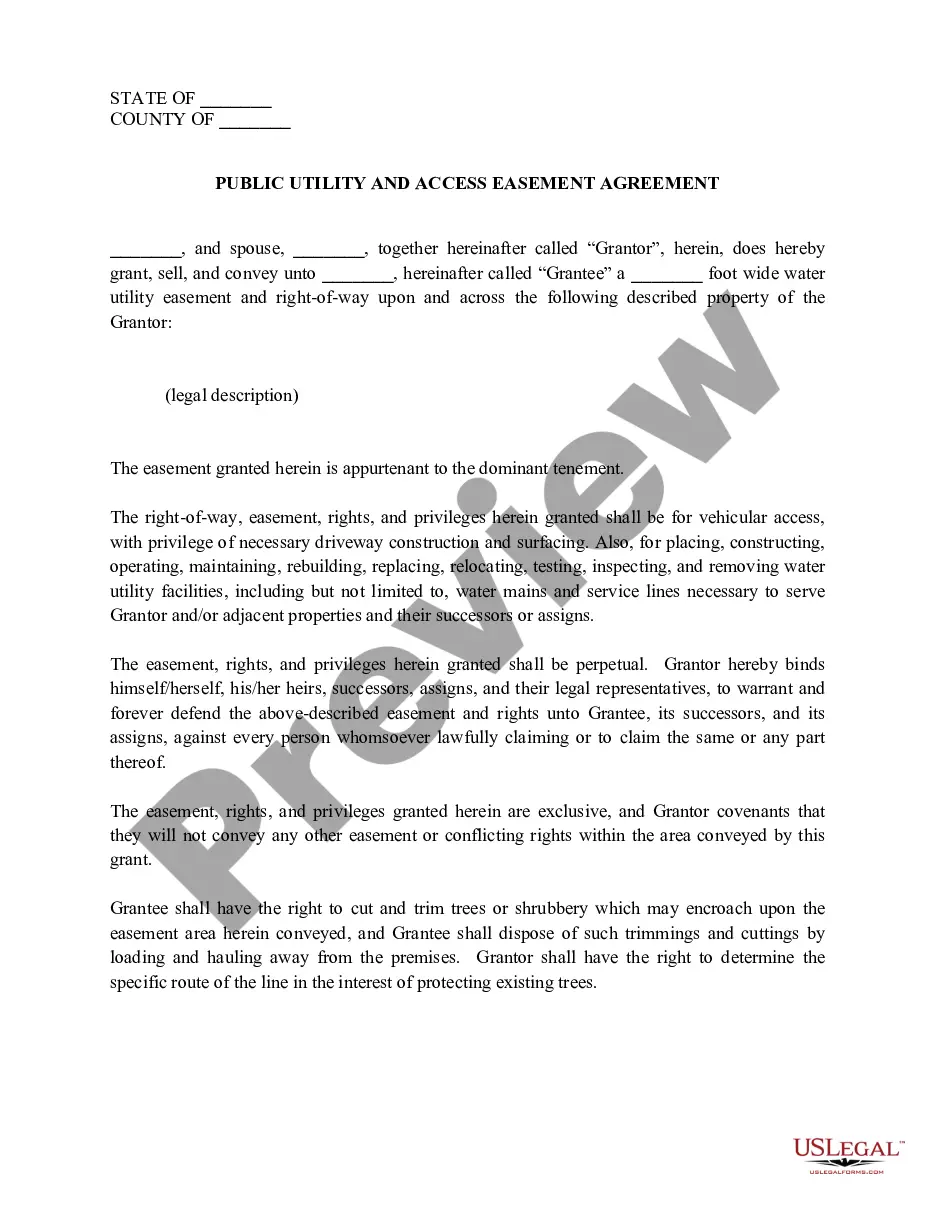
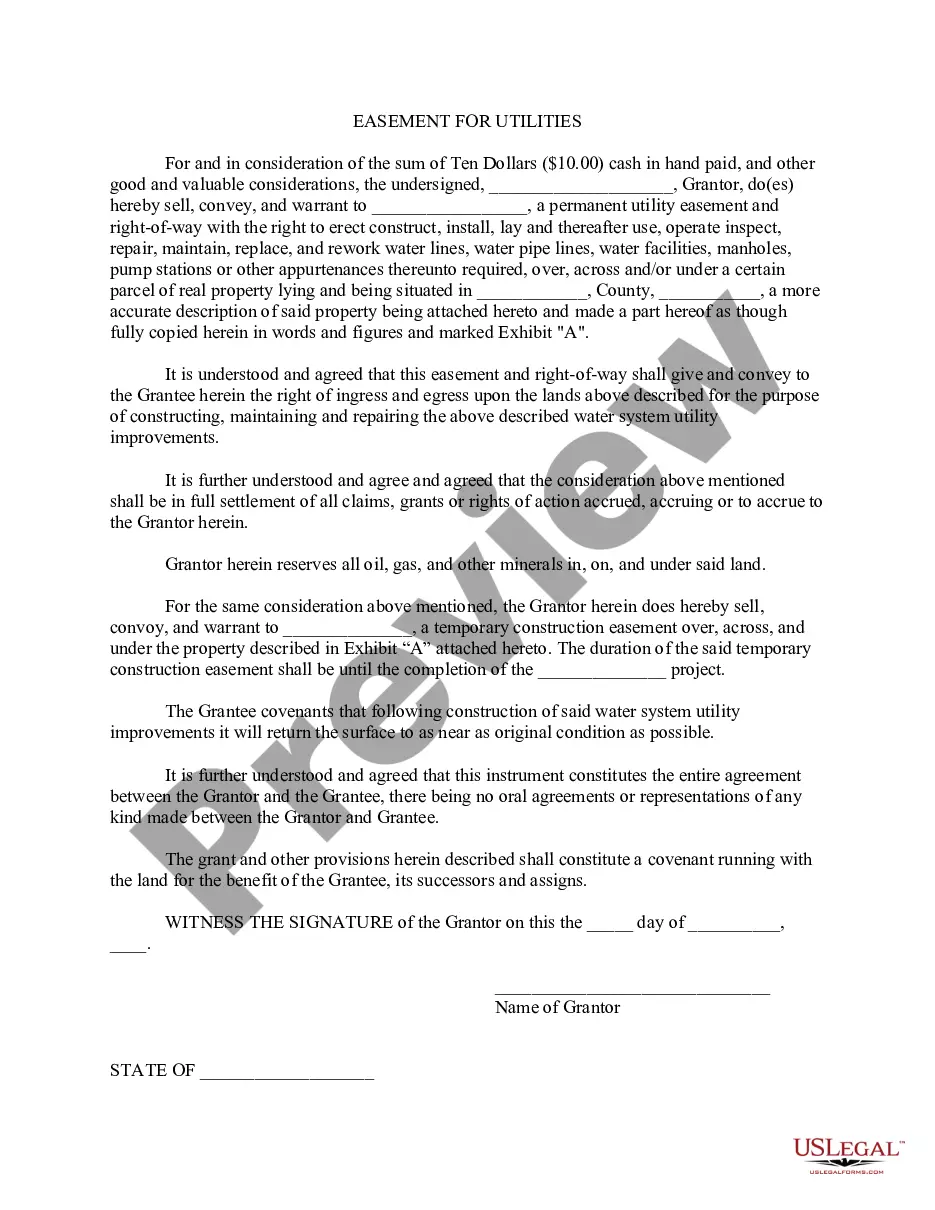
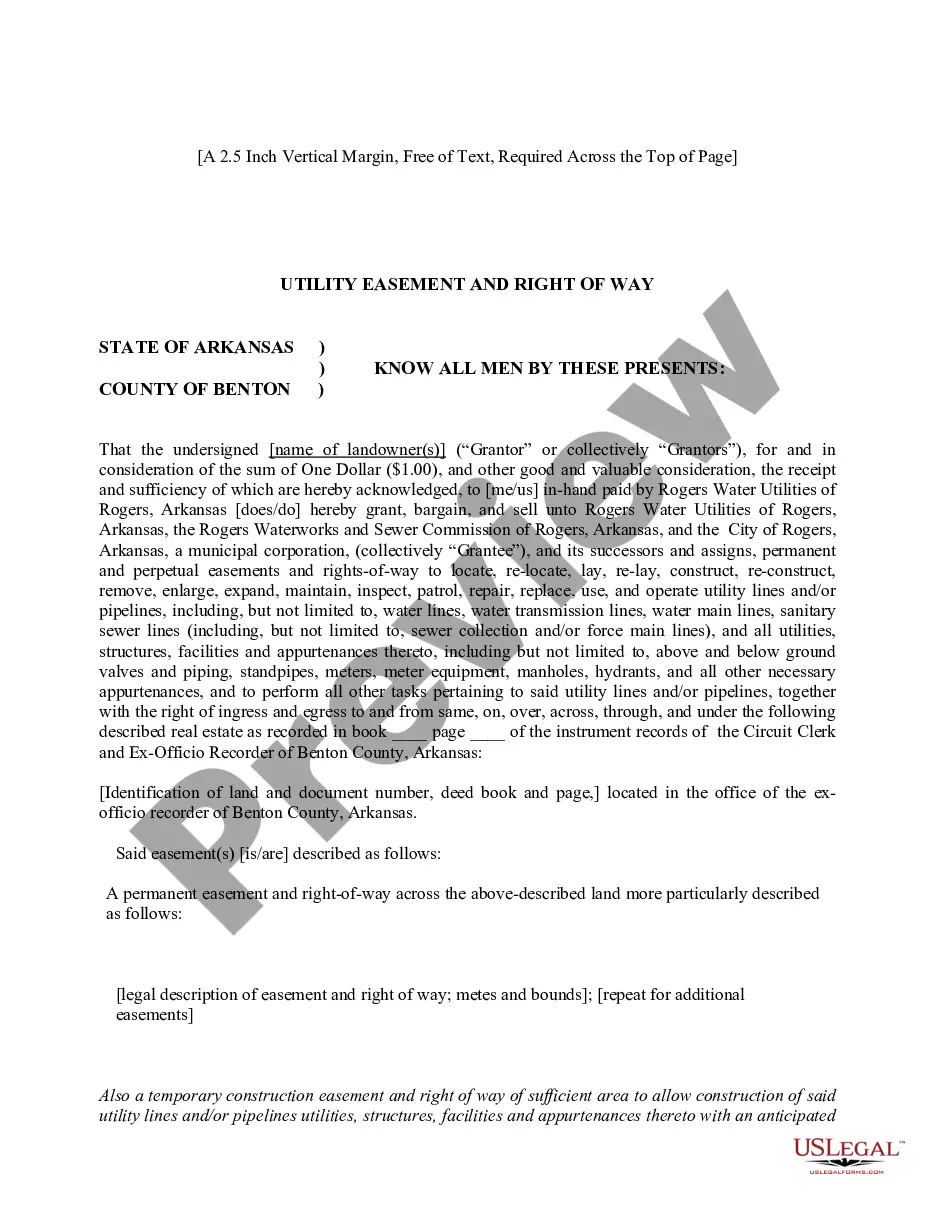
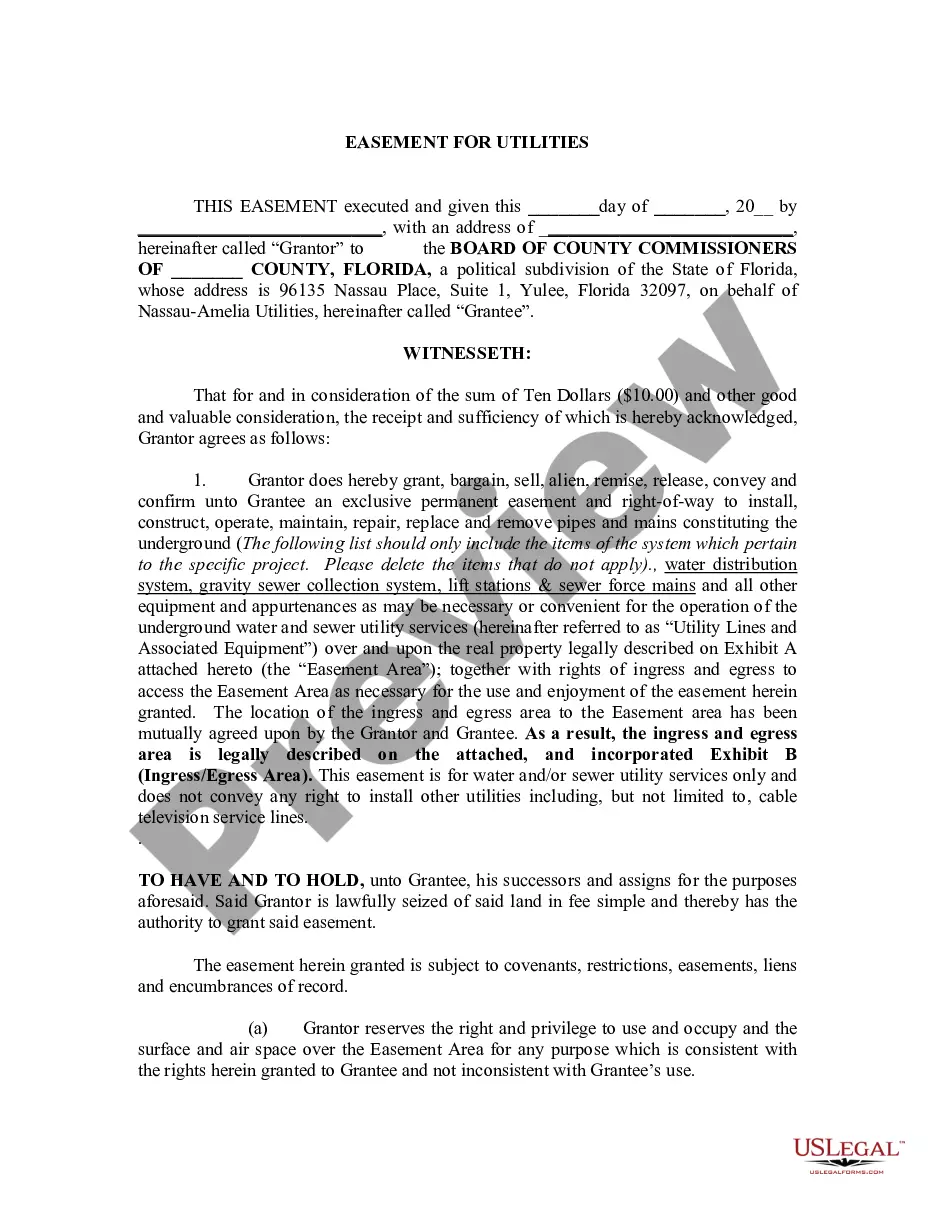
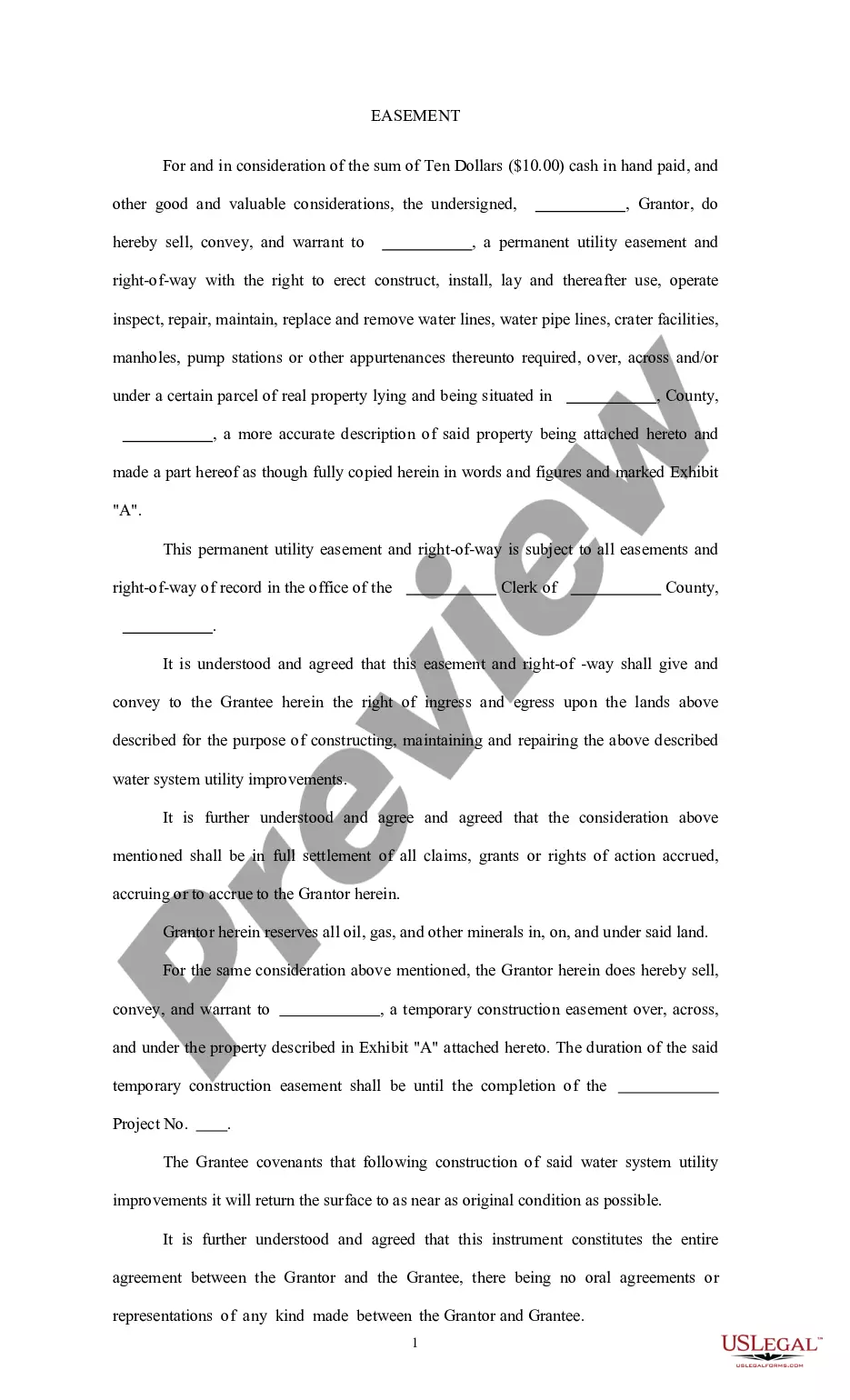
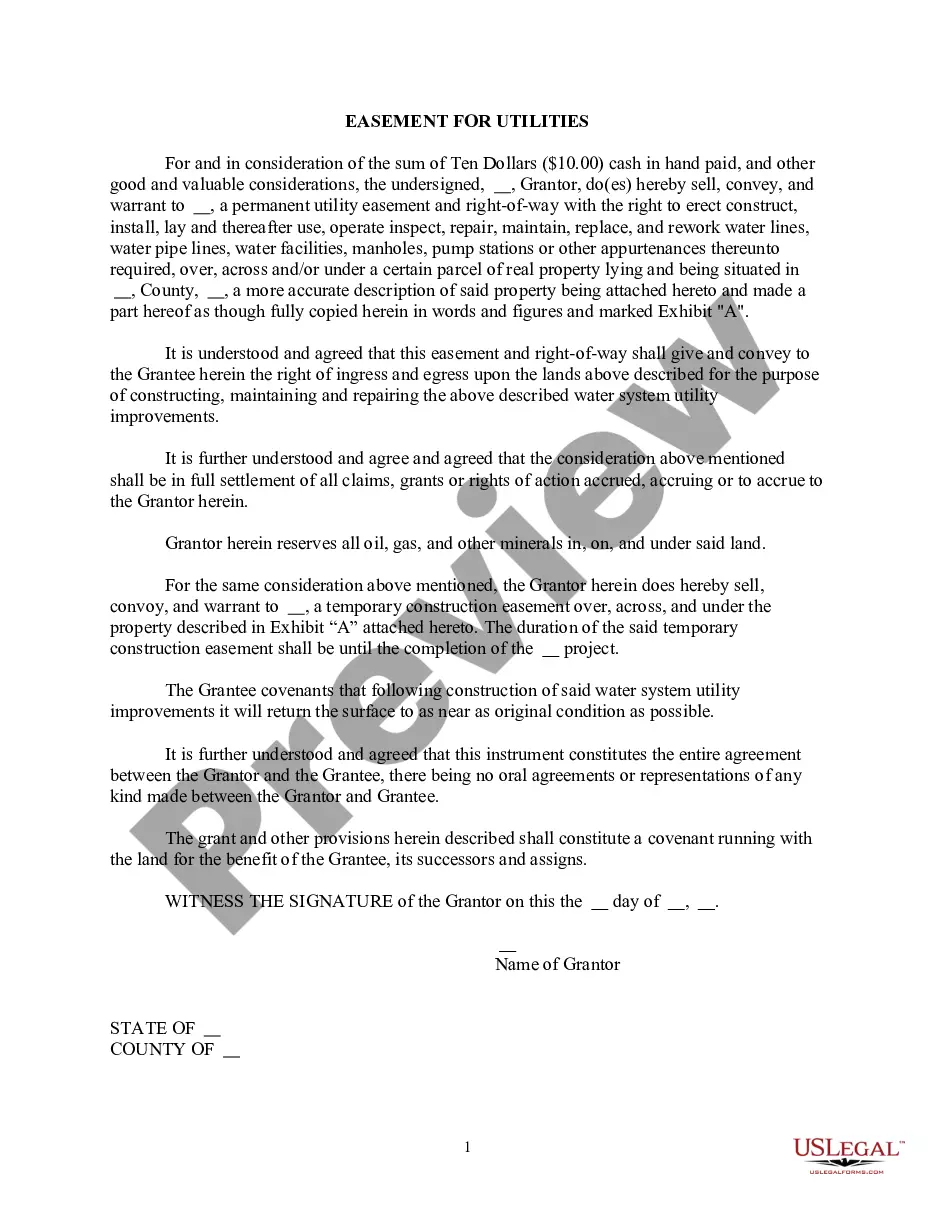
The Public Utility and Access Easement is a legal document that grants one party the right to use a portion of another party's property for a specific purpose, particularly for utilities and drainage. This agreement allows the grantee to access the property for maintaining water utility facilities without transferring ownership. It differs from other real estate forms by focusing on access for public utilities rather than general property sales or leasing.
Form components explained
- Identification of the parties involved: Grantor (property owner) and Grantee (the party receiving the easement).
- Legal description of the property being affected by the easement.
- Details about the purpose of the easement, including rights for vehicular access and utility maintenance.
- Perpetual nature of the easement, ensuring lasting rights to the grantee.
- Obligations regarding tree trimming and maintenance within the easement area.
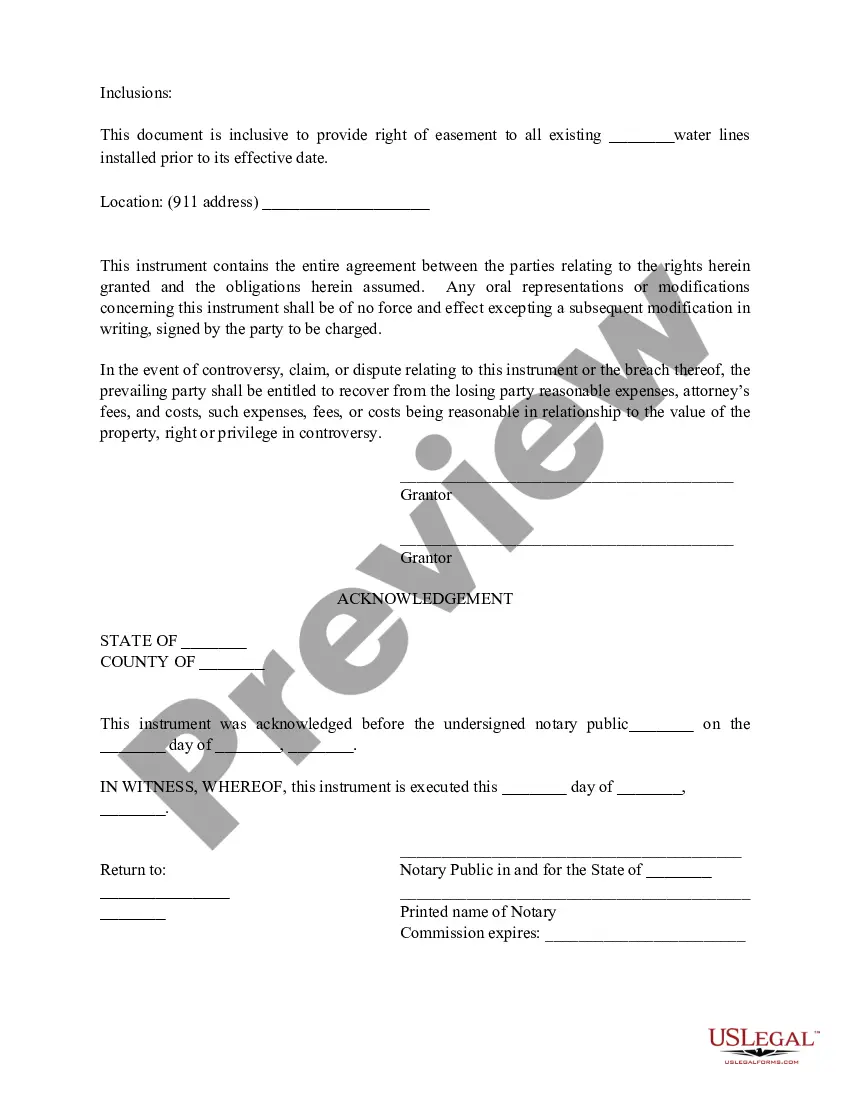
- Acknowledgment requirements and signature lines for all parties involved.
Situations where this form applies
This form is necessary when a property owner needs to grant another party the right to access their land for utility purposes, such as installing or maintaining water lines. It is commonly used in situations where public utilities need to traverse private properties to connect services, ensuring that the utilities can operate effectively while providing clear legal rights to all involved parties.
Who needs this form
- Property owners (Grantors) who wish to allow utility companies or neighboring properties access to their land for utility purposes.
- Utility companies or other entities (Grantees) requiring access to maintain water lines or other utility infrastructures.
- Real estate professionals assisting clients in property agreements involving easements.
How to complete this form
- Identify and list the parties involved as Grantor and Grantee.
- Provide a detailed legal description of the property where the easement will take place.
- Specify the width of the easement and its intended use, including access and utility maintenance rights.
- Include acknowledgment of any existing utilities that are included in the easement.
- Have both parties sign the document in the presence of a notary public.
Does this form need to be notarized?
Yes, this form must be notarized to be legally valid. US Legal Forms offers integrated online notarization services, allowing you to complete this process securely via video call at any time, ensuring the document meets legal standards without the need for travel.
Get your form ready online
Our built-in tools help you complete, sign, share, and store your documents in one place.
Make edits, fill in missing information, and update formatting in US Legal Forms—just like you would in MS Word.
Download a copy, print it, send it by email, or mail it via USPS—whatever works best for your next step.
Sign and collect signatures with our SignNow integration. Send to multiple recipients, set reminders, and more. Go Premium to unlock E-Sign.
If this form requires notarization, complete it online through a secure video call—no need to meet a notary in person or wait for an appointment.
We protect your documents and personal data by following strict security and privacy standards.

Make edits, fill in missing information, and update formatting in US Legal Forms—just like you would in MS Word.

Download a copy, print it, send it by email, or mail it via USPS—whatever works best for your next step.

Sign and collect signatures with our SignNow integration. Send to multiple recipients, set reminders, and more. Go Premium to unlock E-Sign.

If this form requires notarization, complete it online through a secure video call—no need to meet a notary in person or wait for an appointment.

We protect your documents and personal data by following strict security and privacy standards.
Typical mistakes to avoid
- Failing to include a proper legal description of the property.
- Not specifying the rights granted to the grantee in enough detail.
- Omitting signatures or failing to have the document notarized.
Benefits of completing this form online
- Convenient download for immediate use, eliminating waiting times.
- Editable templates that can be tailored to your specific needs.
- Access to professionally drafted forms, ensuring legal compliance and reliability.
Looking for another form?

Form popularity
FAQ
(2) The landowner shall continue to be solely responsible for the upkeep and maintenance of the restricted land, to the extent it may be required by law.
The easement width shall be a minimum of ten (10) feet.
Prescriptive Easements - An easement by prescription may be established by a showing of unobstructed, open, peaceable, and continuous use under claim of right for a period of at least fifteen years. Express Easements - Under Kentucky law, an express easement is created by written agreement of the parties.
Easements By Necessity Unity of ownership between the dominant estate and the servient estate; Severance of the unity of title by a conveyance of either the dominant or servient estate; and. Strict necessity of the use of the servient estate to provide access to the dominant estate.
Depending on the circumstances and how the easement was created, it is generally the responsibility of the dominant tenement to maintain the easement site in the same way they would manage the rest of the attached land. There is generally no obligation for the servient tenement to maintain the right of carriageway.
Generally, it is the duty of the dominant estate to maintain and repair the easement.
Utility Easements The most common type of easement, a utility easement allows a utility company to run its pipes, lines, etc., under or on other people's property in order to serve its customers. As opposed to buying all the land necessary, utility companies negotiate easement agreements with landowners.