Louisiana Letter to District Attorney Requesting Consolidation of Defendants' Court Dates
Understanding this form
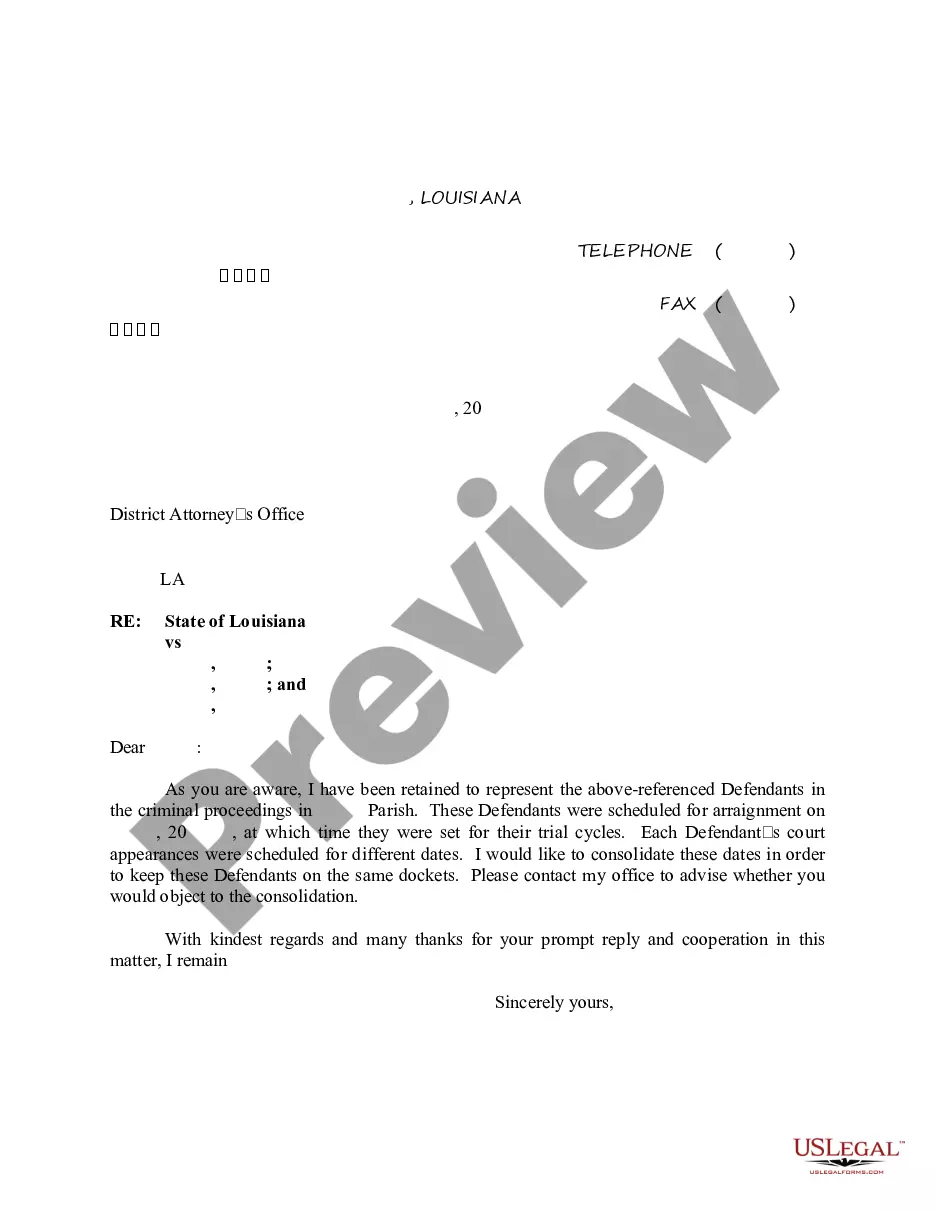
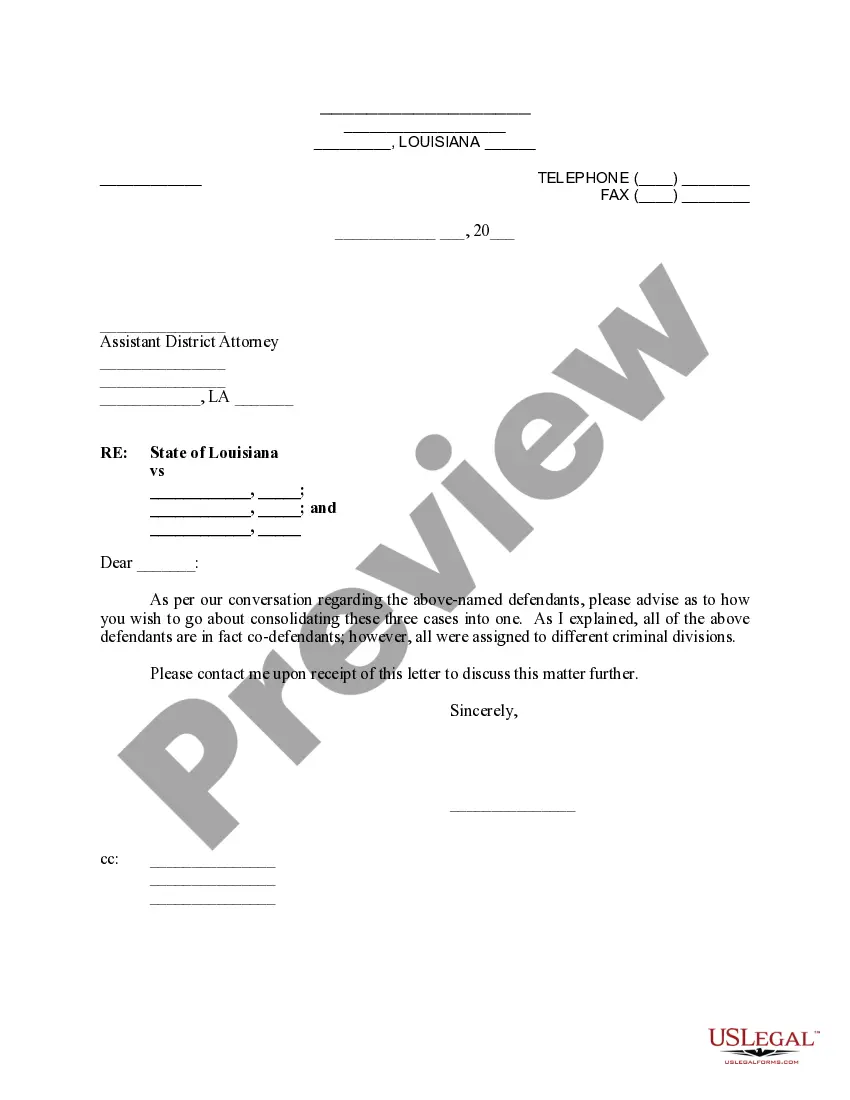
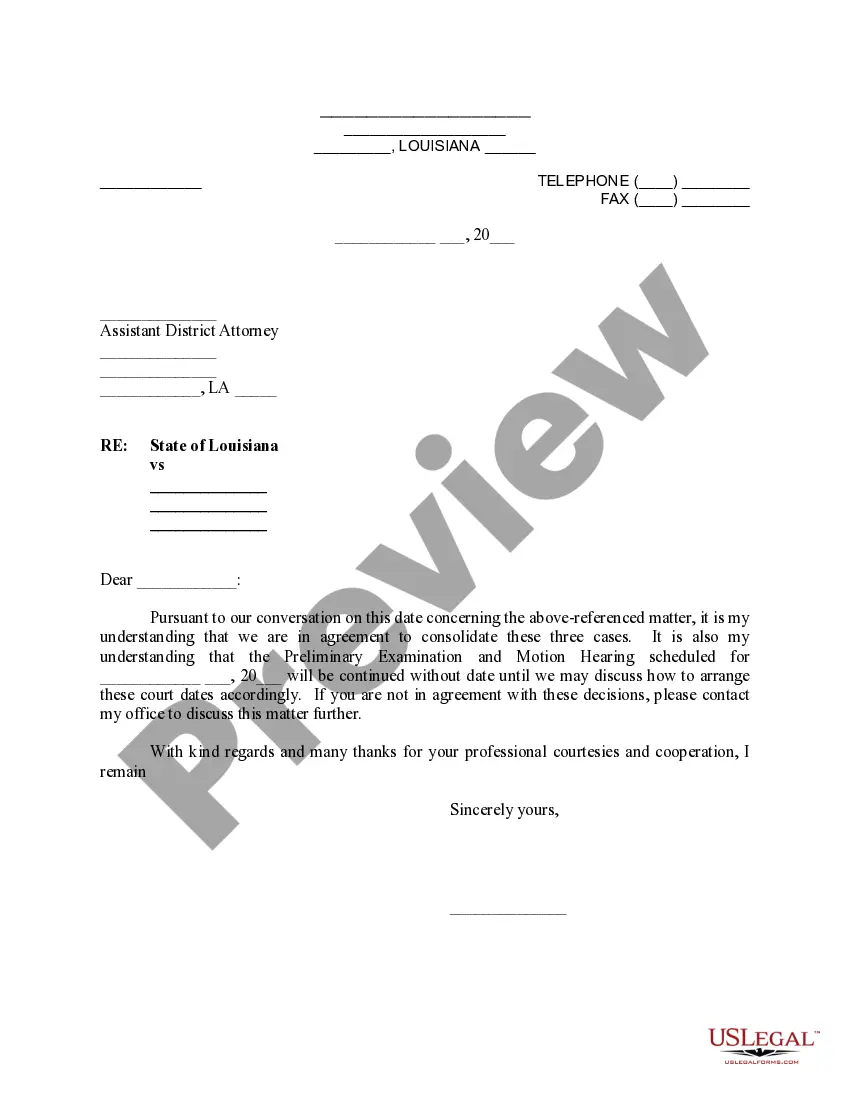
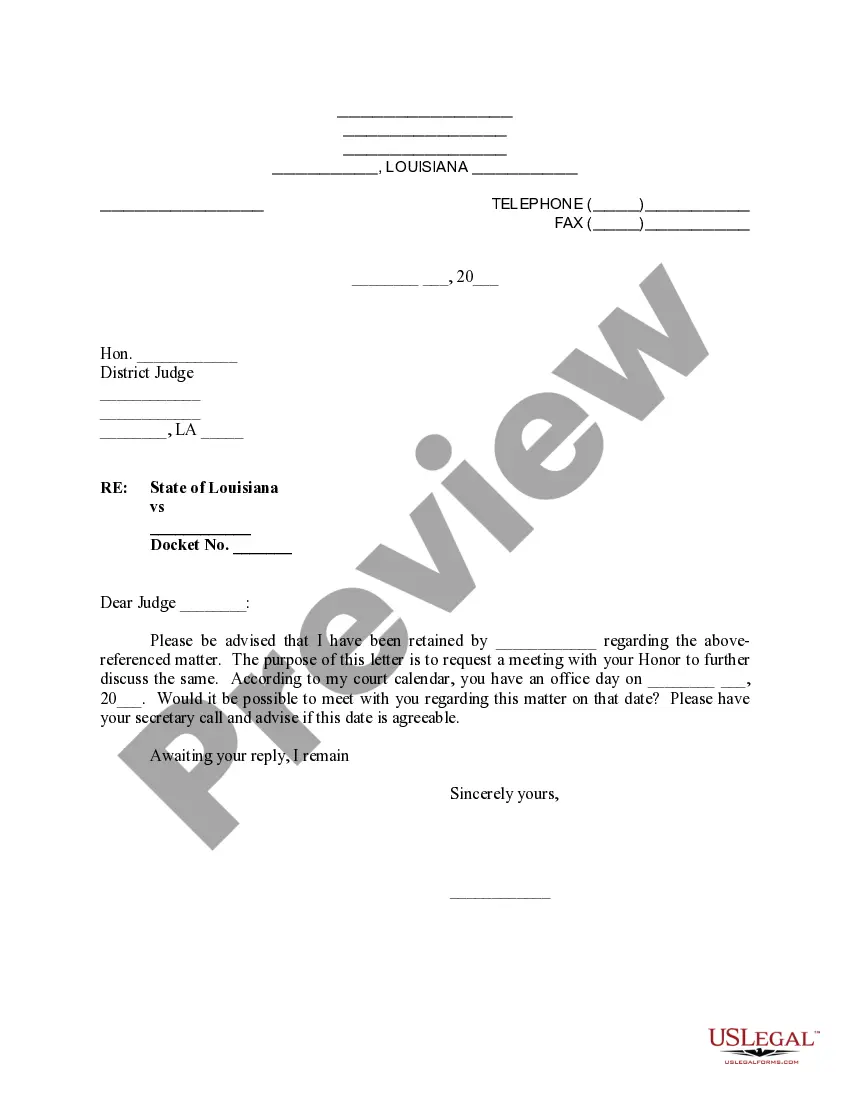
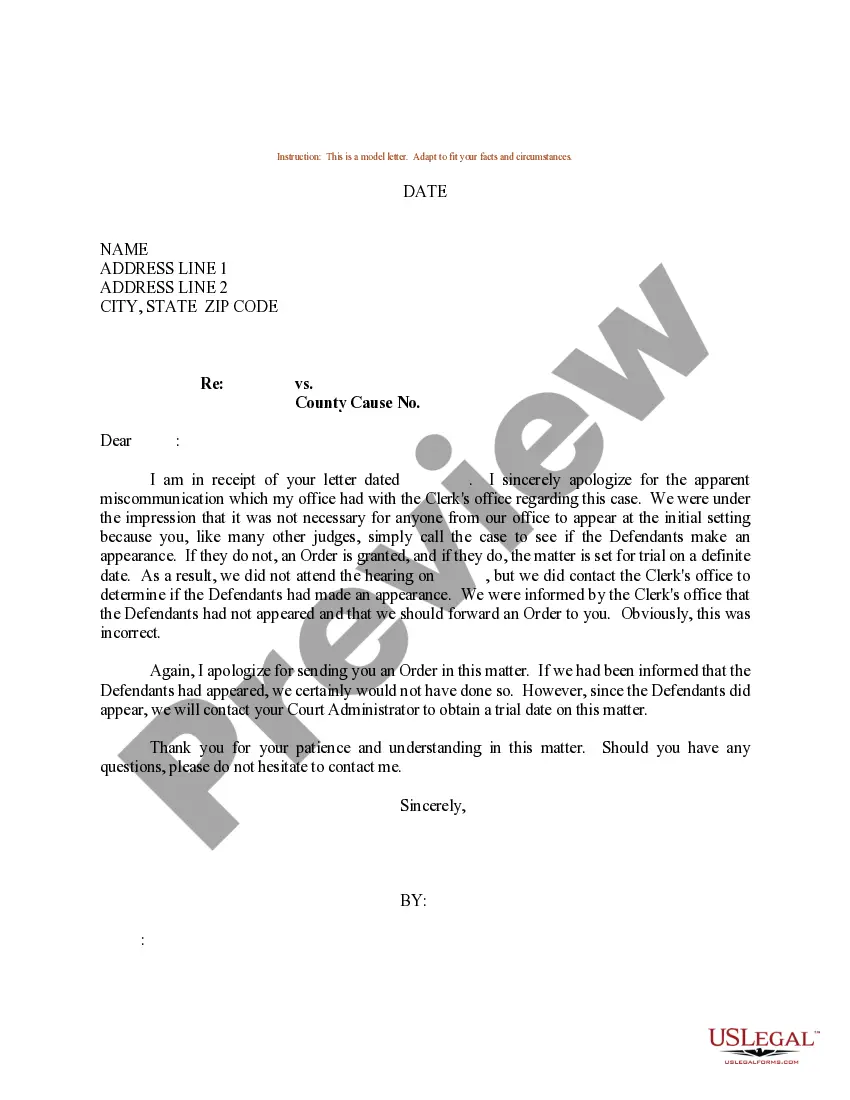
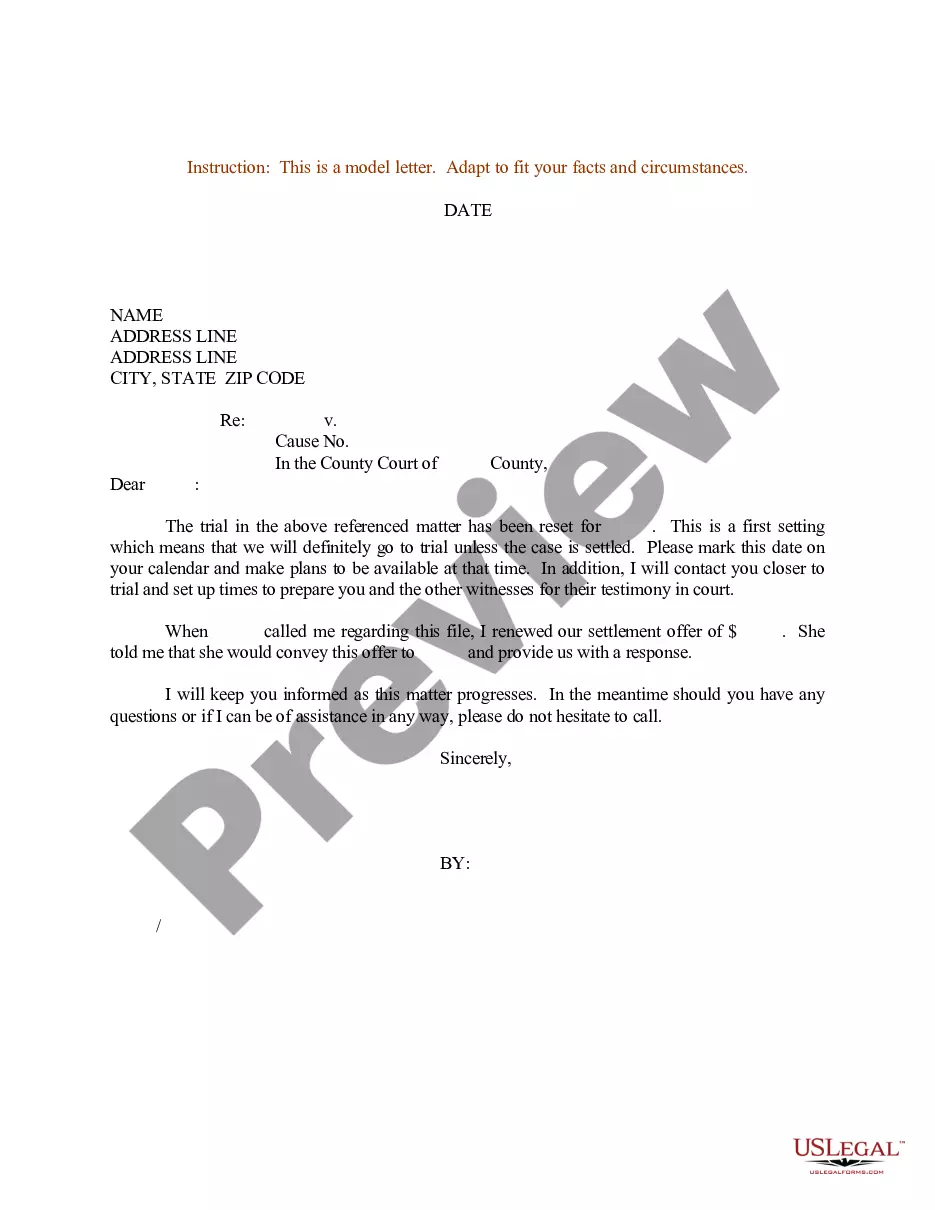
This form is a Letter to District Attorney Requesting Consolidation of Defendants' Court Dates. It is used by an attorney representing multiple defendants in a criminal case to request that their court dates be combined. This helps streamline the legal process and keeps all defendants on the same docket, ensuring equal representation and efficiency in the court system.
Key parts of this document
- Header with the District Attorney's Office contact information.
- Statement of representation for multiple defendants.
- Details of the separate court dates assigned to each defendant.
- A formal request for consolidation of the defendants' court dates.
- Contact information for follow-up correspondence.
When to use this document
This form is needed when an attorney represents multiple defendants who have been assigned different court dates at their arraignment. By using this letter, the attorney seeks to have the cases consolidated, which can help reduce confusion, expedite the legal process, and make it easier for all parties involved to attend the hearings.
Intended users of this form
- Attorneys representing multiple defendants in a criminal matter.
- Lawyers looking to streamline court proceedings for their clients.
- Defendants who have received different court dates and want to consolidate their cases.
Instructions for completing this form
- Enter the District Attorney's Office address at the top of the letter.
- Clearly state your representation of the multiple defendants in the opening paragraph.
- List the individual court dates assigned to each defendant.
- Make a formal request for the consolidation of court dates.
- Provide your contact information for any follow-up communications.
Does this form need to be notarized?
In most cases, this form does not require notarization. However, some jurisdictions or signing circumstances might. US Legal Forms offers online notarization powered by Notarize, accessible 24/7 for a quick, remote process.
Get your form ready online
Our built-in tools help you complete, sign, share, and store your documents in one place.
Make edits, fill in missing information, and update formatting in US Legal Forms—just like you would in MS Word.
Download a copy, print it, send it by email, or mail it via USPS—whatever works best for your next step.
Sign and collect signatures with our SignNow integration. Send to multiple recipients, set reminders, and more. Go Premium to unlock E-Sign.
If this form requires notarization, complete it online through a secure video call—no need to meet a notary in person or wait for an appointment.
We protect your documents and personal data by following strict security and privacy standards.

Make edits, fill in missing information, and update formatting in US Legal Forms—just like you would in MS Word.

Download a copy, print it, send it by email, or mail it via USPS—whatever works best for your next step.

Sign and collect signatures with our SignNow integration. Send to multiple recipients, set reminders, and more. Go Premium to unlock E-Sign.

If this form requires notarization, complete it online through a secure video call—no need to meet a notary in person or wait for an appointment.

We protect your documents and personal data by following strict security and privacy standards.
Mistakes to watch out for
- Not including all defendants' court dates.
- Failing to provide complete contact information.
- Using vague language when requesting consolidation.
- Not addressing the letter properly to the District Attorney's Office.
Why complete this form online
- Convenient access to legal forms from any device.
- Editable templates that can be customized to fit specific cases.
- Reliable forms drafted by licensed attorneys, ensuring legal compliance.
Looking for another form?
Form popularity
FAQ
Whether consolidating your debt is a good idea depends on both your personal financial situation and on the type of debt consolidation being considered. Consolidating debt with a loan could reduce your monthly payments and provide near term relief, but a lengthier term could mean paying more in total interest.
To consolidate (consolidation) is to combine assets, liabilities, and other financial items of two or more entities into one.Consolidation also refers to the union of smaller companies into larger companies through mergers and acquisitions (M&A).
Your debt settlement proposal letter must be formal and clearly state your intentions, as well as what you expect from your creditors. You should also include all the key information your creditor will need to locate your account on their system, which includes: Your full name used on the account. Your full address.
1 Determine the total amount of debt you owe. 2 Try to know the names of your creditors. 3 Mention the amount you can pay to settle debts. 4 Explain your financial hardship. 5 The letter needs to be formal. 6 A proper header. 7 Explanation of your financial constraints.
1 : the act or process of consolidating : the state of being consolidated. 2 : the process of uniting : the quality or state of being united specifically : the unification of two or more corporations by dissolution of existing ones and creation of a single new corporation.
The creditor and/or debt collectors name. The date the letter was drafted. Your name. Your account number.
A hardship letter of this type is written to a bank and other financial institutions for debt consolidation. This letter is used as a platform to let the creditors know about your bad financial state. At the end, you request the authority to consolidate your debts.
When writing the letter, it is crucial to use a simple and professional language. Do not be harsh or threat the debtor in your letter as it can turn the tables against you. The letter should be addressed to the debtor's home address or any other address that the debtor has provided before.
Original creditor and collection agent's company name. Date the letter was written. Your name. Your account number. Outstanding balance owed on the account (optional) Amount agreed to as settlement.