Jury Instruction - Impeachment - Inconsistent Statement and Felony Conviction
What is this form?
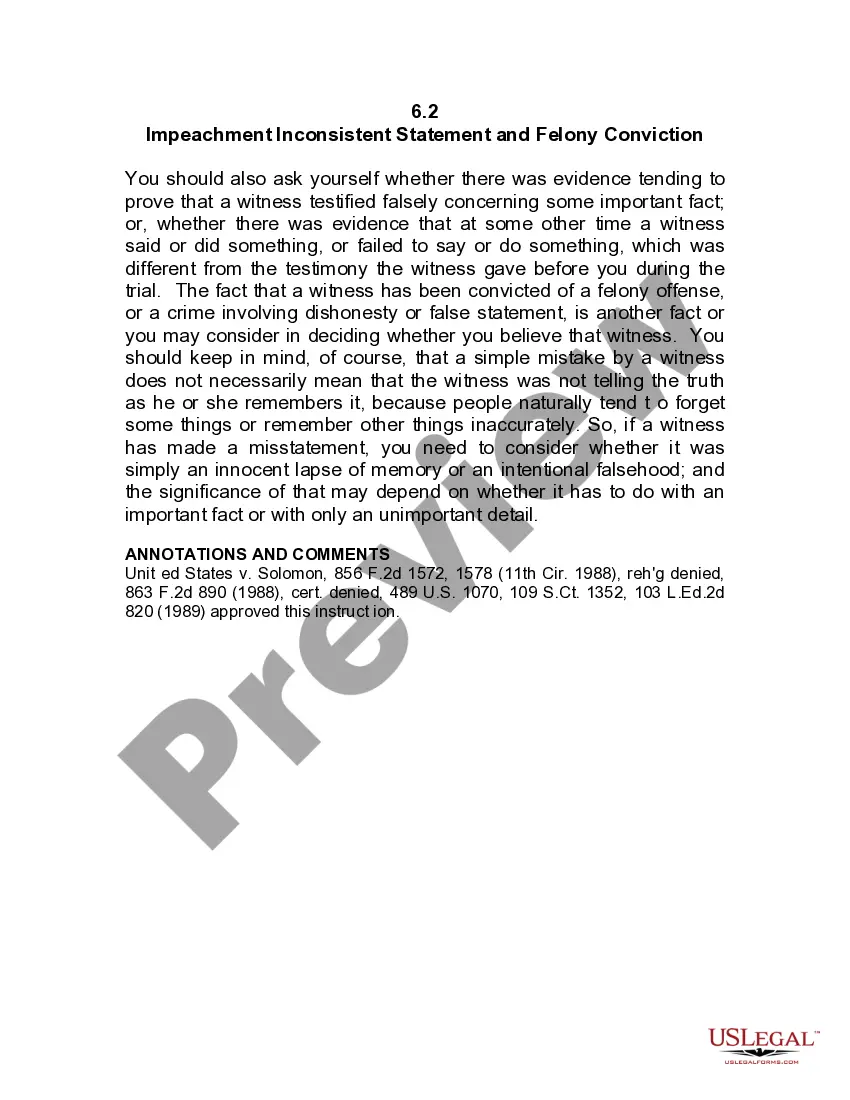
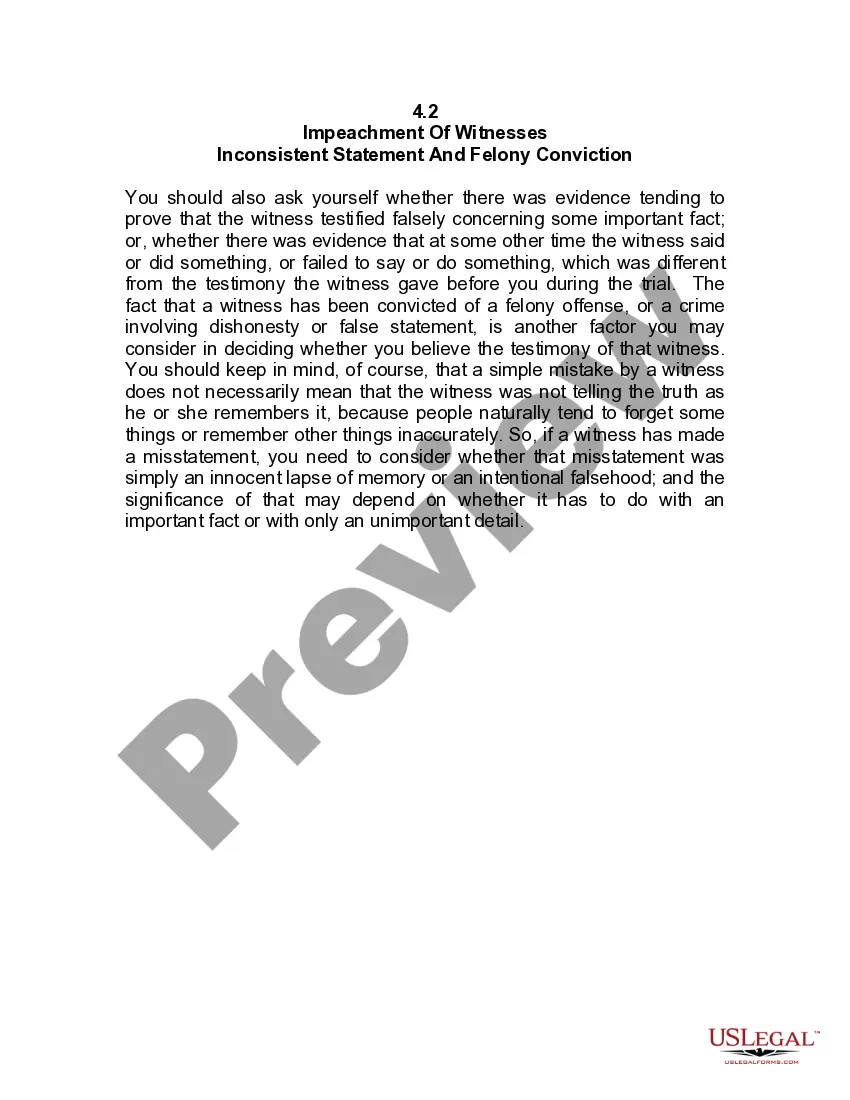
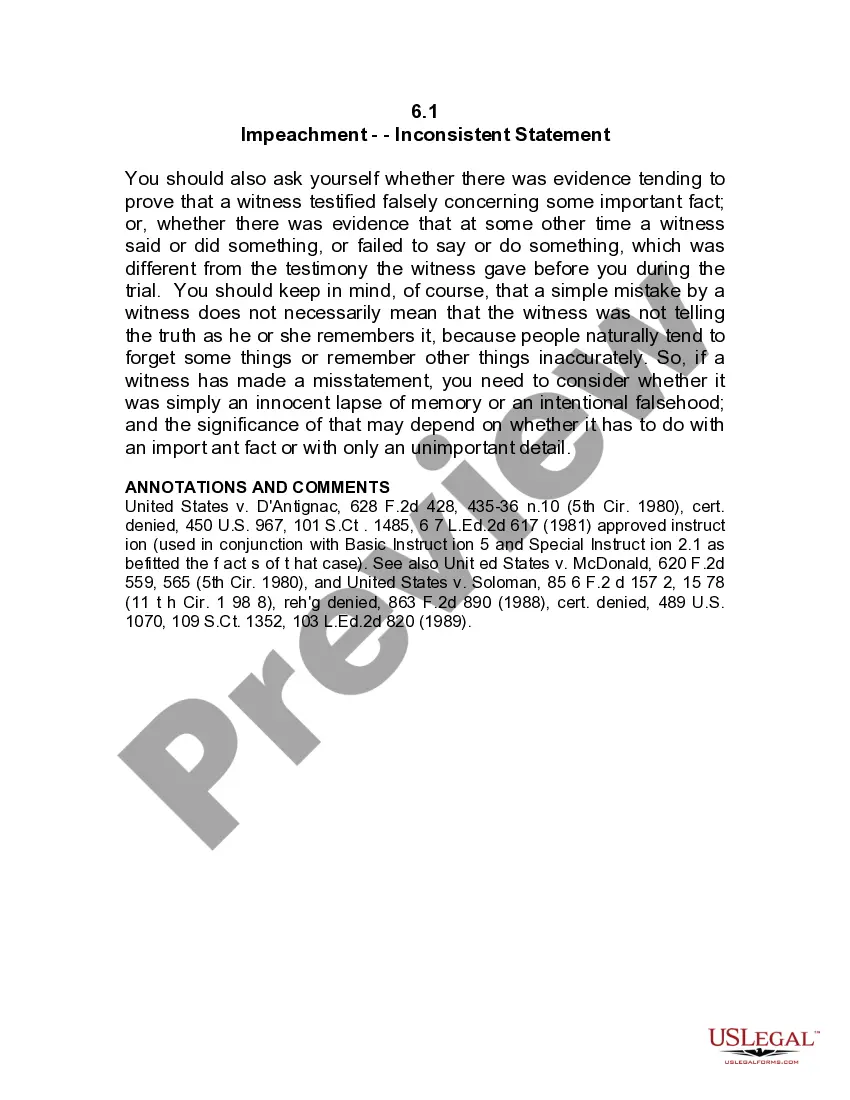
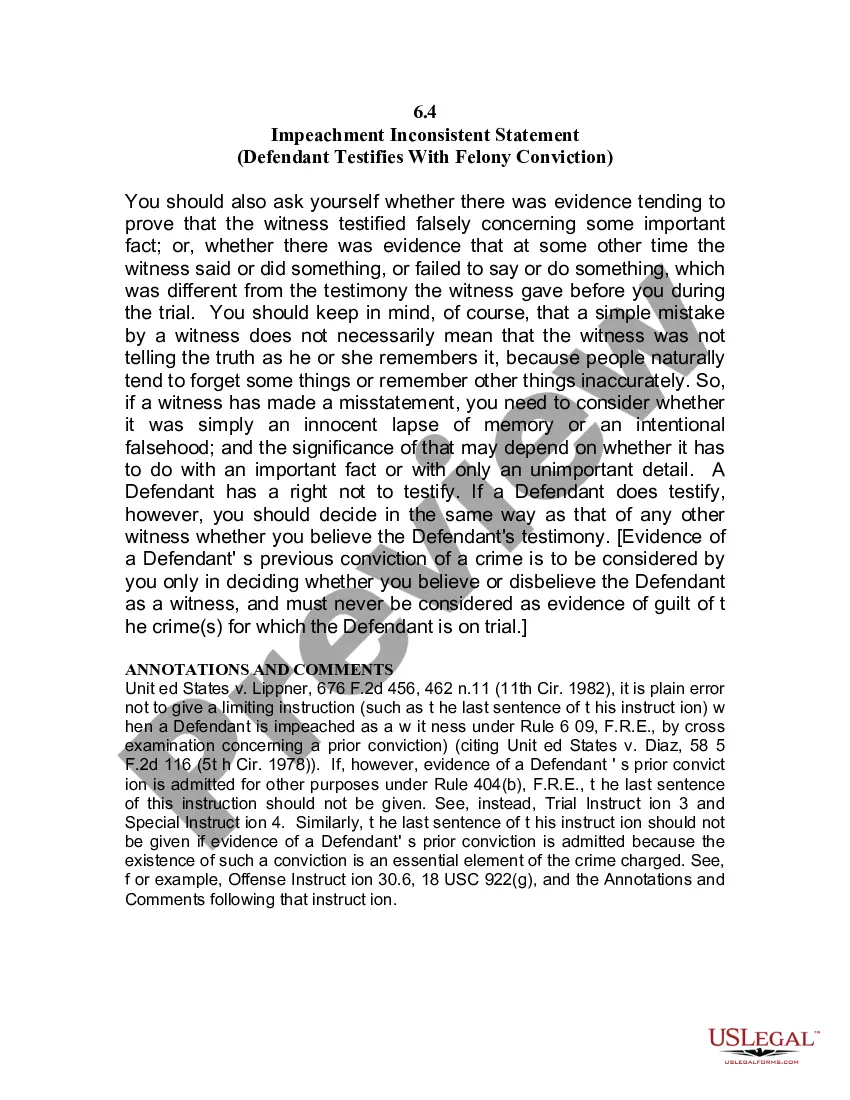
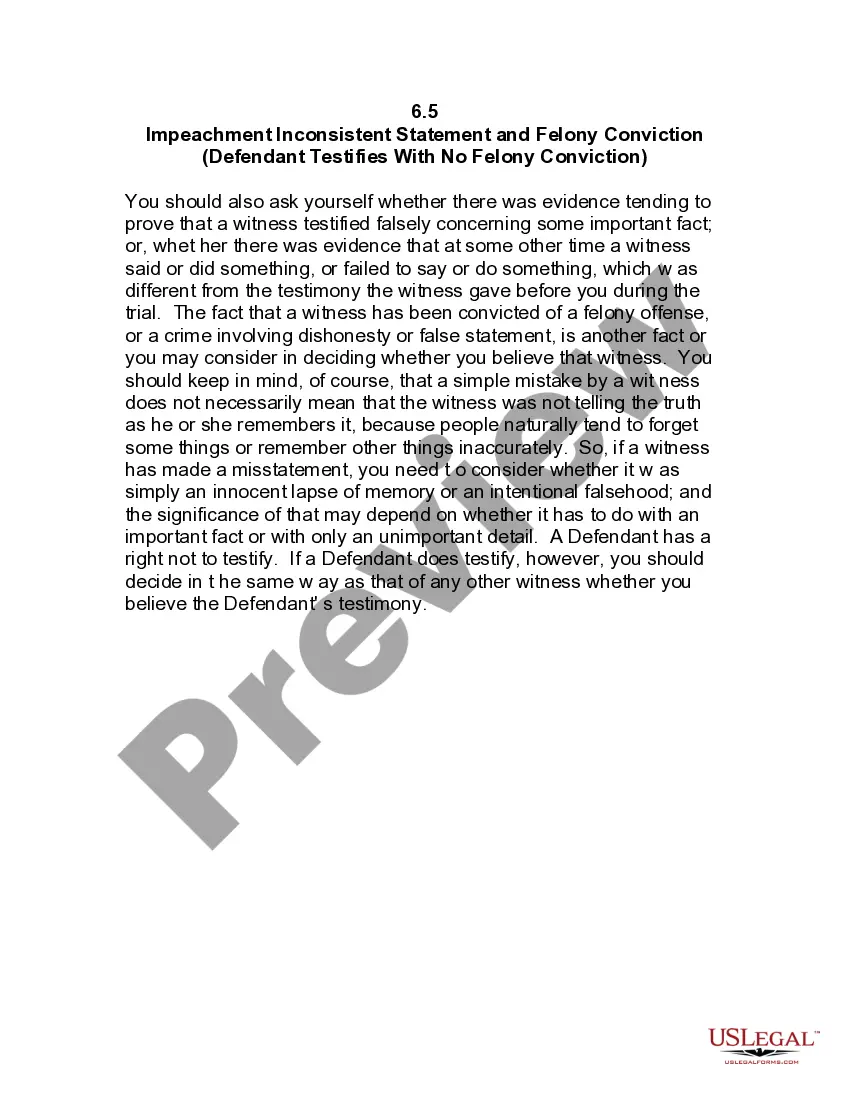
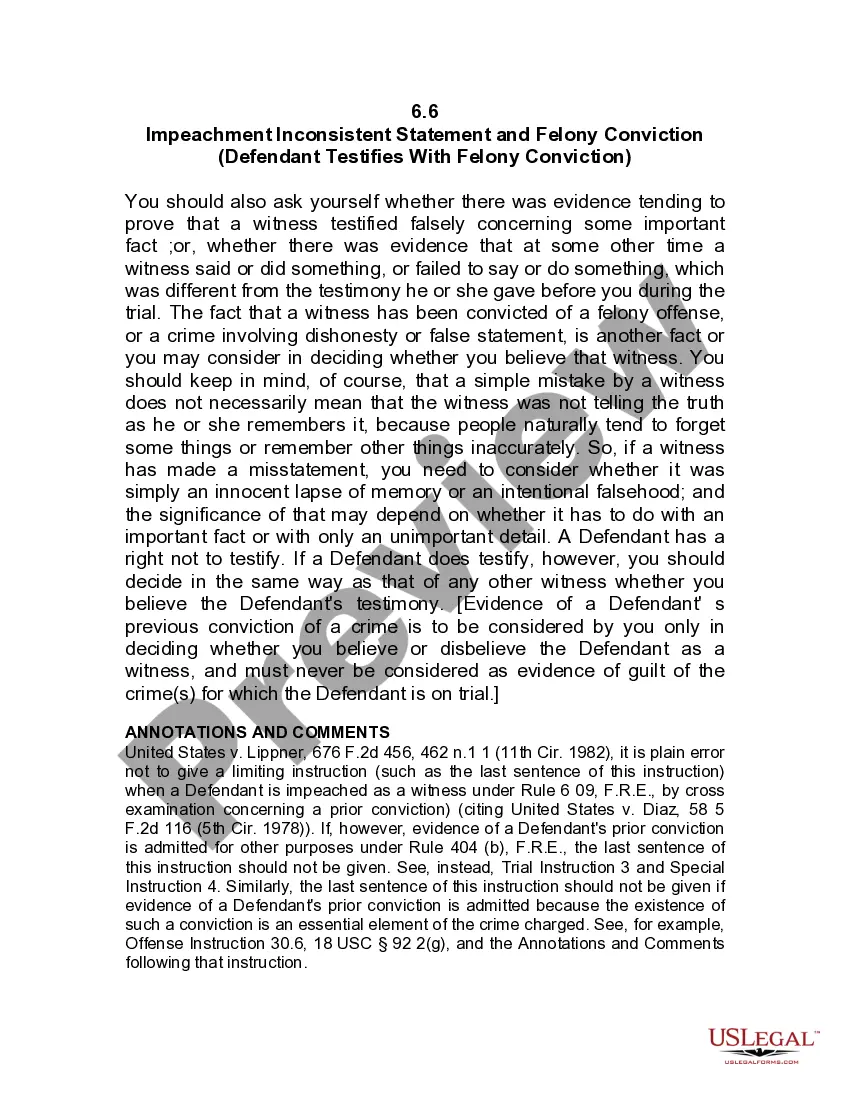
The Jury Instruction - Impeachment - Inconsistent Statement and Felony Conviction form provides guidance for jurors regarding the evaluation of witness credibility. This form is designed to help jurors understand how to assess inconsistencies in witness testimony and the impact of a witness's felony conviction on their reliability. Unlike other jury instructions, this specific form focuses on impeachment issues related to inconsistent statements and past convictions, ensuring a clearer framework for making judgments in a trial.
What’s included in this form
- Instructions on evaluating witness credibility based on inconsistencies in testimony.
- Guidance on how to consider a witness's felony conviction when assessing their reliability.
- Clarification of the difference between innocent mistakes and intentional falsehoods.
- Emphasis on the importance of the fact being testified about.
- References to relevant legal cases that support the instruction.
When this form is needed
This jury instruction form should be used during a trial when a witness's testimony is challenged due to inconsistencies or when the witness has a felony conviction. It provides jurors with the necessary framework to critically evaluate the credibility of evidence presented and determine how these factors may affect the outcome of the case. This form is particularly relevant in criminal cases where witness reliability is crucial.
Who this form is for
- Judges who are issuing jury instructions in trials.
- Attorneys representing either side in a case involving contested witness credibility.
- Legal consultants who prepare materials for courtroom proceedings.
- Students and practitioners in legal education settings discussing impeachment of witnesses.
Steps to complete this form
- Review the key issues to determine if witness testimony is inconsistent.
- Evaluate any prior felony convictions relevant to the witness's credibility.
- Consider the context of the testimony and the importance of the details involved.
- Modify any language in the instructions to ensure clarity and relevance to your trial.
- Present the completed jury instructions to the jurors at the appropriate time during the trial.
Notarization guidance
In most cases, this form does not require notarization. However, some jurisdictions or signing circumstances might. US Legal Forms offers online notarization powered by Notarize, accessible 24/7 for a quick, remote process.
Get your form ready online
Our built-in tools help you complete, sign, share, and store your documents in one place.
Make edits, fill in missing information, and update formatting in US Legal Forms—just like you would in MS Word.
Download a copy, print it, send it by email, or mail it via USPS—whatever works best for your next step.
Sign and collect signatures with our SignNow integration. Send to multiple recipients, set reminders, and more. Go Premium to unlock E-Sign.
If this form requires notarization, complete it online through a secure video call—no need to meet a notary in person or wait for an appointment.
We protect your documents and personal data by following strict security and privacy standards.

Make edits, fill in missing information, and update formatting in US Legal Forms—just like you would in MS Word.

Download a copy, print it, send it by email, or mail it via USPS—whatever works best for your next step.

Sign and collect signatures with our SignNow integration. Send to multiple recipients, set reminders, and more. Go Premium to unlock E-Sign.

If this form requires notarization, complete it online through a secure video call—no need to meet a notary in person or wait for an appointment.

We protect your documents and personal data by following strict security and privacy standards.
Avoid these common issues
- Failing to adequately explain the difference between a mistake and an intentional falsehood.
- Not tailoring the instructions to the specifics of the case being tried.
- Overlooking the relevance of the conviction in assessing credibility.
- Using overly complicated language that jurors may find difficult to understand.
Benefits of using this form online
- Convenience of immediate access to essential legal instructions.
- Editability to ensure the content aligns with specific trial needs.
- Reliability of templates drafted by licensed attorneys, providing peace of mind.
Looking for another form?


Form popularity
FAQ
First, the most basic step, is to have the witness repeat the testimony from today's hearing that you want to impeach. You cannot effectively impeach unless the witness repeats a fact they said during the current hearing that clearly contradicts a prior statement.
Repeat. First, the most basic step, is to have the witness repeat the testimony from today's hearing that you want to impeach. Build Up. Impeach.
Under common law, a witness may be impeached by proof the witness has contradicted him- or herself through evidence of prior acts or statements that are inconsistent with testimony given on direct examination.
In the US, a party has the option of discrediting a witness through impeachment by cross-examining the witness about facts that reflect poorly on the witness's credibility or, in some cases, by introducing extrinsic evidence that reflects negatively on the witness's truthfulness or knowledge.
The five basic methods are: use of contradiction, proof of bad character, proof of inconsistency, proof of bias, or proof of diminished capacity.
In the US, a party has the option of discrediting a witness through impeachment by cross-examining the witness about facts that reflect poorly on the witness's credibility or, in some cases, by introducing extrinsic evidence that reflects negatively on the witness's truthfulness or knowledge.
Rule 609 provides that, with certain restrictions, a witness may be impeached witrh evidence of two kids of criminal convictions: (1) felonies, regardless of their nature; and (2) misdemeanors involving crimes of dishonesty and false statement, such as check deception and perjury.
Under the Federal Rule of Evidence (often referred to as the FRE) section 609, prior criminal convictions can only be used if the conviction was punishable by more than one year in prison, and the value of the evidence does not result in an unfair advantage to the prosecution.