Jury Instruction - Impeachment - Inconsistent Statement and Felony Conviction - Defendant Testifies With No Felony Conviction
Understanding this form
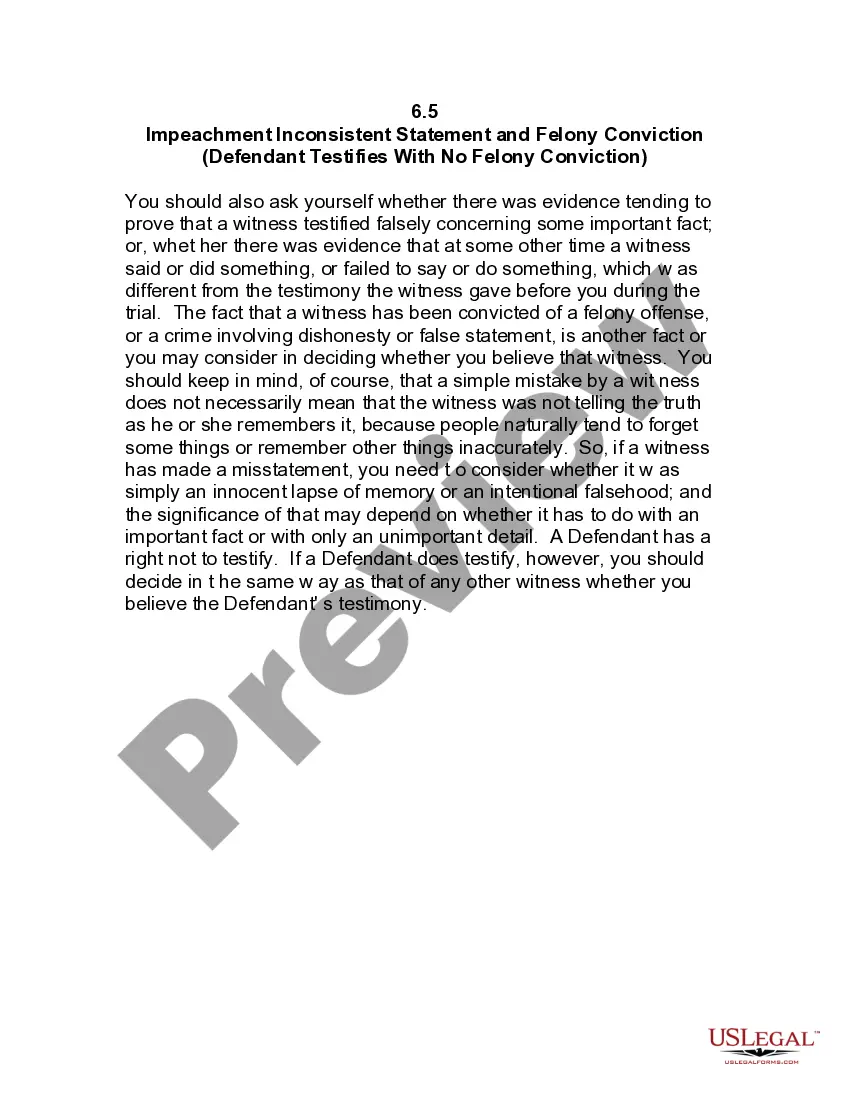
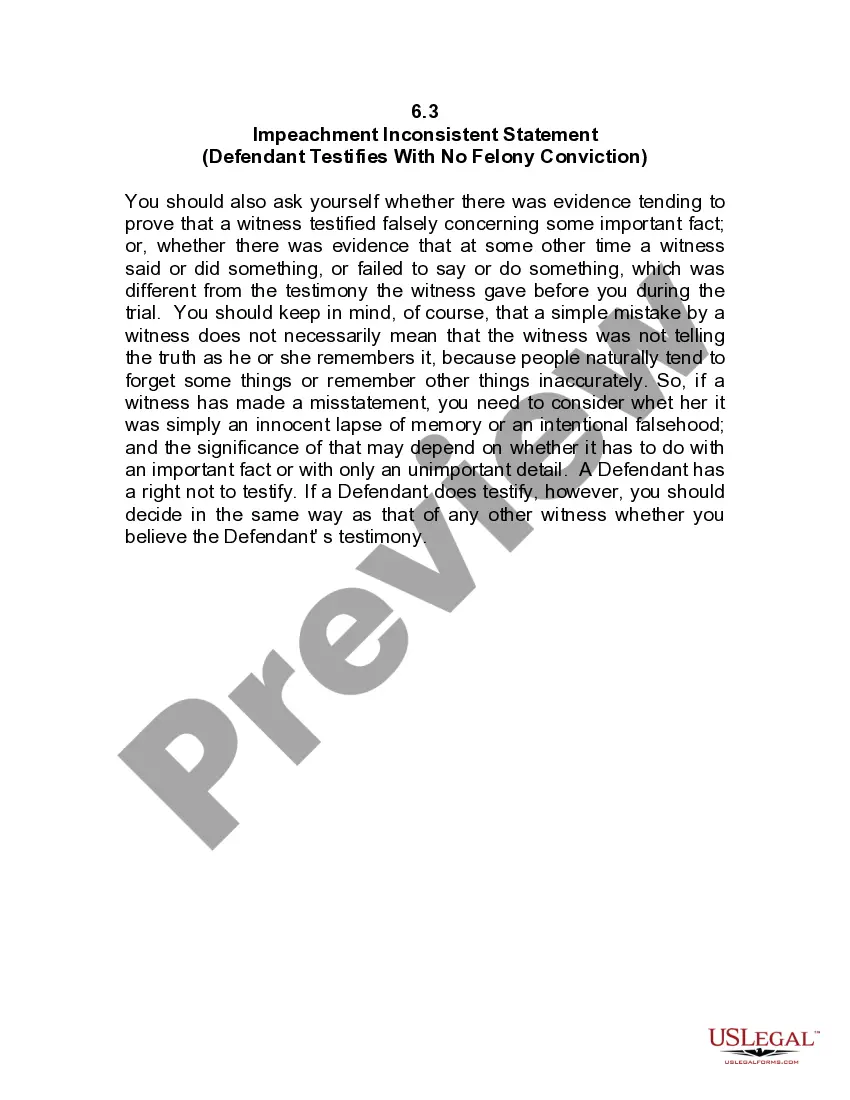
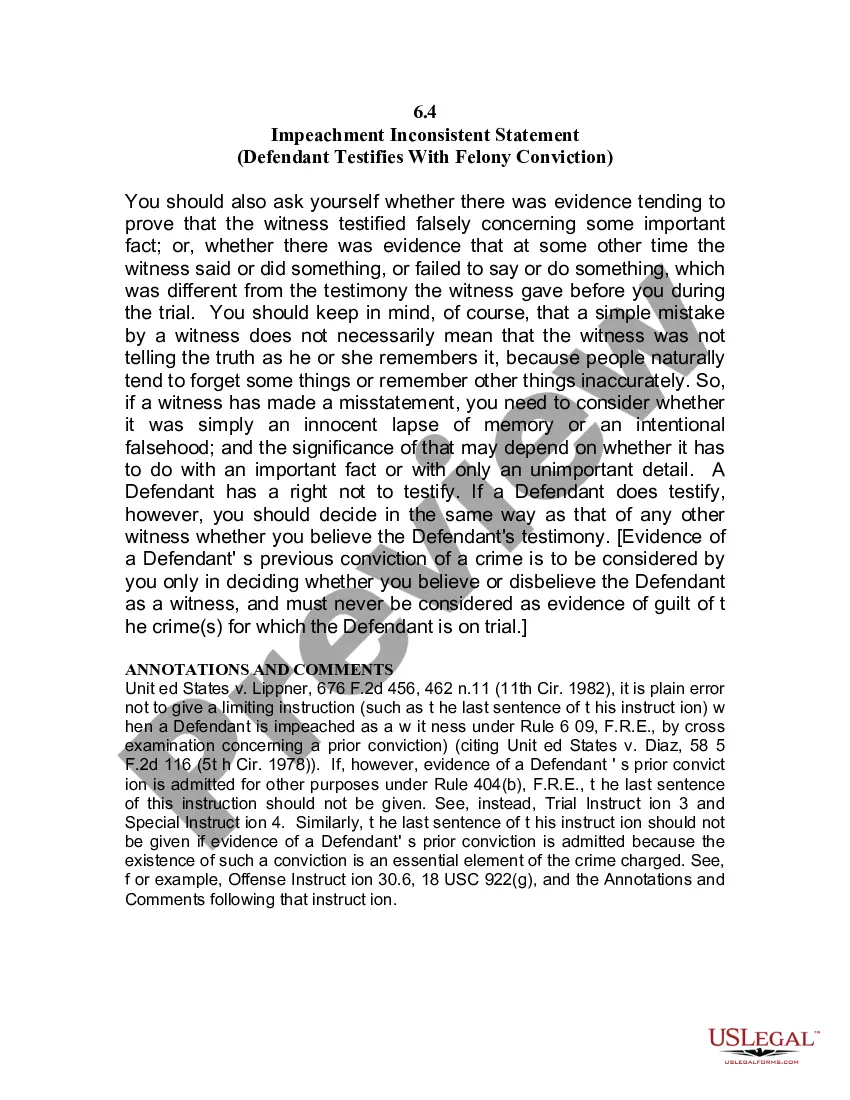
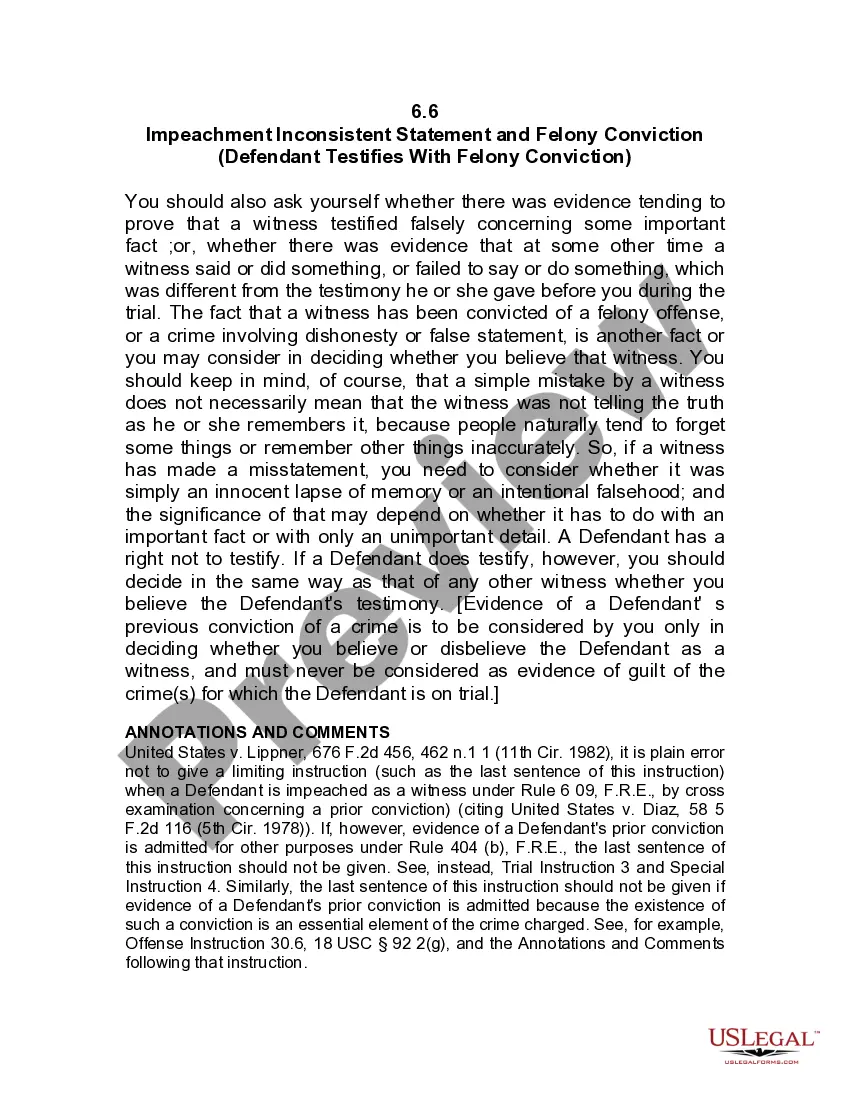
The Jury Instruction form for Impeachment - Inconsistent Statement and Felony Conviction is a legal template intended for use in court settings. It provides sample jury instructions related to evaluating the credibility of a defendant's testimony, specifically when the defendant has no felony convictions. This form helps jurors consider factors such as inconsistent statements or prior criminal convictions while determining the truthfulness of testimony, making it distinct from other jury instruction forms focusing on different aspects of witness credibility.
Form components explained
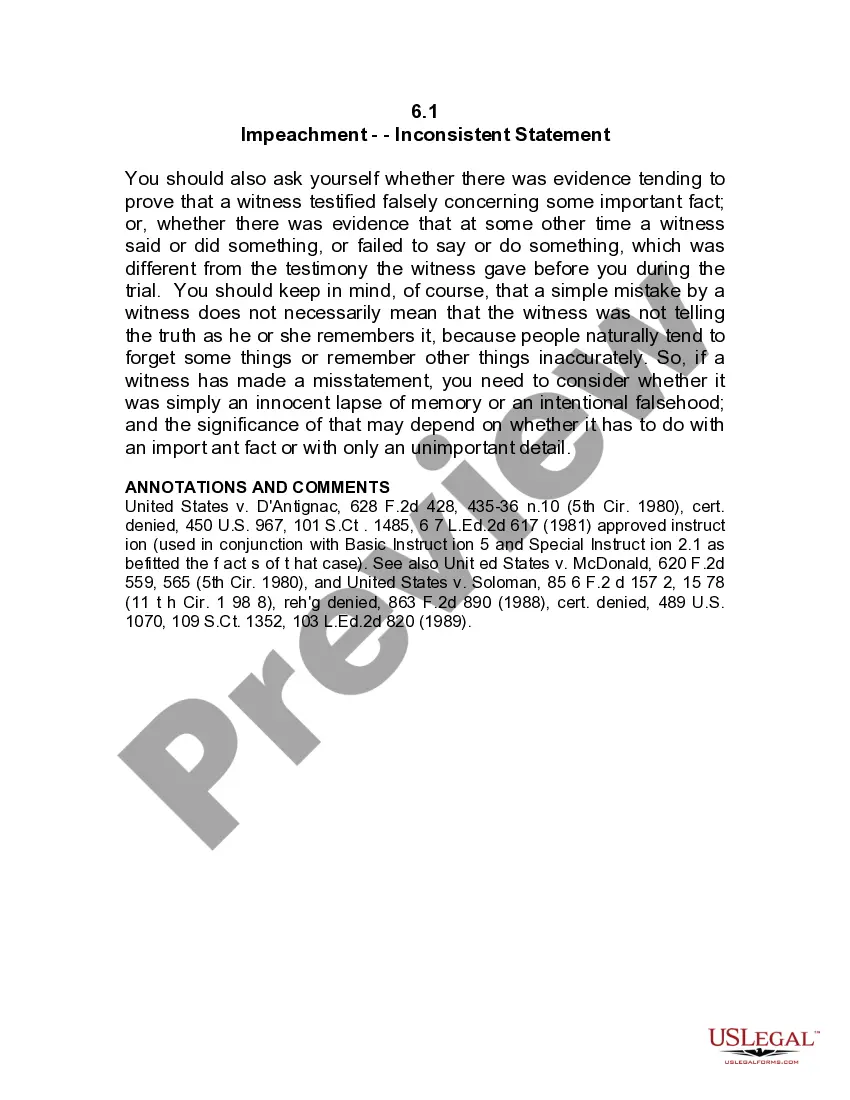
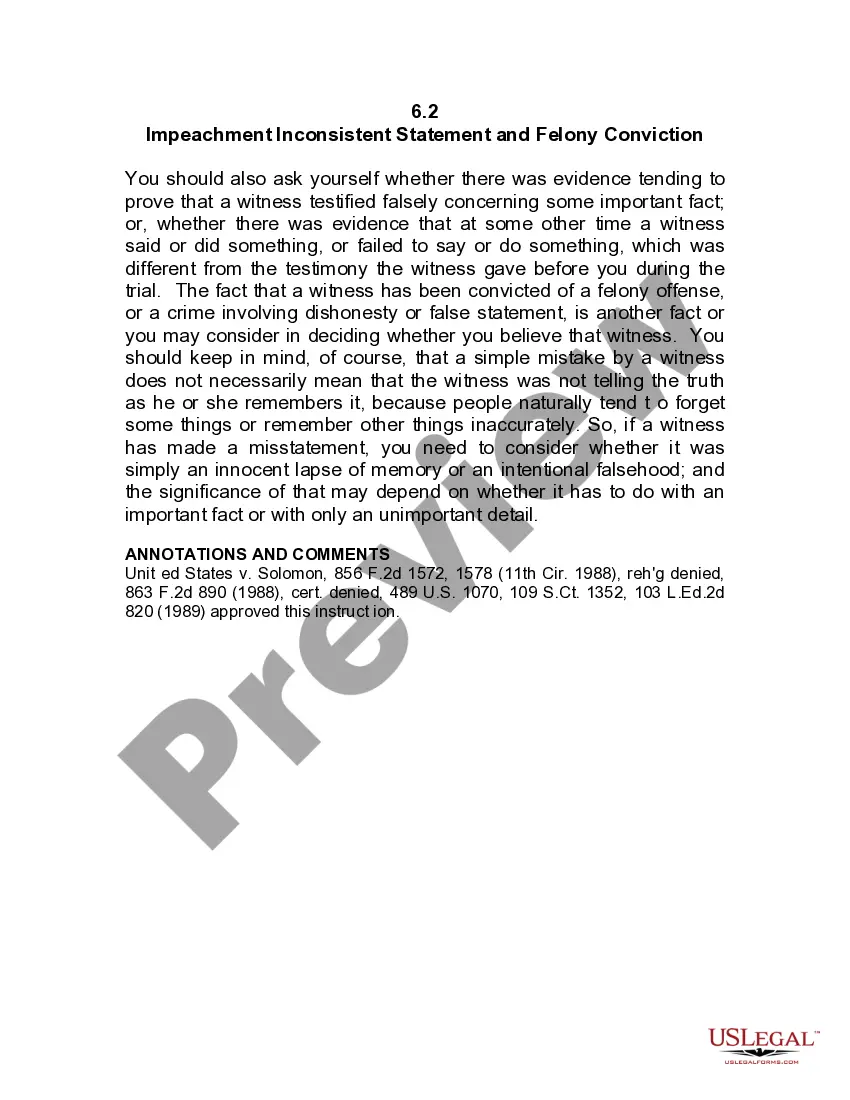
- Guidance on assessing a witness's credibility based on inconsistent statements.
- Consideration of whether a witness has a felony conviction.
- Clarification on the importance of innocent mistakes versus intentional falsehoods.
- Instructions on how to evaluate the testimony of a defendant who takes the stand.
When to use this form
This form is useful when you need to provide the jury with instructions on how to evaluate the credibility of a defendant who has testified in their own defense. It is crucial in cases where discrepancies in witness testimonies arise, particularly regarding past convictions or inconsistencies that may influence the jury's perception of truthfulness.
Who should use this form
- Judges presiding over a trial where the defendant chooses to testify.
- Attorneys looking to present jury instructions to the court.
- Legal professionals involved in jury selection and trial preparation.
Steps to complete this form
- Review the basic principles of witness credibility as outlined in the instructions.
- Adapt the sample questions to fit the particulars of the case at hand.
- Ensure jury instructions are clearly articulated and easy to understand.
- Present the final instructions to the court for approval prior to the trial.
Notarization requirements for this form
This form does not typically require notarization unless specified by local law. It serves primarily as a jury instruction guideline meant for use in court proceedings.
Get your form ready online
Our built-in tools help you complete, sign, share, and store your documents in one place.
Make edits, fill in missing information, and update formatting in US Legal Forms—just like you would in MS Word.
Download a copy, print it, send it by email, or mail it via USPS—whatever works best for your next step.
Sign and collect signatures with our SignNow integration. Send to multiple recipients, set reminders, and more. Go Premium to unlock E-Sign.
If this form requires notarization, complete it online through a secure video call—no need to meet a notary in person or wait for an appointment.
We protect your documents and personal data by following strict security and privacy standards.

Make edits, fill in missing information, and update formatting in US Legal Forms—just like you would in MS Word.

Download a copy, print it, send it by email, or mail it via USPS—whatever works best for your next step.

Sign and collect signatures with our SignNow integration. Send to multiple recipients, set reminders, and more. Go Premium to unlock E-Sign.

If this form requires notarization, complete it online through a secure video call—no need to meet a notary in person or wait for an appointment.

We protect your documents and personal data by following strict security and privacy standards.
Mistakes to watch out for
- Failing to customize the sample questions to fit the specific case.
- Overlooking the significance of minor inconsistencies in witness testimony.
- Not clearly distinguishing between innocent mistakes and intentional dishonesty.
Advantages of online completion
- Convenience of accessing up-to-date legal templates from anywhere.
- Editability allows for tailored jury instructions that fit the specifics of the case.
- Reliability of templates drafted by licensed attorneys ensures legal soundness.
Legal use & context
- Used in court to guide jurors in evaluating the credibility of witnesses.
- Helps ensure that jurors understand the weight of inconsistencies in testimony.
- Avoids potential errors in jury deliberation processes based on unclear instructions.
Quick recap
- This form aids jurors in assessing witness credibility under specific circumstances.
- It is crucial in criminal cases where inconsistencies in testimony may arise.
- Proper use of this form can lead to more fair and informed jury deliberations.
Looking for another form?
Form popularity
FAQ
Under common law, a witness may be impeached by proof the witness has contradicted him- or herself through evidence of prior acts or statements that are inconsistent with testimony given on direct examination.
Rule 609 provides that, with certain restrictions, a witness may be impeached witrh evidence of two kids of criminal convictions: (1) felonies, regardless of their nature; and (2) misdemeanors involving crimes of dishonesty and false statement, such as check deception and perjury.
First, the most basic step, is to have the witness repeat the testimony from today's hearing that you want to impeach. You cannot effectively impeach unless the witness repeats a fact they said during the current hearing that clearly contradicts a prior statement.
In the US, a party has the option of discrediting a witness through impeachment by cross-examining the witness about facts that reflect poorly on the witness's credibility or, in some cases, by introducing extrinsic evidence that reflects negatively on the witness's truthfulness or knowledge.
Repeat. First, the most basic step, is to have the witness repeat the testimony from today's hearing that you want to impeach. Build Up. Impeach.
Generally, prosecutors can't use evidence of prior convictions to prove a defendant's guilt or tendency to commit crimes, but they can sometimes use them to question the truthfulness or credibility of the defendant's testimony.
The five basic methods are: use of contradiction, proof of bad character, proof of inconsistency, proof of bias, or proof of diminished capacity.
In the US, a party has the option of discrediting a witness through impeachment by cross-examining the witness about facts that reflect poorly on the witness's credibility or, in some cases, by introducing extrinsic evidence that reflects negatively on the witness's truthfulness or knowledge.