Presenting False Declaration or Certification
Understanding this form
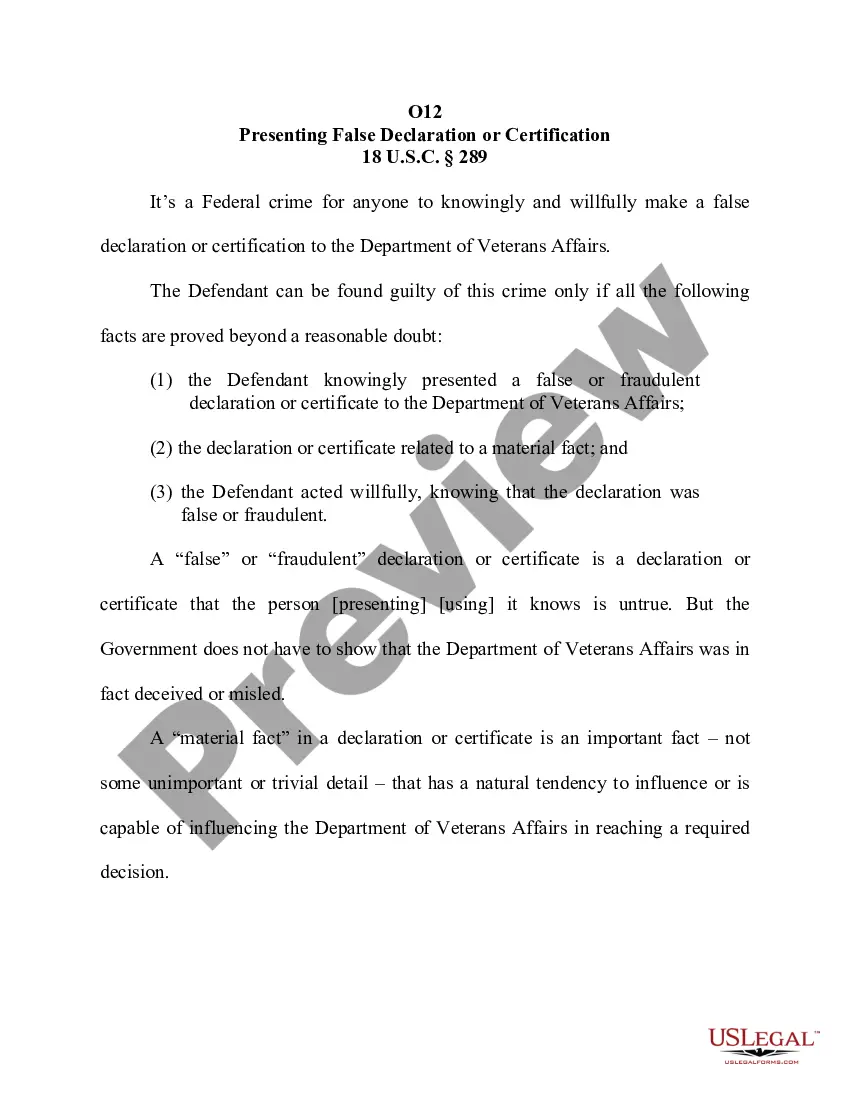
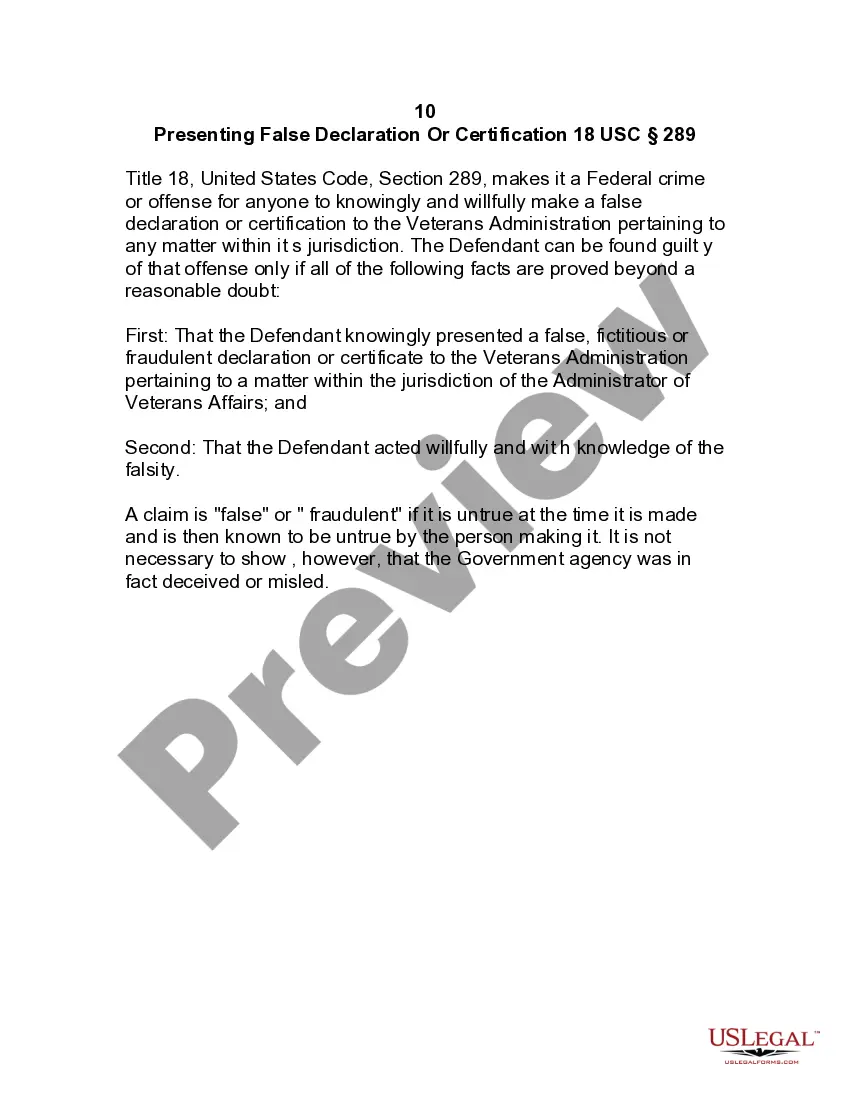
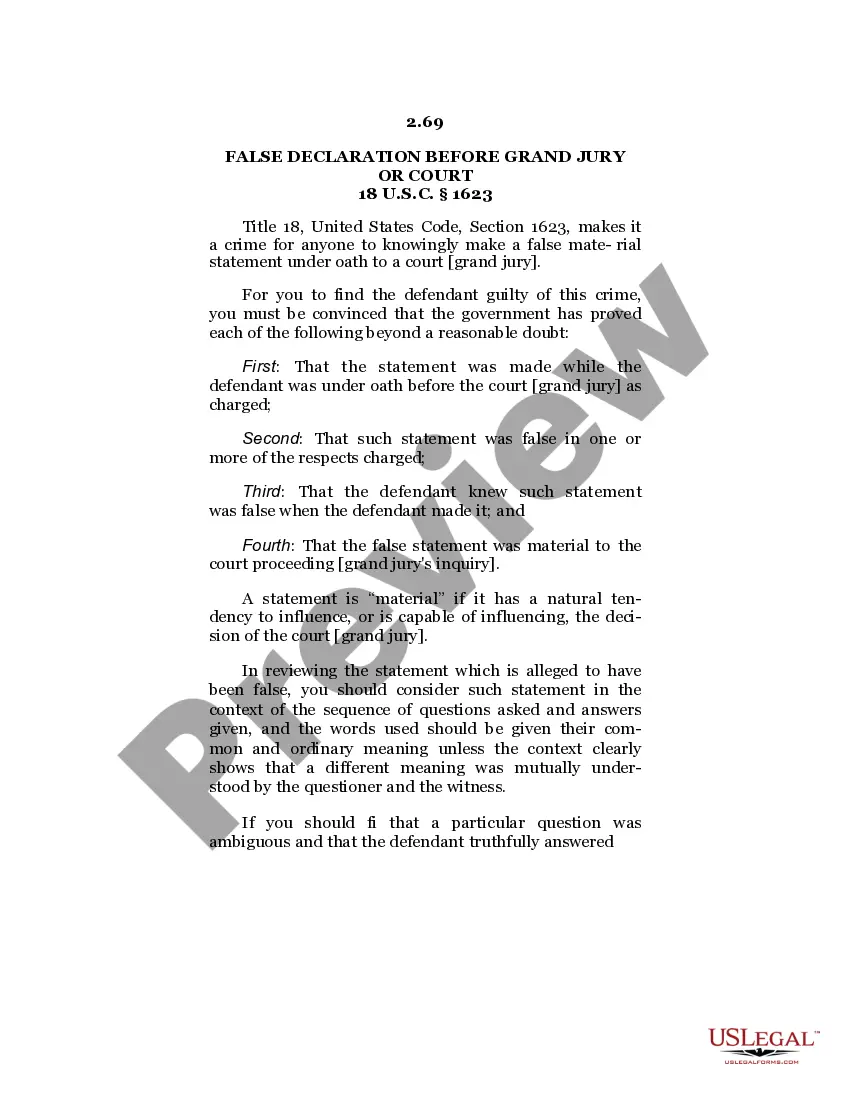
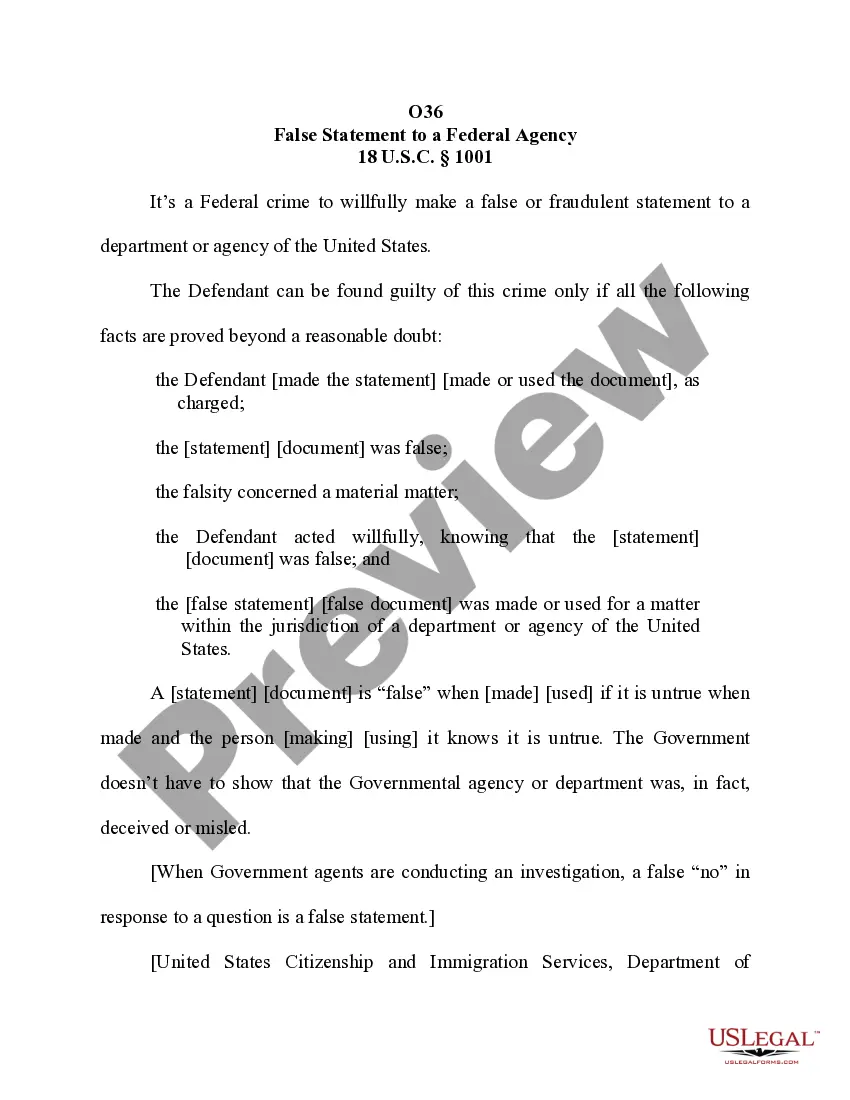
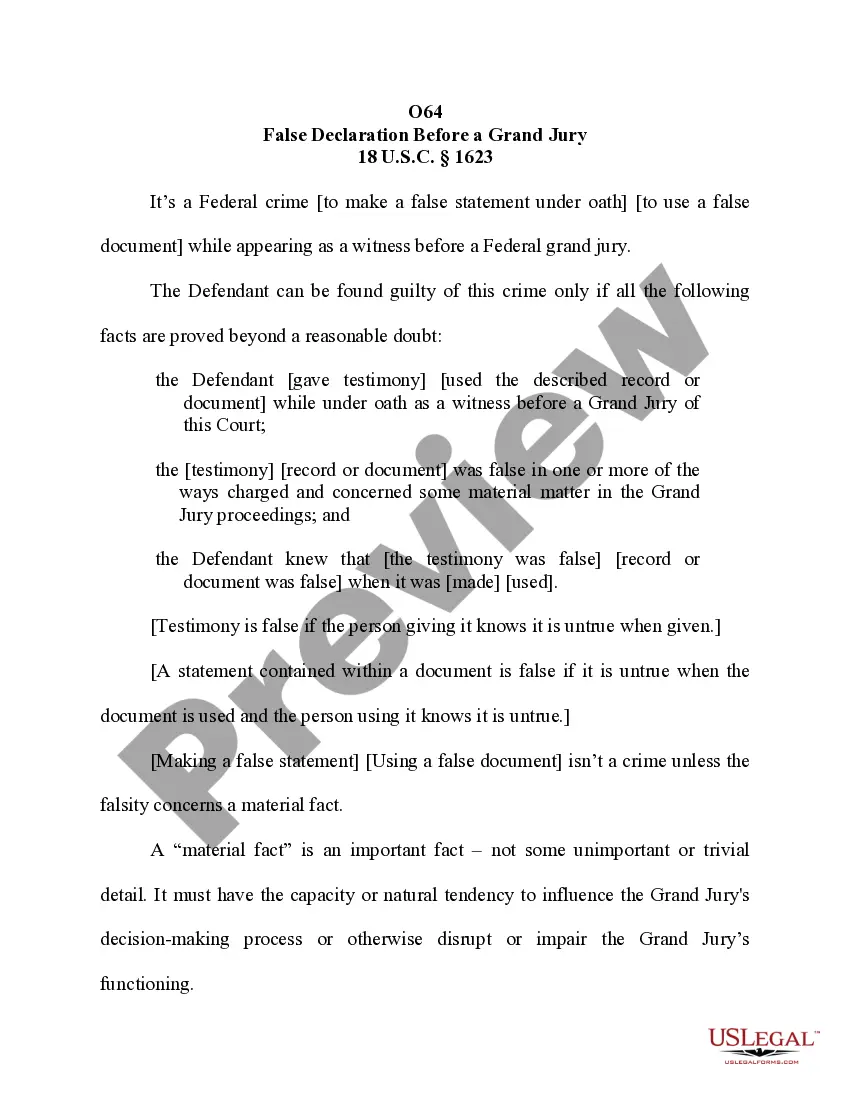
The Presenting False Declaration or Certification form is a legal document that outlines the federal crime of knowingly and willfully making a false declaration or certification to the Department of Veterans Affairs. This form is important as it clarifies the elements that must be proven for a guilty verdict, distinguishing it from other legal documents that may address fraud or misrepresentation in general contexts.
What’s included in this form
- The elements that constitute the crime, including the requirement that the declaration or certification must be false or fraudulent.
- Definition of a "material fact," emphasizing its significance in influencing decisions by the Department of Veterans Affairs.
- The necessity for the prosecution to prove that the defendant acted willfully and knowingly with respect to the false declaration.
Common use cases
This form is utilized in cases where an individual is accused of submitting false information to the Department of Veterans Affairs. It clarifies the legal standards that must be met for such actions to be deemed criminal. If you are facing charges related to providing misleading certifications or declarations, this form is essential for understanding your legal position and the criteria that need to be established for a conviction.
Who this form is for
- Individuals charged with making false declarations to the Department of Veterans Affairs.
- Legal practitioners representing clients in cases related to false certifications.
- People needing to understand the implications of fraud in dealings with government agencies.
How to complete this form
- Identify the defendant and the relevant details surrounding the false declaration or certification.
- Review the declaration to ensure all material facts are accurately reflected.
- Ensure that your understanding of the definition of "material fact" aligns with the legal requirements.
- Confirm that the actions taken were willful and knowing regarding the misinformation.
- Complete any additional necessary fields relating to the specific case or circumstances involved.
Notarization requirements for this form
This form does not typically require notarization unless specified by local law. It is advisable to check specific jurisdictional requirements or consult with legal counsel if unsure.
Get your form ready online
Our built-in tools help you complete, sign, share, and store your documents in one place.
Make edits, fill in missing information, and update formatting in US Legal Forms—just like you would in MS Word.
Download a copy, print it, send it by email, or mail it via USPS—whatever works best for your next step.
Sign and collect signatures with our SignNow integration. Send to multiple recipients, set reminders, and more. Go Premium to unlock E-Sign.
If this form requires notarization, complete it online through a secure video call—no need to meet a notary in person or wait for an appointment.
We protect your documents and personal data by following strict security and privacy standards.

Make edits, fill in missing information, and update formatting in US Legal Forms—just like you would in MS Word.

Download a copy, print it, send it by email, or mail it via USPS—whatever works best for your next step.

Sign and collect signatures with our SignNow integration. Send to multiple recipients, set reminders, and more. Go Premium to unlock E-Sign.

If this form requires notarization, complete it online through a secure video call—no need to meet a notary in person or wait for an appointment.

We protect your documents and personal data by following strict security and privacy standards.
Mistakes to watch out for
- Failing to accurately understand what constitutes a "material fact."
- Neglecting to prove the willful nature of the declaration made.
- Not fully disclosing all relevant details that may have influenced the Department of Veterans Affairs.
Benefits of completing this form online
- Accessibility: Download the form easily from any location.
- Editability: Make necessary changes or annotations before final submission.
- Reliability: Ensure compliance with current legal standards drafted by licensed attorneys.
Legal use & context
- This form is critical for maintaining the integrity of federal programs.
- Under federal law, making false claims can lead to severe penalties.
- The form serves as an essential tool for prosecutors in fraud cases.
What to keep in mind
- The form outlines the legal definition of a false declaration to the Department of Veterans Affairs.
- Understanding the criteria for prosecution is essential for anyone facing such charges.
- Consulting with a legal professional is advisable to navigate the complexities associated with such cases.
Looking for another form?

Form popularity
FAQ
False declaration, false documents, etc.?Whoever makes, signs or uses, or causeshaving reason to believe that such declaration, statement or document is false in any material particular, shall be punishable with. Central Government Act.
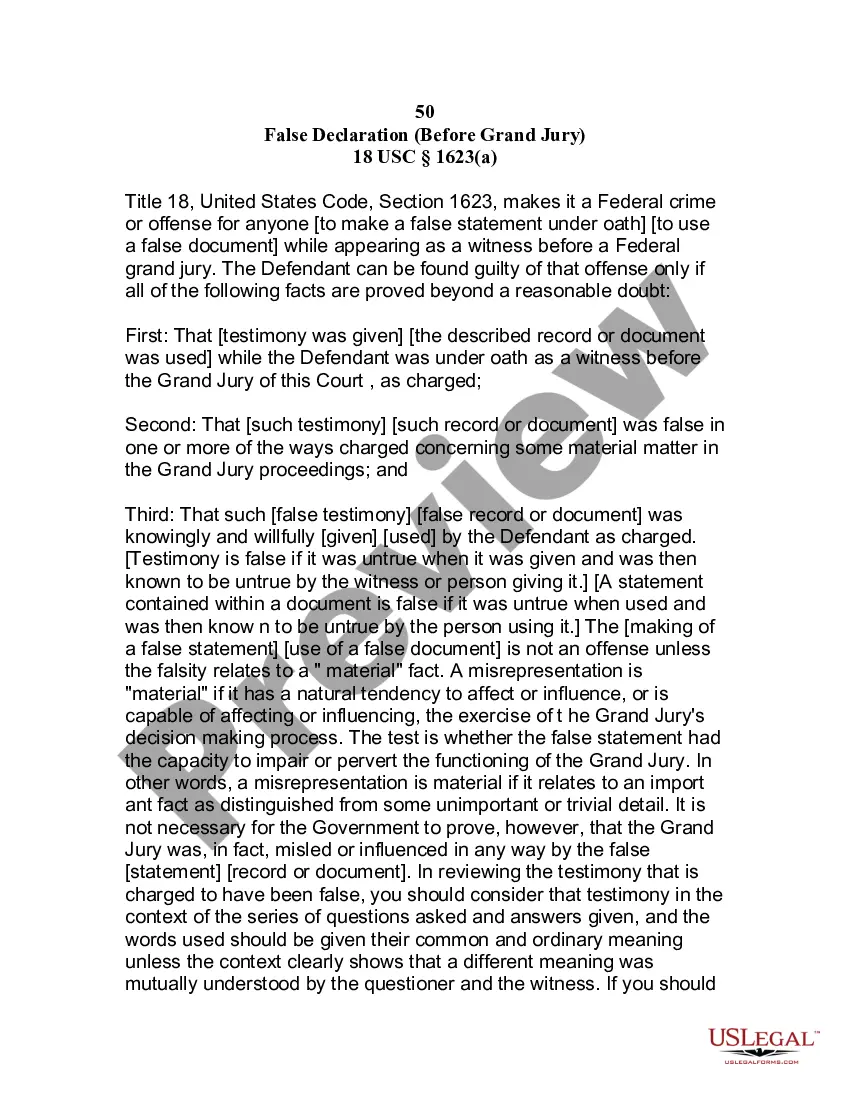
"To prove a false statement in violation of 18 U.S.C. § 1001, the government must show that the defendant: (1) knowingly and willfully, (2) made a statement, (3) in relation to a matter within the jurisdiction of a department or agency of the United States, (4) with knowledge of its falsity." United States v.
In short, a false statement is perjury when it is made under oath or made under penalty of perjury. Two separate statutes define the crime of perjury under federal law. Both statutes, 18 U.S.C. §1621 and 18 U.S.C. §1623, criminalize essentially the same conduct.
Examples of false declaration They often increased the recommended rate of fertilizers after submitting a false declaration on the area they were planning to sow with cotton. A person summoned for jury service must declare that he or she is qualified to serve; it is an offence to make a false declaration.
: a statement that is known or believed by its maker to be incorrect or untrue and is made especially with intent to deceive or mislead. submitted a false statement to obtain the loan.
DIFFERENCES BETWEEN PERJURY & MAKING FALSE STATEMENTS And for perjury, the statement must be literally false and made with intent to deceive or mislead. In contrast, making false statements applies when people lie to the government regardless of whether it's under oath or not.
False declaration means the act of declaring assets, income and liabilities with an intention to conceal their disproportionate assets by providing incomplete or incorrect information.
Legal Falsity Express False Certification. The express false certification theory applies when a defendant falsely certifies that it complied with a statute, regulation or other legal requirement, where compliance with that requirement is a prerequisite to payment.