New Mexico Application for Judgment by Default to Quiet Title
Understanding this form
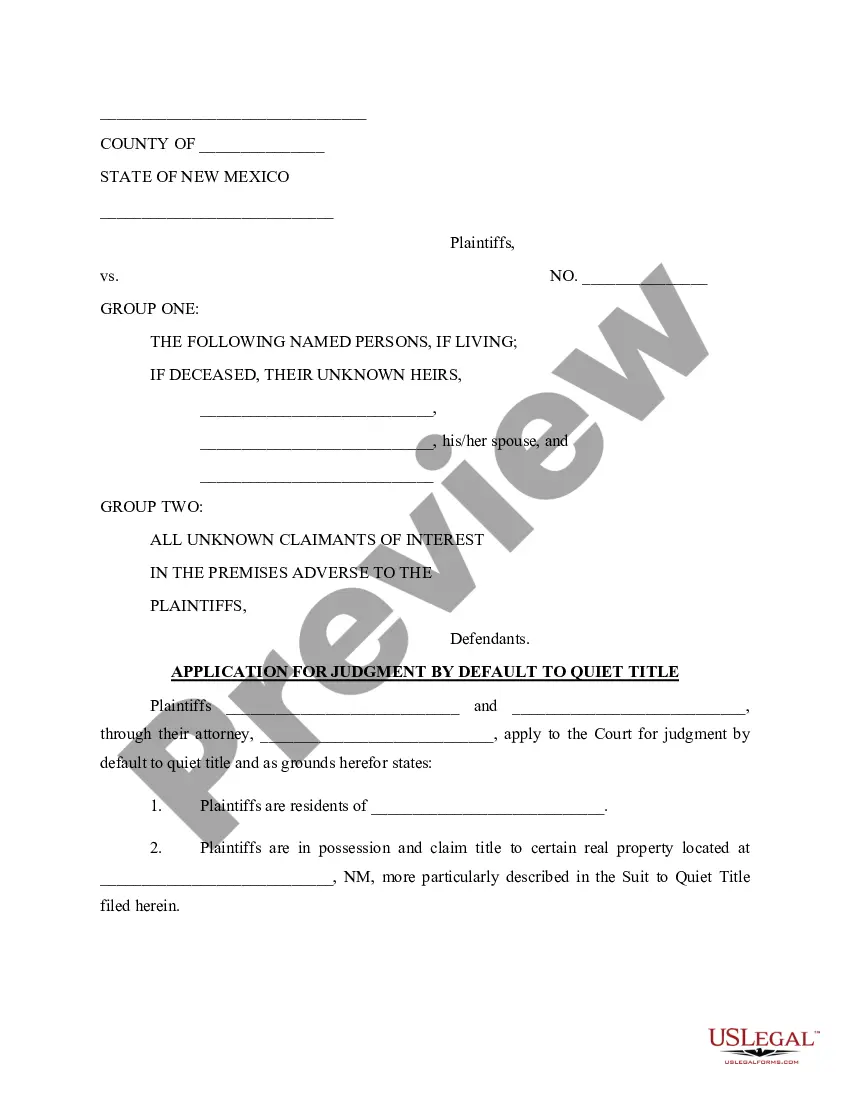
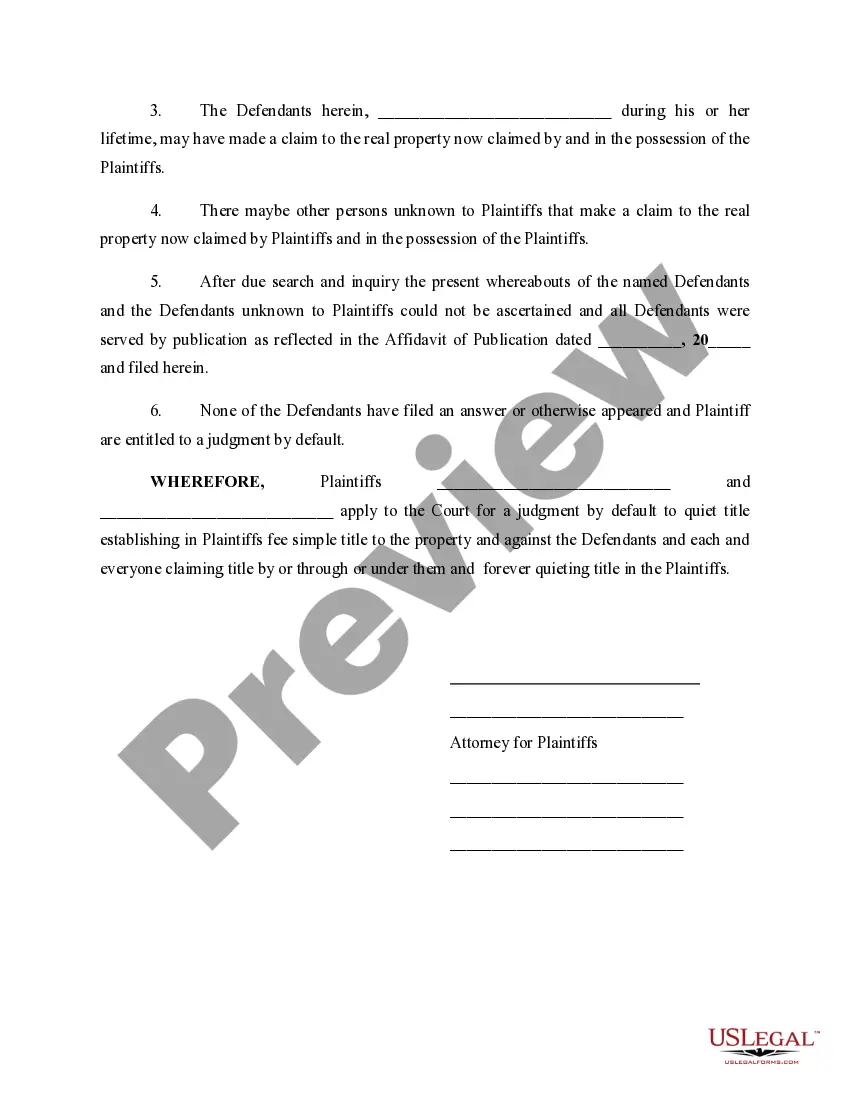
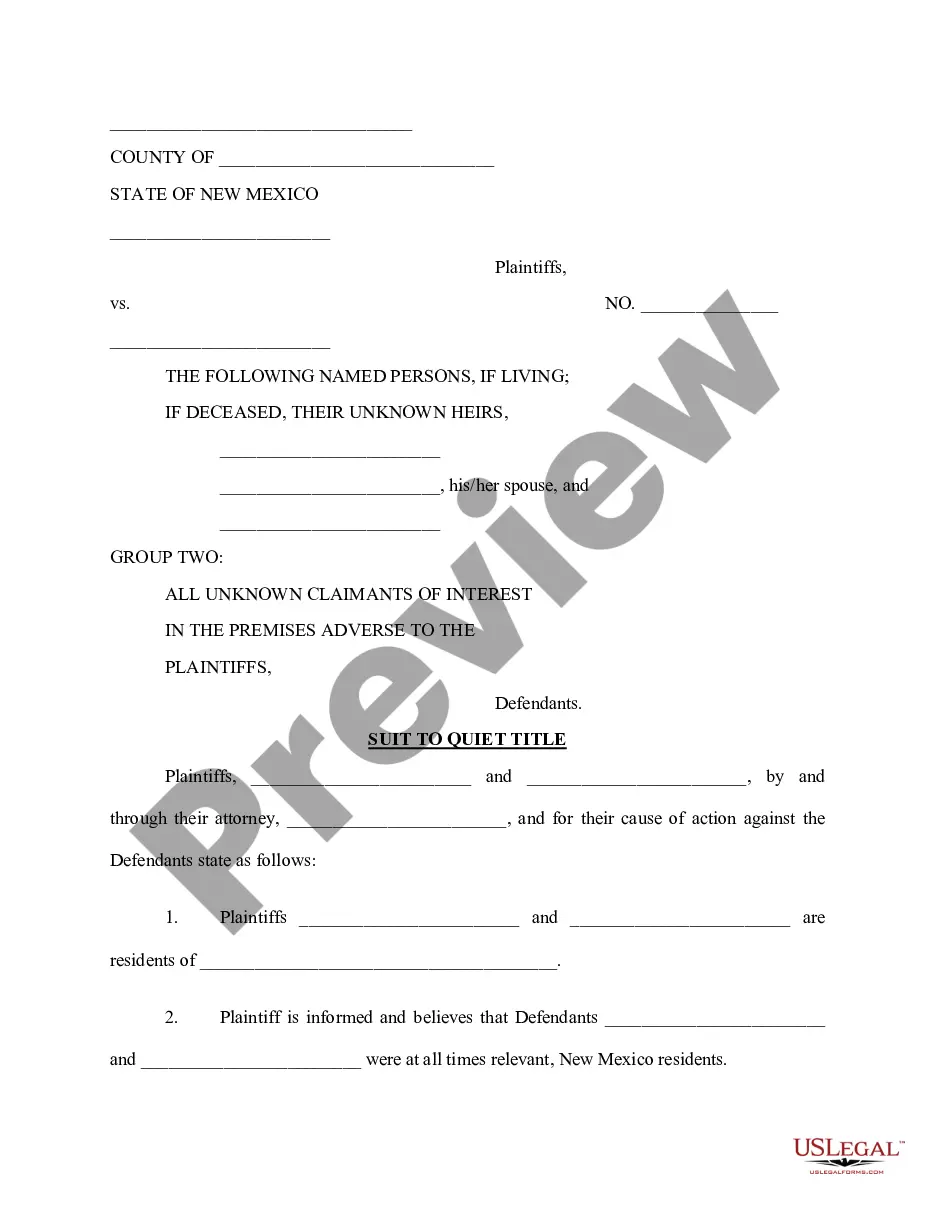
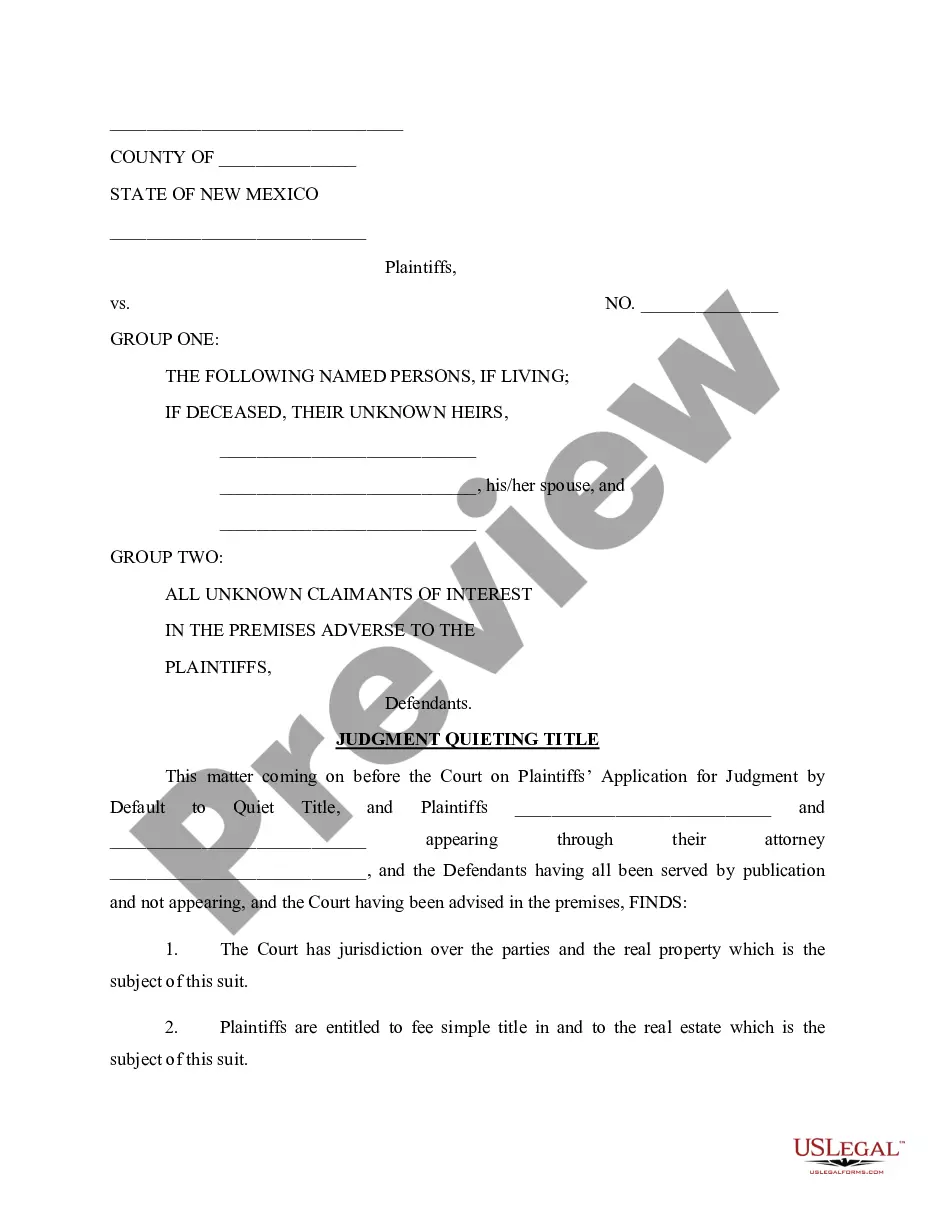
The Application for Judgment by Default to Quiet Title is a legal document used to request a court judgment that affirms the ownership of a property when all defendants have failed to respond to the lawsuit. This form is essential for those who cannot locate other potential claimants and seek to establish clear ownership without opposition, distinguishing it from other forms like a standard quiet title action that may involve more parties or claims.
Main sections of this form
- Identification of the plaintiffs and defendants involved in the action.
- Statement of the plaintiffs' possession and claim to the real property.
- Details regarding the defendants' lack of response or whereabouts.
- Affidavit of Publication indicating service of notice to the defendants.
- Request for a judgment by default to quiet title.
When this form is needed
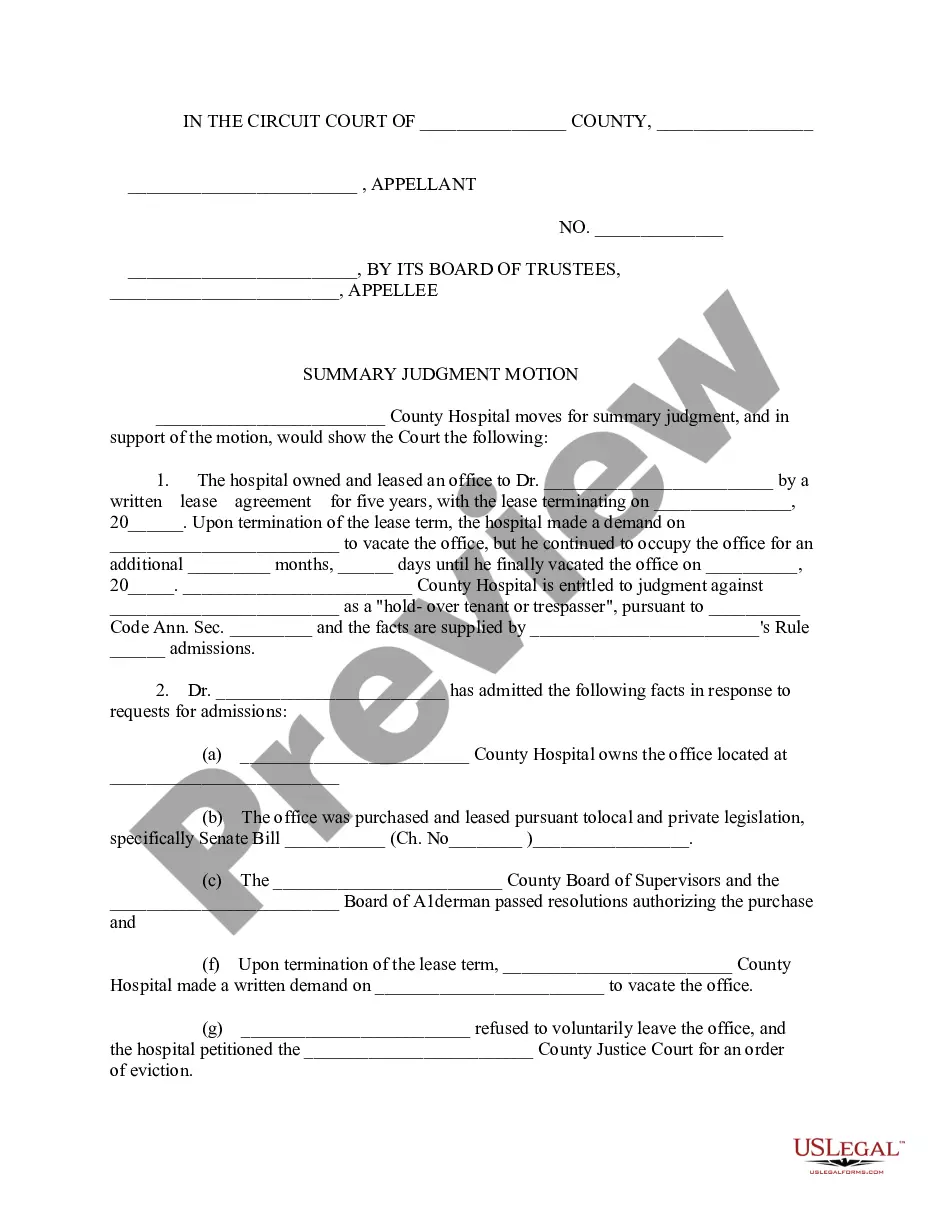
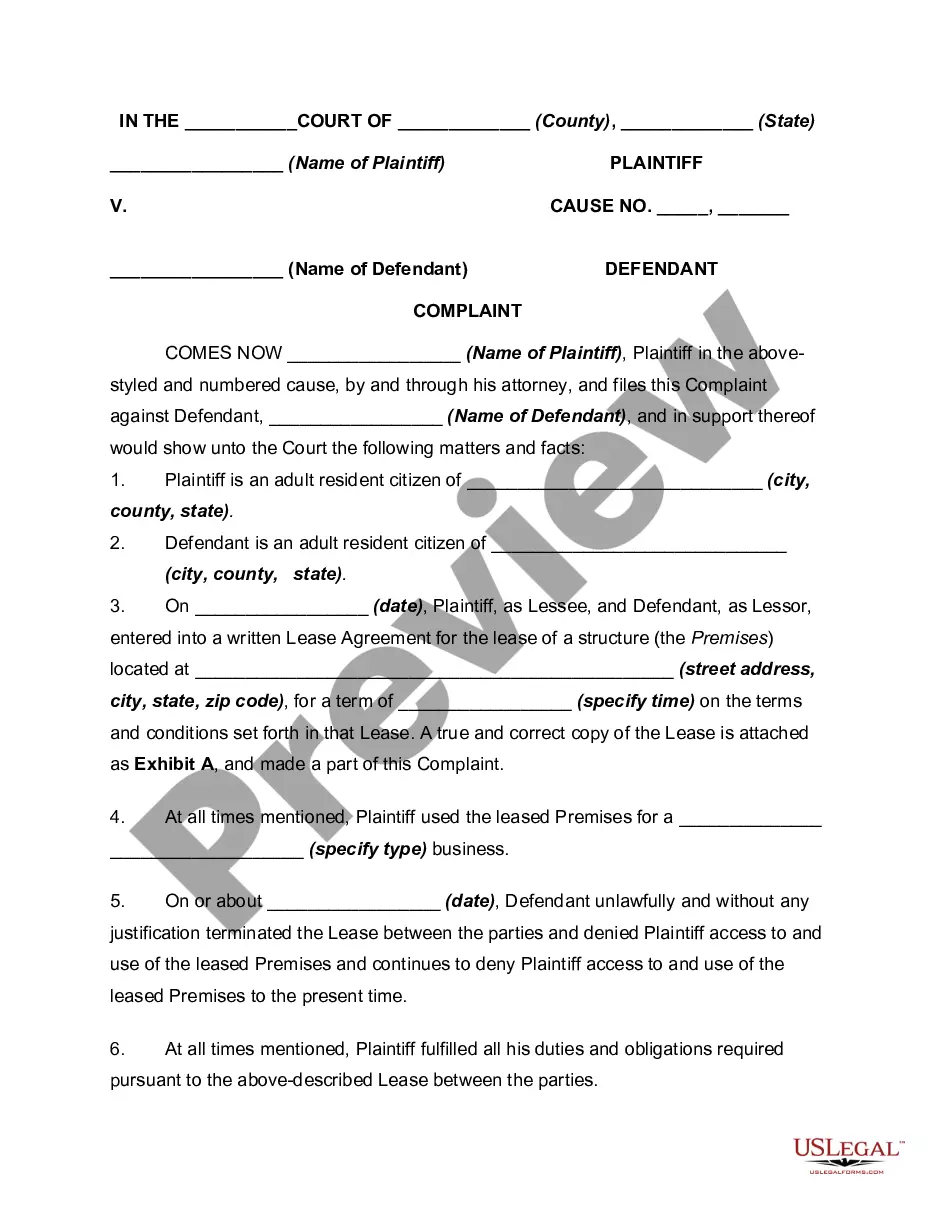
This form is needed in situations where a property owner is unable to locate certain parties that may claim an interest in their property, especially after making reasonable efforts to find these parties. It is typically used when the involved parties have been notified of the lawsuit by publication, and none have responded, allowing the plaintiffs to seek a default judgment to reinforce their title to the property.
Who needs this form
- Property owners looking to resolve disputes over property ownership.
- Individuals who have not received responses from potential claimants after taking reasonable steps to locate them.
- Homeowners wanting to confirm their right to use and control their property without concerns of rival claims.
How to prepare this document
- Identify and list the plaintiffs and their contact information.
- Specify the details of the real property in question, including address and legal description.
- Mention the defendants, including any known relationships to prior claimants.
- Provide details about efforts made to notify the defendants, including dates and methods of notification.
- Sign and date the application, ensuring the attorney's certification if applicable.
Notarization guidance
This form does not typically require notarization unless specified by local law. It is important to check any additional requirements that may apply in your jurisdiction.
Get your form ready online
Our built-in tools help you complete, sign, share, and store your documents in one place.
Make edits, fill in missing information, and update formatting in US Legal Forms—just like you would in MS Word.
Download a copy, print it, send it by email, or mail it via USPS—whatever works best for your next step.
Sign and collect signatures with our SignNow integration. Send to multiple recipients, set reminders, and more. Go Premium to unlock E-Sign.
If this form requires notarization, complete it online through a secure video call—no need to meet a notary in person or wait for an appointment.
We protect your documents and personal data by following strict security and privacy standards.

Make edits, fill in missing information, and update formatting in US Legal Forms—just like you would in MS Word.

Download a copy, print it, send it by email, or mail it via USPS—whatever works best for your next step.

Sign and collect signatures with our SignNow integration. Send to multiple recipients, set reminders, and more. Go Premium to unlock E-Sign.

If this form requires notarization, complete it online through a secure video call—no need to meet a notary in person or wait for an appointment.

We protect your documents and personal data by following strict security and privacy standards.
Common mistakes to avoid
- Failing to include all known parties in the application.
- Neglecting to provide accurate property descriptions.
- Not documenting efforts to locate defendants properly.
- Omitting necessary signatures or dates.
Why use this form online
- Immediate access to a professionally drafted document simplifying the legal process.
- Convenience of downloading and editing the form according to specific needs.
- Reliable content crafted by licensed attorneys, ensuring compliance with legal standards.
Looking for another form?

Form popularity
FAQ
A lawsuit for quiet title must be brought in local Superior Court. To begin the lawsuit, the plaintiff (the lender or homeowner) files a complaint with the court followed by a Notice of Pendency of Action (a Lis Pendens) that is recorded with the county recorder and filed with the court.
When two or more persons have adverse claims to the same property, any of them may file a quiet title action. The purpose of the quiet title action is to eliminate an adverse claim to a legal interest in the property and to establish, perfect, or quiet the title in the property in one or more of the claimants.
' This is actually a legal action to 'quiet the title' under Texas law. Quiet Title refers to a lawsuit to clarify the ownership of land and the validity of any liens on a piece of property.If ownership is in dispute, it must be resolved. A court order can quiet the title and determine who has title to the property.
What Is a Quiet Title Action? A quiet title action, also known as an action of quiet title, is a circuit court actionor lawsuitthat is filed with the intended purpose to establish or settle the title to a property.
A quiet title action usually takes 8-10 weeks to complete. The process may take longer or may be shorter depending on certain factors surrounding the dispute such as the Court rulings on certain matters.
A failure to record an instrument may render title un-marketable if a subsequent bona fide purchaser or creditor takes an interest in the property without notice of the instrument, by virtue of New Mexico's recording statutes which creates a race-notice regime.
A quiet title action usually takes 8-10 weeks to complete. The process may take longer or may be shorter depending on certain factors surrounding the dispute such as the Court rulings on certain matters.
The costs involved in filing a quiet title action in Florida include such things as the Court required case filing fee which ranges between $300 and $450, depending on the county in which the case is filed. There are also title search charges of approximately $125 and Publication charges of approximately $150.