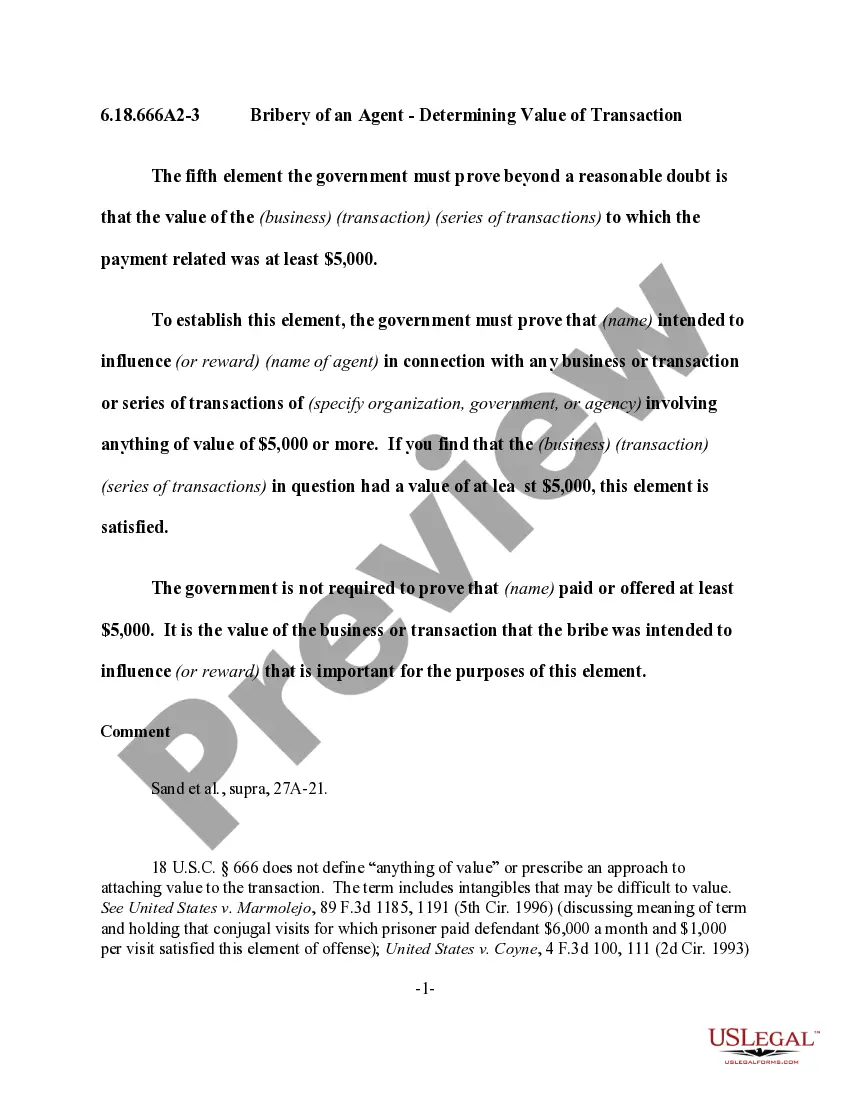
Bribery of an Agent - Determining Value of Transaction - revised 11/2013
What this document covers
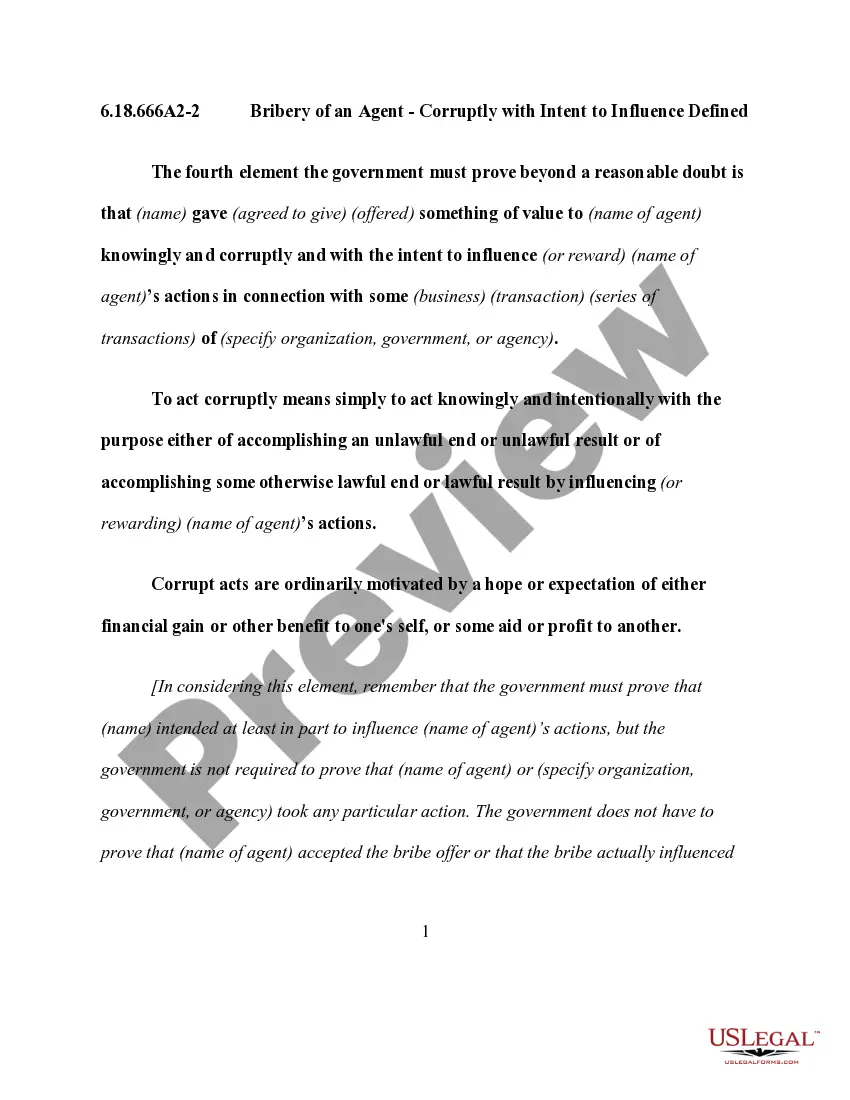
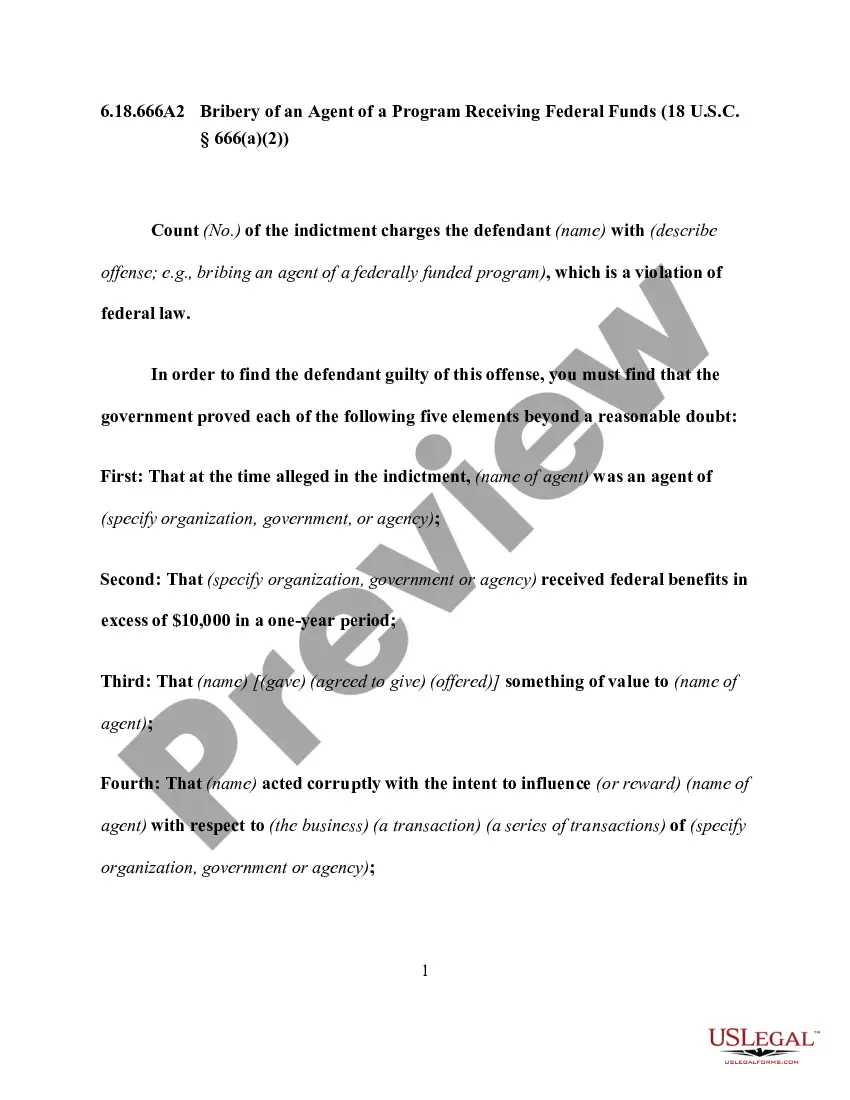
The Bribery of an Agent - Determining Value of Transaction form is a legal document used to establish the value of a business transaction that is related to a bribery offense. This form is essential when the payment made is intended to influence or reward an agent in a company or government context. It differs from other bribery-related forms by focusing specifically on determining the monetary value of the transaction that the bribe sought to influence, which must be at least $5,000.
What’s included in this form
- Identification of the parties involved in the bribery case.
- Specification of the business, transaction, or series of transactions related to the payment.
- Explanation of the need to demonstrate the value of the transaction as at least $5,000.
- Clarification that the actual amount paid does not need to equal $5,000.
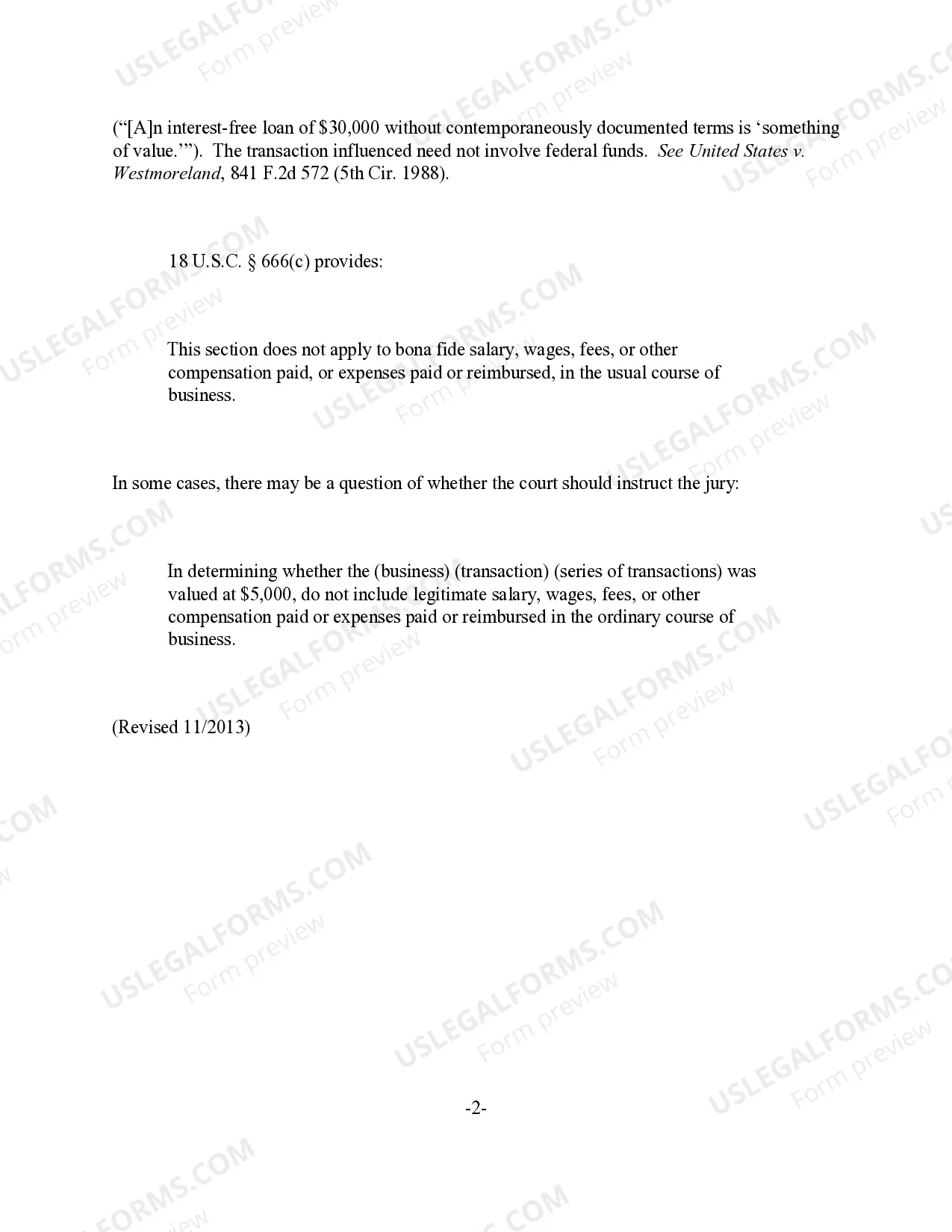
- Exclusions for legitimate salary, wages, or expenses paid in the ordinary course of business.
Common use cases
This form is necessary in situations involving legal cases where bribery is suspected, particularly when there is a need to establish the value of business transactions linked to the alleged bribery. It is commonly used in criminal proceedings where the prosecution must prove the substantiality of the transaction affected by the bribery efforts.
Who should use this form
- Legal professionals or attorneys working on bribery cases.
- Prosecutors who need to establish the value of transactions in bribery cases.
- Defendants accused of bribery with transactions over $5,000 they wish to contest.
- Individuals involved in cases that require the evaluation of business transactions.
How to complete this form
- Identify and state the names of the parties involved in the bribery case.
- Specify the business entity or agency related to the transaction.
- Detail the transaction or series of transactions influenced by the alleged bribery.
- Clearly establish the value of the transaction as meeting the $5,000 threshold.
- Ensure to indicate that legitimate payments and compensation are not included in this valuation.
Notarization requirements for this form
This form does not typically require notarization unless specified by local law. It's important to review any jurisdictional requirements that may apply to specific cases or scenarios where this form is used.
Get your form ready online
Our built-in tools help you complete, sign, share, and store your documents in one place.
Make edits, fill in missing information, and update formatting in US Legal Forms—just like you would in MS Word.
Download a copy, print it, send it by email, or mail it via USPS—whatever works best for your next step.
Sign and collect signatures with our SignNow integration. Send to multiple recipients, set reminders, and more. Go Premium to unlock E-Sign.
If this form requires notarization, complete it online through a secure video call—no need to meet a notary in person or wait for an appointment.
We protect your documents and personal data by following strict security and privacy standards.

Make edits, fill in missing information, and update formatting in US Legal Forms—just like you would in MS Word.

Download a copy, print it, send it by email, or mail it via USPS—whatever works best for your next step.

Sign and collect signatures with our SignNow integration. Send to multiple recipients, set reminders, and more. Go Premium to unlock E-Sign.

If this form requires notarization, complete it online through a secure video call—no need to meet a notary in person or wait for an appointment.

We protect your documents and personal data by following strict security and privacy standards.
Common mistakes to avoid
- Failing to establish that the transaction's value meets the $5,000 threshold.
- Confusing the amount of the payment made with the value of the transaction.
- Neglecting to specify the nature of the business or agency involved.
- Including legitimate payments that should not be counted toward the transaction's value.
Advantages of online completion
- Convenient access to legally compliant templates at any time.
- Easy to download, edit, and customize to suit specific needs.
- Reliable formats drafted by licensed attorneys ensure legal accuracy.
- Streamlined completion process helps avoid common mistakes.
Legal use & context
- This form helps establish the necessary evidentiary foundation in bribery cases.
- It is crucial for aligning the prosecution's requirements with the legal definitions used in bribery statutes.
- Understanding transaction valuation can impact the outcome of bribery allegations significantly.
Summary of main points
- The form establishes the minimum transaction value necessary to prove bribery.
- It emphasizes the importance of transaction value over the amount paid as a bribe.
- Understanding local laws can enhance the proper use of this form.
- Accurate completion is critical to support legal claims or defenses in bribery cases.
Looking for another form?
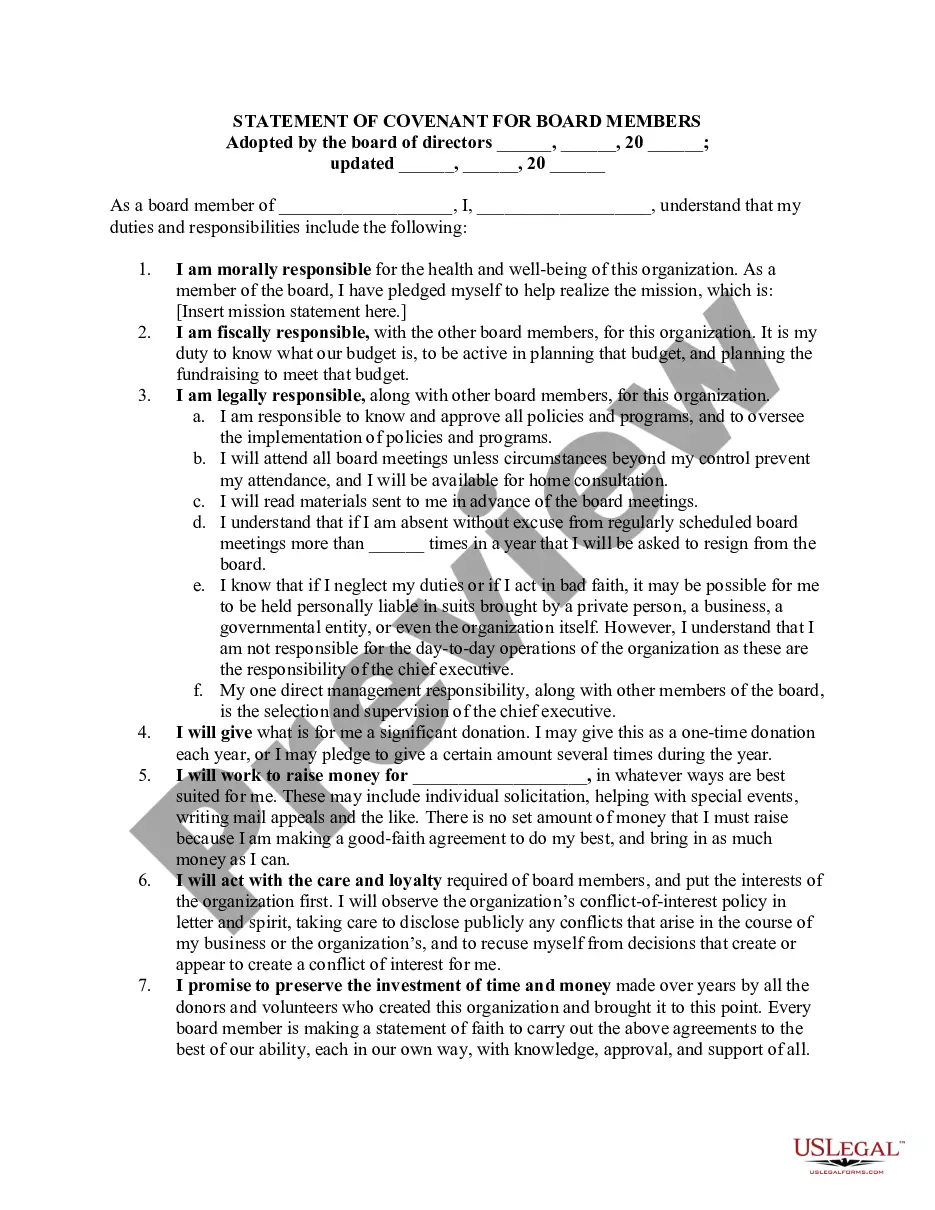
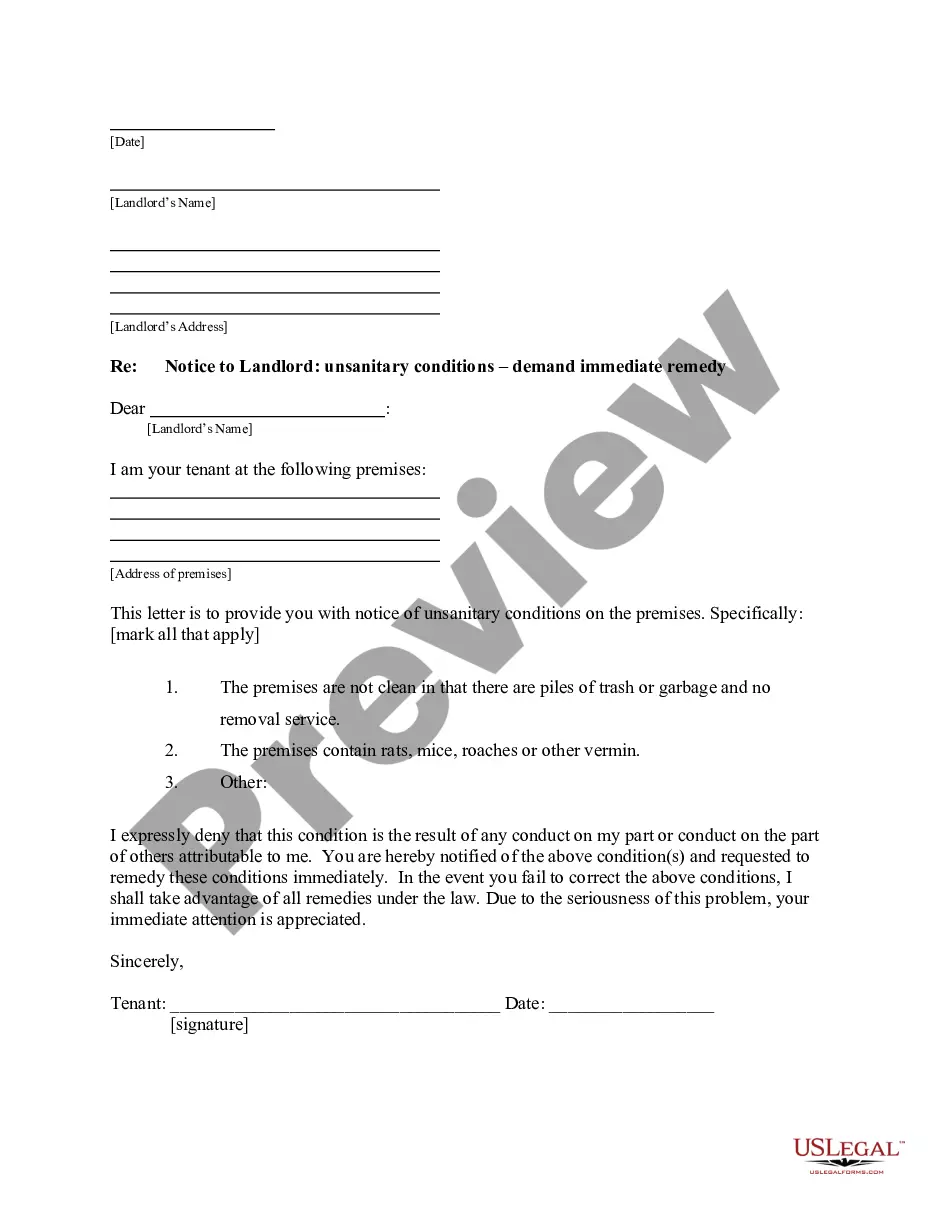
Form popularity
FAQ
Title 29 U.S.C. § 666(e) provides criminal penalties for any employer who willfully violates a safety standard prescribed pursuant to the Occupational Safety and Health Act, where that violation causes the death of any employee. Four elements must be proved in order to establish a criminal violation of 29 U.S.C.
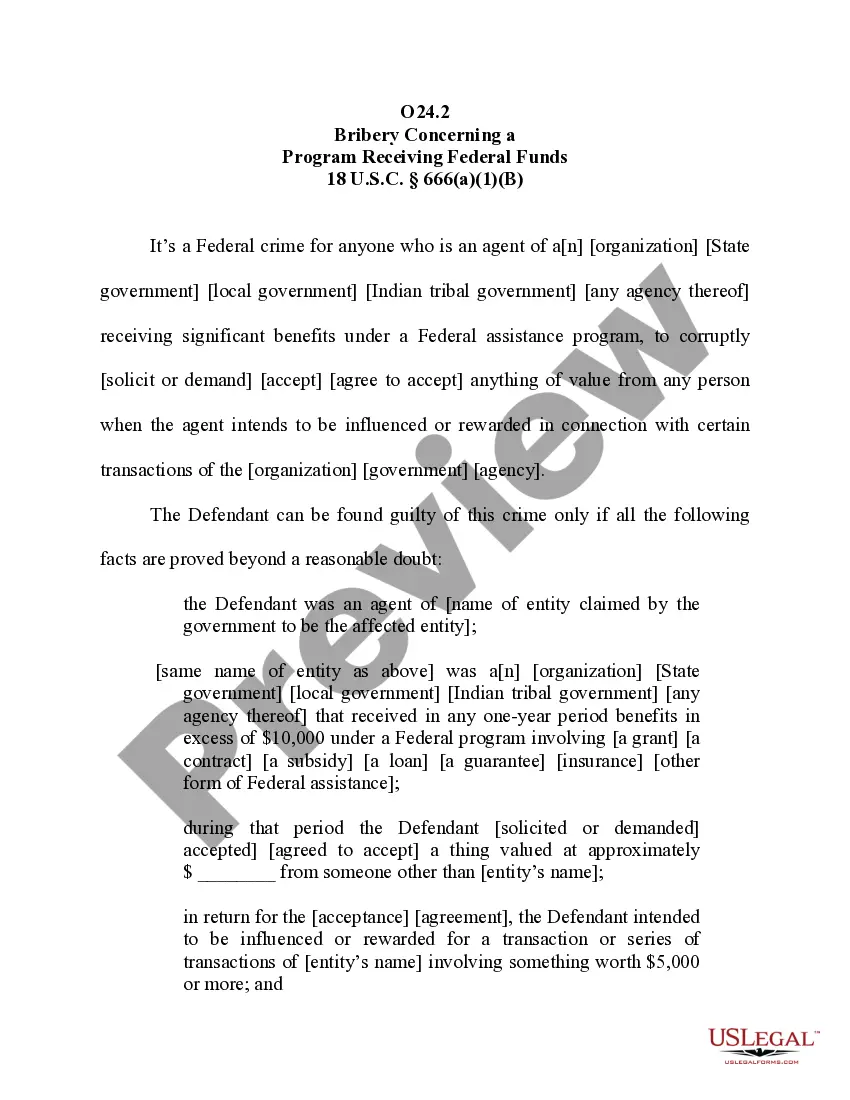
Section 666(b) requires that the organization, government or agency must have received, in any one year period, "benefits in excess of $10,000 under a Federal program involving a grant, contract, subsidy, loan, guarantee, insurance, or other form of Federal assistance." This provision does not distinguish between cash
Elements: Proof of bribery requires demonstrating a ?quid pro quo? relationship in which the recipient directly alters behavior in exchange for the gift. Because the relationship does not occur directly enough, campaign donations from corporations or individuals to political candidates do not constitute bribery.
Whoever knowingly makes any false statement, representation, or certification in any application, record, report, plan, or other document filed or required to be maintained pursuant to this chapter shall, upon conviction, be punished by a fine of not more than $10,000, or by imprisonment for not more than six months,
The district court observed, and the government agrees, that the following elements comprise a violation of § 666(a)(1)(B): 1) corrupt solicitation; 2) of anything of value; 3) with the intention of being influenced in connection with any transaction of a local government or organization receiving at least $10,000 in
18 U.S. Code § 666 - Theft or bribery concerning programs receiving Federal funds U.S. Code US Law LII / Legal Information Institute.
Section 666(b) requires that the organization, government or agency must have received, in any one year period, "benefits in excess of $10,000 under a Federal program involving a grant, contract, subsidy, loan, guarantee, insurance, or other form of Federal assistance." This provision does not distinguish between cash
The district court observed, and the government agrees, that the following elements comprise a violation of § 666(a)(1)(B): 1) corrupt solicitation; 2) of anything of value; 3) with the intention of being influenced in connection with any transaction of a local government or organization receiving at least $10,000 in