Jury Instruction - False Declaration - Before Grand Jury
Overview of this form
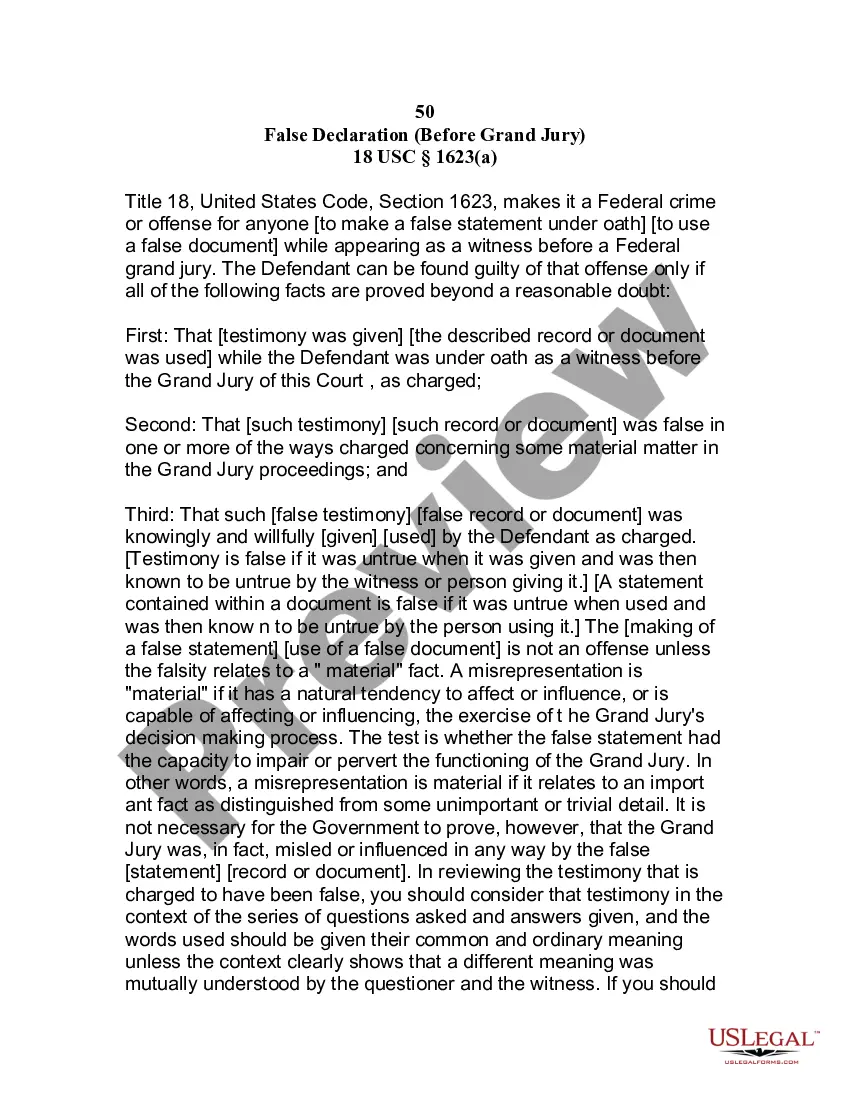
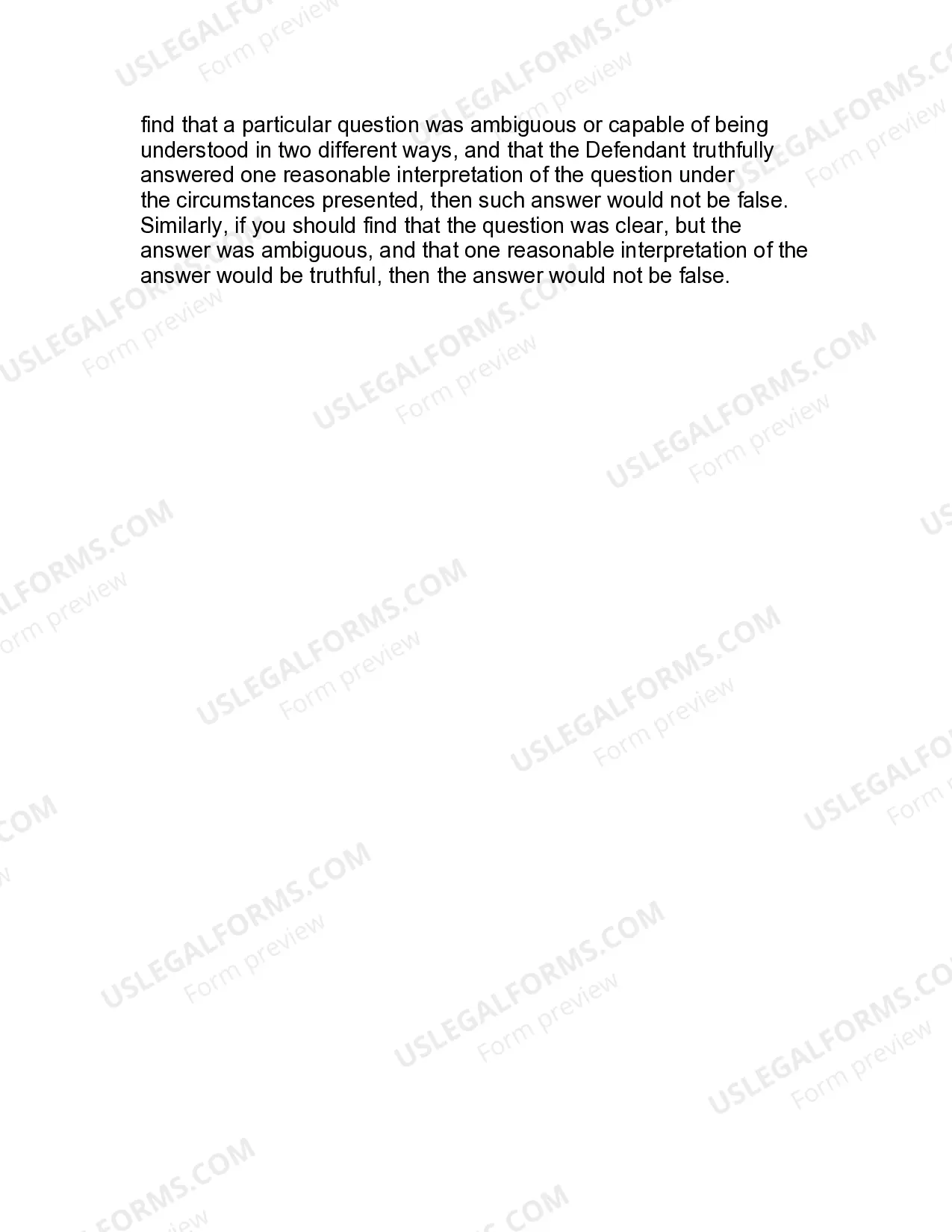
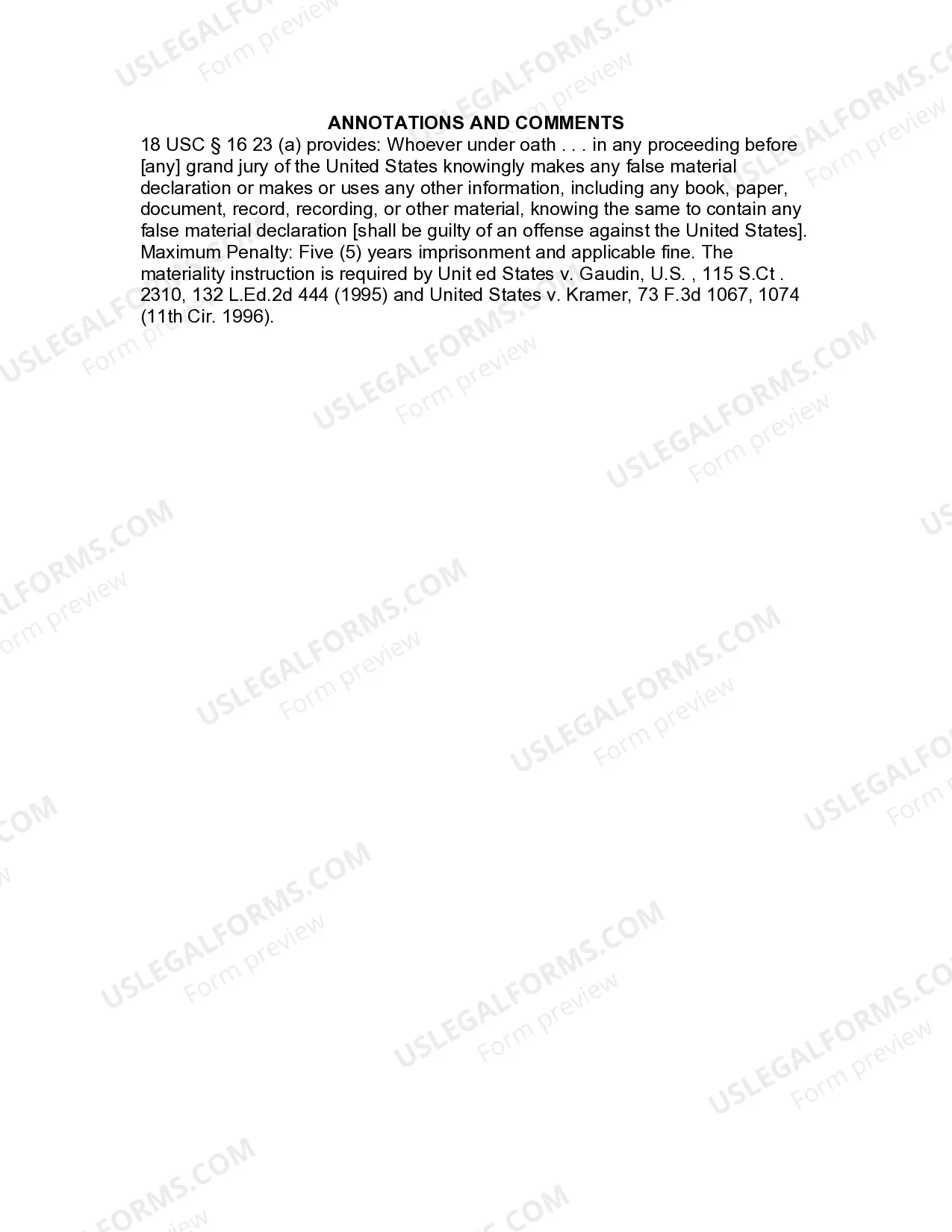
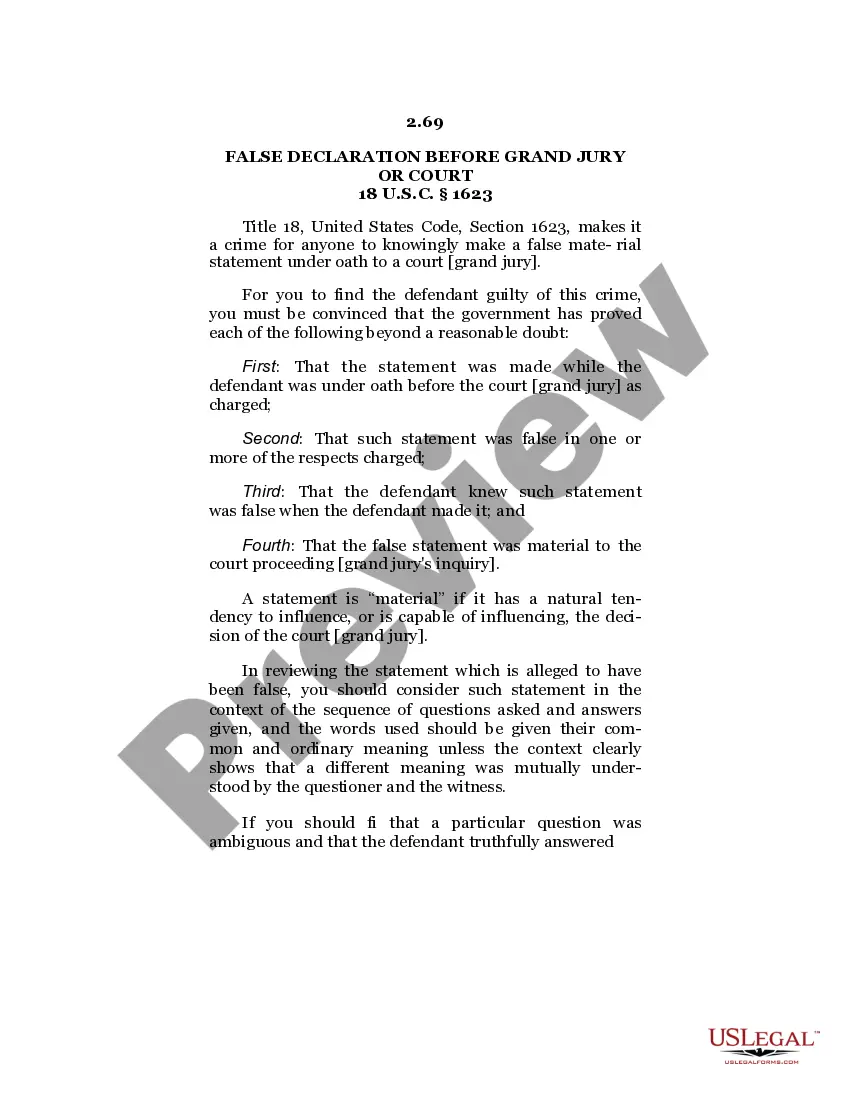
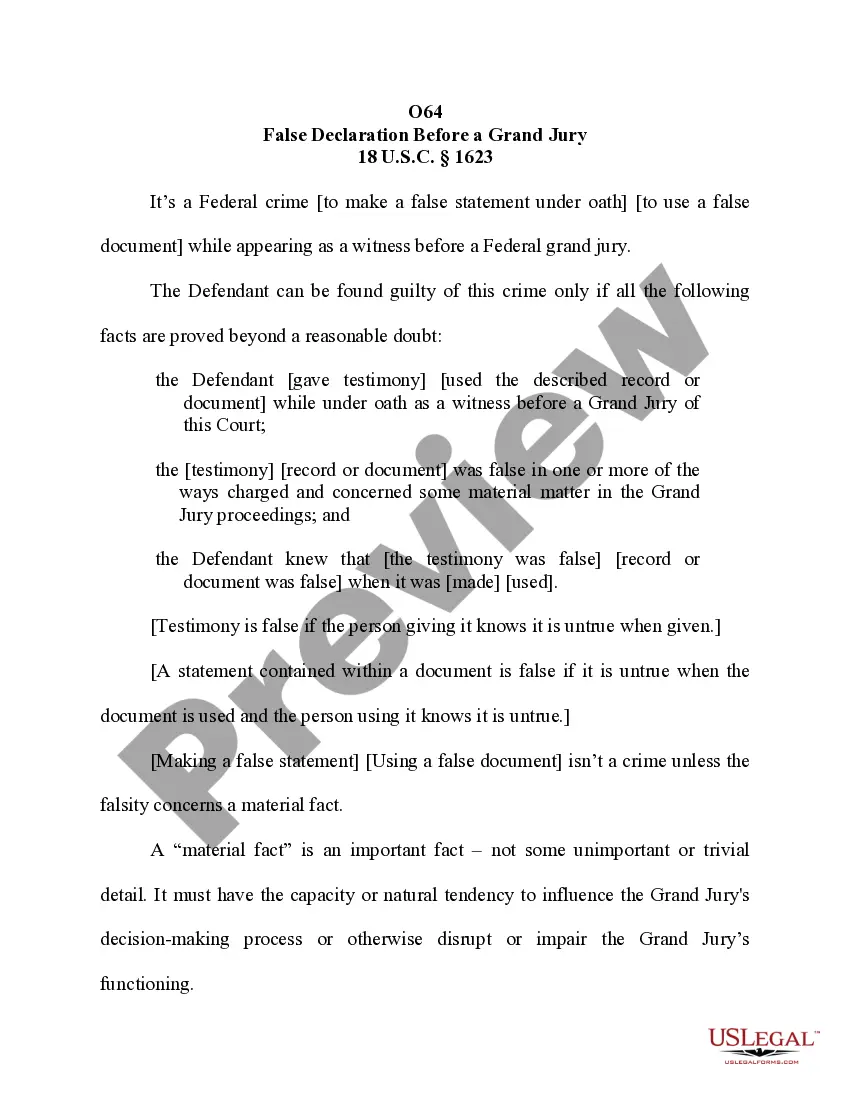
The Jury Instruction - False Declaration - Before Grand Jury form provides sample jury instructions to assist in legal proceedings concerning false declarations made under oath before a grand jury. This form emphasizes the importance of truthful testimony and outlines the necessary conditions for proving a violation of federal law under 18 USC 1623. Unlike standard jury instructions, this document is tailored for cases involving false statements made in this specific legal context.
Main sections of this form
- Definition of false declaration and related offenses.
- Elements needed to prove guilt beyond a reasonable doubt.
- Clarification of what constitutes materiality in a false statement.
- Instructions on considering the context of testimony and questioning.
- Discussion on misunderstandings of ambiguous questions or answers.
When to use this document
This form should be used in federal courtrooms during cases where the defendant is accused of making a false declaration, using false documents, or providing false testimony before a grand jury. It is essential in guiding jurors in understanding their role in determining the truthfulness of the defendant's statements, as well as the legal standards required to assess materiality and intent.
Who needs this form
- Judges presiding over cases involving false declarations before a grand jury.
- Prosecutors preparing for cases of perjury or false testimony.
- Defense attorneys representing clients accused of making false statements.
- Any legal professionals involved in federal grand jury proceedings.
Instructions for completing this form
- Identify the particular charge of false declaration being addressed.
- Include all necessary legal definitions and criteria for the jury's consideration.
- Ensure correct wording to outline the elements of the offense.
- Review testimony and material facts relevant to the case thoroughly.
- Provide clear guidance on interpreting ambiguous questions and answers during deliberation.
Does this document require notarization?
Notarization is not commonly needed for this form. However, certain documents or local rules may make it necessary. Our notarization service, powered by Notarize, allows you to finalize it securely online anytime, day or night.
Get your form ready online
Our built-in tools help you complete, sign, share, and store your documents in one place.
Make edits, fill in missing information, and update formatting in US Legal Forms—just like you would in MS Word.
Download a copy, print it, send it by email, or mail it via USPS—whatever works best for your next step.
Sign and collect signatures with our SignNow integration. Send to multiple recipients, set reminders, and more. Go Premium to unlock E-Sign.
If this form requires notarization, complete it online through a secure video call—no need to meet a notary in person or wait for an appointment.
We protect your documents and personal data by following strict security and privacy standards.

Make edits, fill in missing information, and update formatting in US Legal Forms—just like you would in MS Word.

Download a copy, print it, send it by email, or mail it via USPS—whatever works best for your next step.

Sign and collect signatures with our SignNow integration. Send to multiple recipients, set reminders, and more. Go Premium to unlock E-Sign.

If this form requires notarization, complete it online through a secure video call—no need to meet a notary in person or wait for an appointment.

We protect your documents and personal data by following strict security and privacy standards.
Typical mistakes to avoid
- Failing to adequately define materiality and its relevance to the case.
- Overlooking the necessity for clarity in jury instructions.
- Not considering context when evaluating testimony.
- Ignoring the potential for reasonable interpretations of answers.
Why use this form online
- Convenience of accessing and downloading the form anytime.
- Editability allows customization to fit specific cases and jurisdictions.
- Reliability backed by legally drafted templates by licensed attorneys.
Legal use & context
- This form aids in the prosecution of individuals accused of making false statements to a grand jury.
- It outlines the legal standards that must be met to conclude that false declarations have occurred.
- Using this form helps ensure that jurors are correctly informed about their responsibilities regarding the evidence presented.
What to keep in mind
- The form provides essential jury instructions for assessing false declarations before a grand jury.
- Understanding materiality and context is crucial in these legal proceedings.
- It can be used across federal jurisdictions with consistent legal applicability.
Looking for another form?
Form popularity
FAQ
Perjury is considered a crime against justice, since lying under oath compromises the authority of courts, grand juries, governing bodies, and public officials. Other crimes against justice include criminal contempt of court, probation violation, and tampering with evidence.
Of course, making a false statement in an affidavit before a court amounts to an offence of perjury, which may be punished under Section 193 of the IPC or under other relevant sections. At the same time, deliberately making a false statement in an affidavit before a court may also amount to contempt of court.
All three criteria must be proved for conviction. Intention is most important. False evidence is said to be given intentionally, if, the person making the statement is aware or has knowledge that it is false and has deliberately used such evidence in a judicial proceeding with the intention of deceiving the court .
A person convicted of perjury under federal law may face up to five years in prison and fines. The punishment for perjury under state law varies from state to state, but perjury is a felony and carries a possible prison sentence of at least one year, plus fines and probation.
In New South Wales, perjury is governed by Section 327 of the Crimes Act and carries a maximum penalty of 10 years imprisonment. If the false statement is made in order to bring about a conviction or an acquittal, the maximum penalty is 14 years.
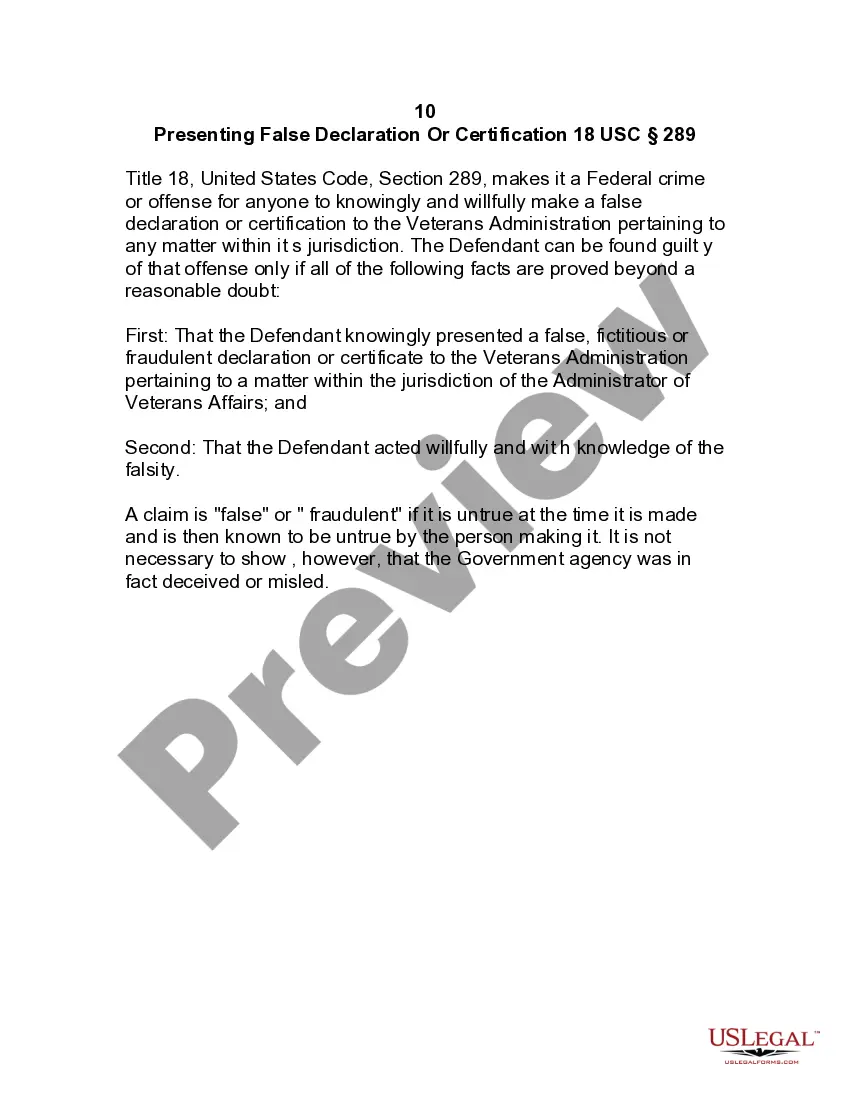
Lying, or making a false statement, is a federal crime under a number of circumstances.Perjury is also a federal crime. Perjury is a false statement made under oath before a federal tribunal or official. Moreover, some false certifications are punishable as perjury by operation of a federal statute.
False declaration means giving incorrect information on the value of a currency or bearer negotiable instruments being physically transferred across the border, or giving other incorrect related information required to be declared or provided through any other another means by the customs authorities.
In short, a false statement is perjury when it is made under oath or made under penalty of perjury. Two separate statutes define the crime of perjury under federal law.
Perjury can also be committed by knowingly signing or acknowledging a written legal document (such as affidavit, declaration under penalty of perjury, deed, license application, tax return) that contains false information. Perjury can be difficult to prove.