False Declaration Before a Grand Jury
What is this form?
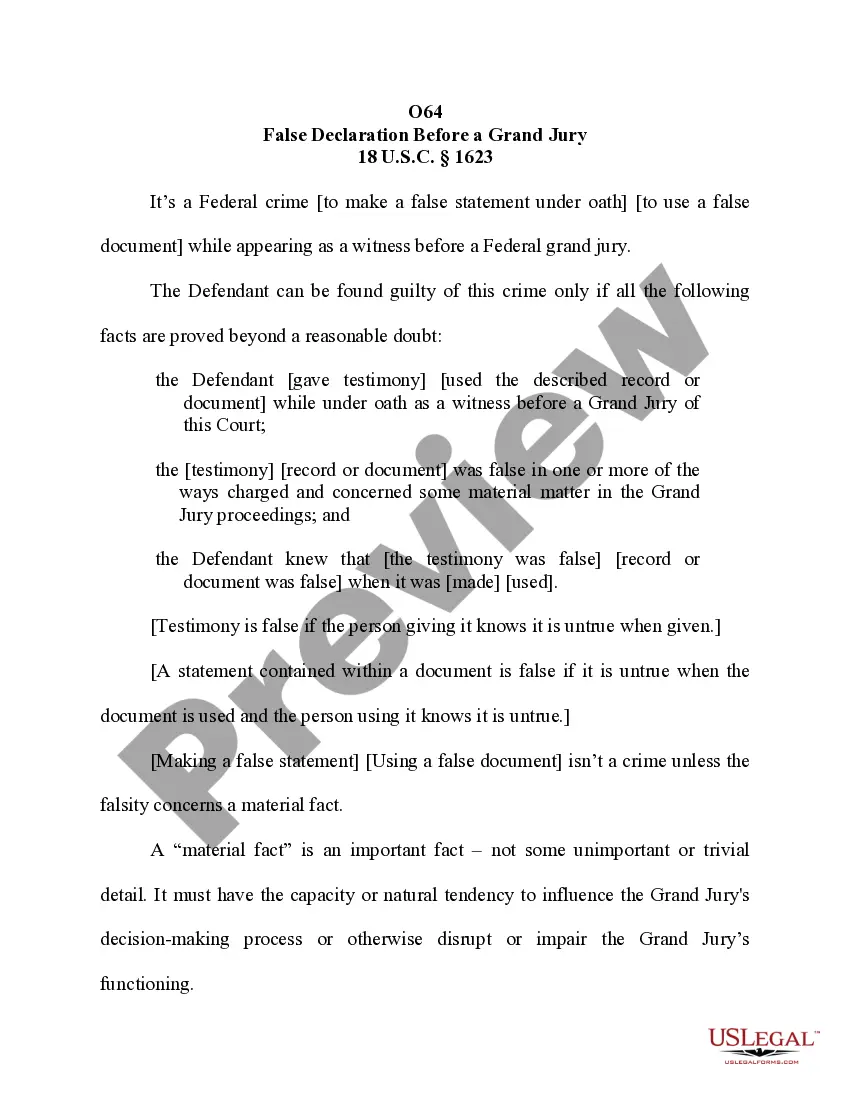
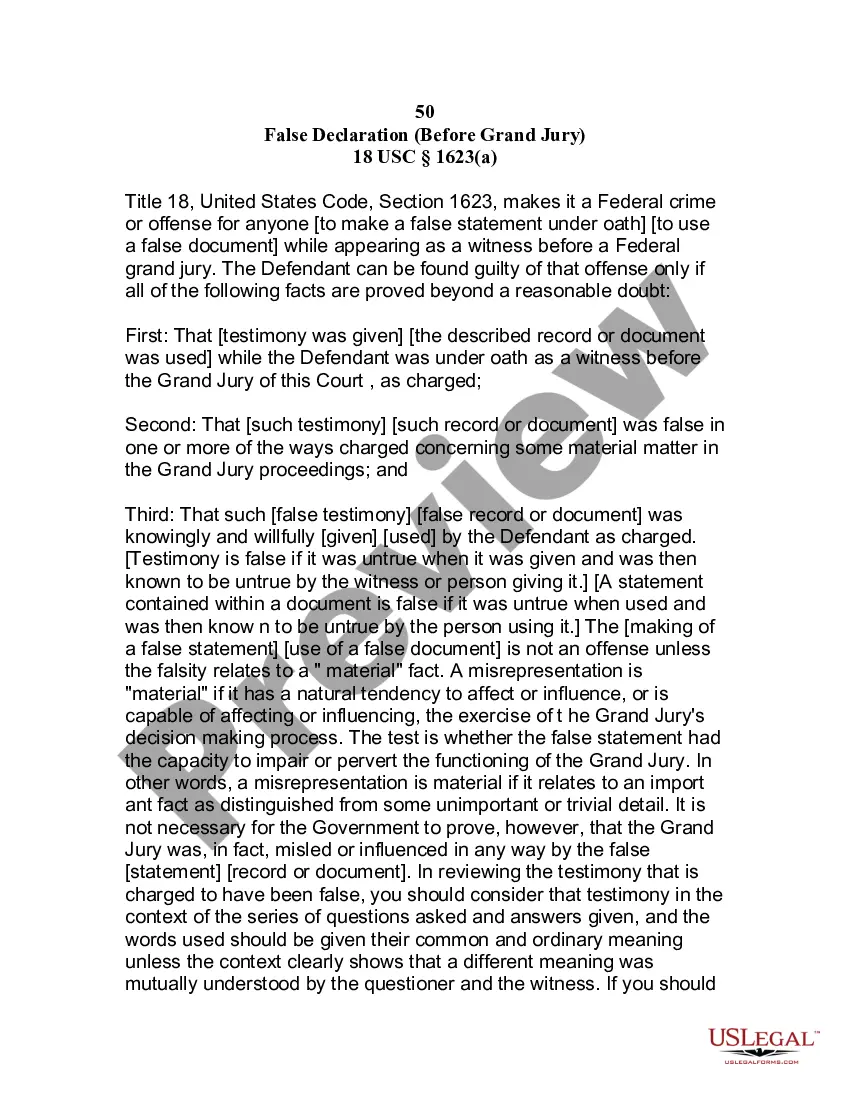
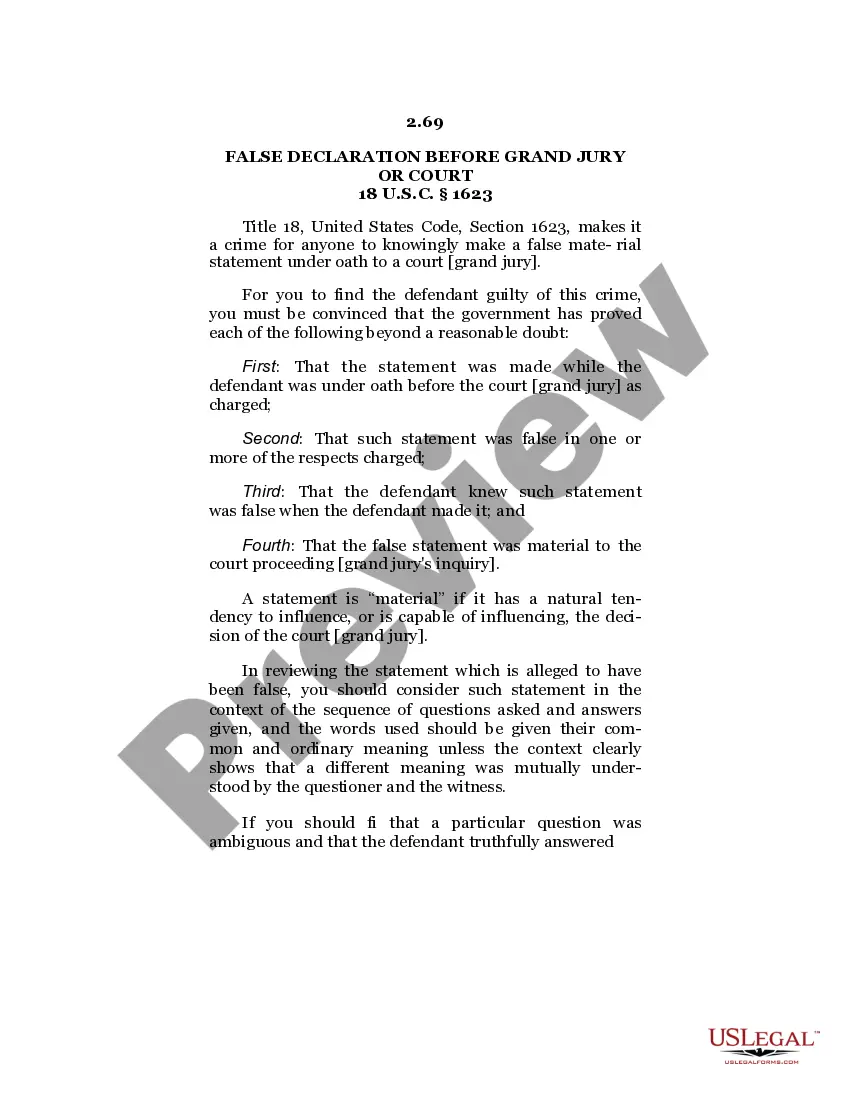
The False Declaration Before a Grand Jury form is a legal document used in federal court proceedings. This form addresses the crime of making false statements under oath or using false documents while testifying before a federal grand jury. It is crucial for ensuring the integrity of grand jury proceedings and serves as a legal basis for prosecuting individuals who may attempt to deceive the court. Understanding this form is essential for anyone involved in federal legal matters where truthfulness is paramount.
Main sections of this form
- Description of the crime: false declaration under oath.
- Elements of the offense that must be proven: giving testimony, falsity of the testimony, and knowledge of the falseness.
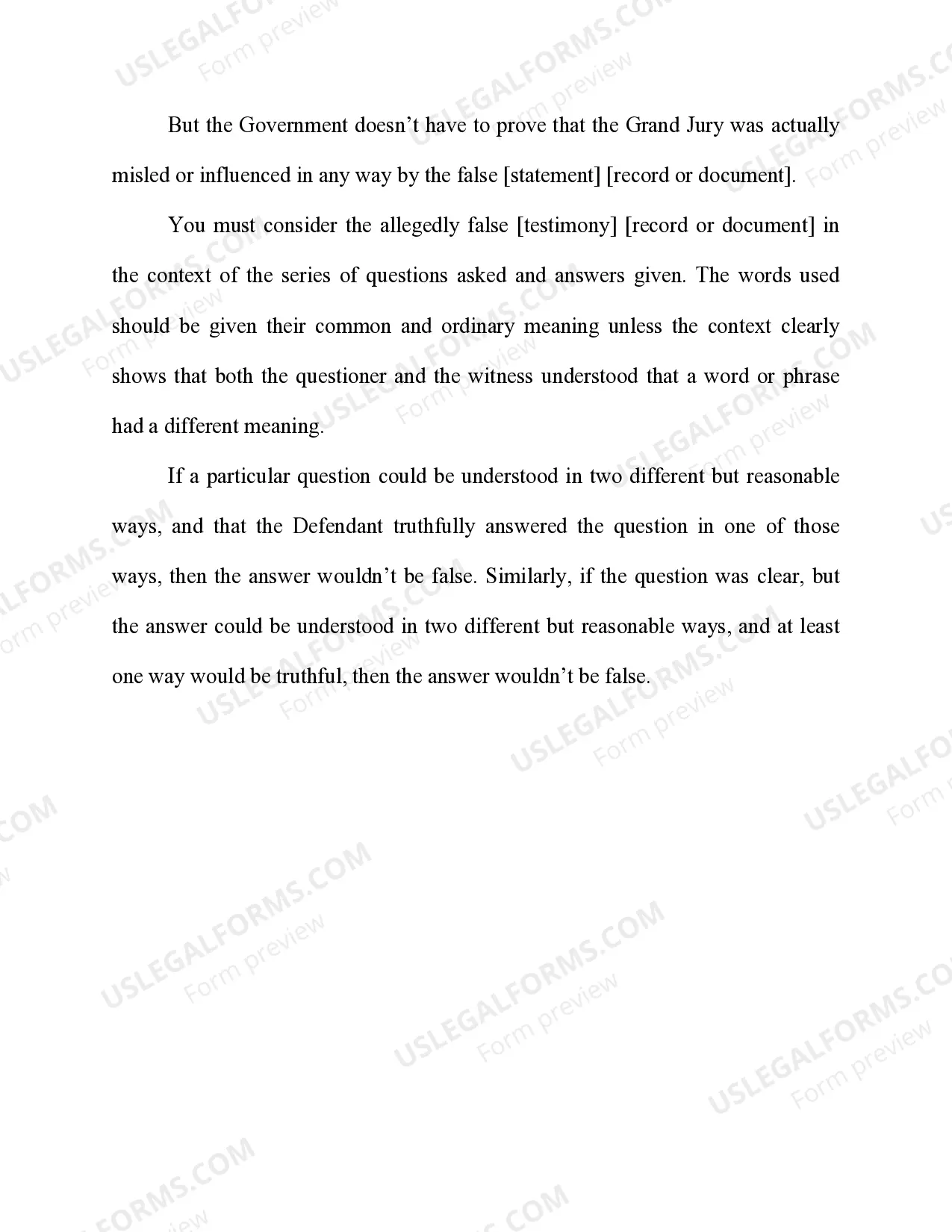
- Explanation of material facts and their significance to grand jury proceedings.
- Instructions for evaluating the truthfulness of testimony based on context.
Common use cases
This form is used when an individual is called to testify before a federal grand jury. It applies in situations where there is a concern that the witness may provide false information or documentation, which could potentially mislead the grand jury. It is particularly important in investigations involving serious federal offenses.
Who needs this form
Eligible users of this form include:
- Witnesses summoned to testify before a federal grand jury.
- Individuals involved in federal criminal investigations.
- Legal counsel representing clients in grand jury proceedings.
Steps to complete this form
- Read the instructions carefully to understand the legal implications.
- Complete sections regarding personal information and the context of your testimony.
- Ensure all answers reflect the truth and do not omit any material facts.
- Review your completed form for accuracy before submission.
Notarization requirements for this form
This form does not typically require notarization unless specified by local law. However, verifying the requirements based on your specific situation is always recommended.
Get your form ready online
Our built-in tools help you complete, sign, share, and store your documents in one place.
Make edits, fill in missing information, and update formatting in US Legal Forms—just like you would in MS Word.
Download a copy, print it, send it by email, or mail it via USPS—whatever works best for your next step.
Sign and collect signatures with our SignNow integration. Send to multiple recipients, set reminders, and more. Go Premium to unlock E-Sign.
If this form requires notarization, complete it online through a secure video call—no need to meet a notary in person or wait for an appointment.
We protect your documents and personal data by following strict security and privacy standards.

Make edits, fill in missing information, and update formatting in US Legal Forms—just like you would in MS Word.

Download a copy, print it, send it by email, or mail it via USPS—whatever works best for your next step.

Sign and collect signatures with our SignNow integration. Send to multiple recipients, set reminders, and more. Go Premium to unlock E-Sign.

If this form requires notarization, complete it online through a secure video call—no need to meet a notary in person or wait for an appointment.

We protect your documents and personal data by following strict security and privacy standards.
Typical mistakes to avoid
- Failing to provide complete and accurate information.
- Misunderstanding what constitutes a material fact.
- Not considering the context in which questions are asked.
Benefits of completing this form online
- Convenience of accessing legal forms from anywhere at any time.
- Editability ensures that the form meets specific legal needs and personal circumstances.
- Reliable templates drafted by licensed attorneys, reducing the likelihood of mistakes.
Summary of main points
- The False Declaration Before a Grand Jury form is essential for maintaining the integrity of legal proceedings.
- Truthfulness is critical when testifying under oath; false statements can lead to serious legal consequences.
- It's important to understand the legal definitions of material facts and how they apply to testimony.
Looking for another form?
Form popularity
FAQ
Section 1623(c) authorizes a person to be accused of having ?made two or more declarations, which are inconsistent to the degree that one of them is necessarily false,? and the government is not required to specify which declaration is false.
False declaration means the act of declaring assets, income and liabilities with an intention to conceal their disproportionate assets by providing incomplete or incorrect information.
A person convicted of perjury under federal law may face up to five years in prison and fines. (18 U.S.C. § 1621.) The punishment for perjury under state law varies from state to state but is typically a felony.
Generally any person can lodge complaint of an offence and set the law in motion. Exception to this rule is offences. Specified u/s 195 CrPC. Section 195 lays down rules to be followed by the court to take cognizance of an offence specified under it.
The U.S. Code's Sections 1621 and 1623 of title 18 govern perjury before a federal court, tribunal, or grand jury. If you are facing this type of accusation, whether on its own or as part of other criminal allegations at the state and/or federal level, you could face severe penalties with lasting consequences.
Perjury (also known as foreswearing) is the intentional act of swearing a false oath or falsifying an affirmation to tell the truth, whether spoken or in writing, concerning matters material to an official proceeding.
The offence of ?Perjury? is stating false testimony or furnishing false evidence by a person on oath. It can be done by stating wrong or incorrect or suppressed information in the affidavit submitted in the court proceedings.
DIFFERENCES BETWEEN PERJURY & MAKING FALSE STATEMENTS And for perjury, the statement must be literally false and made with intent to deceive or mislead. In contrast, making false statements applies when people lie to the government regardless of whether it's under oath or not.