Addressing Holdover Tenancy in a Lease
About this form
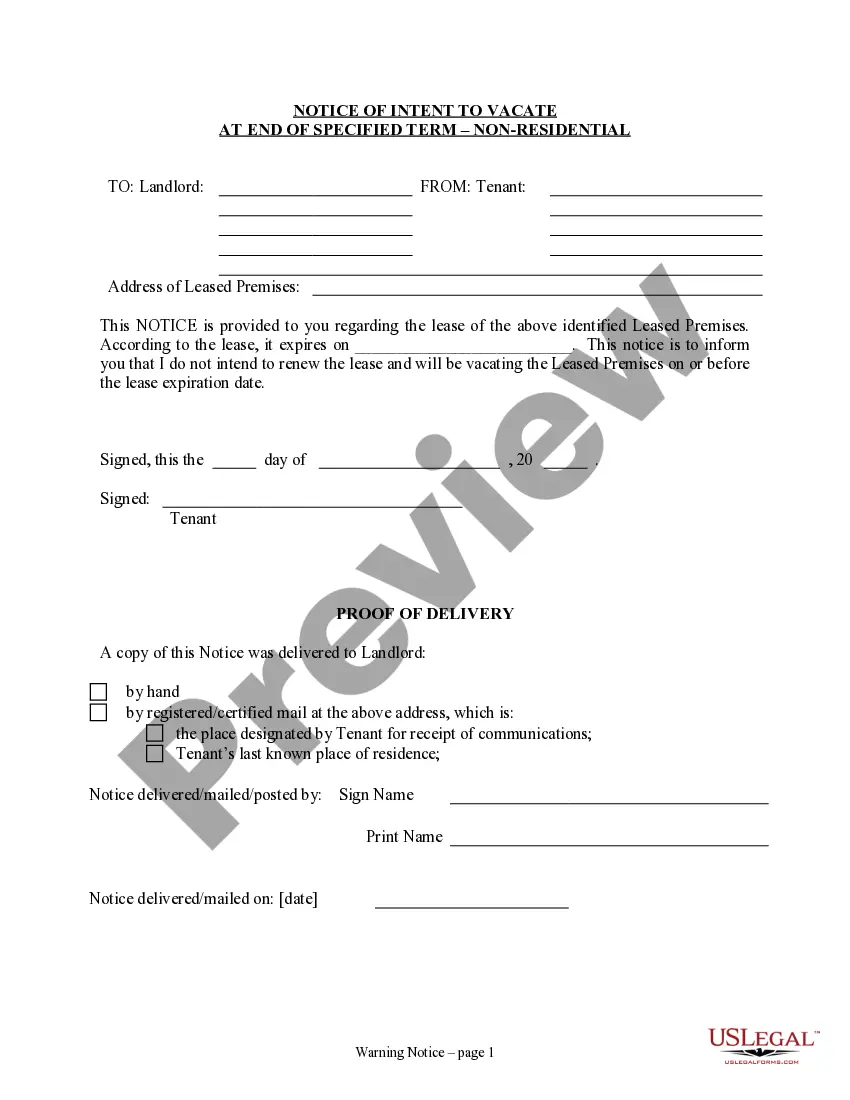
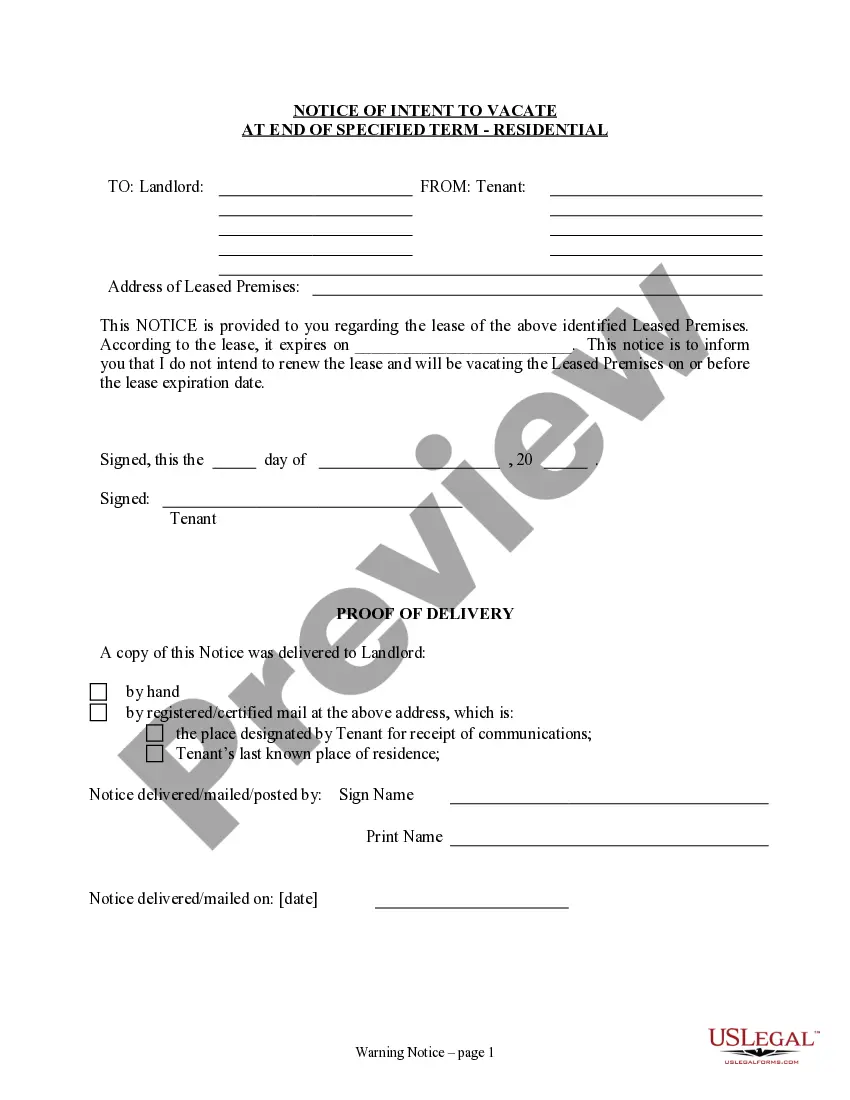
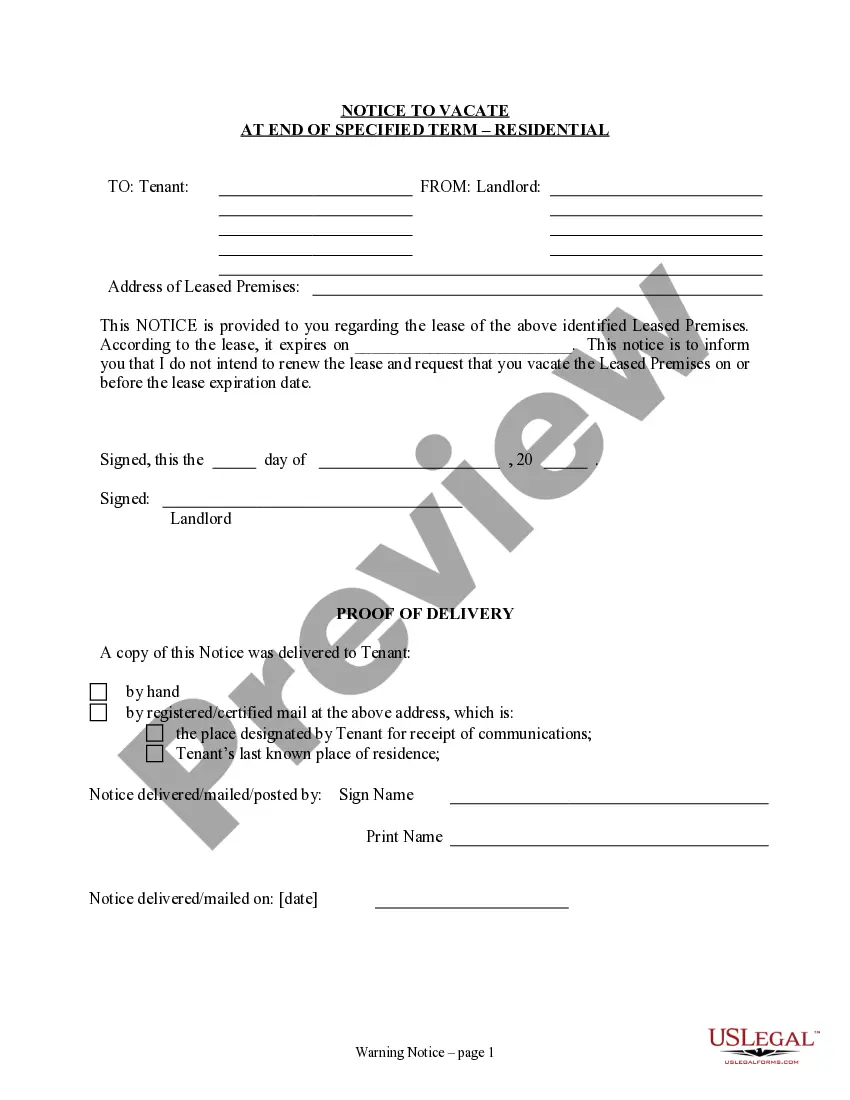
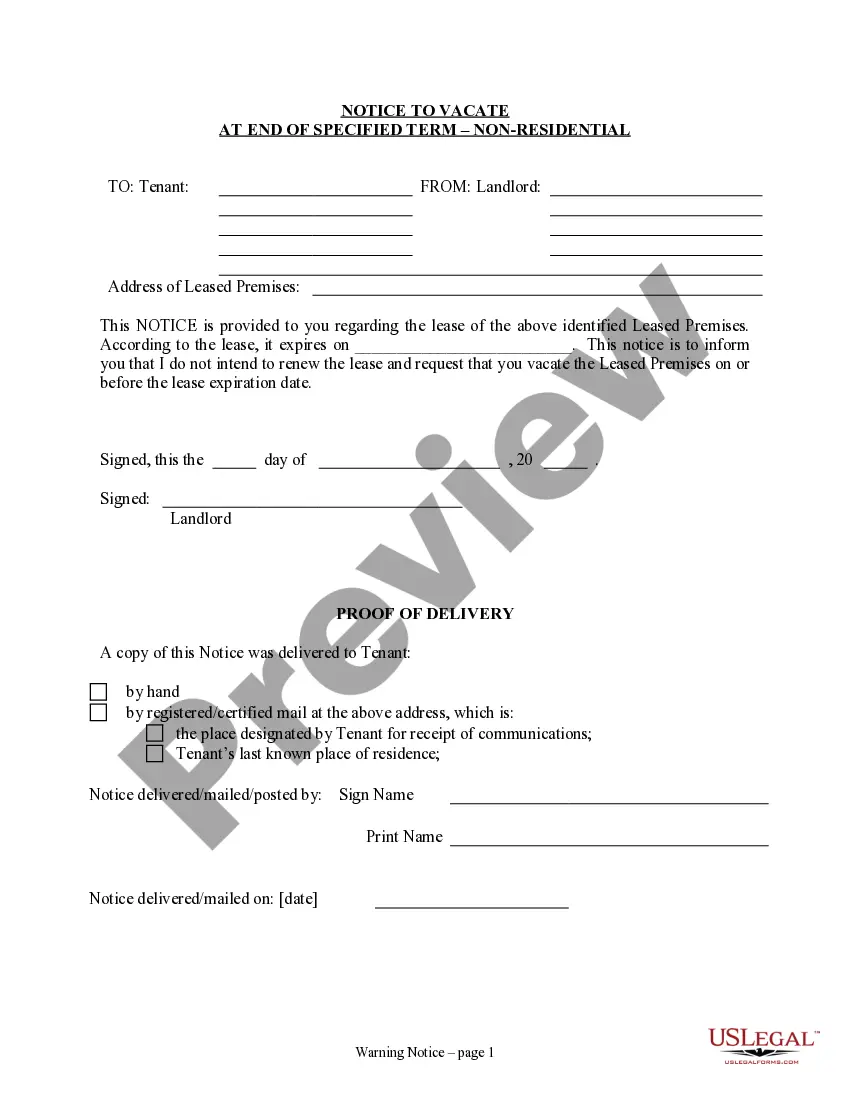
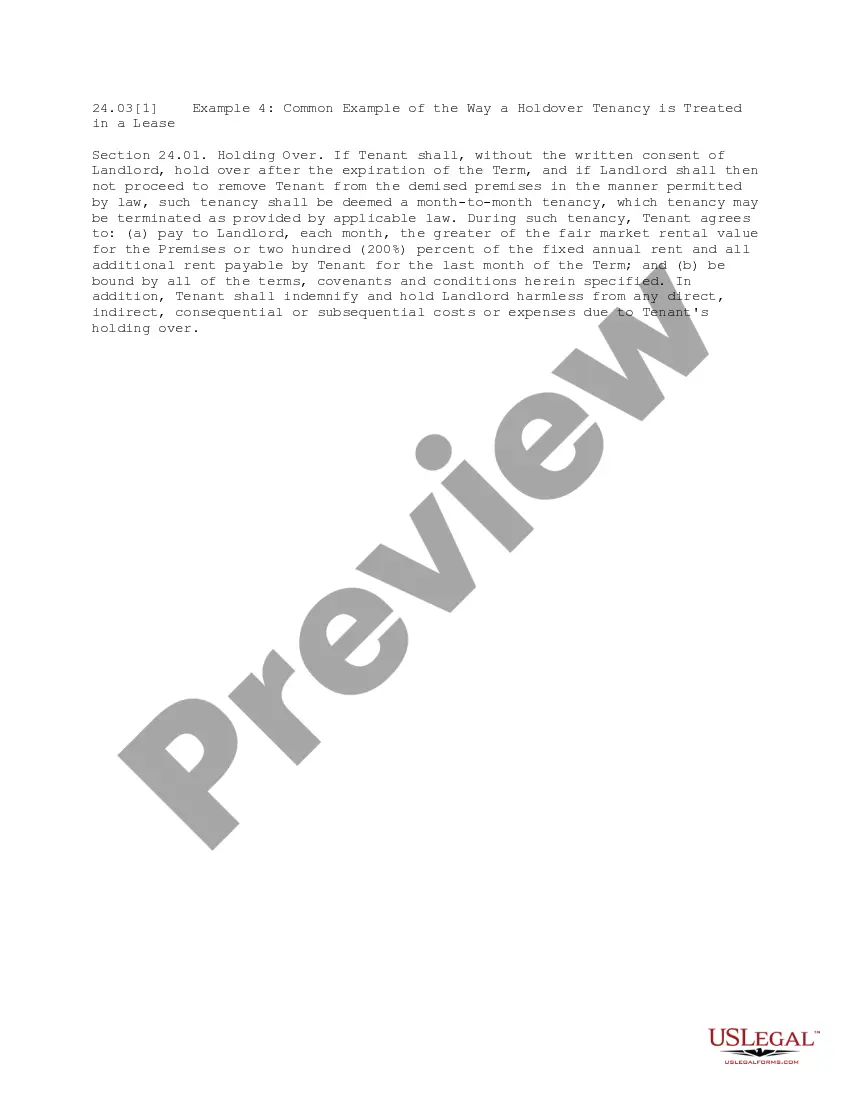
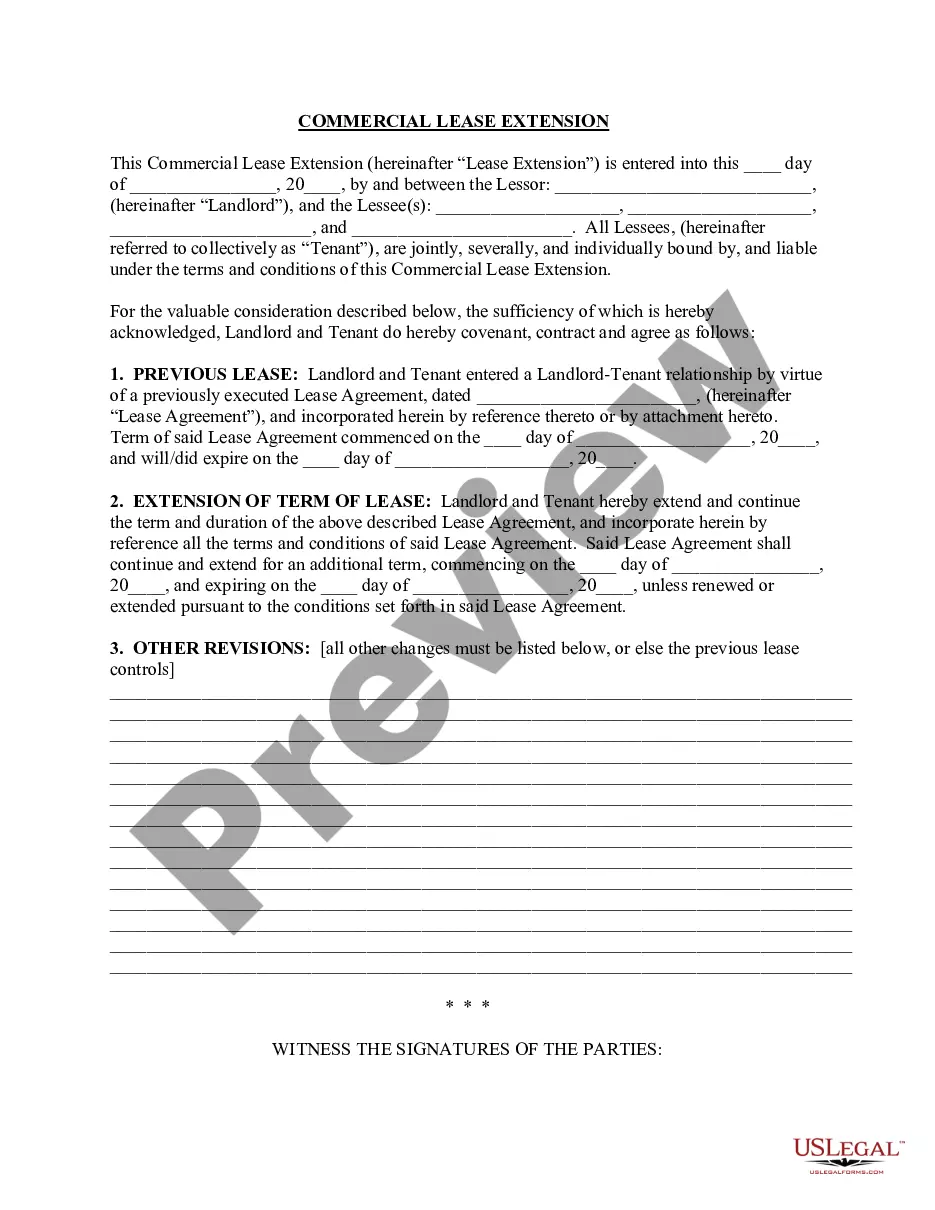
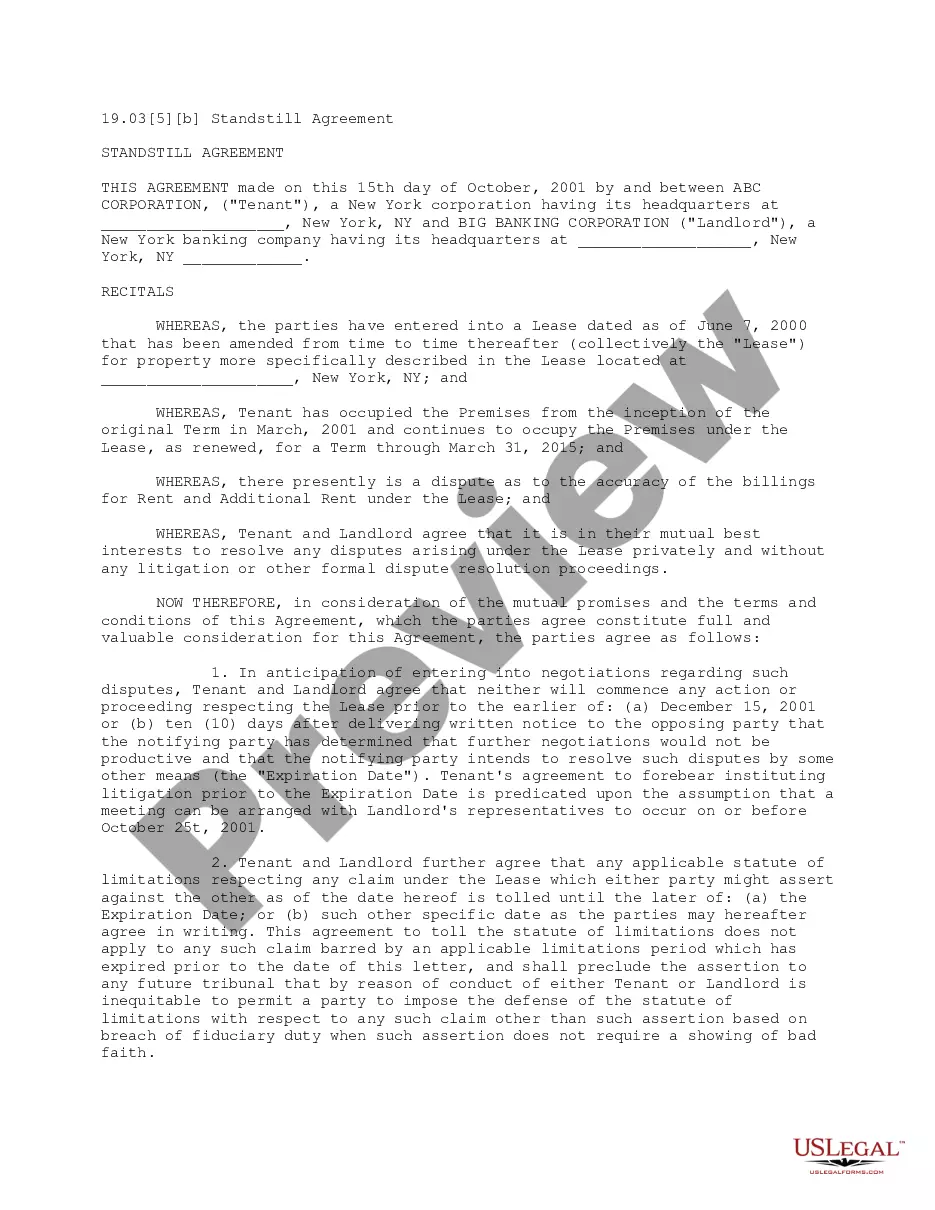
The Addressing Holdover Tenancy in a Lease form is a legal document that outlines the terms under which a tenant may remain on the rental property after their lease has expired, without the landlord's written consent. This form distinguishes itself from standard lease agreements by specifying that a tenant holding over can transition to a month-to-month tenancy subject to distinct rental obligations. It serves to protect both the landlord's rights and the tenant's responsibilities during this transitional period.
Form components explained
- Definition of holdover tenancy and conditions for its recognition.
- Rental payment obligations during the month-to-month tenancy period.
- Indemnification provisions protecting the landlord from potential losses.
- Reference to applicable laws governing termination of the tenancy.

Common use cases
This form is essential when a tenant continues to occupy the property after their lease term has expired, without the landlord's explicit consent to remain. Use this form to clarify the terms of the holdover tenancy and ensure that both parties understand their rights and obligations to avoid disputes later on.
Who should use this form
- Landlords seeking to formalize the terms for a tenant who remains after lease expiration.
- Property managers responsible for managing lease agreements and tenant compliance.
- Tenants wishing to understand their rights and duties when their lease ends but they still occupy the property.
Steps to complete this form
- Identify the parties involved: the landlord and the tenant.
- Specify the property details, including the address and unit number if applicable.
- Fill in the expiration date of the original lease.
- Indicate any agreed-upon rental terms for the holdover period, including payment amounts.
- Ensure all parties sign and date the document to validate it.
Does this document require notarization?
In most cases, this form does not require notarization. However, some jurisdictions or signing circumstances might. US Legal Forms offers online notarization powered by Notarize, accessible 24/7 for a quick, remote process.
Get your form ready online
Our built-in tools help you complete, sign, share, and store your documents in one place.
Make edits, fill in missing information, and update formatting in US Legal Forms—just like you would in MS Word.
Download a copy, print it, send it by email, or mail it via USPS—whatever works best for your next step.
Sign and collect signatures with our SignNow integration. Send to multiple recipients, set reminders, and more. Go Premium to unlock E-Sign.
If this form requires notarization, complete it online through a secure video call—no need to meet a notary in person or wait for an appointment.
We protect your documents and personal data by following strict security and privacy standards.

Make edits, fill in missing information, and update formatting in US Legal Forms—just like you would in MS Word.

Download a copy, print it, send it by email, or mail it via USPS—whatever works best for your next step.

Sign and collect signatures with our SignNow integration. Send to multiple recipients, set reminders, and more. Go Premium to unlock E-Sign.

If this form requires notarization, complete it online through a secure video call—no need to meet a notary in person or wait for an appointment.

We protect your documents and personal data by following strict security and privacy standards.
Common mistakes to avoid
- Failing to provide written consent for a tenant to hold over.
- Not updating rental amounts to reflect current market values.
- Omitting signatures or dates from the finalized form.
Benefits of using this form online
- Convenience of downloading the form directly and completing it at your own pace.
- Editability allows for customization based on specific needs or agreements.
- Reliability of using forms drafted by licensed attorneys to ensure legality.
Summary of main points
- The form is critical for outlining a tenant's rights and responsibilities as they transition to a holdover tenancy.
- Both landlords and tenants should understand the implications of holding over after a lease ends.
- Effective communication and proper documentation can prevent future legal disputes.
Looking for another form?



Form popularity
FAQ
Your landlord can end the let at any time by serving a written 'notice to quit'. The notice period will depend on the tenancy or agreement, but is often at least 4 weeks.
I am giving 1 month's notice to end my tenancy, as required by law. I will be leaving the property on (date xxxxx). I would like you to be at the property on the day I move out to check the premises and for me to return the keys. I also need you to return my tenancy deposit of (state amount).
You can immediately file an eviction if the tenant refuses to leave the property.If you took a rental payment from the tenant after their lease expired, you'll need to provide all the normal notices. When your tenant overstays their lease, you will still, however, be required to go through the normal eviction process.
A holdover tenant is a renter who remains in a property after the expiration of the lease. If the landlord continues to accept rent payments, the holdover tenant can continue to legally occupy the property, and state laws and court rulings determine the length of the holdover tenant's new rental term.
Explain the Situation Tell your tenant in straightforward terms what the problem is, and explain that they cannot stay on the property any longer. Describe the Consequences Calmly explain that they will be evicted with necessary court orders if they remain on the property.
Month to Month Agreements: For month to month agreements, it is generally accepted for the tenant to notify the landlord at least 30 days in advance of their desire to move. For example, if the lease ends on October 31, then the tenant should let the landlord know they want to move by October 1, at the latest.
Let the tenant stay. A landlord who continues to accept monthly rent and allows the tenant to stay cannot later seek to evict the tenant on the basis of the holdover. Treat the tenant as a trespasser and seek eviction.
Make an appointment for handover with your tenants during which you will: check the property for damage using the inventory. take possession of the keys. agree (if possible) on how much of the deposit will be returned and in what timeframe.
You should say something like: I am giving 1 month's notice to end my tenancy, as required by law. I will be leaving the property on (date xxxxx). I would like you to be at the property on the day I move out to check the premises and for me to return the keys.