Jury Instruction - Impeachment - Inconsistent Statement
Understanding this form
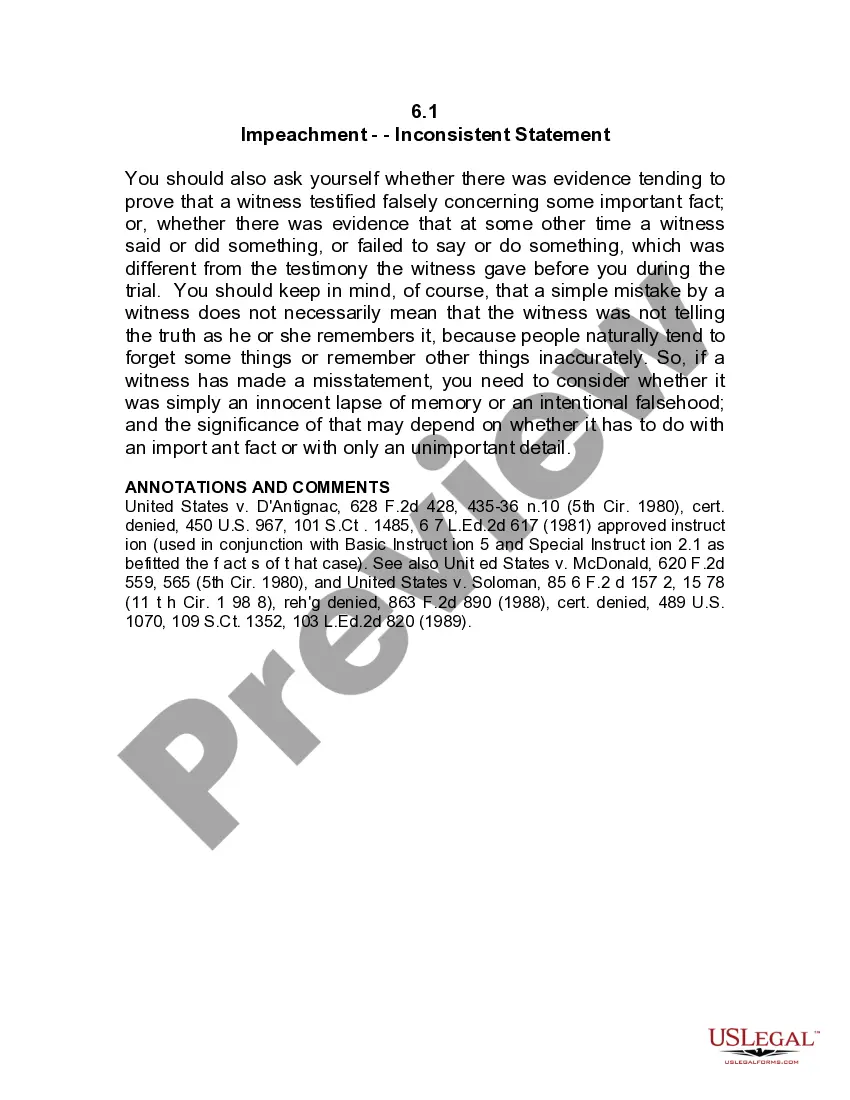
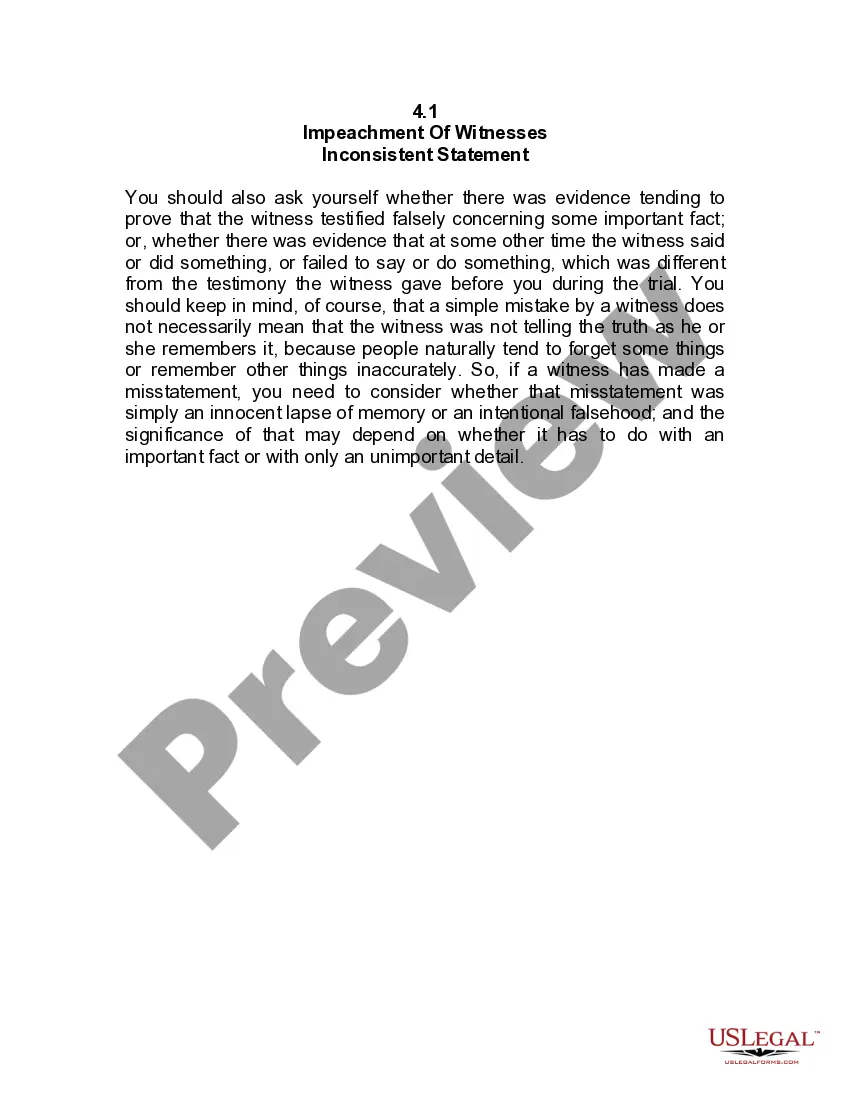
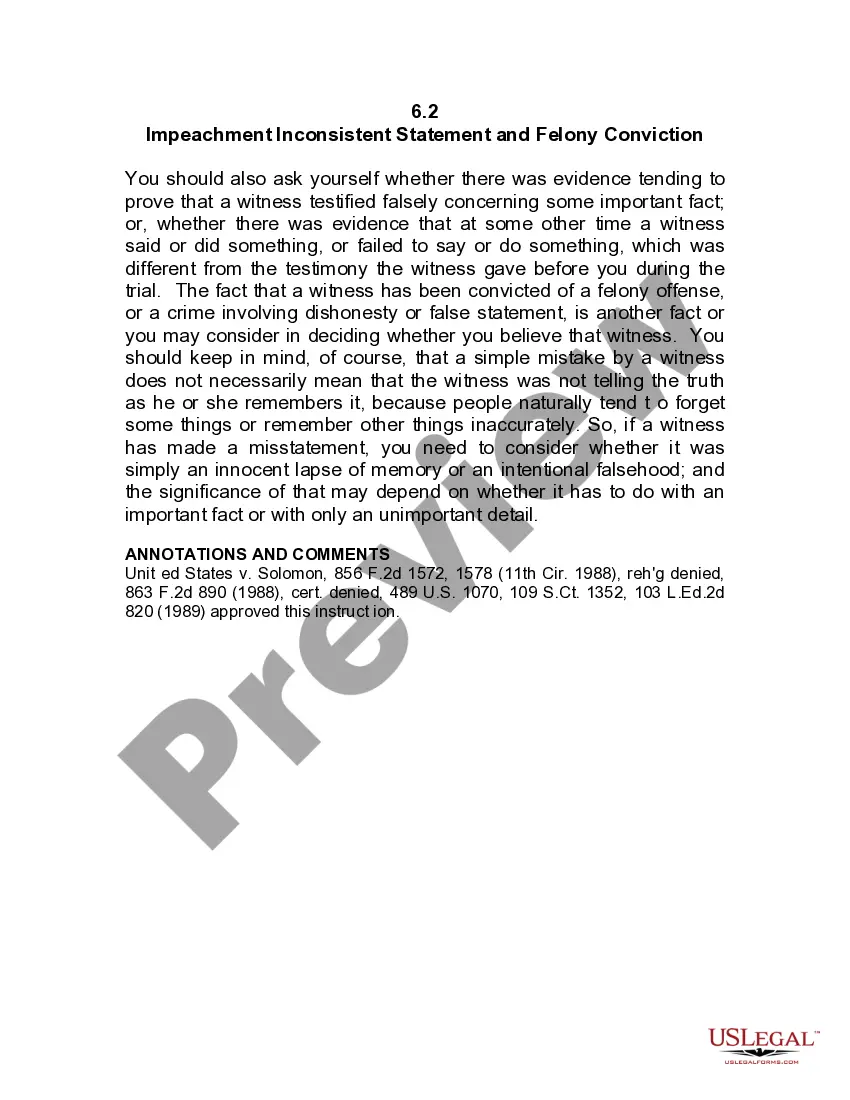
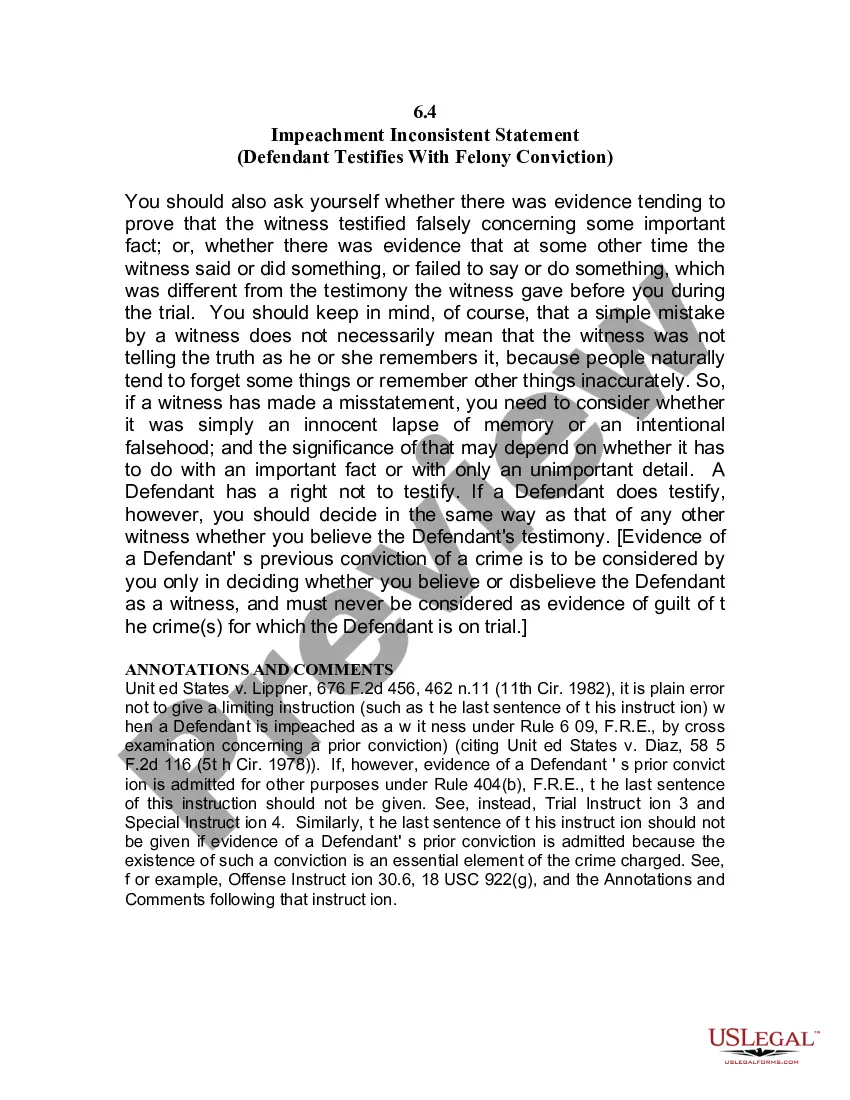
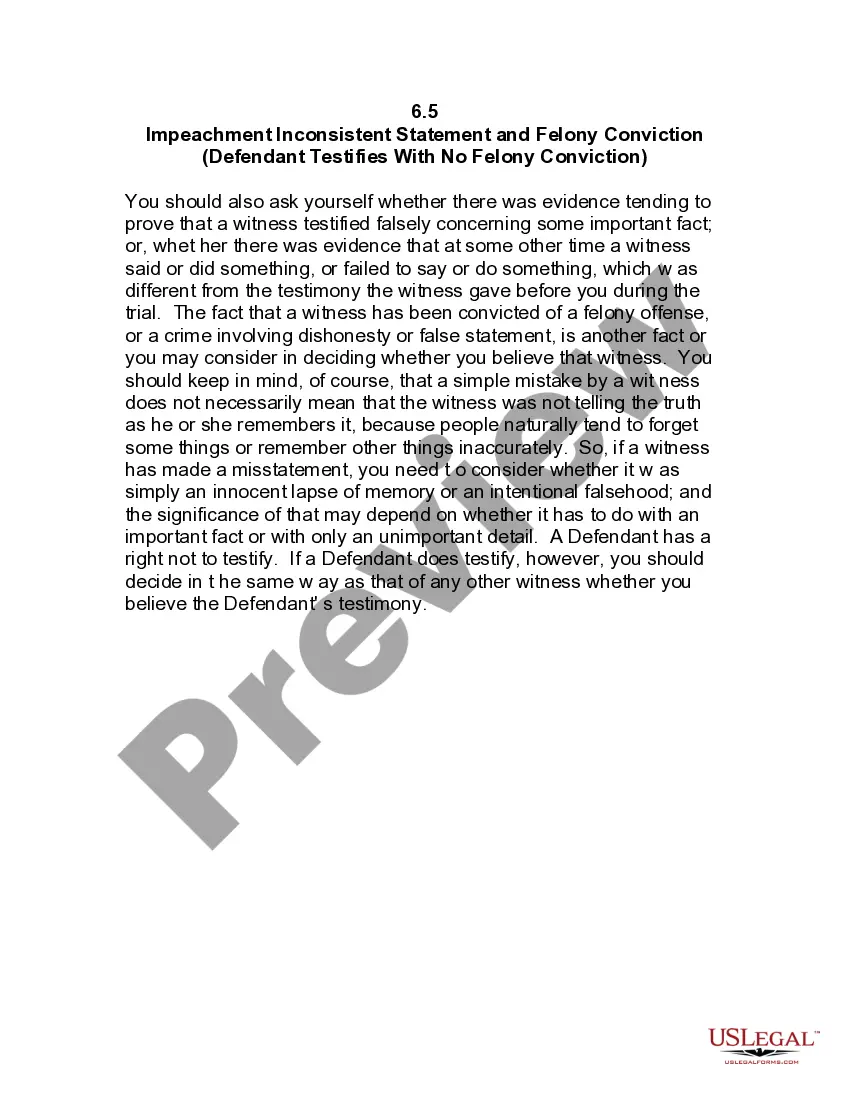
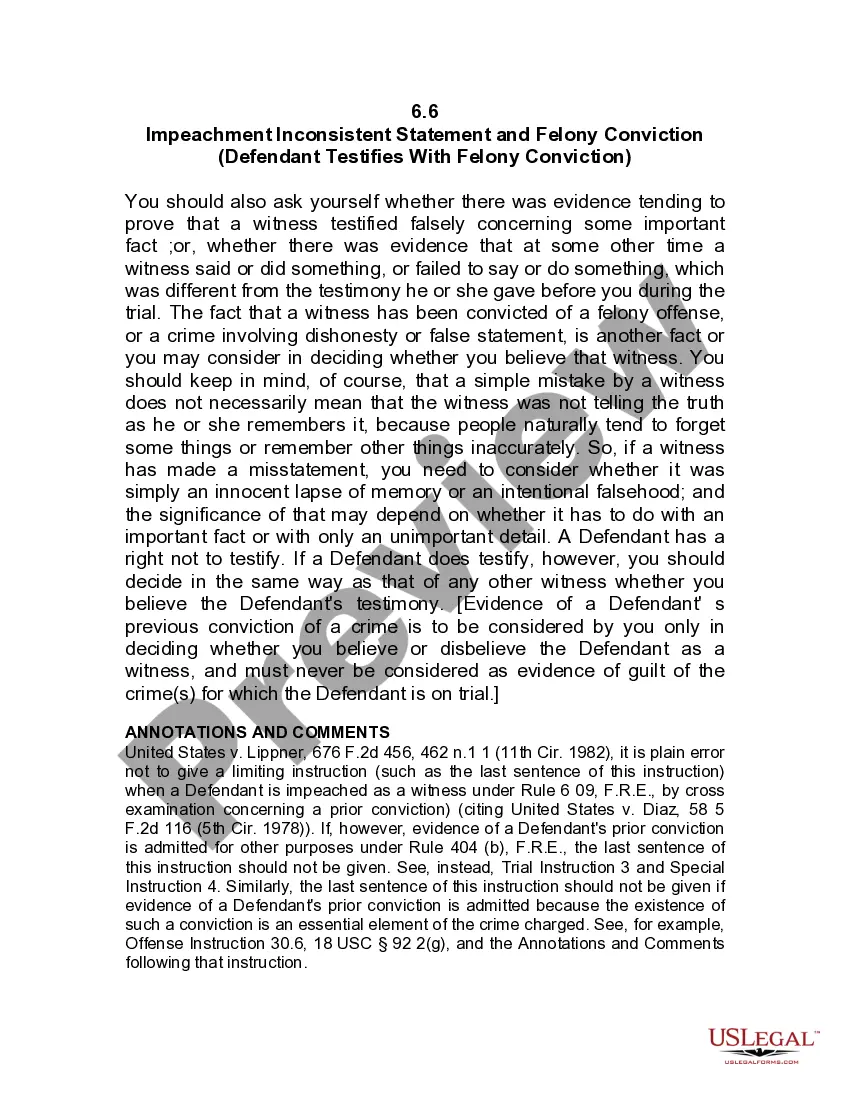
This Jury Instruction - Impeachment - Inconsistent Statement form provides sample jury instructions used in court cases across the United States. This form aids jurors in assessing witness credibility, specifically when inconsistencies in testimony arise. Its purpose is to guide jurors in determining whether a witness's varied statements indicate a lack of truthfulness or are merely lapses in memory, helping to ensure fair evaluations during trials.
Form components explained
- Instructions for jurors on assessing inconsistencies in witness statements.
- Guidance on differentiating between innocent mistakes and intentional falsehoods.
- Clarification on the importance of the inconsistency to the case at hand.
- Legal references supporting the instructions provided.
Situations where this form applies
This form is utilized during jury trials when inconsistencies in a witness's statements arise. It is important in cases involving witness credibility where jurors must decide whether a witness's testimony is truthful or has been misrepresented. This form ensures that jurors understand the implications of discrepancies in witness accounts and can make informed decisions based on the evidence presented.
Intended users of this form
- Judges overseeing jury trials who need to provide clear instructions to jurors.
- Attorneys representing clients in civil or criminal cases requiring jury involvement.
- Legal professionals aiming for consistency in jury instructions across cases.
Instructions for completing this form
- Review the case details to identify any inconsistencies in witness testimony.
- Modify the provided instructions to fit the specific facts of your case.
- Include references to relevant case law to support the jury instructions.
- Ensure all jurors understand the implications of inconsistencies before deliberation.
- Provide the finalized instruction to the jury at the appropriate stage of the trial.
Is notarization required?
This form usually doesn’t need to be notarized. However, local laws or specific transactions may require it. Our online notarization service, powered by Notarize, lets you complete it remotely through a secure video session, available 24/7.
Get your form ready online
Our built-in tools help you complete, sign, share, and store your documents in one place.
Make edits, fill in missing information, and update formatting in US Legal Forms—just like you would in MS Word.
Download a copy, print it, send it by email, or mail it via USPS—whatever works best for your next step.
Sign and collect signatures with our SignNow integration. Send to multiple recipients, set reminders, and more. Go Premium to unlock E-Sign.
If this form requires notarization, complete it online through a secure video call—no need to meet a notary in person or wait for an appointment.
We protect your documents and personal data by following strict security and privacy standards.

Make edits, fill in missing information, and update formatting in US Legal Forms—just like you would in MS Word.

Download a copy, print it, send it by email, or mail it via USPS—whatever works best for your next step.

Sign and collect signatures with our SignNow integration. Send to multiple recipients, set reminders, and more. Go Premium to unlock E-Sign.

If this form requires notarization, complete it online through a secure video call—no need to meet a notary in person or wait for an appointment.

We protect your documents and personal data by following strict security and privacy standards.
Avoid these common issues
- Failing to adapt the standard instructions to the specifics of the case.
- Overlooking the significance of minor discrepancies versus major inconsistencies.
- Neglecting to provide adequate explanation on assessing witness credibility.
Why use this form online
- Easy access to up-to-date legal language tailored for jury instructions.
- Ability to customize the form based on specific case needs efficiently.
- Convenient downloading options for immediate use in court proceedings.
Looking for another form?



Form popularity
FAQ
The most common situation in which the issue of extrinsic evidence arises is when counsel seeks to impeach the witness in reply to the witness's denial of some facts or previous statements and introduces evidence proving that the witness is lying.
First, the most basic step, is to have the witness repeat the testimony from today's hearing that you want to impeach. You cannot effectively impeach unless the witness repeats a fact they said during the current hearing that clearly contradicts a prior statement.
The five basic methods are: use of contradiction, proof of bad character, proof of inconsistency, proof of bias, or proof of diminished capacity.
In the US, a party has the option of discrediting a witness through impeachment by cross-examining the witness about facts that reflect poorly on the witness's credibility or, in some cases, by introducing extrinsic evidence that reflects negatively on the witness's truthfulness or knowledge.
Repeat. First, the most basic step, is to have the witness repeat the testimony from today's hearing that you want to impeach. Build Up. Impeach.
In the US, a party has the option of discrediting a witness through impeachment by cross-examining the witness about facts that reflect poorly on the witness's credibility or, in some cases, by introducing extrinsic evidence that reflects negatively on the witness's truthfulness or knowledge.
Rule 609 provides that, with certain restrictions, a witness may be impeached witrh evidence of two kids of criminal convictions: (1) felonies, regardless of their nature; and (2) misdemeanors involving crimes of dishonesty and false statement, such as check deception and perjury.
Under common law, a witness may be impeached by proof the witness has contradicted him- or herself through evidence of prior acts or statements that are inconsistent with testimony given on direct examination.