Notice of Assignment, Sale, or Transfer of Servicing Rights, Mortgage Loans
What is this form?
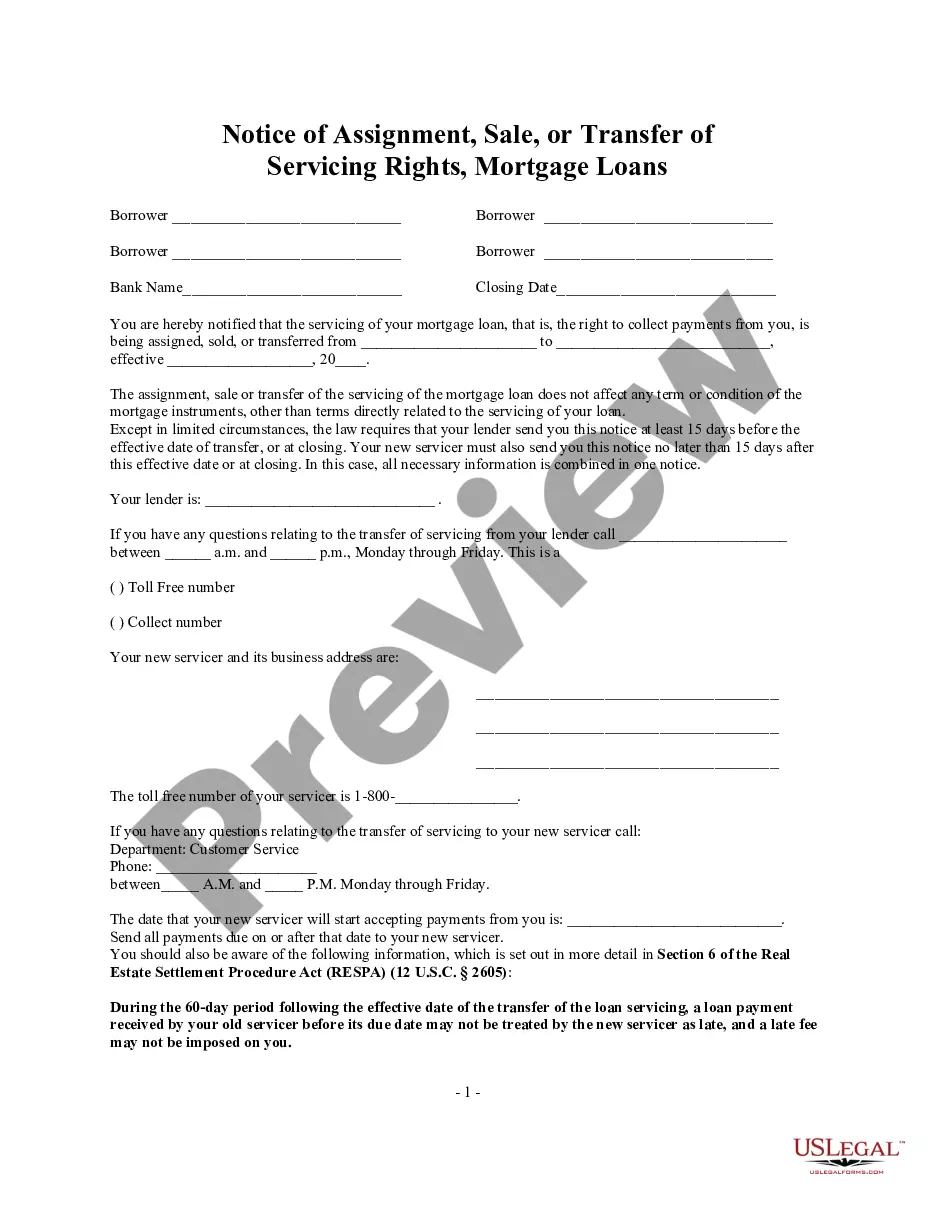
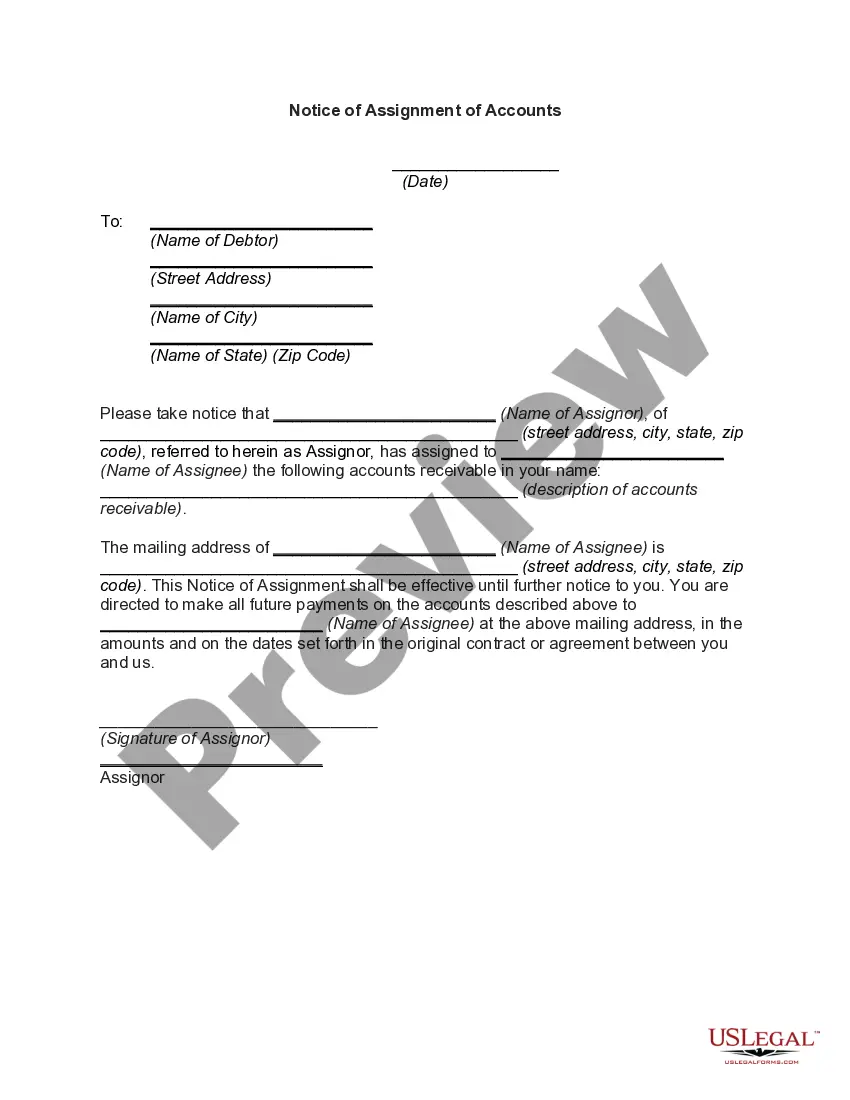
The Notice of Assignment, Sale, or Transfer of Servicing Rights for Mortgage Loans is a document that informs borrowers that the servicing rights of their mortgage loan have been assigned, sold, or transferred to a new lender. This form is crucial as it ensures that borrowers are aware of who is now responsible for collecting their mortgage payments, providing clarity on where to direct future payments, and safeguarding the terms of the original mortgage agreement.
Main sections of this form
- Borrower information: Names of all borrowers involved.
- Bank name: The name of the lender transferring the servicing rights.
- Effective date: The date when the transfer of servicing takes effect.
- Contact information: Phone numbers for the old and new servicers.
- Payment instructions: Date when the new servicer will start accepting payments.
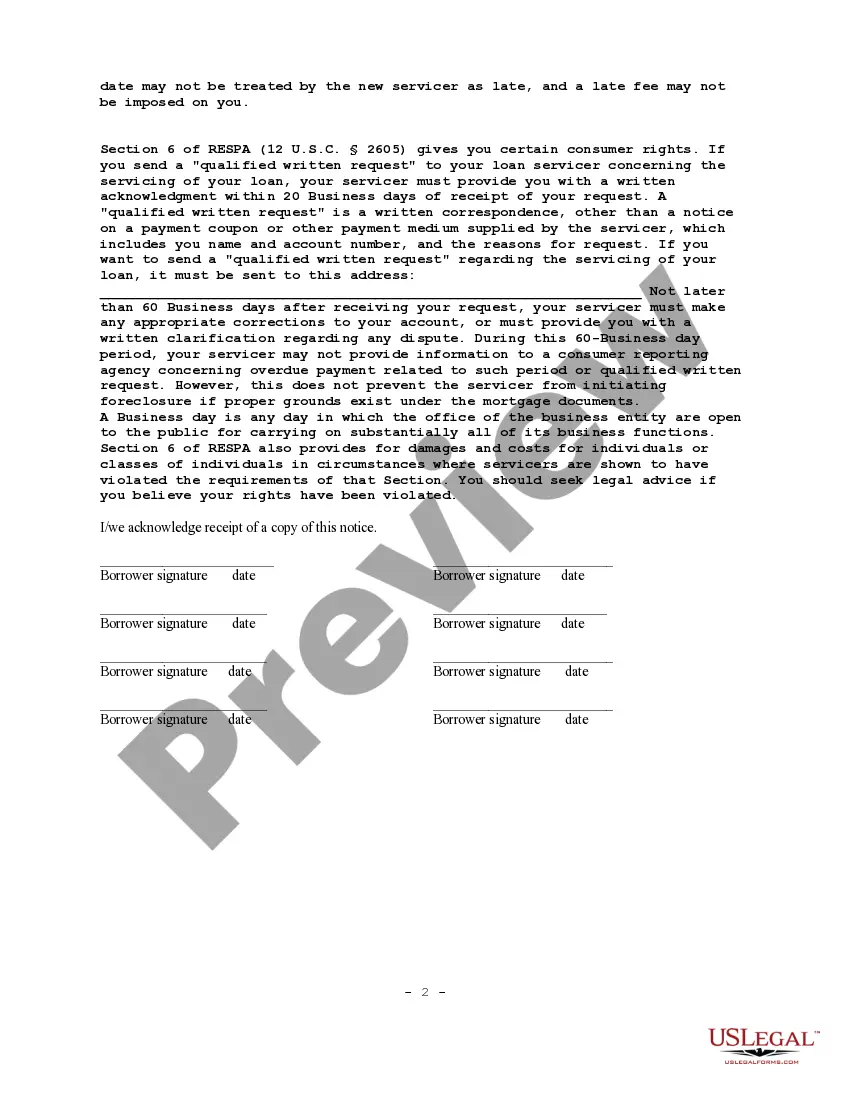
- Borrower acknowledgment: Signatures of the borrowers confirming receipt of the notice.


When to use this document
This form should be used when a borrower is notified that the company responsible for servicing their mortgage loan is changing. This situation often arises when lenders merge, sell portfolios of loans, or simply transfer the servicing rights to another company. Using this form ensures that borrowers understand who they will be dealing with for payment and servicing inquiries moving forward.
Who can use this document
- Homeowners whose mortgage loans are being assigned to a different servicer.
- Borrowers wanting to ensure they receive proper notification about changes to their loan servicing.
- Lenders or mortgage companies responsible for notifying borrowers about the transfer of servicing rights.
Steps to complete this form
- Identify the borrowers: Fill in the names of all individuals who took out the mortgage.
- Specify the bank name: Enter the name of the original lender transferring the servicing rights.
- Enter the effective date: Include the date when the transfer becomes effective.
- Provide contact information: Fill in phone numbers for both the original and new servicer.
- Obtain signatures: Ensure all borrowers sign and date the acknowledgment section.
Does this document require notarization?
This form usually doesn’t need to be notarized. However, local laws or specific transactions may require it. Our online notarization service, powered by Notarize, lets you complete it remotely through a secure video session, available 24/7.
Mistakes to watch out for
- Not providing the effective date of the transfer, which can lead to confusion.
- Failing to include all borrower's names on the form.
- Omitting contact information for the new servicer.
- Not securing signatures from all borrowers on the acknowledgment section.
Advantages of online completion
- Convenience: Download and fill out the form at your own pace from anywhere.
- Editability: Make adjustments easily to ensure accuracy before submission.
- Reliability: Get access to forms created by licensed attorneys, ensuring they meet legal standards.
State-specific requirements
This form is suitable for use across multiple states but may need changes to align with your state’s laws. Review and adapt it before final use.

Form popularity
FAQ
When you have a mortgage transferred to Fannie Mae, your loan servicer doesn't change right away. Fannie Mae is among the largest purchasers of mortgages operating in what's known as the secondary housing market.
Freddie Mac only buys mortgages that meet its underwriting criteria, meaning that it considers you a good credit risk and your home a worthy investment. Freddie Mac and Fannie Mae sell securities -- bonds, essentially -- backed by the cash flows from millions of homeowners' mortgage payments.
When must a borrower receive notice of whether loan servicing can be assigned, sold, or transferred? Either at the time of application or within three business days of application.
When your lender transfers servicing, they hand over the management of your loan to a new mortgage or servicing company. For the borrower, all this means is a new institution will be collecting your payments, handling your escrow accounts, dealing with any insurance or tax matters, and answering your questions.