Entrapment
About this form
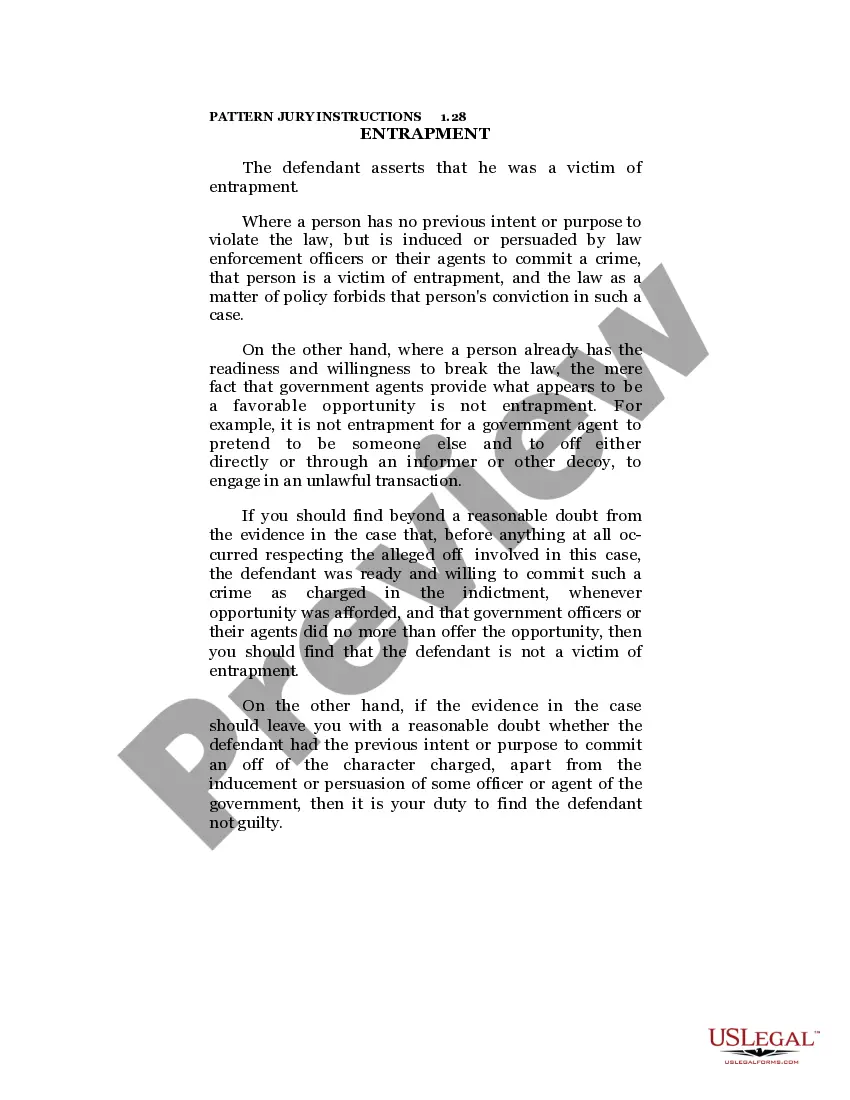
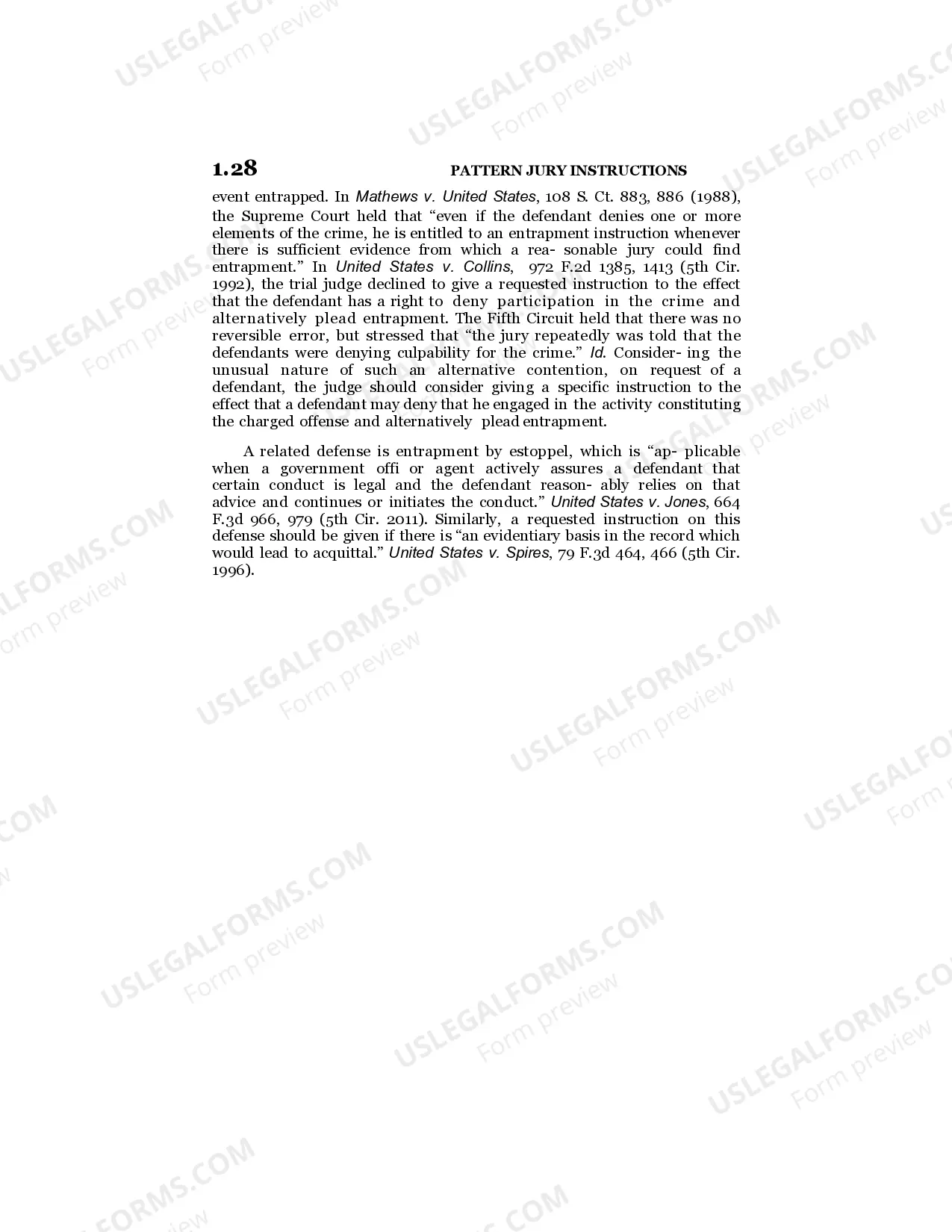
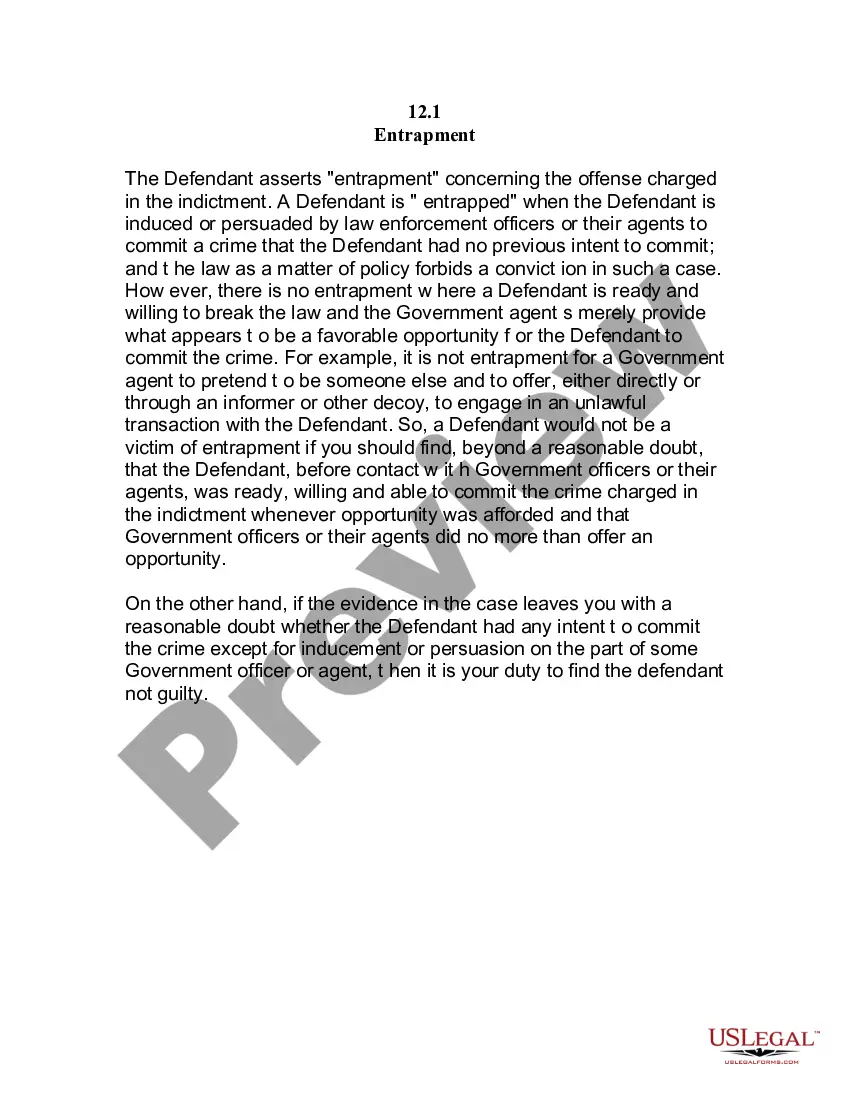
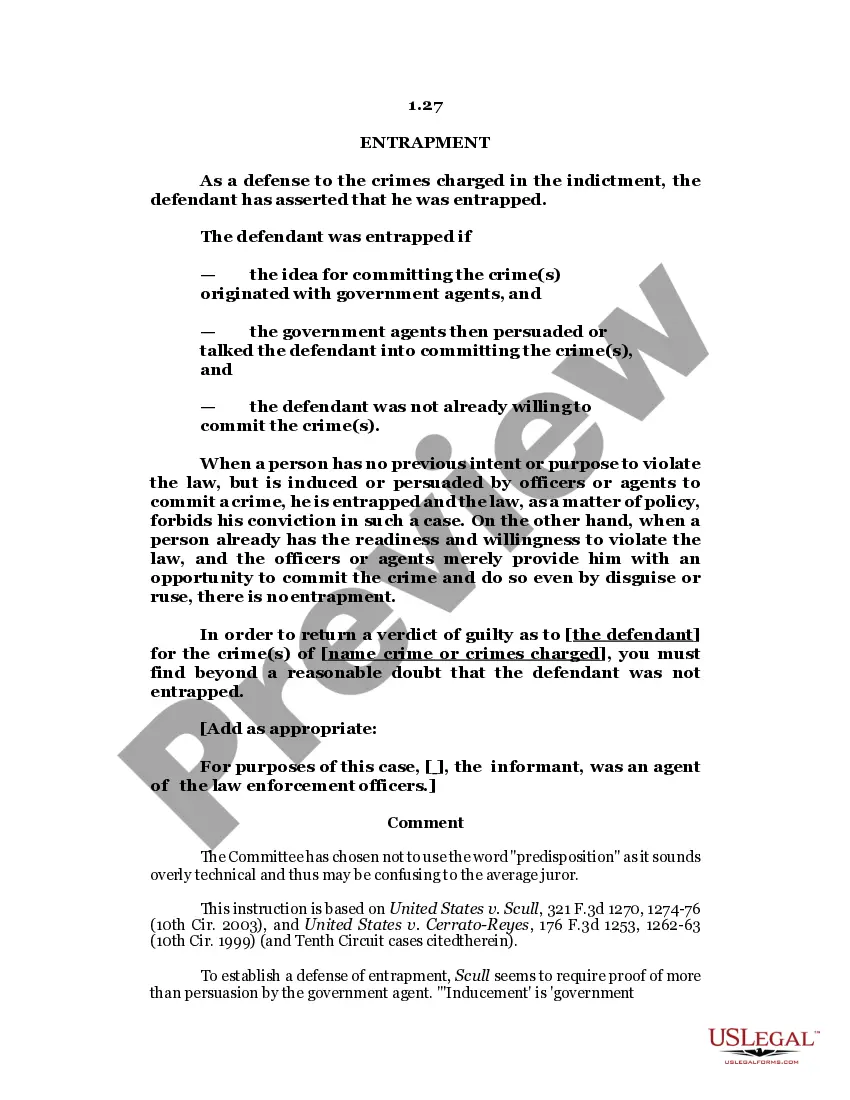
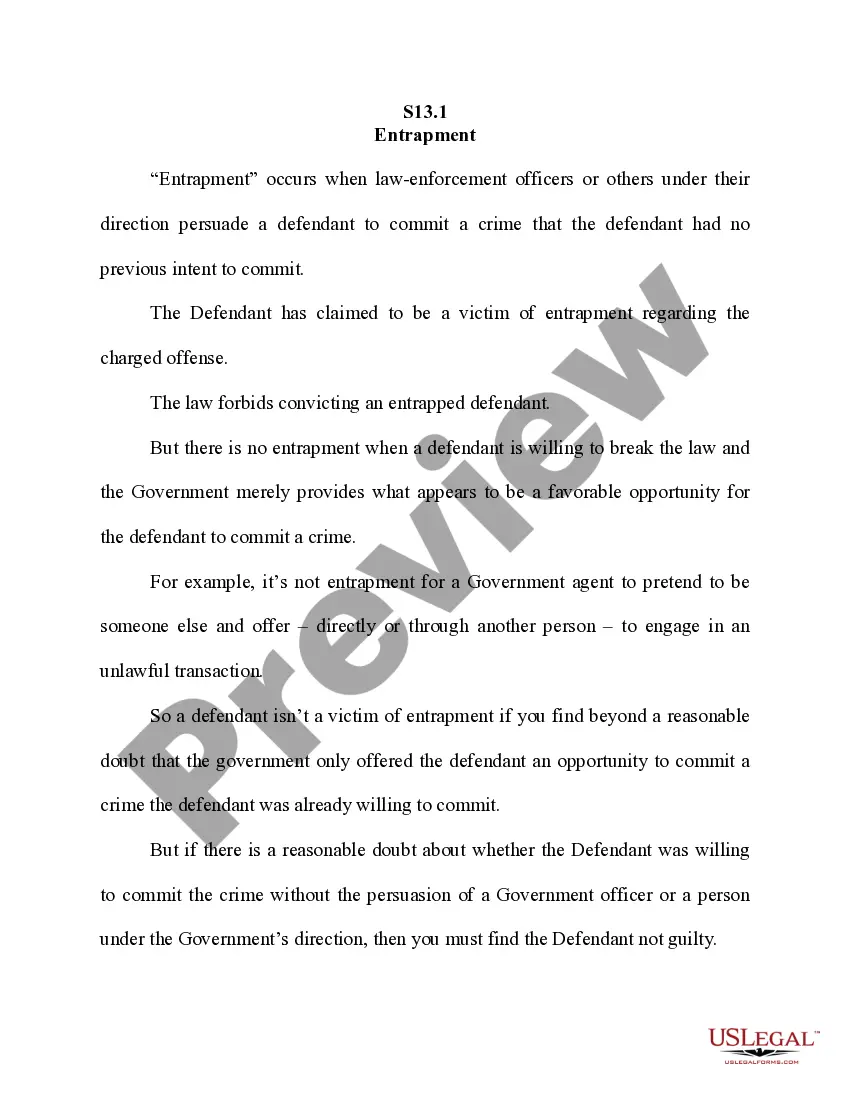
The entrapment form is a legal document used to assert that a defendant was induced by law enforcement to commit a crime they otherwise had no intention of committing. This legal concept protects individuals from being convicted if they can prove that they were persuaded by government agents to break the law. The form clearly outlines the distinctions between entrapment and a defendant's predisposition to commit a crime, ensuring that the legal rights of individuals are safeguarded against prosecutorial misconduct.
Form components explained
- Definition of entrapment and its legal implications.
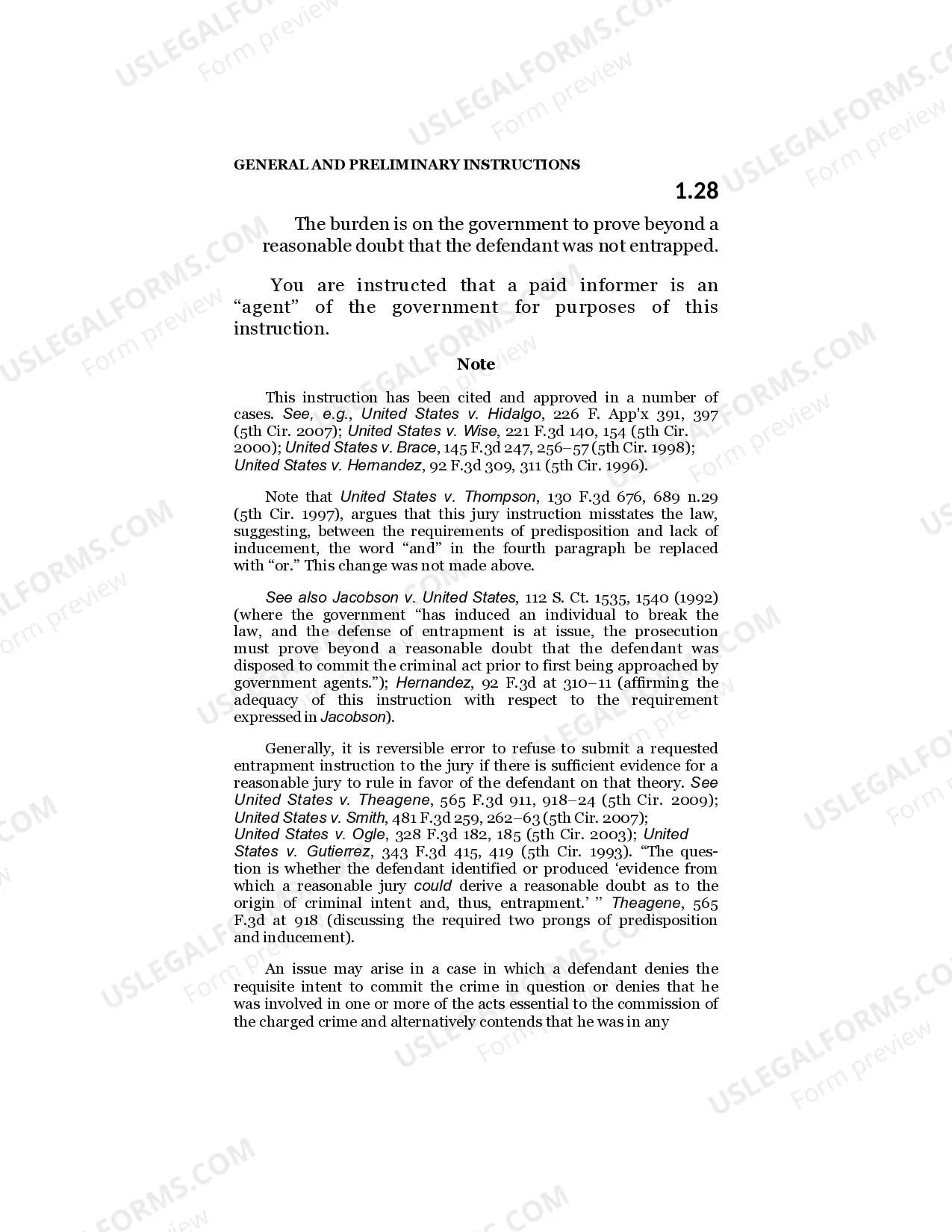
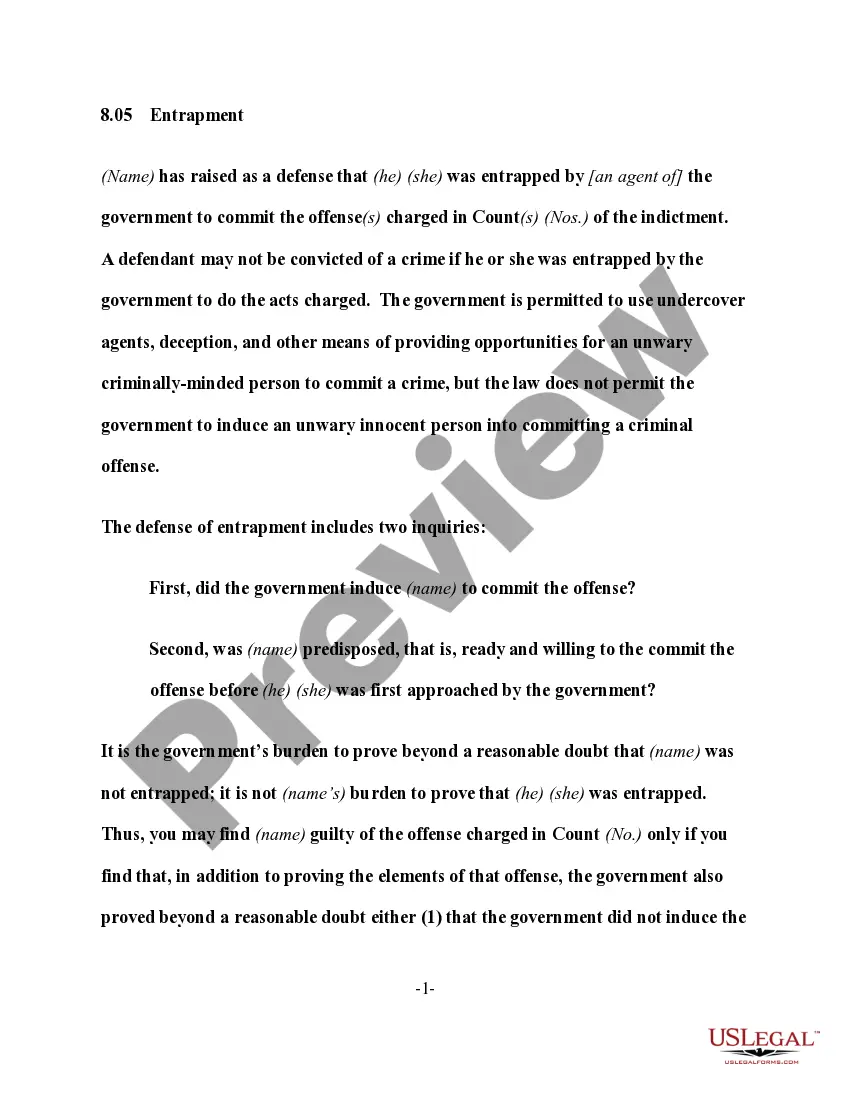
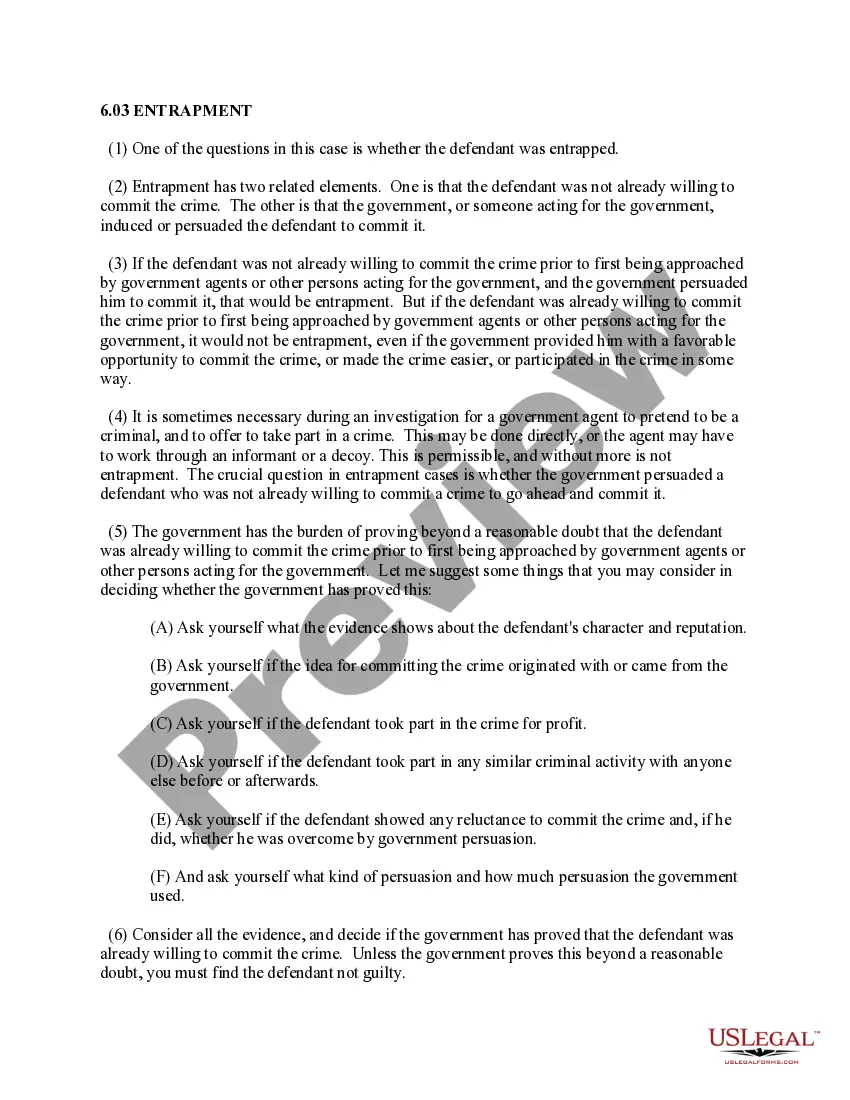
- Clarification of the burden of proof on the government.
- Criteria for determining the defendant's predisposition to commit a crime.
- Guidance on the jury's considerations regarding inducement versus predisposition.
- Legal precedents cited to support the entrapment defense.
When to use this document
This form should be used in criminal cases where the defendant believes they were coerced into committing a crime by government agents. It is particularly relevant in cases involving undercover operations or sting operations, where law enforcement's involvement may push someone to engage in illegal activities they would not have otherwise pursued. The form is essential when establishing a defense strategy centered around claims of entrapment.
Intended users of this form
- Defendants facing criminal charges who wish to assert an entrapment defense.
- Attorneys representing clients in cases involving potential entrapment.
- Individuals accused of crimes resulting from alleged coercion by law enforcement.
How to complete this form
- Identify the defendant and specify the charges they are facing.
- Clearly state the circumstances surrounding the allegations of entrapment.
- Detail any evidence that supports the claim of inducement by law enforcement.
- Include references to case law that may support the defense of entrapment.
- Review and ensure that all statements are accurate and complete before submission.
Does this form need to be notarized?
This form does not typically require notarization unless specified by local law. However, check local regulations to ensure compliance with jurisdiction-specific requirements.
Get your form ready online
Our built-in tools help you complete, sign, share, and store your documents in one place.
Make edits, fill in missing information, and update formatting in US Legal Forms—just like you would in MS Word.
Download a copy, print it, send it by email, or mail it via USPS—whatever works best for your next step.
Sign and collect signatures with our SignNow integration. Send to multiple recipients, set reminders, and more. Go Premium to unlock E-Sign.
If this form requires notarization, complete it online through a secure video call—no need to meet a notary in person or wait for an appointment.
We protect your documents and personal data by following strict security and privacy standards.

Make edits, fill in missing information, and update formatting in US Legal Forms—just like you would in MS Word.

Download a copy, print it, send it by email, or mail it via USPS—whatever works best for your next step.

Sign and collect signatures with our SignNow integration. Send to multiple recipients, set reminders, and more. Go Premium to unlock E-Sign.

If this form requires notarization, complete it online through a secure video call—no need to meet a notary in person or wait for an appointment.

We protect your documents and personal data by following strict security and privacy standards.
Typical mistakes to avoid
- Failing to provide sufficient evidence of inducement by law enforcement.
- Not understanding the difference between entrapment and predisposition.
- Submitting incomplete information regarding the circumstances of the alleged crime.
Why use this form online
- Convenient access to legally vetted templates created by licensed attorneys.
- Editability allows users to customize the form according to their specific case.
- Reliable legal language that ensures clarity and accuracy for legal proceedings.
Legal use & context
- The entrapment defense can be a critical factor in determining the outcome of criminal cases.
- Courts require a clear demonstration of government inducement and the lack of predisposition to commit the crime.
- Defendants have the right to assert an entrapment defense if evidence supports their claim.
Quick recap
- The entrapment form helps defendants assert a key legal defense against criminal charges.
- A clear understanding of the criteria for entrapment is essential for effective use.
- Proper completion of the form, with supporting evidence, bolsters the defense's chances in court.
Looking for another form?
Form popularity
FAQ
Abstract. Psychological entrapment occurs when people continue investing in unfavorable situations after already devoting too much to lose. We predicted that women who already invested more time and resources into their relationships would exert effort to improve their relationships following partner violence.
What is an example of police entrapment? A police officer offers to buy drugs from a suspected drug dealer. The dealer sells the drugs to the officer, who then arrests the dealer. This act is entrapment by inducement.
Another special rule for entrapment is that private citizens cannot entrap others. A private individual inducing another person to commit an illegal act has not committed entrapment, but has rather aided and/or abetted the crime in the eyes of the court.
What Constitutes Entrapment in California? Pressure an Individual Into Committing a Crime.Threaten Someone Into Committing a Crime.Make False Promises.Drug Crimes: An Example of Entrapment.Prostitution: An Example of Entrapment.
Entrapment is defined as a situation in which a normally law-abiding individual is induced into committing a criminal act they otherwise would not have committed because of overbearing harassment, fraud, flattery or threats made by an official police source.
Entrapment is a complete defense to a criminal charge, on the theory that "Government agents may not originate a criminal design, implant in an innocent person's mind the disposition to commit a criminal act, and then induce commission of the crime so that the Government may prosecute." Jacobson v.
Entrapment may result from the use of threats, intimidation, extended fraud, or any other means where the defendant was essentially forced to commit a crime. For example, law enforcement officers could set up a sting operation for a suspected criminal to commit a burglary.