License and Distribution Agreement - Utilizing Push Technology
Overview of this form
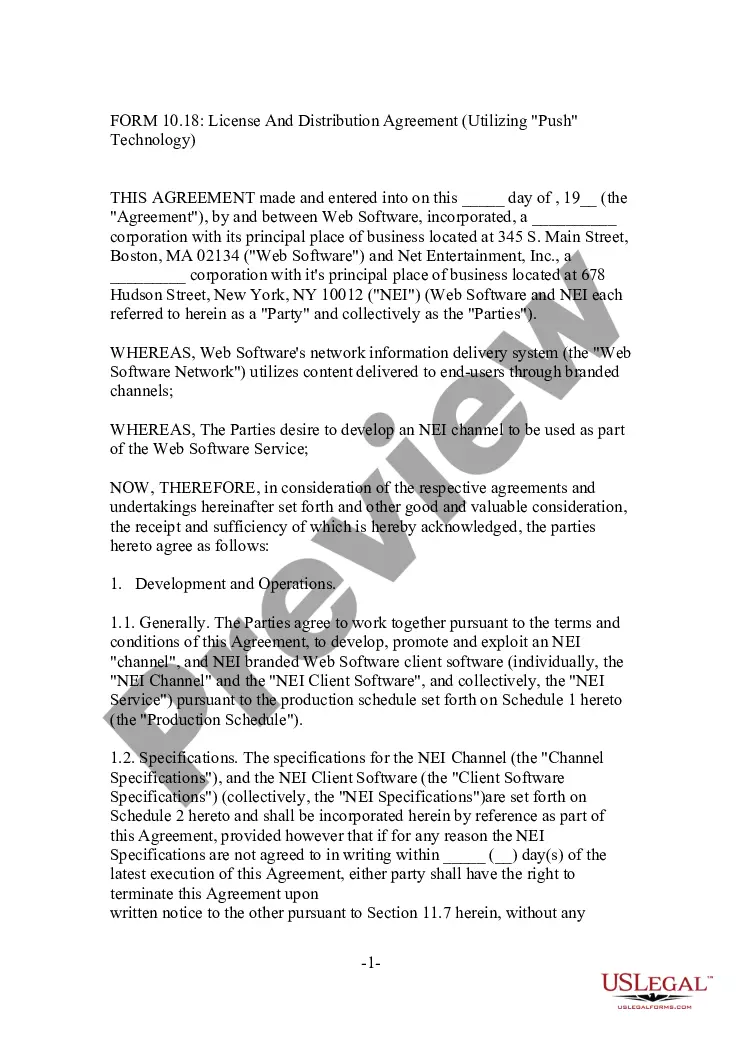
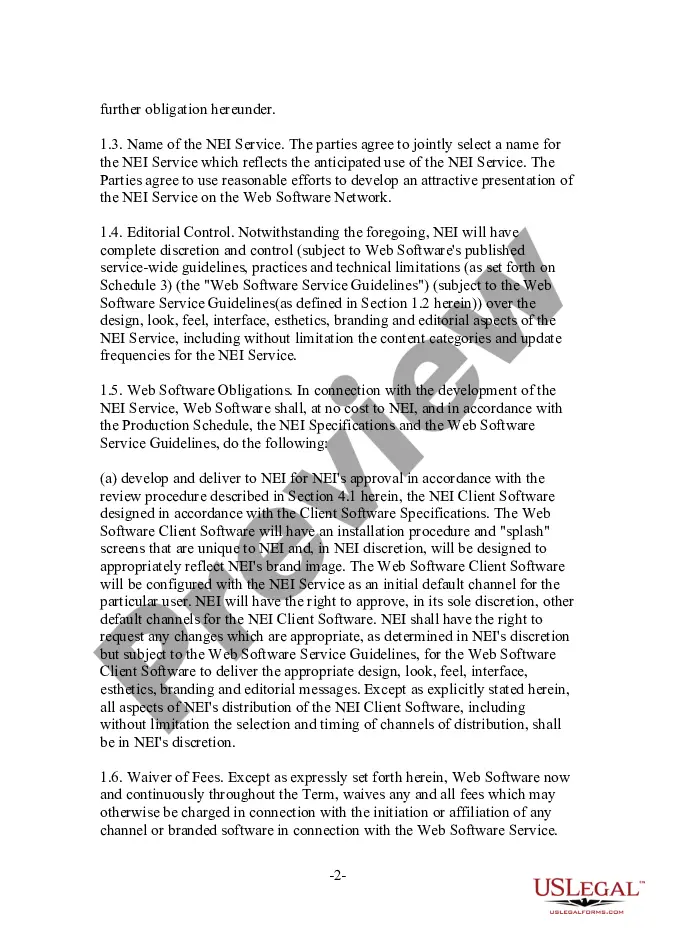
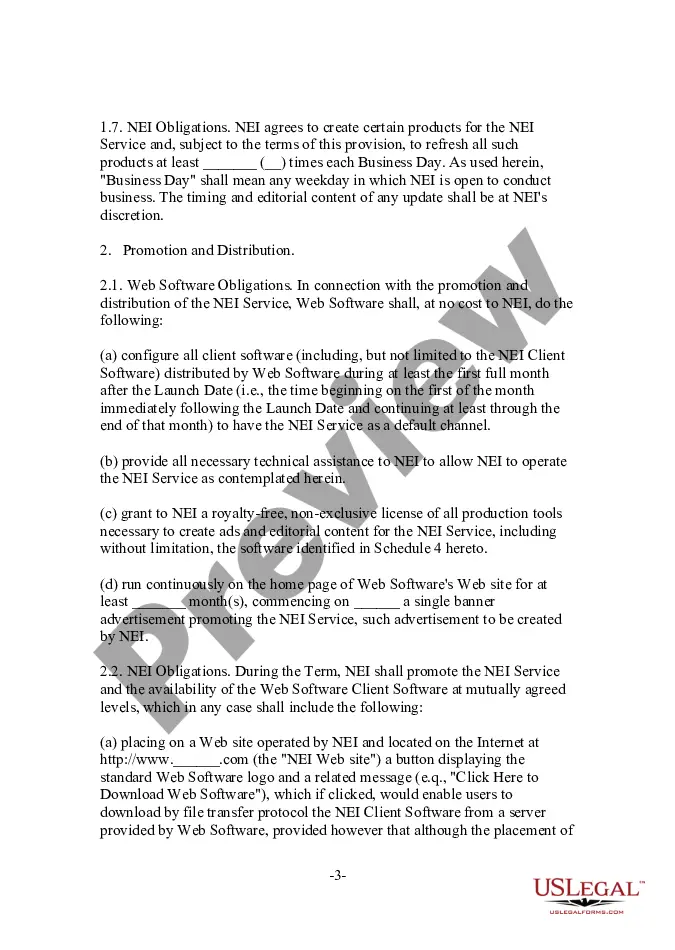
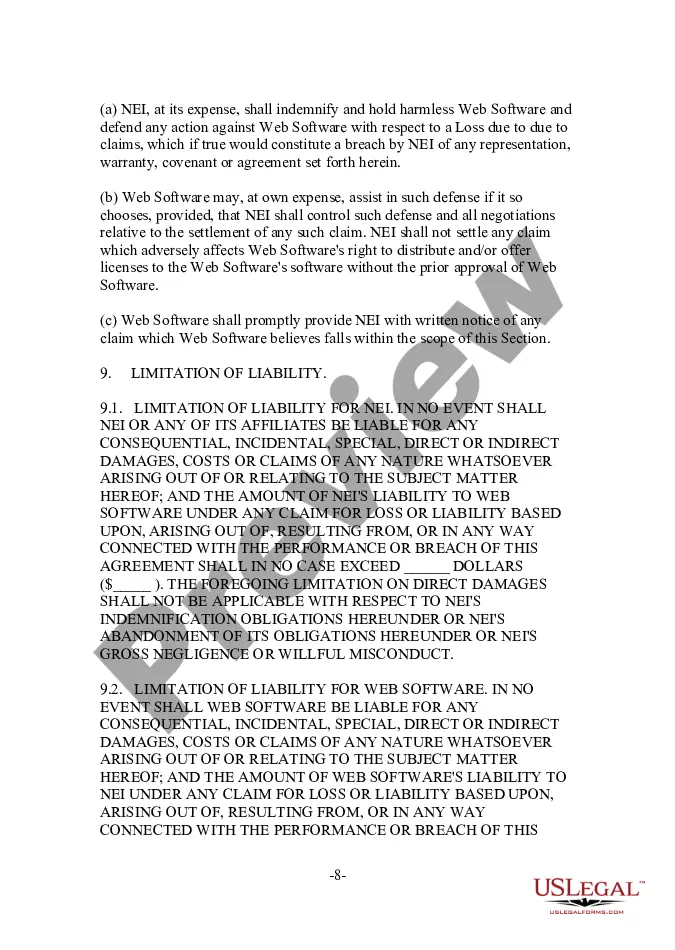
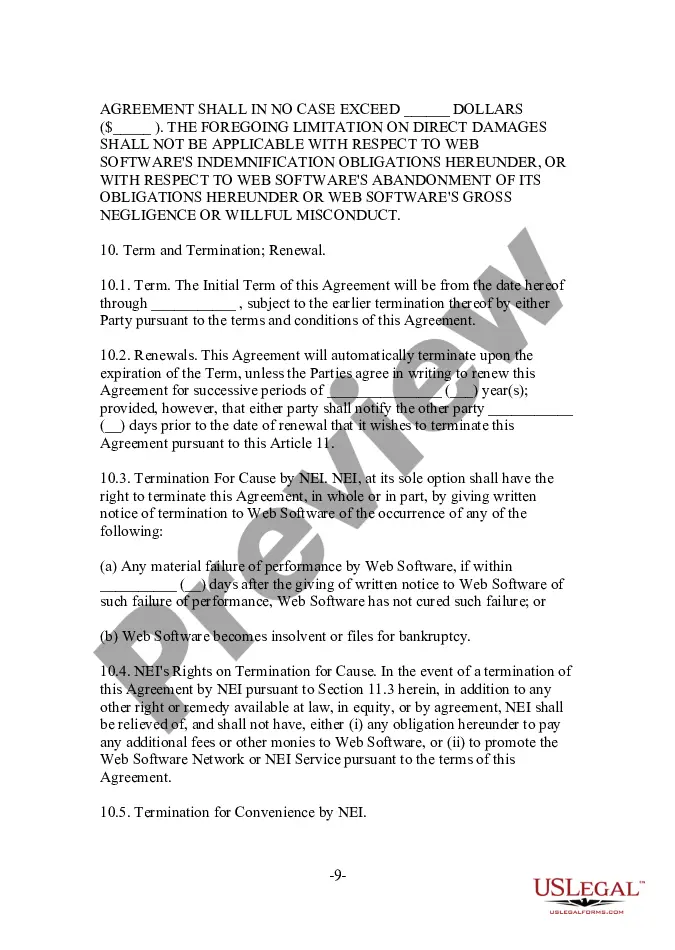
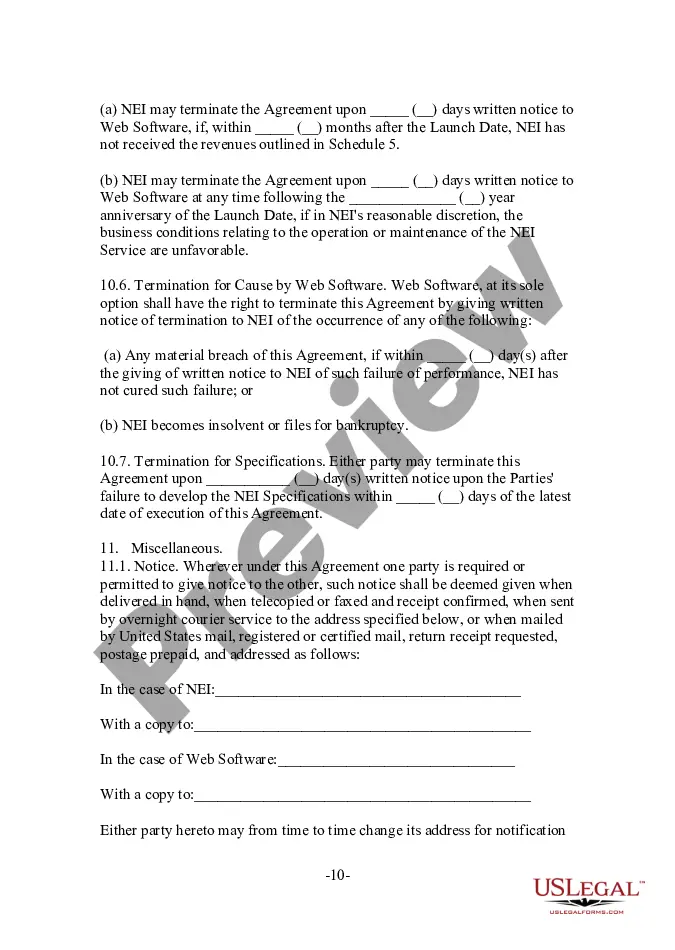
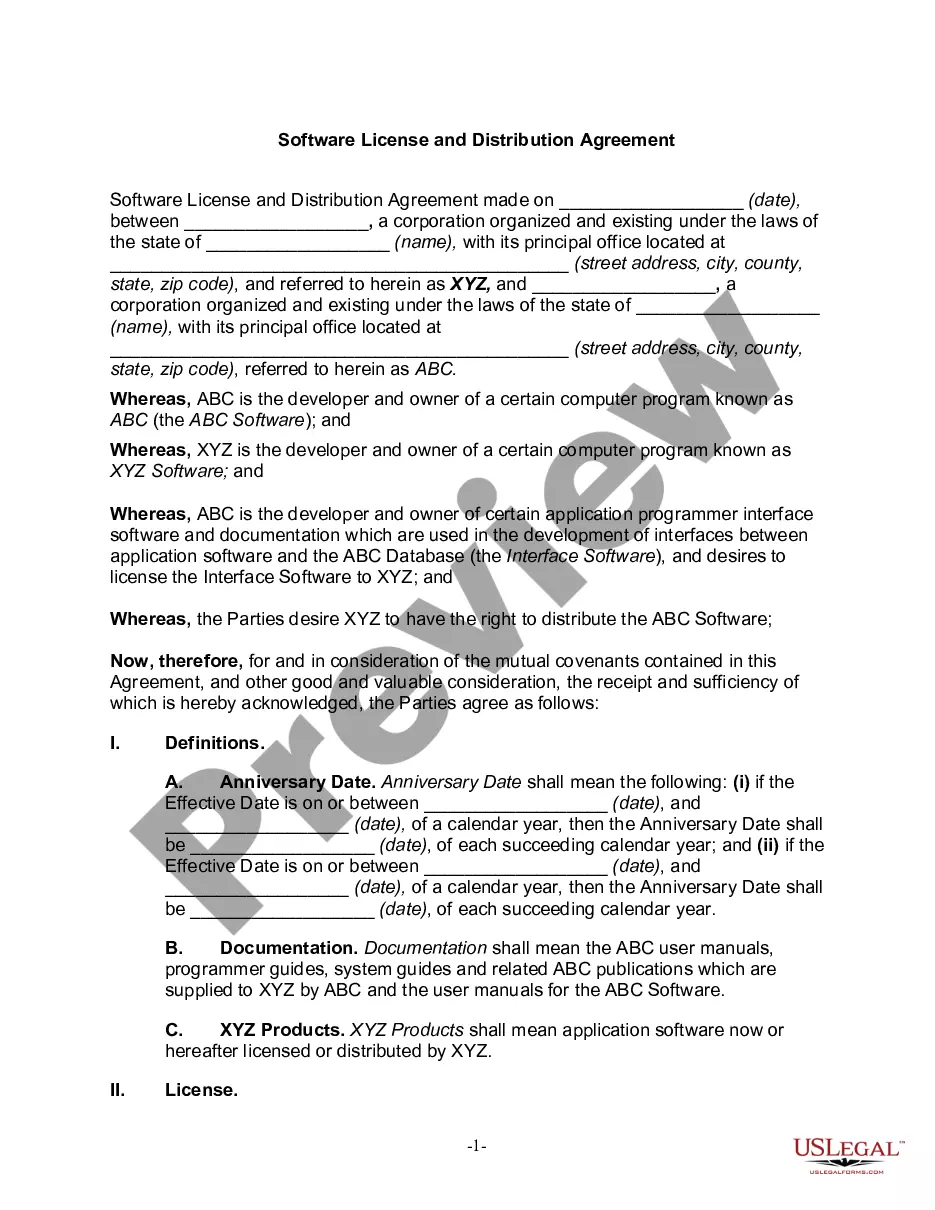
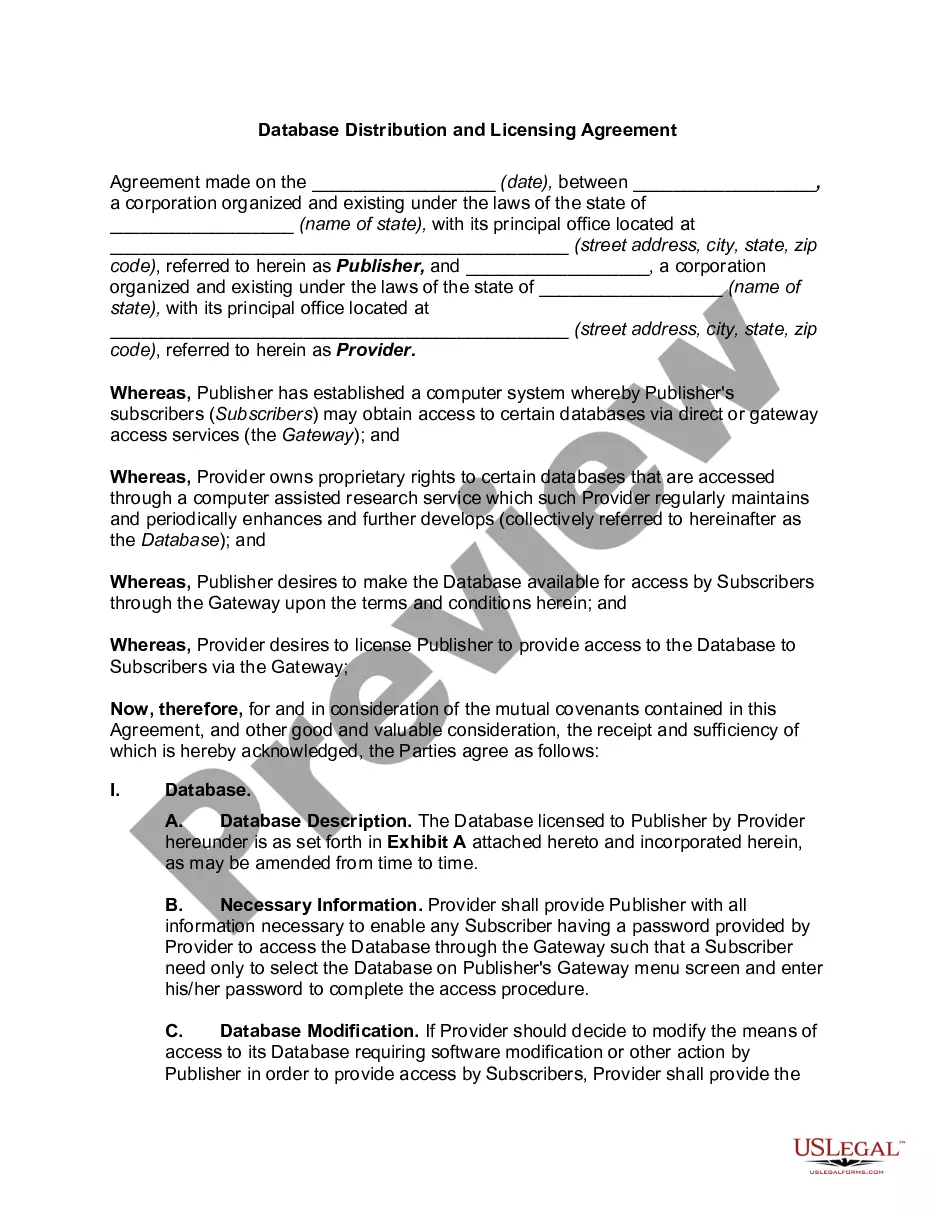
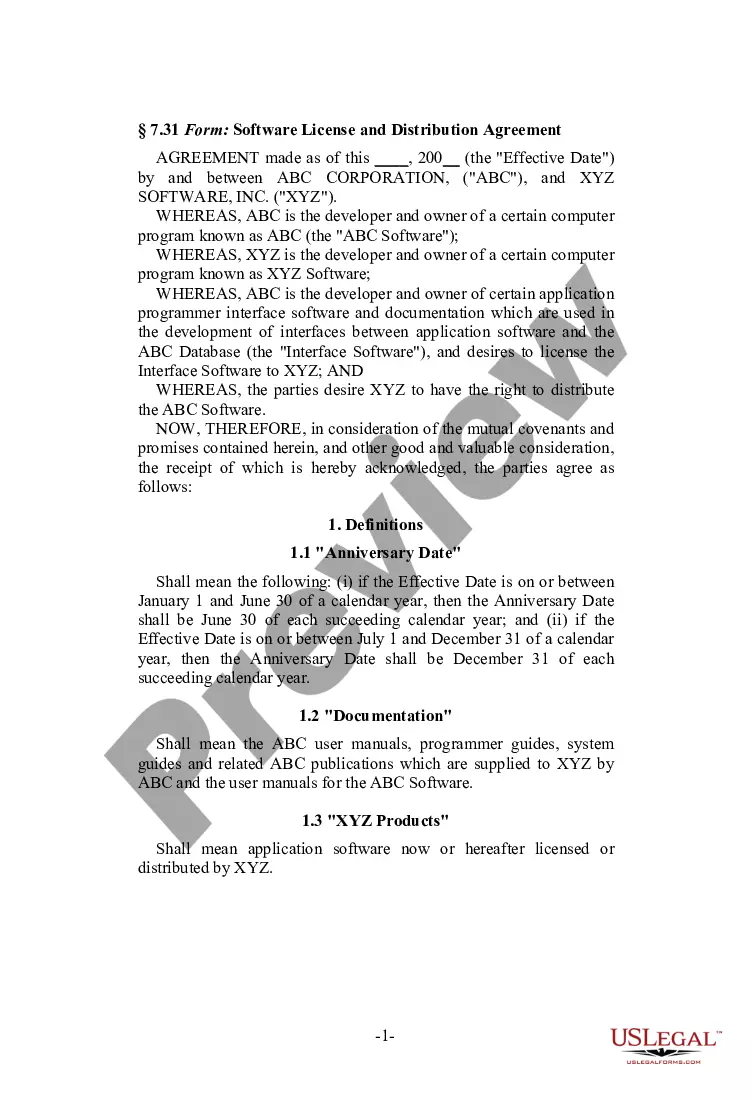
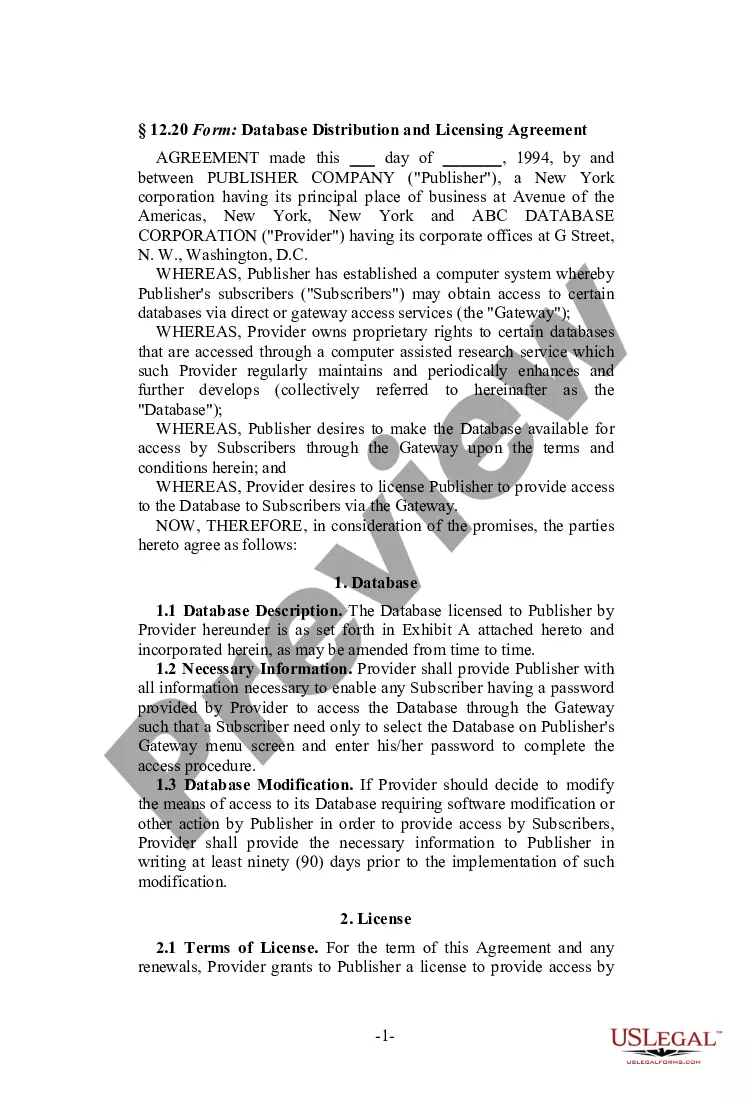
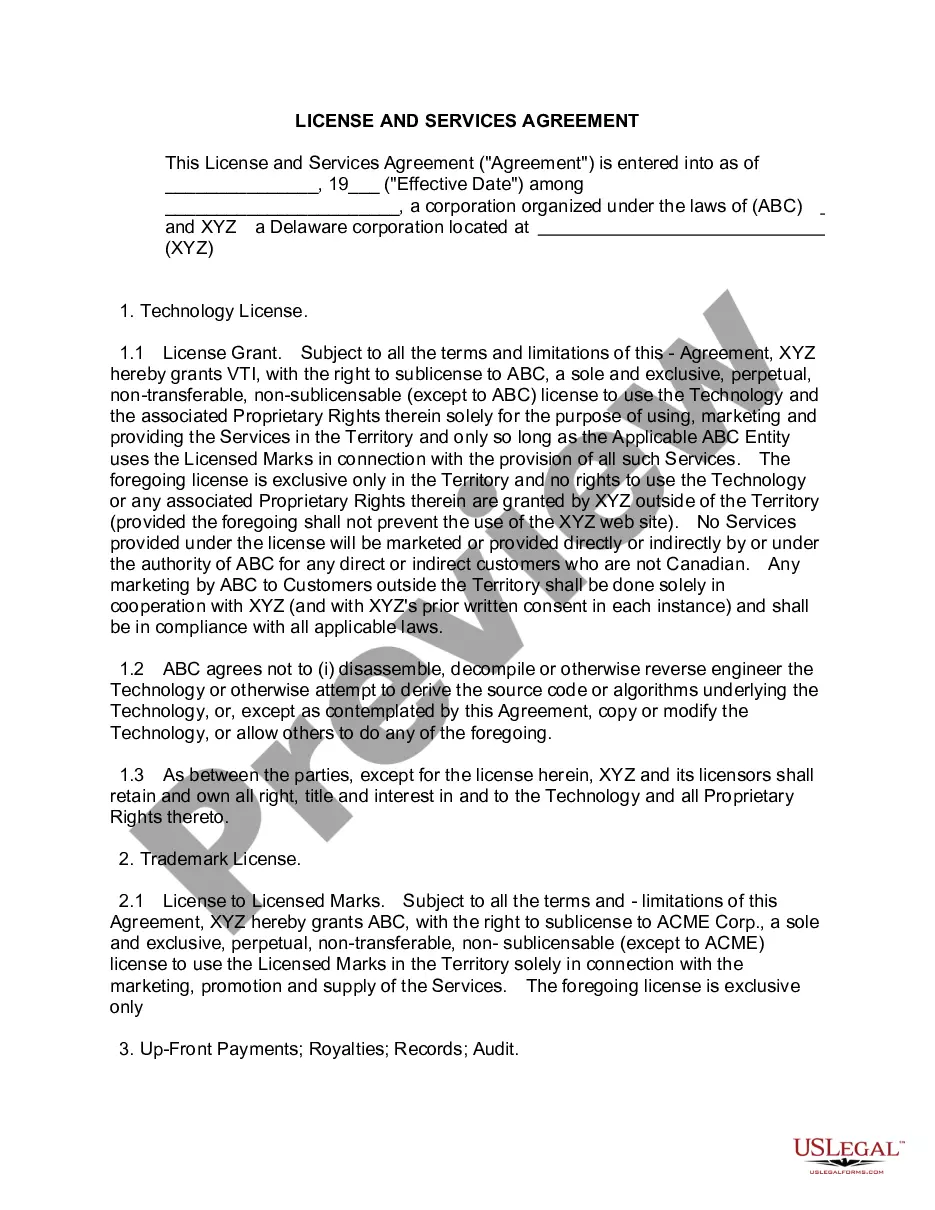
The License and Distribution Agreement - Utilizing Push Technology is a legal document designed for parties engaged in internet technology or software distribution. This agreement outlines the terms under which one party licenses their software for distribution by another party, specifically using push technology for content delivery. Unlike other distribution agreements, this form focuses on the partnership aspects and responsibilities in developing and maintaining the software service, ensuring clarity and protection for both parties involved.
Main sections of this form
- Development and operations: Details the obligations of each party regarding software development and service deployment.
- Promotion and distribution: Specifies how the software will be marketed and distributed to end-users.
- Advertising sales and revenue sharing: Outlines the terms regarding advertising space and how revenue from sales will be divided.
- Acceptance and launch: Defines the process for testing and approving the software before it goes live.
- Termination clauses: Describes conditions under which the agreement can be terminated by either party.

Common use cases
This agreement is ideal for businesses or individuals planning to collaborate on software development or distribution. It is particularly useful when one party owns proprietary software and seeks to partner with another for distribution using push technology. You should use this form when you want to clearly define your operational roles, revenue sharing, and responsibilities before launching a technology service.
Who should use this form
- Software developers looking to license their products for distribution.
- Technology firms planning to partner with others on service development.
- Businesses wanting to clarify terms surrounding software marketing and distribution efforts.
- Companies interested in utilizing push technology to enhance content delivery.
Instructions for completing this form
- Identify the parties: Enter the full legal names and addresses of both the licensor (Web Software) and licensee (Net Entertainment, Inc.).
- Specify the terms: Clearly outline the software specifications, development timelines, and obligations for each party.
- Include financial details: State the revenue sharing percentages and any fees involved within the agreement.
- Define the promotional strategies: Describe how each party will promote the NEI Service and Client Software.
- Insert dates: Provide the effective date of the agreement along with any important deadlines for deliverables or updates.
Does this form need to be notarized?
This form does not typically require notarization unless specified by local law. However, it is advisable to consult with a legal professional to ensure compliance with any jurisdiction-specific requirements.
Get your form ready online
Our built-in tools help you complete, sign, share, and store your documents in one place.
Make edits, fill in missing information, and update formatting in US Legal Forms—just like you would in MS Word.
Download a copy, print it, send it by email, or mail it via USPS—whatever works best for your next step.
Sign and collect signatures with our SignNow integration. Send to multiple recipients, set reminders, and more. Go Premium to unlock E-Sign.
If this form requires notarization, complete it online through a secure video call—no need to meet a notary in person or wait for an appointment.
We protect your documents and personal data by following strict security and privacy standards.

Make edits, fill in missing information, and update formatting in US Legal Forms—just like you would in MS Word.

Download a copy, print it, send it by email, or mail it via USPS—whatever works best for your next step.

Sign and collect signatures with our SignNow integration. Send to multiple recipients, set reminders, and more. Go Premium to unlock E-Sign.

If this form requires notarization, complete it online through a secure video call—no need to meet a notary in person or wait for an appointment.

We protect your documents and personal data by following strict security and privacy standards.
Avoid these common issues
- Failing to clearly define roles and responsibilities for each party.
- Not specifying the revenue-sharing model, leading to potential disputes later.
- Overlooking compliance with specific state regulations related to software licensing.
- Neglecting to include termination clauses or conditions can complicate future agreements.
Why use this form online
- Easy access to customizable templates that can be tailored to specific business needs.
- Quickly generate a legally binding document without the need to hire attorneys.
- Ability to save and edit forms any time, ensuring information can be updated as business needs change.
- Secure and efficient delivery of documents via electronic formats that facilitate faster agreements.
Legal use & context
- This licensing agreement is enforceable as a contract if completed properly by both parties.
- It provides legal protection for intellectual property rights associated with the software or service being licensed.
- The agreementâs terms help prevent disputes by clearly outlining each partyâs obligations and rights.
Looking for another form?


Form popularity
FAQ
Exclusive or non-exclusive. In an exclusive license, the intellectual property holder is licensing the work only to one person, for that particular use/territory. Territory. Use. Attribution. Derivative works. Confidentiality. Time frame. Termination.
Do your homework. Before you begin negotiating, you need to understand your licensee's business. Start with a term sheet. Manage your expectations. Be patient. Have a win-win attitude. Don't lose your sense of humor. Remember to hold something back. Put yourself in their shoes.
Terms and conditions of sale; term for which the contract is in effect; marketing rights; trademark licensing; geographical territory covered by the agreement; performance; reporting; and. circumstances under which the contract may be terminated.
Do your homework. Before you begin negotiating, you need to understand your licensee's business. Start with a term sheet. Manage your expectations. Be patient. Have a win-win attitude. Don't lose your sense of humor. Remember to hold something back. Put yourself in their shoes.
A license agreement is a business contract between two parties. The licensor (the seller of the license) owns the asset being licensed and the licensee (the buyer) pays for the right to use the license. The licensee pays royalties to the owner in exchange for the right to sell the product or use the technology.
A licensing agreement allows one party (the licensee) to use and/or earn revenue from the property of the owner (the licensor). Licensing agreements generate revenues, called royalties, earned by a company for allowing its copyrighted or patented material to be used by another company.
Technology licensing agreements are contracts or arrangements that involve an owner of a technology-based intellectual property, also known as a licensor, who will accept compensation in exchange for allowing an outside party, known as the licensee, resell the property, make alterations to it, or simply use it.
A technology license agreement is an arrangement that involves an owner (licensor) of some technological intellectual property who accepts compensation (consideration) to let someone else (licensee) use, change, or resell the property.