Concrete Contractor Agreement - Self-Employed
Overview of this form
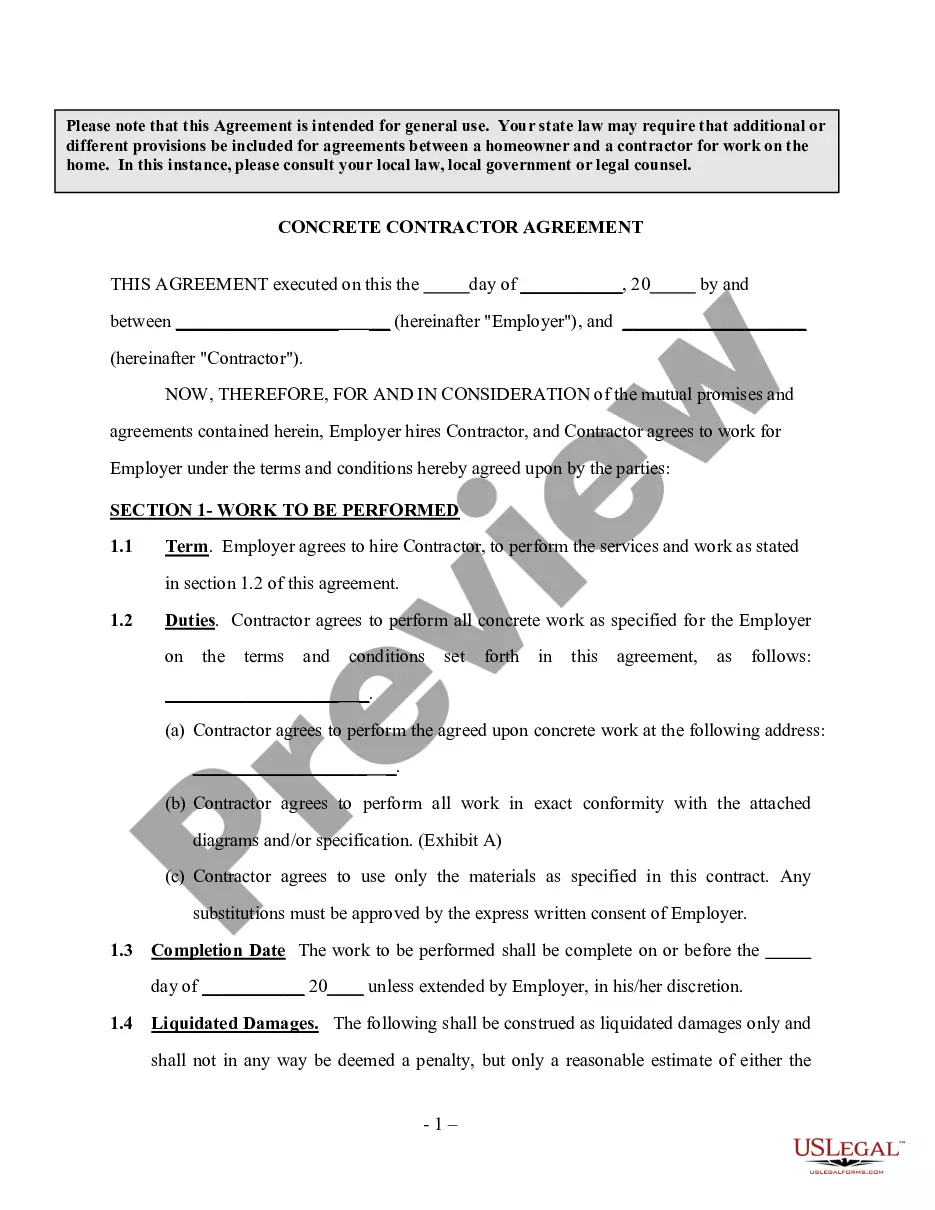
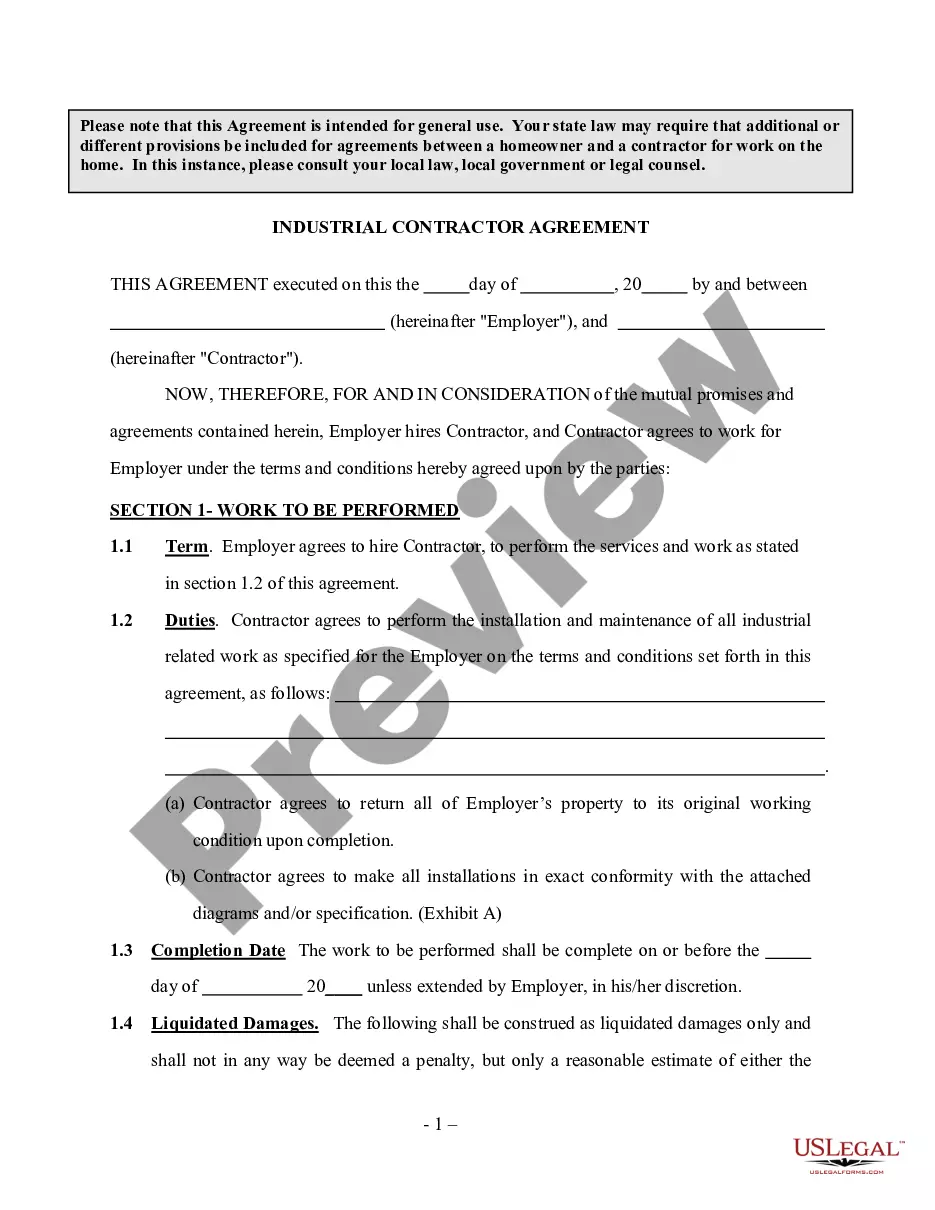
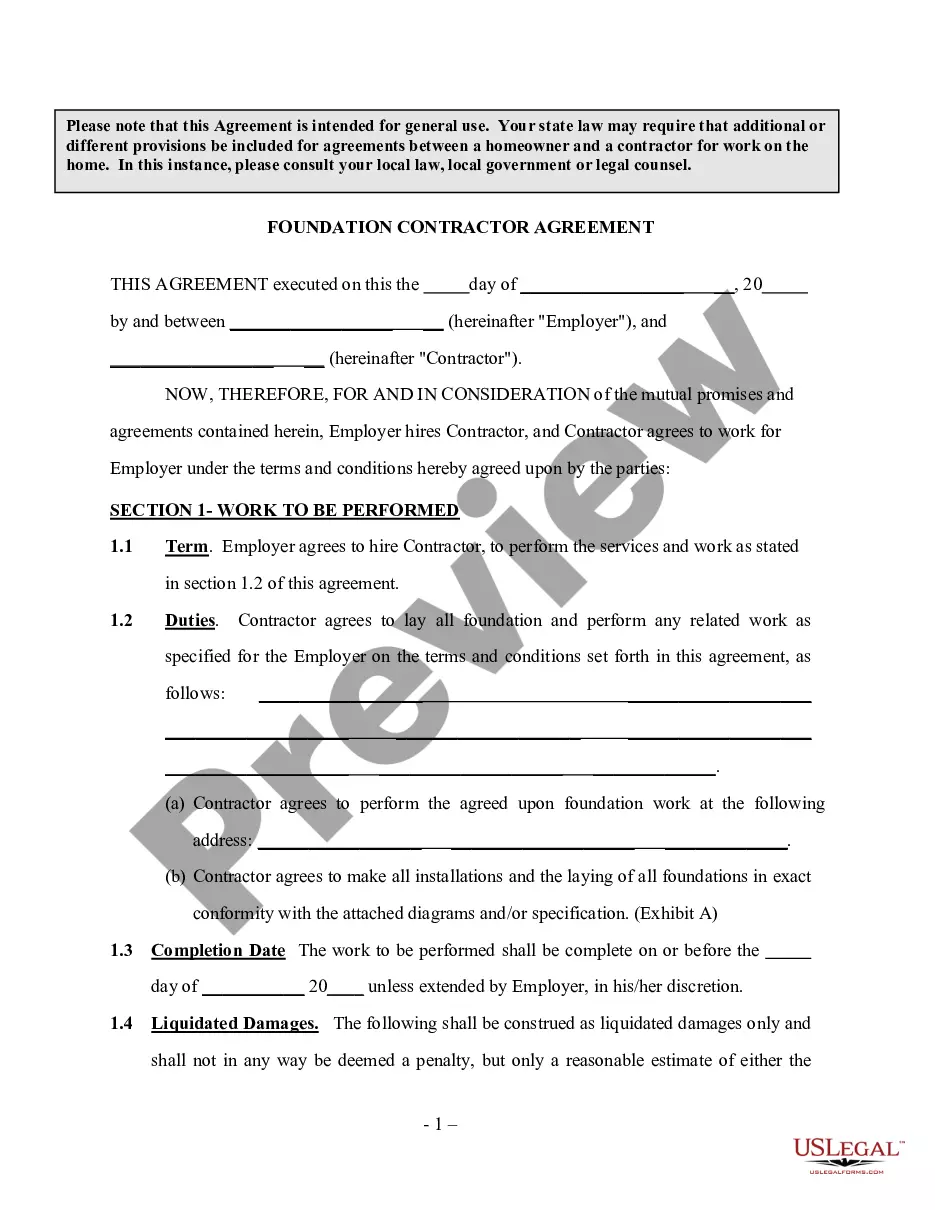
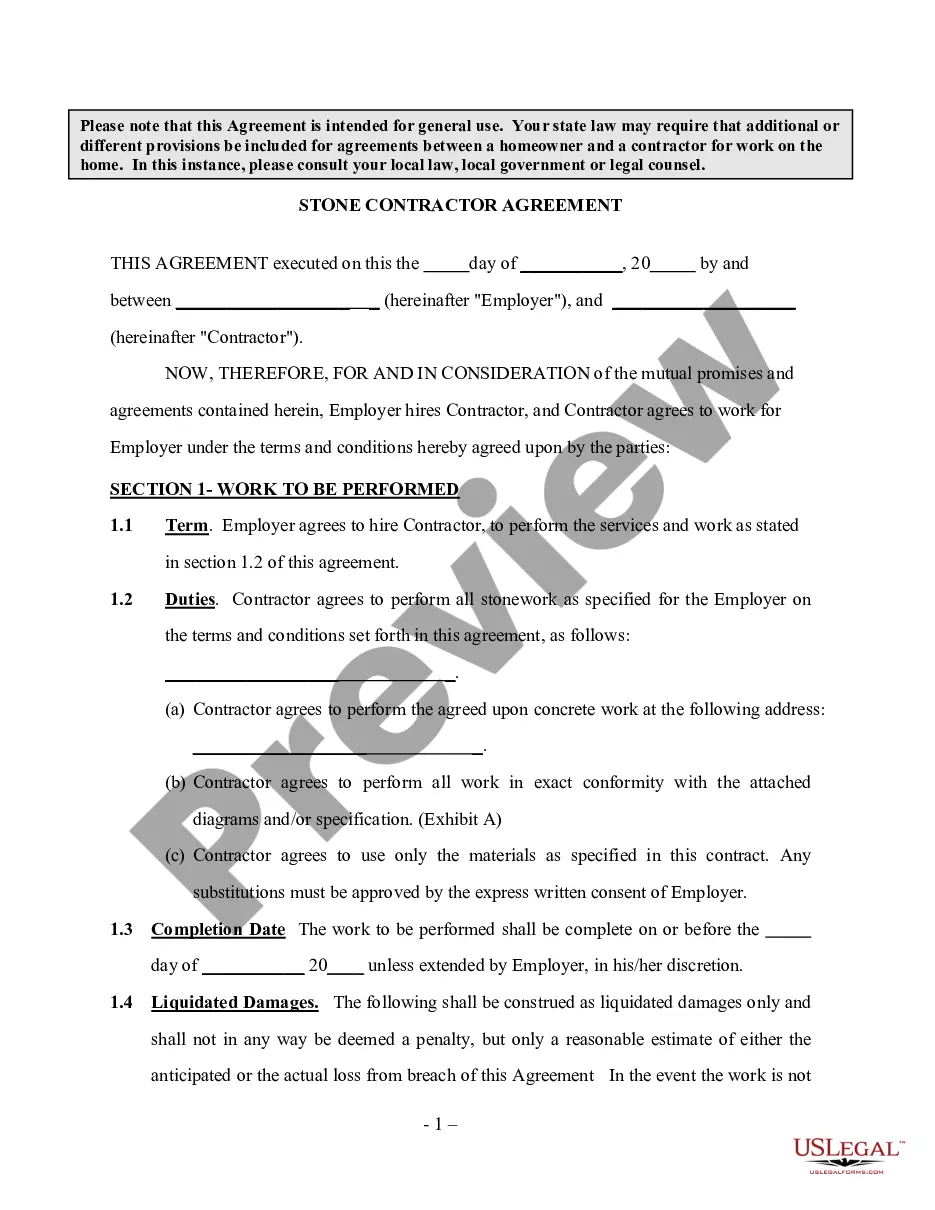
The Concrete Contractor Agreement - Self-Employed is a legal document that outlines the terms and conditions under which an independent contractor agrees to provide concrete pouring services. This agreement specifies the responsibilities of both the contractor and the employer, ensuring clarity and legal protection for both parties. It is essential for establishing a professional relationship and differs from other construction contracts by focusing specifically on the work of independent concrete contractors.
Key components of this form
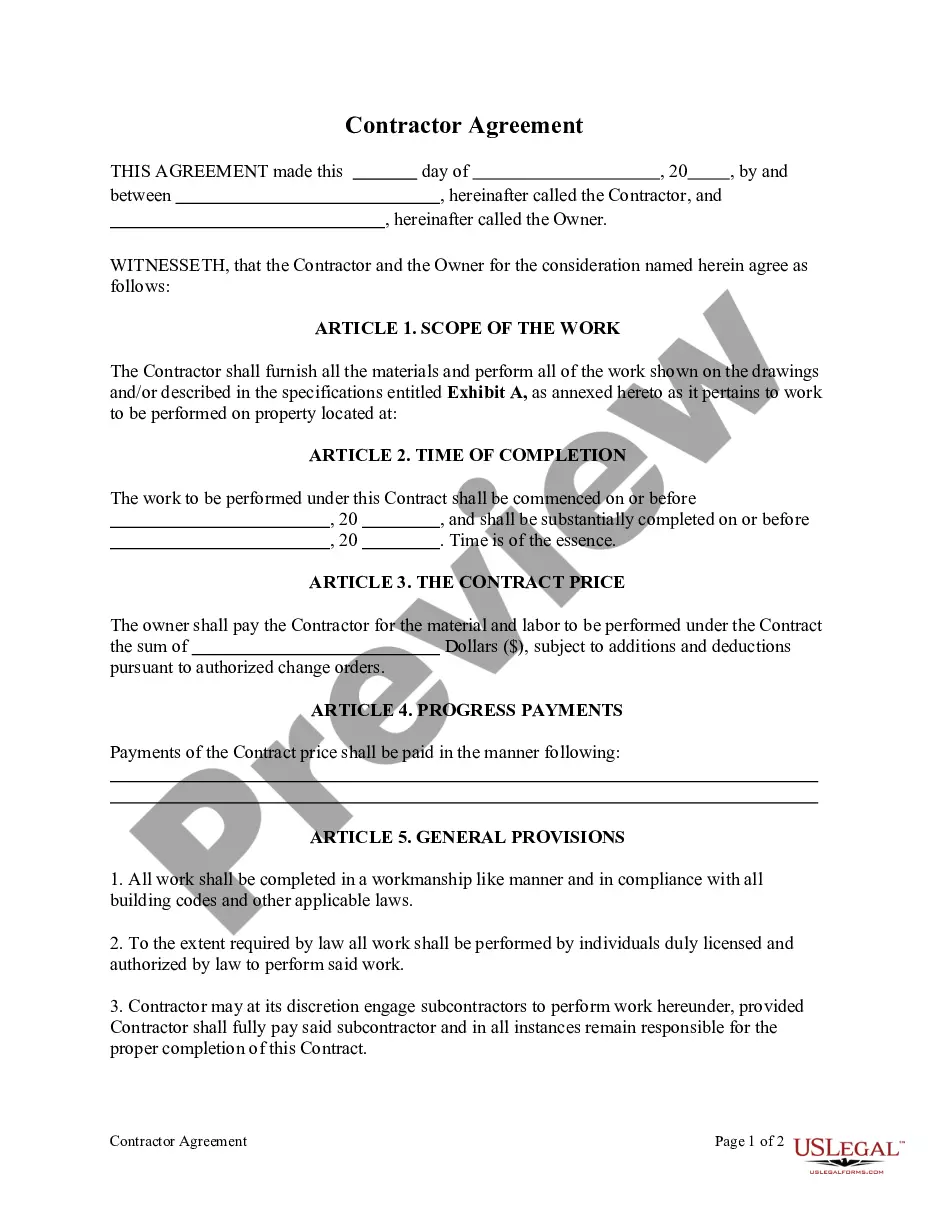
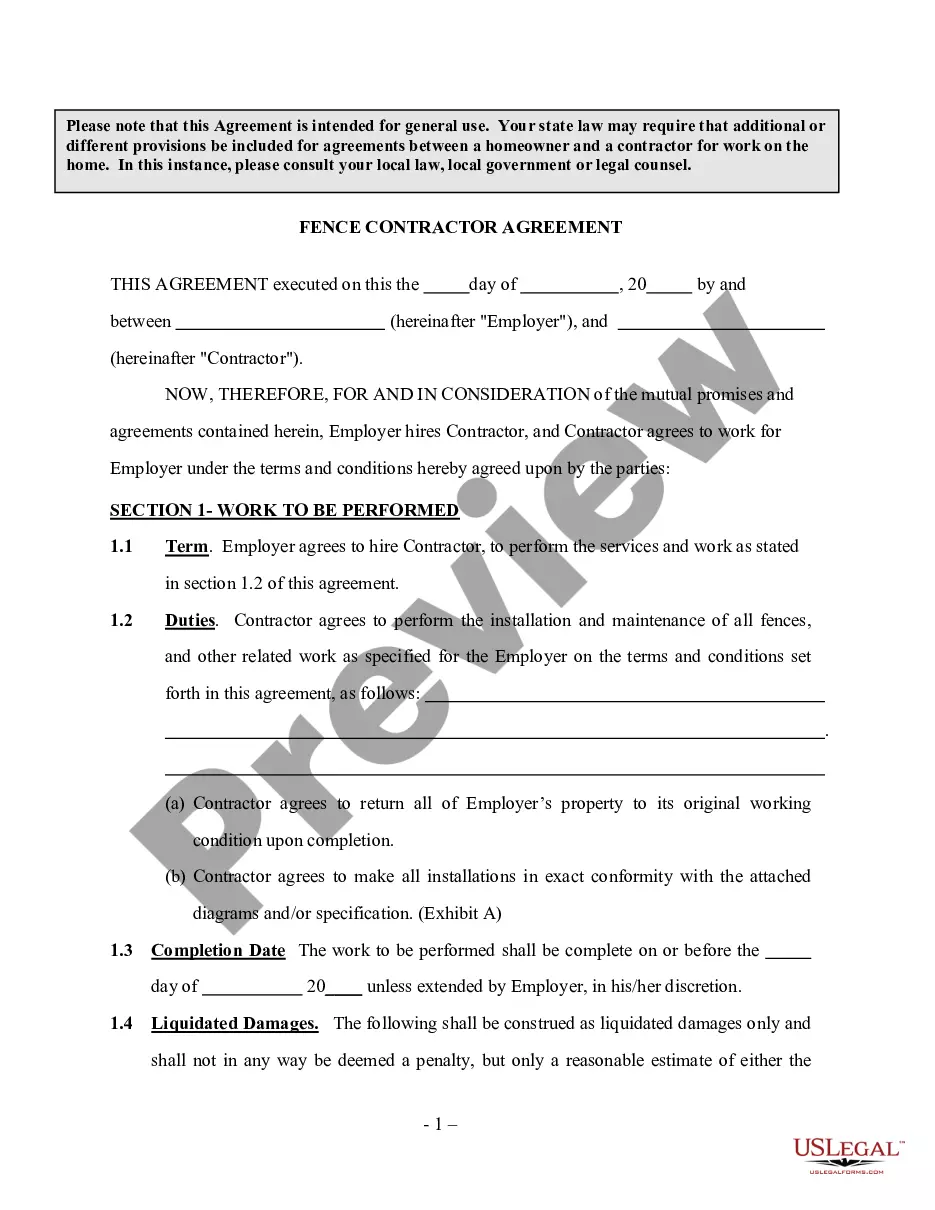
- Work to be performed: Details the specific concrete work the contractor will complete.
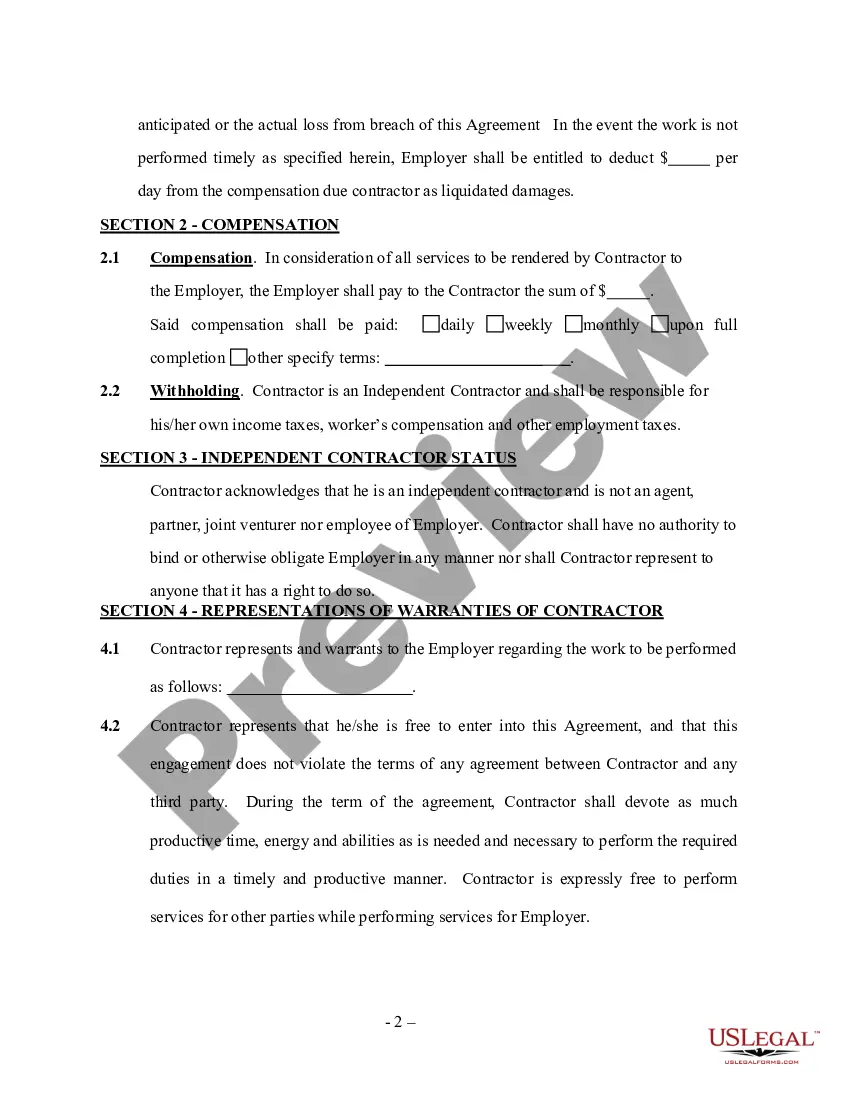
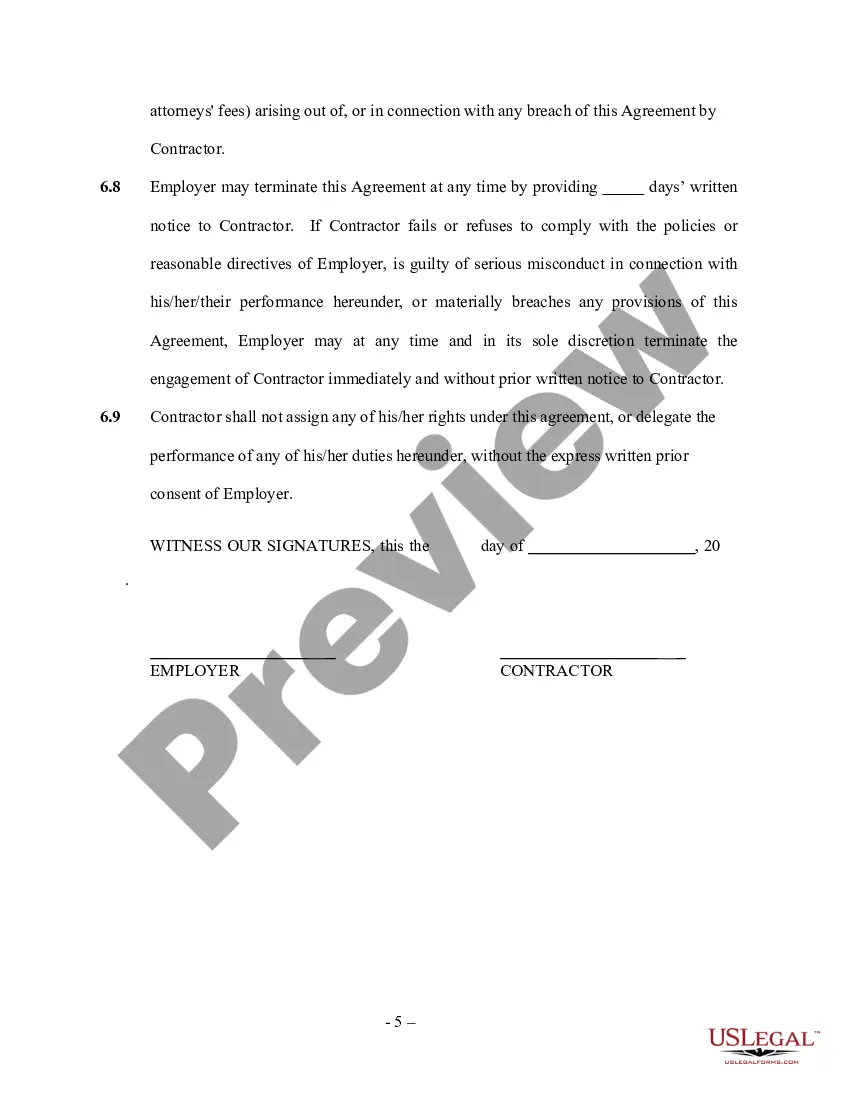
- Independent contractor status: Clarifies the nature of the contractor's relationship with the employer.
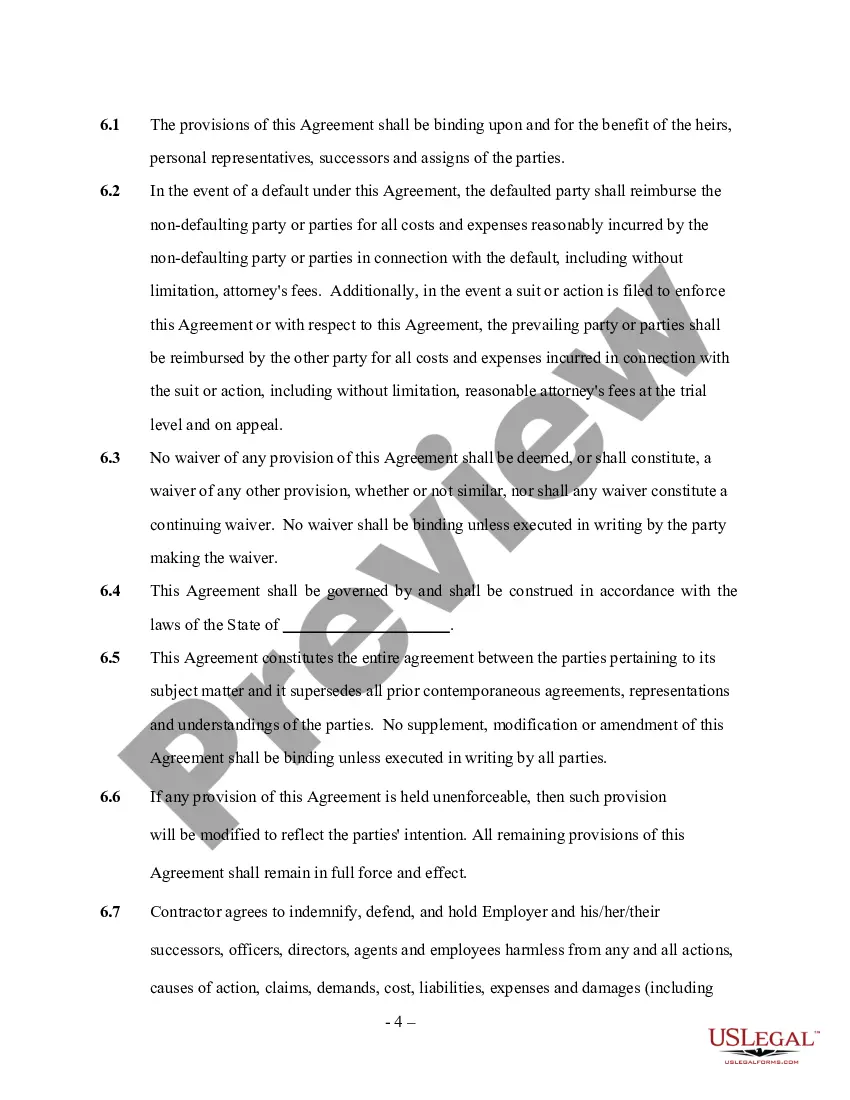
- Representations and warranties: Outlines guarantees provided by the contractor regarding their licensing and capability.
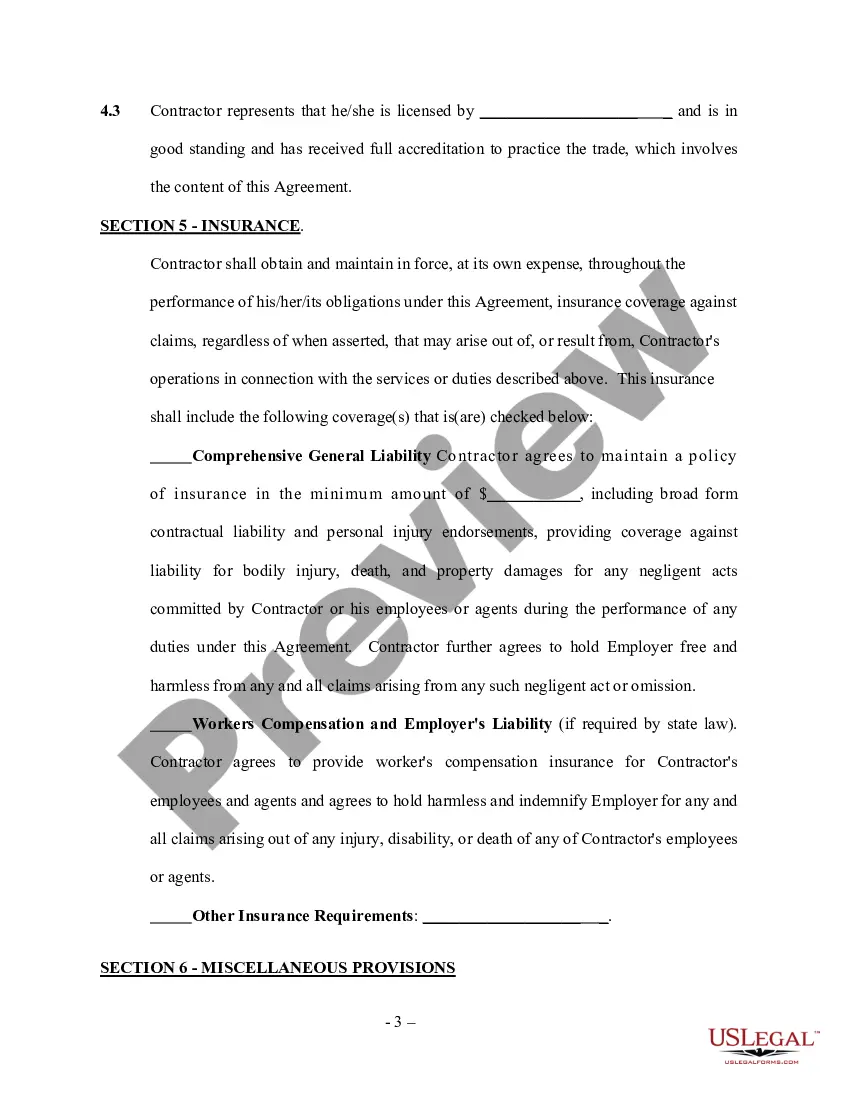
- Insurance requirements: Specifies the need for the contractor to maintain certain insurance coverage.
- Indemnification clause: Details the contractor's obligation to protect the employer from legal claims related to their work.
When to use this document
This form is essential when a homeowner or business needs to hire a self-employed concrete contractor. It should be used for any concrete pouring project, such as driveways, sidewalks, or foundations. By utilizing this agreement, both parties can ensure that the project's scope, budget, and timelines are clearly established, reducing potential disputes.
Who can use this document
- Homeowners contracting for concrete work on their property.
- Business owners hiring independent concrete contractors for commercial projects.
- Concrete contractors who want to formalize agreements with employers.
Instructions for completing this form
- Identify the parties by entering the names and addresses of the contractor and employer.
- Specify the nature of the concrete work to be performed, including the location and any diagrams or specifications needed.
- Enter the duration of the contract and specify any critical project deadlines.
- Complete the insurance section, ensuring the contractor lists the required coverage.
- Obtain signatures from both parties to finalize the agreement.
Does this form need to be notarized?
Notarization is generally not required for this form. However, certain states or situations might demand it. You can complete notarization online through US Legal Forms, powered by Notarize, using a verified video call available anytime.
Get your form ready online
Our built-in tools help you complete, sign, share, and store your documents in one place.
Make edits, fill in missing information, and update formatting in US Legal Forms—just like you would in MS Word.
Download a copy, print it, send it by email, or mail it via USPS—whatever works best for your next step.
Sign and collect signatures with our SignNow integration. Send to multiple recipients, set reminders, and more. Go Premium to unlock E-Sign.
If this form requires notarization, complete it online through a secure video call—no need to meet a notary in person or wait for an appointment.
We protect your documents and personal data by following strict security and privacy standards.

Make edits, fill in missing information, and update formatting in US Legal Forms—just like you would in MS Word.

Download a copy, print it, send it by email, or mail it via USPS—whatever works best for your next step.

Sign and collect signatures with our SignNow integration. Send to multiple recipients, set reminders, and more. Go Premium to unlock E-Sign.

If this form requires notarization, complete it online through a secure video call—no need to meet a notary in person or wait for an appointment.

We protect your documents and personal data by following strict security and privacy standards.
Common mistakes to avoid
- Failing to specify the exact work to be performed can lead to misunderstandings.
- Not reviewing local laws that may impose additional requirements on contractor agreements.
- Omitting signatures, which can render the agreement unenforceable.
Why complete this form online
- Convenience: Fill out and download the form anytime, anywhere.
- Editability: Easily customize the agreement to fit your specific needs and project details.
- Reliability: The templates are drafted by licensed attorneys, ensuring legal soundness.
Looking for another form?


Form popularity
FAQ
Provides a template that sets the terms for a self-employed concrete contractor. It clarifies the independent contractor relationship, outlines the work to be performed, and specifies insurance, indemnification, and representations. Use this form to establish a professional, written agreement that protects both the contractor and the hiring party for concrete pouring projects.
This form provides a ready-made structure for documenting the scope of work, the independent contractor relationship, warranties, insurance requirements, and an indemnification clause. To use it, fill in the specifics of your project, confirm the contractor’s self-employed status, attach required insurance, and have both parties sign to create a binding agreement.
In general, independent contractor status is about control, financial arrangement, and relationship. This form reinforces the self-employed relationship by clearly labeling the contractor as independent and outlining responsibilities like work performed, warranties, insurance, and indemnification. For specific tax determinations, consult a licensed tax professional.
Stick to the terms in the Concrete Contractor Agreement - Self-Employed and avoid promising benefits, changing payment terms, or implying employee status. Do not introduce terms or conditions outside the Work to be performed, independent contractor status, insurance, or indemnification sections. Any changes should be in writing and signed by both parties.
This form is designed as a ready-to-use agreement template for a self-employed concrete contractor. You can customize the fields for the concrete project, but ensure the essential components—work to be performed, independent contractor status, representations and warranties, insurance requirements, and indemnification—are completed. For complete legality, consider consulting an attorney.
This agreement is tailored for self-employed concrete contractors. It explicitly confirms independent contractor status and includes the core provisions—work to be performed, representations and warranties, insurance requirements, and an indemnification clause—designed to protect both parties in a self-employed relationship, unlike standard employee-based contractor agreements.