Stone Contractor Agreement - Self-Employed
Overview of this form
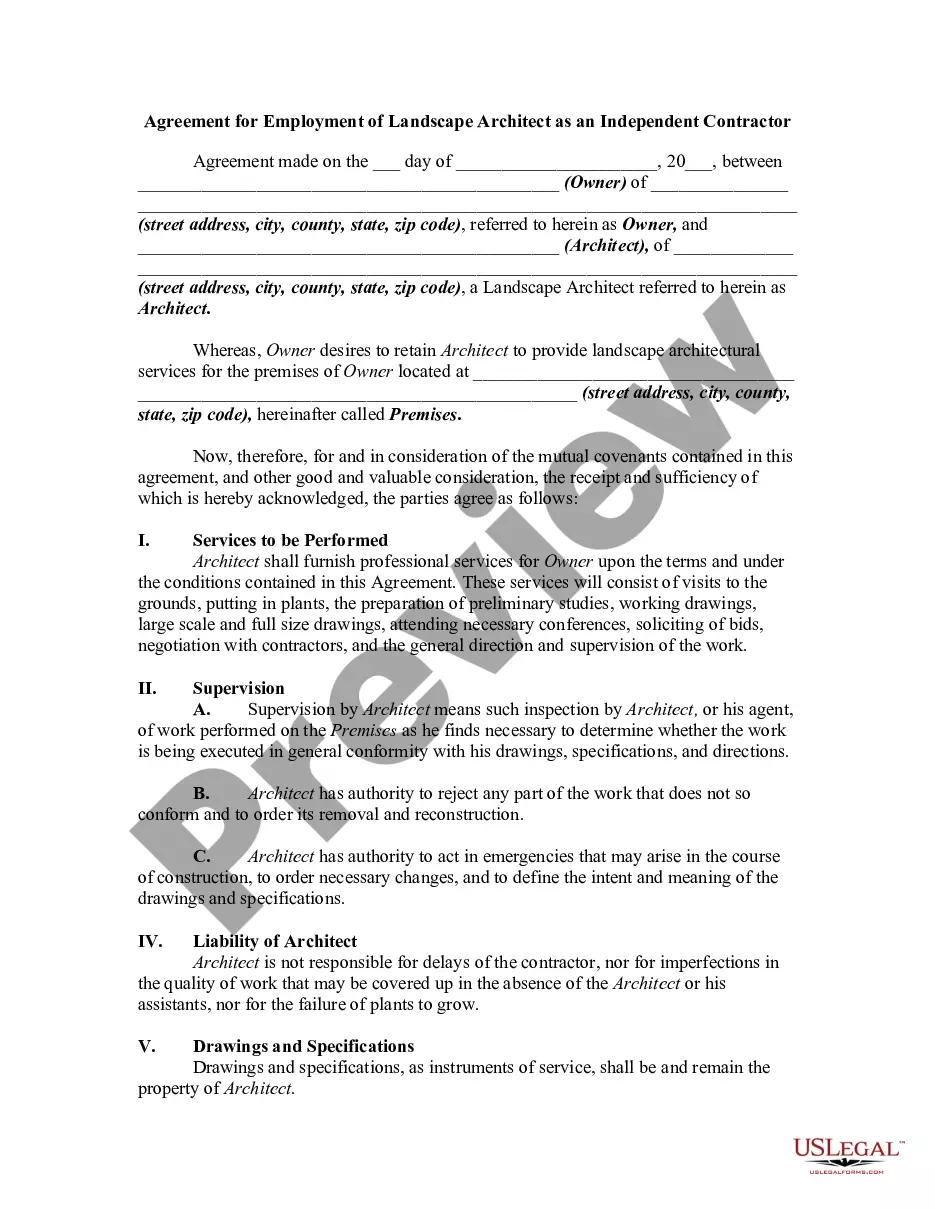
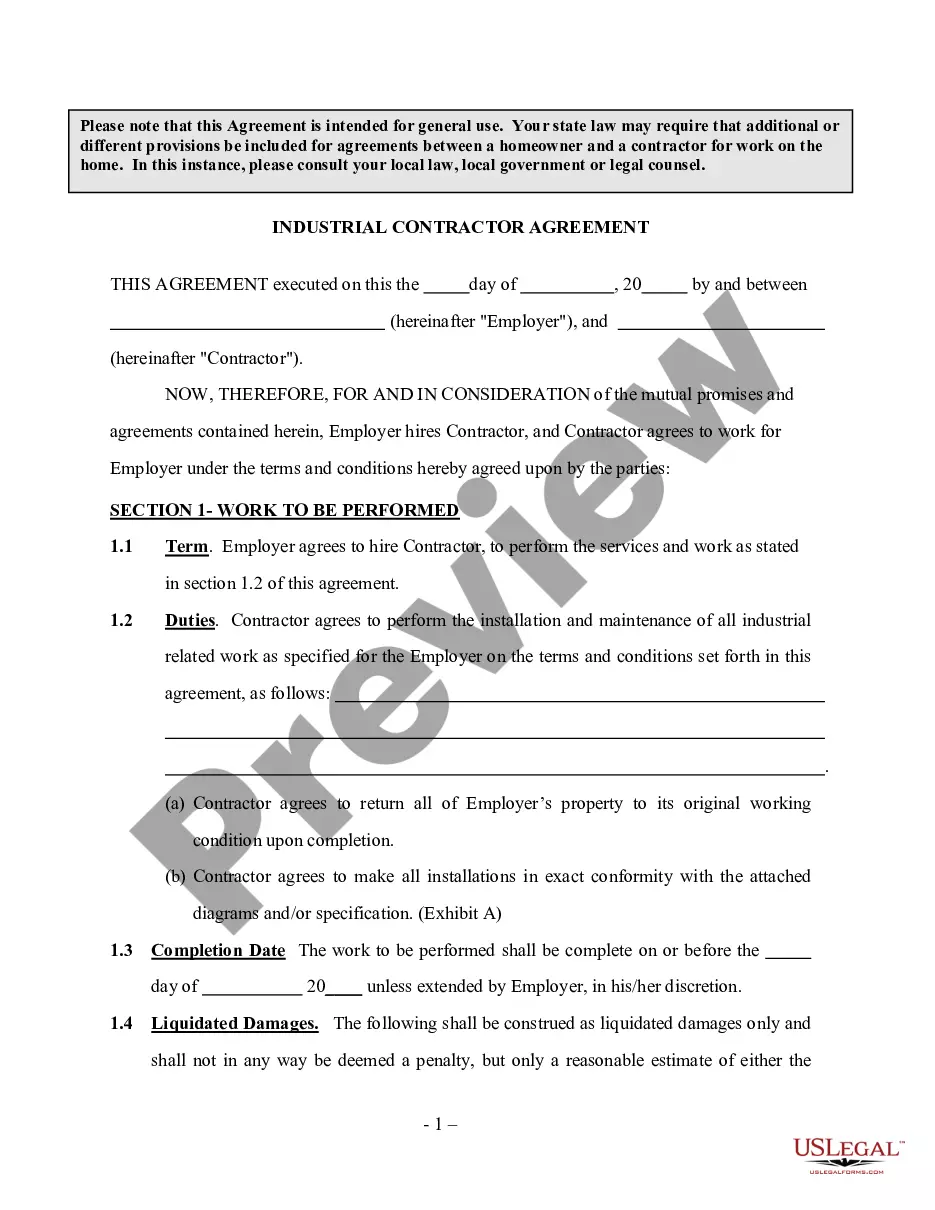
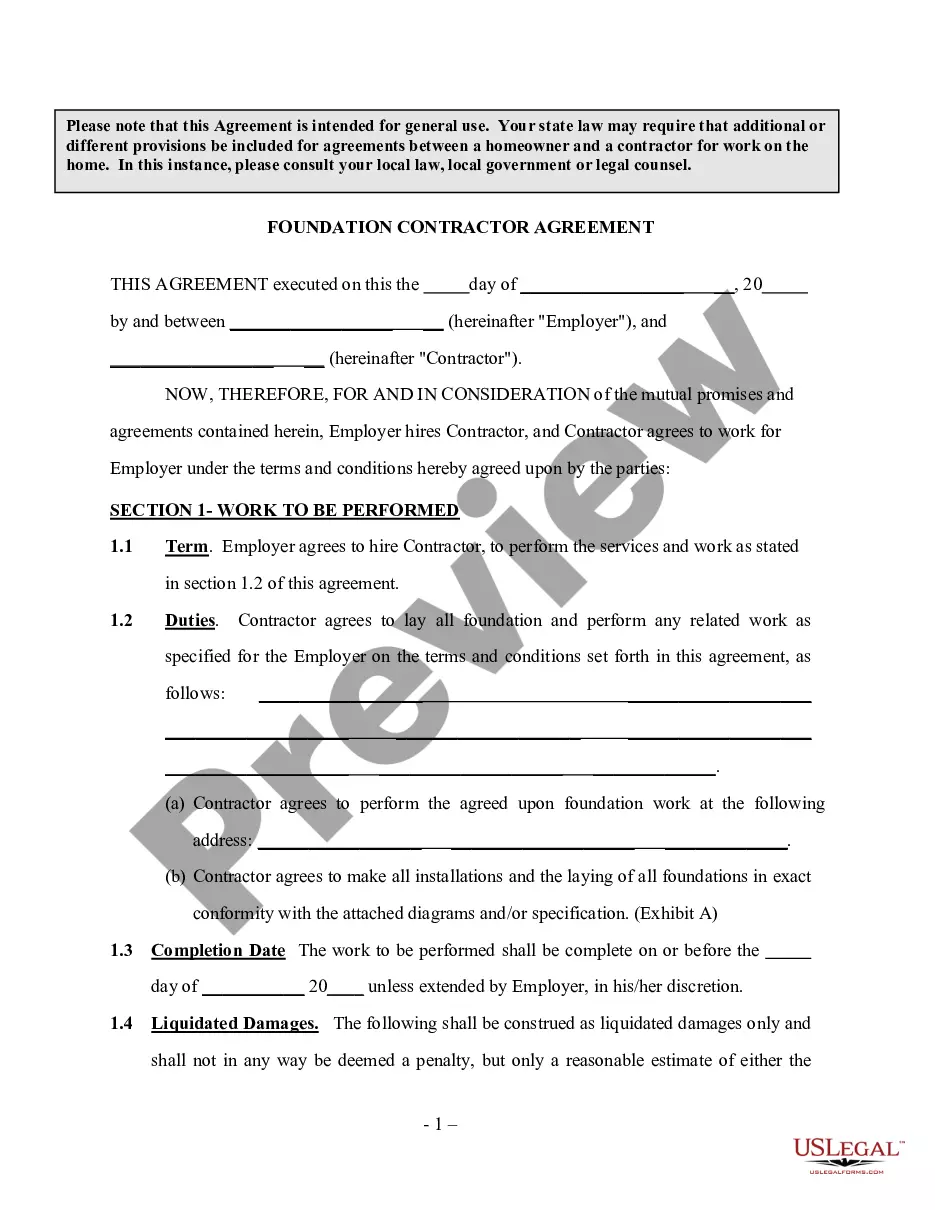
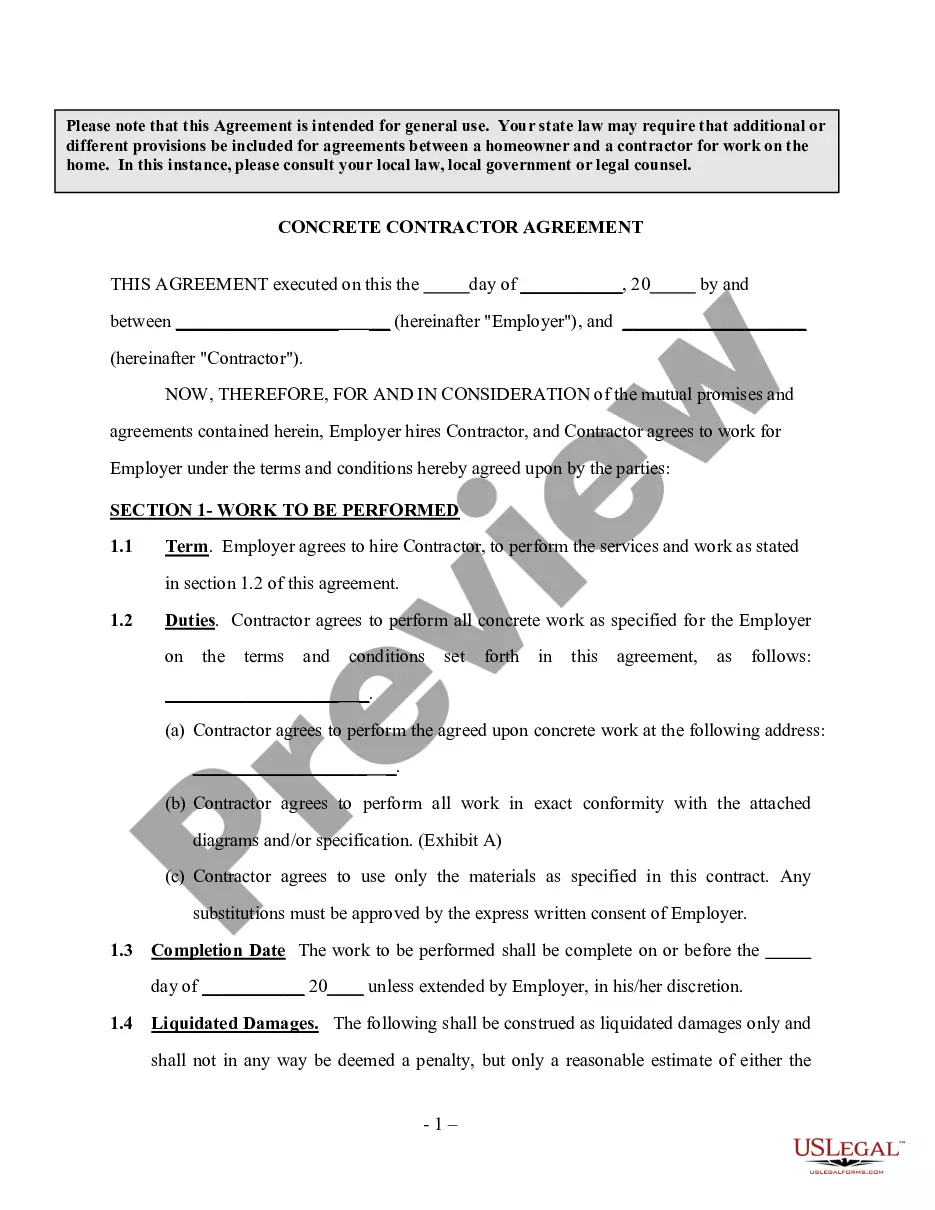
The Stone Contractor Agreement - Self-Employed is a legal document used between an employer and an independent contractor specifically for stonework projects. This form formalizes the terms under which the contractor will provide stone services, outlining the rights, responsibilities, and expectations of both parties. Unlike other contracts, this agreement emphasizes the independent status of the contractor, clarifying they are not an employee of the employer, thus establishing a clear contractual relationship for stonework services.
Key components of this form
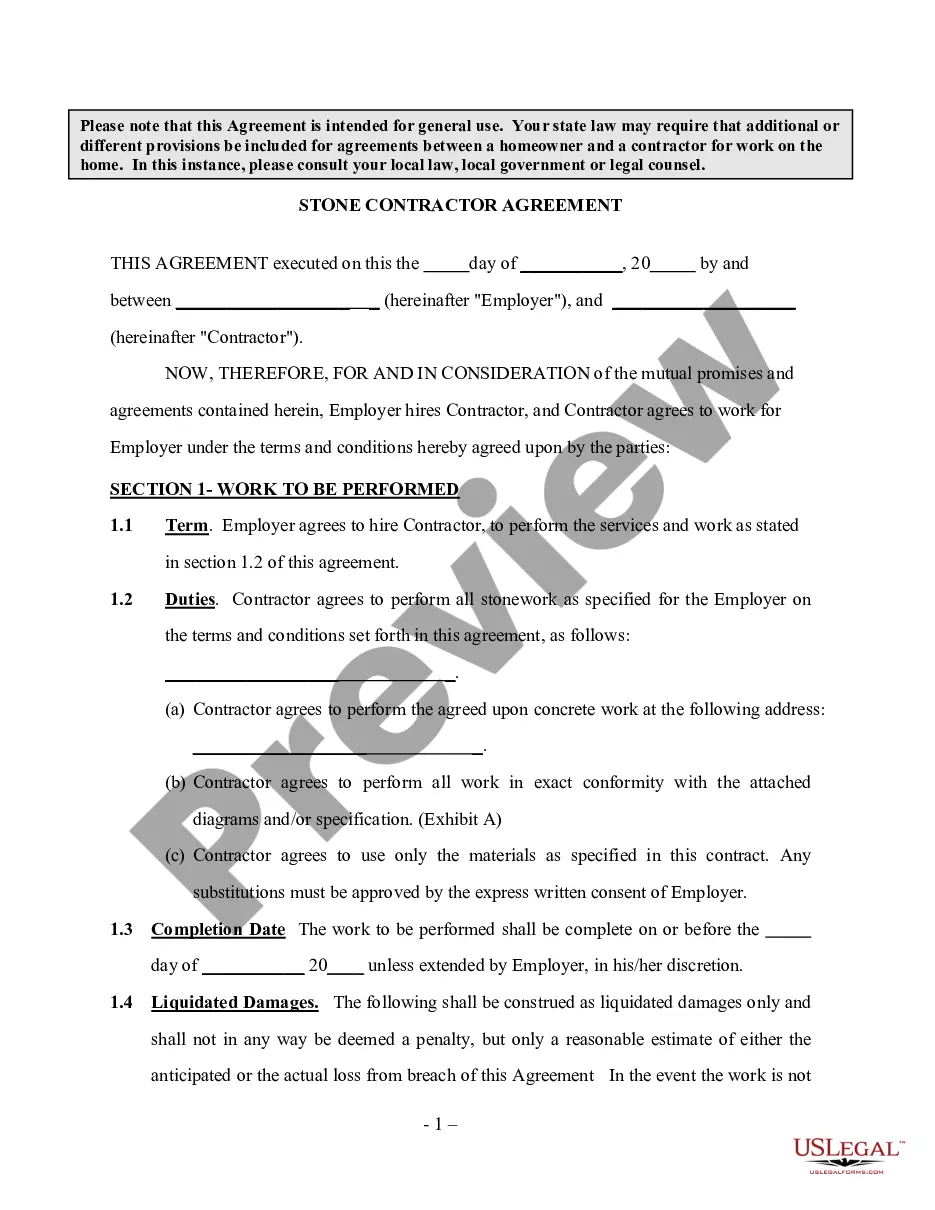
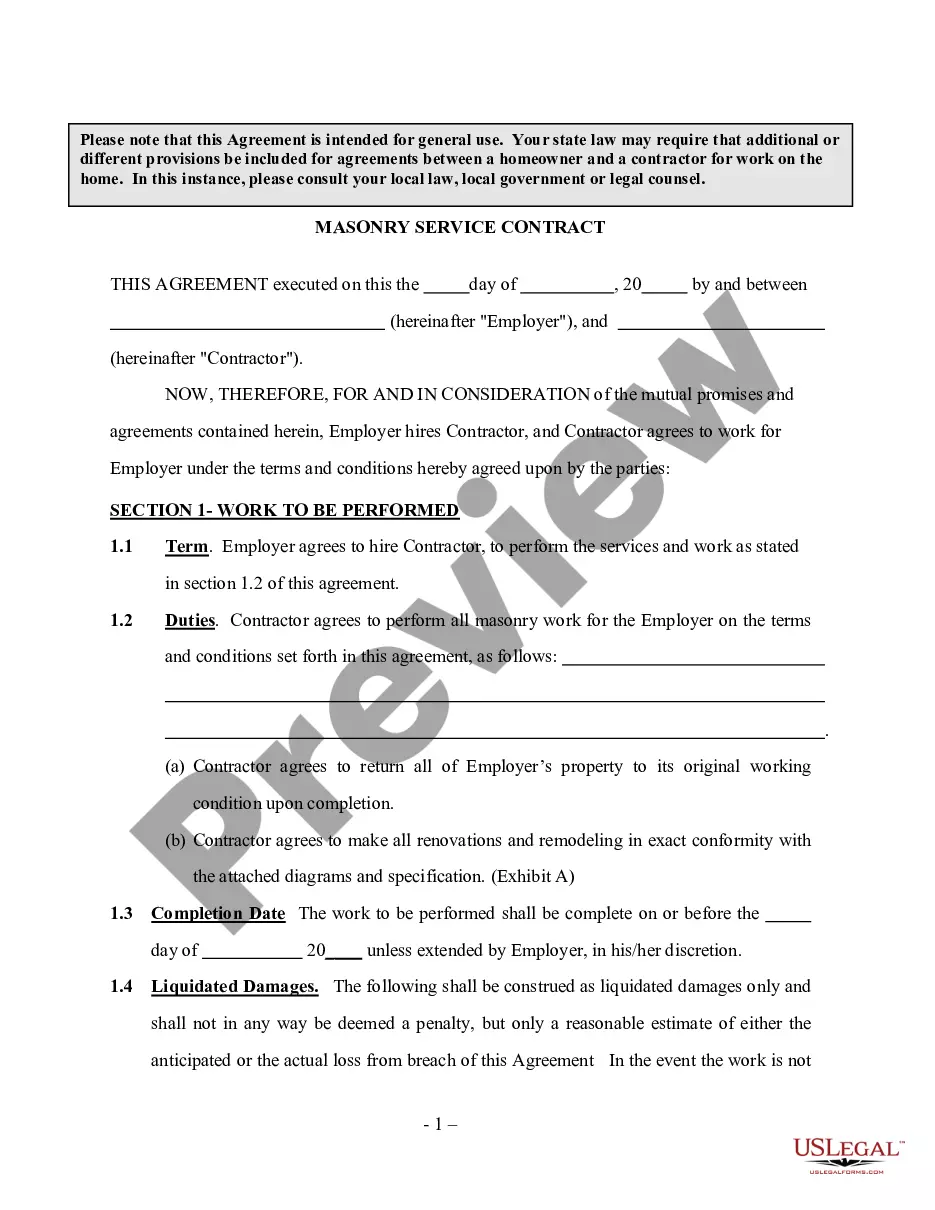
- Section 1 - Work to be Performed: Details the scope of stonework, including specific duties and location.
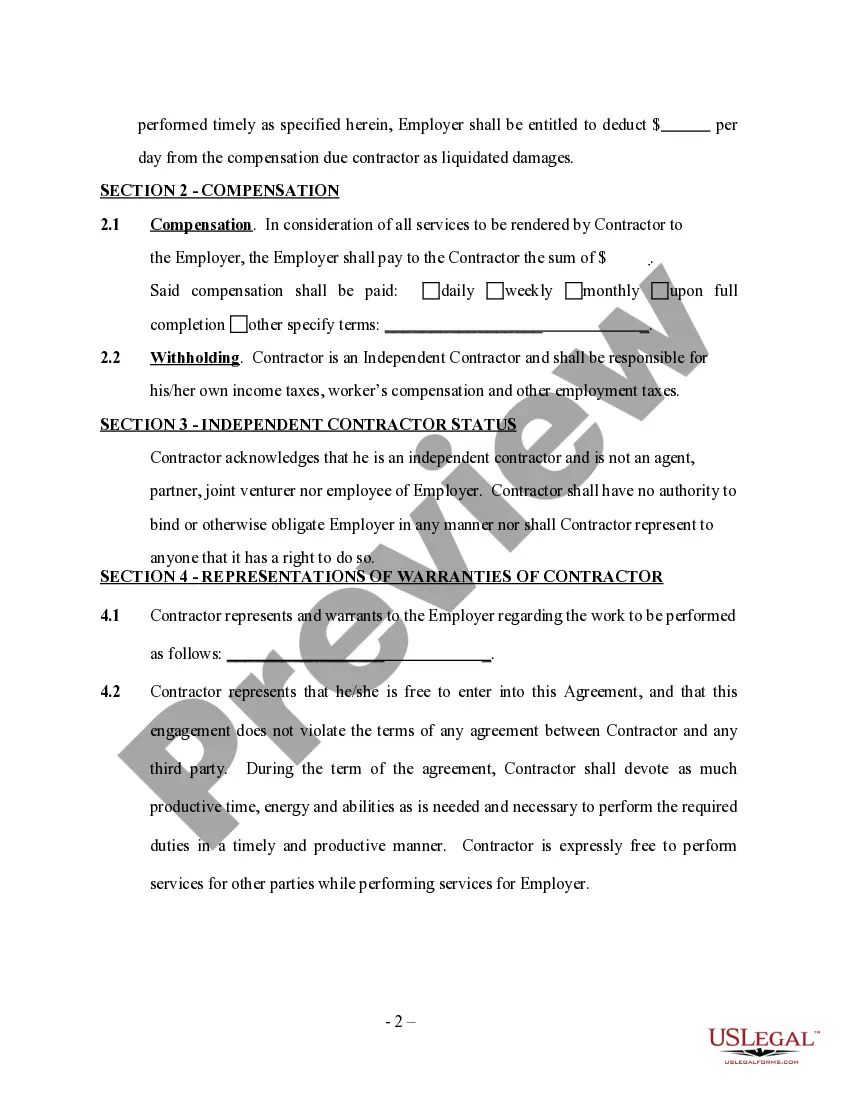
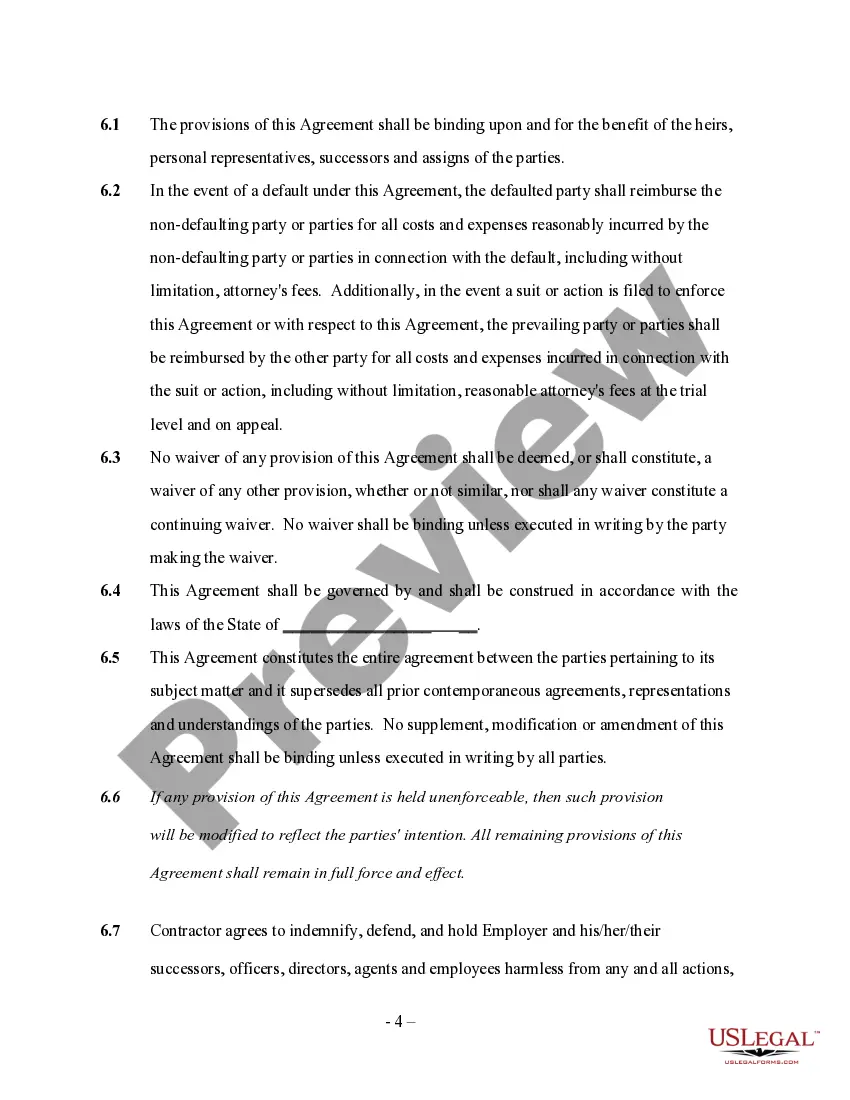
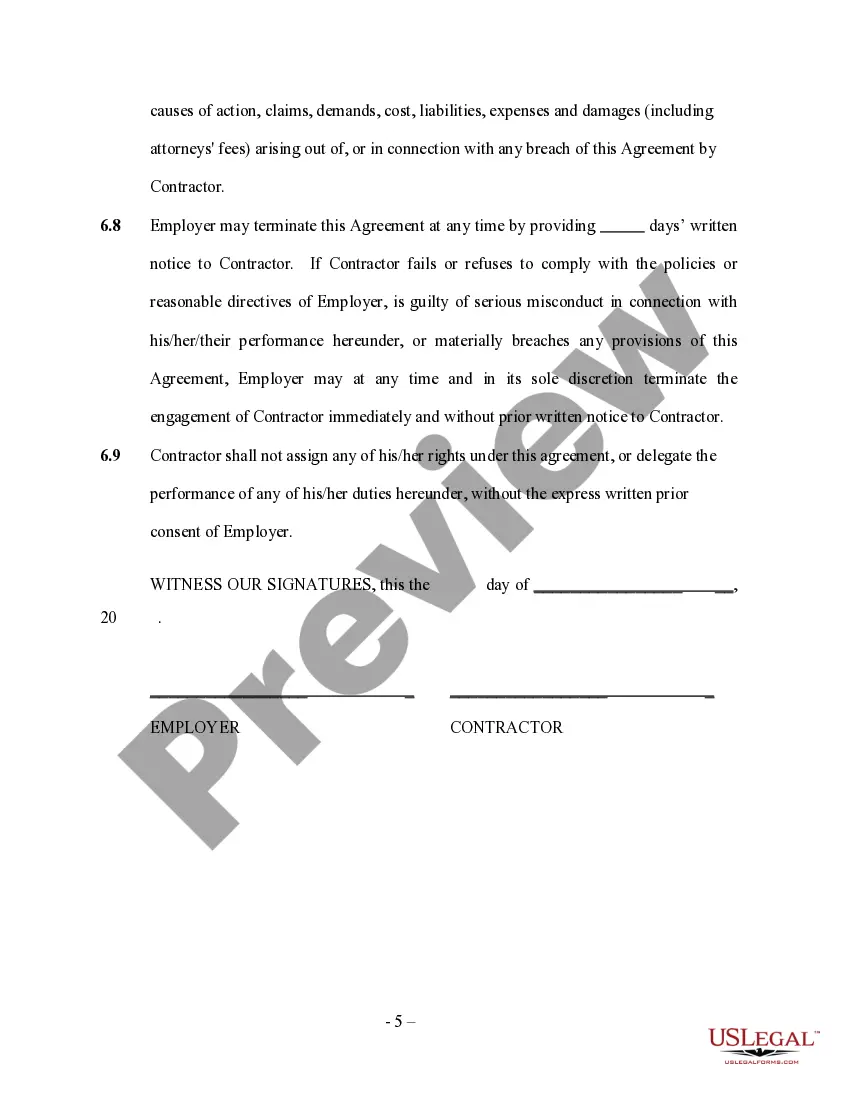
- Section 3 - Independent Contractor Status: Affirms the contractor's independent status and limits their authority.
- Section 4 - Representations and Warranties: Outlines the contractor's assurances regarding qualifications and prior obligations.
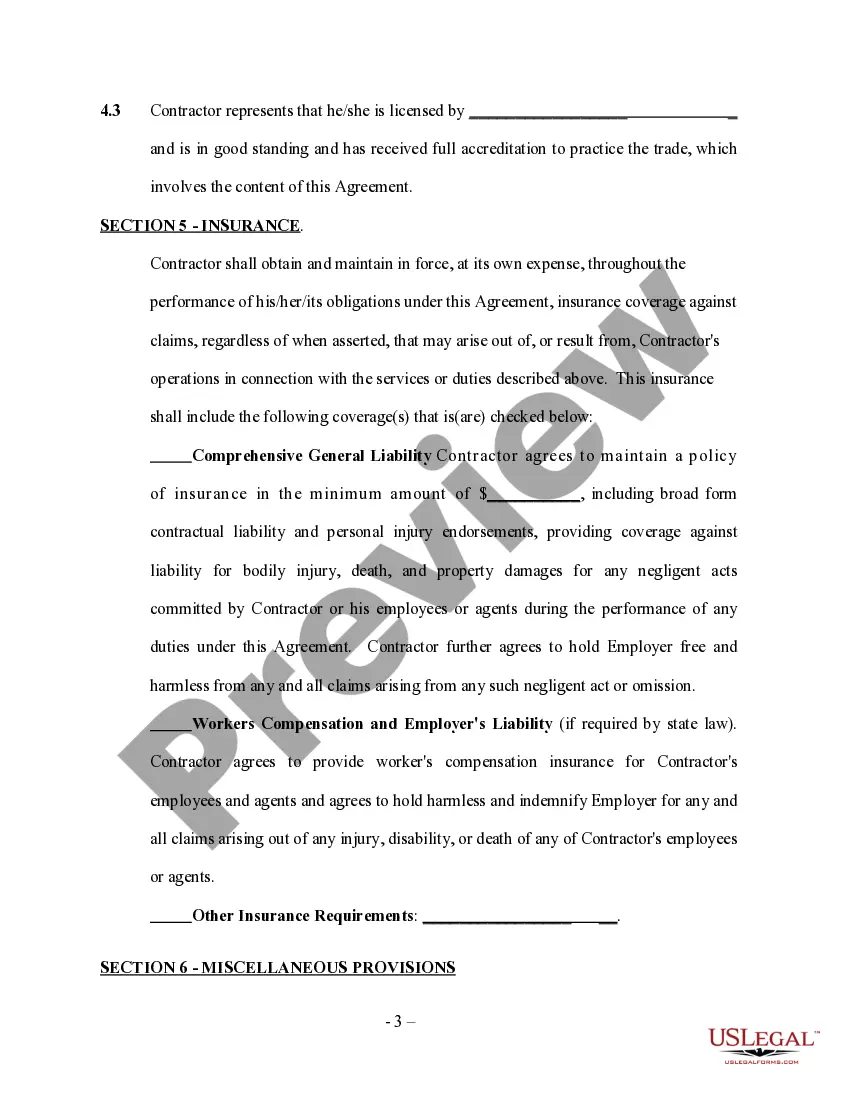
- Section 5 - Insurance: States the contractor's responsibility for maintaining necessary insurance coverage.
- Default and Waiver Clauses: Specifies the procedures for resolving defaults and waivers of contract terms.
Common use cases
This form should be used when an employer contracts an independent contractor to perform stonework services. It is particularly useful when defining the specific tasks, locations, and expectations for stone projects, ensuring both parties are clear on their obligations. The agreement is also suitable for homeowners who are hiring contractors to perform stone-related work on their properties.
Intended users of this form
- Employers seeking to hire independent contractors for stonework projects.
- Independent contractors engaged in the stone industry looking to formalize their work agreements.
- Homeowners who wish to outline terms with a contractor for stone-related home improvements.
Completing this form step by step
- Identify the parties involved: Enter the names and addresses of the employer and contractor.
- Specify the work to be performed: Clearly describe the stonework services to be carried out and the project location.
- Include exhibits: Attach any diagrams or specifications as necessary.
- Enter the term of the agreement: State the duration of the contract and any relevant deadlines.
- Sign and date the agreement: Ensure both parties sign the document to make it legally binding.
Does this form need to be notarized?
Notarization is generally not required for this form. However, certain states or situations might demand it. You can complete notarization online through US Legal Forms, powered by Notarize, using a verified video call available anytime.
Get your form ready online
Our built-in tools help you complete, sign, share, and store your documents in one place.
Make edits, fill in missing information, and update formatting in US Legal Forms—just like you would in MS Word.
Download a copy, print it, send it by email, or mail it via USPS—whatever works best for your next step.
Sign and collect signatures with our SignNow integration. Send to multiple recipients, set reminders, and more. Go Premium to unlock E-Sign.
If this form requires notarization, complete it online through a secure video call—no need to meet a notary in person or wait for an appointment.
We protect your documents and personal data by following strict security and privacy standards.

Make edits, fill in missing information, and update formatting in US Legal Forms—just like you would in MS Word.

Download a copy, print it, send it by email, or mail it via USPS—whatever works best for your next step.

Sign and collect signatures with our SignNow integration. Send to multiple recipients, set reminders, and more. Go Premium to unlock E-Sign.

If this form requires notarization, complete it online through a secure video call—no need to meet a notary in person or wait for an appointment.

We protect your documents and personal data by following strict security and privacy standards.
Avoid these common issues
- Failing to specify the scope of work can lead to misunderstandings.
- Not including insurance requirements may expose parties to risk.
- Ignoring state-specific regulations can invalidate the agreement.
Benefits of using this form online
- Convenience: Access and complete the form from anywhere, at any time.
- Editability: Easily make changes to fit specific project needs or legal requirements.
- Reliability: Form templates created by licensed attorneys ensure legal compliance.
Legal use & context
- This agreement legally binds the parties to the terms specified.
- It protects both the employer and contractor by clearly outlining roles and responsibilities.
- Contractors are reminded to maintain compliance with local licensing and insurance requirements.
Key takeaways
- The Stone Contractor Agreement serves to outline the duties of independent contractors in stonework projects.
- Clear terms help prevent disputes between employers and contractors.
- Always consider local laws that may impact the validity of the agreement.
Looking for another form?


Form popularity
FAQ
Independent contractors are self-employed workers who provide services for an organisation under a contract for services. Independent contractors are not employees and are typically highly skilled, providing their clients with specialist skills or additional capacity on an as needed basis.
Yes, if you have 1099 income you are considered to be self-employed, and you will need to pay self-employment taxes (Social Security and Medicare taxes) on this income.
Those eligible for PUA also will receive an additional $300/week through the end of the extension period unlike CARES Act I, which added $600/week in federal stimulus payments. Finally, the new stimulus bill provides independent contractors with paid sick and paid family leave benefits through March 14, 2021.
Protect your social security number. Have a clearly defined scope of work and contract in place with clients. Get general/professional liability insurance. Consider incorporating or creating a limited liability company (LLC).
Make sure you really qualify as an independent contractor. Choose a business name (and register it, if necessary). Get a tax registration certificate (and a vocational license, if required for your profession). Pay estimated taxes (advance payments of your income and self-employment taxes).
This is where it gets tricky, in almost all cases, an independent contractor is self-employed, but not everyone who is self-employed is an independent contractor.Since independent contractors are not employees the contractor is responsible for paying employment taxes, income taxes, social security, and insurance.
The earnings of a person who is working as an independent contractor are subject to Self-Employment Tax. If you are an independent contractor, you are self-employed.However, your earnings as an employee may be subject to FICA (Social Security tax and Medicare) and income tax withholding.
If you're self-employed, you do not have a contract of employment with an employer.You don't have employment rights as such if you're self-employed as you are your own boss and can therefore decide how much to charge for your work and how much holiday to give yourself. You do have some legal protection.
People who work for themselves or who own their own company are sometimes alternately referred to as self-employed or independent contractors, though there is a difference between the two. In general, all independent contractors are self-employed, but not all self-employed people are independent contractors.