License and Services Agreement
Understanding this form
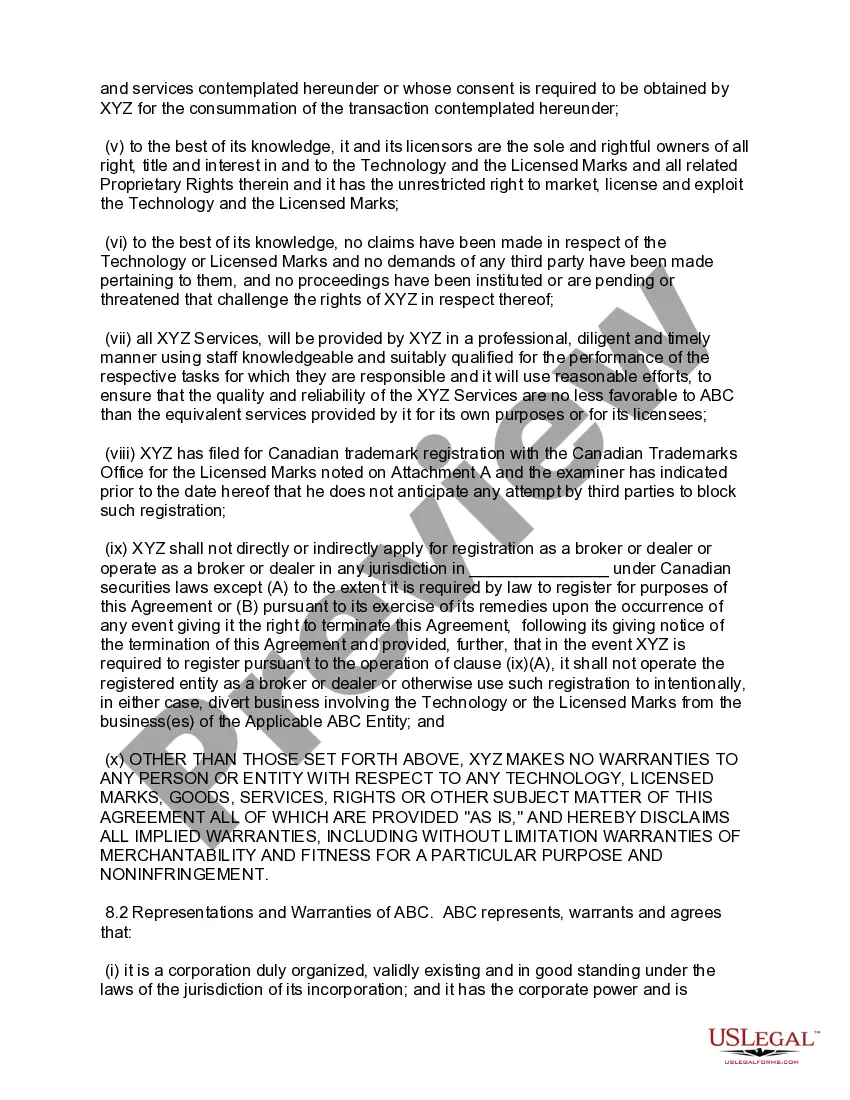
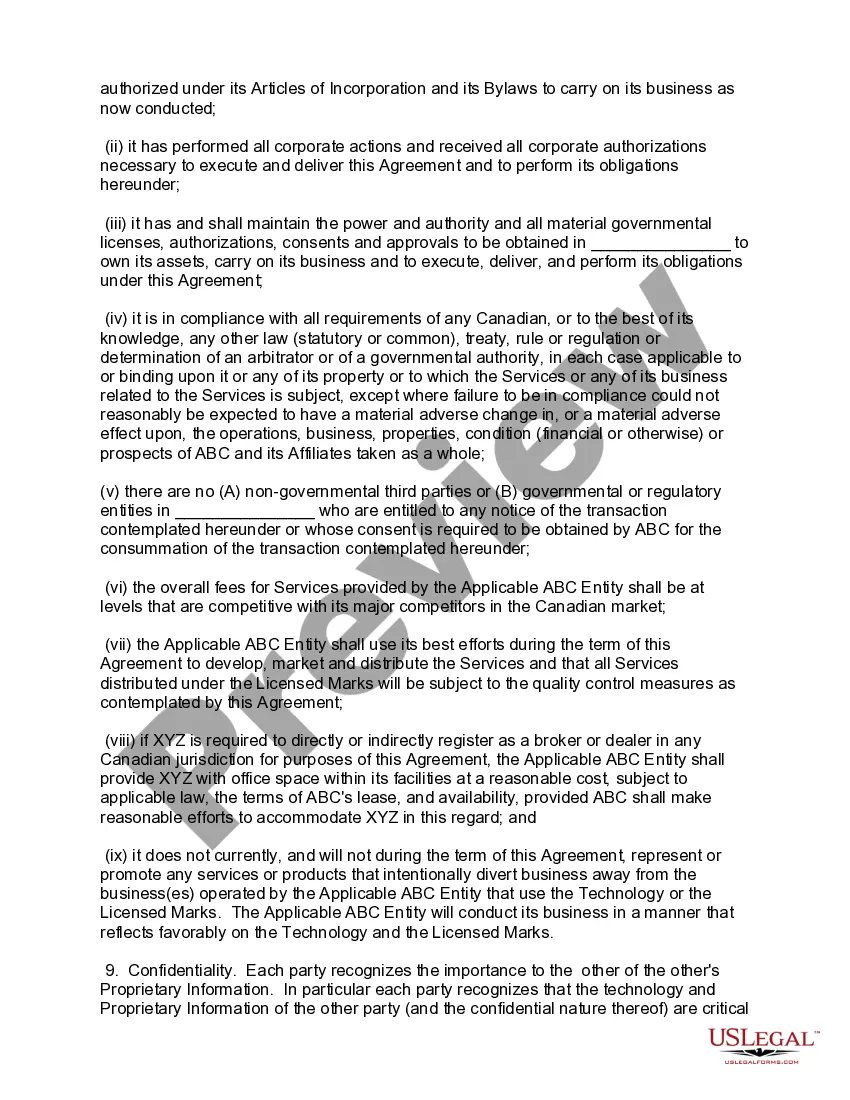
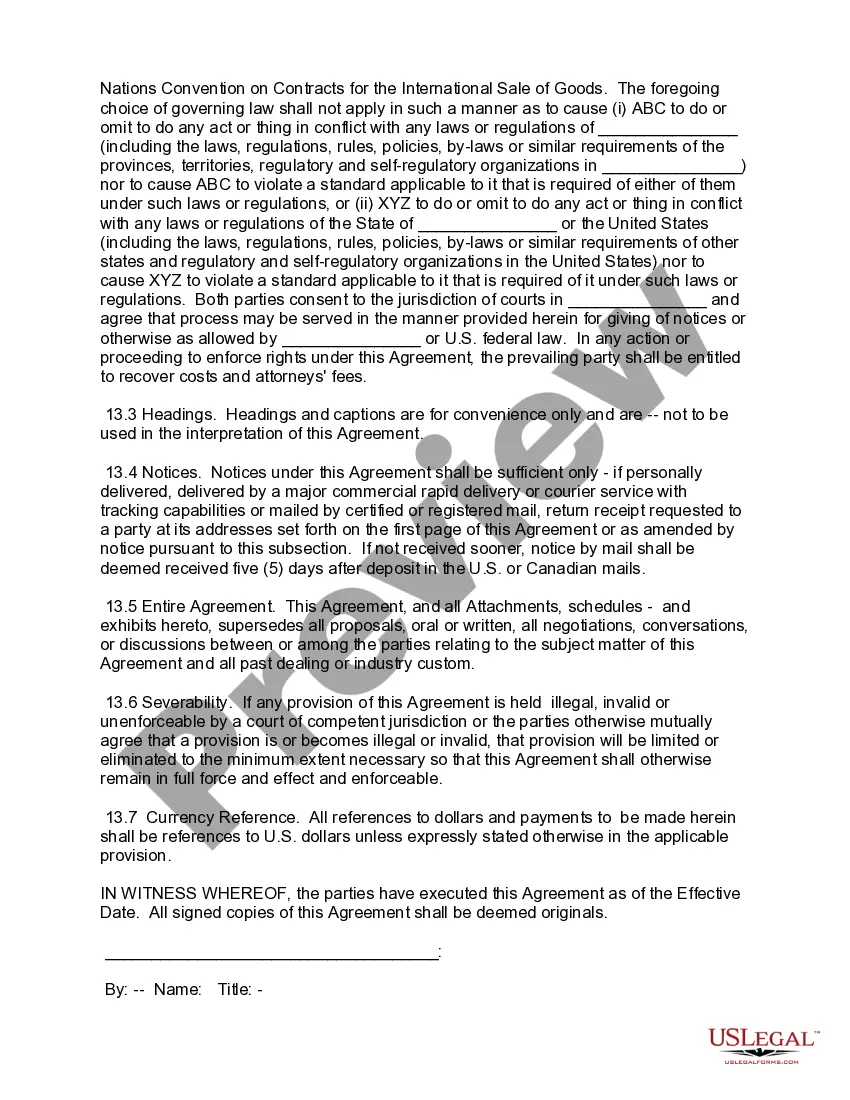
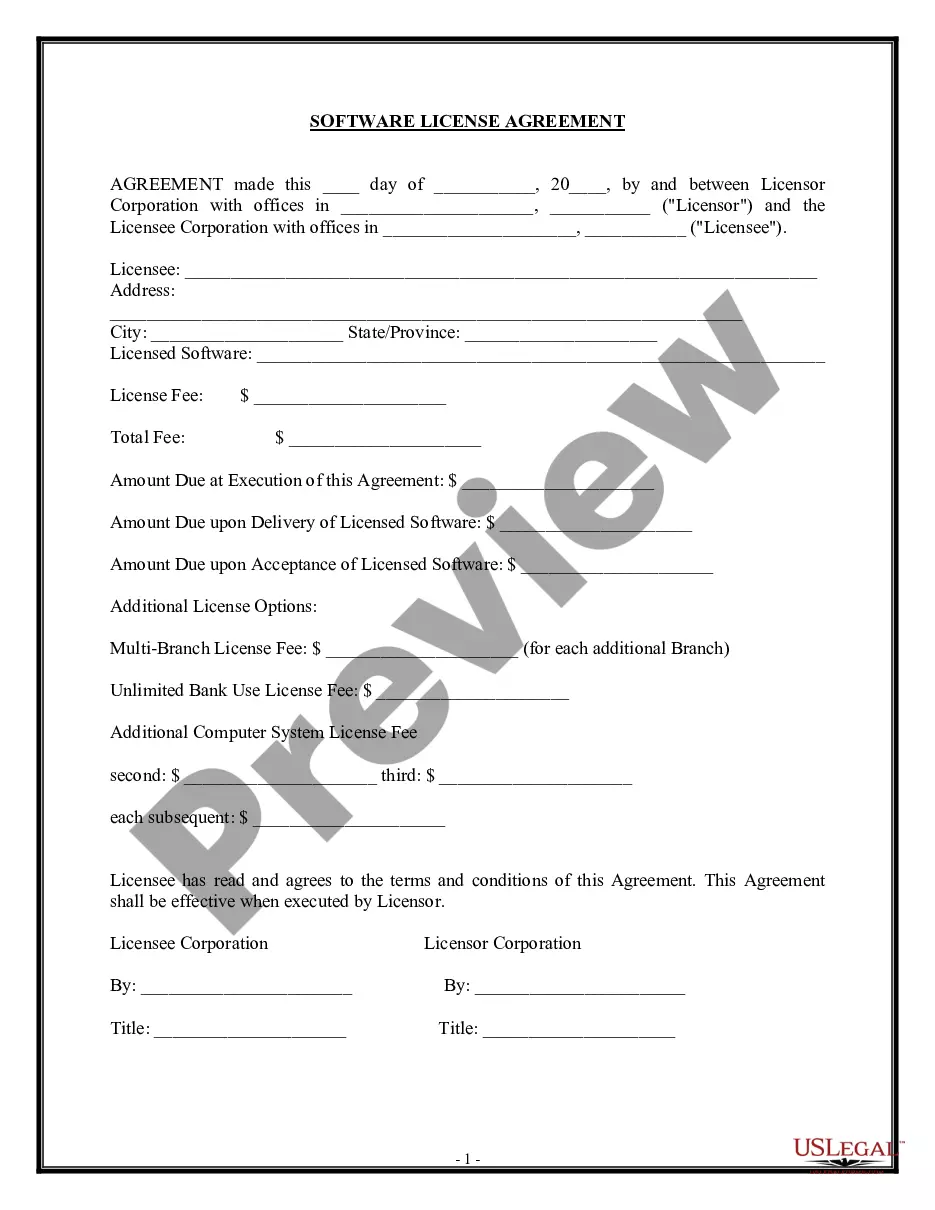
This License and Services Agreement is a legally binding document that outlines the terms under which one party licenses specific technology or services to another party. It sets forth the rights and obligations of both parties, acknowledging the proprietary nature of the information shared. This form differs from other agreements by specifically addressing licensing rights, usage restrictions, and the nature of the relationship between the parties involved, which is that of independent contractors.
Form components explained
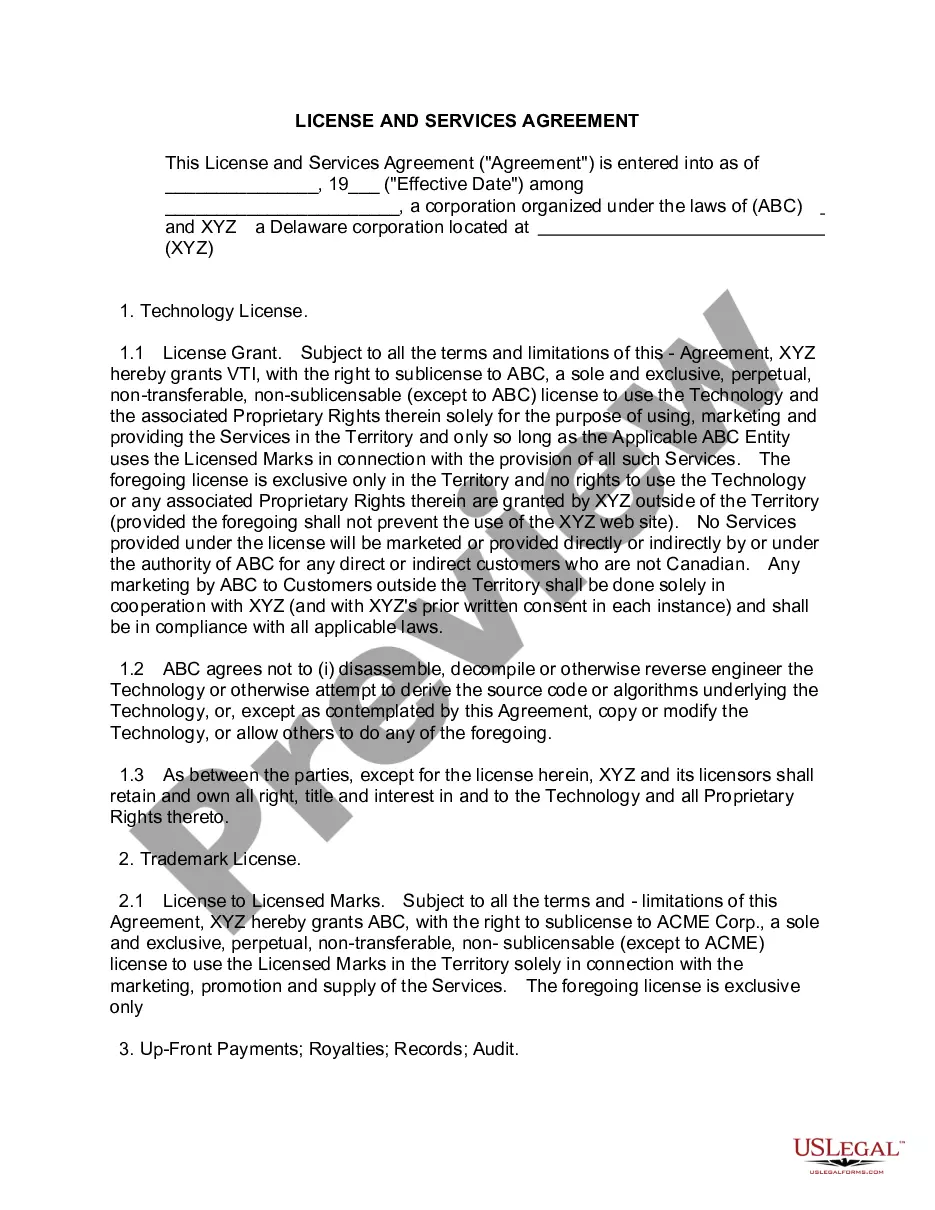
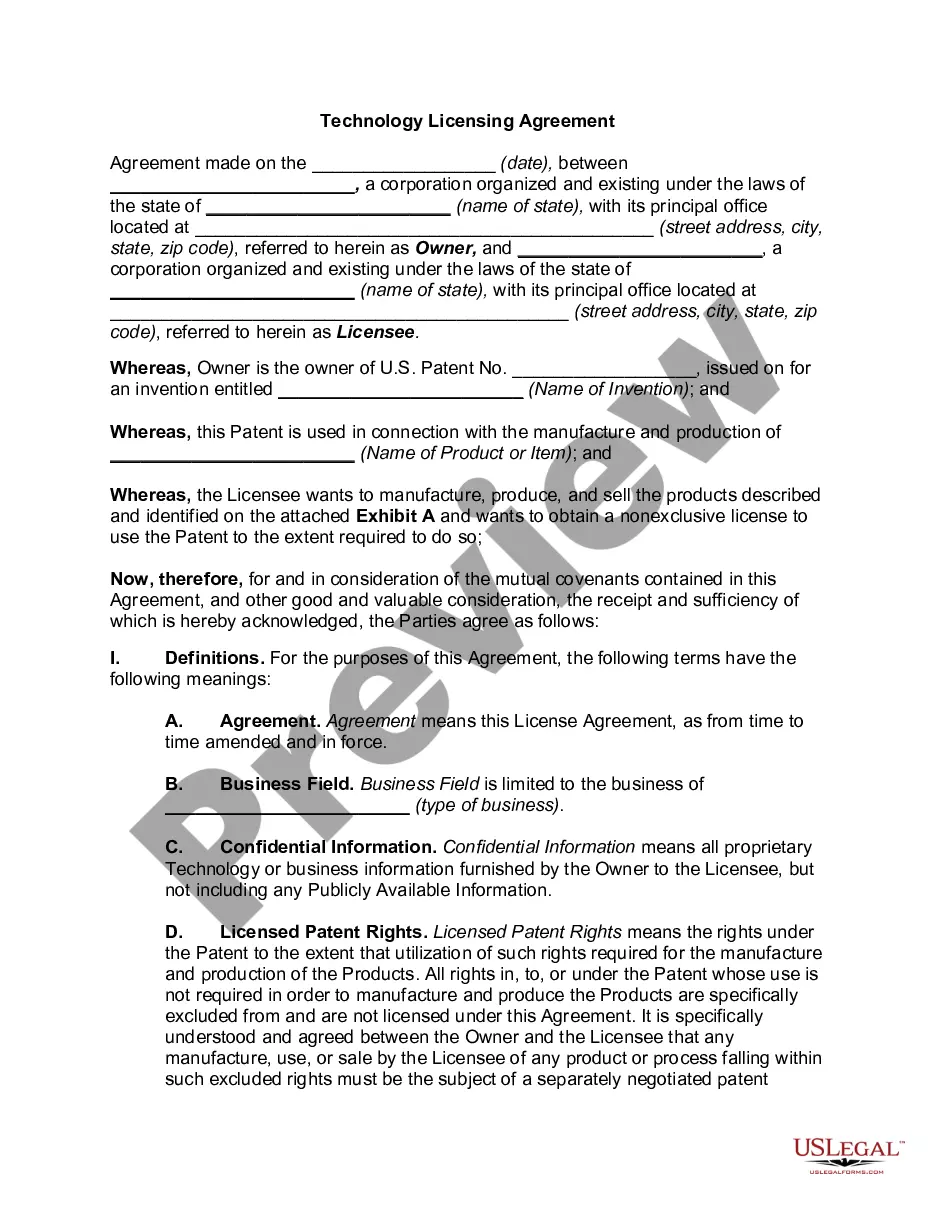
- Technology License: Details the exclusive rights granted to utilize the specified technology within a defined territory.
- Trademark License: Defines the rights to use specific trademarks in connection with the services provided.
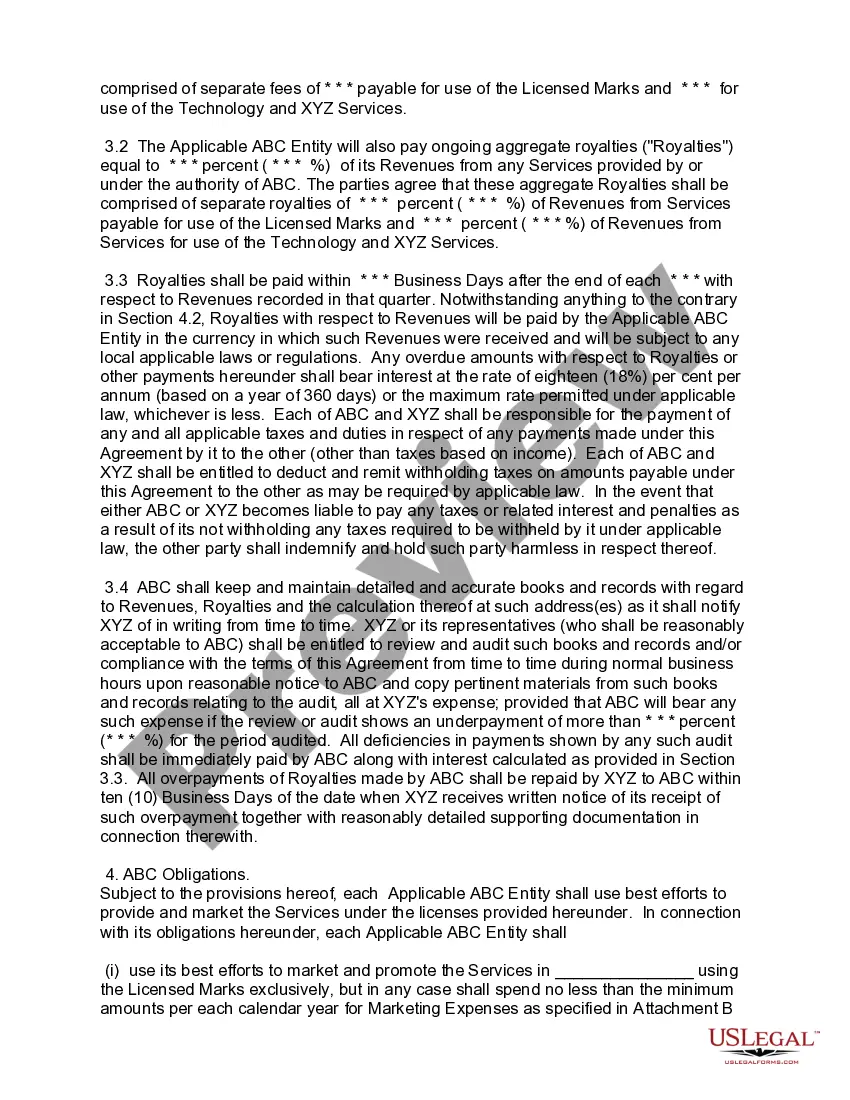
- Financial Terms: Outlines upfront payments, ongoing royalties, and how records should be maintained for auditing purposes.
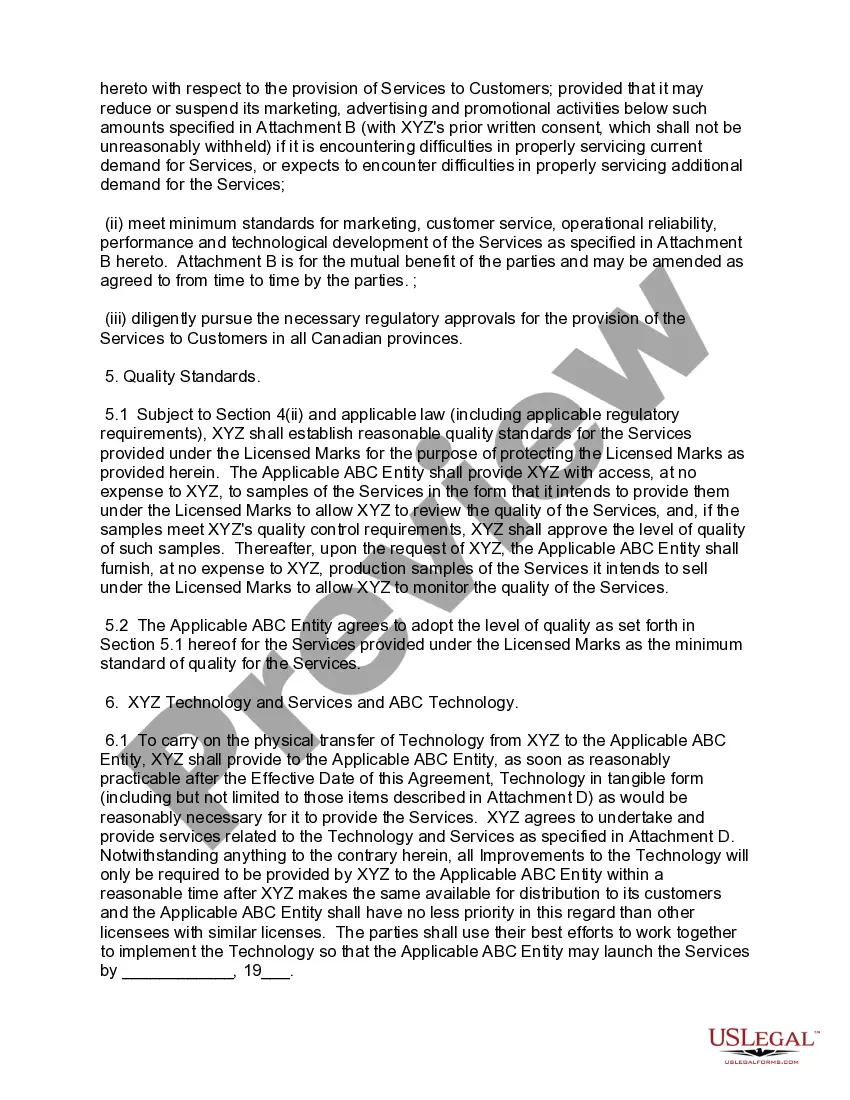
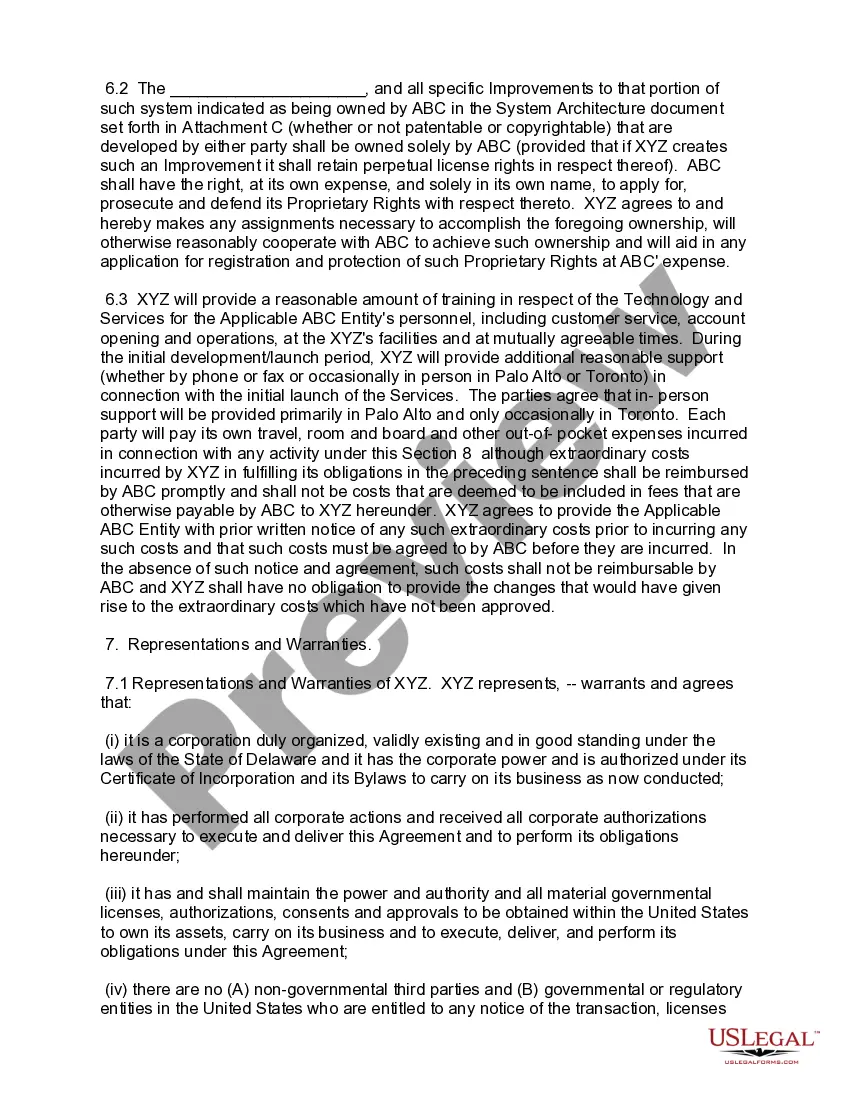
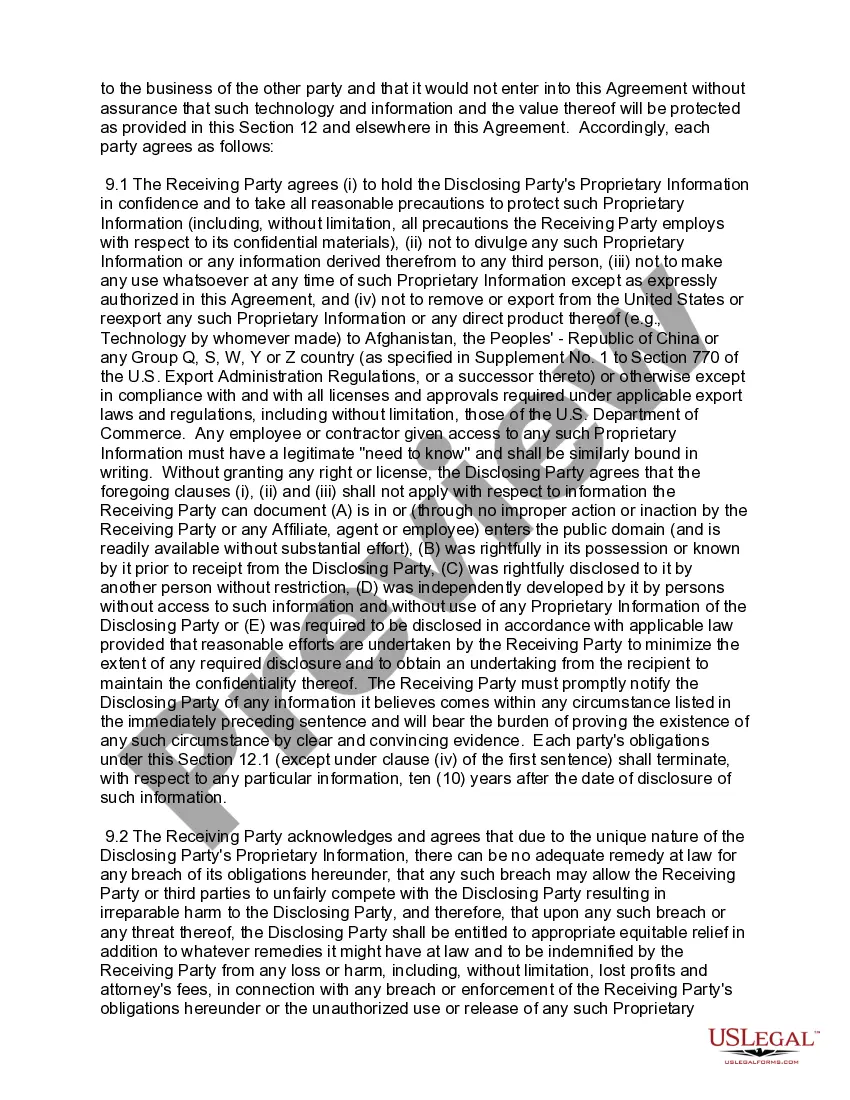
- Confidentiality Obligations: Specifies how proprietary information is to be protected and the consequences of breaches.
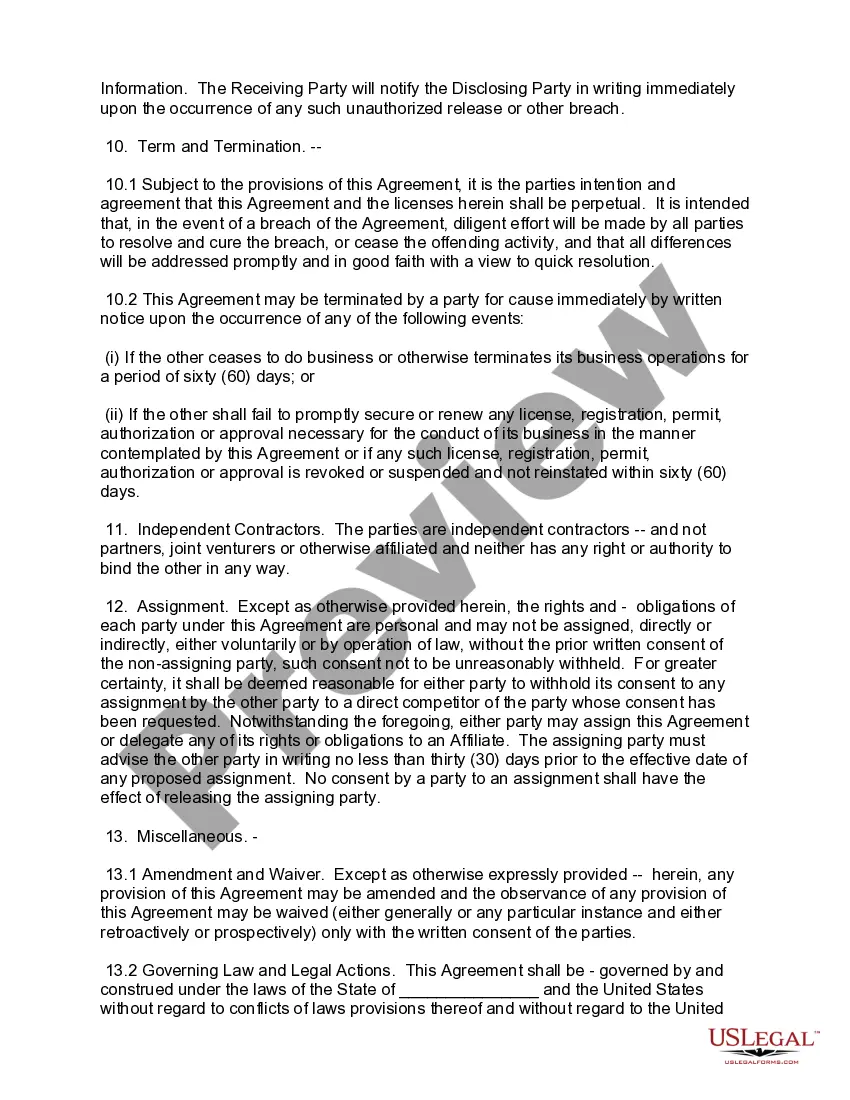
- Termination Clauses: Describes the conditions under which the agreement may be terminated by either party.
- Independent Contractor Status: Clarifies that the parties are not partners and cannot bind each other legally.

When to use this document
This agreement is typically used when one party wishes to license technology or services to another party for specific purposes, such as marketing or distribution. It is essential in scenarios where proprietary information is being shared, ensuring that both parties understand their rights and responsibilities. This form is beneficial for businesses entering into licensing relationships, especially when working within defined territories and markets.
Intended users of this form
- Businesses or corporations looking to license technology or services from another company.
- Companies that wish to ensure their proprietary information is legally protected during a licensing arrangement.
- Organizations seeking to define their relationship in a clear, binding manner to avoid any potential conflicts.
How to prepare this document
- Identify the parties: Clearly input the names and corporate details of the parties involved in the agreement.
- Specify the effective date: Enter the date on which the agreement will come into force.
- Fill in financial terms: Complete the sections regarding payments, royalties, and any attachments that detail these terms.
- Define the territory: Clearly state the geographical area where the licensed rights apply.
- Include signatures: Ensure that authorized representatives from both parties sign and date the agreement.
Does this form need to be notarized?
This form usually doesn’t need to be notarized. However, local laws or specific transactions may require it. Our online notarization service, powered by Notarize, lets you complete it remotely through a secure video session, available 24/7.
Get your form ready online
Our built-in tools help you complete, sign, share, and store your documents in one place.
Make edits, fill in missing information, and update formatting in US Legal Forms—just like you would in MS Word.
Download a copy, print it, send it by email, or mail it via USPS—whatever works best for your next step.
Sign and collect signatures with our SignNow integration. Send to multiple recipients, set reminders, and more. Go Premium to unlock E-Sign.
If this form requires notarization, complete it online through a secure video call—no need to meet a notary in person or wait for an appointment.
We protect your documents and personal data by following strict security and privacy standards.

Make edits, fill in missing information, and update formatting in US Legal Forms—just like you would in MS Word.

Download a copy, print it, send it by email, or mail it via USPS—whatever works best for your next step.

Sign and collect signatures with our SignNow integration. Send to multiple recipients, set reminders, and more. Go Premium to unlock E-Sign.

If this form requires notarization, complete it online through a secure video call—no need to meet a notary in person or wait for an appointment.

We protect your documents and personal data by following strict security and privacy standards.
Typical mistakes to avoid
- Failing to define the territory clearly, which can lead to disputes over licensing rights.
- Omitting financial terms or details about royalty calculations, which are critical for transparency.
- Not including proper signatures and dates, which could render the agreement unenforceable.
Benefits of completing this form online
- Convenience: Easily download and fill out the agreement at your own pace.
- Editability: Make necessary adjustments to customize the terms specific to your needs.
- Reliability: Obtain a professionally drafted template that ensures compliance with legal standards.
Main things to remember
- This agreement provides a framework for licensing technology and services between parties.
- It emphasizes the importance of confidentiality and quality standards in business partnerships.
- Common pitfalls include vague terms and neglected payment specifications, which can lead to disputes.
Looking for another form?
Form popularity
FAQ
What is a Licensing Agreement? A licensing agreement is a contract between two parties (the licensor and licensee) in which the licensor grants the licensee the right to use the brand name, trademark, patented technology, or ability to produce and sell goods owned by the licensor.
The 3 P's of collegiate licensing are protection, promotion, and profit.
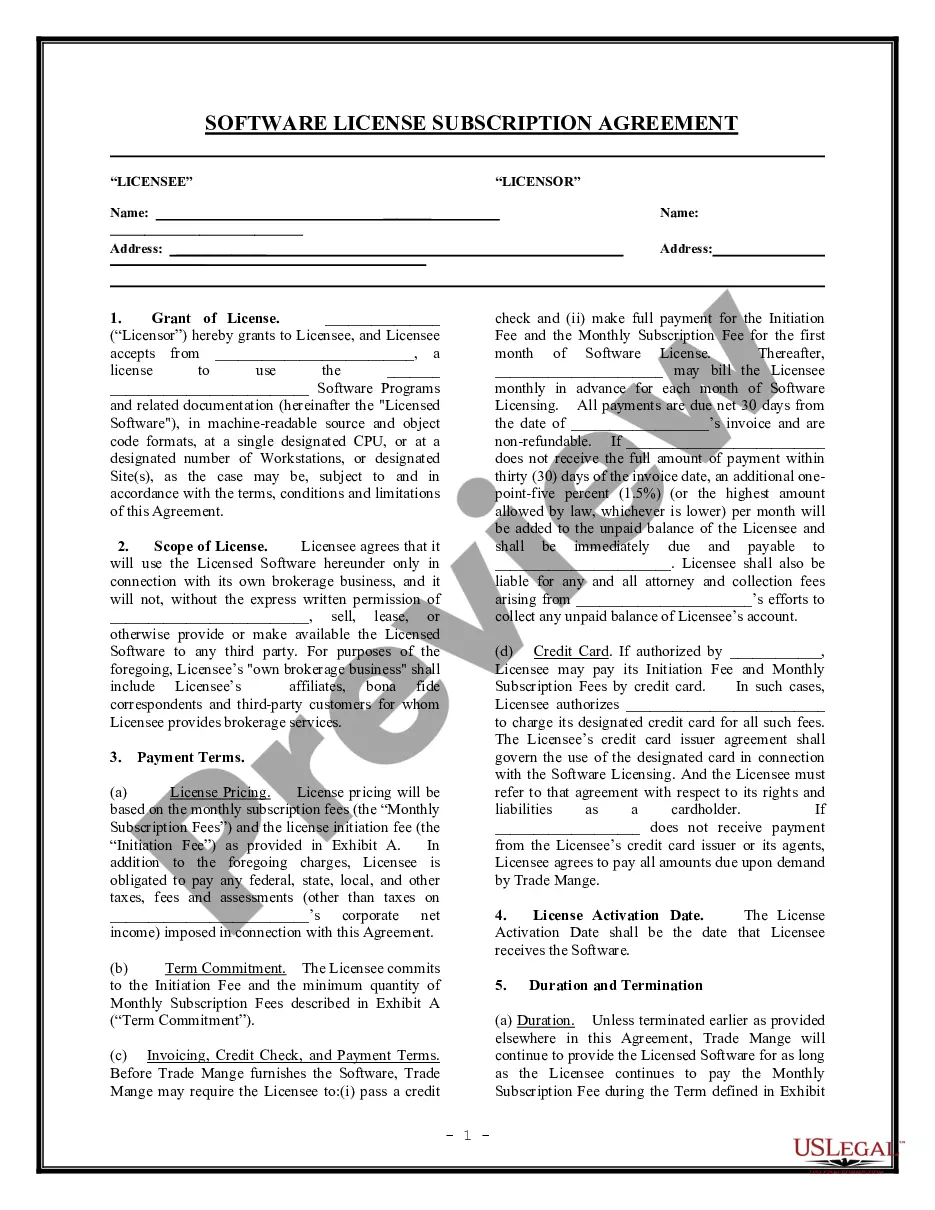
A license agreement is a business contract between two parties. The licensor (the seller of the license) owns the asset being licensed and the licensee (the buyer) pays for the right to use the license. The licensee pays royalties to the owner in exchange for the right to sell the product or use the technology.
Download a template for a licensing agreement. Choose your role as the licensor or licensee. Define the license(s) in the agreement. Decide whether the license is exclusive or not. Settle the matter of fees and payment schedule. Add a renewal date and rules.
Exclusive or non-exclusive. In an exclusive license, the intellectual property holder is licensing the work only to one person, for that particular use/territory. Territory. Use. Attribution. Derivative works. Confidentiality. Time frame. Termination.
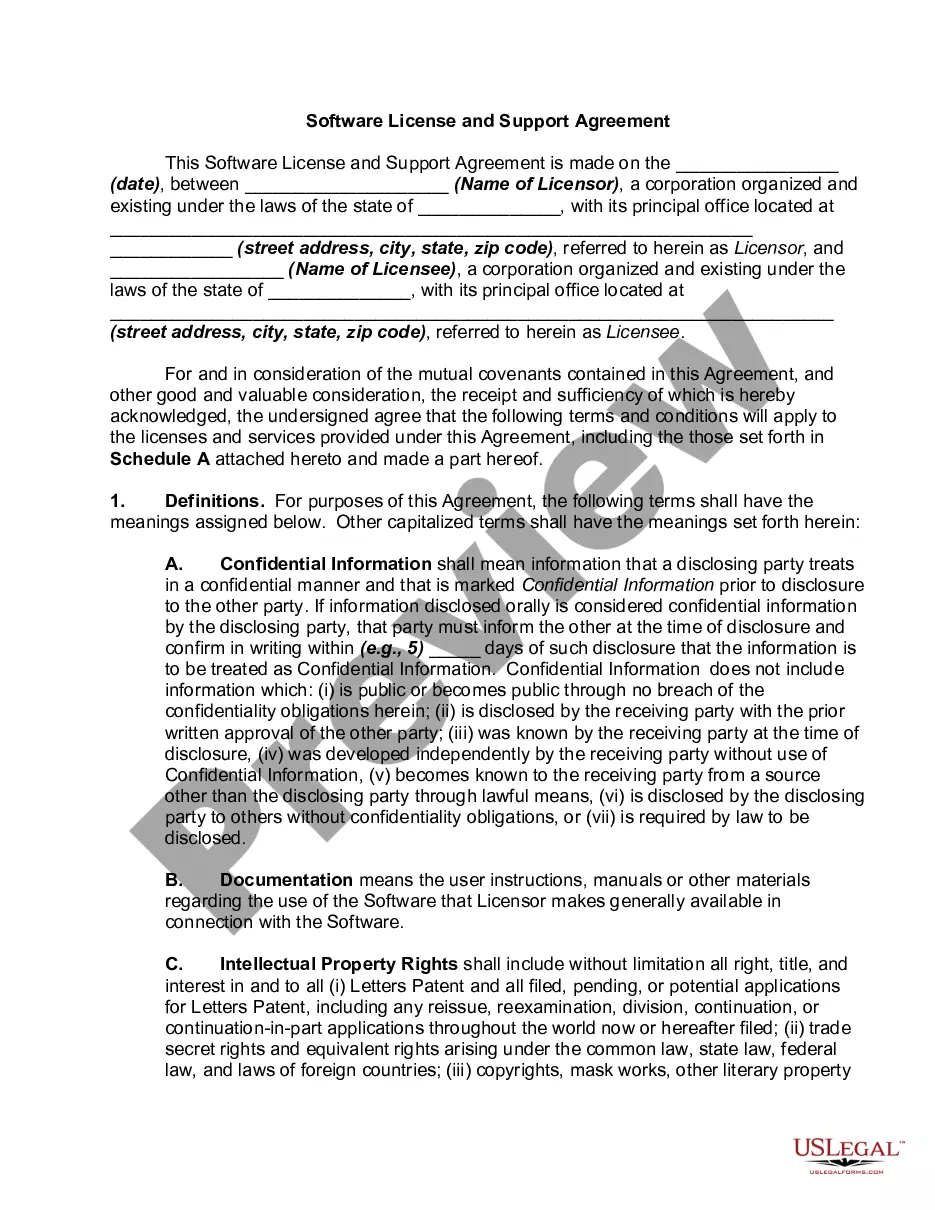
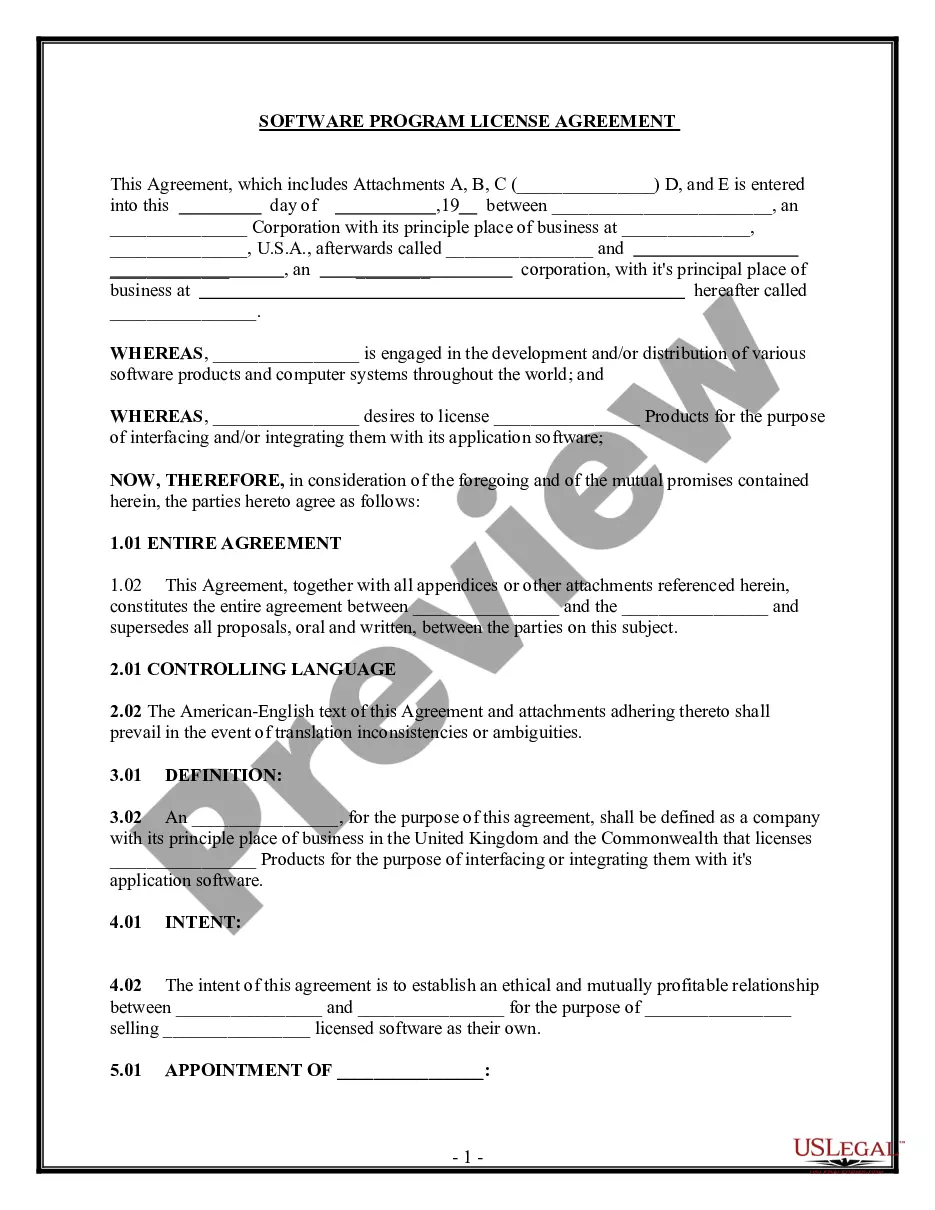
An example of a licensing agreement is a contract between the copyright holders of software and another company, allowing the latter to use the computer software for their daily business operations.
An example of a licensing agreement is a contract between the copyright holders of software and another company, allowing the latter to use the computer software for their daily business operations.
A license agreement is a business contract between two parties. The licensor (the seller of the license) owns the asset being licensed and the licensee (the buyer) pays for the right to use the license. The licensee pays royalties to the owner in exchange for the right to sell the product or use the technology.