Database Distribution and Licensing Agreement
Understanding this form
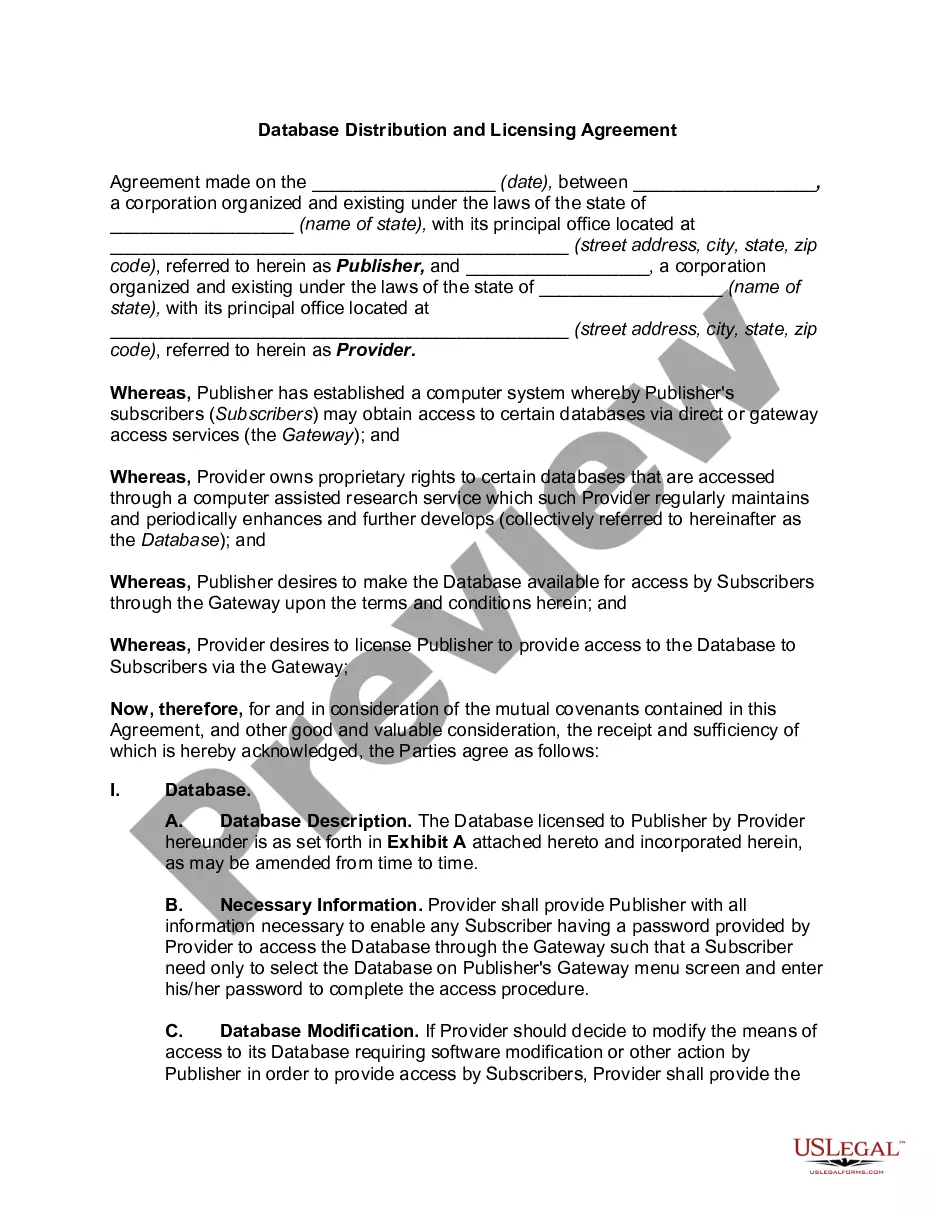
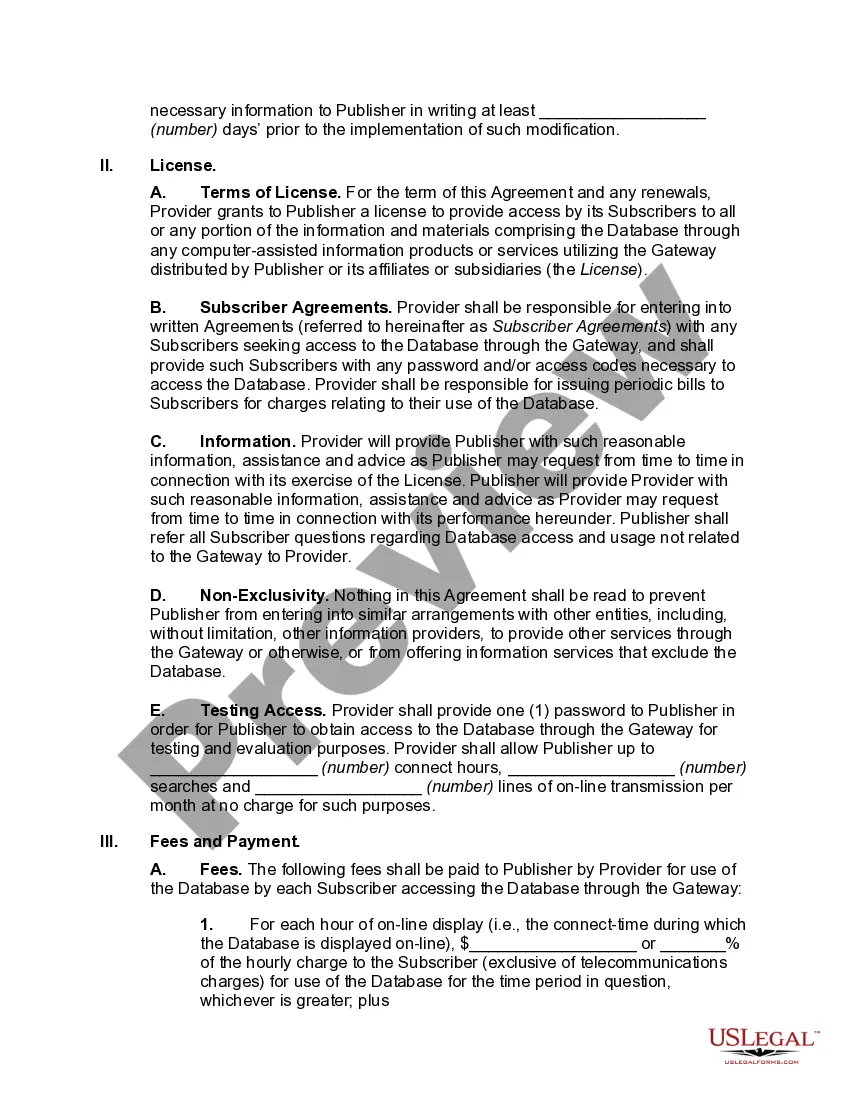
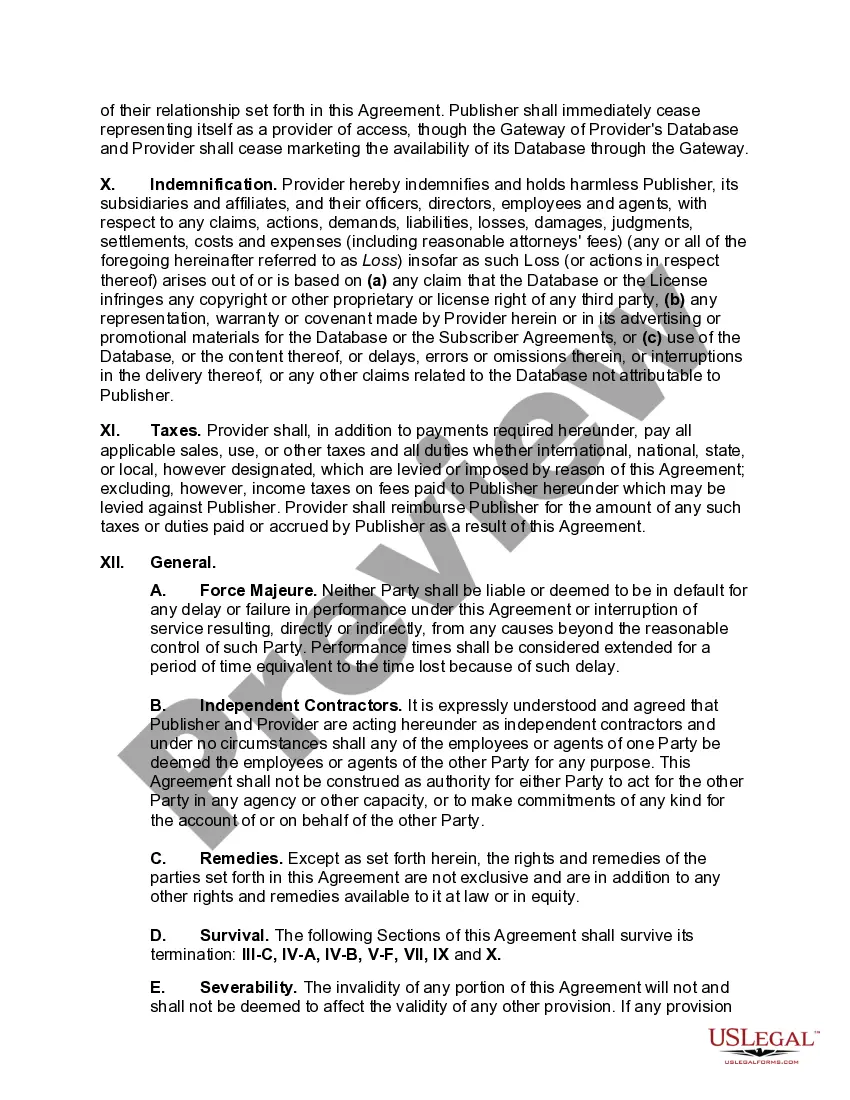
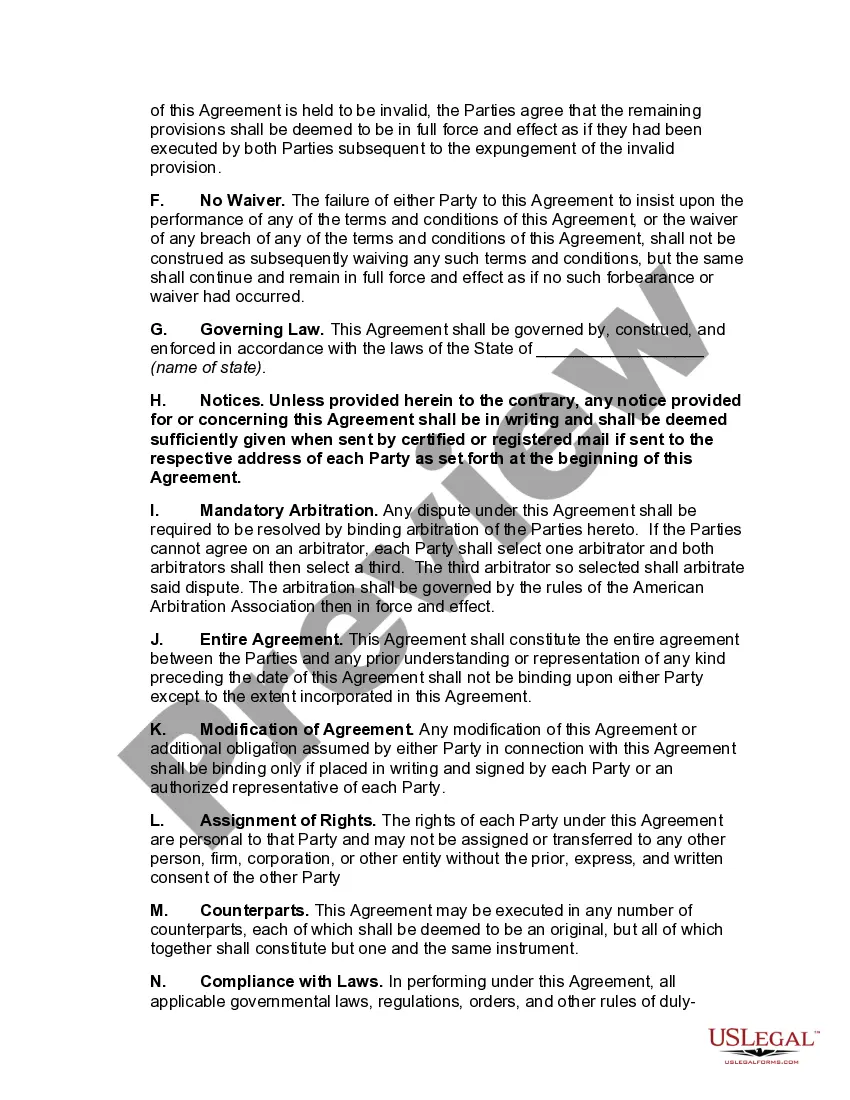
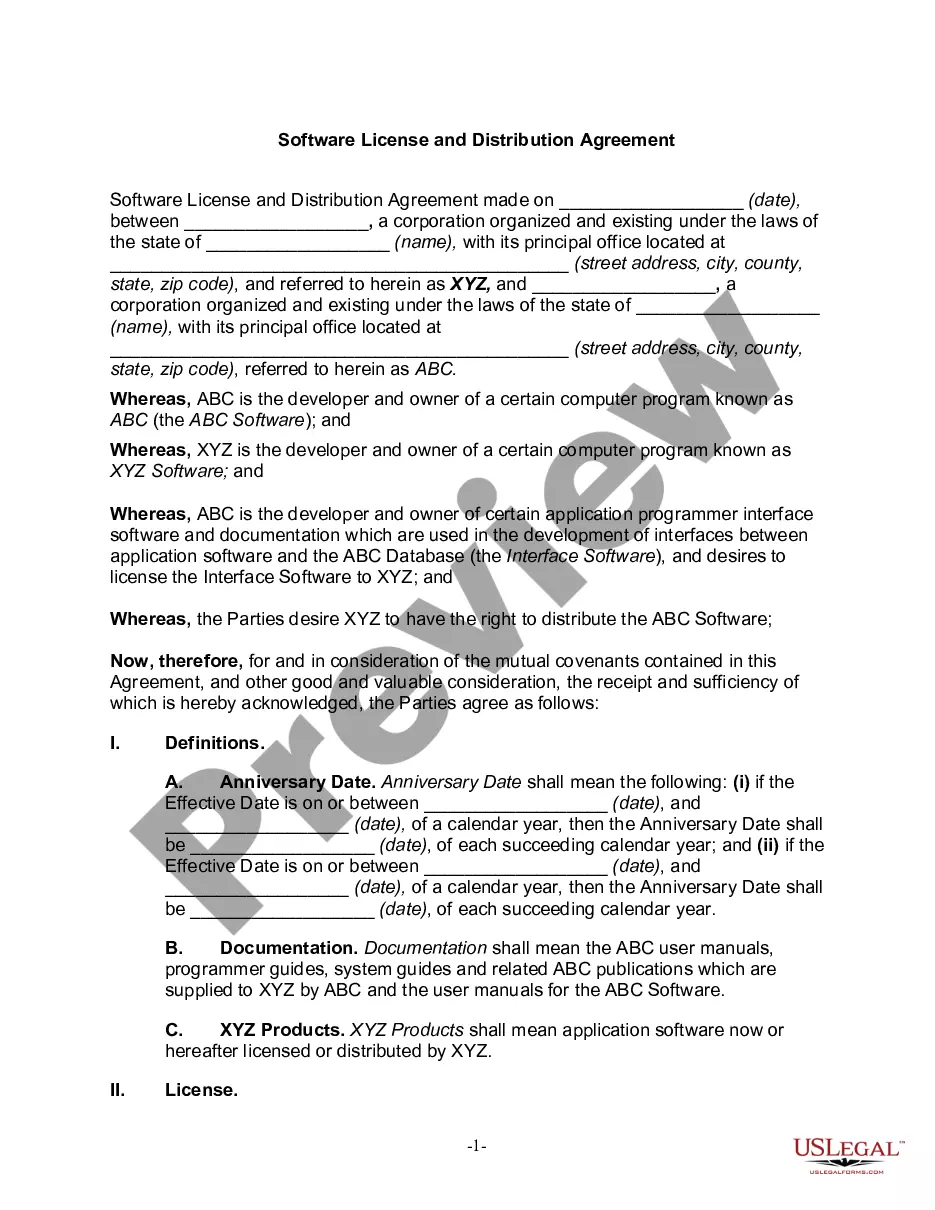
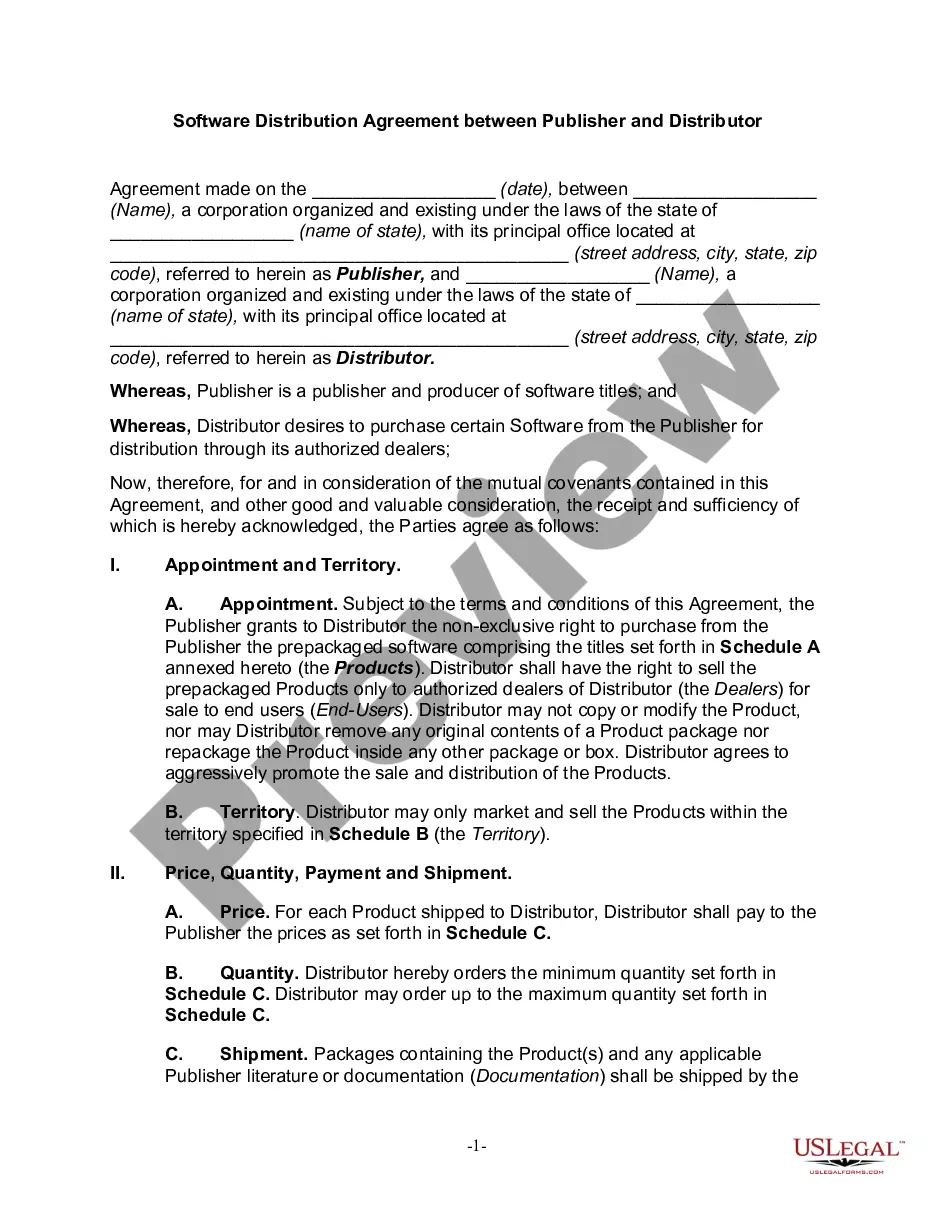
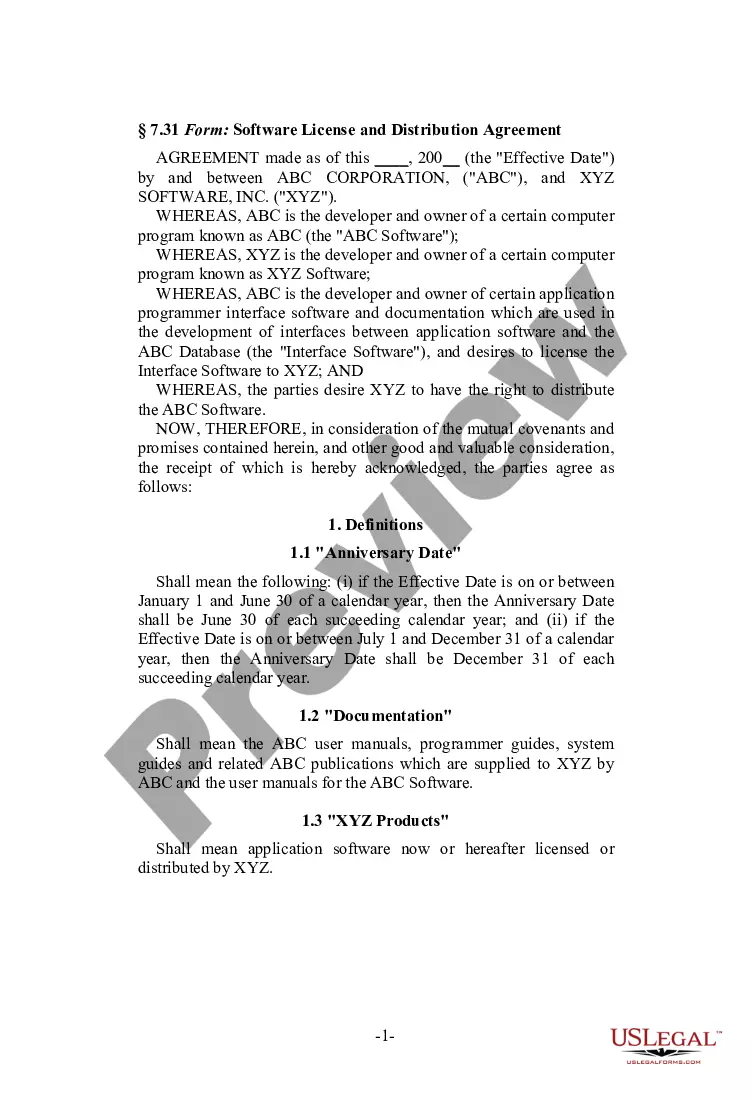
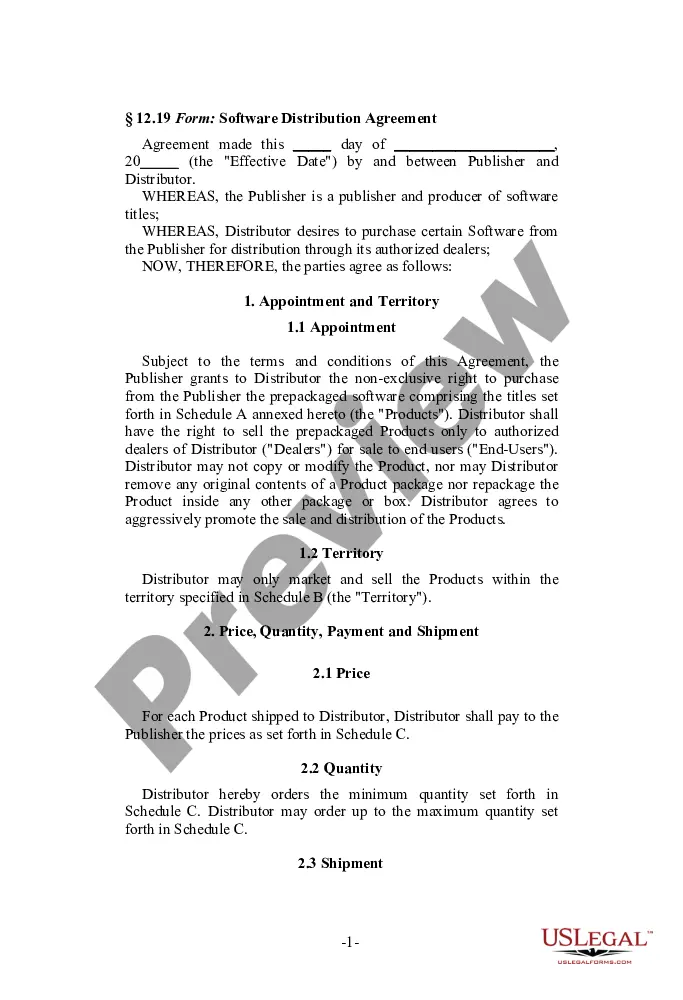
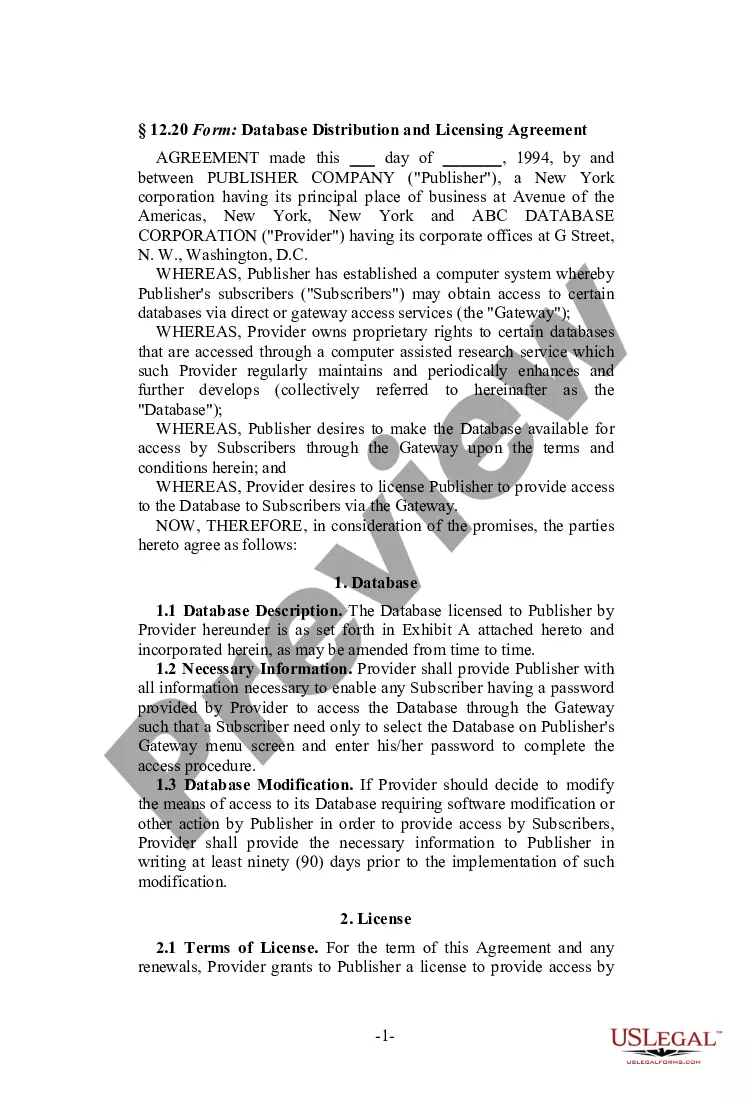
The Database Distribution and Licensing Agreement is a legal document used primarily in the computer, internet, and software industries. This form establishes the terms under which a Publisher can provide access to a Provider's database to its subscribers. It outlines the responsibilities and rights of both parties, differentiating it from other licensing agreements by focusing specifically on database access and distribution through a designated Gateway.
Key components of this form
- Database Description: Details about the specific databases being licensed.
- License Terms: Conditions under which the Publisher can access and provide the Database to subscribers.
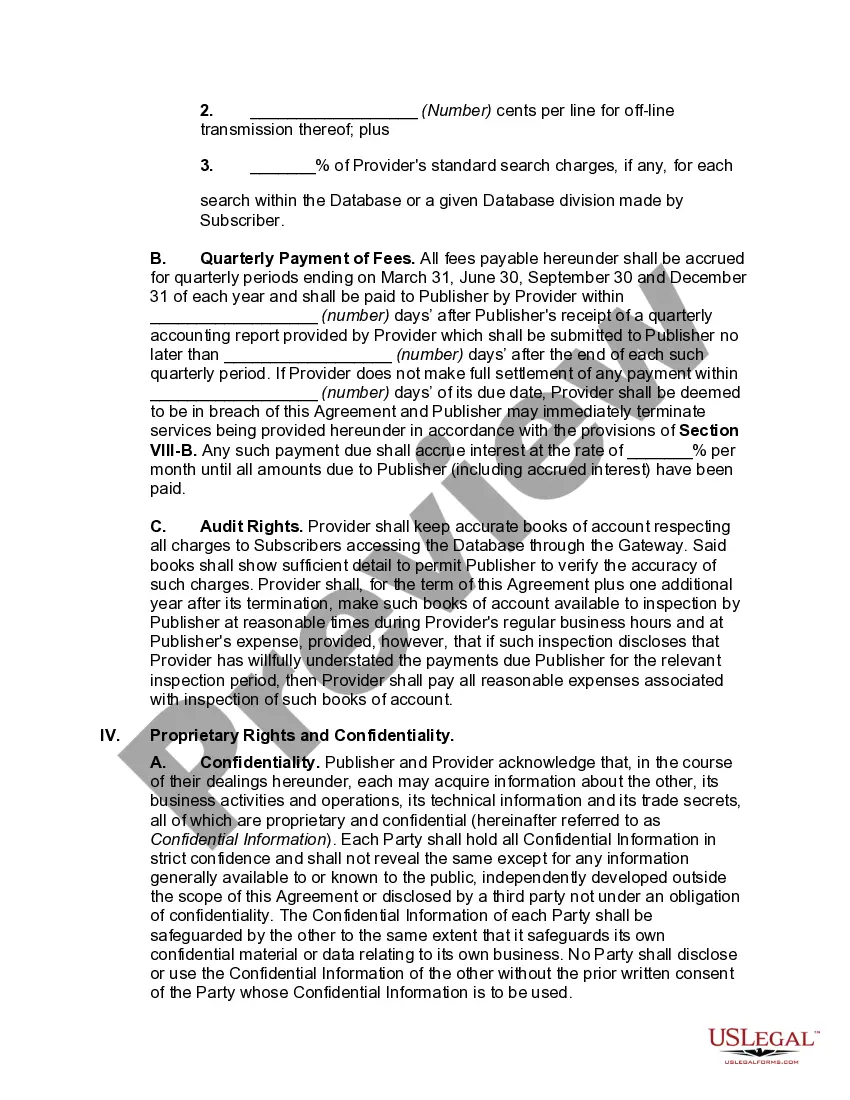
- Fees and Payment Structure: Outline of payment terms for accessing the Database and associated fees.
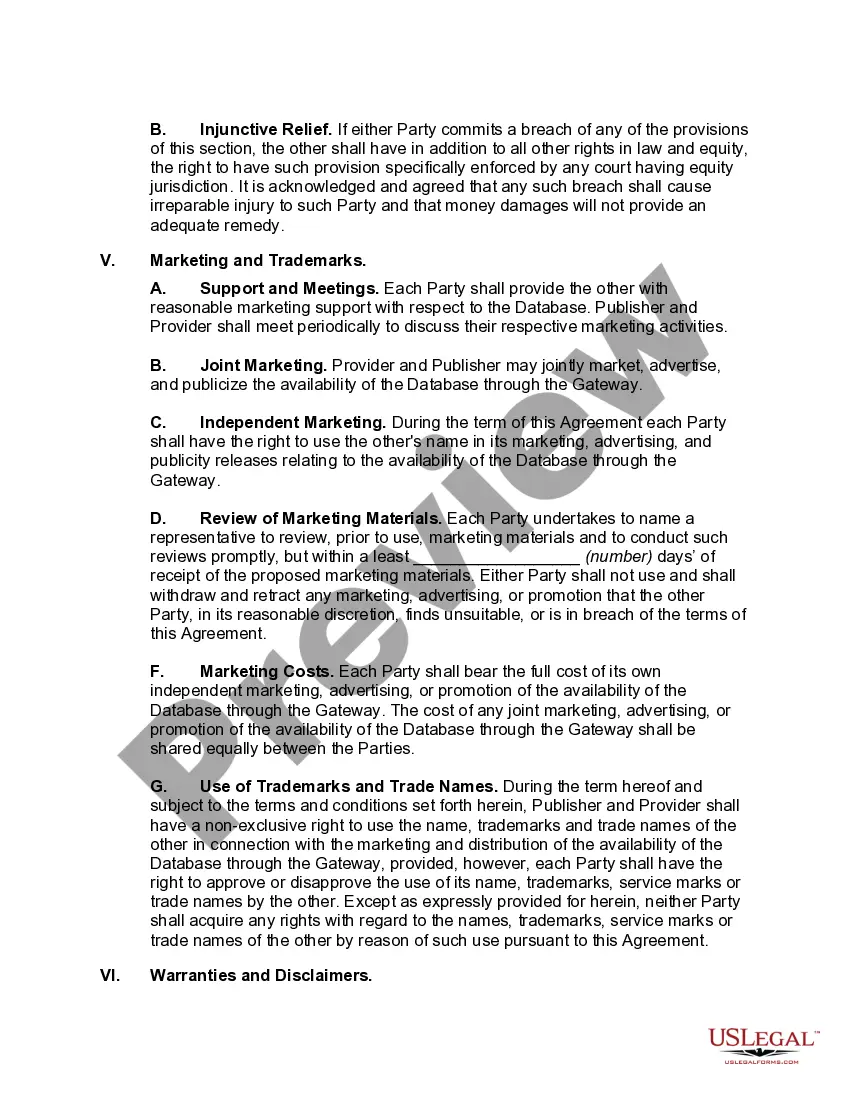
- Confidentiality Clauses: Provisions for protecting sensitive information exchanged between the parties.
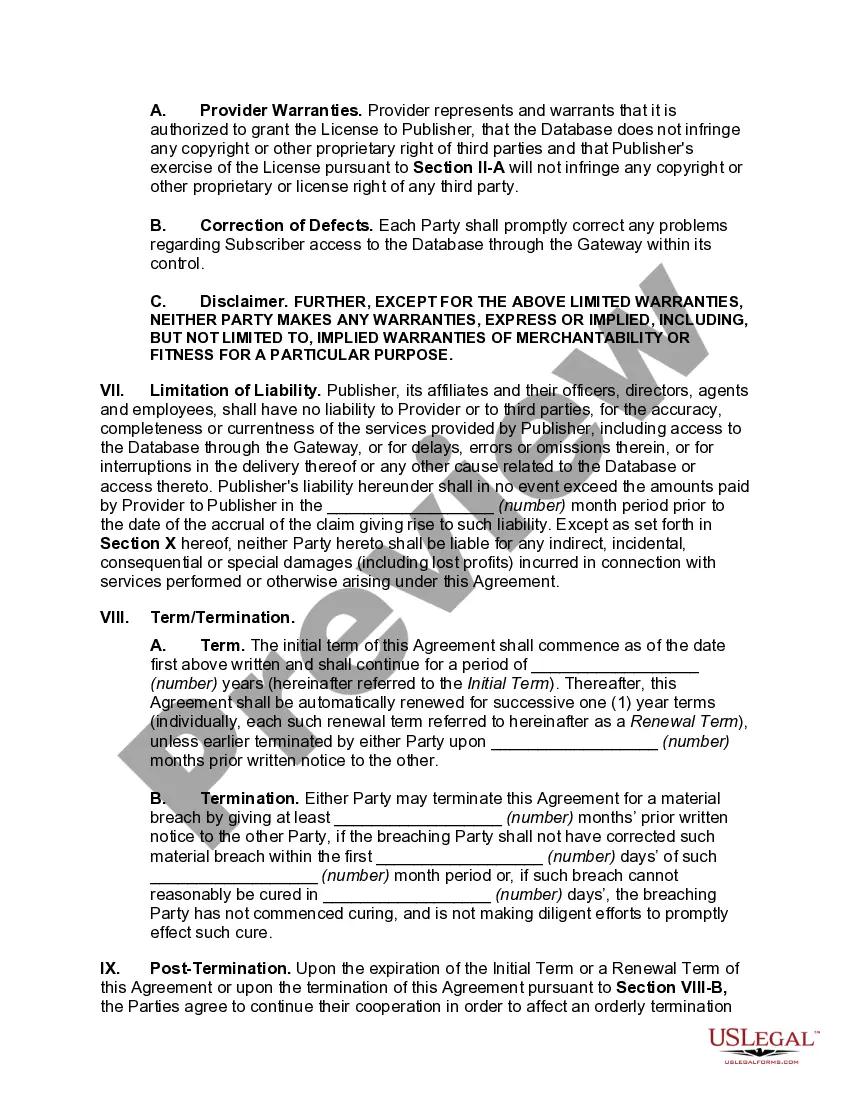
- Termination Conditions: Rules governing how and when either party can terminate the agreement.
Common use cases
This agreement is essential when a Publisher seeks to license a Provider's database for distribution to its subscribers. You might need this form if you are developing a subscription service that requires database access to provide valuable information to users, or if you want to formalize the terms of your database access to prevent potential disputes in the future.
Who this form is for
- Businesses or individuals involved in the software or internet industry.
- Publishers who intend to distribute access to databases owned by third parties.
- Providers who own databases and seek to grant access rights to Publishers.
- Legal professionals assisting clients with database licensing agreements.
Completing this form step by step
- Enter the date of the agreement at the beginning of the document.
- Specify the names and addresses of both the Publisher and the Provider.
- Detail the description of the Database in Exhibit A.
- Outline the license terms, including any associated fees and payment structure.
- Ensure both parties sign and date the agreement in the designated section.
Notarization requirements for this form
This form does not typically require notarization unless specified by local law.
Get your form ready online
Our built-in tools help you complete, sign, share, and store your documents in one place.
Make edits, fill in missing information, and update formatting in US Legal Forms—just like you would in MS Word.
Download a copy, print it, send it by email, or mail it via USPS—whatever works best for your next step.
Sign and collect signatures with our SignNow integration. Send to multiple recipients, set reminders, and more. Go Premium to unlock E-Sign.
If this form requires notarization, complete it online through a secure video call—no need to meet a notary in person or wait for an appointment.
We protect your documents and personal data by following strict security and privacy standards.

Make edits, fill in missing information, and update formatting in US Legal Forms—just like you would in MS Word.

Download a copy, print it, send it by email, or mail it via USPS—whatever works best for your next step.

Sign and collect signatures with our SignNow integration. Send to multiple recipients, set reminders, and more. Go Premium to unlock E-Sign.

If this form requires notarization, complete it online through a secure video call—no need to meet a notary in person or wait for an appointment.

We protect your documents and personal data by following strict security and privacy standards.
Mistakes to watch out for
- Failing to clearly define the Database and its usage rights.
- Neglecting to specify payment terms and conditions, leading to financial disputes.
- Leaving out confidentiality provisions, which could compromise sensitive information.
- Not including termination clauses, making it difficult to end the agreement if needed.
Benefits of completing this form online
- Convenience of downloading a ready-to-use legal form.
- Editability allows customization to fit specific agreements.
- Reliable legal content drafted by licensed attorneys.
- Easy access to legal resources without the need for in-person consultations.
Looking for another form?


Form popularity
FAQ
A license agreement is a business contract between two parties. The licensor (the seller of the license) owns the asset being licensed and the licensee (the buyer) pays for the right to use the license. The licensee pays royalties to the owner in exchange for the right to sell the product or use the technology.
A licensing agreement is a legal contract between two parties, known as the licensor and the licensee. In a typical licensing agreement, the licensor grants the licensee the right to produce and sell goods, apply a brand name or trademark, or use patented technology owned by the licensor.
Exclusive or non-exclusive. In an exclusive license, the intellectual property holder is licensing the work only to one person, for that particular use/territory. Territory. Use. Attribution. Derivative works. Confidentiality. Time frame. Termination.
Download a template for a licensing agreement. Choose your role as the licensor or licensee. Define the license(s) in the agreement. Decide whether the license is exclusive or not. Settle the matter of fees and payment schedule. Add a renewal date and rules.
What is a Licensing Agreement? A licensing agreement is a contract between two parties (the licensor and licensee) in which the licensor grants the licensee the right to use the brand name, trademark, patented technology, or ability to produce and sell goods owned by the licensor.
A license agreement is a business contract between two parties. The licensor (the seller of the license) owns the asset being licensed and the licensee (the buyer) pays for the right to use the license. The licensee pays royalties to the owner in exchange for the right to sell the product or use the technology.
Give three examples of sport licensees. A company that wants to manufacture and sell products using trademarked property.What kinds of products can be licensed? Keychains, mugs, banners, magnets, boxer shorts, even furniture and jewelry.
The 3 P's of collegiate licensing are protection, promotion, and profit.
Example: An example would include Walt Disney granting McDonalds a license for McDonalds to co-brand its McDonalds Happy Meals with a Disney trademarked character; (b) A license where a technology company, as licensor, grants a license to an individual or company, as licensee, to use a particular technology.
An example of a licensing agreement is a contract between the copyright holders of software and another company, allowing the latter to use the computer software for their daily business operations.