Home Improvement or Remodeling Construction Contract
What is this form?
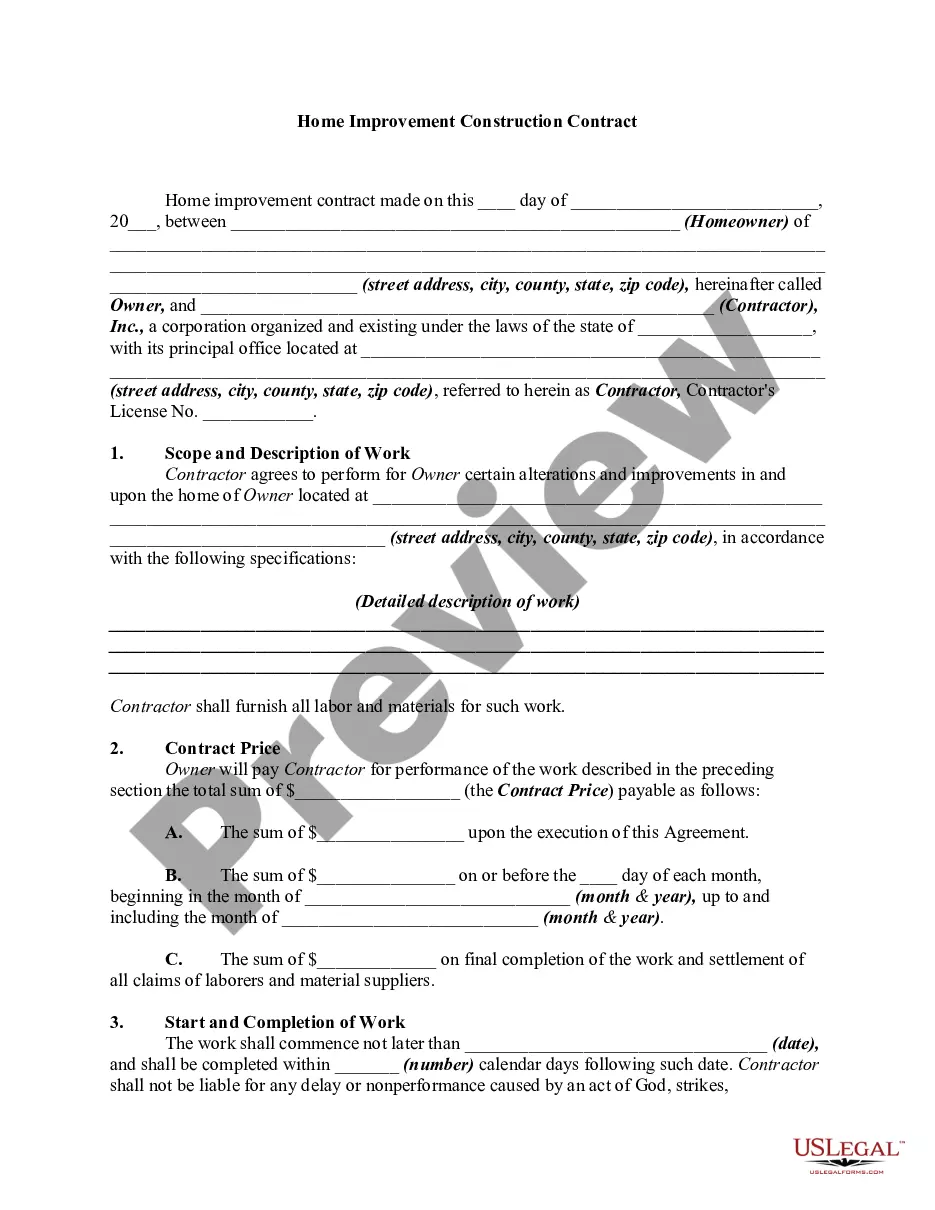
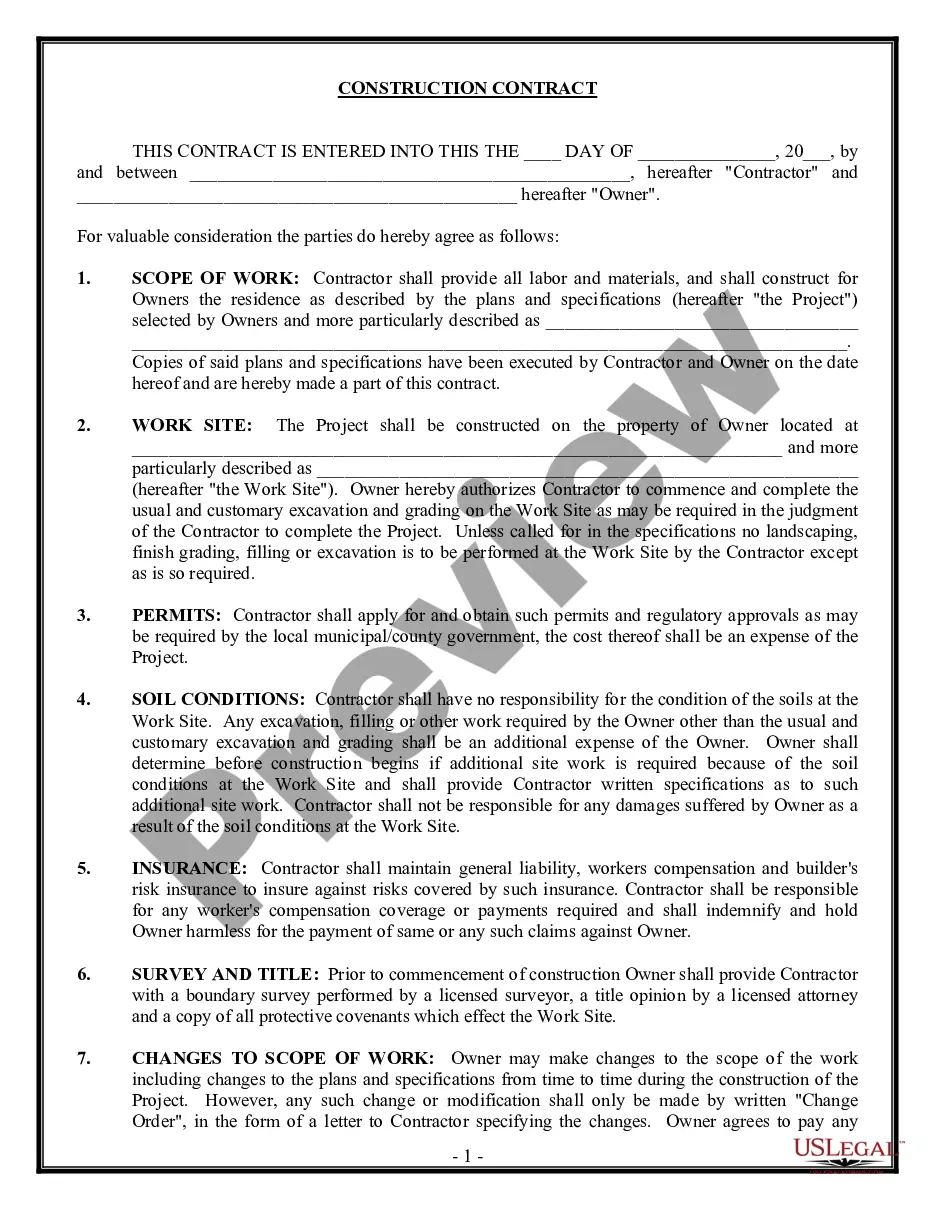
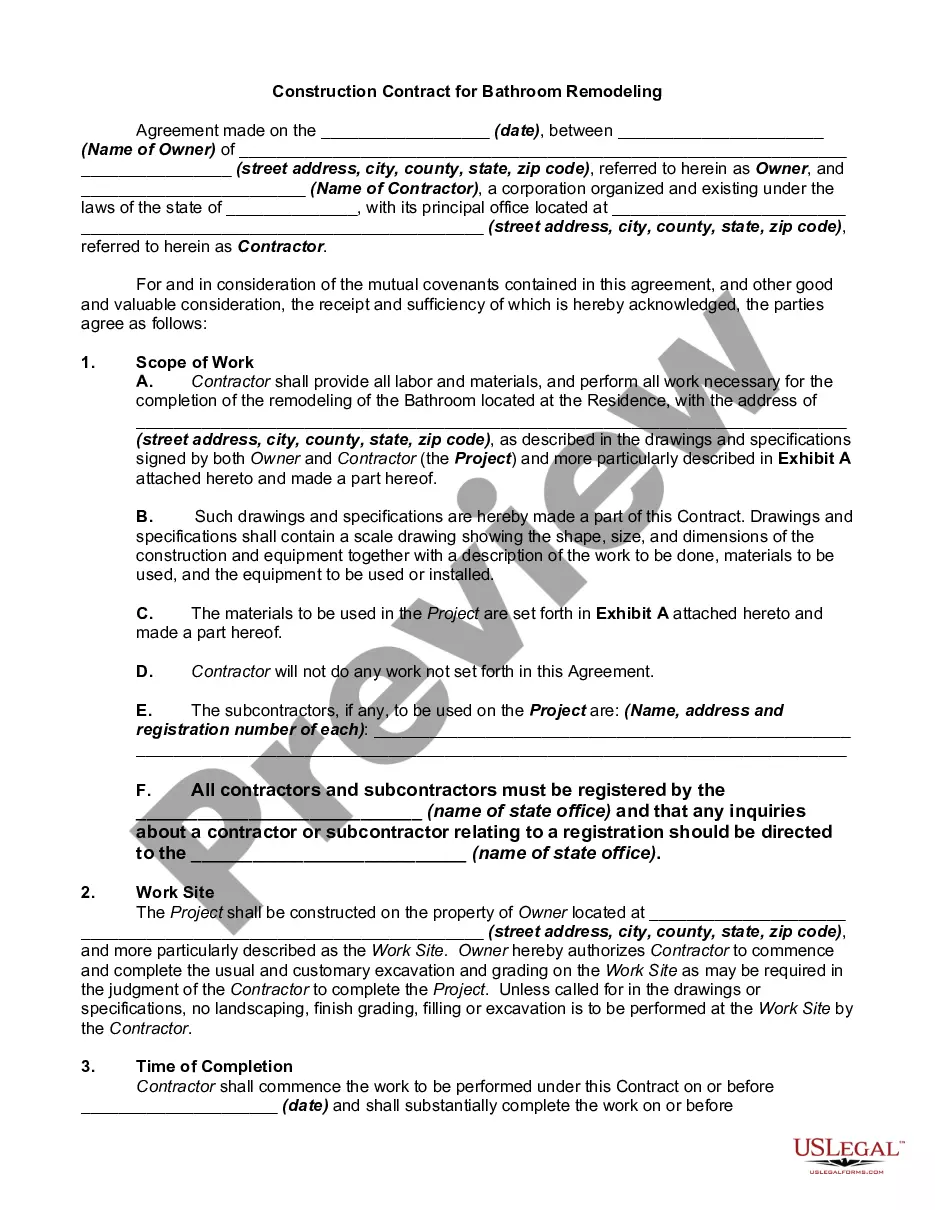
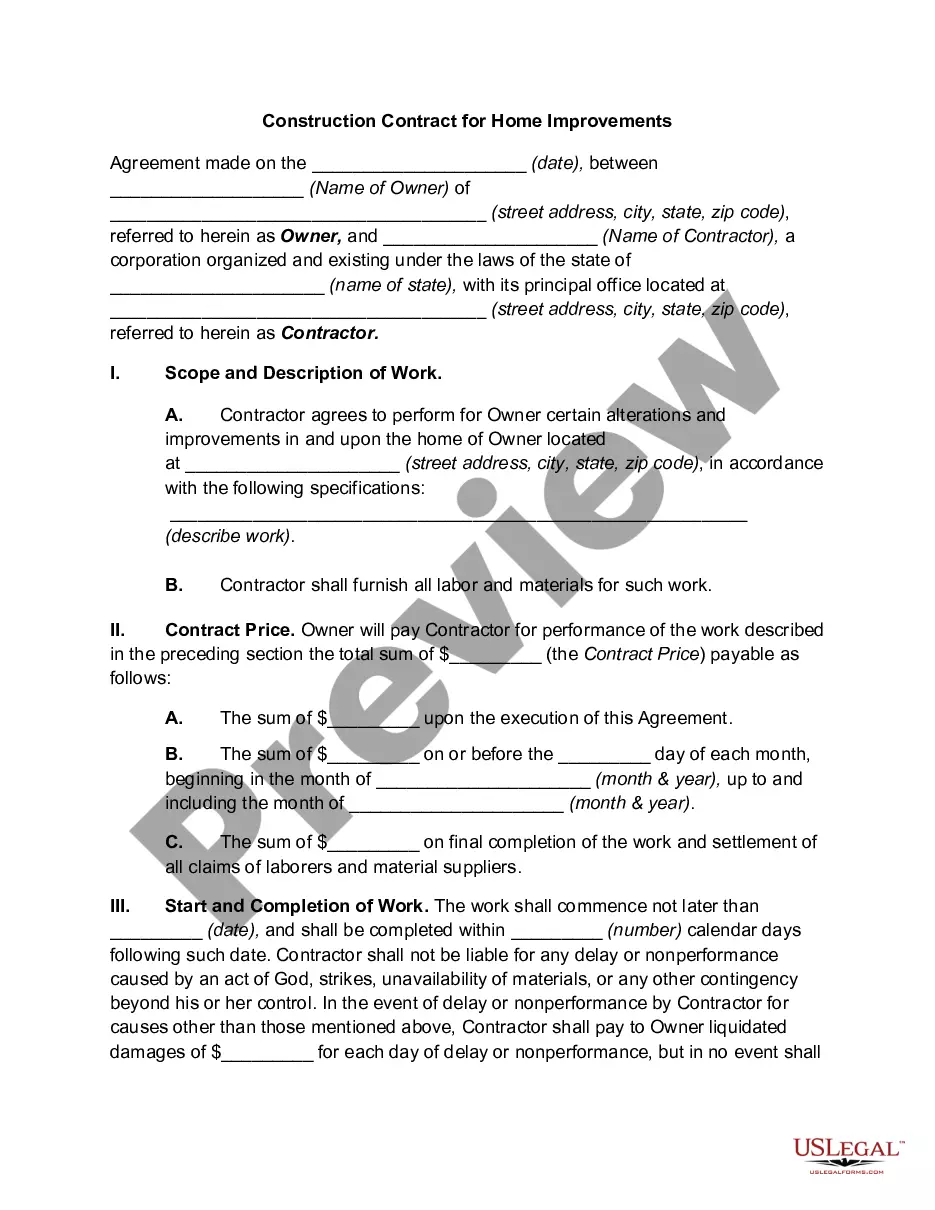
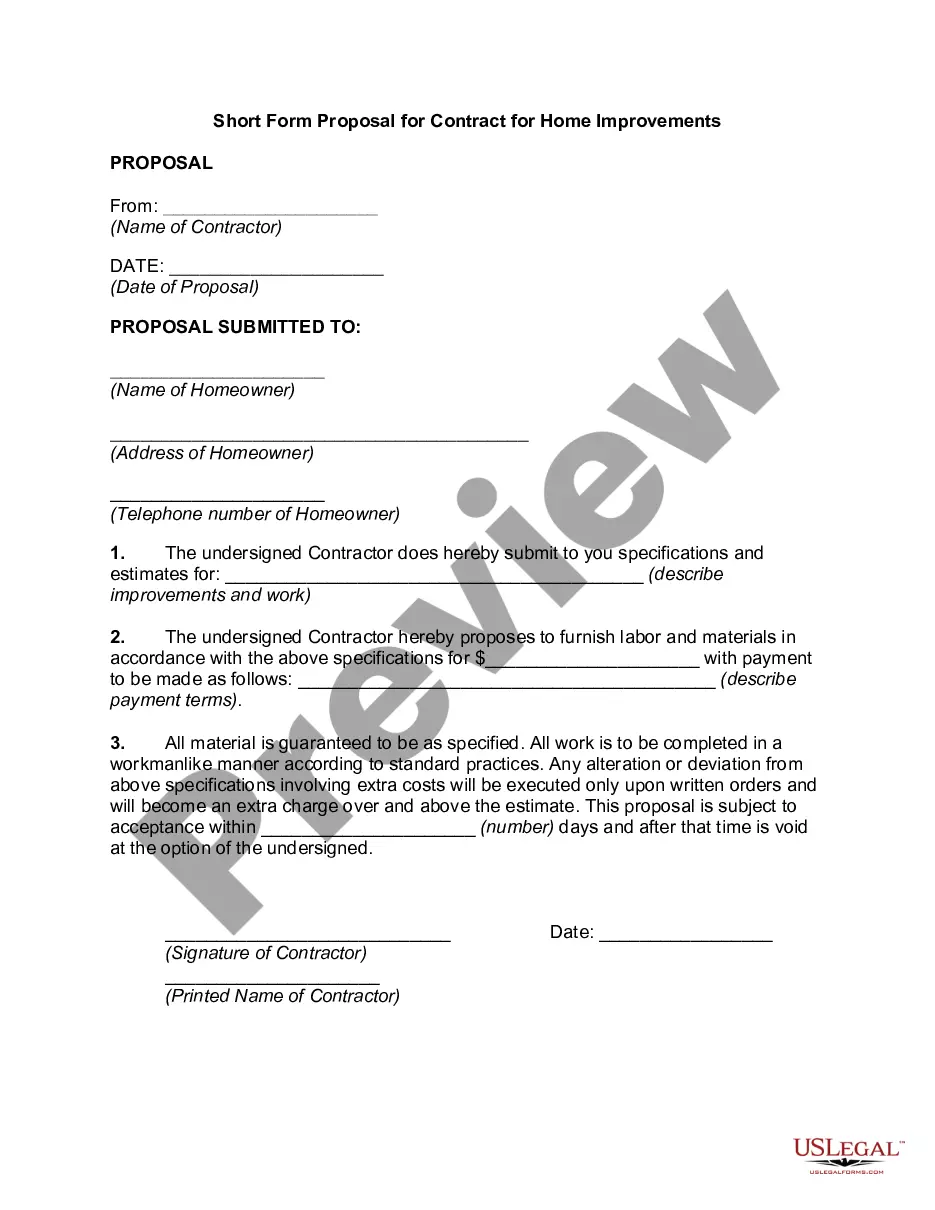
The Home Improvement or Remodeling Construction Contract is a legally binding agreement between a homeowner and a contractor for providing home improvement services. This form outlines the scope of work, payment terms, and responsibilities of both parties, distinguishing it from other types of construction contracts that may pertain to commercial projects or general contractor agreements. It is essential for projects exceeding $500 to ensure clarity and legal protection for both the homeowner and the contractor.
Key components of this form
- Contracting parties: Identification of the homeowner and contractor, including addresses and license numbers.
- Scope and description of work: Detailed specifications of the home improvement tasks to be performed.
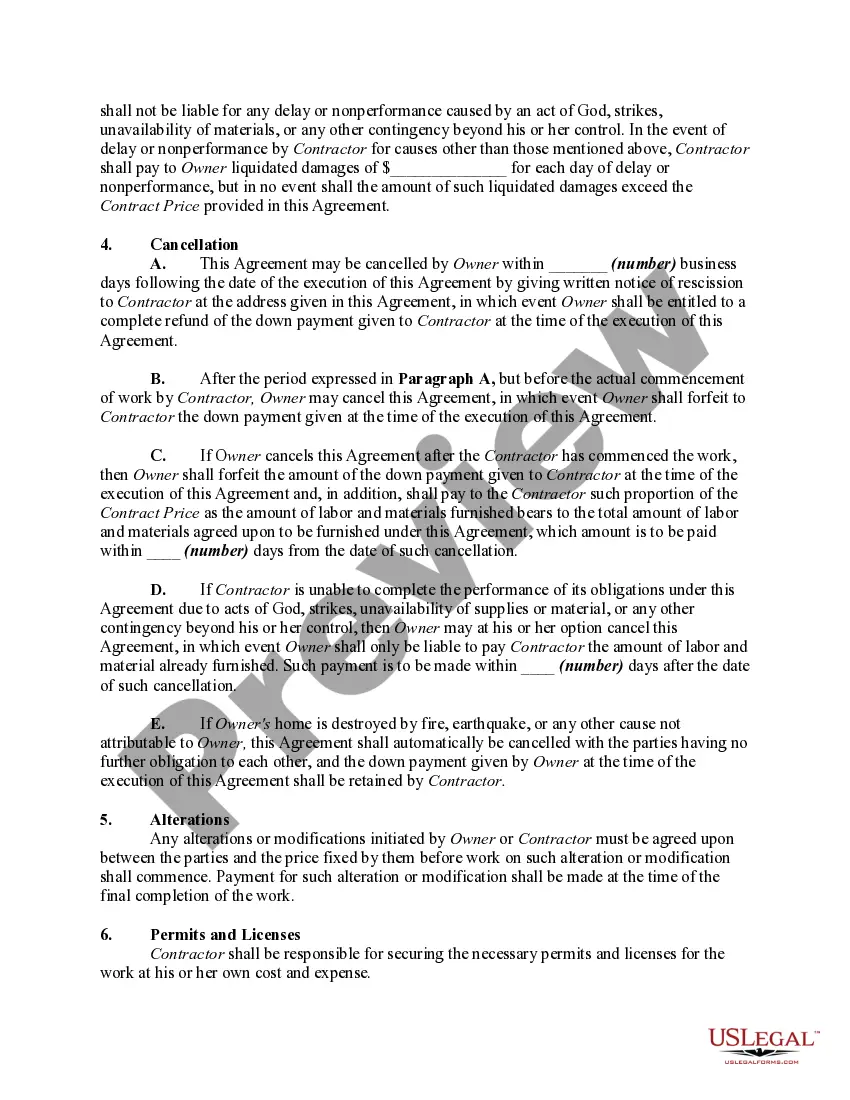
- Contract price: Payment structure, including down payments and final payment upon completion.
- Start and completion dates: Outline of when work will begin and when it is expected to finish.
- Cancellation policy: Conditions under which either party may cancel the contract.
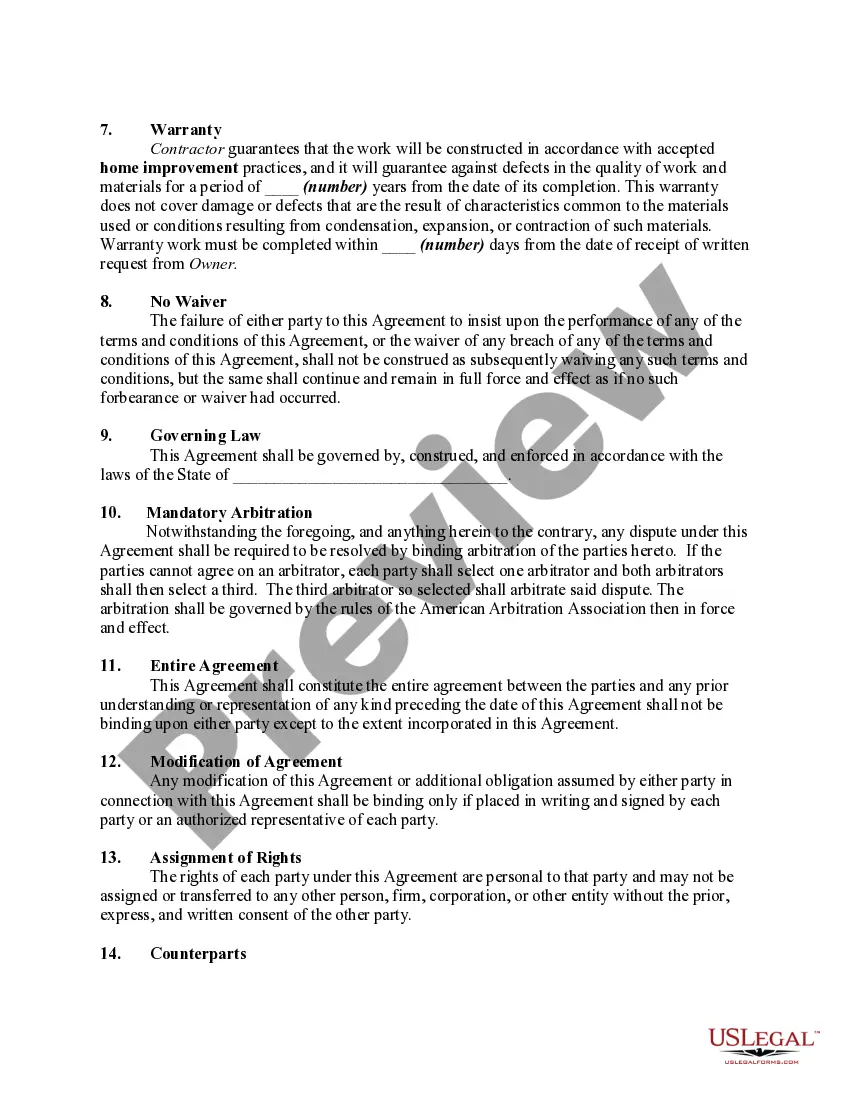
- Warranty: Guarantee of work quality and materials for a specified duration after completion.

When to use this document
This form is ideal when a homeowner engages a contractor for any residential property enhancement or renovation project. It should be used for significant improvements, such as remodeling kitchens, finishing basements, or adding new roofs, especially when project costs exceed $500. Having a formal agreement helps protect both parties' rights and ensures mutual understanding of expectations.
Who can use this document
- Homeowners looking to contract a professional for home improvement or remodeling projects.
- Contractors providing services to homeowners in residential settings.
- Tenants who require written permission from landlords for home alterations, in accordance with lease agreements.
Instructions for completing this form
- Identify the parties involved: Fill in the names and addresses of both the homeowner and contractor.
- Specify the property: Include the address of the home where the work will take place.
- Detail the scope of work: Clearly describe the renovations or improvements to be completed.
- Enter financial terms: Document the total contract price and any payment schedules.
- Set dates: Provide the start date for the work and the expected completion date.
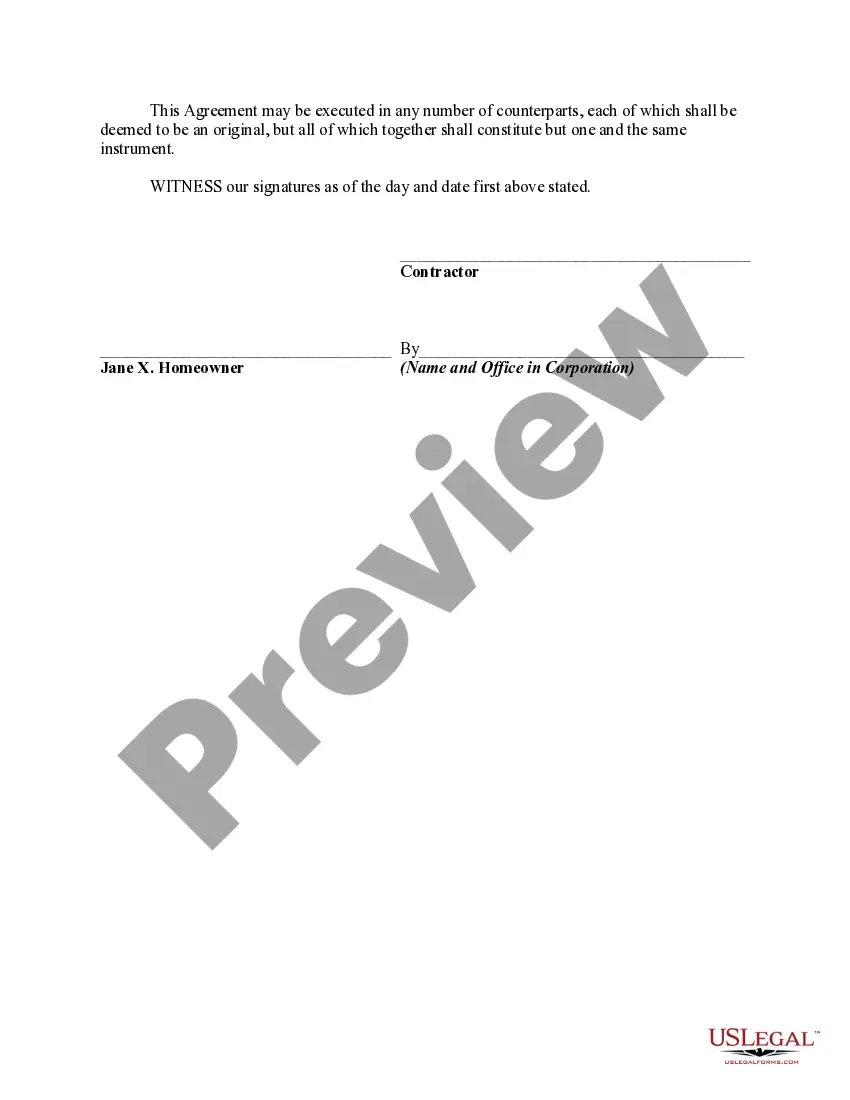
- Sign the contract: Ensure both parties sign and date the agreement to make it legally binding.
Notarization guidance
This form does not typically require notarization unless specified by local law. However, having the document notarized can add an extra layer of protection and verification for both parties involved.
Get your form ready online
Our built-in tools help you complete, sign, share, and store your documents in one place.
Make edits, fill in missing information, and update formatting in US Legal Forms—just like you would in MS Word.
Download a copy, print it, send it by email, or mail it via USPS—whatever works best for your next step.
Sign and collect signatures with our SignNow integration. Send to multiple recipients, set reminders, and more. Go Premium to unlock E-Sign.
If this form requires notarization, complete it online through a secure video call—no need to meet a notary in person or wait for an appointment.
We protect your documents and personal data by following strict security and privacy standards.

Make edits, fill in missing information, and update formatting in US Legal Forms—just like you would in MS Word.

Download a copy, print it, send it by email, or mail it via USPS—whatever works best for your next step.

Sign and collect signatures with our SignNow integration. Send to multiple recipients, set reminders, and more. Go Premium to unlock E-Sign.

If this form requires notarization, complete it online through a secure video call—no need to meet a notary in person or wait for an appointment.

We protect your documents and personal data by following strict security and privacy standards.
Avoid these common issues
- Failing to detail the scope of work, which can lead to misunderstandings later.
- Not specifying payment terms clearly, causing confusion over financial obligations.
- Neglecting to include start and completion dates which can lead to delays.
- Overlooking cancellation terms, potentially resulting in disputes if the project needs to be stopped.
Benefits of using this form online
- Convenience: Easily fill out and download the form from any location at your convenience.
- Editability: Tailor the contract to fit specific project needs before printing or sharing.
- Reliability: Access forms prepared by licensed attorneys, ensuring that they meet legal standards.
Legal use & context
- This contract is legally binding and can be enforced in court if disputes arise between the homeowner and contractor.
- It is essential that both parties fully understand the terms before signing to ensure the contractâs enforceability.
Looking for another form?

Form popularity
FAQ
Scope of Work, Selection Sheet and Drawings. License Number and Insurance. Description of Change Orders. Warranty information. Subcontractor Agreements. Payment schedule. Completion Schedule / Timeline. Clauses Required by Law.
Detailed Description of the Job. How Payments Will Be Made. Start and End Dates of the Project. How Changes to the Project Will Be Dealt With. Lien Waivers. Written Notice of Your Right to Cancel Without Penalty. Warranty. Signatures.
Identifying/Contact Information. Title and Description of the Project. Projected Timeline and Completion Date. Cost Estimate and Payment Schedule. Stop Work Clause and Stop Payment Clause. Act of God Clause. Change Order Agreement. Warranty.
Identifying/Contact Information. Title and Description of the Project. Projected Timeline and Completion Date. Cost Estimate and Payment Schedule. Stop Work Clause and Stop Payment Clause. Act of God Clause. Change Order Agreement. Warranty.
A general contractor provides a strong background in framing and carpentry along with many other skills. Because remodeling jobs typically involve several specialty areas, the general contractor serves as a project manager who coordinates the entire job.
Check Contract Basics. The basic job of a contractor agreement is to spell out the scope of the project's work. Set a Payment Schedule. Schedule Start and End Dates. Specify Change Orders. Research Your Arbitration Options. Turn Down the Contractor's Warranty.
Name of contractor and contact information. Name of homeowner and contact information. Describe property in legal terms. List attachments to the contract. The cost. Failure of homeowner to obtain financing. Description of the work and the completion date. Right to stop the project.
Check Contract Basics. The basic job of a contractor agreement is to spell out the scope of the project's work. Set a Payment Schedule. Schedule Start and End Dates. Specify Change Orders. Research Your Arbitration Options. Turn Down the Contractor's Warranty.
Define and describe the project in detail. Include what materials must be used; be as specific as possible. Include weight, brand name and other identifying features. Specify the work being performed and all equipment being used or installed.