Partial Release of Pipeline Easement
Understanding this form
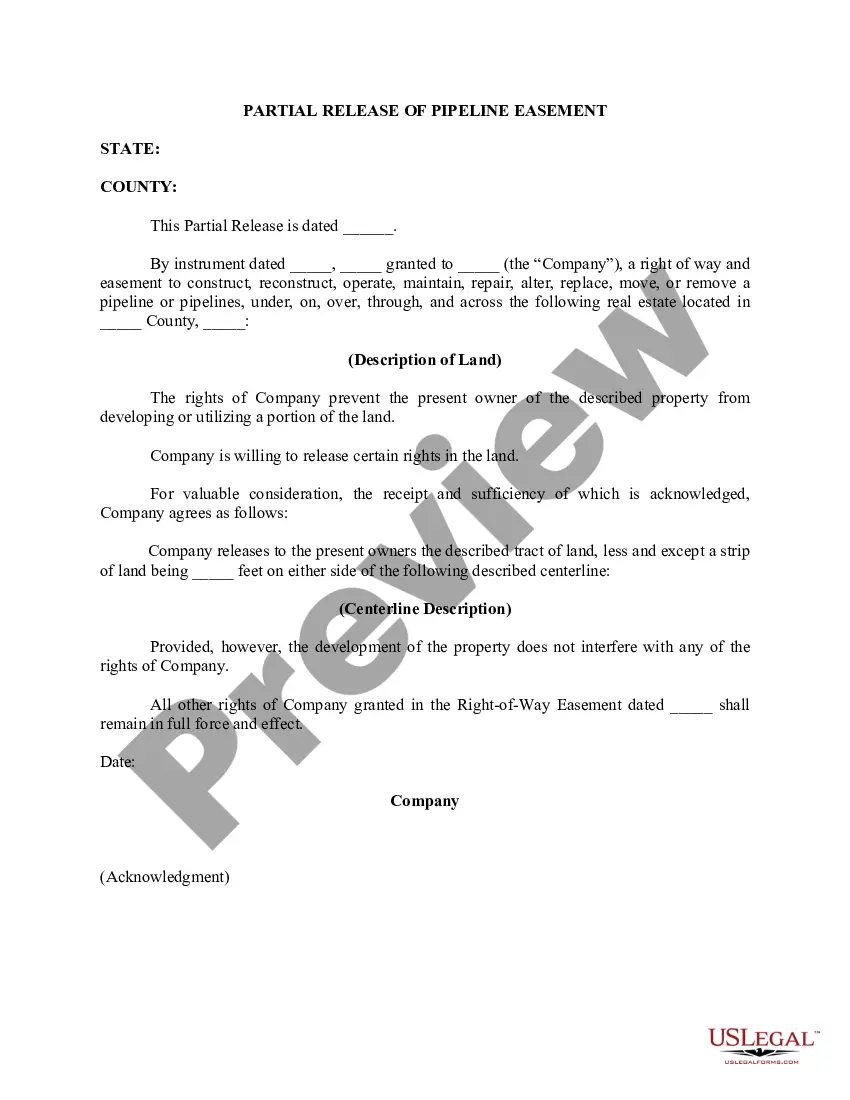
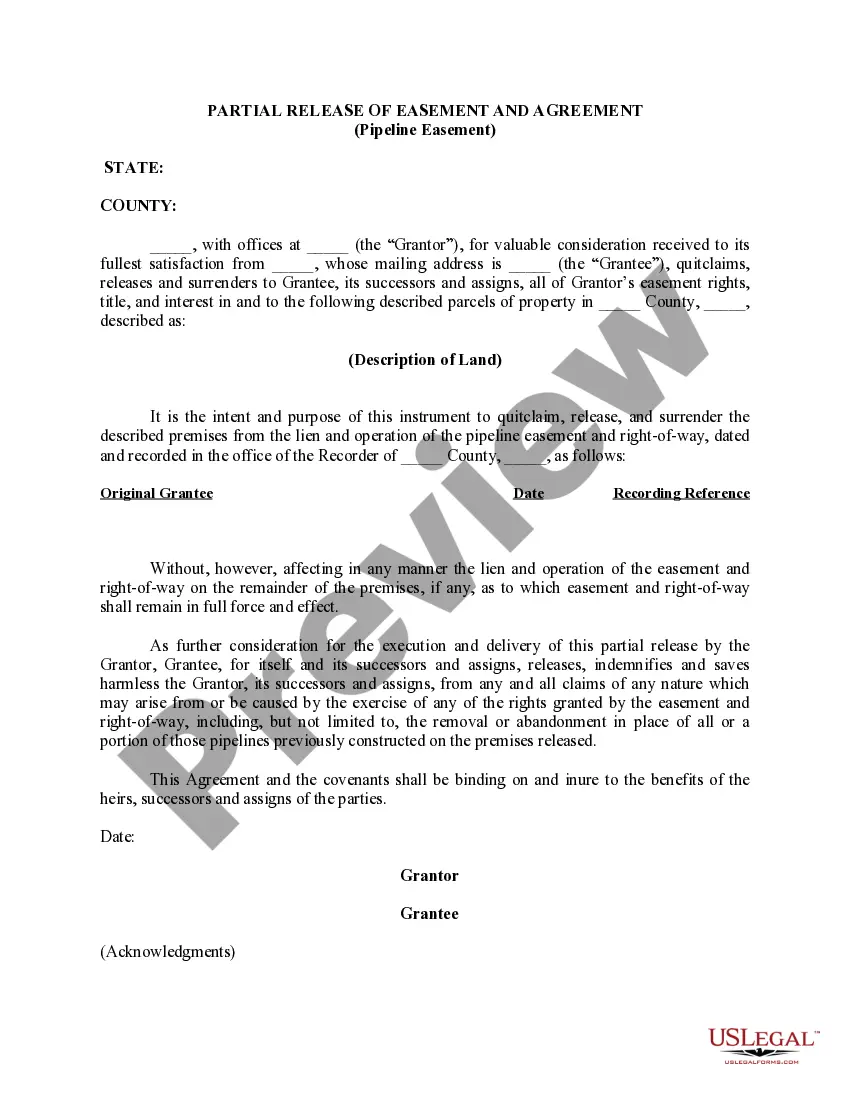
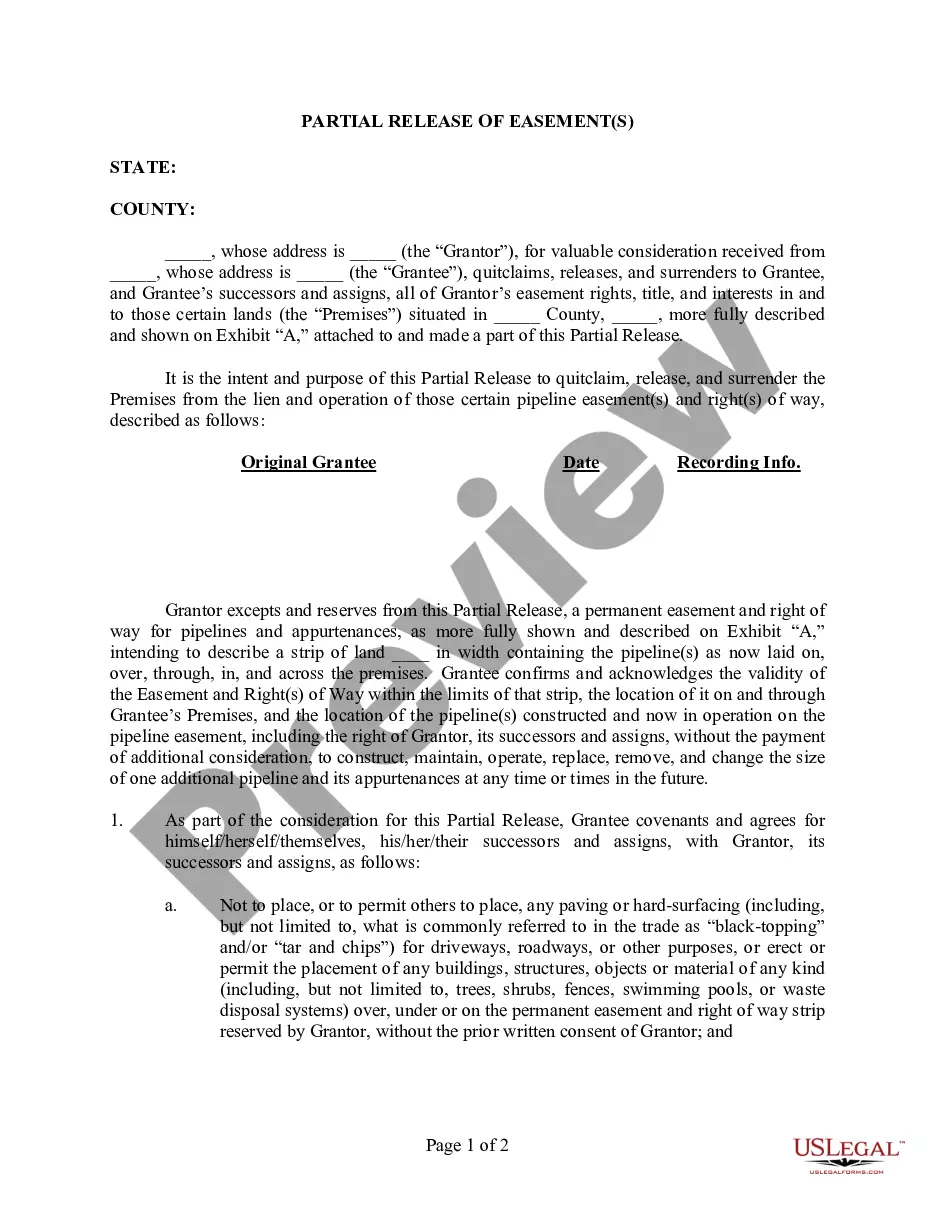
The Partial Release of Pipeline Easement is a legal document that allows the holder of an easement to relinquish certain rights to a portion of land while retaining some usage rights. This form is essential when the company owning the pipeline easement agrees to allow the current property owner to develop parts of the land, provided it does not interfere with their remaining rights. It differs from full easement releases by only allowing for specific sections of land to be released for development, while other rights continue to exist.
Main sections of this form
- Date of the partial release.
- Identification of the company granting the easement rights.
- Description of the property affected by the easement.
- Specific details regarding the part of the land being released.
- Conditions that permit development without interfering with remaining rights.
- Acknowledgment section for the company.

When to use this document
This form should be used when a landowner seeks to partially release an easement on their property to allow for development while still ensuring that the easement holder retains necessary rights for pipeline operations. For example, if a property owner wants to build a structure on a portion of their land but an existing easement restricts such development, this form allows for the release of specific rights related to that structure.
Who needs this form
- Property owners seeking to develop land affected by a pipeline easement.
- Pipelines companies looking to facilitate land development around their easements.
- Land use attorneys assisting clients with easement negotiations.
Completing this form step by step
- Fill in the date the partial release is being executed.
- Identify the company that originally granted the easement.
- Provide a detailed description of the property affected by the easement.
- Specify the section of land being released from the easement.
- Include any stipulations regarding the remaining rights of the easement holder.
- Sign and date the form, ensuring the company acknowledges the release.
Notarization requirements for this form
This form does not typically require notarization unless specified by local law. However, it is essential to confirm whether any state-specific regulations apply that might necessitate notarization.
Get your form ready online
Our built-in tools help you complete, sign, share, and store your documents in one place.
Make edits, fill in missing information, and update formatting in US Legal Forms—just like you would in MS Word.
Download a copy, print it, send it by email, or mail it via USPS—whatever works best for your next step.
Sign and collect signatures with our SignNow integration. Send to multiple recipients, set reminders, and more. Go Premium to unlock E-Sign.
If this form requires notarization, complete it online through a secure video call—no need to meet a notary in person or wait for an appointment.
We protect your documents and personal data by following strict security and privacy standards.

Make edits, fill in missing information, and update formatting in US Legal Forms—just like you would in MS Word.

Download a copy, print it, send it by email, or mail it via USPS—whatever works best for your next step.

Sign and collect signatures with our SignNow integration. Send to multiple recipients, set reminders, and more. Go Premium to unlock E-Sign.

If this form requires notarization, complete it online through a secure video call—no need to meet a notary in person or wait for an appointment.

We protect your documents and personal data by following strict security and privacy standards.
Avoid these common issues
- Failing to specify the exact land area being released.
- Not including necessary conditions for the remaining rights.
- Omitting the date or signature from the acknowledgment section.
Advantages of online completion
- Convenient access to legal documents from anywhere.
- Quick download and the ability to edit relevant information.
- Easy to execute without the need for a lawyer visit.
Legal use & context
- The partial release allows for limited usage of property while protecting the easement holder's rights.
- It is important that development does not interfere with the operation of the pipelines.
Quick recap
- The Partial Release of Pipeline Easement facilitates property development while respecting existing easement rights.
- Accurate completion of the form is essential to prevent legal disputes.
- Understanding both the rights being released and retained is crucial for all parties involved.
Looking for another form?
Form popularity
FAQ
Background on perpetual easementsEasements are treated as a recovery of the basis of the property first, with any excess proceeds treated as capital gain, which is taxed at a lower rate than ordinary income. The basis of property that offsets an easement is limited to the basis of the affected acres or square footage.
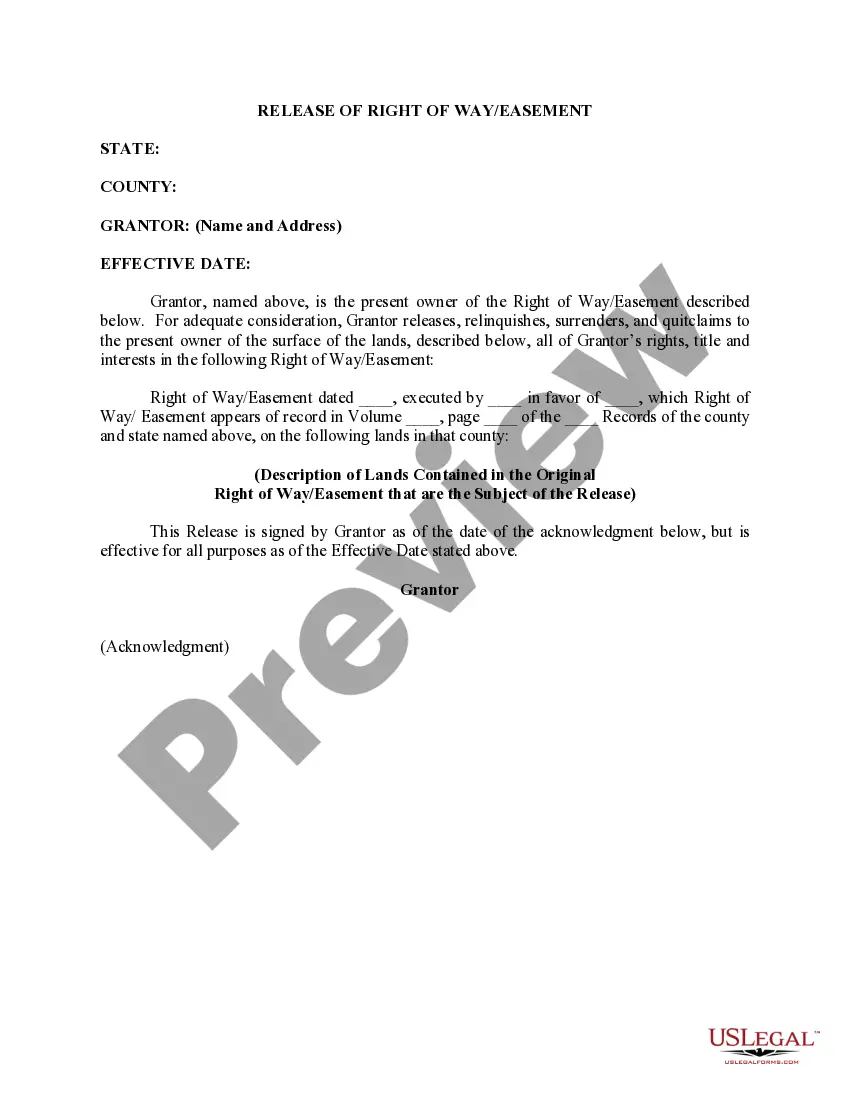
Easement: An intangible capital asset that reflects the purchased right to use land without ownership. This right is considered permanent and inexhaustible.
Tax Reporting Whoever is paying for the easement will send you a Form 1099 at the end of the year. If you get a 1099-MISC for rental payments, you report the income on Schedule E. For a permanent easement, you get a 1099-S and use Schedule D to report capital gains.
A property easement is generally written and recorded with the local assessor's office. The documented easement will show up when a title search is conducted and it stays there indefinitely, unless both parties agree to remove it.
While an unrecorded easement may still be enforceable, the easement may be nullified by a "bona fide purchaser" of the property if the property is sold for value and the subsequent purchaser has no notice (constructive or otherwise) of the unrecorded easement.
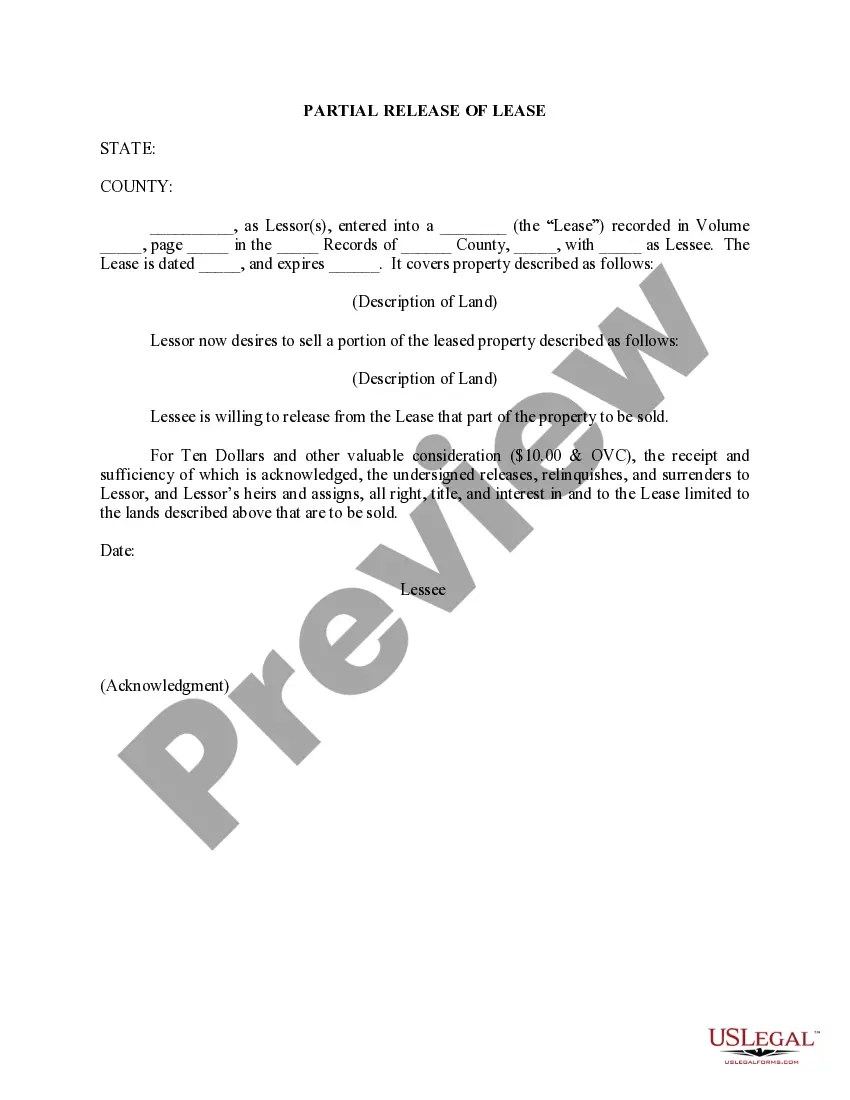
Key Takeaways. A partial release is a mortgage provision that allows some of the collateral to be released from a mortgage after the borrower pays a certain amount of the loan. Lenders require proof of payment, a survey map, appraisal, and a letter outlining the reason for the partial release.
If you are approved for the partial mortgage release, you will receive notification within two to six weeks.
How much money should landowners get when an oil or gas pipeline crosses their land? As it stands, landowners receive a one-time payment roughly based on the length of the pipeline, with rates varying from $5 to $50 per foot or more for a Marcellus or Utica shale pipeline right-of-way agreement.
Background on perpetual easements Easements are treated as a recovery of the basis of the property first, with any excess proceeds treated as capital gain, which is taxed at a lower rate than ordinary income. The basis of property that offsets an easement is limited to the basis of the affected acres or square footage.