Partial Release of Easement(s)
What is this form?
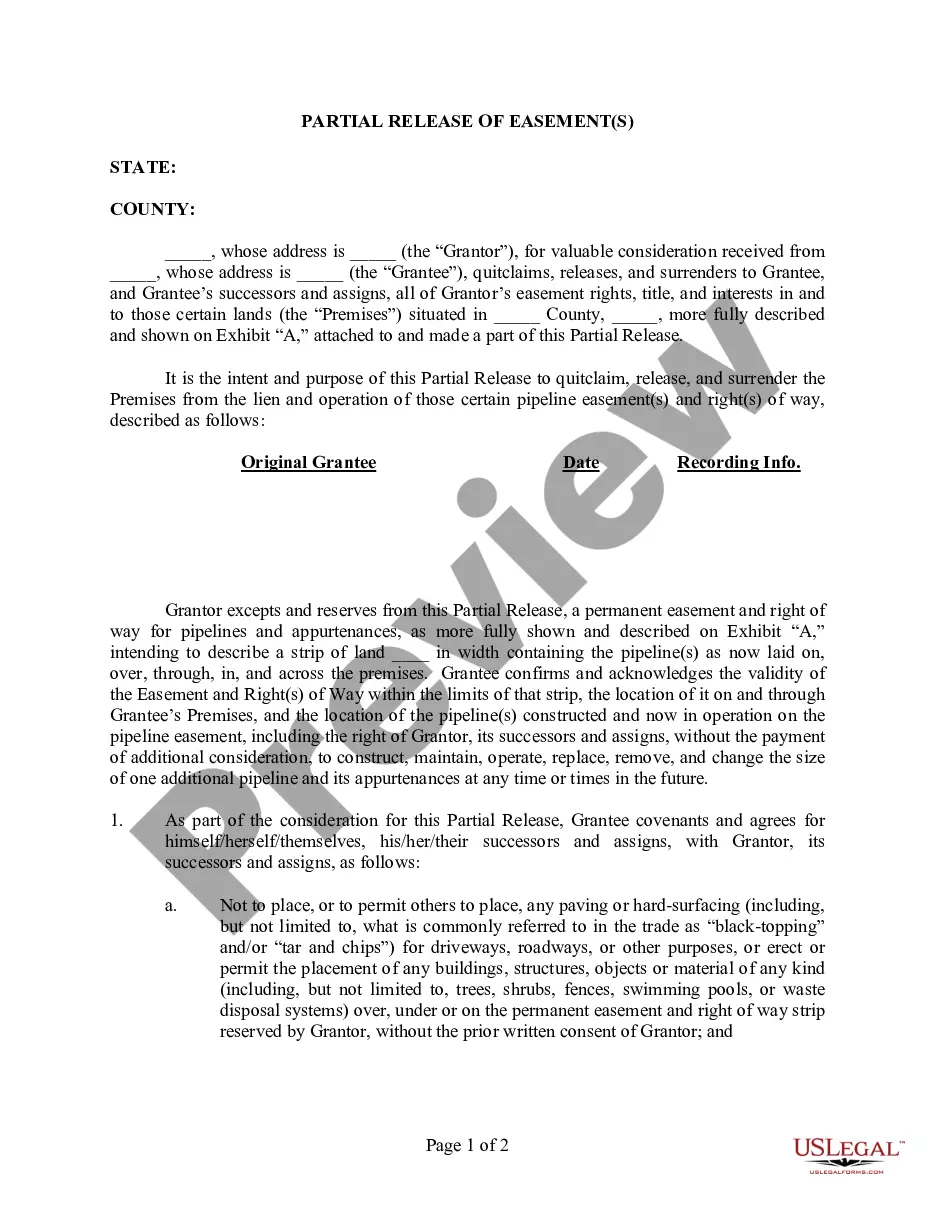
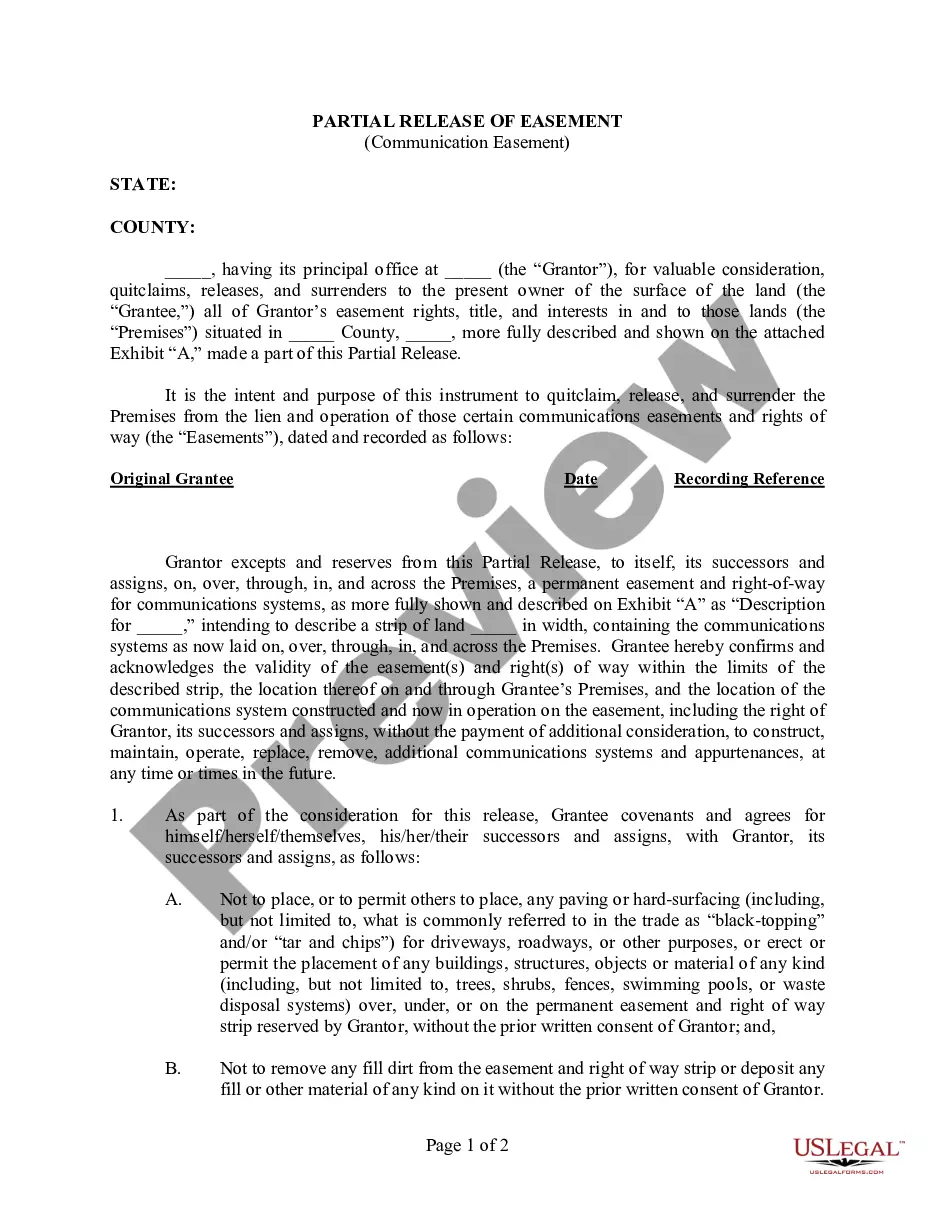
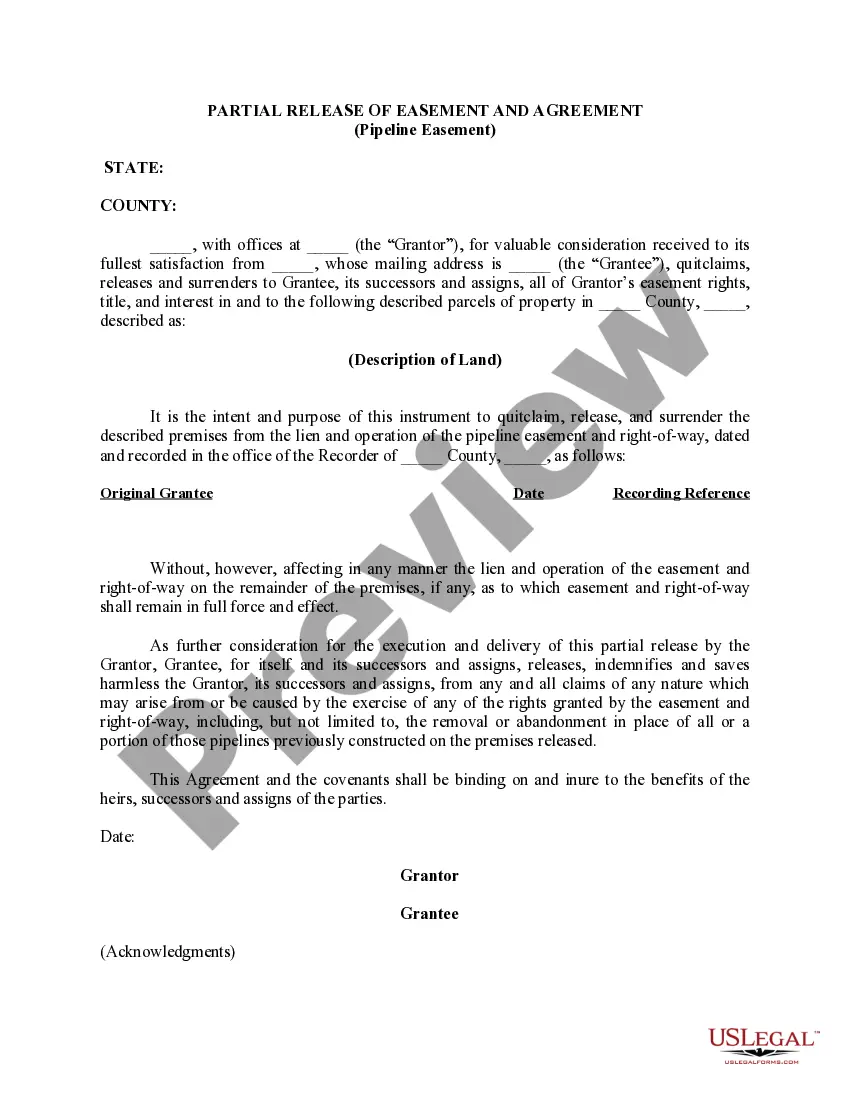
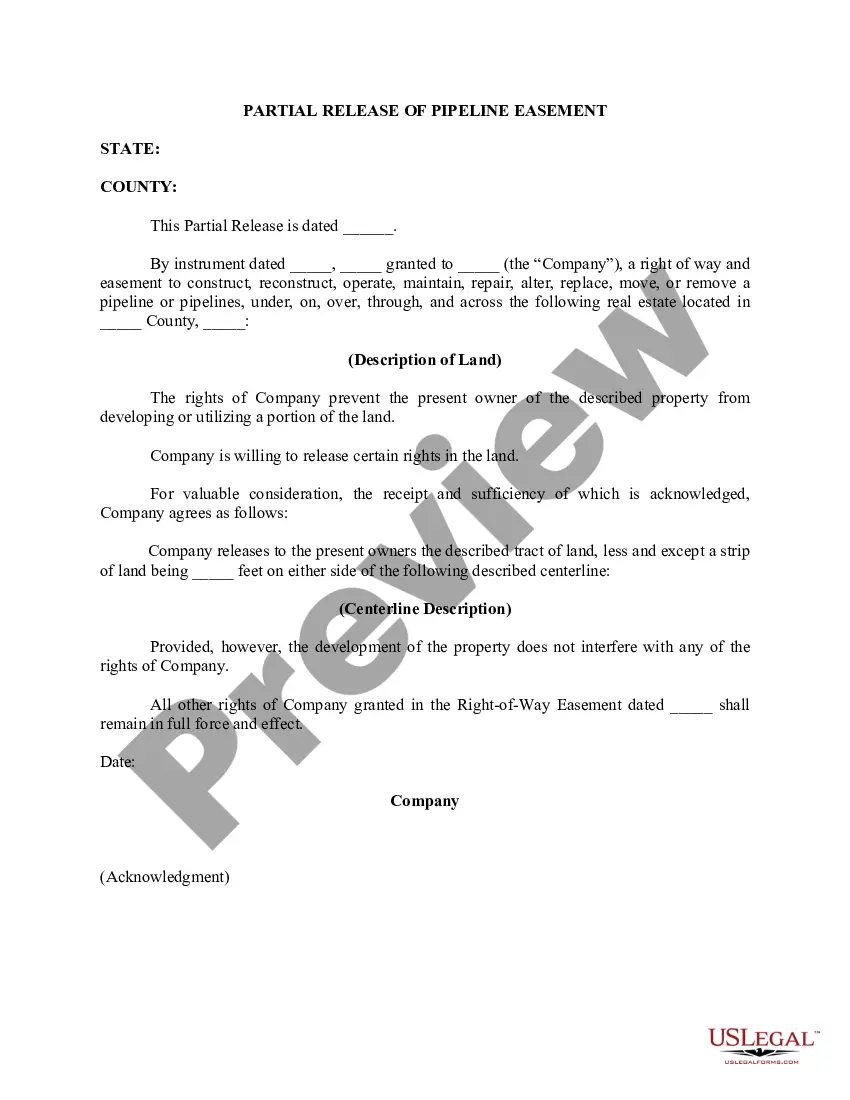
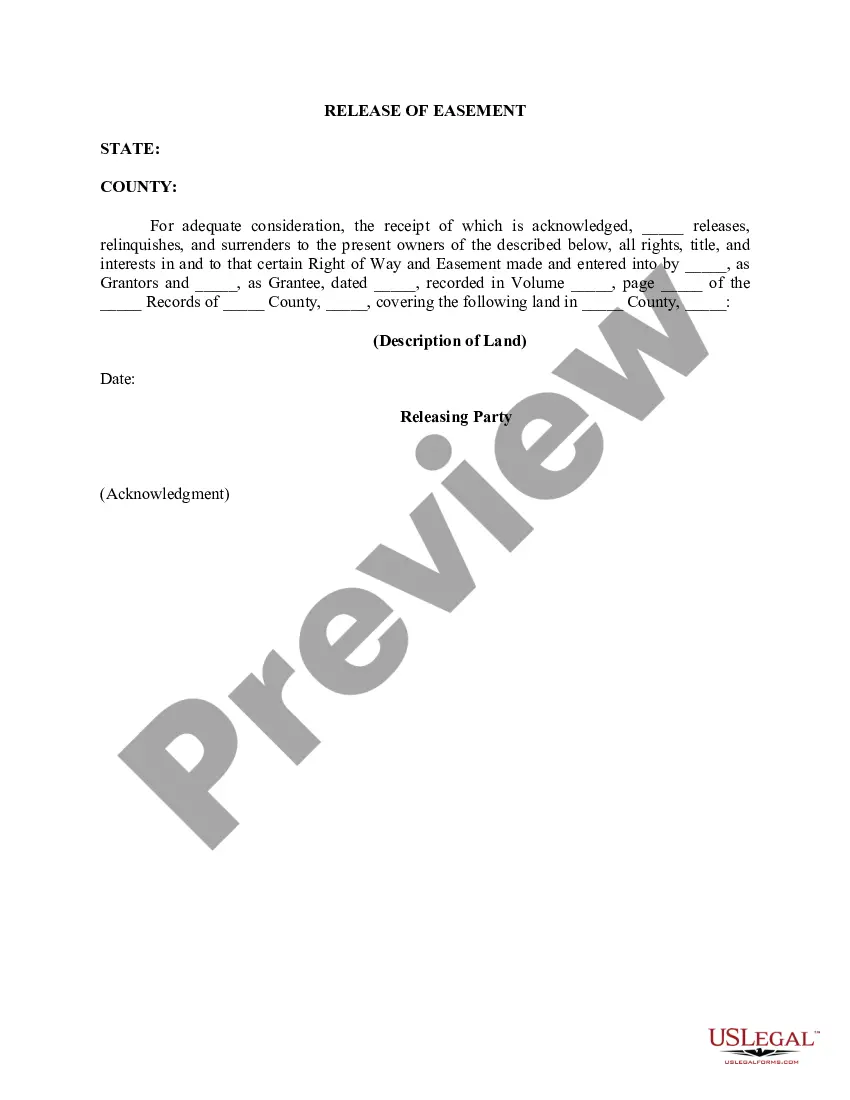
The Partial Release of Easement(s) is a legal document used to relinquish specific easement rights, allowing property owners to modify or control their property more freely. This form differs from a complete release as it only cancels certain easement rights while maintaining others. It is essential for property owners looking to manage land use without entirely giving up existing easements or rights of way.
Main sections of this form
- Grantor and Grantee Information: Contains the names and addresses of the parties involved.
- Legal Description of the Premises: Identifies the property subject to the easement release.
- Details of the Easement: Specifies which easement rights are being released and which are retained.
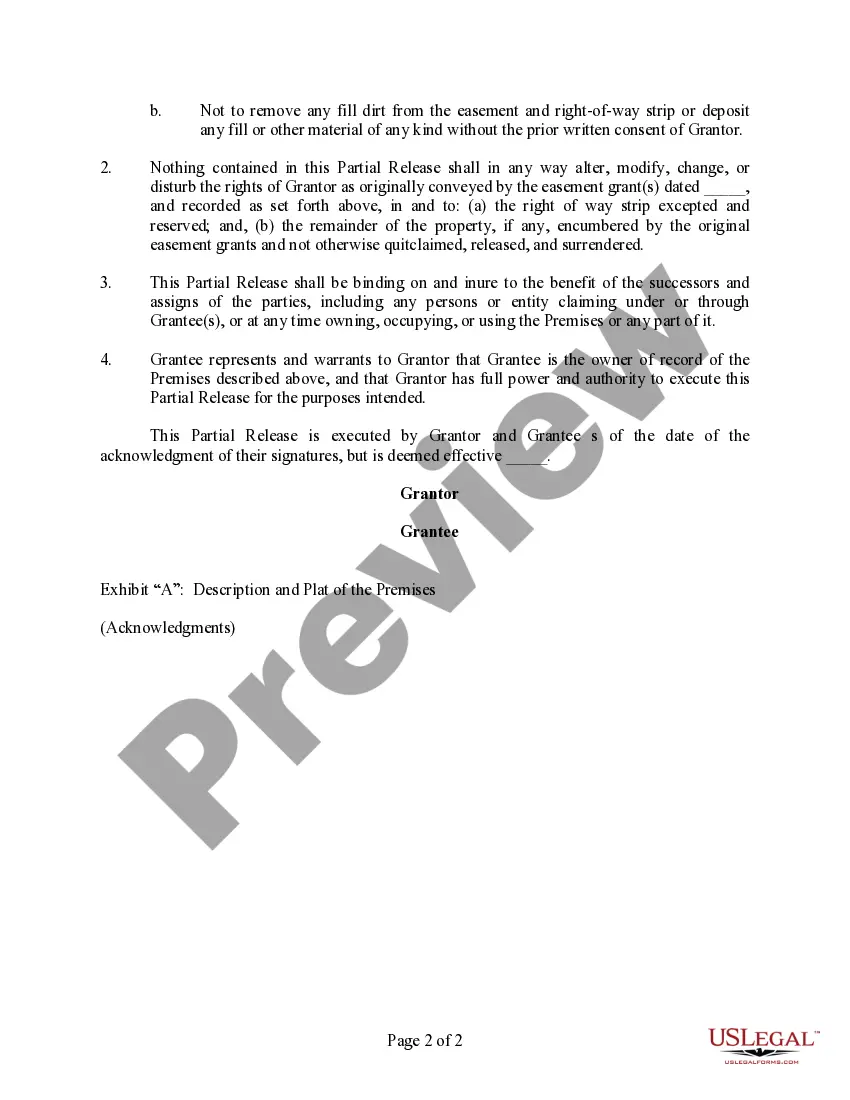
- Covenants and Agreements: Includes commitments from the Grantee regarding usage of the easement area.
- Signatures: Requires the signatures of both parties, along with acknowledgment for legal validity.

When to use this form
This form is useful when a property owner (Grantor) wishes to partially release easement rights in favor of another party (Grantee). For instance, if a landowner wants to eliminate certain pipeline easements affecting the use of their property while retaining the right to maintain any necessary utility lines, this form allows for such adjustments without losing all easement rights. It can also be used in situations where land use is changing, and easement rights may need to be limited or specified more clearly.
Intended users of this form
This form is intended for:
- Property owners looking to modify existing easements without a full release.
- Developers or contractors needing to clarify easement rights before construction projects.
- Real estate professionals who facilitate property transactions involving easements.
Instructions for completing this form
- Identify the parties: Enter the names and addresses of the Grantor and Grantee at the beginning of the document.
- Specify the property: Provide a clear legal description of the Premises affected by the easement in the designated area.
- Detail the easement rights: Clearly outline which specific easement rights are being released and which are retained.
- Include covenants: State the Grantee's commitments regarding the use of the easement area and any existing structures.
- Sign and date: All parties must sign the form and include the date to validate the agreement.
Is notarization required?
This form must be notarized to be legally valid. US Legal Forms provides secure online notarization powered by Notarize, allowing you to complete the process through a verified video call.
Get your form ready online
Our built-in tools help you complete, sign, share, and store your documents in one place.
Make edits, fill in missing information, and update formatting in US Legal Forms—just like you would in MS Word.
Download a copy, print it, send it by email, or mail it via USPS—whatever works best for your next step.
Sign and collect signatures with our SignNow integration. Send to multiple recipients, set reminders, and more. Go Premium to unlock E-Sign.
If this form requires notarization, complete it online through a secure video call—no need to meet a notary in person or wait for an appointment.
We protect your documents and personal data by following strict security and privacy standards.

Make edits, fill in missing information, and update formatting in US Legal Forms—just like you would in MS Word.

Download a copy, print it, send it by email, or mail it via USPS—whatever works best for your next step.

Sign and collect signatures with our SignNow integration. Send to multiple recipients, set reminders, and more. Go Premium to unlock E-Sign.

If this form requires notarization, complete it online through a secure video call—no need to meet a notary in person or wait for an appointment.

We protect your documents and personal data by following strict security and privacy standards.
Mistakes to watch out for
- Neglecting to provide accurate property descriptions, which can lead to disputes later.
- Failing to properly sign and date the document, rendering it ineffective.
- Omitting essential details regarding retained easement rights, which may cause confusion or legal issues.
Why complete this form online
- Convenience: Access and complete the form from anywhere at any time.
- Editability: Easily modify entries and ensure all necessary information is accurate.
- Reliability: Forms are drafted by licensed attorneys, ensuring legal compliance and protection.
Legal use & context
- The Partial Release of Easement(s) is a legally recognized method for altering the ownership of easement rights.
- This form is enforceable as long as it complies with applicable local laws and properly identifies the parties and easement rights involved.
- Failure to accurately complete or execute the form can lead to disputes over easement rights in the future.
Quick recap
- The Partial Release of Easement(s) allows for a selective relinquishment of easement rights.
- It is important to accurately identify all parties involved and describe the property and easement in detail.
- This form can save time and effort by being available online and easily customizable to your needs.
Looking for another form?
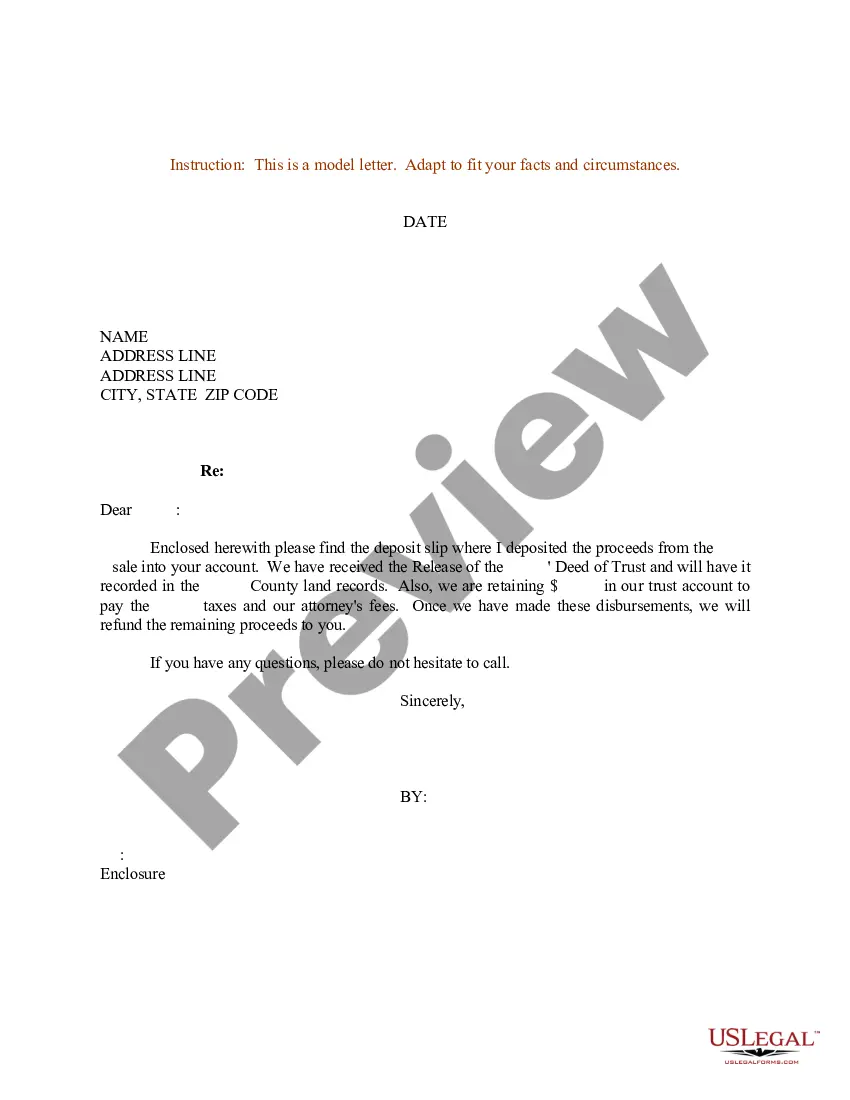
Form popularity
FAQ
A property easement is a legal situation in which the title to a specific piece land remains with the landowner, but another person or organization is given the right to use that land for a distinct purpose.
If you are approved for the partial mortgage release, you will receive notification within two to six weeks.
An easement is a right which the owner of a property has to compel the owner of another property to allow something to be done, or to refrain from doing something on the survient element for the benefit of the dominant tenement.
An easement or right-of-way is an agreement that confers on an individual, company or municipality the right to use a landowner's property in some way. While these agreements grant rights, they also have the effect of partially restricting an owner's use of the affected portions of land.
Partial Release Clause is a provision under which the mortgagee agrees to release certain parcels from the lien of the blanket mortgage upon payment of a certain sum of money by the mortgagor. It's frequently found in tract development construction loans.
An easement is a limited right to use another person's land for a stated purpose. Examples of easements include the use of private roads and paths, or the use of a landowner's property to lay railroad tracks or electrical wires.
Key Takeaways. A partial release is a mortgage provision that allows some of the collateral to be released from a mortgage after the borrower pays a certain amount of the loan. Lenders require proof of payment, a survey map, appraisal, and a letter outlining the reason for the partial release.
So, having an easement on a property may have a permanent outcome on the property with rights of the home owner. But not all easements are bad.If you live in a rural area, you run into bad easement issues more often, typically where the easement was created by a parcel owner next to your land.
Easement holders have the right to use the land to their enjoyment as long as it does not place an unreasonable burden on the servient estate. Landowners have the right to make whatever use of the land as long as it doesn't unduly affect the easement.