Arbitration Agreement for Employees
Understanding this form
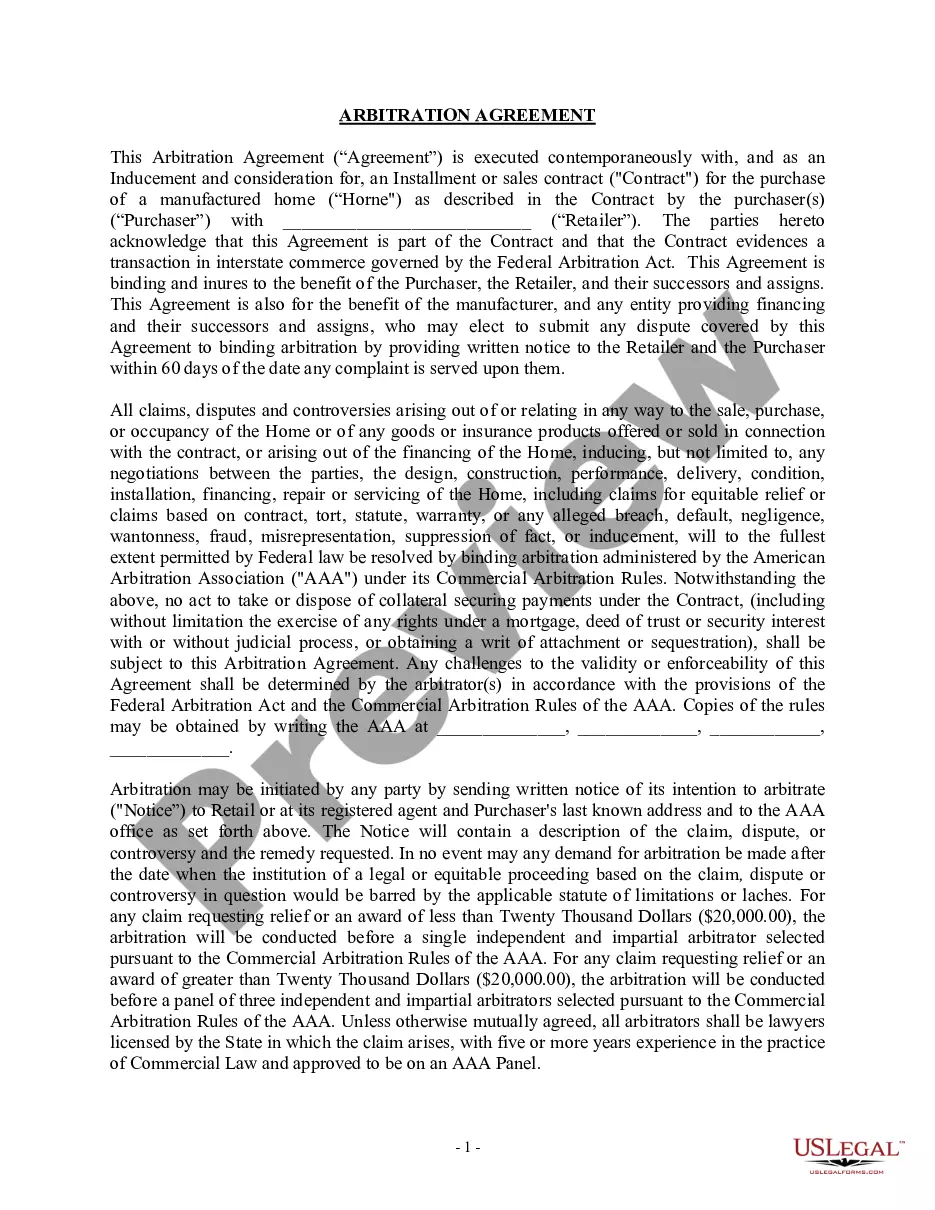
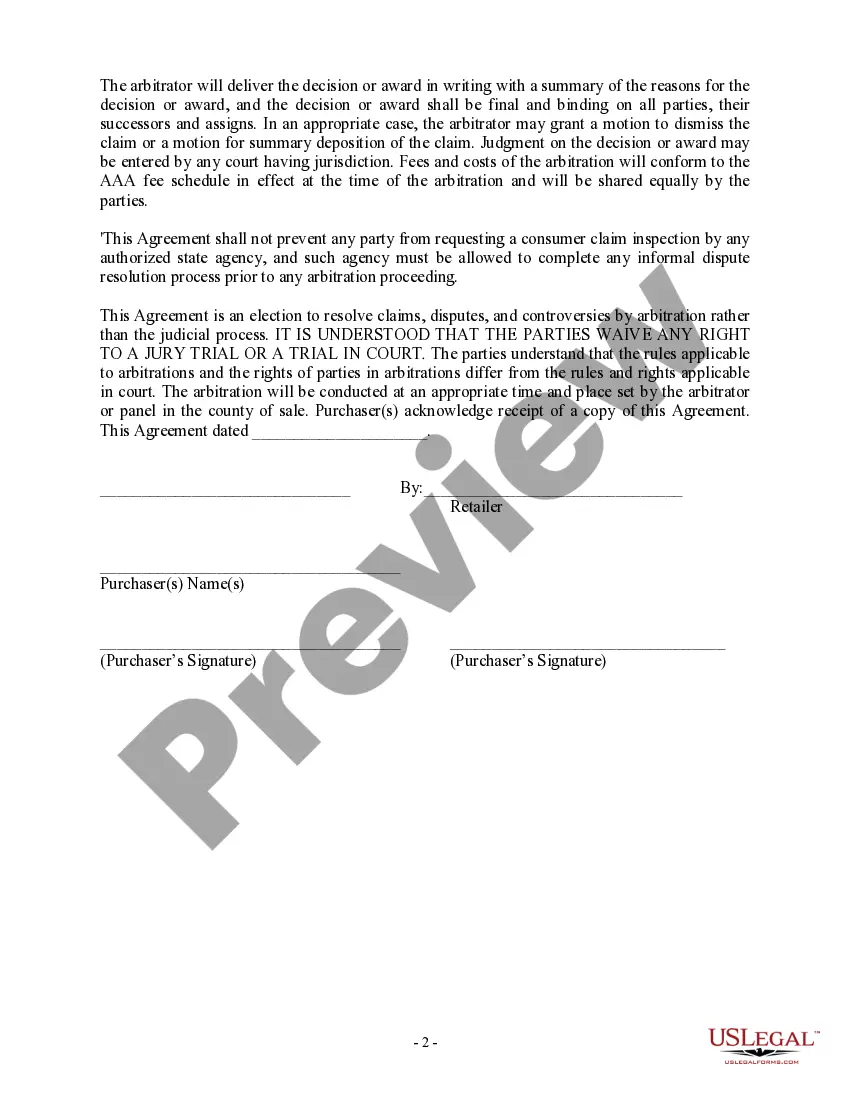
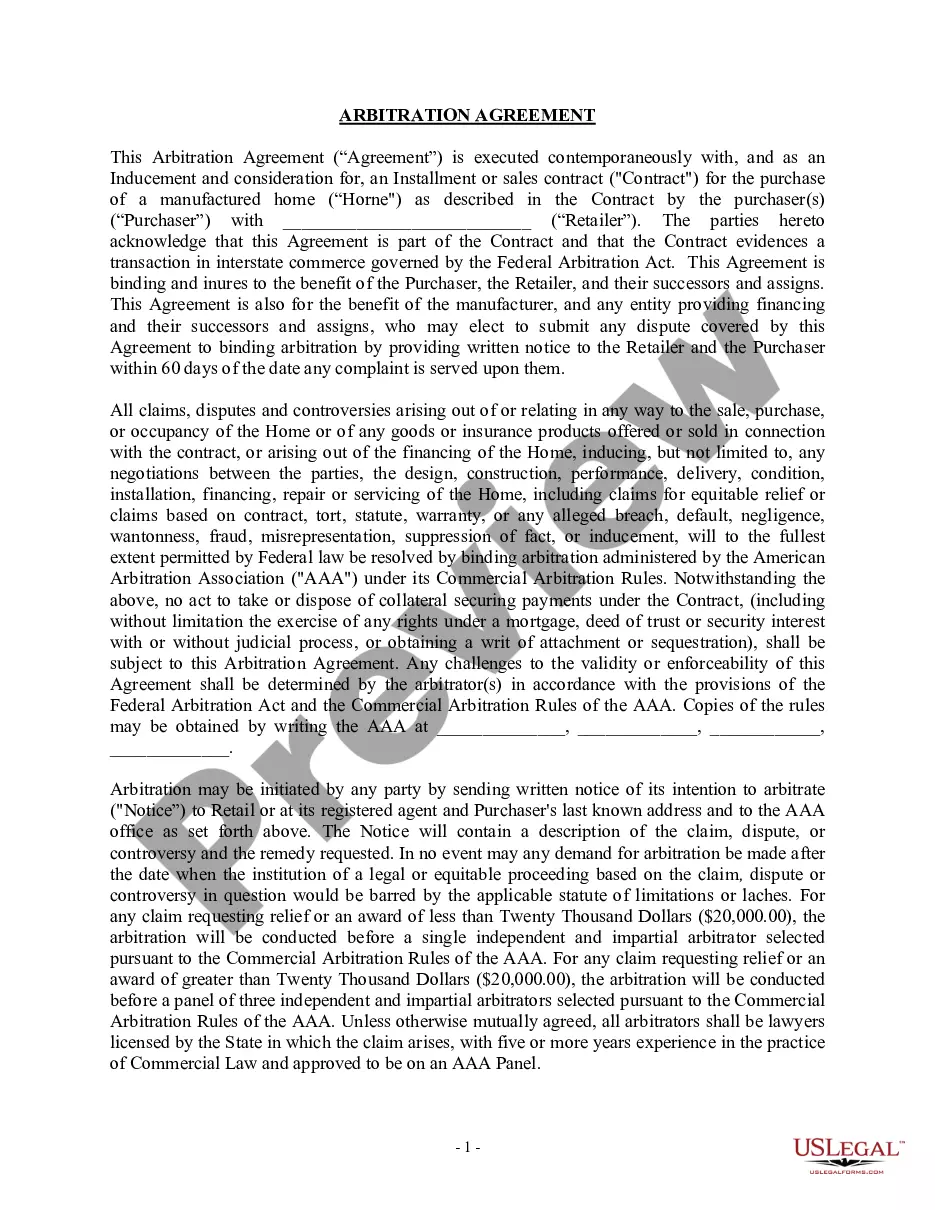
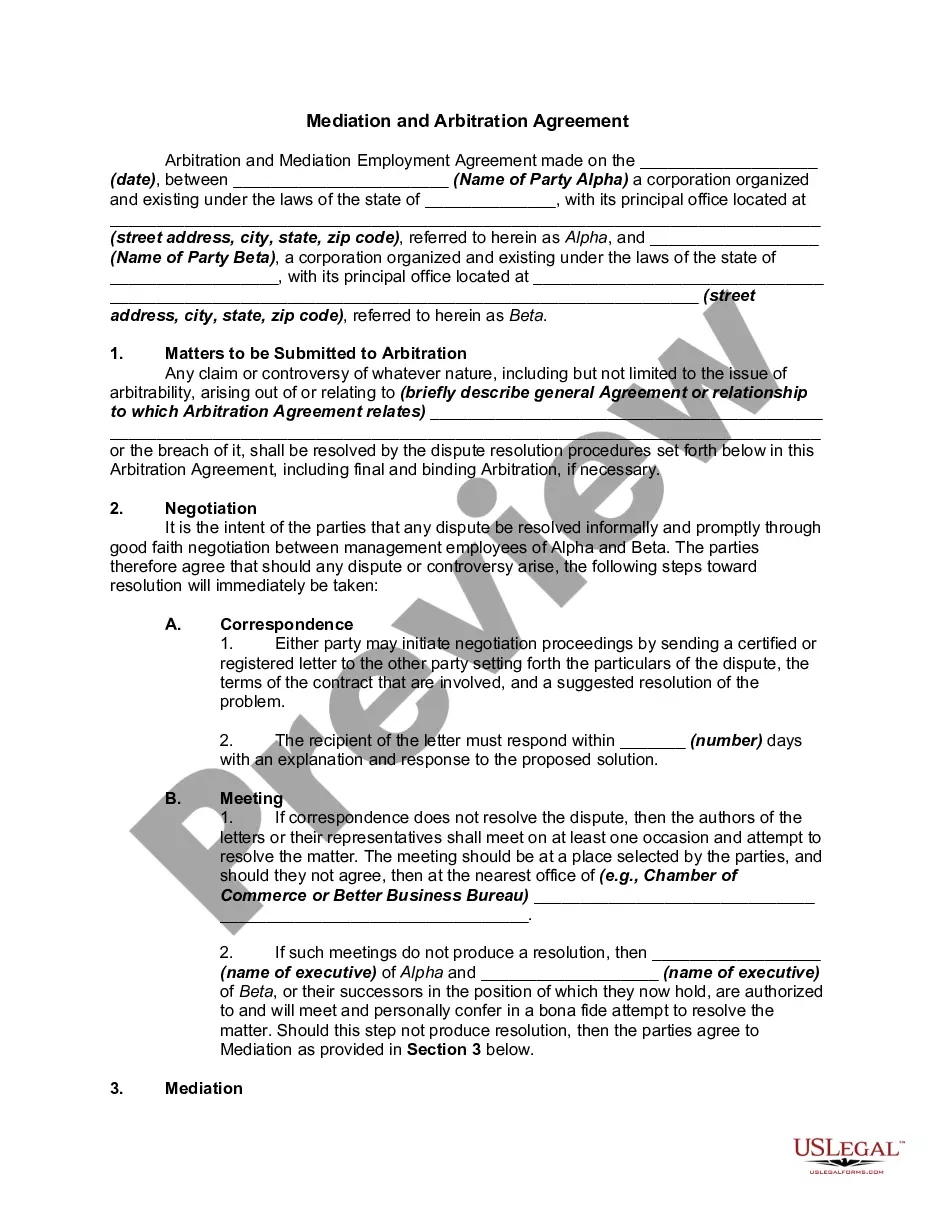
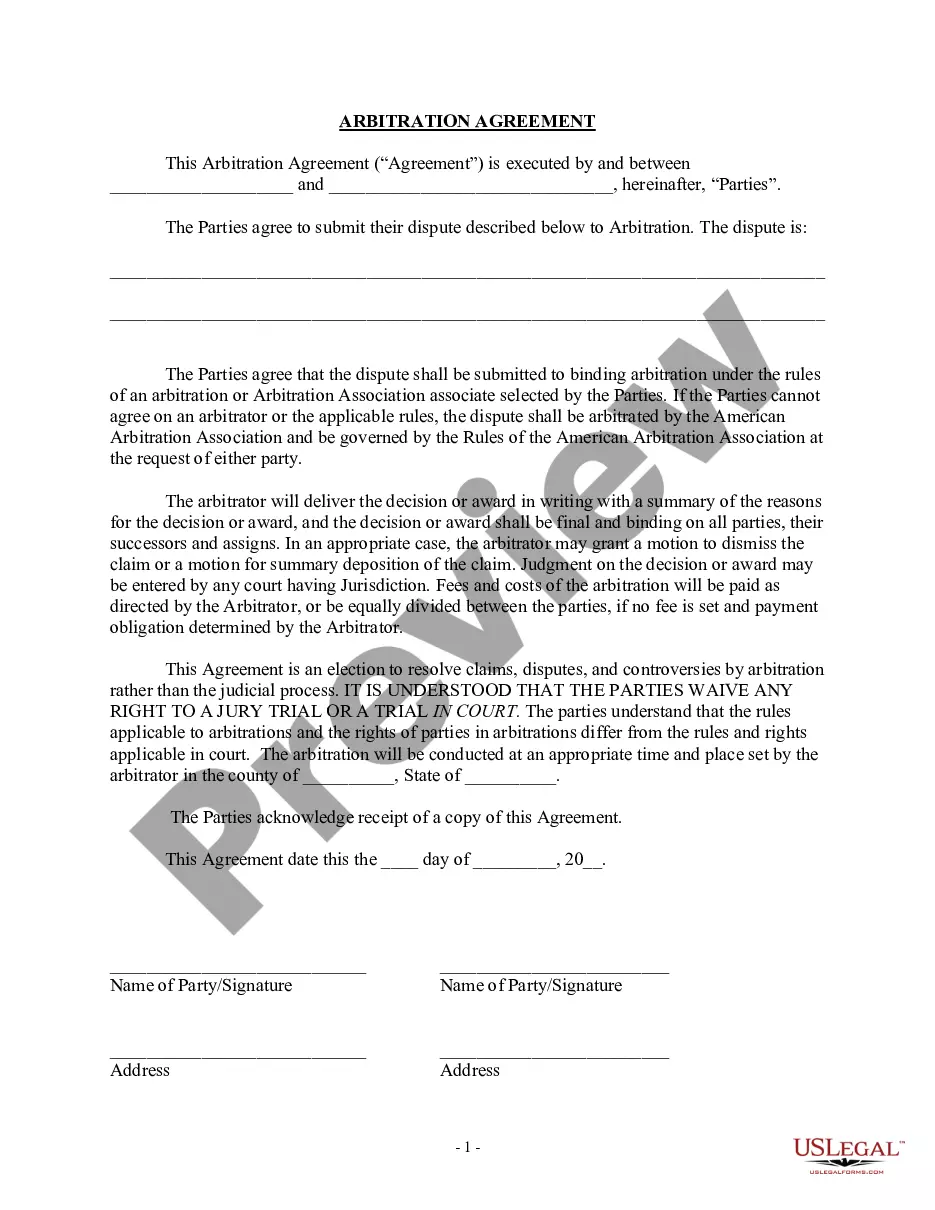
The arbitration agreement for employees is a legal document that outlines the process for resolving disputes related to the sale, purchase, or occupancy of manufactured homes through binding arbitration. By signing this agreement, both parties waive their right to pursue claims in a court of law, opting instead for arbitration administered by the American Arbitration Association. This form serves to clarify the expectations and procedures for resolving conflicts, distinguishing it from traditional legal avenues or agreements that may not include binding arbitration clauses.
Form components explained
- Description of the parties involved: the purchaser and the retailer.
- Acknowledgment that the agreement is binding and part of the sales contract.
- Clause outlining the scope of claims covered by the agreement.
- Details on the arbitration process, including how to initiate it and the selection of arbitrators.
- Statement on the waiver of rights to judicial trials and jury trials.
- Information regarding arbitration fees and expenses.


Common use cases
This arbitration agreement should be used when purchasing a manufactured home to ensure that any potential disputes arising from the transaction are handled through arbitration. It is particularly useful in situations where disputes may arise regarding the terms of the sales contract, the condition of the home, or related financing issues. Utilizing this form helps manage expectations regarding conflict resolution before entering into a sales agreement.
Who needs this form
- Homebuyers purchasing manufactured homes.
- Retailers selling manufactured homes.
- Manufacturers and financing entities involved in the transaction.
How to complete this form
- Identify the purchaser and the retailer, entering their names in the appropriate sections.
- Specify the details of the manufactured home in connection with the sales contract.
- Review the arbitration clauses carefully to understand the rights being waived.
- Sign and date the agreement to finalize the terms.
- Ensure all parties receive a copy of the signed agreement for their records.
Is notarization required?
This form does not typically require notarization unless specified by local law. It is important to verify if your state has specific requirements for notarization when using this arbitration agreement.
Get your form ready online
Our built-in tools help you complete, sign, share, and store your documents in one place.
Make edits, fill in missing information, and update formatting in US Legal Forms—just like you would in MS Word.
Download a copy, print it, send it by email, or mail it via USPS—whatever works best for your next step.
Sign and collect signatures with our SignNow integration. Send to multiple recipients, set reminders, and more. Go Premium to unlock E-Sign.
If this form requires notarization, complete it online through a secure video call—no need to meet a notary in person or wait for an appointment.
We protect your documents and personal data by following strict security and privacy standards.

Make edits, fill in missing information, and update formatting in US Legal Forms—just like you would in MS Word.

Download a copy, print it, send it by email, or mail it via USPS—whatever works best for your next step.

Sign and collect signatures with our SignNow integration. Send to multiple recipients, set reminders, and more. Go Premium to unlock E-Sign.

If this form requires notarization, complete it online through a secure video call—no need to meet a notary in person or wait for an appointment.

We protect your documents and personal data by following strict security and privacy standards.
Typical mistakes to avoid
- Failing to read and understand the arbitration clauses fully.
- Not signing the agreement, which can invalidate the arbitration process.
- Forgetting to provide a copy of the signed agreement to all relevant parties.
Benefits of completing this form online
- Convenience of downloading and completing the form at any time.
- Editability allows for easy modifications to fit specific needs.
- Reliability of having a legally sound document drafted by licensed attorneys.
Legal use & context
- This arbitration agreement is enforceable under federal arbitration laws.
- It should be clearly understood that signing this document waives the right to a jury trial.
- The arbitration process outlined is intended to provide a fair resolution mechanism for disputes.
Summary of main points
- The arbitration agreement is critical for resolving disputes in the sale of manufactured homes.
- By signing, parties agree to arbitration instead of court trials.
- This form must be completed accurately and shared with all parties involved to be effective.
Looking for another form?
Form popularity
FAQ
Many employers ask employees to sign arbitration agreements, in which they give up their right to sue in court over job-related issues such as wrongful termination, breach of contract, and discrimination.But if your rights are later violated at work, that arbitration agreement might come back to haunt you.
You don't have to sign the agreement, but the consequences of refusing to sign could be severe. Many employers ask new hires to sign an arbitration agreement: a contract in which the employee agrees to bring any legal disputes with the employer to arbitration, rather than to court.
Unconscionable Arbitration Agreements Will Not Be EnforcedYou can also escape an arbitration agreement by demonstrating that the terms of the agreement itself are inherently unequal in favor of the employer. Courts require both of the aforementioned methods to show the agreement is unconscionable, thus unenforceable.
The conditions for an arbitration agreement to be valid are: - The dispute must arise out of a legal relationship. - The subject-matter of the dispute must be arbitrable. (The relationship between arbitrability and public policy will be discussed later.)
Under California law, as well as the law of every other state, an employer can refuse to hire you (or can terminate you) if you refuse to agree to arbitrate all of your employment disputes.And, an arbitration agreement cannot limit an employee's rights to discovery or the damages that can be recovered.
Under California law, as well as the law of every other state, an employer can refuse to hire you (or can terminate you) if you refuse to agree to arbitrate all of your employment disputes.However, not a single court in California has held that it is improper to require an individual to sign an arbitration agreement.
No, you can't sue your employer in court if you signed an arbitration agreement.Instead, any disputes that you have with your employer must be settled through a process known as arbitration. Arbitration is one of the alternative dispute resolution techniques that serve as an alternative to filing a lawsuit.
Despite arbitration clauses being more beneficial to employers, who have superior bargaining power at the point an employment contract is signed, the U.S. Supreme Court has decided that arbitration clauses in employment contracts are binding.