Social Worker Agreement - Self-Employed Independent Contractor
Understanding this form
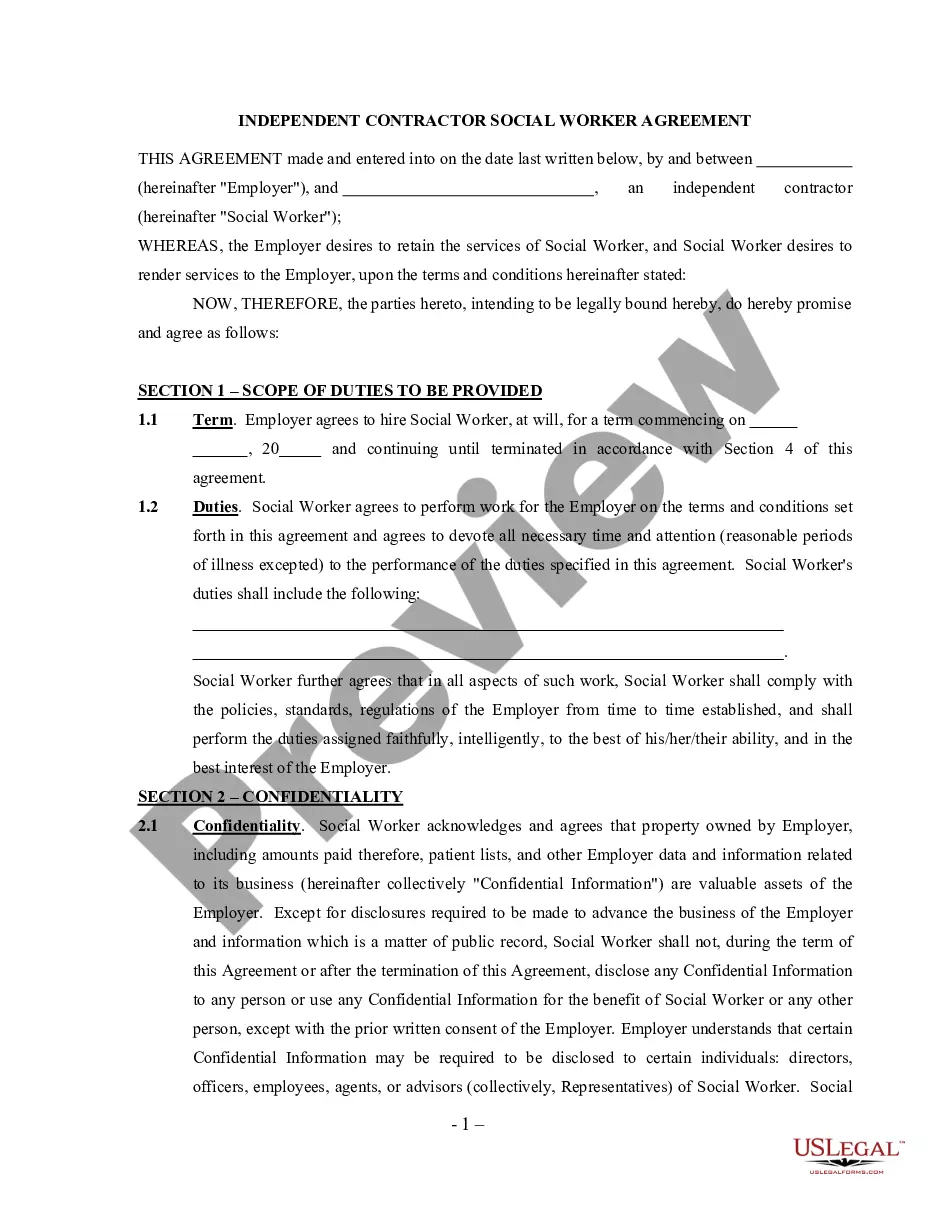
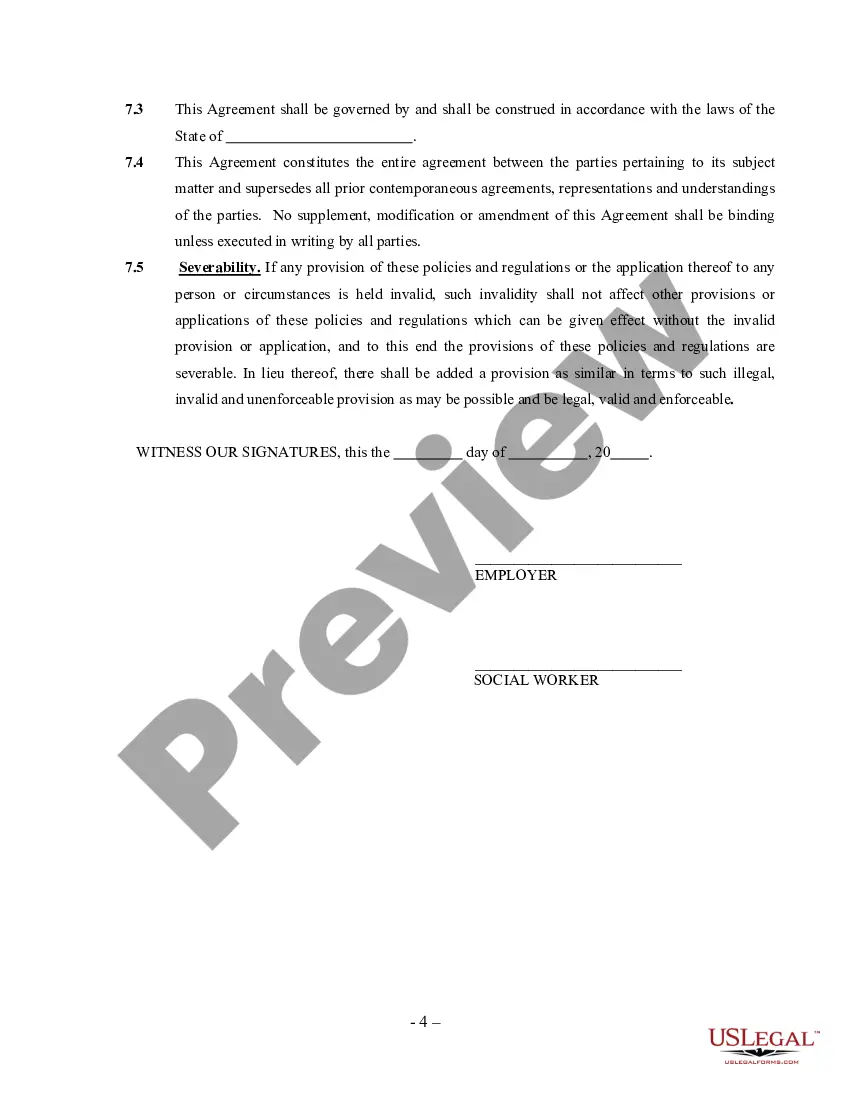
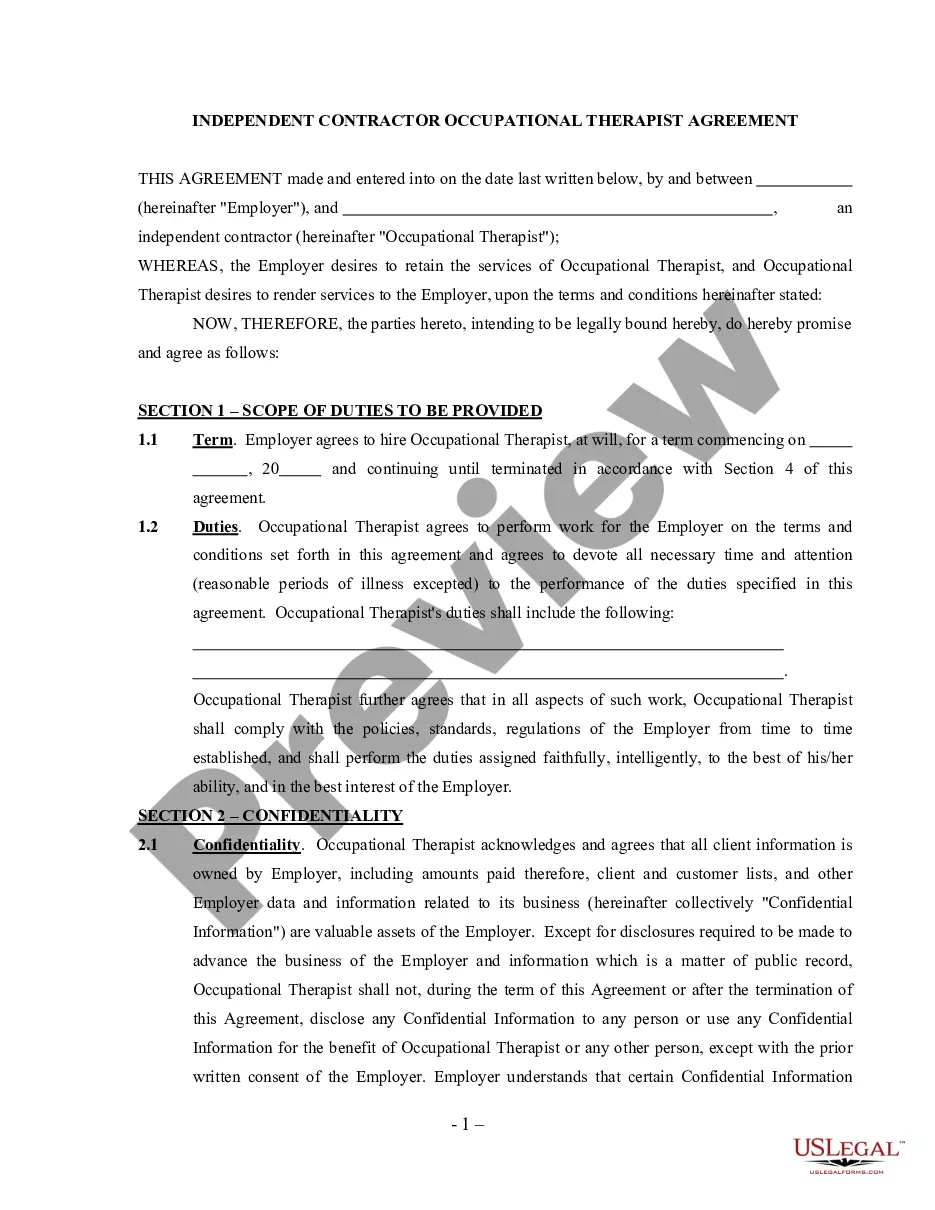
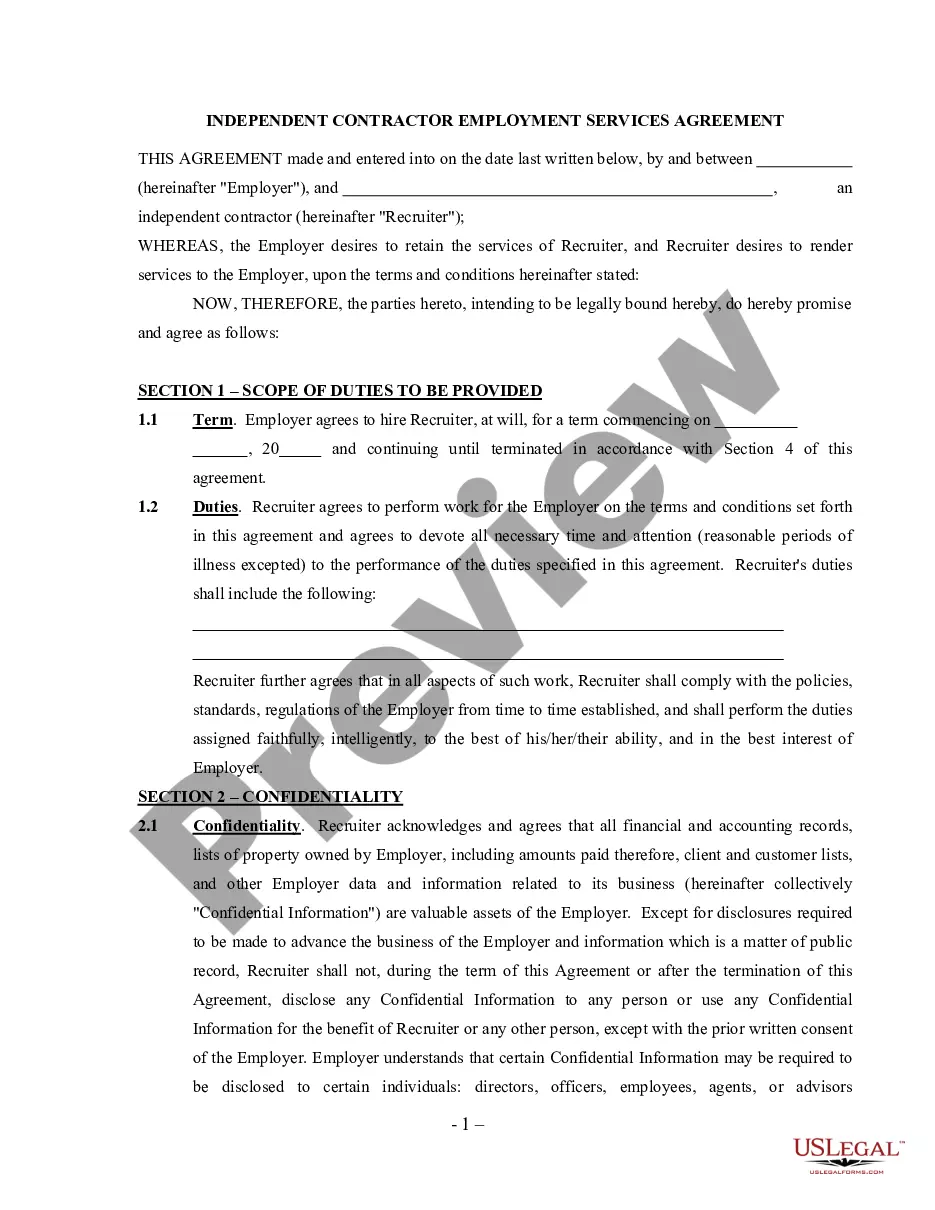
The Social Worker Agreement - Self-Employed Independent Contractor is a legal document that outlines the relationship between an employer and a social worker hired as an independent contractor. This agreement specifies the services to be provided by the social worker, confidentiality obligations, and the independent contractor status, distinguishing this arrangement from traditional employment contracts. It's essential for both parties to understand their rights and responsibilities to ensure a clear, professional working relationship.
Key parts of this document
- Scope of Duties: Details the specific services the social worker will provide.
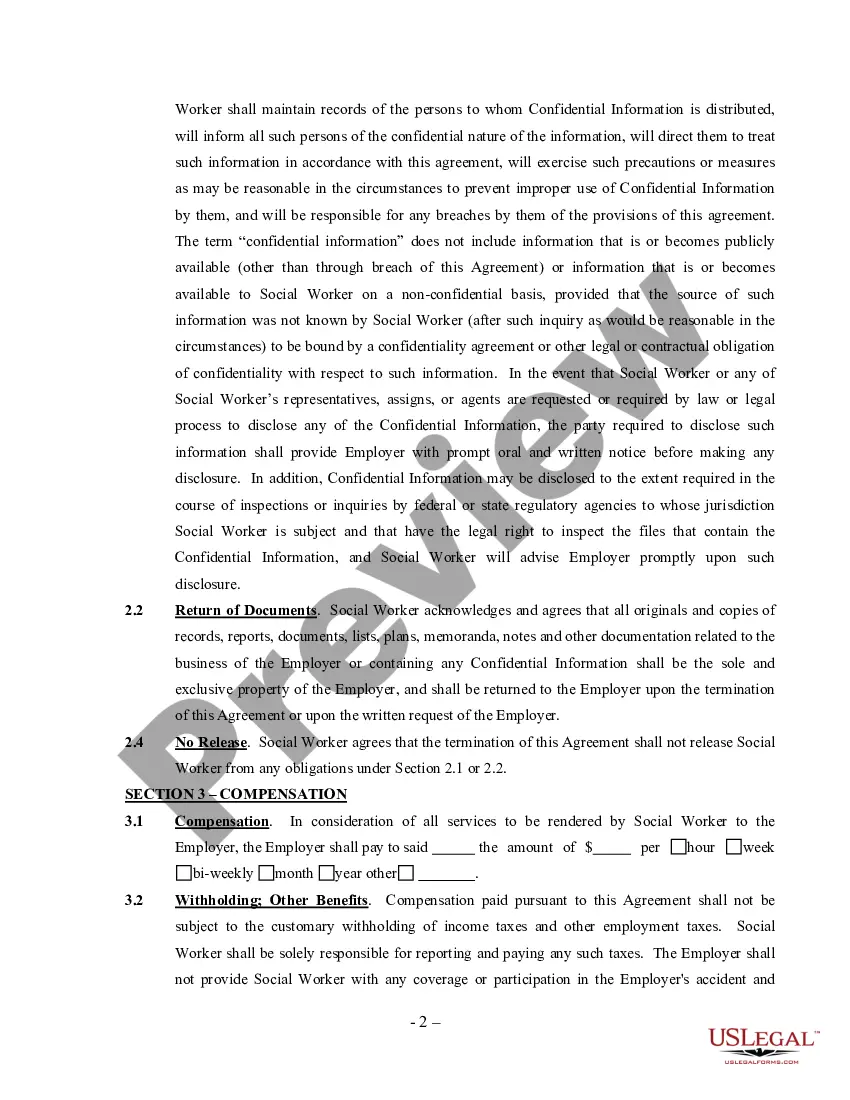
- Confidentiality: Outlines the obligations regarding the handling of confidential information.
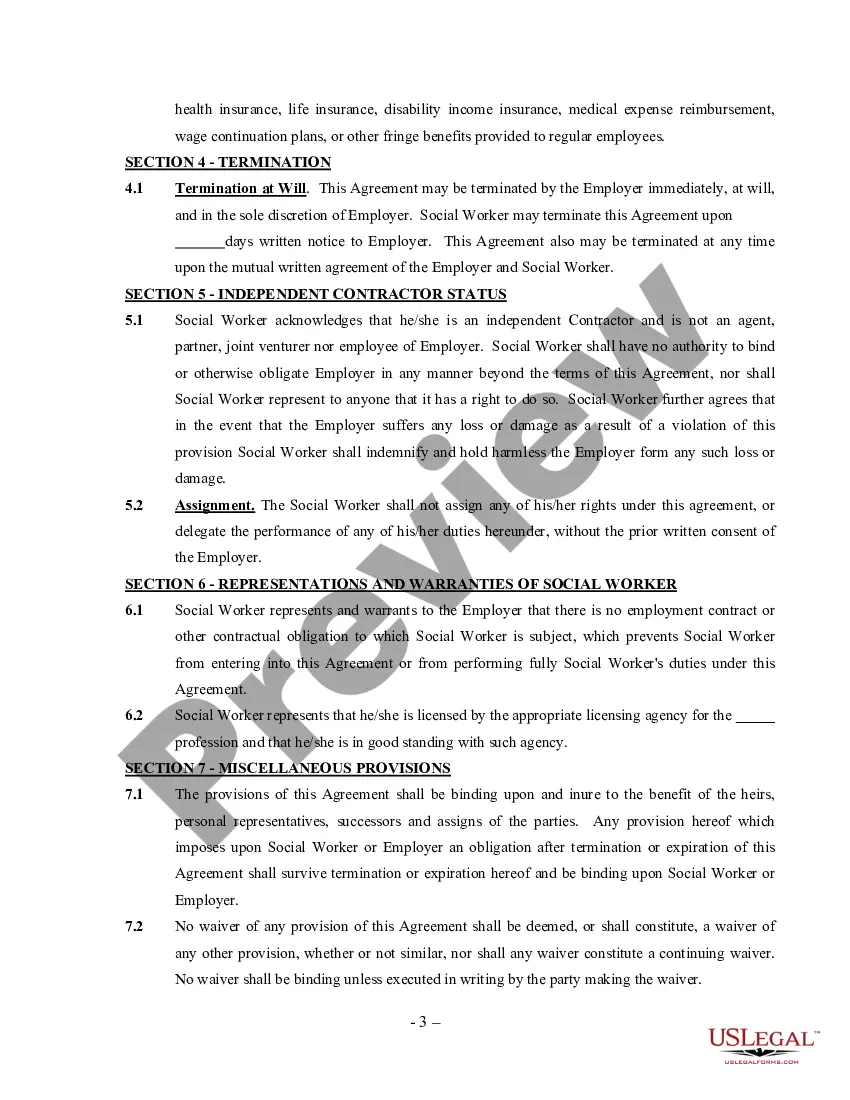
- Independent Contractor Status: Clarifies that the social worker is not an employee and has no authority to bind the employer.
- Termination: Specifies the conditions under which the agreement can be terminated.
- Representations and Warranties: Ensures the social worker is not under any conflicting obligations.
When to use this document
This agreement is used when an employer wishes to hire a social worker on a contract basis rather than as an employee. It is essential when both parties need to clearly define the scope of services and confidentiality obligations, especially in fields dealing with sensitive client information, such as mental health services and social work practices.
Who this form is for
- Employers looking to hire social workers as independent contractors.
- Social workers seeking to formalize their contract agreements with employers.
- Organizations or agencies providing social services that require clear terms between contractors and the organization.
Completing this form step by step
- Identify the parties involved: Clearly state the names of the employer and the social worker.
- Define the scope of services: Specify the services the social worker will provide to the employer.
- Include confidentiality provisions: Ensure both parties understand and agree on confidentiality obligations.
- Sign and date the agreement: Both the employer and the social worker should sign and date the contract to make it legally binding.
- Keep copies: Ensure both parties keep a signed copy for their records.
Notarization guidance
This form does not typically require notarization unless specified by local law. It is advisable to check state regulations to ensure compliance.
Get your form ready online
Our built-in tools help you complete, sign, share, and store your documents in one place.
Make edits, fill in missing information, and update formatting in US Legal Forms—just like you would in MS Word.
Download a copy, print it, send it by email, or mail it via USPS—whatever works best for your next step.
Sign and collect signatures with our SignNow integration. Send to multiple recipients, set reminders, and more. Go Premium to unlock E-Sign.
If this form requires notarization, complete it online through a secure video call—no need to meet a notary in person or wait for an appointment.
We protect your documents and personal data by following strict security and privacy standards.

Make edits, fill in missing information, and update formatting in US Legal Forms—just like you would in MS Word.

Download a copy, print it, send it by email, or mail it via USPS—whatever works best for your next step.

Sign and collect signatures with our SignNow integration. Send to multiple recipients, set reminders, and more. Go Premium to unlock E-Sign.

If this form requires notarization, complete it online through a secure video call—no need to meet a notary in person or wait for an appointment.

We protect your documents and personal data by following strict security and privacy standards.
Common mistakes
- Failing to clearly define the scope of duties, leading to misunderstandings.
- Not addressing confidentiality adequately, potentially exposing sensitive information.
- Assuming it is not necessary to sign the agreement, which can lead to legal complications.
Benefits of completing this form online
- Convenience of downloading and editing the document as needed.
- Access to templates drafted by licensed attorneys, ensuring legal compliance.
- Time-saving compared to drafting an agreement from scratch.
Key takeaways
- The Social Worker Agreement is essential for establishing clear terms for independent contractor relationships.
- Understanding the confidentiality obligations is crucial for both parties to protect sensitive information.
- Proper completion and signing of the document are necessary for it to be legally binding.
Looking for another form?



Form popularity
FAQ
Send the tax return and schedules, along with your self-employment tax, to the IRS. Even if you don't owe any income tax, you must complete Form 1040 and Schedule SE to pay self-employment Social Security tax. This is true even if you already get Social Security benefits. Family members may operate a business together.
The earnings of a person who is working as an independent contractor are subject to Self-Employment Tax. If you are an independent contractor, you are self-employed. To find out what your tax obligations are, visit the Self-Employed Tax Center.
An Independent Contractor Agreement should contain all of these basic terms: Description of the services to be provided.Explanation of what the hiring party will provide or not provide, such as equipment, for the independent contractor to use. Ownership of work product if that is relevant to the work being performed.
OSHA literature doesn't typically use the term "independent contractor." It uses "self-employed." There's a pretty simple reason self-employed are exempted from OSHA. OSHA exists to protect workers from unsafe or "unhealthful" conditions that their employer might force them into using economic leverage.
An independent contractor can be any type of business entity (sole proprietor, corporation, LLC, partnership), but most independent contractors are sole proprietors.
If you receive Social Security retirement, disability or Railroad Retirement income and are not typically required to file a tax return, you do not need to take any action the IRS will issue your stimulus payment using the information from your Form SSA-1099 or Form RRB-1099 via direct deposit or by paper check,
Simply put, being an independent contractor is one way to be self-employed. Being self-employed means that you earn money but don't work as an employee for someone else.An independent contractor is someone who provides a service on a contractual basis.
Finally, the new stimulus bill provides independent contractors with paid sick and paid family leave benefits through March 14, 2021.Under CARES Act II, unemployed or underemployed independent contractors who have an income mix from self-employment and wages paid by an employer are still eligible for PUA.