M&A Transaction Term Sheet Guideline
About this form
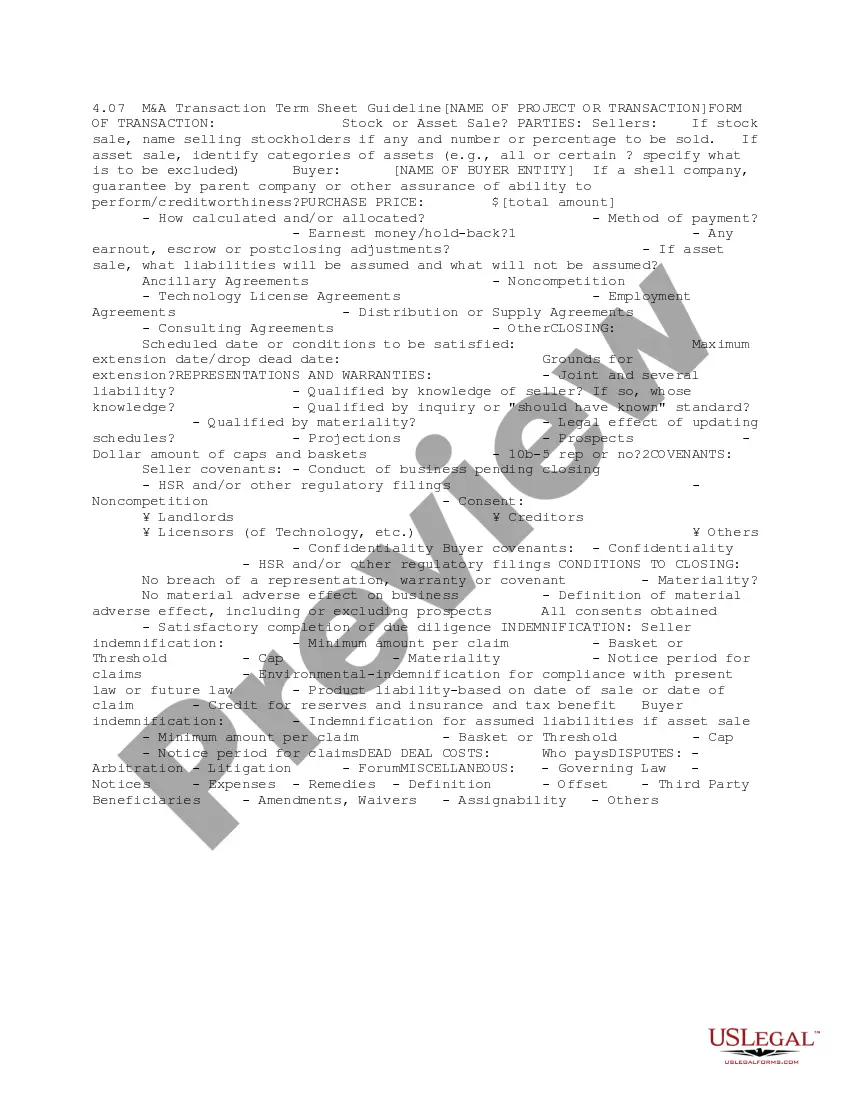
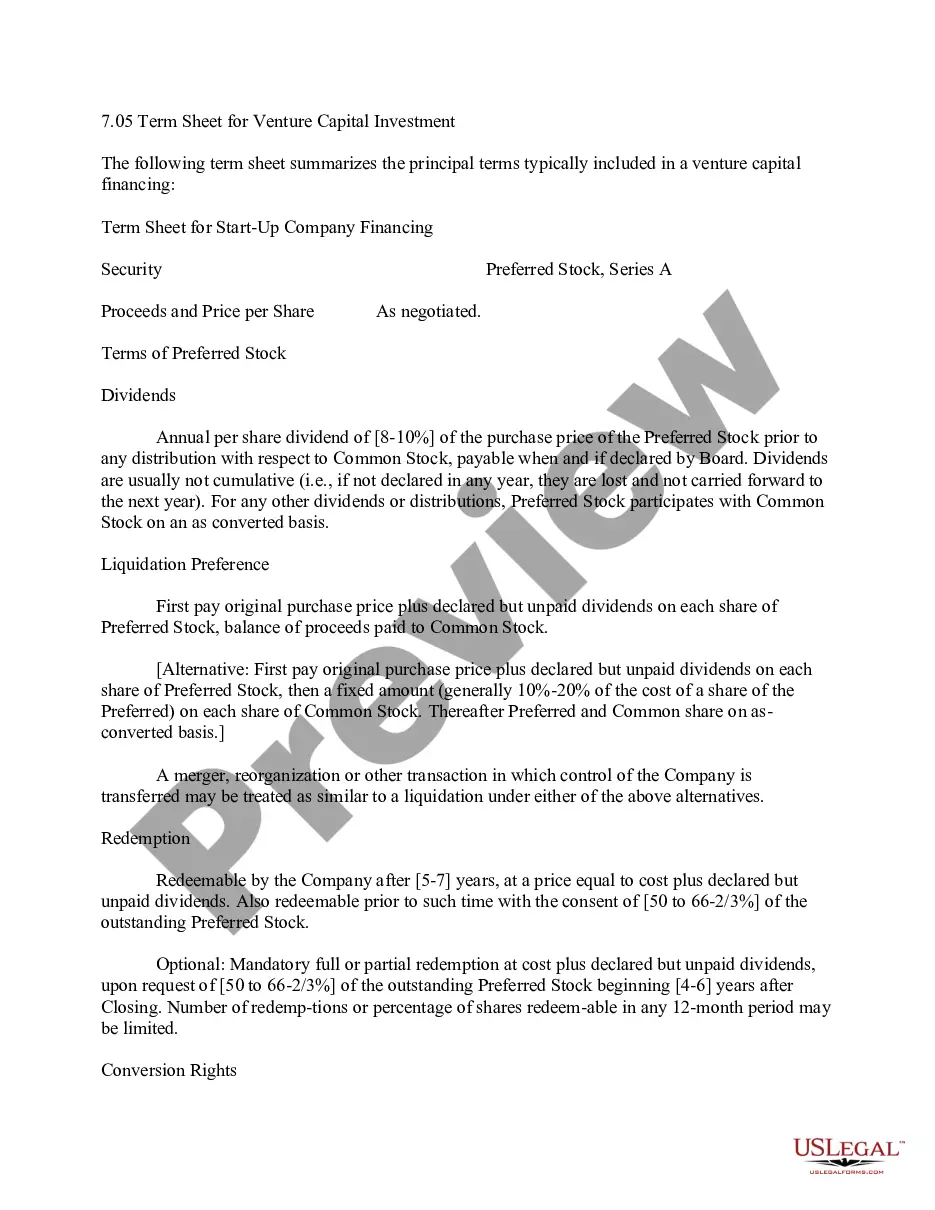
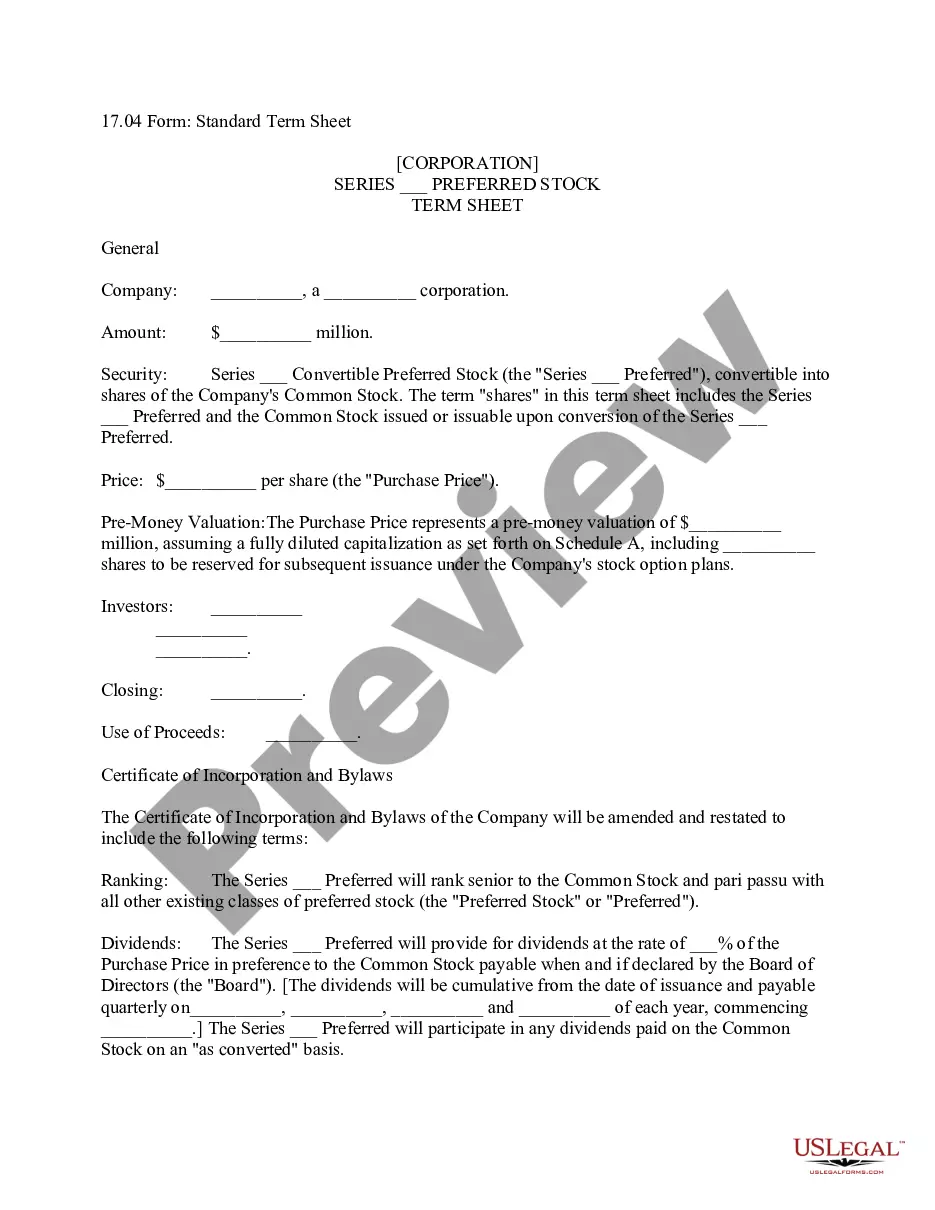
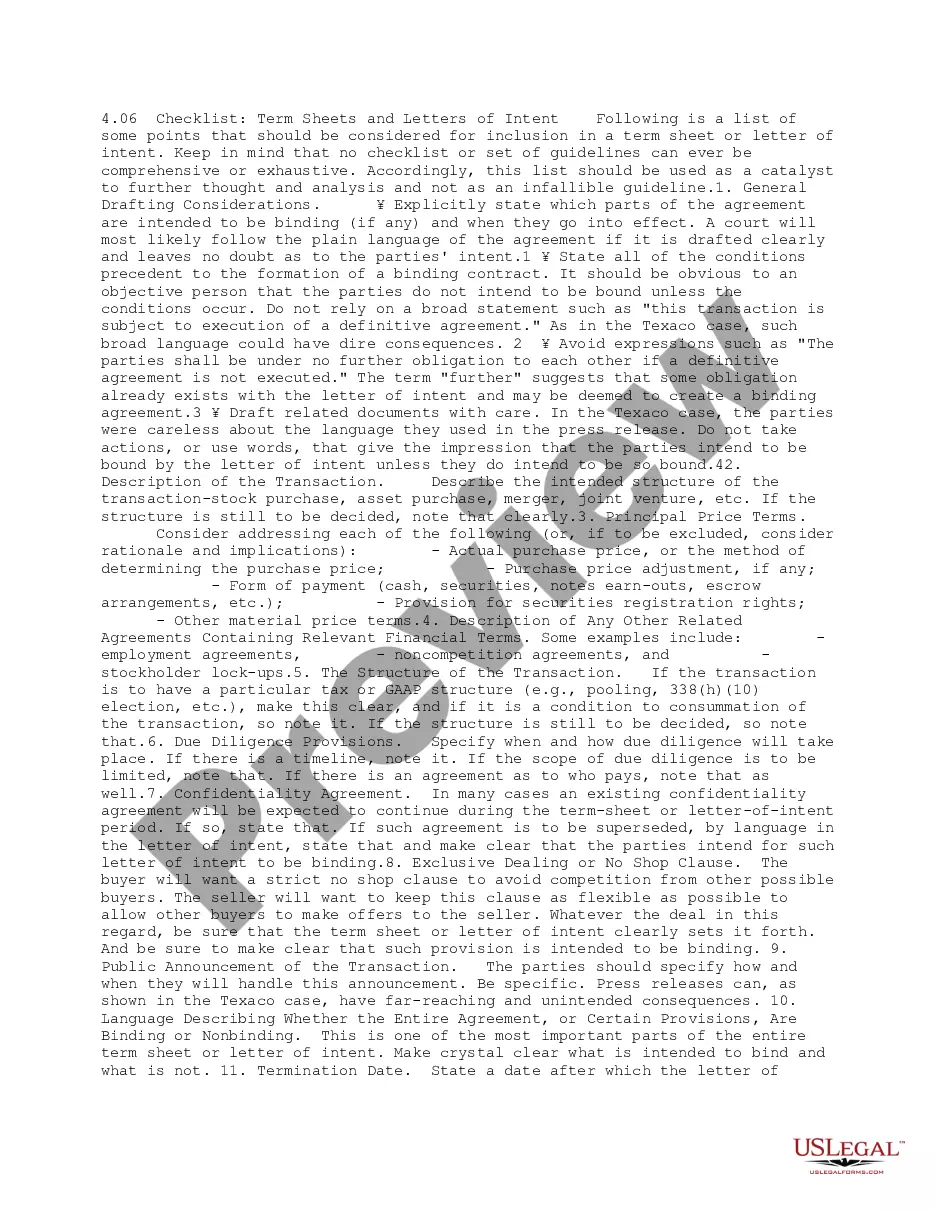
The M&A Transaction Term Sheet Guideline serves as a structured checklist that outlines the key considerations for a mergers and acquisitions transaction term sheet. It assists parties in deciding between a stock or asset sale and covers critical areas such as purchase price, warranties, covenants, indemnification, and necessary agreements. This form is essential for ensuring a thorough analysis and documentation process in M&A activities, differing from other forms by its specific focus on term sheet creation.
Main sections of this form
- Name of Project or Transaction
- Form of Transaction: Stock or Asset Sale
- Parties Involved: Sellers and Buyers with specifics
- Purchase Price and Payment Details
- Ancillary Agreements: Non-compete, employment, etc.
- Closing Conditions and Date
- Representations and Warranties
- Covenants for Sellers and Buyers
- Indemnification Clauses
- Dispute Resolution Methods

When this form is needed
This form is appropriate when negotiating a merger or acquisition, as it helps all parties clarify essential terms before formalizing the deal. It is particularly useful during initial discussions to ensure that both buyers and sellers understand their rights, obligations, and expectations. The guideline is also beneficial for parties looking to assess the feasibility and risks associated with the transaction.
Who this form is for
- Business owners engaging in mergers or acquisitions
- Corporate attorneys advising clients on M&A transactions
- Investment professionals evaluating M&A opportunities
- Financial analysts conducting due diligence
Completing this form step by step
- Identify the name of the project or transaction.
- Determine the form of transaction (stock or asset sale) and outline applicable details.
- List all parties involved, specifying sellers and buyers with relevant specifics.
- Outline the purchase price, including methods of payment and any adjustments.
- Specify any ancillary agreements and closing conditions.
- Review and finalize the representations, warranties, and covenants.
Does this form need to be notarized?
This form does not typically require notarization to be legally valid. However, some jurisdictions or document types may still require it. US Legal Forms provides secure online notarization powered by Notarize, available 24/7 for added convenience.
Get your form ready online
Our built-in tools help you complete, sign, share, and store your documents in one place.
Make edits, fill in missing information, and update formatting in US Legal Forms—just like you would in MS Word.
Download a copy, print it, send it by email, or mail it via USPS—whatever works best for your next step.
Sign and collect signatures with our SignNow integration. Send to multiple recipients, set reminders, and more. Go Premium to unlock E-Sign.
If this form requires notarization, complete it online through a secure video call—no need to meet a notary in person or wait for an appointment.
We protect your documents and personal data by following strict security and privacy standards.

Make edits, fill in missing information, and update formatting in US Legal Forms—just like you would in MS Word.

Download a copy, print it, send it by email, or mail it via USPS—whatever works best for your next step.

Sign and collect signatures with our SignNow integration. Send to multiple recipients, set reminders, and more. Go Premium to unlock E-Sign.

If this form requires notarization, complete it online through a secure video call—no need to meet a notary in person or wait for an appointment.

We protect your documents and personal data by following strict security and privacy standards.
Common mistakes
- Not clearly identifying the parties involved.
- Failing to specify key terms of payment and purchase price.
- Neglecting to consider necessary regulatory filings.
- Overlooking indemnification clauses and their implications.
- Inadequately outlining conditions to closing.
Why use this form online
- Convenient access to a comprehensive guideline for M&A transactions.
- Editable templates to fit specific deal requirements.
- Reliable resources drafted by licensed attorneys for legal assurance.
- Time-efficient completion process compared to traditional methods.
Legal use & context
- The term sheet serves as a non-binding agreement outlining the major deal points.
- It is often used as a basis for drafting a more detailed and legally binding contract.
- Understanding the implications of each clause is essential for enforceability.
- Consulting with legal experts is advised to address complex terms.
Quick recap
- The M&A Transaction Term Sheet Guideline serves as a vital tool for establishing preliminary transaction terms.
- This form aids in clarifying the roles and expectations of all parties involved in the transaction.
- Utilizing this form can help avoid common pitfalls associated with M&A negotiations.
Looking for another form?



Form popularity
FAQ
While a term sheet is not legally binding, there are specific terms in the sheet that can be binding.Confidentiality terms, exclusivity, and closing expenses are examples of legally binding components of a term sheet. Term sheets are an essential part of investment agreements and the funding process for companies.
What is a term sheet? A term sheet is a mostly non-binding document signed by the target and the prospective buyer that describes the major terms of the proposed acquisition. While most term sheets are non-binding, they often contain binding provisions regarding non-soliciation, exculsivity and confidentiality.
A merger or acquisition transaction is the combination of two companies into one resulting in either one corporate entity or a parent-holding and subsidiary company structure.In a reverse merger or a reverse triangular merger, the target company shareholders and management gain control of the acquiring company.
A term sheet is a nonbinding agreement outlining the basic terms and conditions under which an investment will be made.
A legally-binding document is simply one that establishes an agreement between two parties, entailing that certain actions are either required or restricted. An example of a basic contract is one between a real estate agency and a seller.A document that is legally binding is one that can be enforced by a court.
Although there may well be limited exceptions on the facts, the general principle is clear: heads of terms are not binding. Well-advised parties should not treat heads of terms as a legal contract, but should fully document any commercial deal before placing reliance on what the parties have "agreed".
Although term sheets are not generally legally binding, other than in respect of confidentiality, exclusivity (if applicable), costs and jurisdiction, they evidence the intent of the parties to them. Therefore, once something is agreed in a term sheet, it may be difficult for either side to renegotiate.
How much money is expected from the VC, or venture capitalist, to the founder of the startup, A detailed overview of the financial side of the investment, and. The power and controls given to the VCs.
Even though each M&A deal is usually unique, they all consist of a single or combination of the three rudimentary acquisition structures: asset purchase, the merger of companies, or stock sale. Stock sale transactions consist of purchasing the whole business entity, including future loans, liabilities, and receivables.