Employment Application for Scientist
Overview of this form
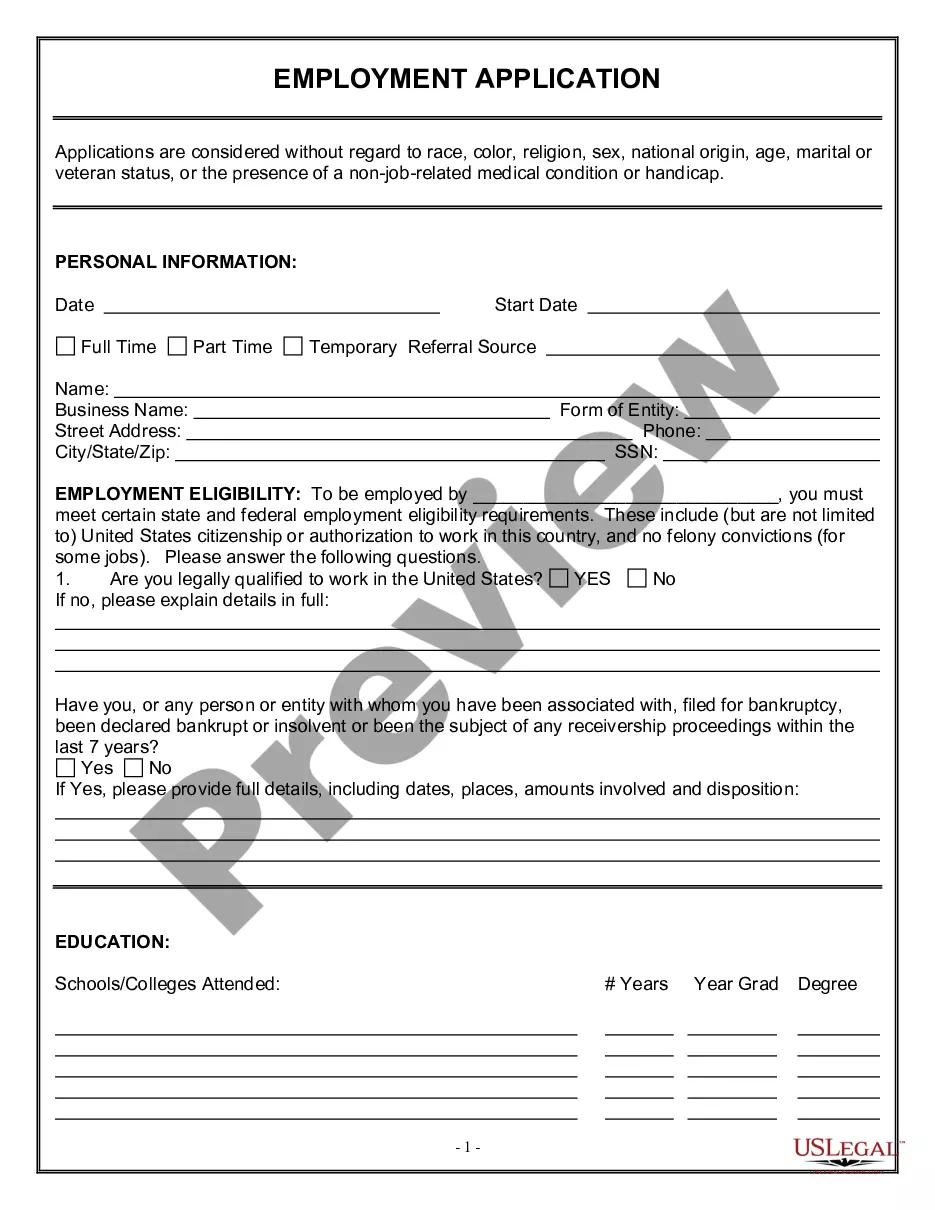
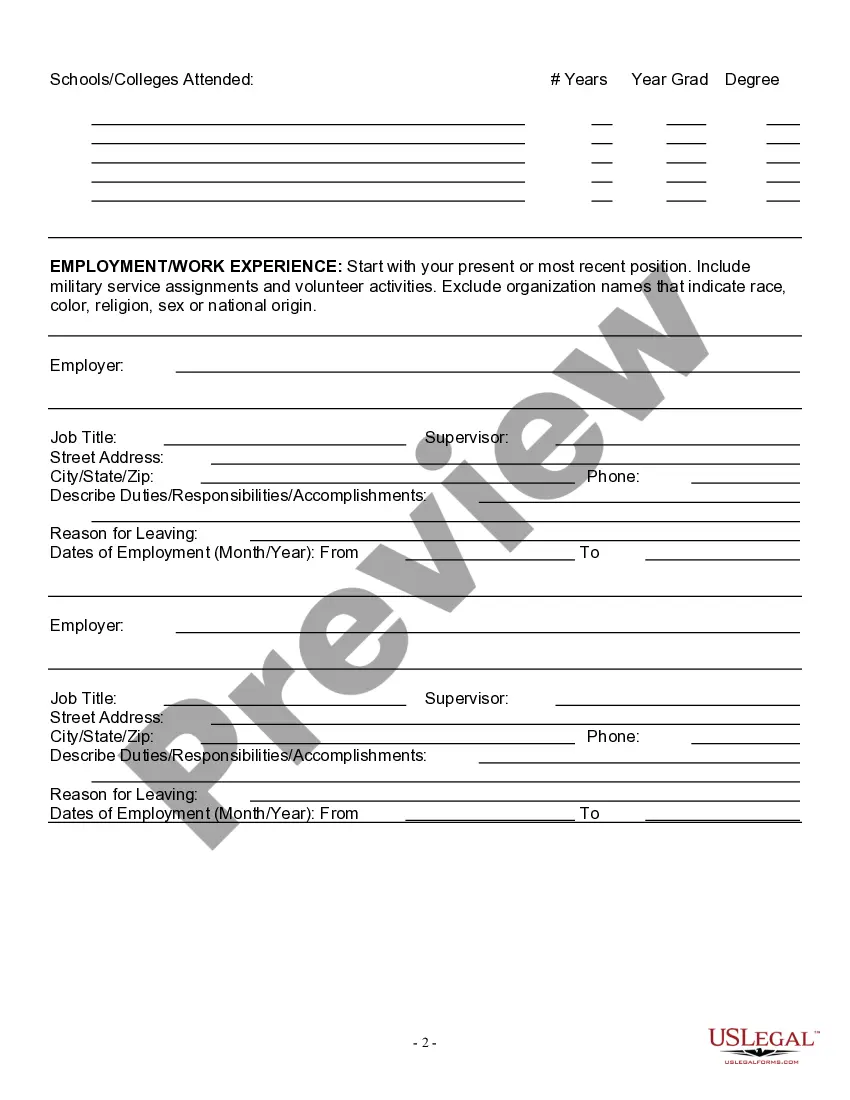
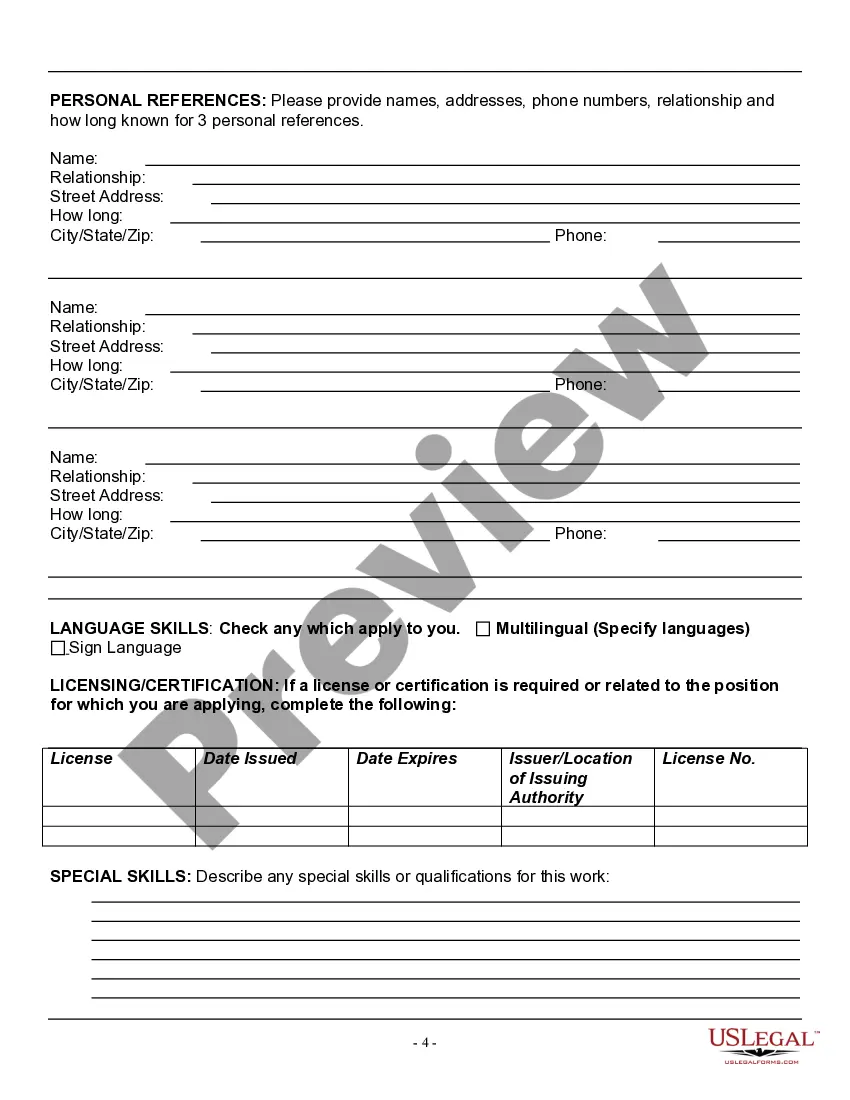
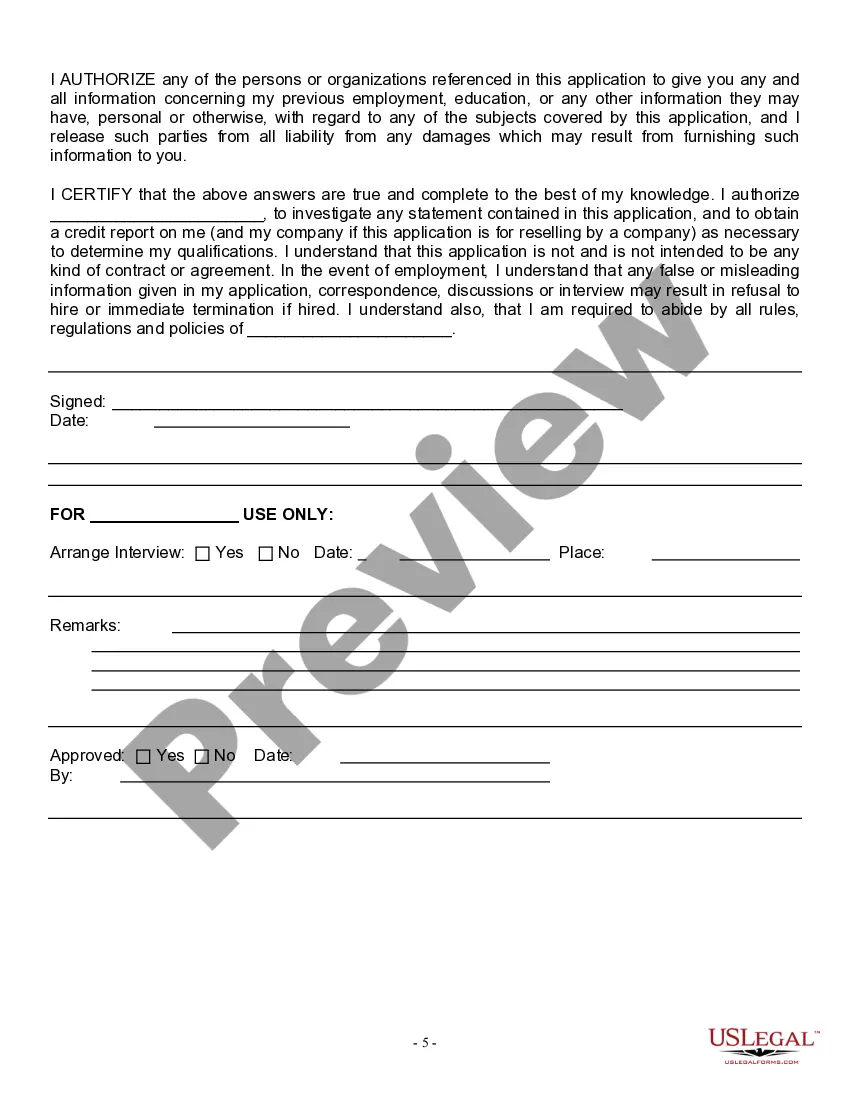
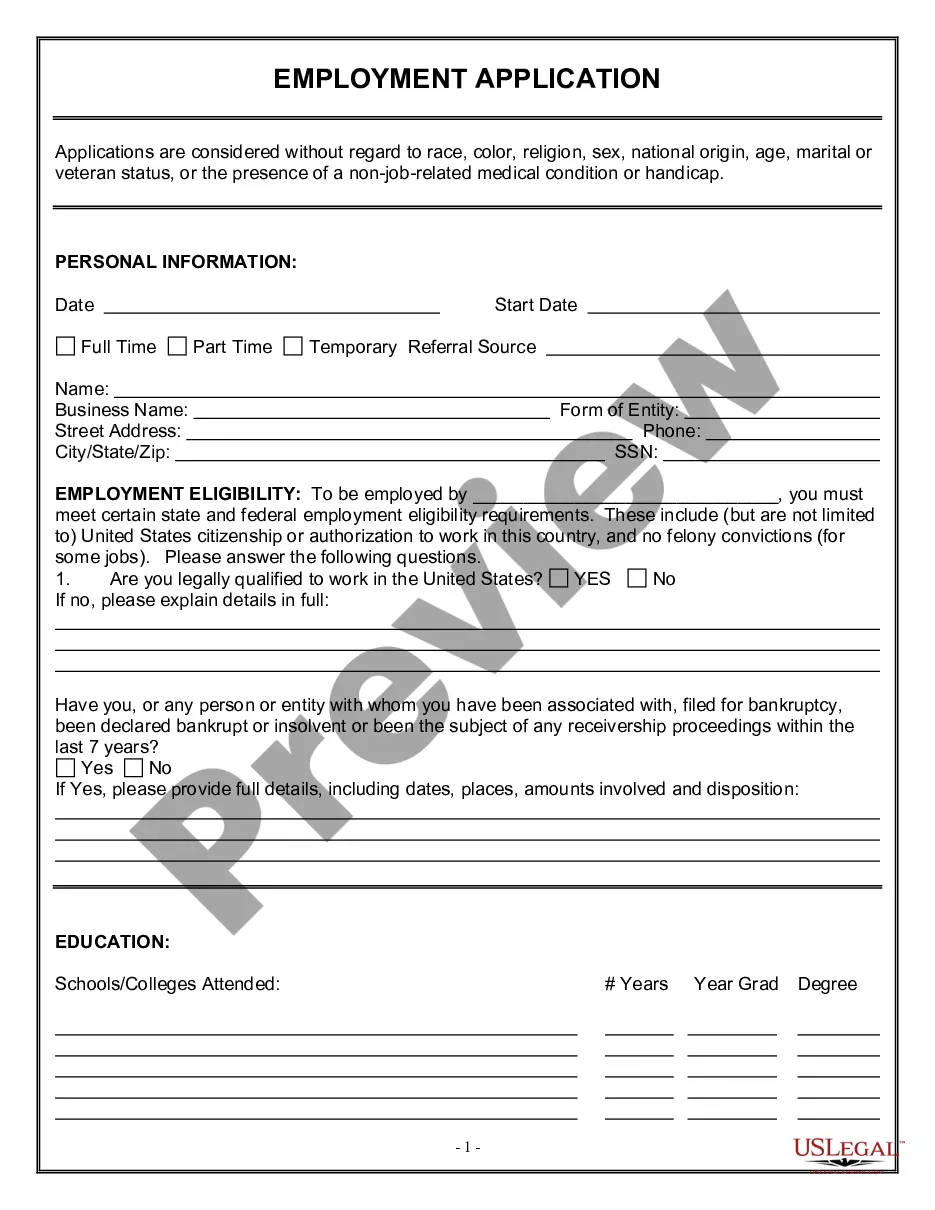
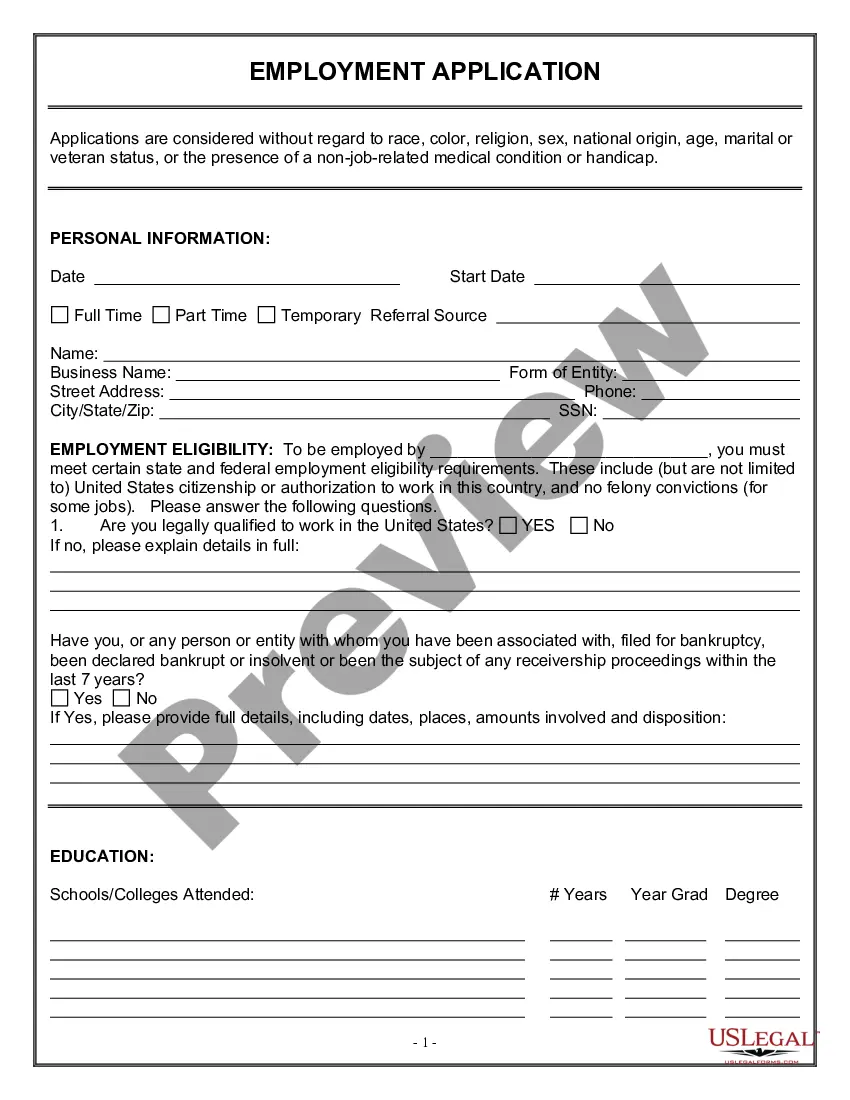
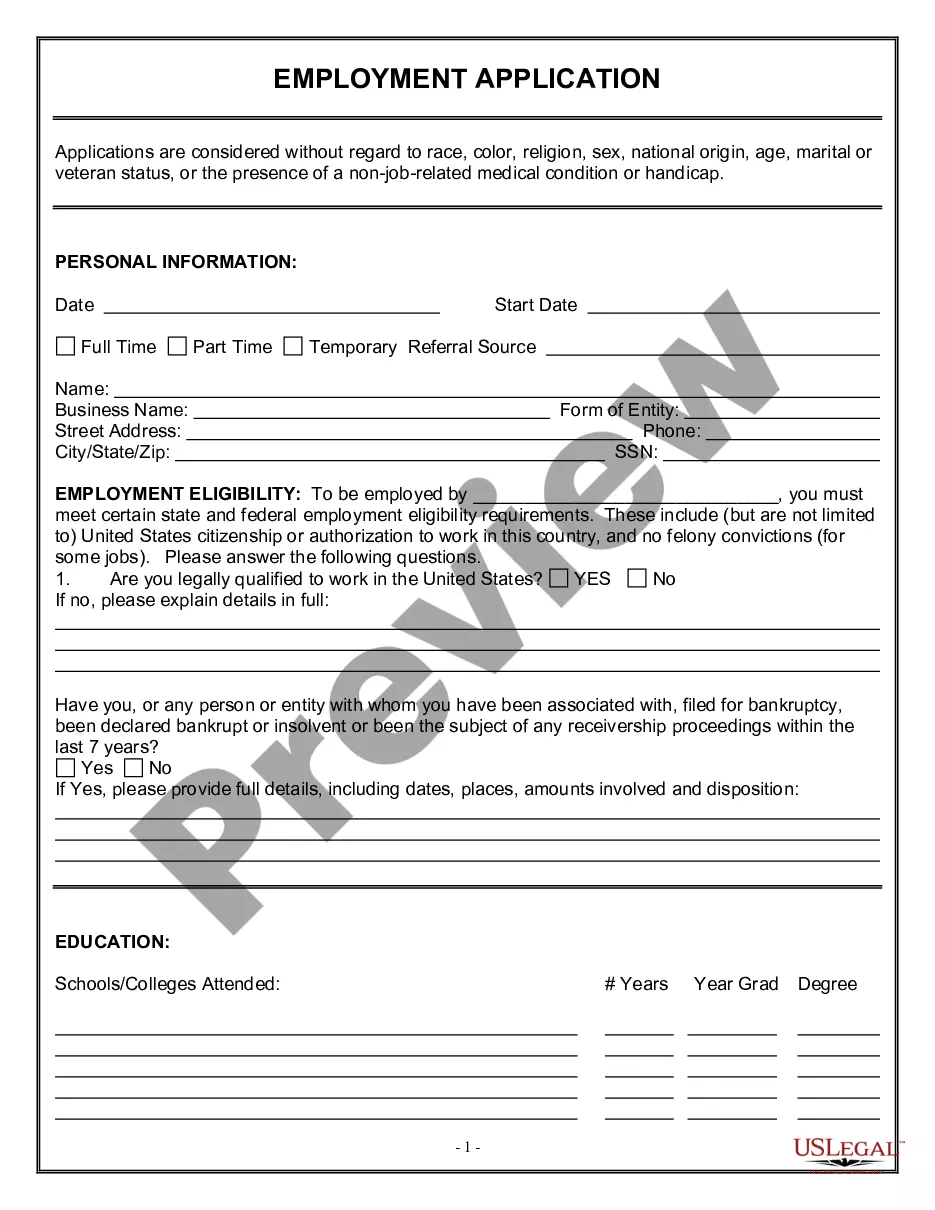
The Employment Application for Scientist is a legal form designed for job seekers applying for positions as scientists. This form collects relevant personal information, qualifications, and legal eligibility to ensure compliance with employment laws. It is distinct from other employment applications due to its specific focus on scientific roles and the inclusion of veteran status considerations.
Main sections of this form
- Personal information section, including legal work eligibility.
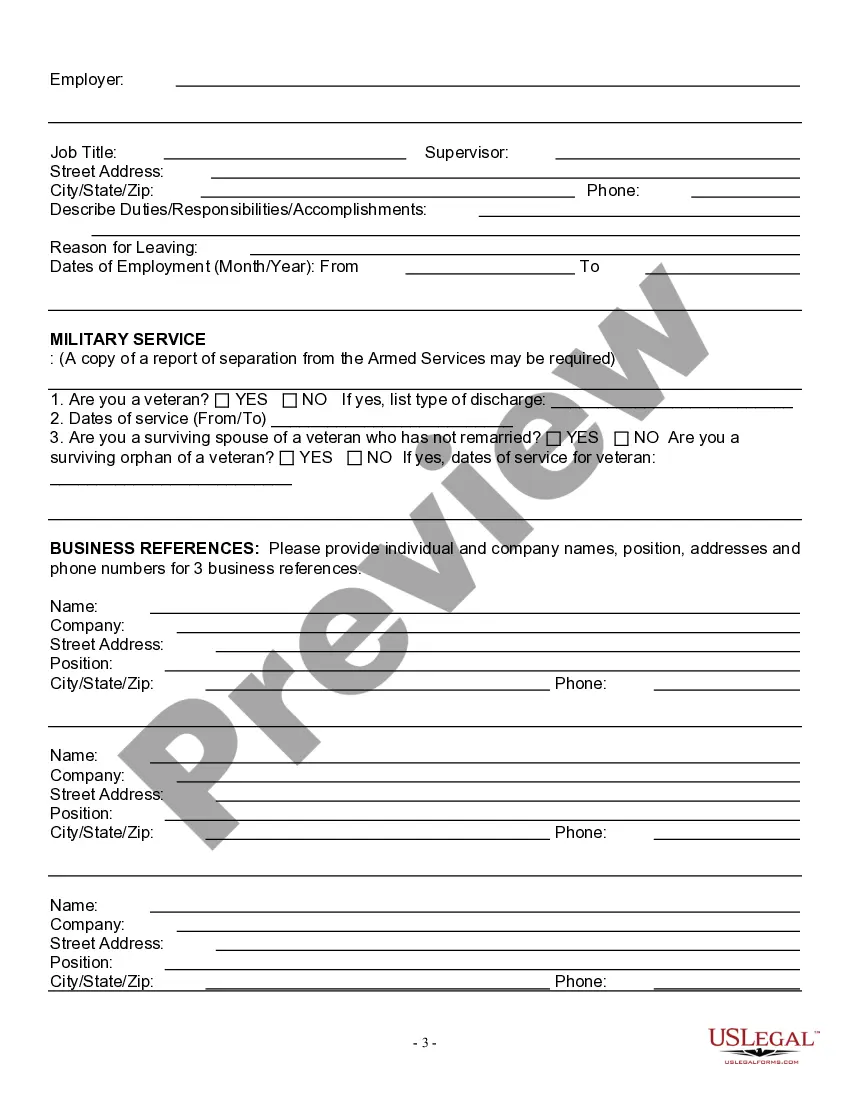
- Inquiry about veteran status and surviving spouse or orphan status.
- Field for dates of service, providing a comprehensive background check.
Situations where this form applies
This form should be used when applying for a scientific position at an organization in the United States. It is appropriate for both new graduates entering the field and experienced professionals seeking new opportunities. Use this application to ensure your personal and professional details are submitted correctly and in compliance with relevant employment regulations.
Intended users of this form
This form is intended for:
- Individuals applying for scientist positions.
- Job seekers who are legally qualified to work in the U.S.
- Veterans and surviving spouses or orphans who wish to clarify their status in the employment context.
Instructions for completing this form
- Provide your full personal details in the personal information section.
- Indicate whether you are legally qualified to work in the United States.
- Fill in the dates of service if applicable and indicate your veteran status.
- Review your application to ensure all fields are completed accurately.
- Submit the application to the employer as per their instructions.
Notarization guidance
This form does not typically require notarization unless specified by local law.
Get your form ready online
Our built-in tools help you complete, sign, share, and store your documents in one place.
Make edits, fill in missing information, and update formatting in US Legal Forms—just like you would in MS Word.
Download a copy, print it, send it by email, or mail it via USPS—whatever works best for your next step.
Sign and collect signatures with our SignNow integration. Send to multiple recipients, set reminders, and more. Go Premium to unlock E-Sign.
If this form requires notarization, complete it online through a secure video call—no need to meet a notary in person or wait for an appointment.
We protect your documents and personal data by following strict security and privacy standards.

Make edits, fill in missing information, and update formatting in US Legal Forms—just like you would in MS Word.

Download a copy, print it, send it by email, or mail it via USPS—whatever works best for your next step.

Sign and collect signatures with our SignNow integration. Send to multiple recipients, set reminders, and more. Go Premium to unlock E-Sign.

If this form requires notarization, complete it online through a secure video call—no need to meet a notary in person or wait for an appointment.

We protect your documents and personal data by following strict security and privacy standards.
Mistakes to watch out for
- Leaving fields blank or incomplete.
- Not providing accurate dates of service.
- Failing to indicate legal eligibility to work.
Why use this form online
- Convenient access to the form from anywhere, anytime.
- Easy editing functionality allows for quick updates.
- Reliable content drafted by licensed attorneys ensures legal validity.
Looking for another form?

Form popularity
FAQ
Well, it usually takes 3-6 years to do an undergraduate science degree (depending on subject), then if you want to do a PhD that takes at least another 3 years. But to be honest, scientists never stop learning and so there isn't really a clear definition of when someone 'becomes a scientist'.
Are written in student-friendly language. contain use science words with explanations (which is important for vocabulary building) include visuals (to explain science concepts, or show different parts of the scientists life) ask and answer questions from the pre-scientist.
The field applications scientist (often referred to by the acronym FAS) works in the field, helping customers do their own work and working on collaborative projects. They also provide training, set up equipment, and deliver presentations and product demonstrations at customer sites and conferences.
Scientists are needed in the public and private sectors and are hired by lots of employers including chemical and pharmaceutical companies, research institutes, universities, food and drink manufacturers, hospitals, environmental agencies, the government and charities such as Cancer Research.
Research scientists work in almost every area of science imaginable. They plan and carry out experiments and investigations in a range of areas, including geoscience, medical research, meteorology and pharmacology.
Scientists are needed in the public and private sectors and are hired by lots of employers including chemical and pharmaceutical companies, research institutes, universities, food and drink manufacturers, hospitals, environmental agencies, the government and charities such as Cancer Research.
Most scientists have a bachelor's degree. The most common areas of study are Biology, Chemistry, Biochemistry, and Neuroscience.
Eligibility to become Scientist Remember your degree must be from a recognised board or institution. Aspirants must also possess a bachelor's, master's and Ph. D. degree for this job profile along with internships in the relevant field.
Many have a bachelor's degree in fields such as information science, engineering, or computer science. All application specialists must ensure that their knowledge remains up to date. This means they spend a lot of time on continuous education classes. Often, these classes and courses also lead to certifications.