Video License Agreement
Overview of this form
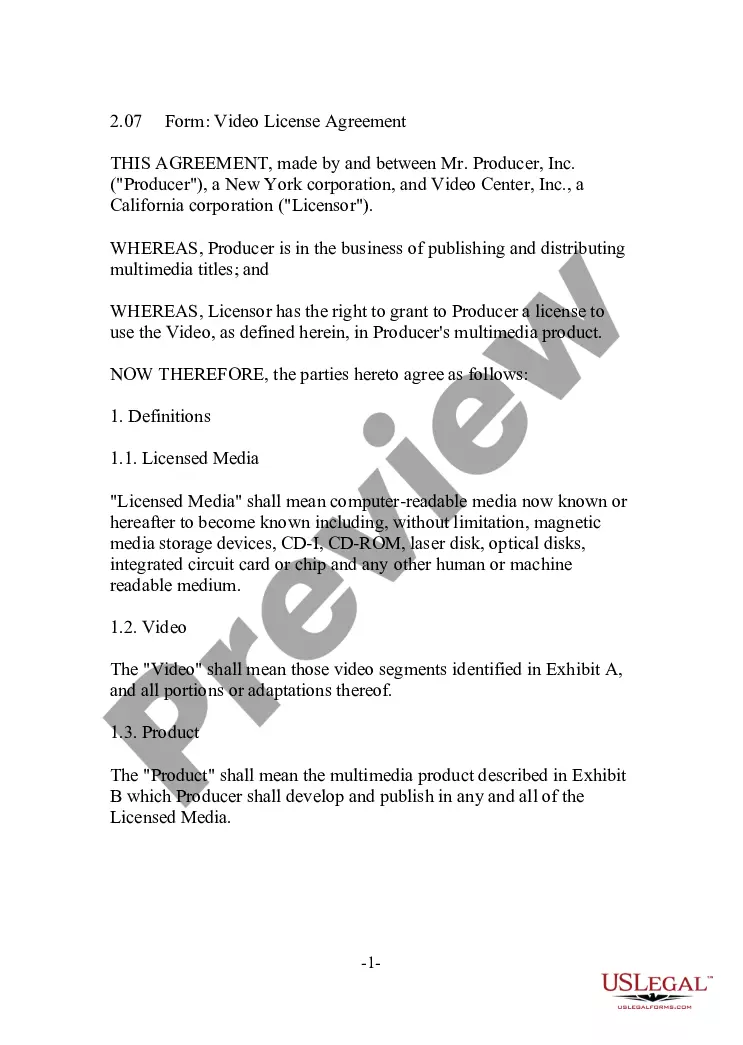
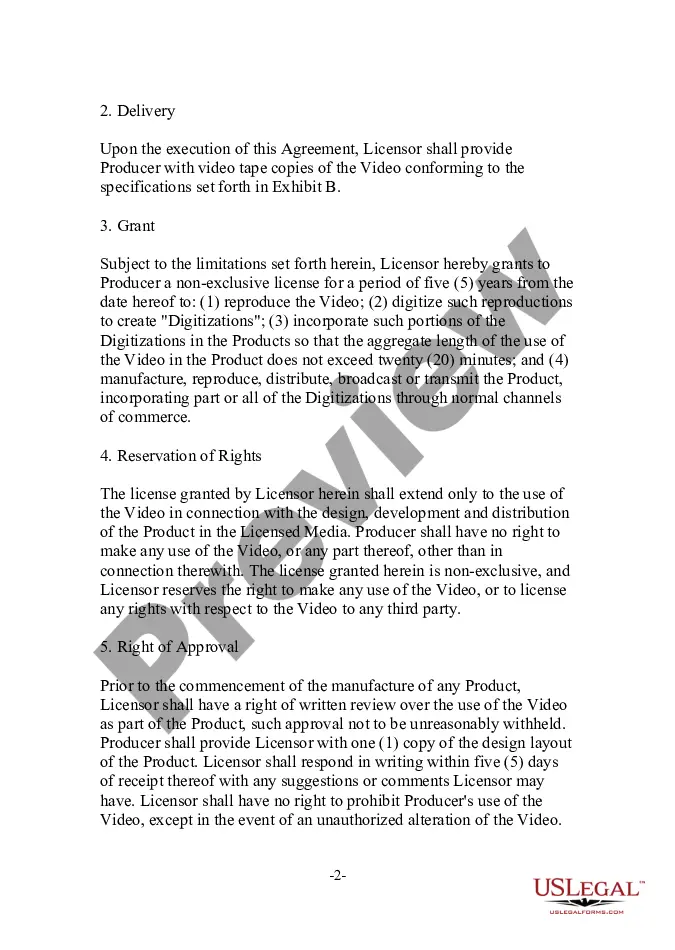
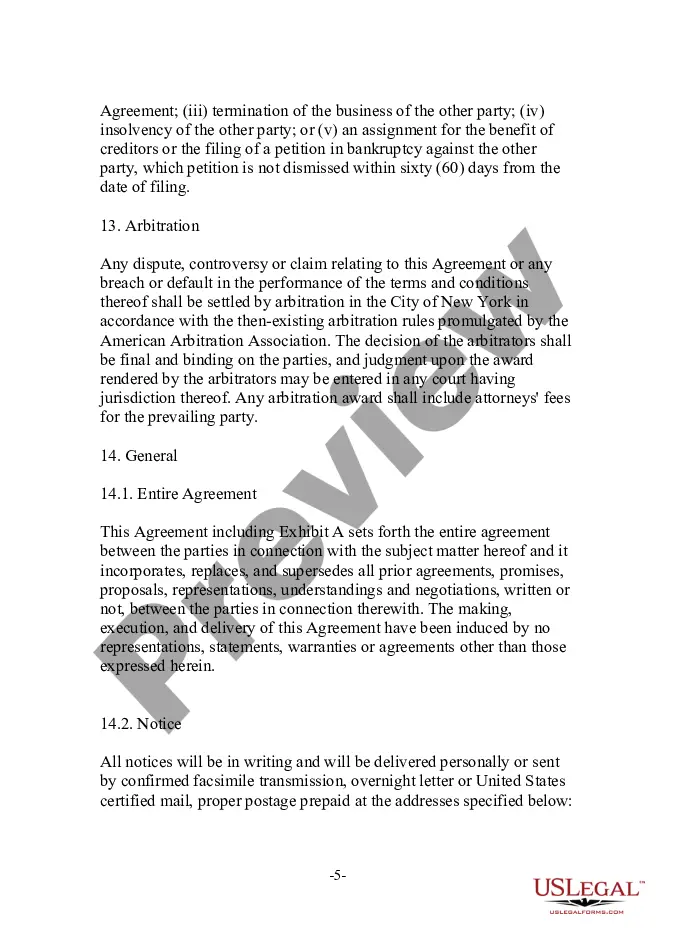
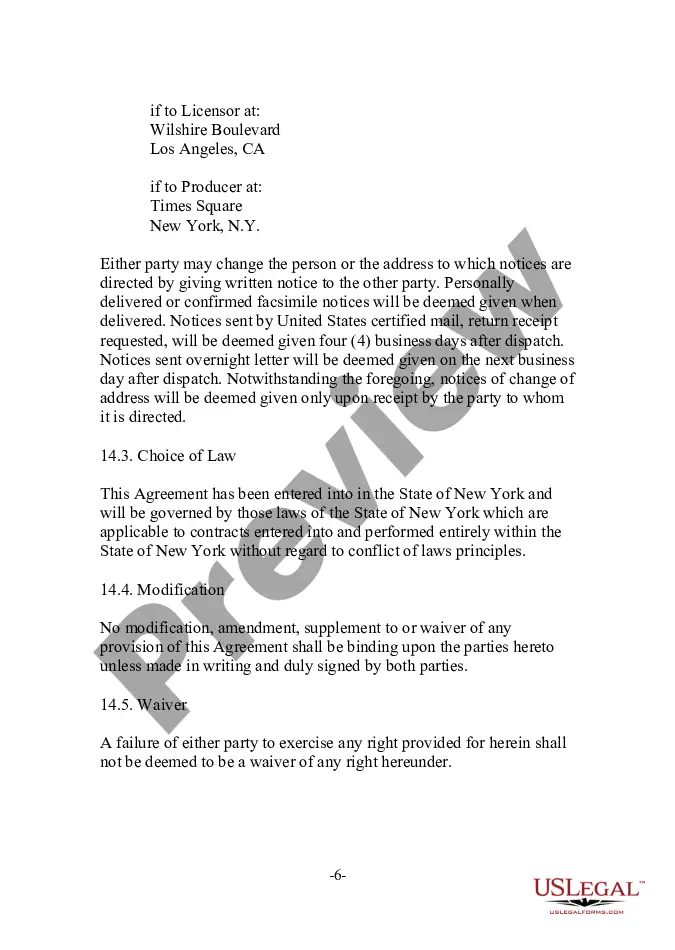
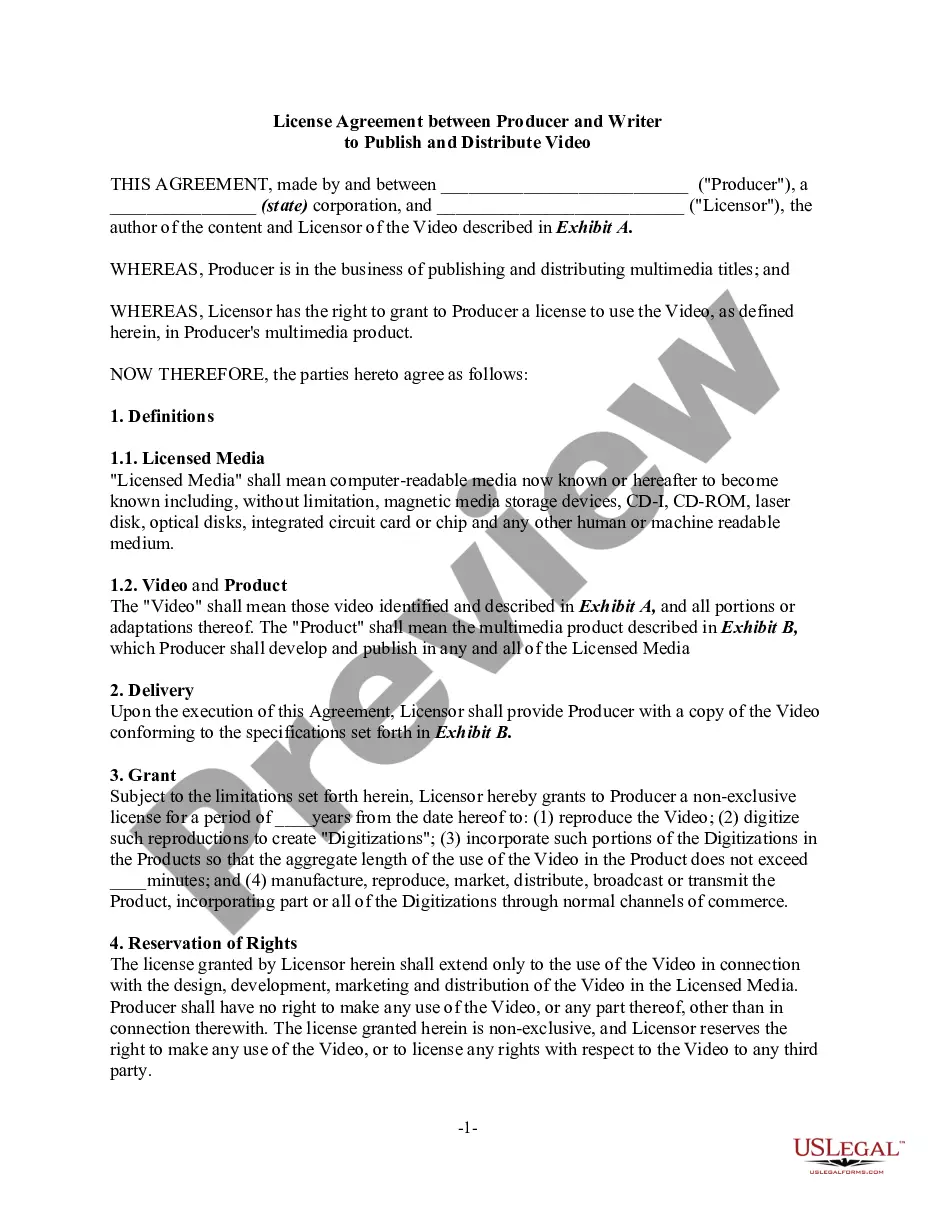
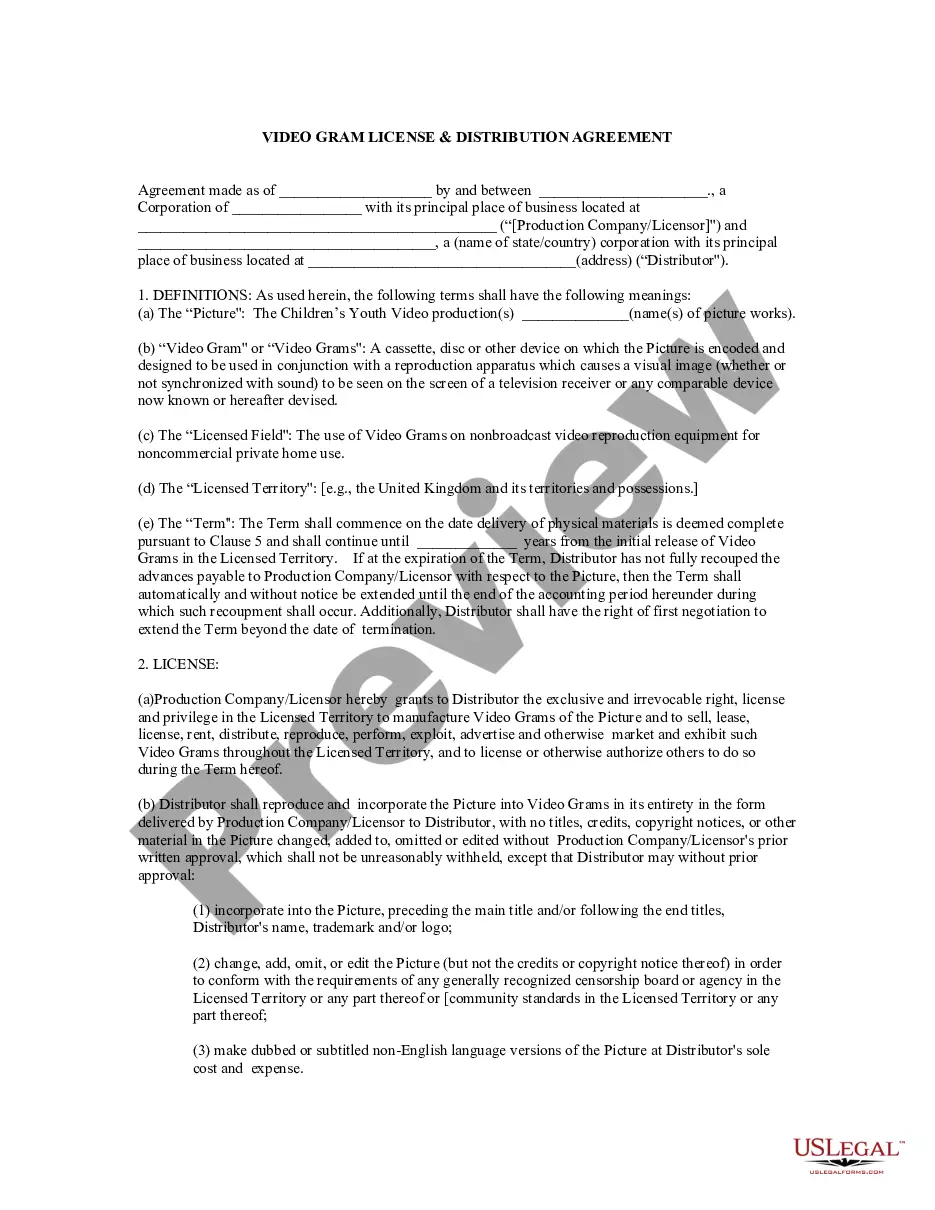
The Video License Agreement is a legal contract outlining the terms under which a producer can obtain rights to use video content from a licensor. This form is crucial in business settings where multimedia products are created, ensuring both parties understand their rights and responsibilities related to the licensing of video materials. Unlike general licensing agreements, this specific form focuses on video content and associated multimedia products, making it essential for companies involved in publishing and distributing multimedia titles.
Key parts of this document
- Definitions: Clearly outlines key terms like Licensed Media, Video, and Product.
- License Grant: Specifies the non-exclusive rights for a defined period and the limitations of use.
- Approval Rights: Details how the licensor can review the producer's use of the video prior to publication.
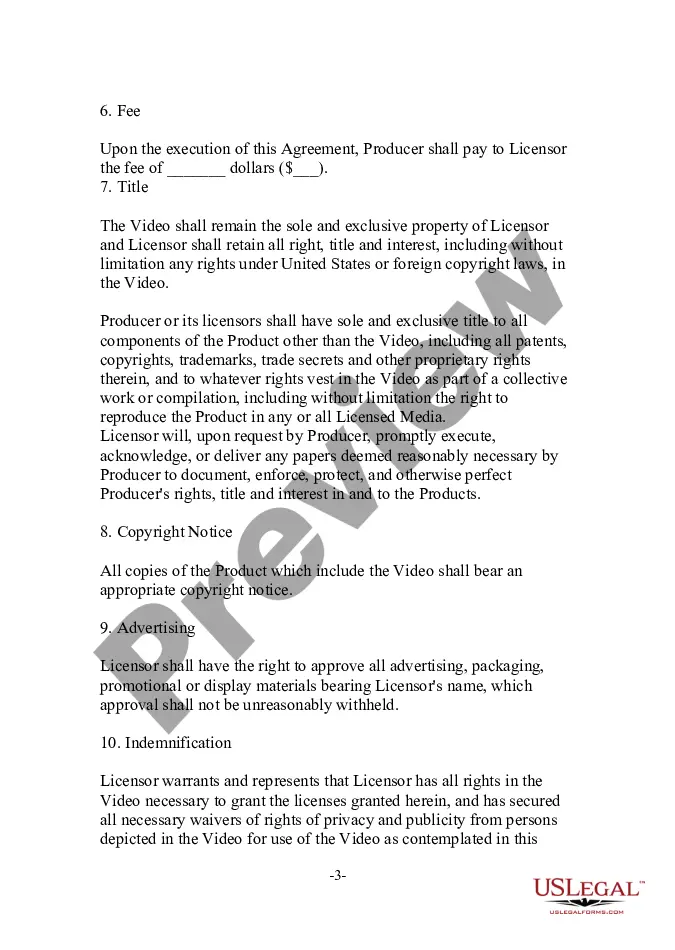
- Fee Structure: Indicates the payment obligations for utilizing the video content.
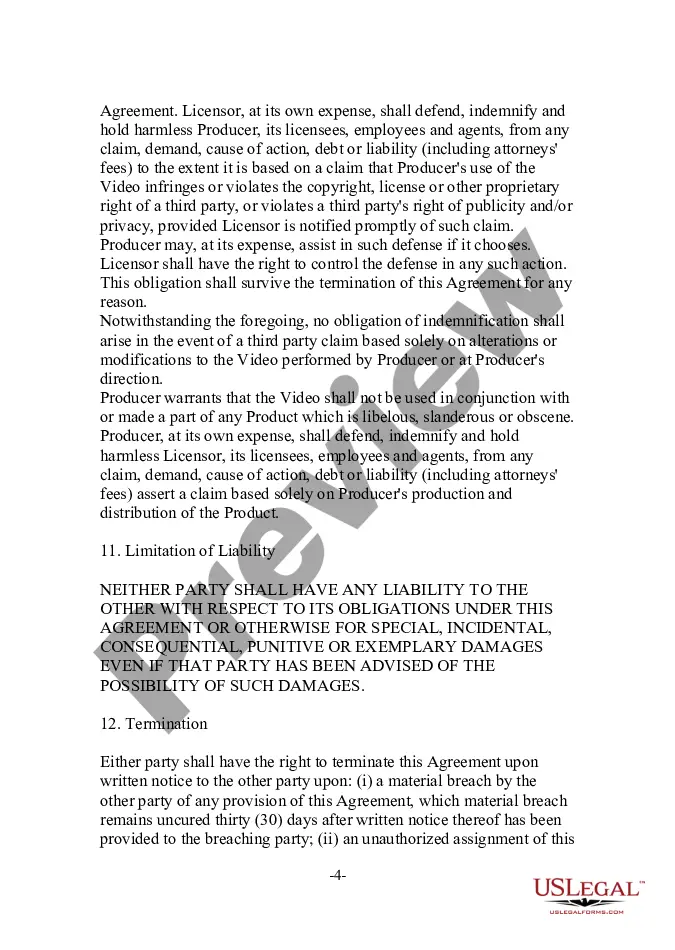
- Indemnification Clause: Protects both parties against potential legal issues arising from the use of the video.
- Termination Conditions: Outlines the circumstances under which the agreement can be ended by either party.
When this form is needed
This form should be used whenever a producer wants to legally incorporate video content into a multimedia product. It is applicable in situations where:
- A production company seeks to publish or distribute media that includes licensed video segments.
- A video content provider wishes to maintain rights over their material while granting use to a producer.
- Negotiations are underway for specific video usage, ensuring both parties are aligned on expectations and legal liabilities.
Who can use this document
This form is suitable for:
- Producers and publishers in need of video content for their multimedia projects.
- Licensors who own video rights and need to ensure their content is protected while granting usage rights.
- Legal professionals advising clients on licensing agreements related to video media.
How to prepare this document
- Identify the parties: Clearly state the names and addresses of both the producer and the licensor.
- Define the licensed media: Specify the types of media that will be used for the video content.
- Outline the video content: Include a detailed description of the video segments in the attached exhibits.
- Enter the fee agreement: Fill in the financial terms as agreed upon by both parties.
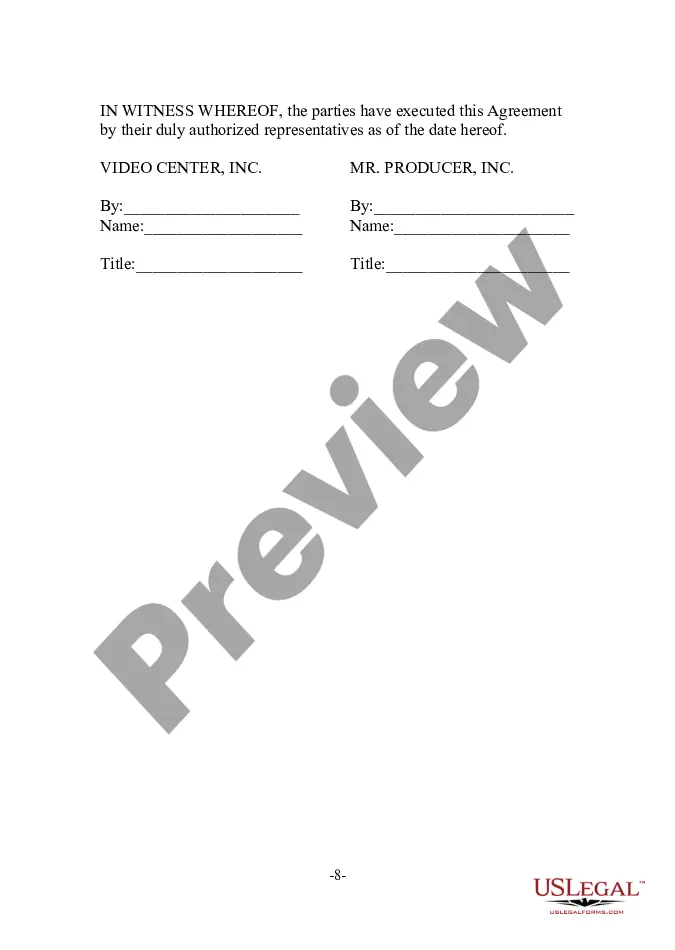
- Sign and date the agreement: Ensure that both parties print and sign their names, including titles and dates.
Notarization guidance
This form usually doesn’t need to be notarized. However, local laws or specific transactions may require it. Our online notarization service, powered by Notarize, lets you complete it remotely through a secure video session, available 24/7.
Get your form ready online
Our built-in tools help you complete, sign, share, and store your documents in one place.
Make edits, fill in missing information, and update formatting in US Legal Forms—just like you would in MS Word.
Download a copy, print it, send it by email, or mail it via USPS—whatever works best for your next step.
Sign and collect signatures with our SignNow integration. Send to multiple recipients, set reminders, and more. Go Premium to unlock E-Sign.
If this form requires notarization, complete it online through a secure video call—no need to meet a notary in person or wait for an appointment.
We protect your documents and personal data by following strict security and privacy standards.

Make edits, fill in missing information, and update formatting in US Legal Forms—just like you would in MS Word.

Download a copy, print it, send it by email, or mail it via USPS—whatever works best for your next step.

Sign and collect signatures with our SignNow integration. Send to multiple recipients, set reminders, and more. Go Premium to unlock E-Sign.

If this form requires notarization, complete it online through a secure video call—no need to meet a notary in person or wait for an appointment.

We protect your documents and personal data by following strict security and privacy standards.
Mistakes to watch out for
- Failing to clearly define video content in the agreement, leading to potential misunderstandings.
- Not including the approval process for the licensor, which can cause disputes later.
- Omitting the payment terms or failing to agree on the fee beforehand.
- Not having both parties sign and date the document to ensure its legality.
Why use this form online
- Convenience: Downloadable and easily accessible from anywhere, saving time and effort.
- Editability: Fillable Word format allows users to customize the agreement without hassle.
- Reliability: Templates drafted by licensed attorneys ensure the document meets legal standards.
Looking for another form?


Form popularity
FAQ
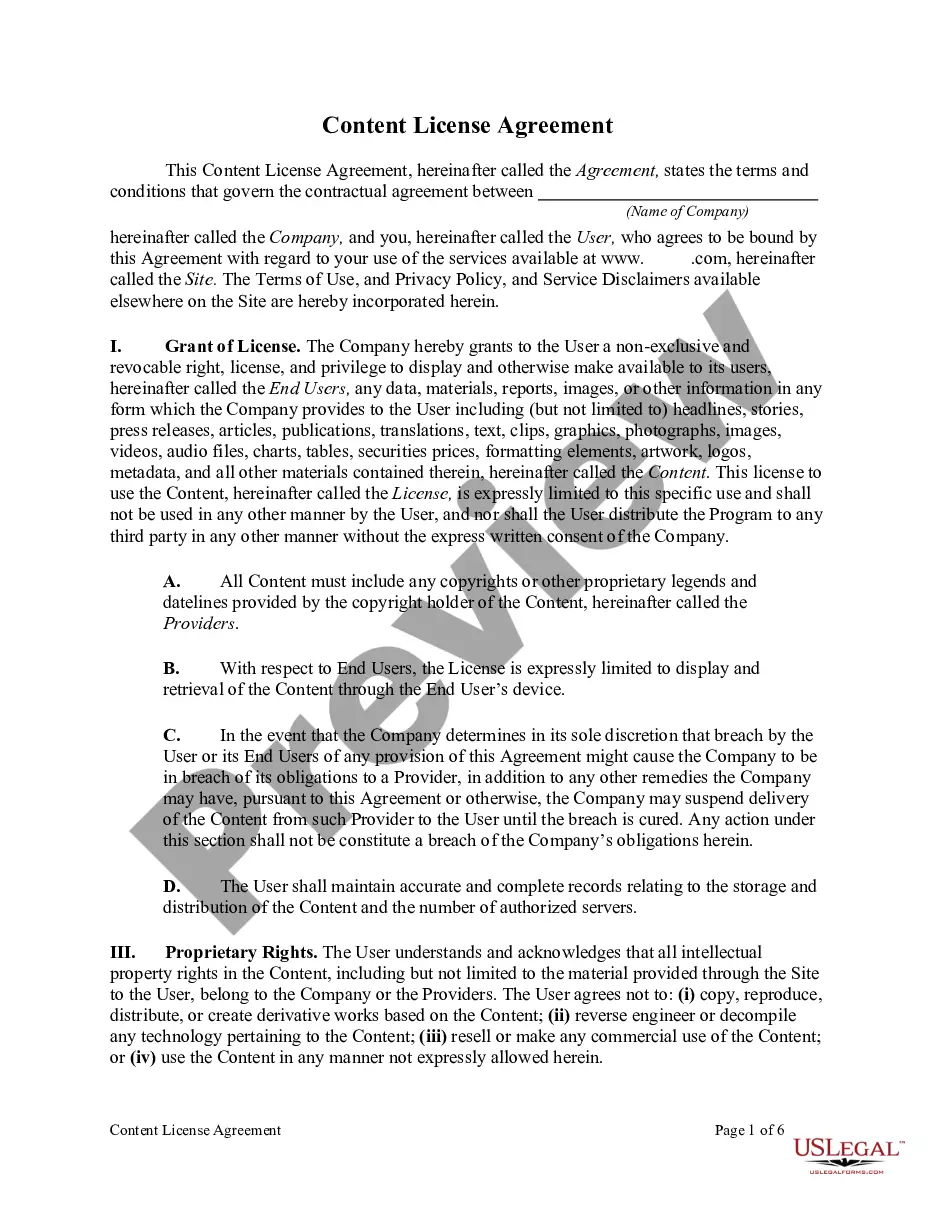
What is a Licensing Agreement? A licensing agreement is a contract between two parties (the licensor and licensee) in which the licensor grants the licensee the right to use the brand name, trademark, patented technology, or ability to produce and sell goods owned by the licensor.
A Copyright License Agreement is a contract under which a copyright owner allows another person or company to use their copyrighted material in one way or another: to reprint it, or distribute it, to use it for a specified amount of time, and more.
Determine if permission is needed. Identify the owner. Identify the rights needed. Contact the owner and negotiate whether payment is required. Get your permission agreement in writing.
Copyrights give the copyright owner exclusive rights over their original works. While not all works are copyrightable, a few examples of copyrightable materials include movies, literary works, live performances, sound recordings, radio broadcasts, and even software.
Exclusive or non-exclusive. In an exclusive license, the intellectual property holder is licensing the work only to one person, for that particular use/territory. Territory. Use. Attribution. Derivative works. Confidentiality. Time frame. Termination.
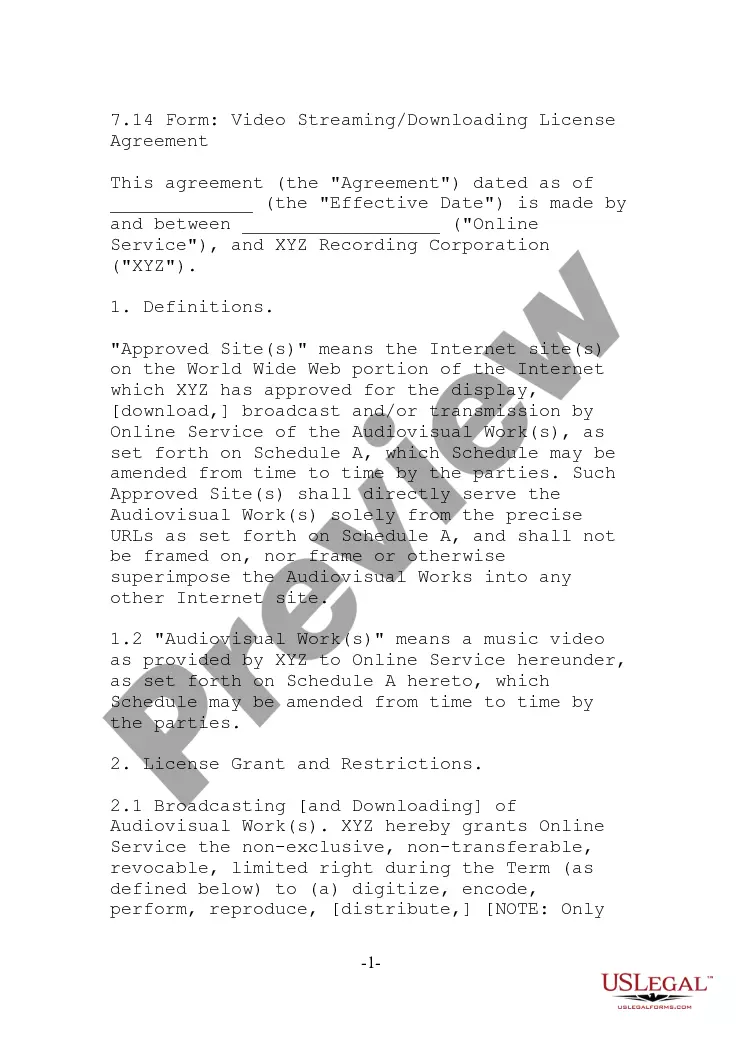
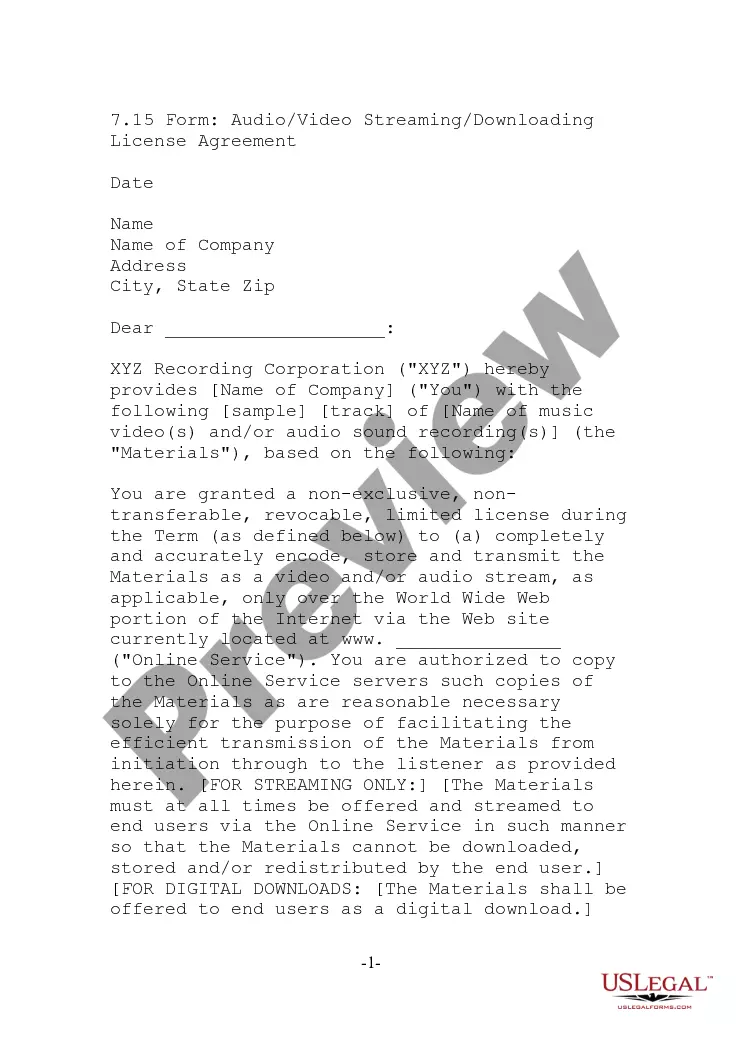
A license is an agreement between a video's copyright owner (this can be the creator and/or the company having funded its production) and another user.Usually in the form of written consent, a license is given to the third party by the copyright holder for the use of their video.
An example of a licensing agreement is a contract between the copyright holders of software and another company, allowing the latter to use the computer software for their daily business operations.
A licensing agreement allows one party (the licensee) to use and/or earn revenue from the property of the owner (the licensor). Licensing agreements generate revenues, called royalties, earned by a company for allowing its copyrighted or patented material to be used by another company.