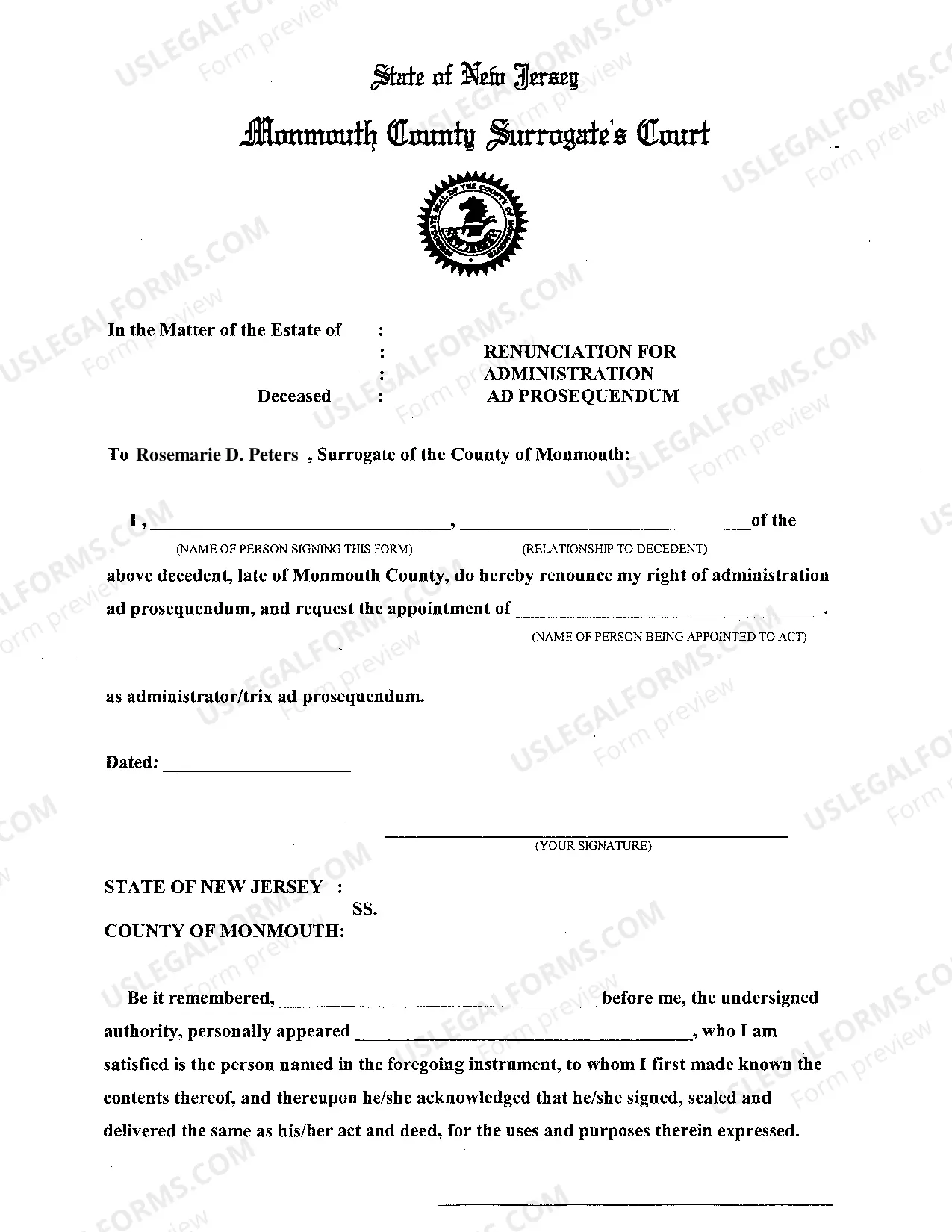
New Hampshire Residential Rental Lease Application
What this document covers
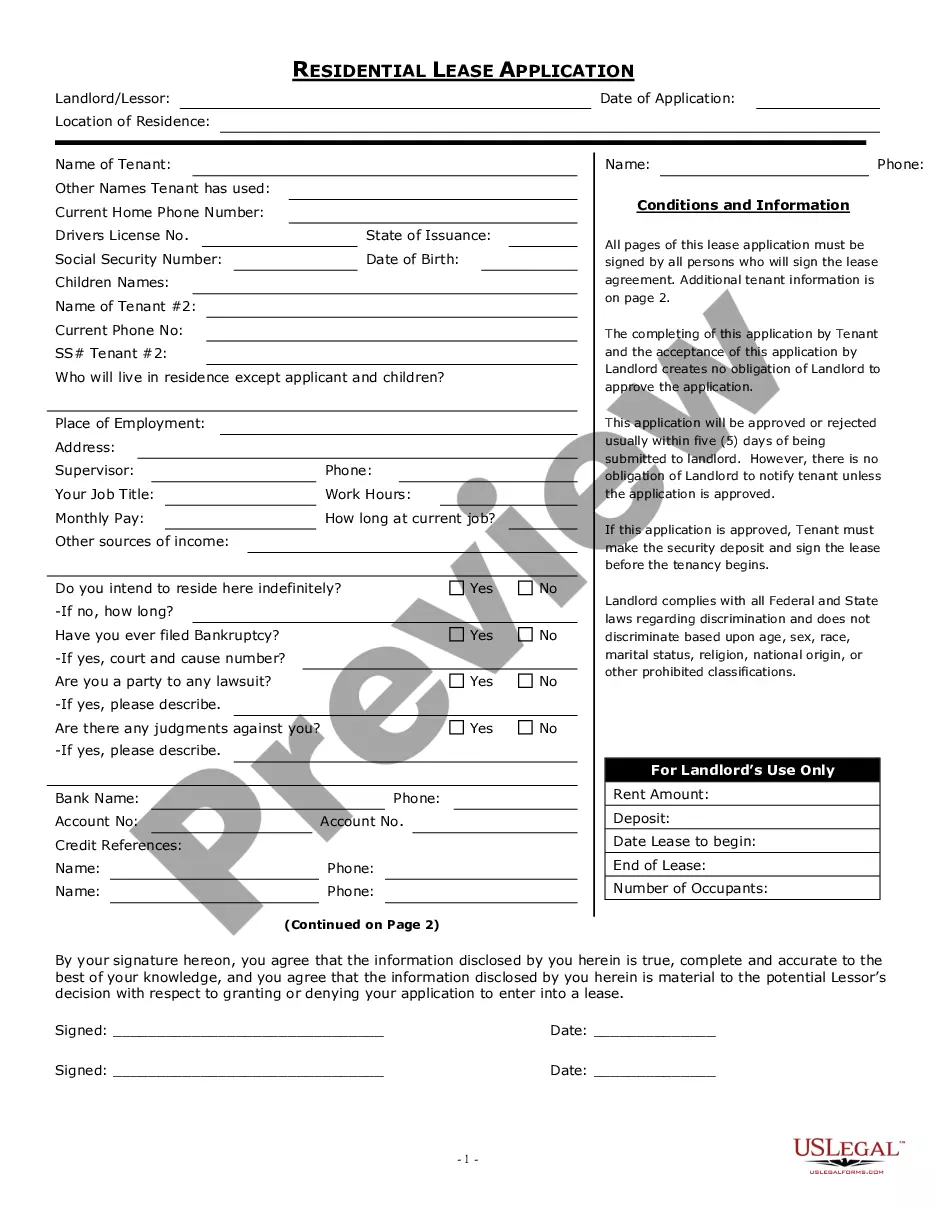
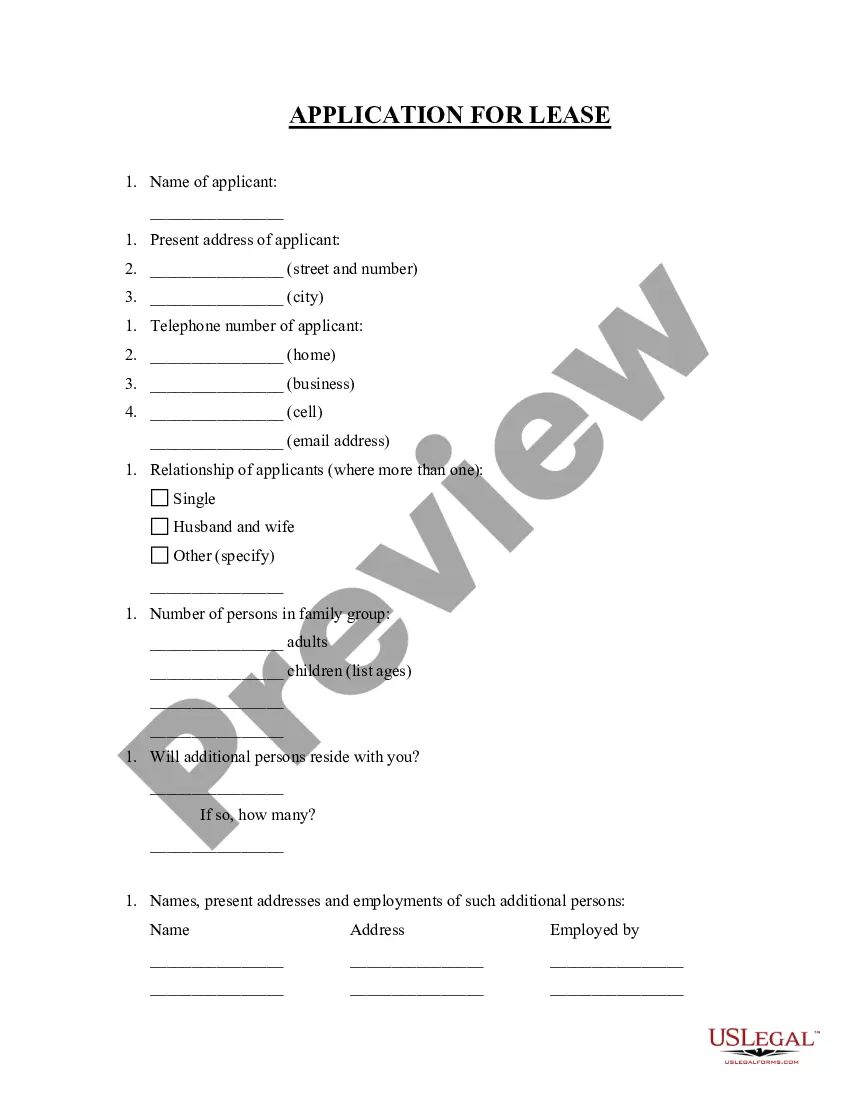
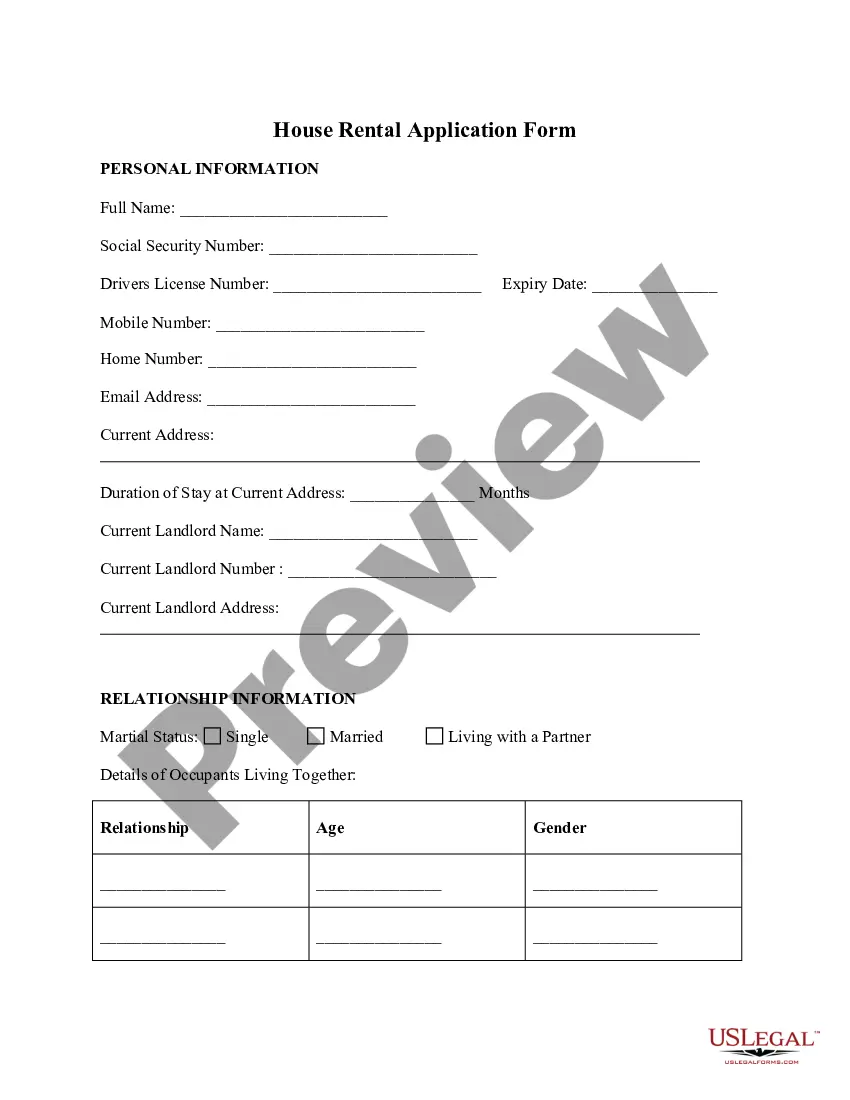
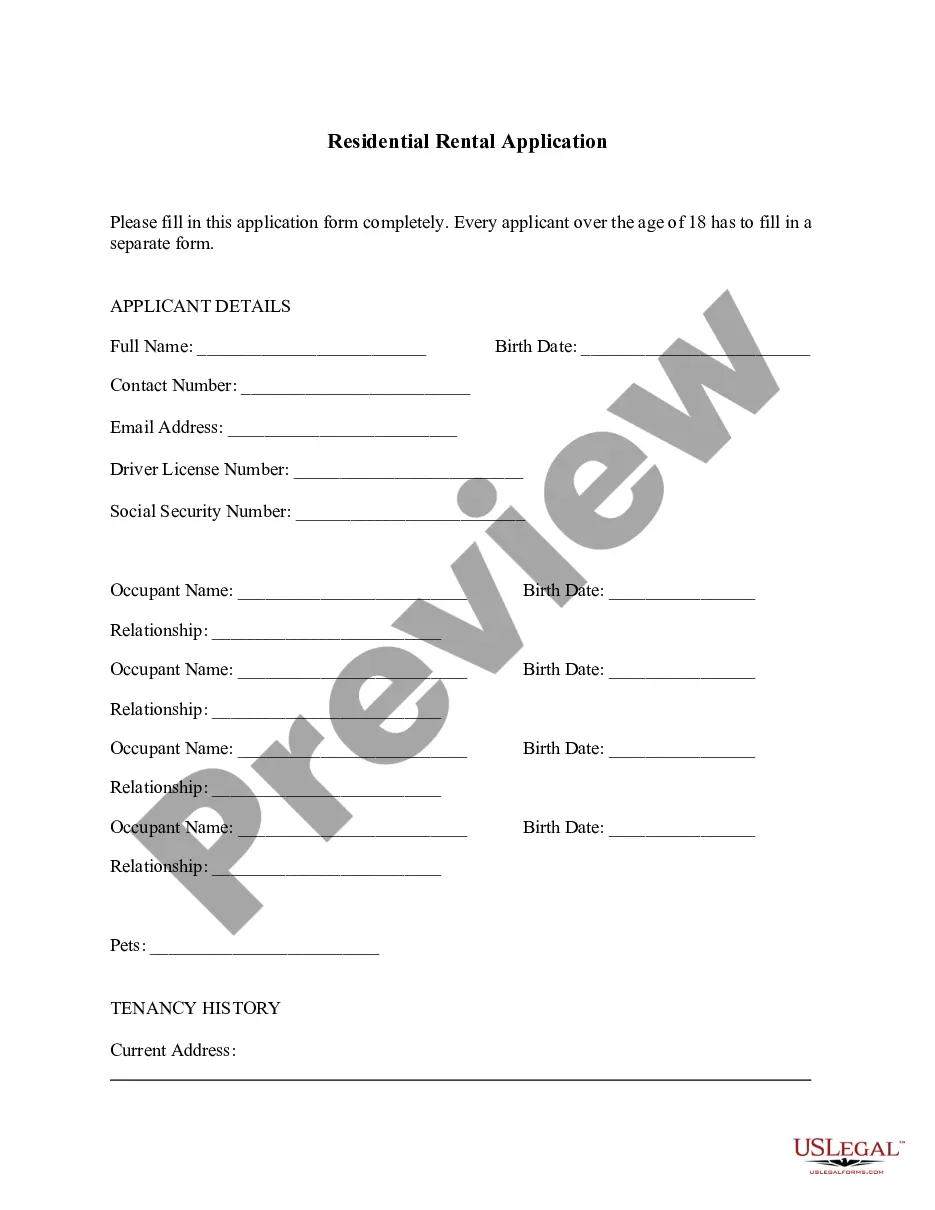
The Residential Rental Lease Application is a legal document that prospective tenants complete to provide information to landlords for evaluation. This form is essential for landlords as it allows them to assess applications for renting property. It includes disclosures and an authorization for releasing personal information, helping landlords make informed decisions about potential tenants.
Key parts of this document
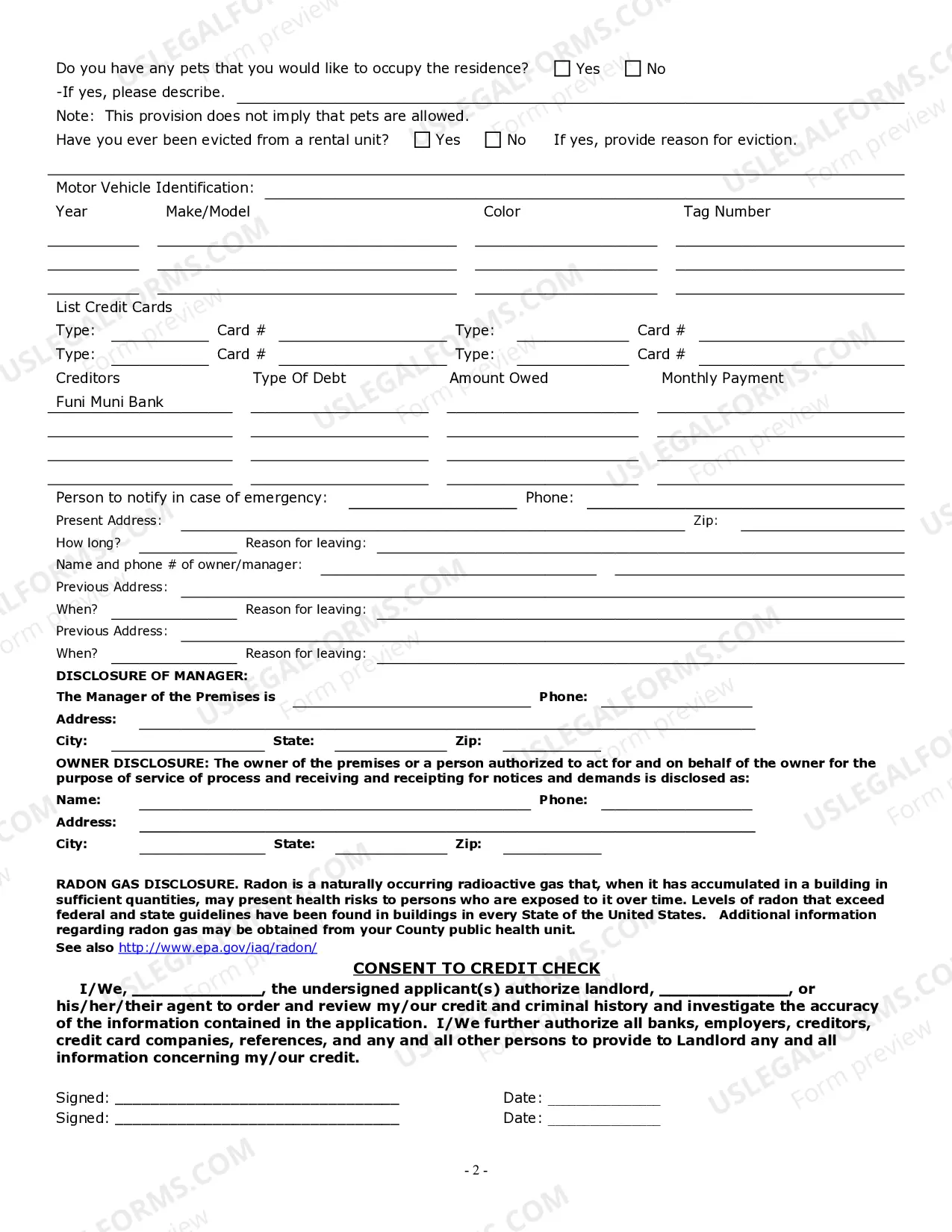
- Tenant information: Includes fields for the tenant's name, contact details, and personal history.
- Disclosure statements: A section that outlines the landlord's compliance with nondiscrimination laws.
- Authorization for a credit check: Tenants must agree to allow landlords to obtain credit and criminal history reports.
- Rental terms: Landlords can specify rental amounts, deposits, and lease dates for their records.
- Tenant signature: A required acknowledgment confirming the accuracy of the information provided.

When to use this form
This application should be used when a landlord is seeking to rent out a property and requires information from potential tenants. It is typically used during the tenant screening process before entering into a formal lease agreement.
Who can use this document
- Landlords seeking to rent a residential property.
- Individuals or families interested in renting a home or apartment.
- Property management companies responsible for leasing rental units.
Steps to complete this form
- Identify the parties: Fill in the tenantâs name and contact information accurately.
- Provide personal information: Include employment details, income, and rental history as required by the application.
- Authorize checks: Sign the section allowing the landlord to conduct a credit and criminal history check.
- Review legal disclosures: Read and understand the non-discrimination clause and tenant rights.
- Sign and date the application: Confirm that all information is true and submit the application to the landlord.
Is notarization required?
This form does not typically require notarization unless specified by local law. However, it is important to confirm the specific requirements in your state or locality to ensure compliance.
Get your form ready online
Our built-in tools help you complete, sign, share, and store your documents in one place.
Make edits, fill in missing information, and update formatting in US Legal Forms—just like you would in MS Word.
Download a copy, print it, send it by email, or mail it via USPS—whatever works best for your next step.
Sign and collect signatures with our SignNow integration. Send to multiple recipients, set reminders, and more. Go Premium to unlock E-Sign.
If this form requires notarization, complete it online through a secure video call—no need to meet a notary in person or wait for an appointment.
We protect your documents and personal data by following strict security and privacy standards.

Make edits, fill in missing information, and update formatting in US Legal Forms—just like you would in MS Word.

Download a copy, print it, send it by email, or mail it via USPS—whatever works best for your next step.

Sign and collect signatures with our SignNow integration. Send to multiple recipients, set reminders, and more. Go Premium to unlock E-Sign.

If this form requires notarization, complete it online through a secure video call—no need to meet a notary in person or wait for an appointment.

We protect your documents and personal data by following strict security and privacy standards.
Common mistakes to avoid
- Failing to provide complete or accurate information.
- Not signing the application, which can lead to automatic rejection.
- Ignoring the disclosure statements, which can cause misunderstandings about tenant rights.
Advantages of online completion
- Convenient access: Download and fill out the application at your convenience.
- Editability: Easily correct mistakes or update information before submitting.
- Reliability: Form templates are drafted by licensed attorneys to ensure compliance with legal standards.
Legal use & context
- This application helps landlords comply with fair housing laws.
- Provides a legally sound basis for tenant screening processes.
- Facilitates documentation that could be important in dispute resolutions.
Main things to remember
- The Residential Rental Lease Application is essential for screening applicants.
- It includes important disclosures and requires authorization for background checks.
- Proper completion can streamline the tenant selection process for landlords.
Looking for another form?
Form popularity
FAQ
As long as the contract spells out specific details and both parties have signed that they agree to the contract's terms, a handwritten contract is legally binding and enforceable in court.
Terms. The lease should state the length of the agreement. Rent. The amount of rent and when it is due. Deposits and fees. The names of all tenants. Occupancy limits. Restrictions on disruptive activity. Pets. Maintenance and repairs.
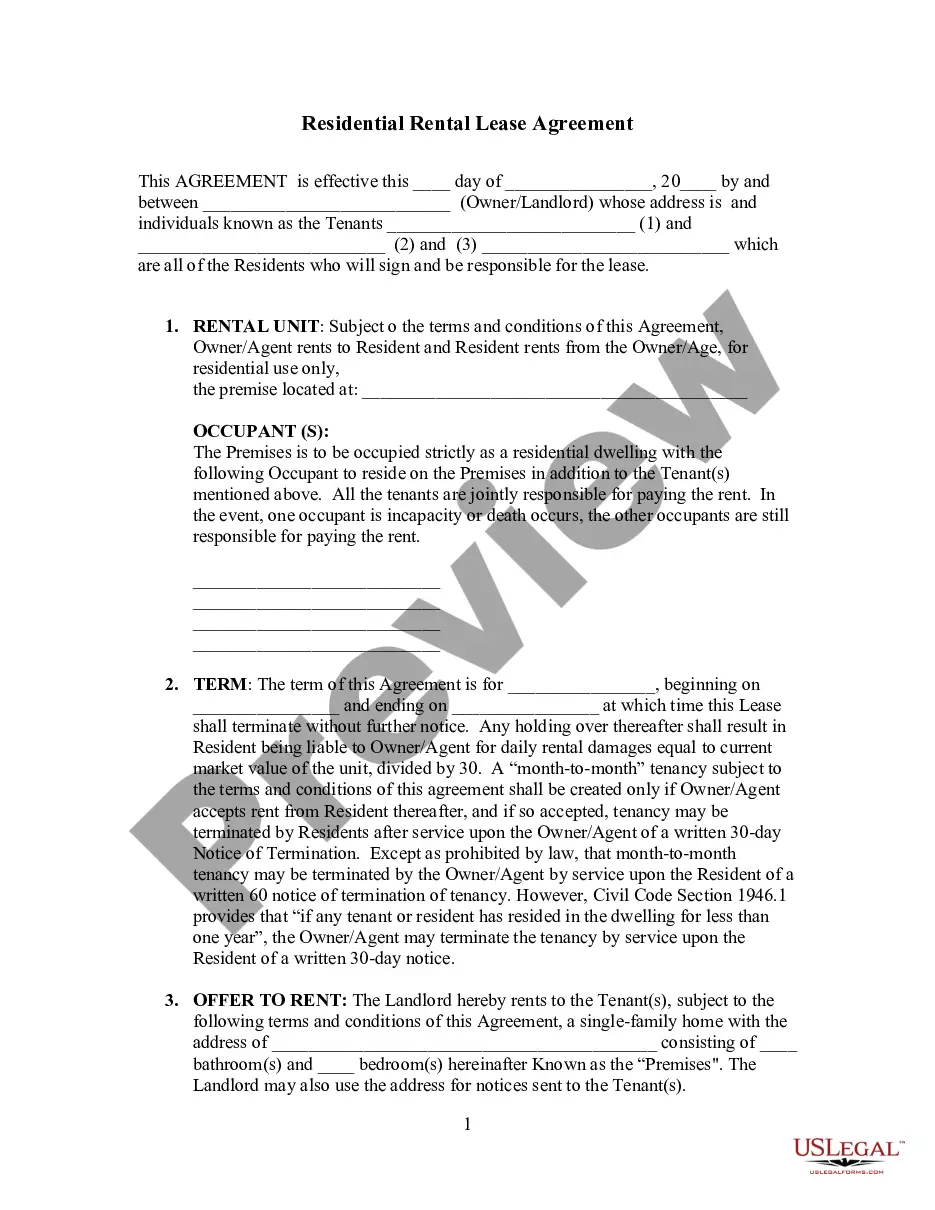
A lease serves as a binding, legal agreement between the property owner and the tenant. As such, it is very important to make sure it thoroughly addresses the rules, policies, and conflict resolution procedures for living in the rental property, and clearly defines tenant and landlord responsibilities.
The survey revealed that the next most common reason for a tenancy application getting stopped in its tracks is when the applicant has a negative rental history.If a tenant can't show proof that they'll be able to pay the rent, their application could be rejected, the rental property site says.
Collect each party's information. Include specifics about your property. Consider all of the property's utilities and services. Know the terms of your lease. Set the monthly rent amount and due date. Calculate any additional fees. Determine a payment method. Consider your rights and obligations.
If you're thinking of renting out your property, or you're a tenant, and the current owner doesn't already have an agreement drawn up, it's possible to create your own rental contract.
Mostbut not allstates require the lease to be in writing to be considered valid. Among the states that require written leases, valid ones must include a description of the property. The property's physical address is considered a valid description. Leases must include starting and ending dates.
Under California law, a lease does have to be in writing to be enforceable, but only when the lease is for a period of more than a year.There is, however, an additional legal doctrine called partial performance which does make oral contracts enforceable even if they are covered by the Statute of Frauds.
The lease agreement or contract offered by the landlord once the application has been approved is a legally binding document. It becomes legally binding once it is signed by the applicants and landlord.It also explains what items the landlord is responsible for and what the tenants are responsible for.