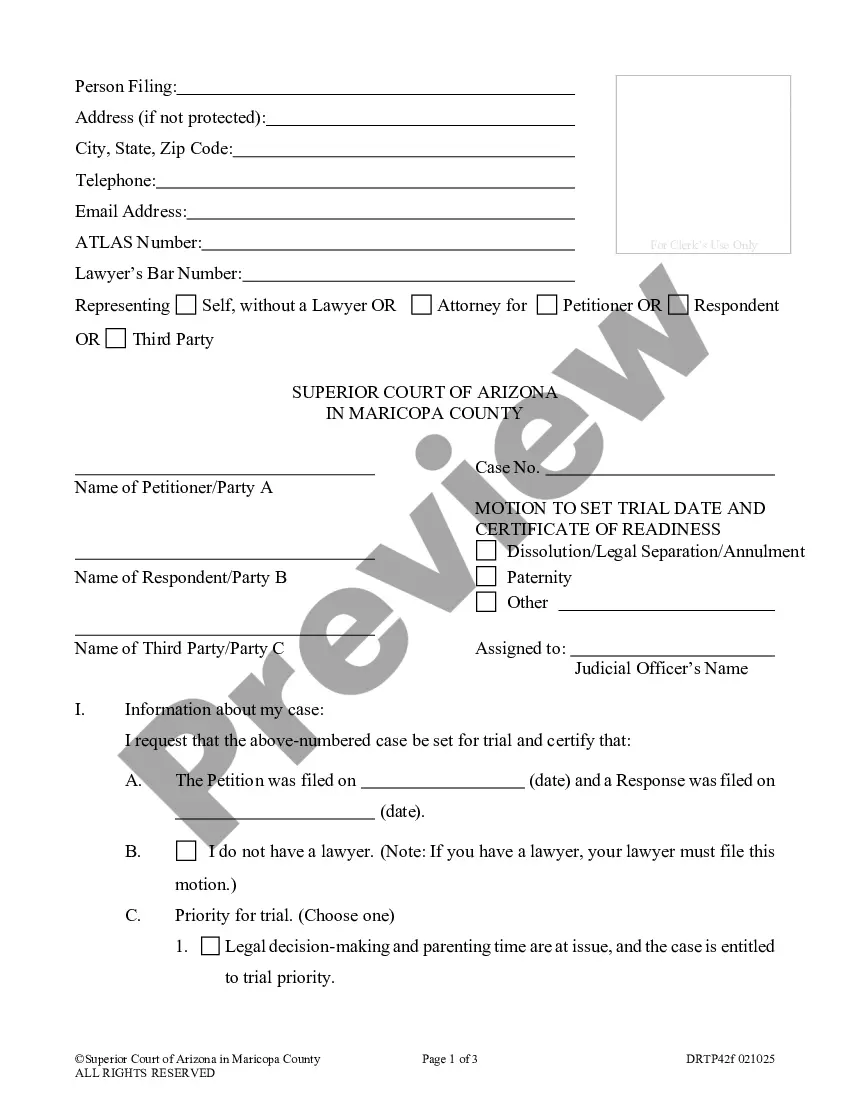
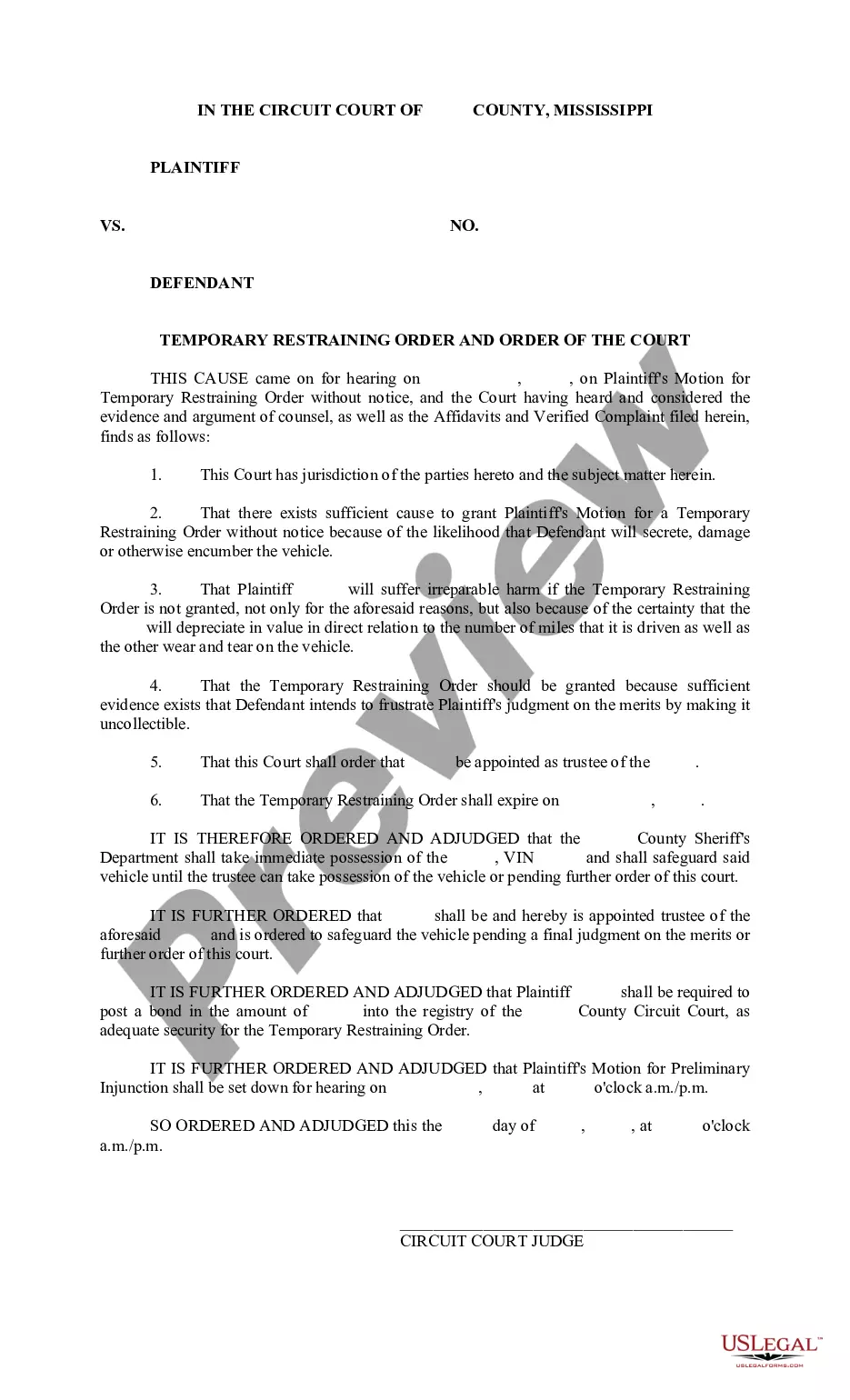
Mississippi Temporary Restraining Order and Order of the Court
What is this form?
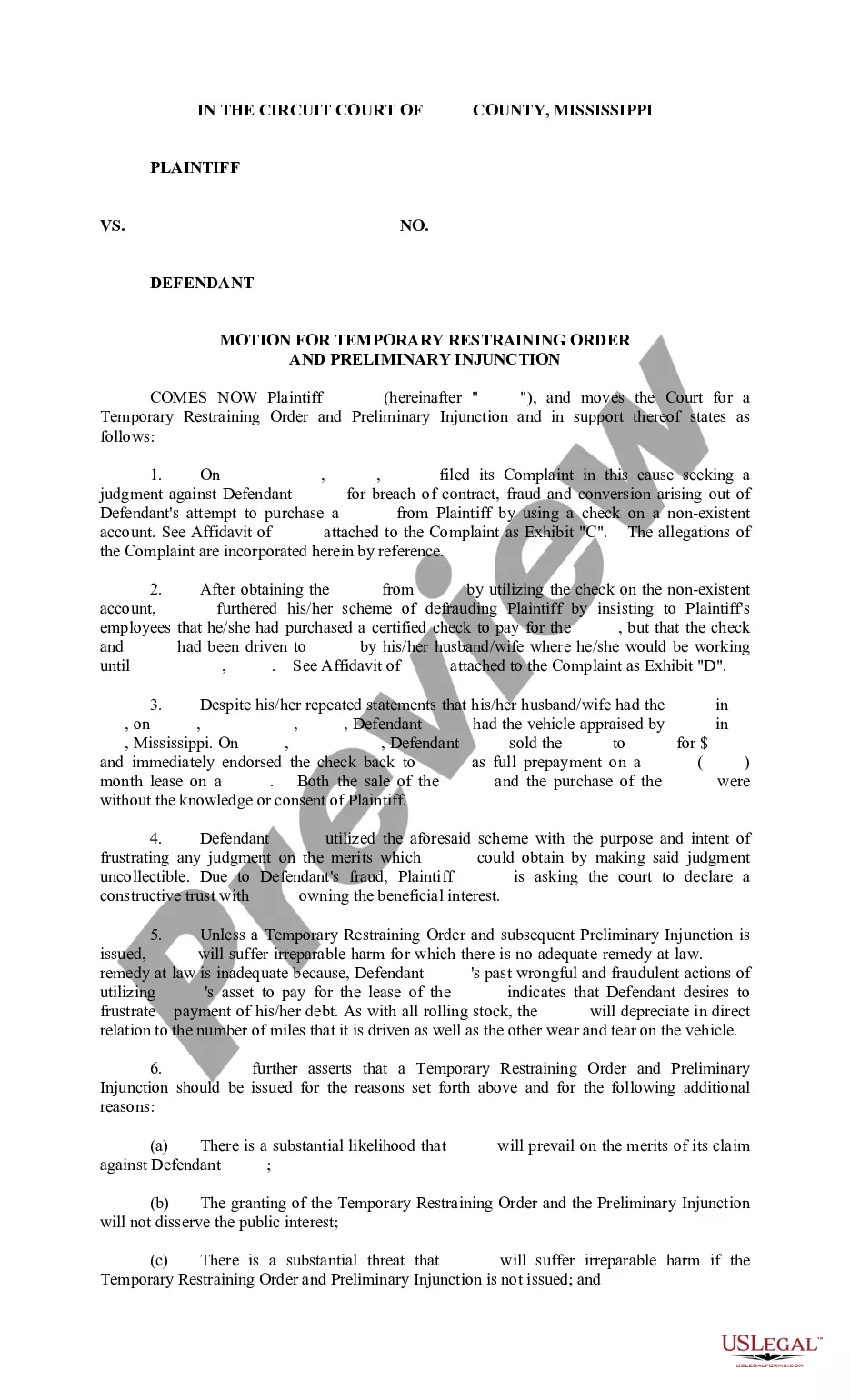
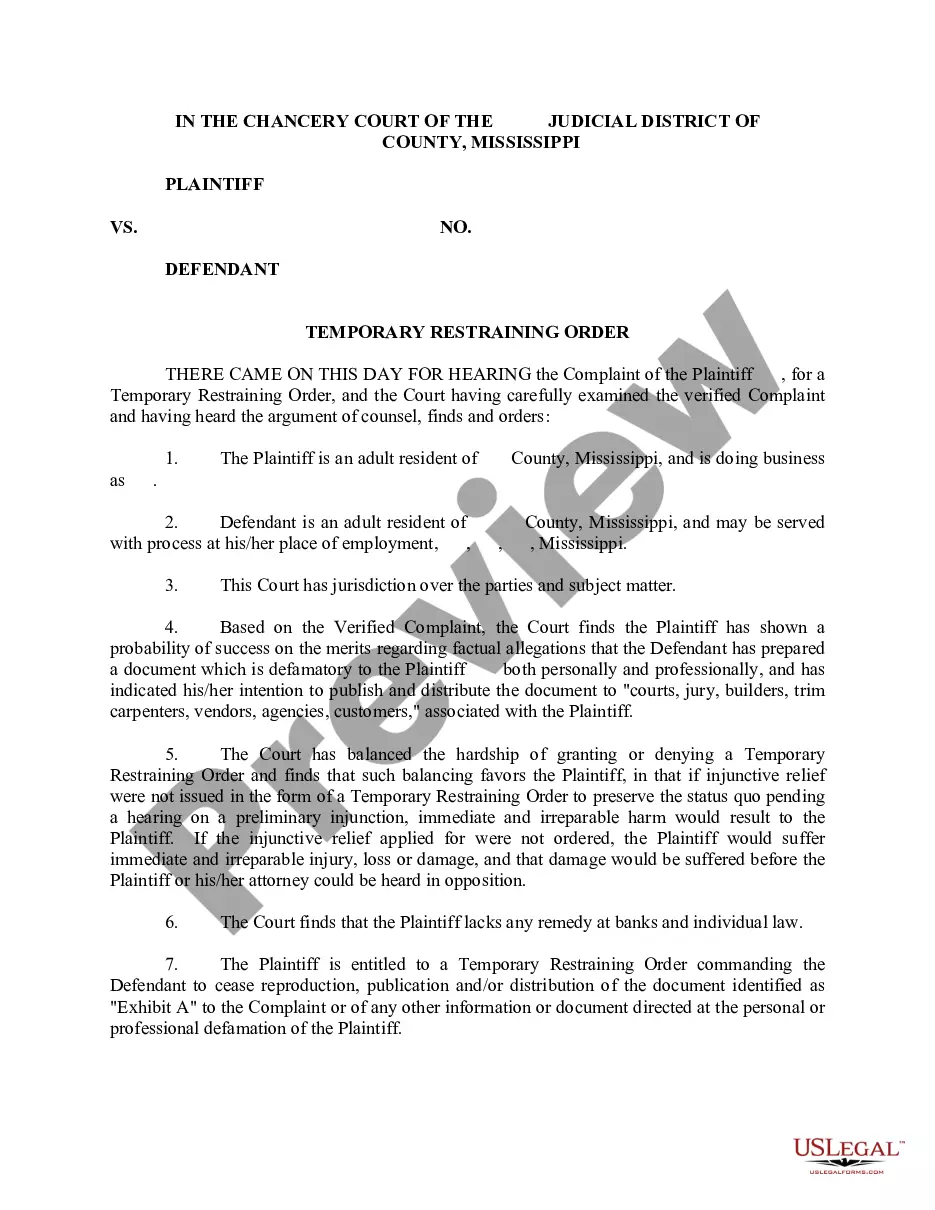
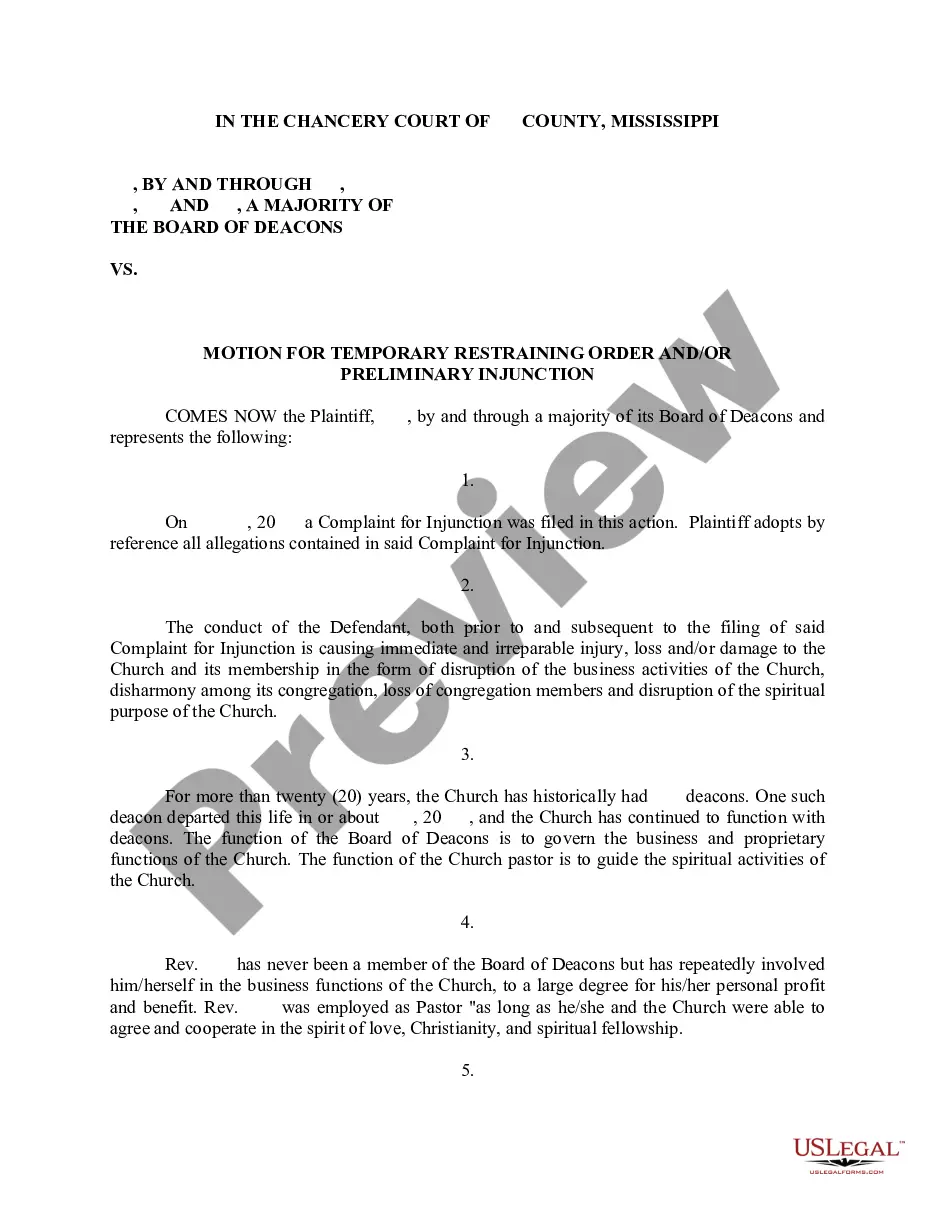
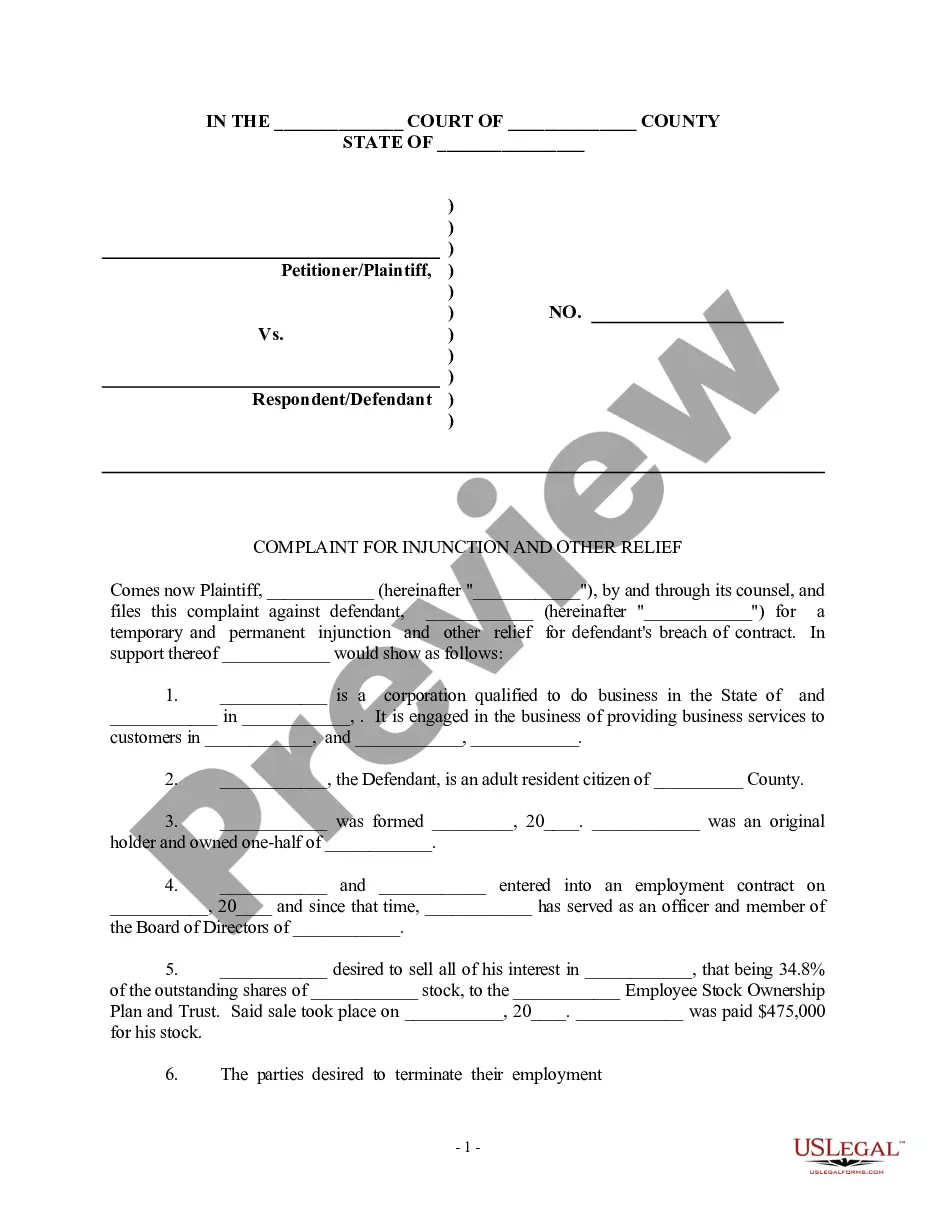
A Temporary Restraining Order and Order of the Court is a legal document that prohibits a defendant from contacting the plaintiff for a specified period. This form is particularly important in situations where immediate relief is necessary to prevent harm or preserve the status quo while legal proceedings are ongoing. Unlike other legal forms, this temporary order does not require a full trial before being issued, allowing for swift action in urgent cases.
Key components of this form
- Jurisdiction statement confirming the court's authority over the parties involved.
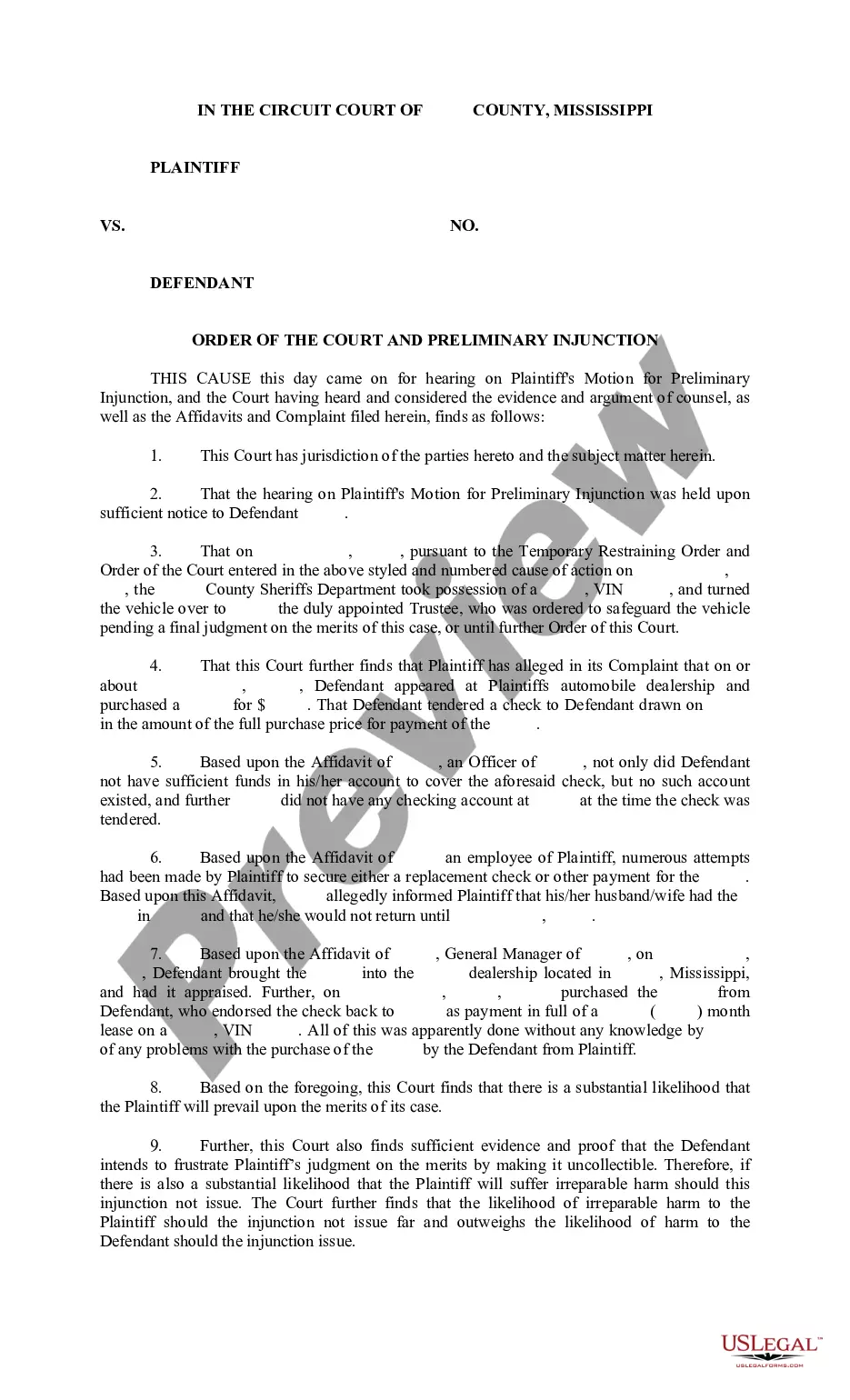
- Reasoning for the restraining order, including evidence of potential harm or damage.
- Details regarding the duration of the order, which specifies how long the restraining order is in effect.
- Signature fields for the judge to validate the order.
When to use this form
This form is typically used in situations where a plaintiff needs immediate protection from a defendant. For example, you might use a Temporary Restraining Order if you are facing threats of violence, harassment, or if the defendant may hide or destroy property that is relevant to a court case.
Intended users of this form
This form is intended for:
- Individuals seeking immediate protection from harassment or harm.
- Parties involved in disputes where urgent action is necessary to preserve rights.
- Victims of threatening behavior who need quick legal recourse.
Completing this form step by step
- Identify the parties involved, including the plaintiff and defendant.
- Specify the grounds for requesting the order, including any evidence of threat or harm.
- Detail the duration for which the restraining order is requested.
- Provide the court's jurisdiction and any relevant case numbers.
- Sign and date the form before submitting it to the court.
Is notarization required?
This form usually doesn’t need to be notarized. However, local laws or specific transactions may require it. Our online notarization service, powered by Notarize, lets you complete it remotely through a secure video session, available 24/7.
Get your form ready online
Our built-in tools help you complete, sign, share, and store your documents in one place.
Make edits, fill in missing information, and update formatting in US Legal Forms—just like you would in MS Word.
Download a copy, print it, send it by email, or mail it via USPS—whatever works best for your next step.
Sign and collect signatures with our SignNow integration. Send to multiple recipients, set reminders, and more. Go Premium to unlock E-Sign.
If this form requires notarization, complete it online through a secure video call—no need to meet a notary in person or wait for an appointment.
We protect your documents and personal data by following strict security and privacy standards.

Make edits, fill in missing information, and update formatting in US Legal Forms—just like you would in MS Word.

Download a copy, print it, send it by email, or mail it via USPS—whatever works best for your next step.

Sign and collect signatures with our SignNow integration. Send to multiple recipients, set reminders, and more. Go Premium to unlock E-Sign.

If this form requires notarization, complete it online through a secure video call—no need to meet a notary in person or wait for an appointment.

We protect your documents and personal data by following strict security and privacy standards.
Avoid these common issues
- Failing to provide sufficient evidence to support the request for a restraining order.
- Not specifying the correct jurisdiction for the case.
- Overlooking signature and date requirements, which can invalidate the order.
Benefits of using this form online
- Convenience of accessing and completing the form from home.
- Editability to easily customize the document for specific needs.
- Reliability of having a form drafted by licensed attorneys, ensuring legal compliance.
Legal use & context
- The Temporary Restraining Order offers immediate protection pending further court action.
- It is enforceable by law and any violation may result in legal penalties.
- This order is temporary, and further court hearings will typically determine long-term arrangements.
Main things to remember
- A Temporary Restraining Order provides urgent legal protection against harm.
- Completion of the form must be thorough to ensure legal validity.
- Usage varies by state; always check local regulations to ensure compliance.
Looking for another form?
Form popularity
FAQ
If a person violates a no contact orders, he or she can face serious consequences. Consequences often include potential jail time, the payment of fines or the loss of certain civil rights.Violating a no contact order is considered a crime as well as a violation of a probation, parole or bail conditions.
A court order that lasts only until the court can hear further evidence. A Temporary Restraining Order (TRO) is a court order of limited duration. A TRO commands the parties in the case to maintain a certain status until the court can hear further evidence and decide whether to issue a preliminary injunction.
Both work the same way, but the pretrial order is issued before your case is heard and the post-conviction order is issued afterward. Keep in mind that NCOs only restrict your behavior as far as making contact and do not pertain to the behavior of the alleged victim.
Under section 93-21-7(2) of the Mississippi Code, there is no cost to file for a protection order. . temporary restraining order. the clerk will fill out the information for you.
A civil harassment restraining order is a court order that helps protect people from violence, stalking, serious harassment, or threats of violence. You can ask for a civil harassment restraining order if: A person has abused (or threatened to abuse), sexually assaulted, stalked, or seriously harassed you, and.
The laws on restraining orders and no-contact agreements vary by state, but the main idea is that no-contact agreements exist to punish someone who has already caused harm and to prevent further harm, whereas restraining orders exist to prevent someone from causing harm in the first place.
A "no contact order" means that the defendant is precluded from having any contact and or communication with the victim or the person under the protection of the no contact order. This includes but is not limited to letters, emails, text messages or messages delivered through a third party.
If the judge is satisfied, he or she will issue a temporary protective order that will last ten days, but which can be extended upon request, up to the maximum length of one year, but can only last 30 days where the victim has minor children with the abuser.