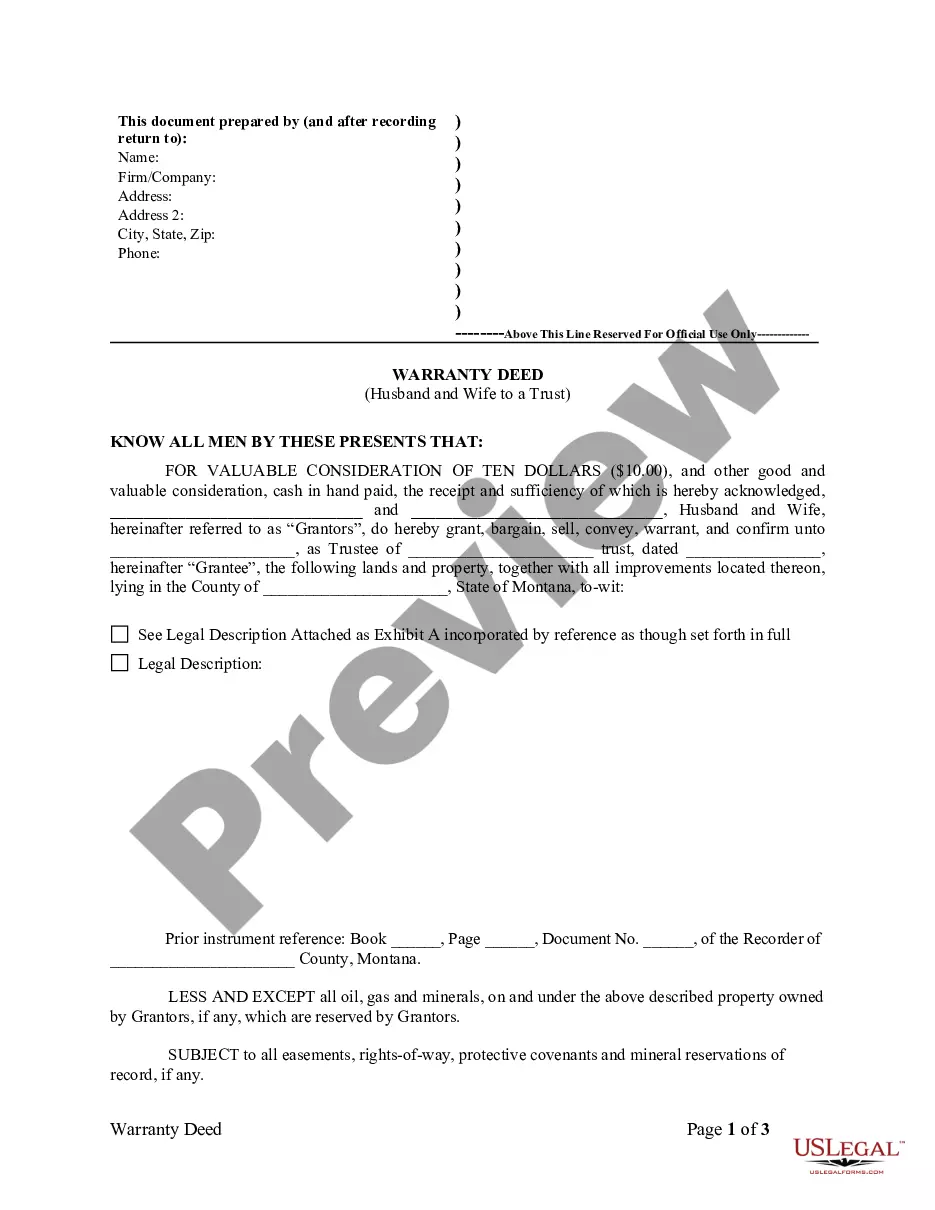
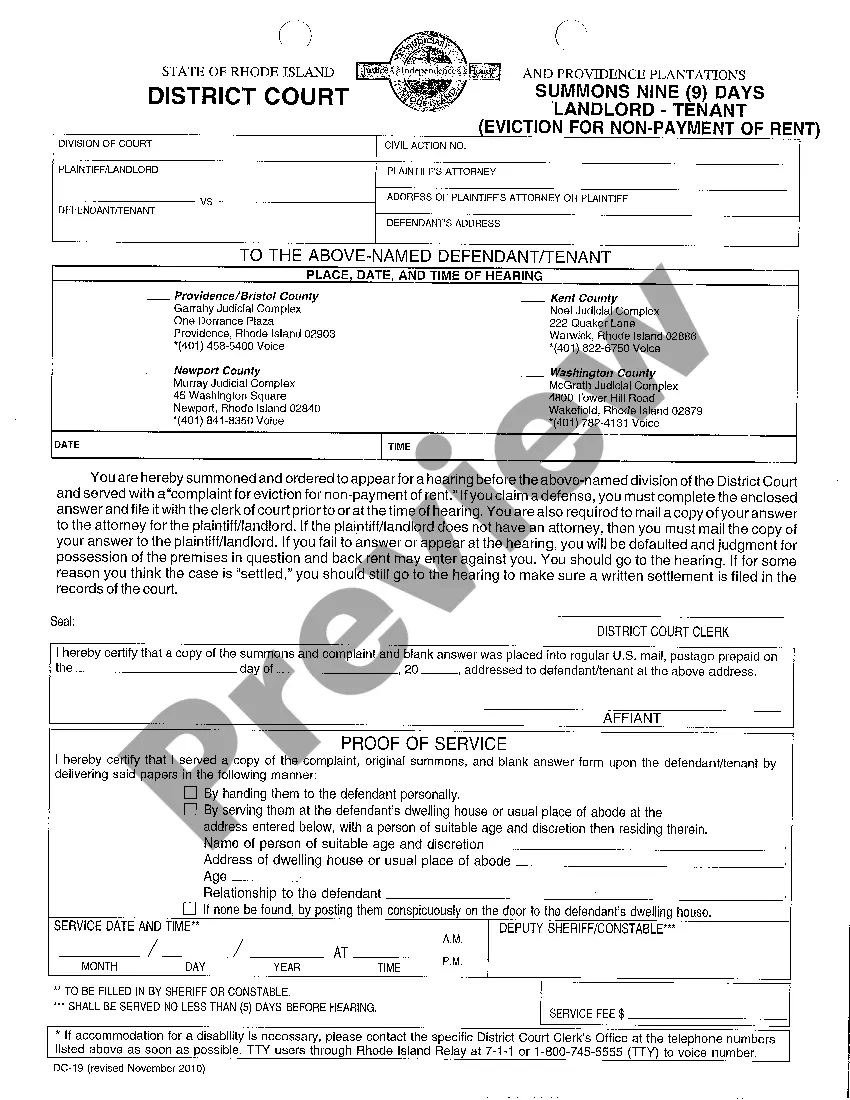
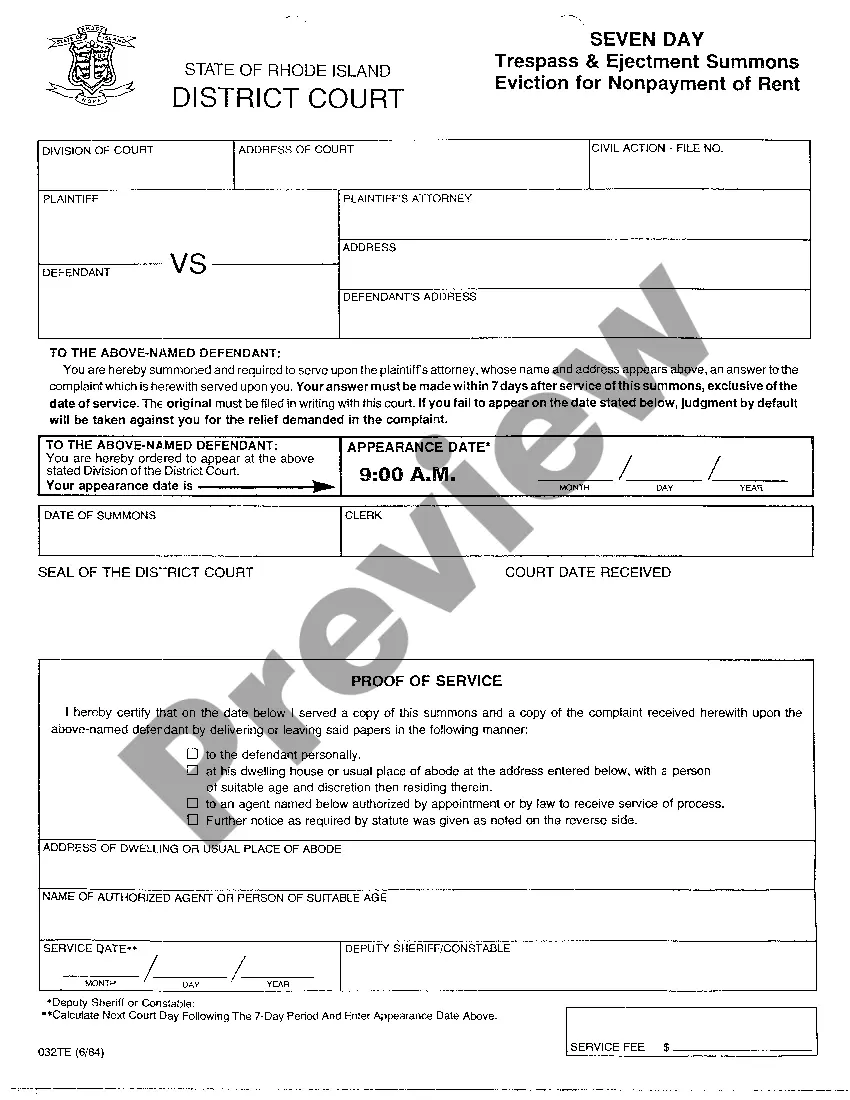
Rhode Island Summons Nine (9) Days Landlord-Tenant (Eviction for Non-Payment of Rent)
What this document covers
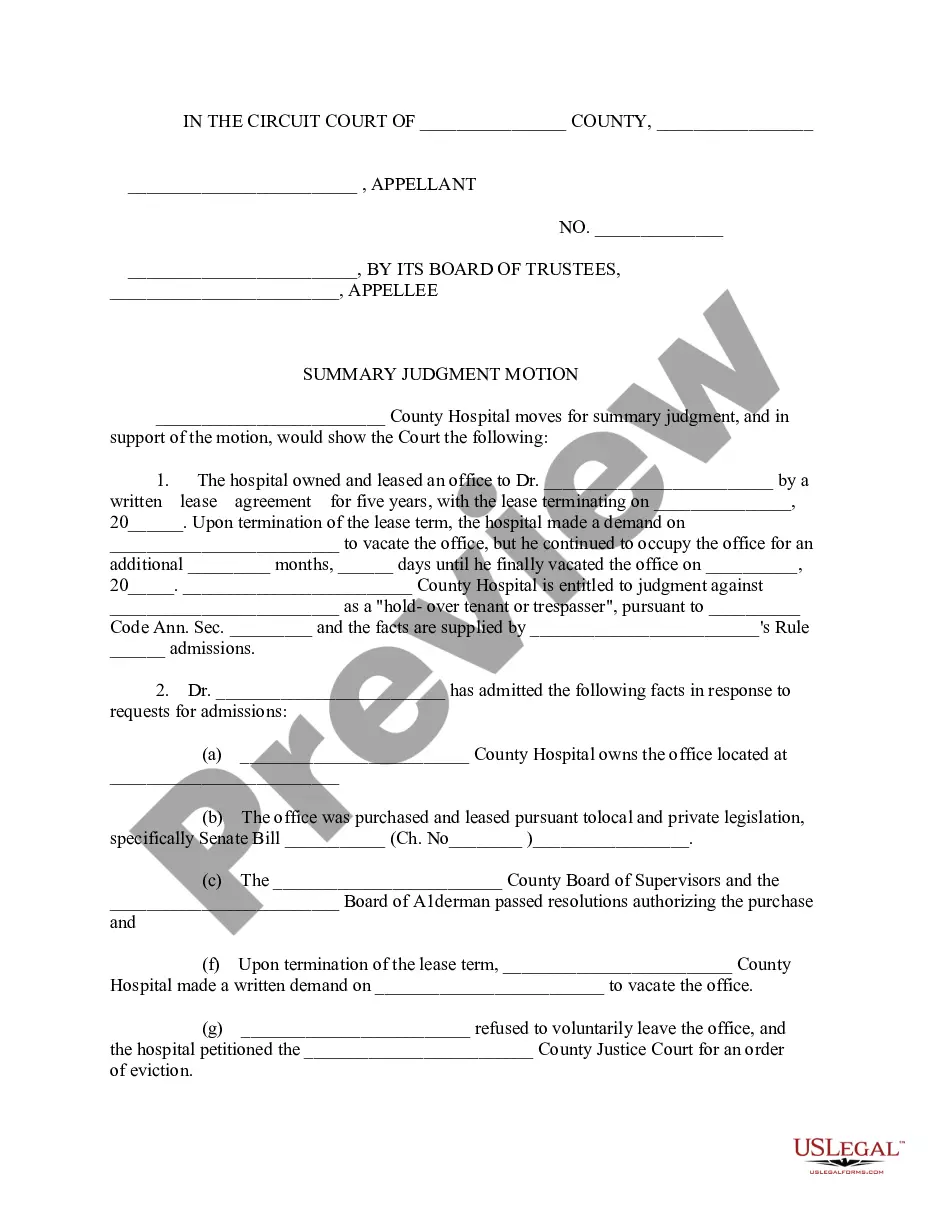
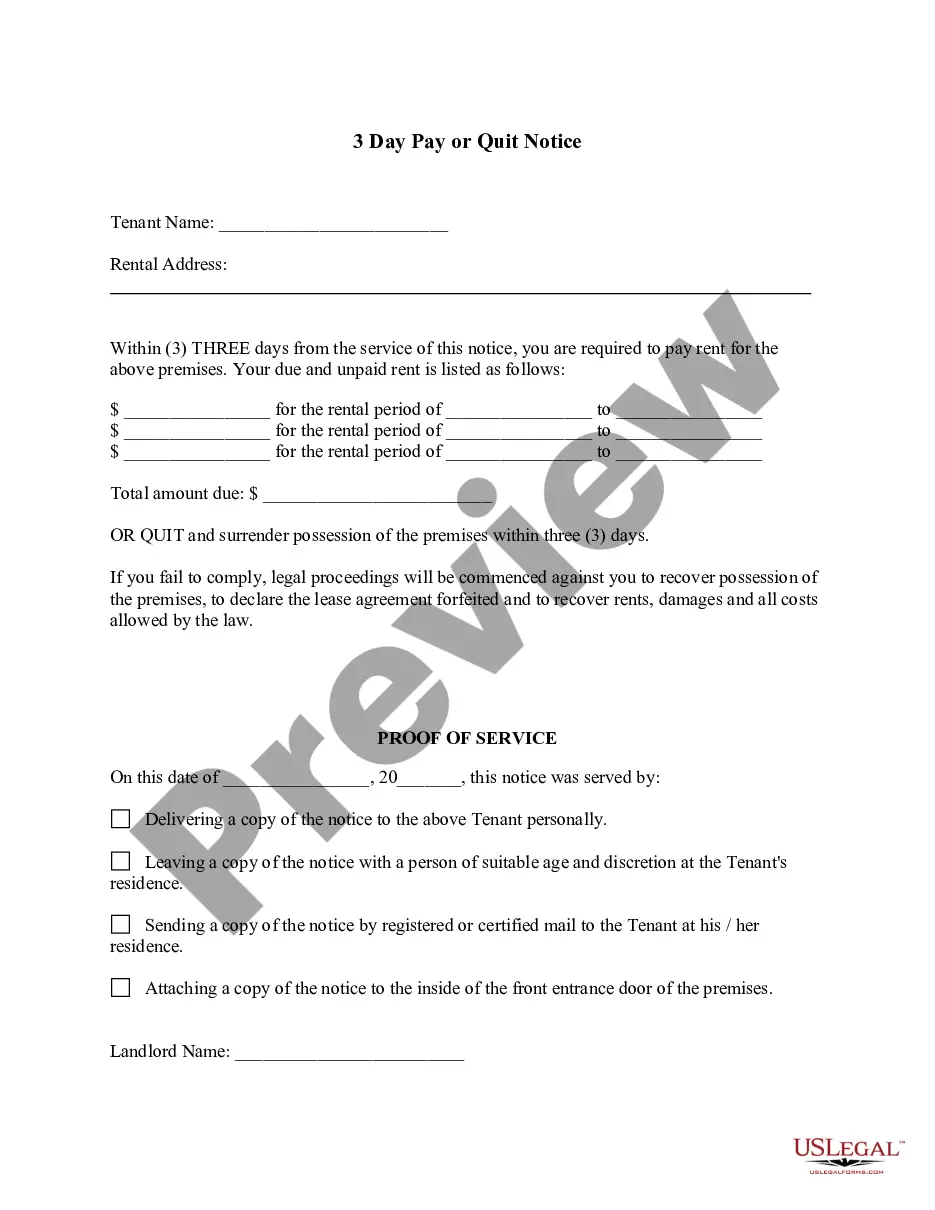
The Summons Nine (9) Days Landlord-Tenant (Eviction for Non-Payment of Rent) is a legal document used to notify a residential tenant of an eviction action due to non-payment of rent. This summons is filed alongside an eviction complaint and serves as a formal notice informing the tenant that they have nine days to respond or vacate the premises. It is crucial for landlords to use this specific summons to comply with legal requirements when initiating eviction proceedings.
Key components of this form
- Identification of the landlord and tenant, including contact information.
- Description of the rental property subject to eviction.
- Notice of the reason for eviction: non-payment of rent.
- Statement informing the tenant of their rights and the time frame for response.
- Signature line for the landlord or their representative.
Situations where this form applies
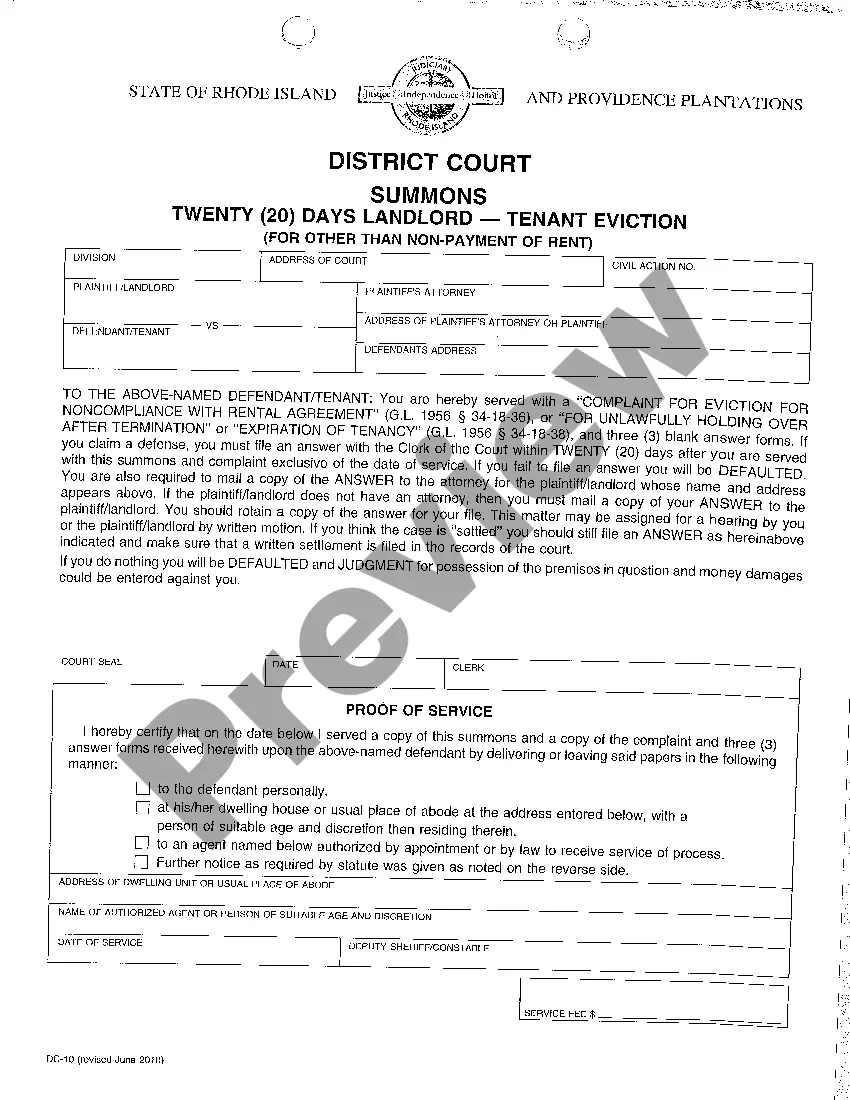
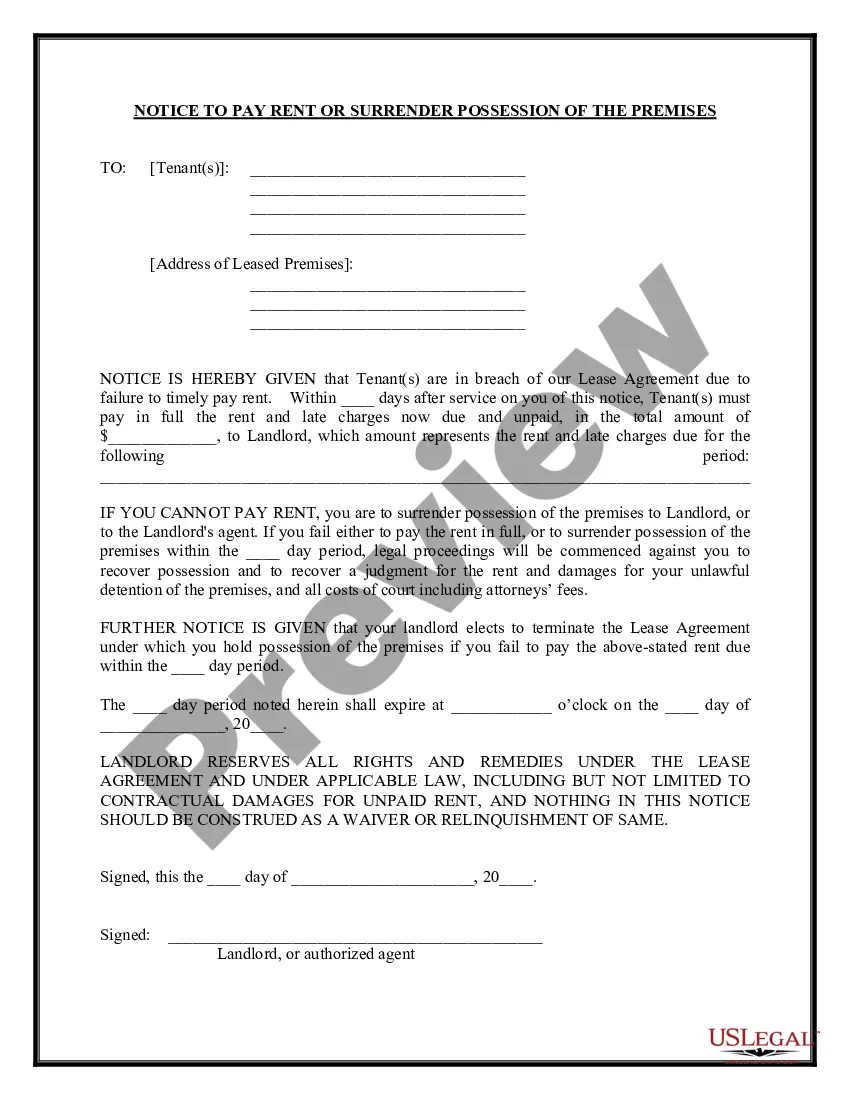
This form should be used when a landlord has filed an eviction complaint against a tenant for not paying rent. It is necessary to provide the tenant with formal notice of the eviction action and to comply with state laws regarding eviction procedures. Situations may include instances where rent is overdue and the landlord has attempted to resolve the issue without success.
Who needs this form
- Landlords seeking to evict tenants for non-payment of rent.
- Property managers handling eviction processes on behalf of landlords.
- Real estate professionals involved in landlord-tenant disputes.
Completing this form step by step
- Identify the parties involved by entering the landlord's and tenant's names and addresses.
- Specify the property by including a clear description and its address.
- Indicate the reason for eviction: clearly state the non-payment of rent.
- Fill in the deadline by which the tenant must respond or vacate, typically nine days.
- Sign and date the form to validate the notice.
Does this document require notarization?
This form does not typically require notarization unless specified by local law. Always check your state's regulations regarding the need for notarization in eviction cases.
Get your form ready online
Our built-in tools help you complete, sign, share, and store your documents in one place.
Make edits, fill in missing information, and update formatting in US Legal Forms—just like you would in MS Word.
Download a copy, print it, send it by email, or mail it via USPS—whatever works best for your next step.
Sign and collect signatures with our SignNow integration. Send to multiple recipients, set reminders, and more. Go Premium to unlock E-Sign.
If this form requires notarization, complete it online through a secure video call—no need to meet a notary in person or wait for an appointment.
We protect your documents and personal data by following strict security and privacy standards.

Make edits, fill in missing information, and update formatting in US Legal Forms—just like you would in MS Word.

Download a copy, print it, send it by email, or mail it via USPS—whatever works best for your next step.

Sign and collect signatures with our SignNow integration. Send to multiple recipients, set reminders, and more. Go Premium to unlock E-Sign.

If this form requires notarization, complete it online through a secure video call—no need to meet a notary in person or wait for an appointment.

We protect your documents and personal data by following strict security and privacy standards.
Common mistakes to avoid
- Failing to provide accurate identification information for both landlord and tenant.
- Not including the correct property address for the eviction.
- Omitting the reason for eviction or providing insufficient details.
- Neglecting to sign the summons, making it invalid.
Advantages of online completion
- Convenience of downloading and filling out the form at any time.
- Easily editable to ensure all information is accurate and up-to-date.
- Access to attorney-drafted templates designed to meet legal standards.
- Reduces the risk of errors by providing clear guidance on required information.
Looking for another form?

Form popularity
FAQ
A landlord cannot legally evict you without a court order, whether or not you have a lease.) How long does it take for a landlord to evict a tenant? A landlord can evict a tenant only by going through a formal eviction proceeding, which can take a few weeks from start to finish.
Eviction can feel difficult and complicated, but it's part of the business of managing rental properties. If a tenant can't pay, you should remove them from your property. Sometimes, it's as simple as asking them to leave. Other times, you'll have to go through the formal eviction process.
Approach The Court Of Law You will have to send a legal notice to your tenant asking him/her to pay the arrears of rent or else to vacate within a month. The tenant has to pay rent in the court once it is assessed by the court and in case he/she fails, it invites immediate eviction.
By failing to pay their rent, your tenant has broken the terms of their tenancy agreement, meaning you can serve them a Section 8 notice at any point in the tenancy. Your tenant may dispute the eviction, so you need to be ready with evidence of unpaid rent and your efforts to resolve the issue.
If the tenant does not leave by the date and time given in the notice, then the landlord must apply for a court order within 10 days to end the tenancy. If the landlord does not apply within 10 days, the tenancy stays in place and the tenant can continue living in the property.
The law includes an extension of the CDC moratorium on evictions. The CDC moratorium, which was set to expire on December 31 2020, will now be in effect through January 31 2021. The new law did not change any other terms of the moratorium.
Pursuant to RI law, to evict a month-to-month tenant, a landlord must send a 30 day notice to terminate the month to month tenancy. When the 30 day time period expires, then the landlord or the landlord's Rhode Island eviction lawyer may file a complaint for eviction in Providence District Court.
If you do not vacate by the day in the notice, the landlord can then apply to the NSW Civil and Administrative Tribunal (NCAT) for a termination order. A termination order ends the tenancy and specifies the day by which you must give vacant possession.
After the Landlord and Tenant Board makes an order to evict a tenant, a court official called the Sheriff is in charge of enforcing or carrying out the order. If you have not moved out by the date the eviction order says you must move, the Sheriff can make you leave and let your landlord change the locks.