Mississippi Temporary Restraining Order
About this form
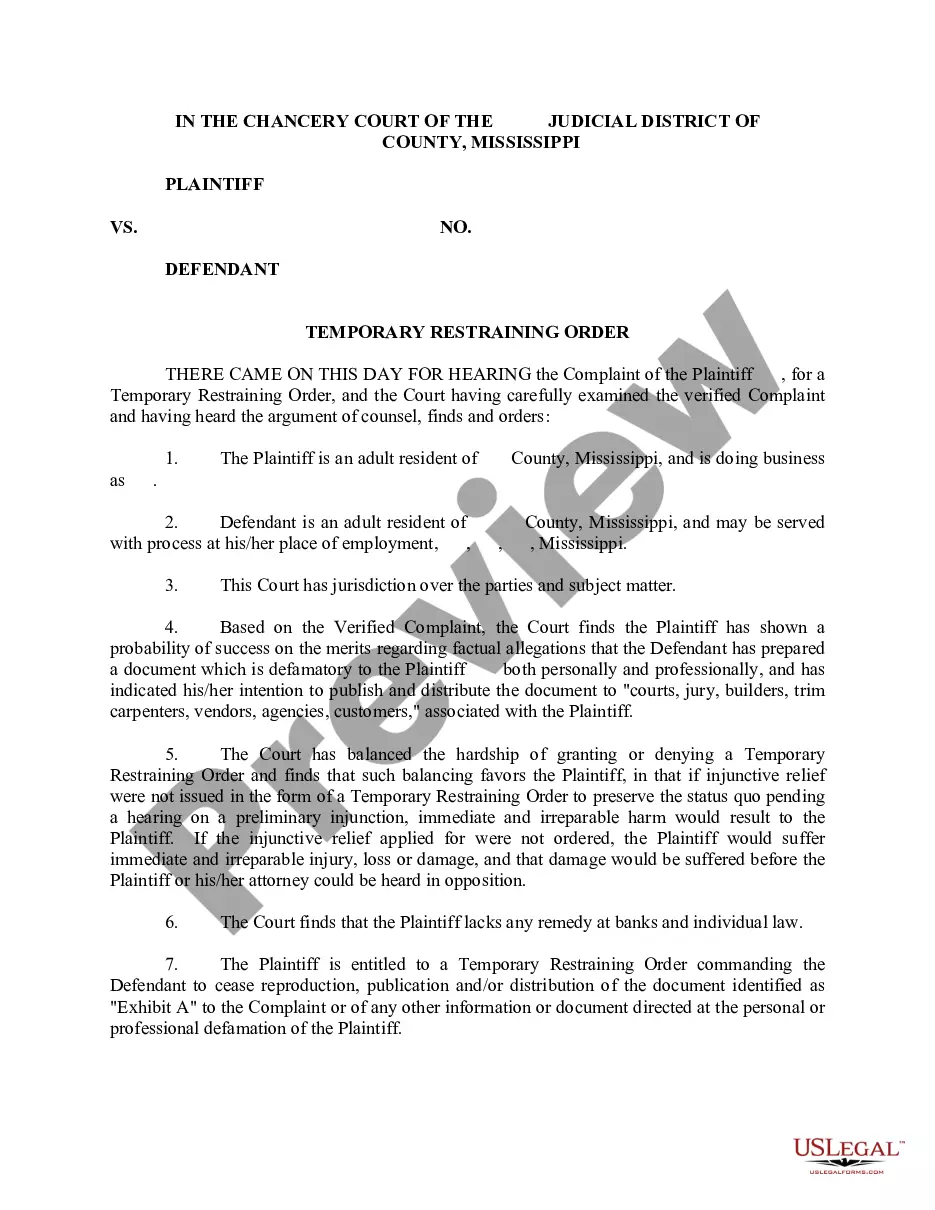
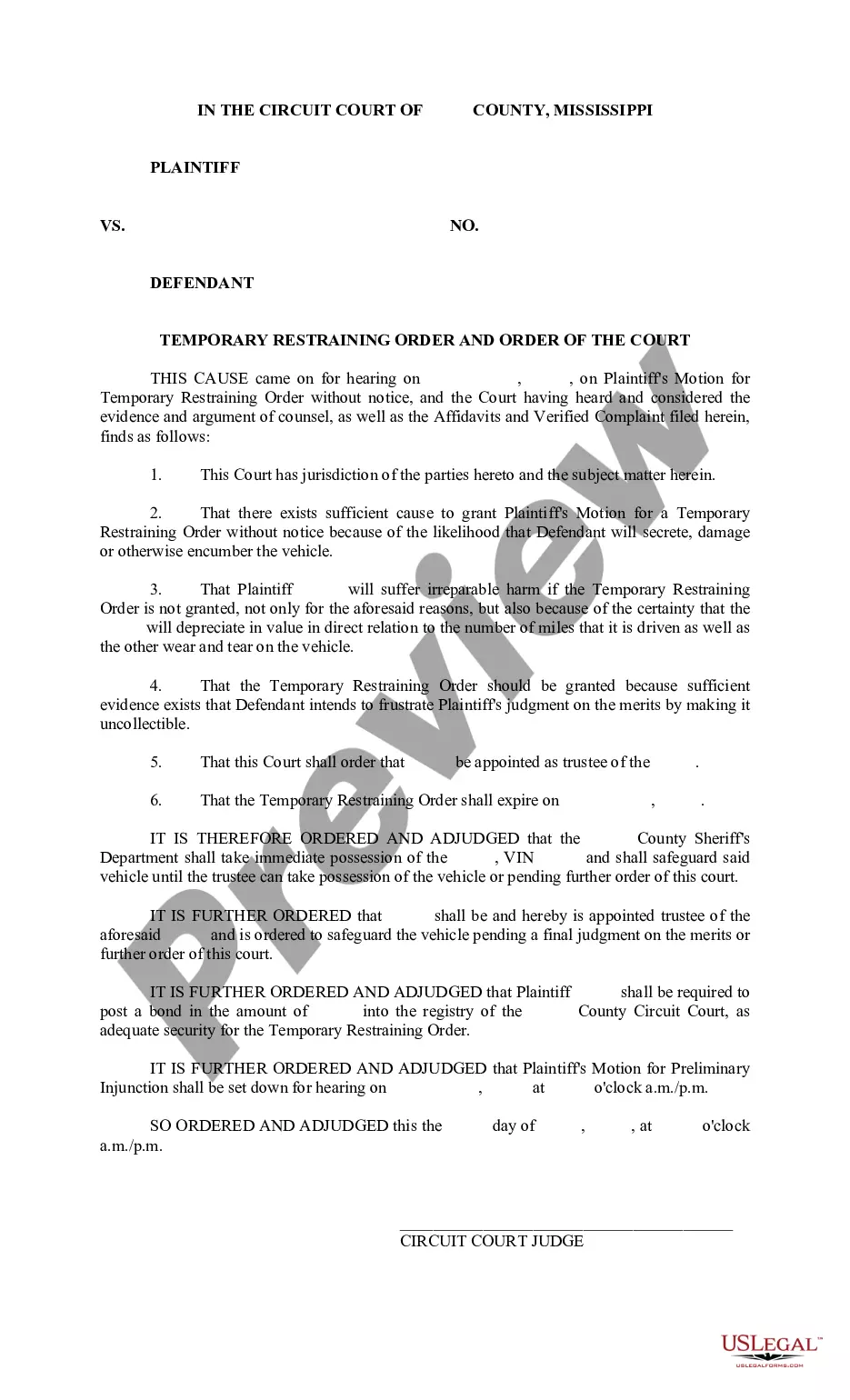
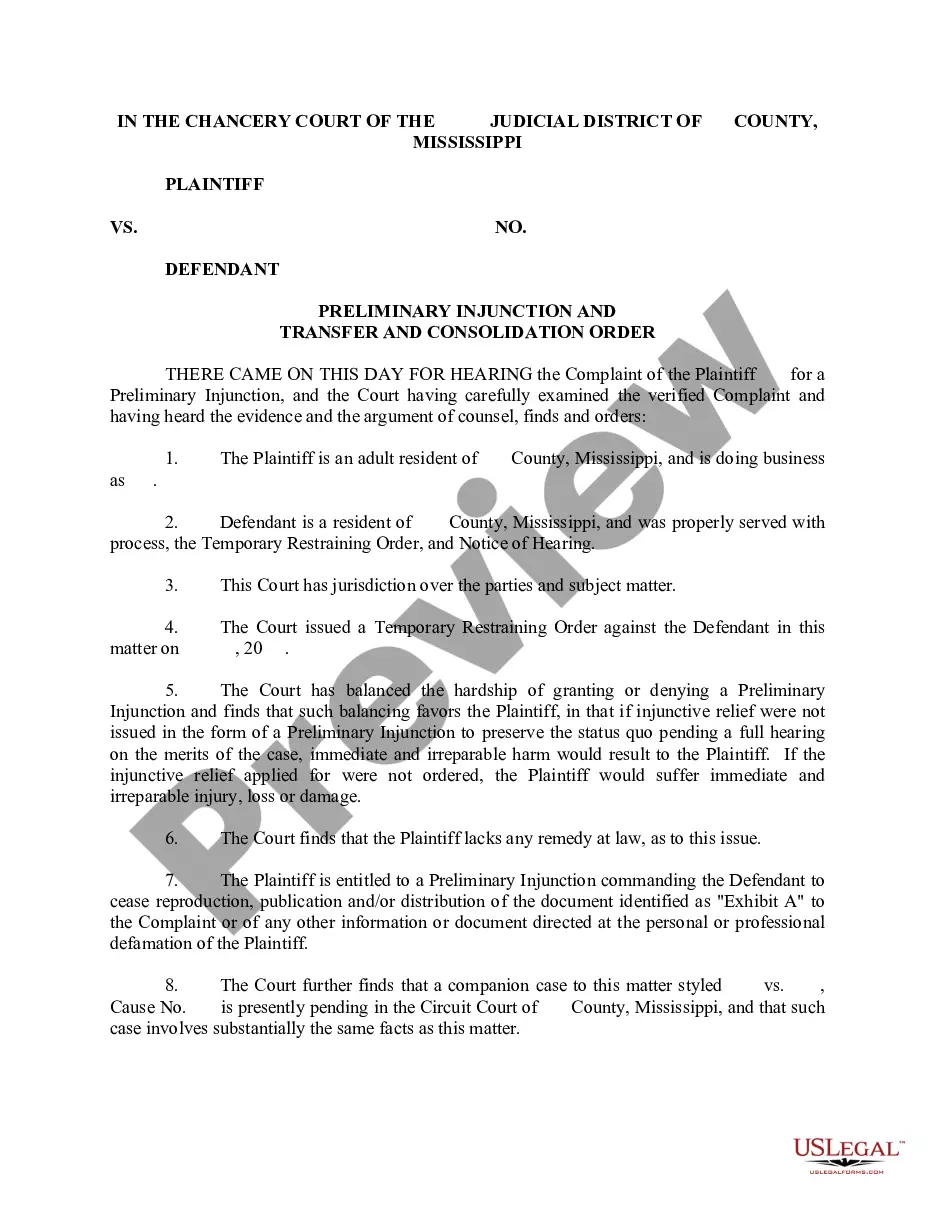
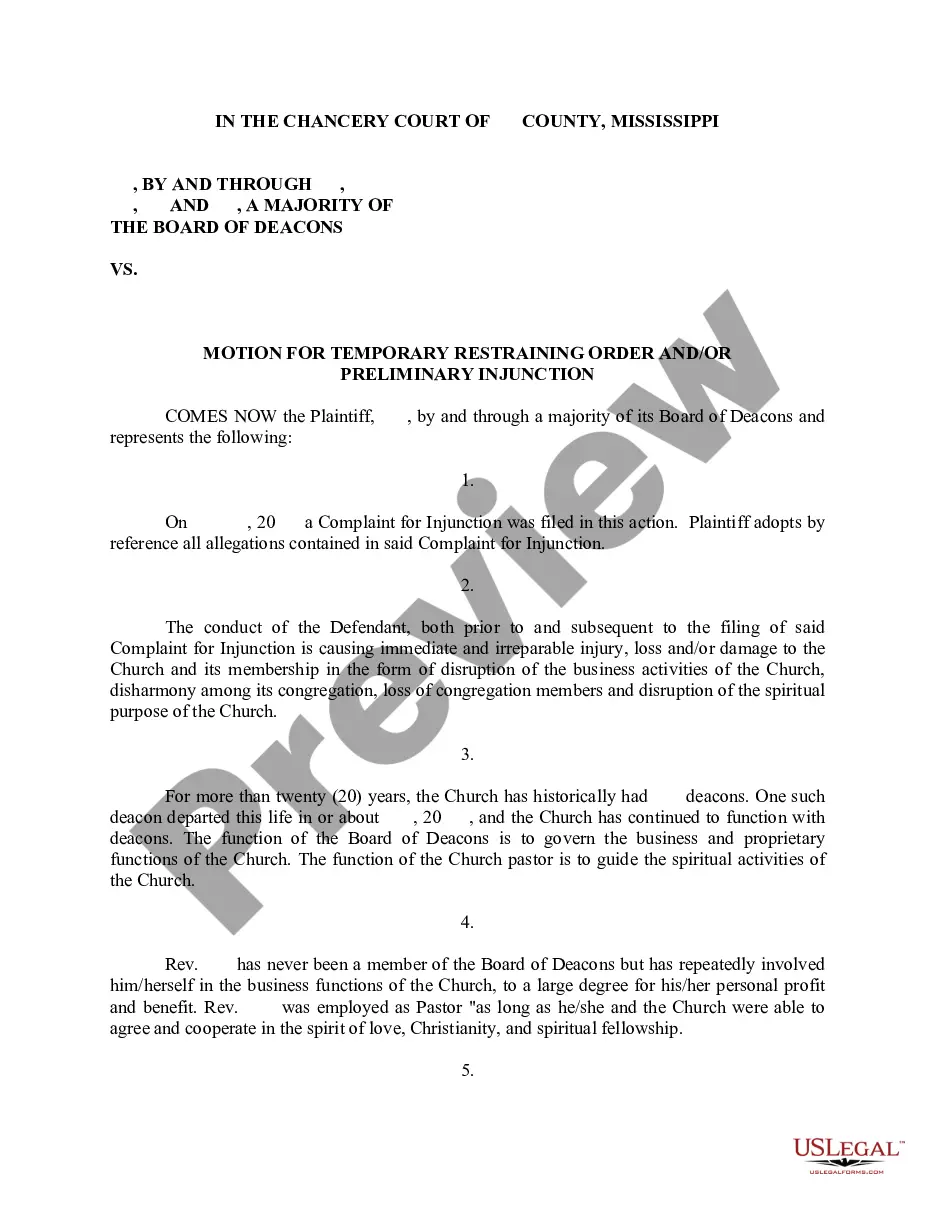
A Temporary Restraining Order is a legal document issued by a court to prohibit a defendant from taking certain actions, typically to prevent immediate harm to the plaintiff. Unlike a permanent restraining order, this order is temporary and usually lasts for a limited timeframe, as specified in the order. It is designed to maintain the status quo while a court reviews the case in a preliminary injunction hearing. This form is essential for individuals needing urgent relief from potential threats or misconduct, making it distinct from other legal remedies.
What’s included in this form
- Identification of the plaintiff and defendant, including their residence and business information.
- The court's findings regarding immediate and irreparable harm to the plaintiff.
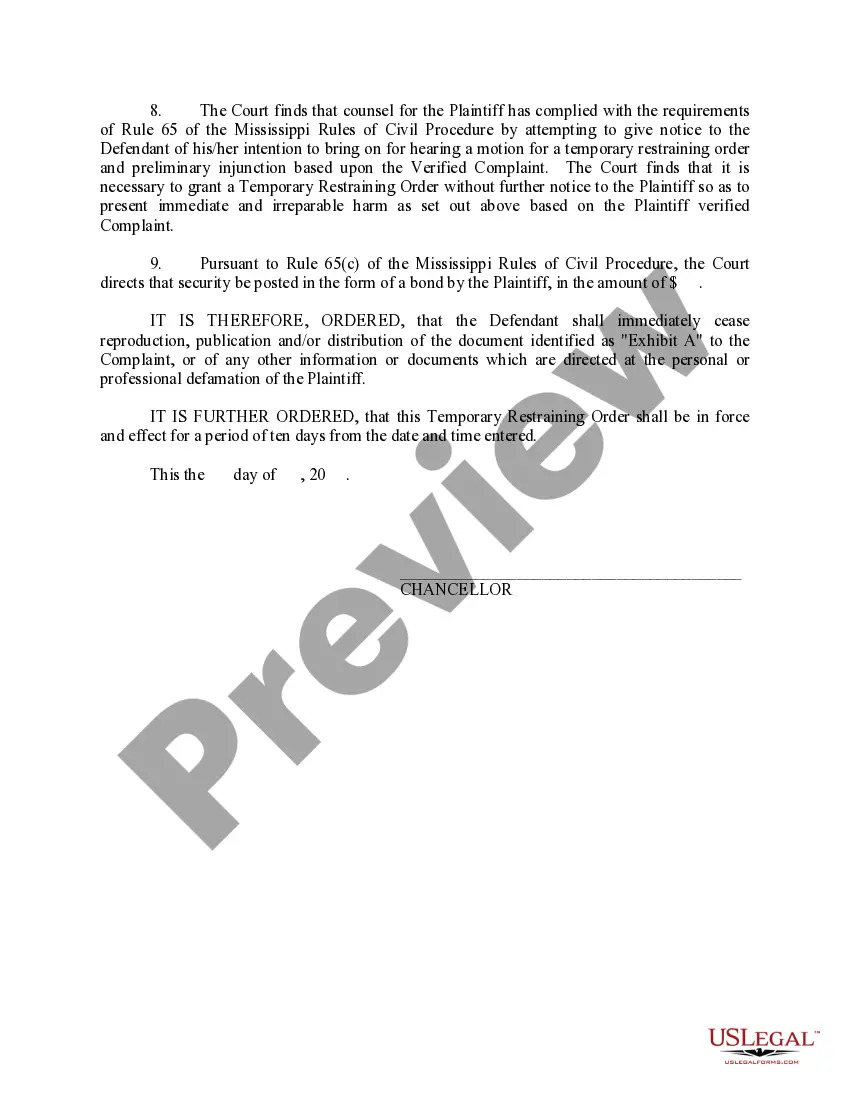
- The requirement for the plaintiff to post a bond as a condition for the restraining order.
- Order for the defendant to cease specific actions that could cause harm to the plaintiff.
- The duration of the Temporary Restraining Order, typically for ten days.
Common use cases
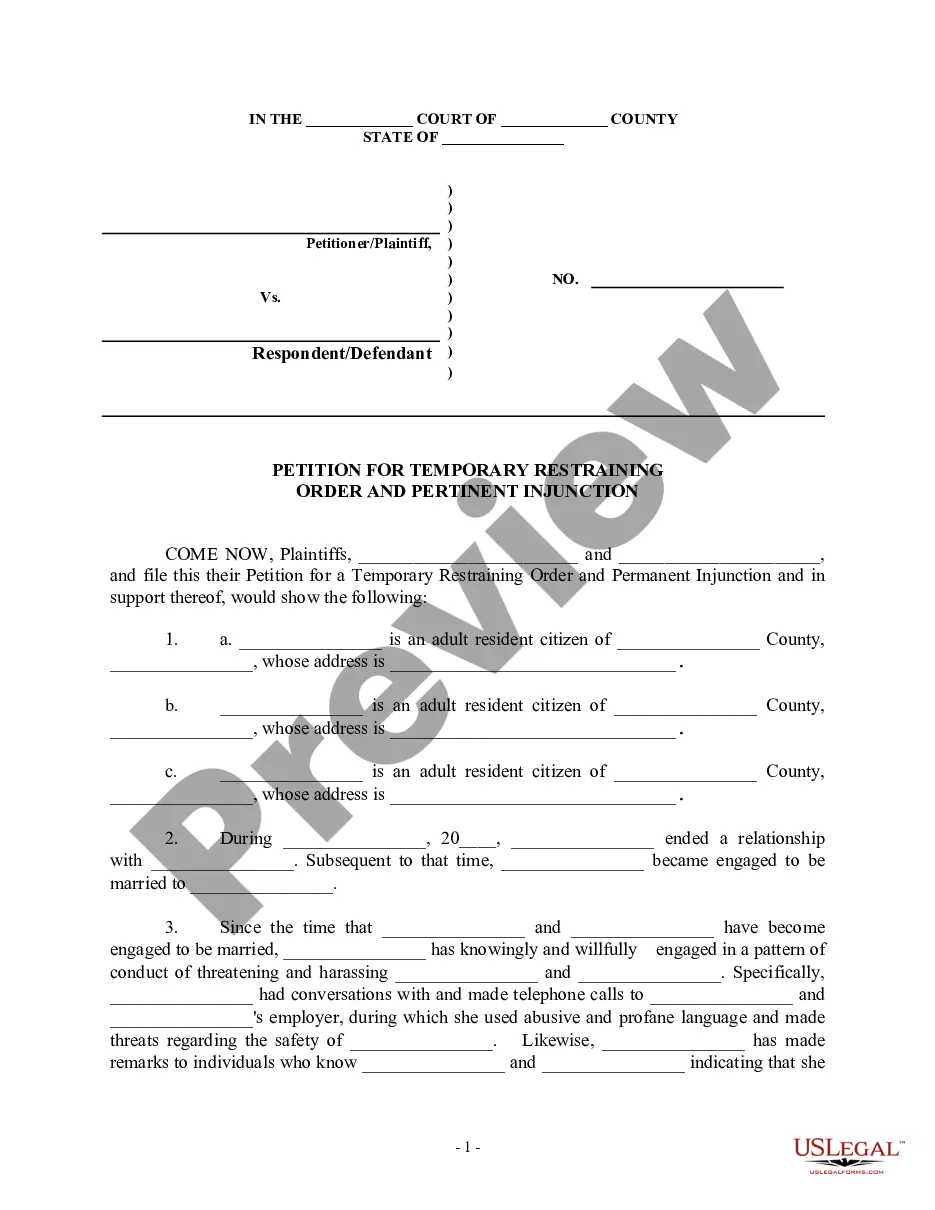
This form should be used in situations where a person needs immediate protection from harm, often in cases involving harassment, domestic violence, defamation, or any form of emergency legal relief. It is particularly relevant when the plaintiff believes that without an order, they will suffer significant and irreversible damage before a more permanent solution can be found.
Who needs this form
- Individuals who are facing immediate threats to their safety or well-being.
- Business owners aiming to protect their professional interests from defamation or other wrongful actions.
- Any adult resident in Mississippi seeking urgent legal relief from potentially harmful actions by another party.
How to complete this form
- Identify the plaintiff by entering personal information, including residence and business name.
- Clearly state the actions that the defendant must cease to prevent harm to the plaintiff.
- Detail the reasons for the request, including specific instances of potential harm.
- Specify the bond amount required by the court as security for the order.
- Sign and date the document, ensuring all necessary fields are completed before submission to the court.
Notarization guidance
Notarization is not commonly needed for this form. However, certain documents or local rules may make it necessary. Our notarization service, powered by Notarize, allows you to finalize it securely online anytime, day or night.
Get your form ready online
Our built-in tools help you complete, sign, share, and store your documents in one place.
Make edits, fill in missing information, and update formatting in US Legal Forms—just like you would in MS Word.
Download a copy, print it, send it by email, or mail it via USPS—whatever works best for your next step.
Sign and collect signatures with our SignNow integration. Send to multiple recipients, set reminders, and more. Go Premium to unlock E-Sign.
If this form requires notarization, complete it online through a secure video call—no need to meet a notary in person or wait for an appointment.
We protect your documents and personal data by following strict security and privacy standards.

Make edits, fill in missing information, and update formatting in US Legal Forms—just like you would in MS Word.

Download a copy, print it, send it by email, or mail it via USPS—whatever works best for your next step.

Sign and collect signatures with our SignNow integration. Send to multiple recipients, set reminders, and more. Go Premium to unlock E-Sign.

If this form requires notarization, complete it online through a secure video call—no need to meet a notary in person or wait for an appointment.

We protect your documents and personal data by following strict security and privacy standards.
Typical mistakes to avoid
- Failing to provide adequate evidence of immediate harm or risk.
- Not completing all required fields, particularly the identification of parties involved.
- Overlooking the need to post a bond as directed by the court.
- Submitting the form without sufficient notice to the defendant, if required.
Benefits of using this form online
- Convenience of accessing legal forms from home, available at any time.
- Editable templates allow customization to fit specific needs and circumstances.
- Reliability, with forms drafted and reviewed by licensed attorneys to ensure compliance with legal standards.
Looking for another form?



Form popularity
FAQ
The temporary restraining order in California does not go into the CLETS database and will not come up on a background check. It will also generally not impact the restrained parties' ability to possess a firearm.
Stay Away Provision: Ordering the abuser to stay at least a certain number of yards or feet away from the victim, his or her home, job, school, and car. The stay-away distance can vary by state, judge or the lethality of the situation, but is often at least 100 yards or 300 feet.
Usually yes, but sometimes no. Temporary restraining orders will appear so law enforcement officers can see it.But if the hearing results in a permanent restraining order, it goes on your record. But even restraining orders that should be expunged sometimes stay in the system longer.
A court order that lasts only until the court can hear further evidence. A Temporary Restraining Order (TRO) is a court order of limited duration. A TRO commands the parties in the case to maintain a certain status until the court can hear further evidence and decide whether to issue a preliminary injunction.
If the judge is satisfied, he or she will issue a temporary protective order that will last ten days, but which can be extended upon request, up to the maximum length of one year, but can only last 30 days where the victim has minor children with the abuser.
Temporary restraining orders usually last between 20 and 25 days, until the court hearing date. When you go to court for the hearing that was scheduled for your TRO, the judge may issue a permanent restraining order. They are not really permanent because they usually last up to 5 years.
Under section 93-21-7(2) of the Mississippi Code, there is no cost to file for a protection order. . temporary restraining order. the clerk will fill out the information for you.
Under section 93-21-7(2) of the Mississippi Code, there is no cost to file for a protection order. . temporary restraining order. the clerk will fill out the information for you.