New Hampshire Salary Verification form for Potential Lease
Understanding this form
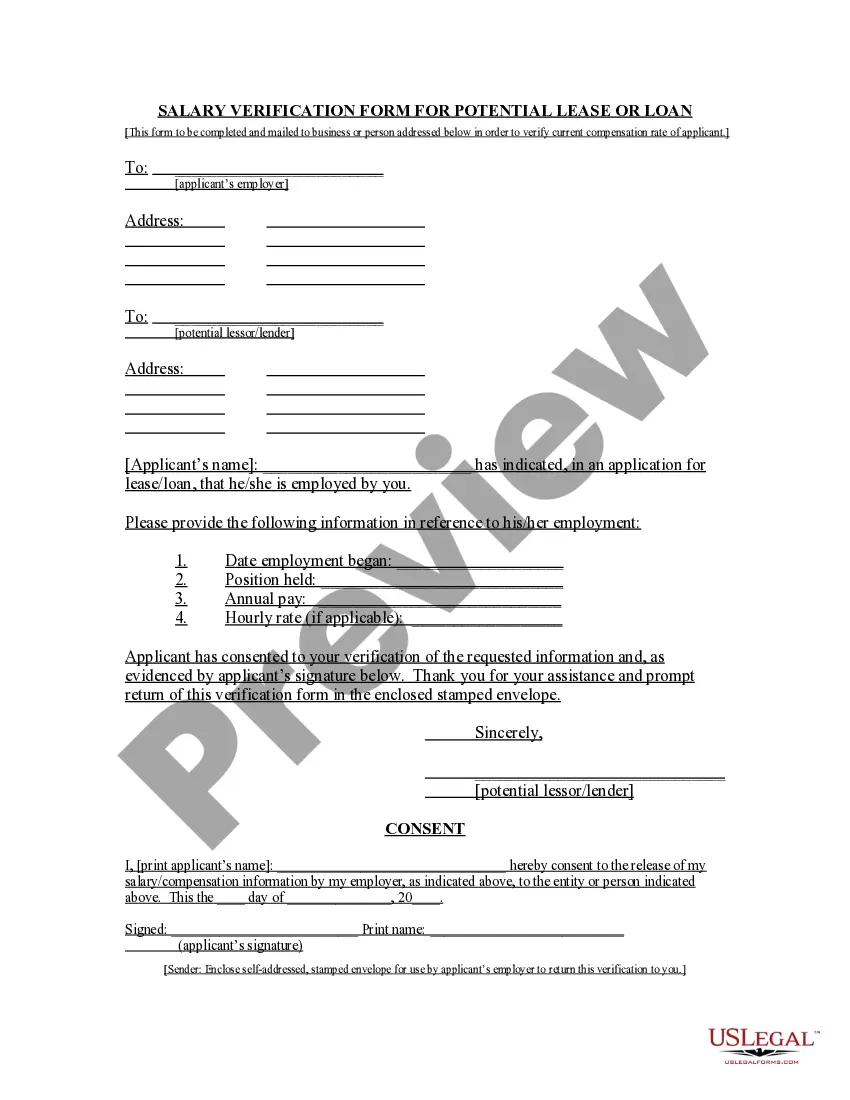
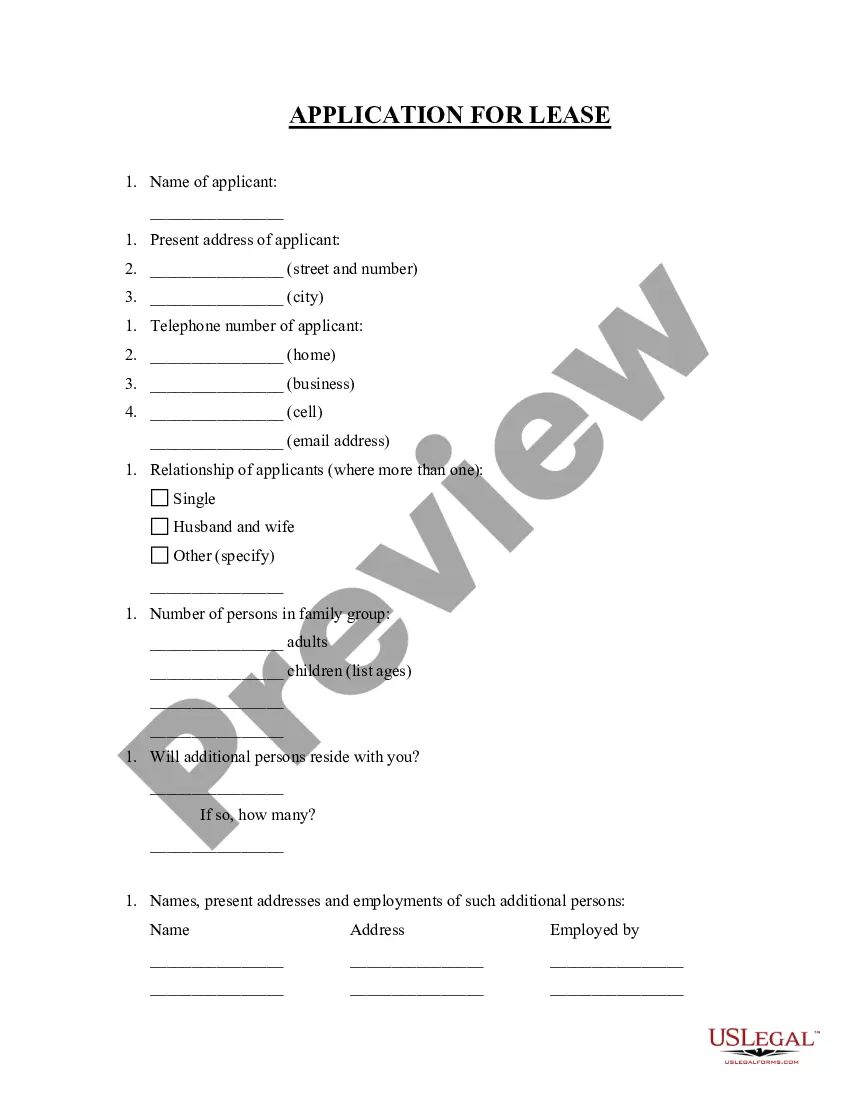
The Salary Verification form for Potential Lease is designed to facilitate the verification of a lease applicant's income by their employer. This form is crucial for landlords to confirm the financial stability of potential tenants, ensuring that the income reported in the lease application aligns with actual earnings. It differs from other forms by specifically focusing on income verification and includes a Tenant Consent Form that the applicant must sign to authorize their employer to disclose this information.
What’s included in this form
- Applicant's name and contact information
- Employer's name and contact information
- Details about the employment, including the start date and position
- Verification of annual pay and hourly rate, if applicable
- Signature section for the tenant's consent
- A stamped envelope for the employer to return the form

When to use this form
This form should be used when a potential tenant is applying for a lease, and the landlord requires confirmation of the applicantâs income directly from their employer. It is essential to ensure that renters have sufficient income to meet lease obligations, which is particularly important in areas with high rental costs.
Who needs this form
- Landlords looking to confirm the income of potential tenants
- Real estate agents assisting clients in the leasing process
- Property management companies managing rental properties
- Potential tenants who need to provide proof of their income
Instructions for completing this form
- Enter the applicant's full name and contact details at the top of the form.
- Fill in the employer's information, including the name and address.
- Specify the employment details: start date, position held, annual pay, and hourly rate, if relevant.
- Ensure the applicant signs the consent section to authorize information release.
- Include a stamped envelope for convenient return of the verification by the employer.
Does this form need to be notarized?
This form does not typically require notarization unless specified by local law. Be sure to check the regulations in your state to ensure compliance.
Get your form ready online
Our built-in tools help you complete, sign, share, and store your documents in one place.
Make edits, fill in missing information, and update formatting in US Legal Forms—just like you would in MS Word.
Download a copy, print it, send it by email, or mail it via USPS—whatever works best for your next step.
Sign and collect signatures with our SignNow integration. Send to multiple recipients, set reminders, and more. Go Premium to unlock E-Sign.
If this form requires notarization, complete it online through a secure video call—no need to meet a notary in person or wait for an appointment.
We protect your documents and personal data by following strict security and privacy standards.

Make edits, fill in missing information, and update formatting in US Legal Forms—just like you would in MS Word.

Download a copy, print it, send it by email, or mail it via USPS—whatever works best for your next step.

Sign and collect signatures with our SignNow integration. Send to multiple recipients, set reminders, and more. Go Premium to unlock E-Sign.

If this form requires notarization, complete it online through a secure video call—no need to meet a notary in person or wait for an appointment.

We protect your documents and personal data by following strict security and privacy standards.
Common mistakes to avoid
- Failing to sign the consent section, which makes the form invalid.
- Entering incorrect employer contact details, leading to delays in verification.
- Omitting the applicant's position or employment start date.
- Not providing a stamped envelope for the employer's response.
Benefits of completing this form online
- Easy access to a legally compliant template tailored by licensed attorneys.
- Convenient editing and downloading capabilities for personalization.
- Streamlined process and immediate availability, saving time compared to traditional legal consultations.
Quick recap
Key Takeaways
- The Salary Verification form is essential for verifying an applicant's income.
- It should be sent directly to the applicant's employer for accurate income confirmation.
- Ensure all sections of the form are complete to avoid delays in the rental application process.
- Convenience and reliability are enhanced when using the form online.
Looking for another form?

Form popularity
FAQ
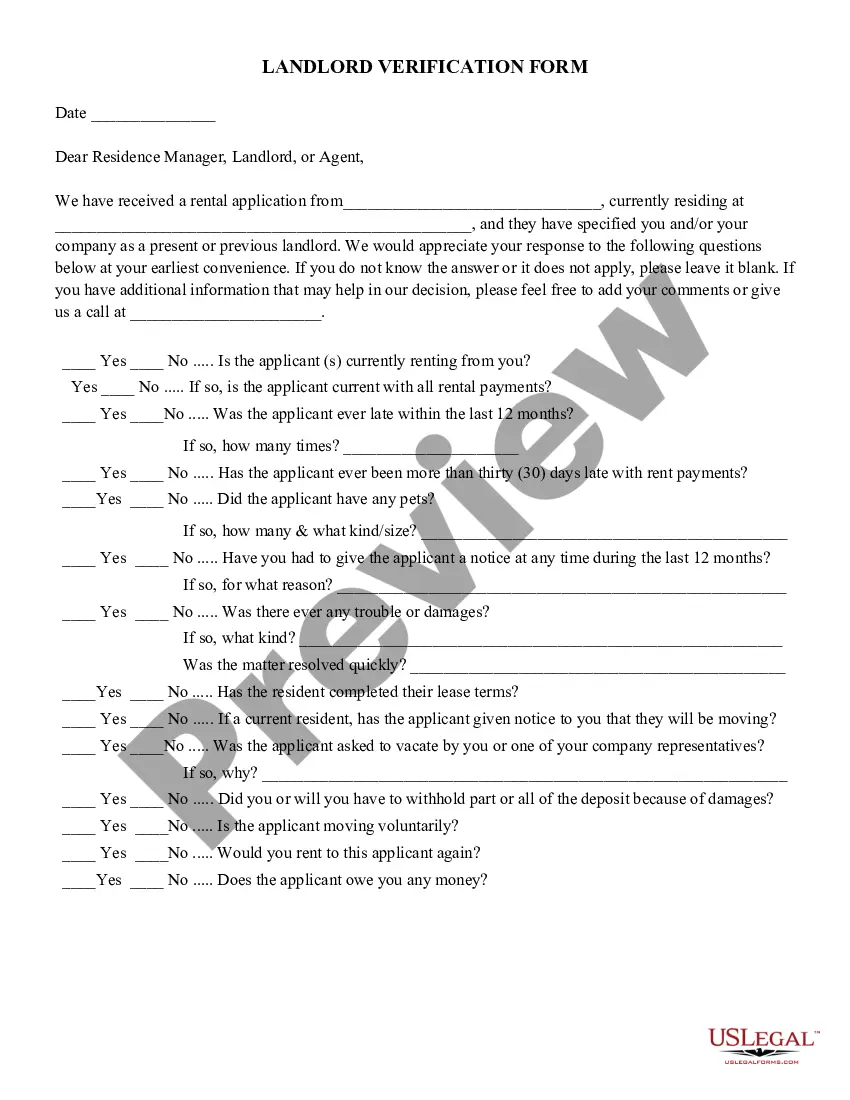
The landlord verification form is a document used by a landlord when verifying the previous rental information of an applicant for tenancy. The requesting landlord must send the form to the applicant's current or past landlord in order to obtain all details related to the tenancy of the individual.
A rental verification helps landlords and property managers to verify the rental history of their applicant. This is done through a background check combined with a phone call verification.Calling the previous and current landlord is an important step of the rental verification.
State the purpose of the letter. In the first paragraph, explain that you are writing to verify that the tenants live on your property. Also include the address where they live. For example, you can write, I am writing to confirm that Mr.
Notice to Pay or Quit. Another common landlord letter to tenants is the notice to pay or quit.Include the date by which the tenant must pay or fix the issues. Send this notice by certified mail, as this will act as a record of your attempt to correspond with your tenant.
In most states, a landlord must give tenants notice at least 30 days before they'll enforce a rent increase. However, in other states like California, the notice can increase to 60 days' notice if the increase is more than 10% of the current rent rate.
The tenant should fill his original name with father name, permanent address, and other essential information in the given form. It verifies a tenant and makes it easy for the landlord to involve the police in case of a dispute.
New Hampshire is a fairly landlord-friendly state because there are no rent control policies and the state does not limit certain fees. However, there are relatively strict requirements on the handling of security deposits.
There is no New Hampshire statute limiting how much a landlord can raise the rent. If your landlord tries to raise your rent by an unreasonable amount, there is a legal argument that such an increase is not enforceable by a court.
A landlord reference letter is a statement that: Details what kind of experience it was leasing property to the tenant. Usually takes the form of a written document, but can be served in a variety of mediums. Serves as a character reference for your tenant.
The first sentence should explain who is writing the letter and why. It should also give the name of the tenant, so the purpose of the letter is clear. The writer may be a property manager or the owner of the property. The landlord can include, if applicable, a statement on the character of the tenant.