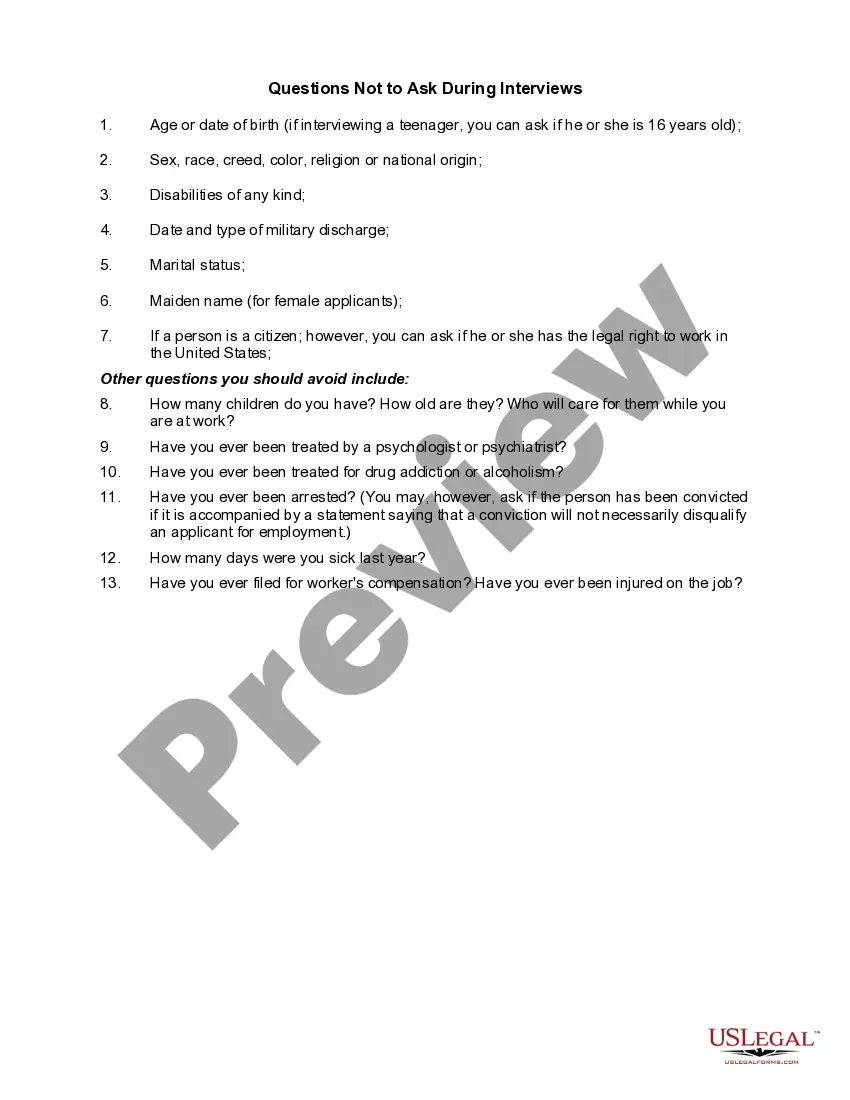
Questions Not to Ask During Interviews
What this document covers
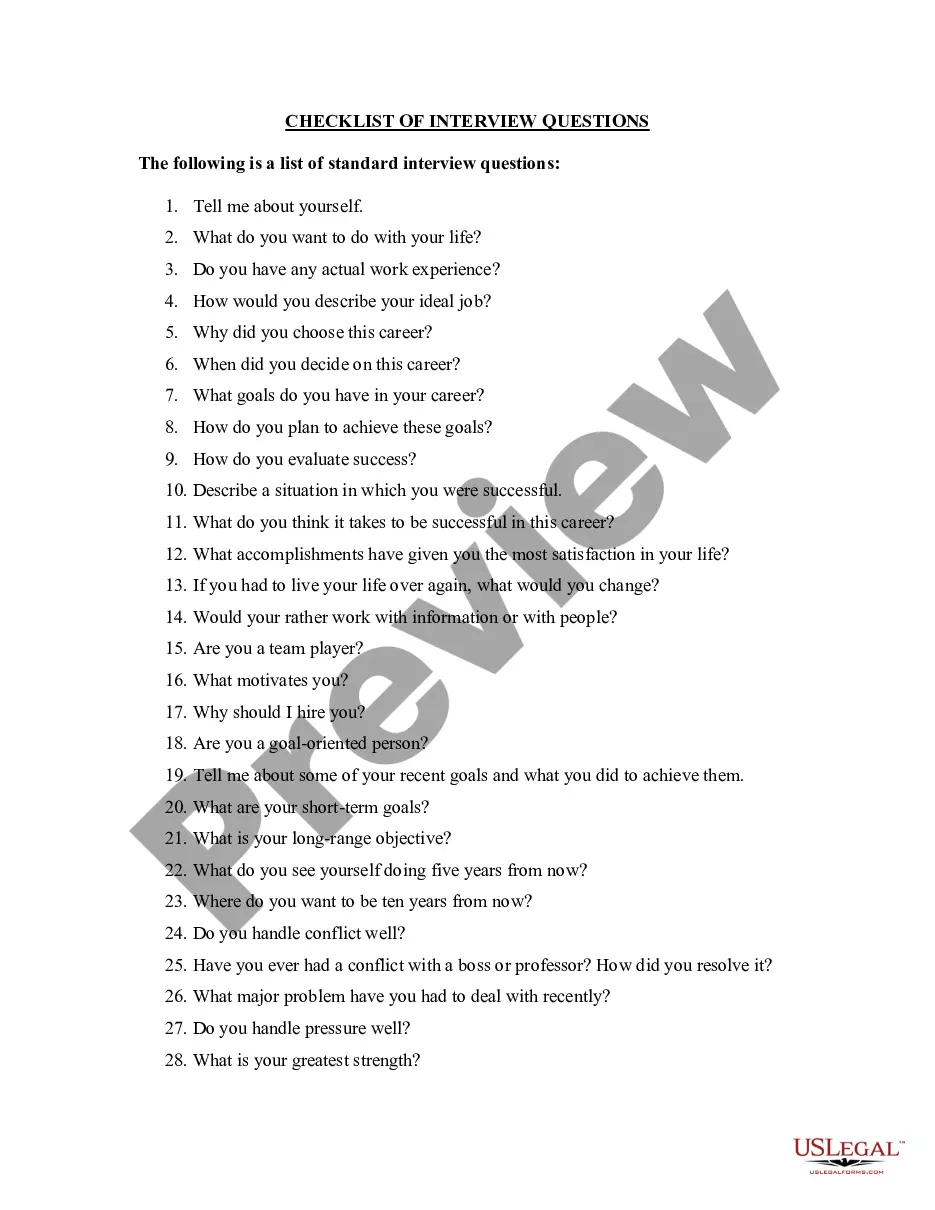
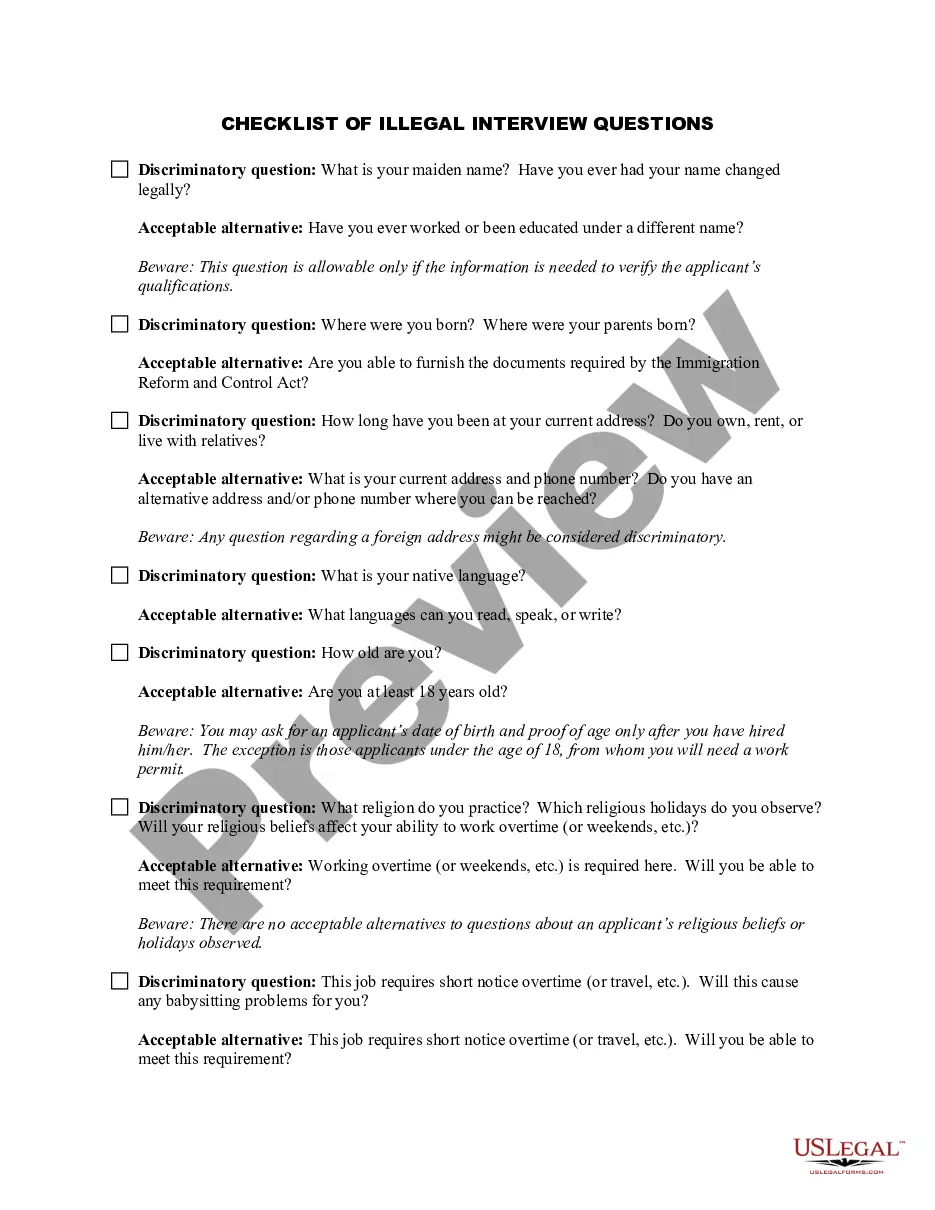
The "Questions Not to Ask During Interviews" form serves as a guideline for employers to navigate the hiring process while adhering to legal standards. This checklist outlines questions that should be avoided during job interviews to prevent discrimination claims based on Equal Employment Opportunity Commission (EEOC) regulations and federal and state laws. By using this form, employers can ensure a fair interview process and protect their organization against potential legal issues.
Key parts of this document
- A detailed checklist of prohibited questions to ensure compliance with anti-discrimination laws.
- Examples of illegal inquiries about personal topics, such as age, race, and marital status.
- Guidance on exceptions for certain questions, like legal work eligibility.
- Clarification on the allowance for specific follow-up inquiries regarding criminal convictions.
- A framework to foster a fair and equitable hiring process.
When to use this form
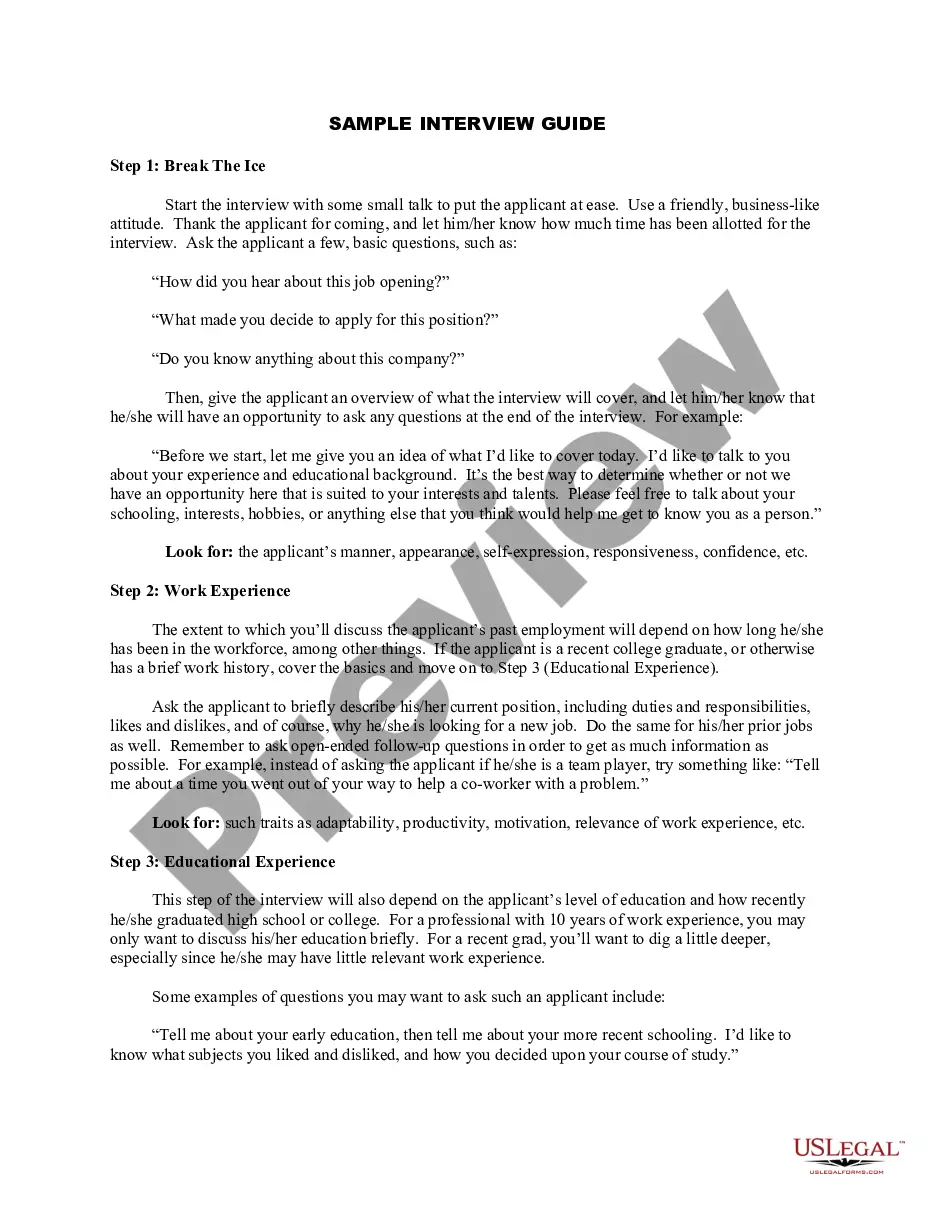
This form is useful for employers conducting job interviews who want to ensure they do not inadvertently ask questions that could be considered illegal. It is especially beneficial during the hiring process to prepare interviewers, ensuring they foster a professional and compliant environment. Utilizing this form can help avoid potential legal complications and create a more inclusive workplace.
Who needs this form
- Human Resources professionals managing recruitment processes.
- Hiring managers directly involved in conducting interviews.
- Business owners overseeing hiring practices within their organizations.
- Legal compliance teams ensuring adherence to employment laws.
Instructions for completing this form
- Review the list of prohibited questions in the checklist.
- Identify which questions apply to your interview scenarios.
- Train interviewers using the checklist to avoid illegal inquiries.
- Document and provide the checklist to all participants involved in the interviewing process.
- Refer to this form regularly when preparing for interviews to ensure compliance.
Notarization requirements for this form
Notarization is generally not required for this form. However, certain states or situations might demand it. You can complete notarization online through US Legal Forms, powered by Notarize, using a verified video call available anytime.
Get your form ready online
Our built-in tools help you complete, sign, share, and store your documents in one place.
Make edits, fill in missing information, and update formatting in US Legal Forms—just like you would in MS Word.
Download a copy, print it, send it by email, or mail it via USPS—whatever works best for your next step.
Sign and collect signatures with our SignNow integration. Send to multiple recipients, set reminders, and more. Go Premium to unlock E-Sign.
If this form requires notarization, complete it online through a secure video call—no need to meet a notary in person or wait for an appointment.
We protect your documents and personal data by following strict security and privacy standards.

Make edits, fill in missing information, and update formatting in US Legal Forms—just like you would in MS Word.

Download a copy, print it, send it by email, or mail it via USPS—whatever works best for your next step.

Sign and collect signatures with our SignNow integration. Send to multiple recipients, set reminders, and more. Go Premium to unlock E-Sign.

If this form requires notarization, complete it online through a secure video call—no need to meet a notary in person or wait for an appointment.

We protect your documents and personal data by following strict security and privacy standards.
Mistakes to watch out for
- Failing to familiarize interviewers with the prohibited questions list.
- Assuming that the form covers all state-specific laws without doing additional research.
- Overlooking the exceptions that allow for certain inquiries regarding legal work eligibility.
- Not updating the form or training materials to reflect current legal standards.
Why complete this form online
- Convenient access to legal guidelines at any time during the hiring process.
- Editability allows customization to fit specific organizational needs.
- Reliability of having up-to-date information on laws and regulations.
Legal use & context
- This form aids in reinforcing compliance with employment discrimination laws.
- Utilizing this form helps mitigate risks related to wrongful hiring practices.
- Regular reference to this checklist can enhance overall fairness in the hiring process.
What to keep in mind
- Understand the importance of avoiding illegal interview questions.
- Utilize the provided checklist to train interviewers effectively.
- Stay informed about both federal and state laws regarding employment practices.
- Employing this form can help foster an equitable hiring environment.
Looking for another form?
Form popularity
FAQ
Gracefully avoid the question and steer the conversation elsewhere. Keep your answers short, broad and general. Redirect a question to your interviewer. Ask the interviewer why the question is relevant to your job.
Can I Do This Job From Home? What Does Your Company Do? When Can I Take Time off for Vacation? Did I Get the Job? What Is the Salary for This Position? What Are the Weekly Hours and Do I Work Weekends? How Long Would I Have to Wait to Get Promoted?
Answer the original question with another question. Respond with sarcasm or a joke. Redirect the question to a topic that you do feel comfortable discussing. Use the shame game. Begin your answer by saying the word No Answer ambiguously or immediately change the subject.
What interview question topics are illegal? Race, Color, or National Origin. Religion. Sex, Gender Identity, or Sexual Orientation.
Acknowledge the question without answering it. Ignore the question completely. Question the question. Attack the question, Decline to answer. Give an incomplete answer. State or imply the question has already been answered. Defer to the will of others.
Enlist the help of a friend. Prepare a canned answer in advance. Use a "bridge" response to change the subject. Restateand reframethe question. Excuse yourself from an uncomfortable conversation. Be straightforward about your discomfort. Deflect with a joke. Answer ambiguously.
Race, Color, or National Origin. Religion. Sex, Gender Identity, or Sexual Orientation. Pregnancy status. Disability. Age or Genetic Information. Citizenship. Marital Status or Number of Children.
Not asking questions of your interviewer during an interview shows a lack of interest in the job/company/your career/prospective colleagues.Do NOT ask questions about benefits or anything negative about the company, keep it positive, positive, positive if you can, and end on an upbeat note.
Avoid giving the answer to a question until the attorney has finished asking it. Avoid allowing yourself to be talked into false testimony or affirming incorrect statements. Listen carefully to each question, and be sure that everything in it is true before adopting it as your own. For example: "Isn't it true that..."