Louisiana Petition for Appointment of Independent Administrator
Understanding this form
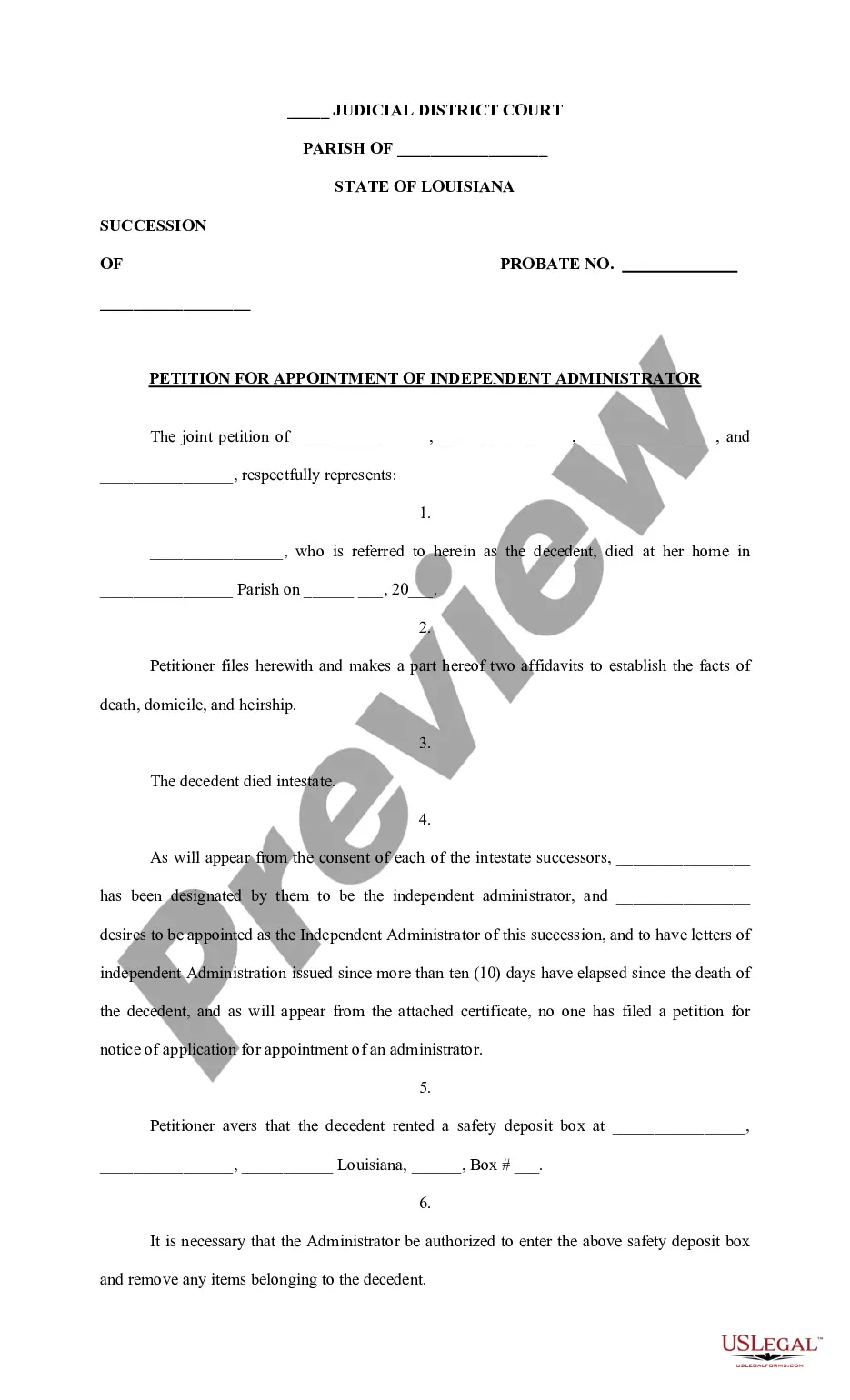
The Petition for Appointment of Independent Administrator is a legal document used to request the appointment of an independent administrator for the estate of someone who has died without a will (intestate). This form is essential for ensuring that the estate is managed according to the law, particularly when there are no designated heirs or executors from a will. It differs from other forms, such as a regular probate petition, by specifically addressing cases without a testamentary document.
Key components of this form
- Identification of the decedent, including name, location of death, and date of death.
- Affidavits to establish facts regarding death, domicile, and heirship.
- Statement confirming that the decedent died intestate.
- Consent from heirs for the appointment of an independent administrator.
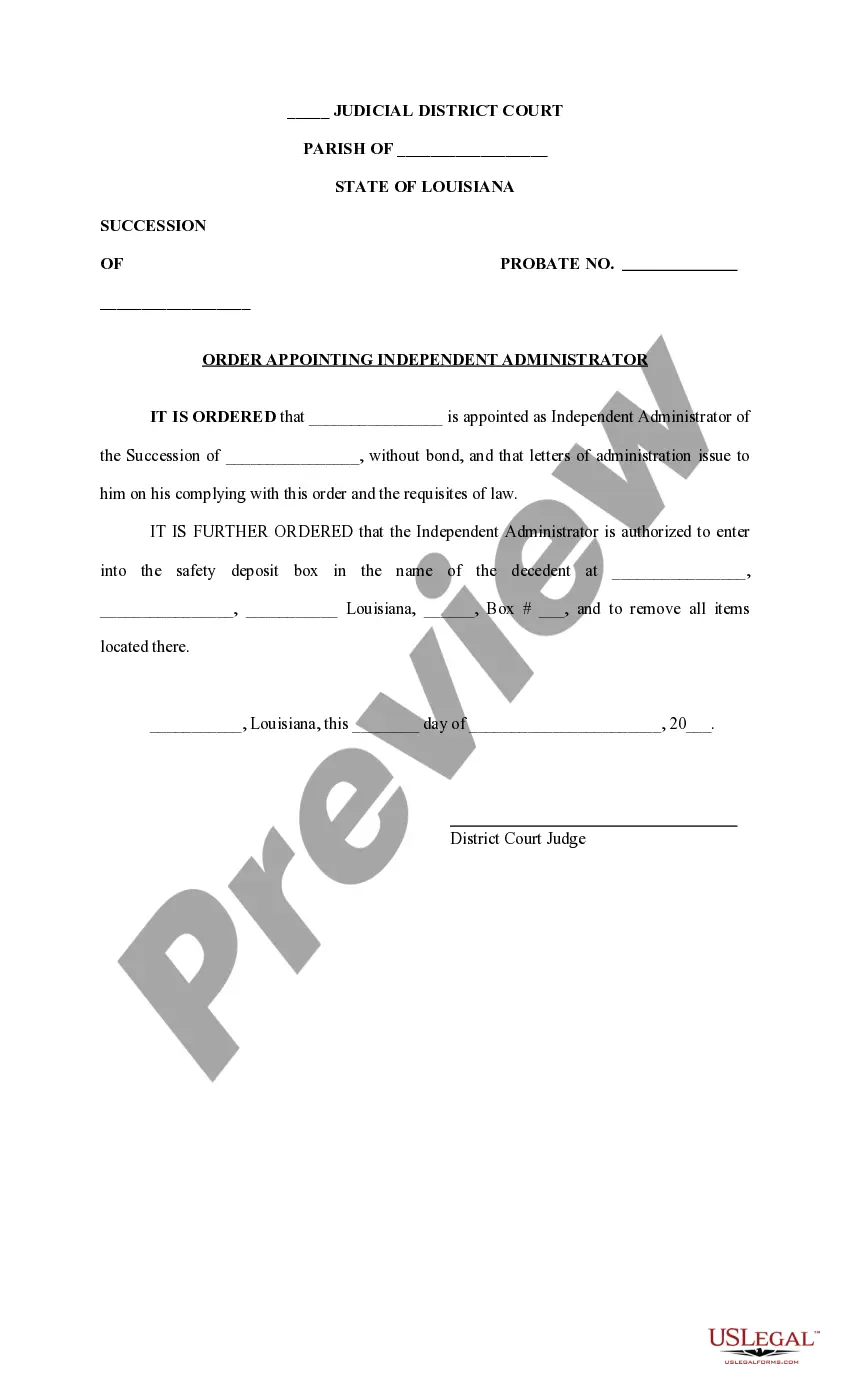
- Details about any safety deposit boxes the decedent may have owned and authorization for access.

Situations where this form applies
This form is necessary when a person has died without leaving a will, and there is a need to appoint someone to manage their estate legally. It is typically used when heirs agree on an independent administrator, facilitating the process to oversee estate matters, distribute assets, and handle debts appropriately.
Who needs this form
This form is intended for the following individuals:
- Heirs of a decedent who died without a will and need to appoint a representative.
- Individuals seeking to manage an intestate estate fairly and legally.
- Family members or friends designated by the heirs to act as the independent administrator.
How to complete this form
- Fill in the decedent's name and details of their death, including date and location.
- Attach the necessary affidavits proving facts of death and heirship.
- List the names and information of all heirs consenting to the appointment of the administrator.
- Specify the details of any safety deposit boxes associated with the decedent.
- Sign and date the petition as required.
Notarization guidance
This form must be notarized to be legally valid. US Legal Forms provides secure online notarization powered by Notarize, allowing you to complete the process through a verified video call.
Get your form ready online
Our built-in tools help you complete, sign, share, and store your documents in one place.
Make edits, fill in missing information, and update formatting in US Legal Forms—just like you would in MS Word.
Download a copy, print it, send it by email, or mail it via USPS—whatever works best for your next step.
Sign and collect signatures with our SignNow integration. Send to multiple recipients, set reminders, and more. Go Premium to unlock E-Sign.
If this form requires notarization, complete it online through a secure video call—no need to meet a notary in person or wait for an appointment.
We protect your documents and personal data by following strict security and privacy standards.

Make edits, fill in missing information, and update formatting in US Legal Forms—just like you would in MS Word.

Download a copy, print it, send it by email, or mail it via USPS—whatever works best for your next step.

Sign and collect signatures with our SignNow integration. Send to multiple recipients, set reminders, and more. Go Premium to unlock E-Sign.

If this form requires notarization, complete it online through a secure video call—no need to meet a notary in person or wait for an appointment.

We protect your documents and personal data by following strict security and privacy standards.
Avoid these common issues
- Failing to include necessary affidavits which support the petition.
- Incomplete information about the decedent or heirs.
- Not providing consent from all heirs involved.
- Missing signatures or dates on the petition.
Benefits of using this form online
- Convenient access to professionally drafted templates at any time.
- Edit and customize the form according to your specific needs easily.
- Reliable and up-to-date legal formats that comply with current laws.
Looking for another form?
Form popularity
FAQ
An executor may have to apply for a special legal authority before they can deal with the estate. This is called probate. An administrator is someone who is responsible for dealing with an estate under certain circumstances, for example, if there is no will or the named executors aren't willing to act.
First, the person who makes the will, also known as the testator, can name an individual to be the executor. The testator would stipulate this appointment in the will. Once the testator passes away, the named executor may have to submit a petition to the appropriate probate court to be confirmed as the executor.
Determine Your Priority for Appointment. Receive Written Waivers From Other Candidates. Contact Court in the County Where Deceased Resided. File the Petition for Administration. Attend the Probate Hearing. Secure a Probate Bond.
Children - if there is no surviving married or civil partner If there is no surviving partner, the children of a person who has died without leaving a will inherit the whole estate. This applies however much the estate is worth. If there are two or more children, the estate will be divided equally between them.
1Determine Your Priority for Appointment.2Receive Written Waivers From Other Candidates.3Contact Court in the County Where Deceased Resided.4File the Petition for Administration.5Attend the Probate Hearing.6Secure a Probate Bond.
You can administer an estate even if the deceased died without a will or failed to specify an executor. If your relationship to the deceased doesn't make you the probate court's default choice for administrator, you'll need to get permission from the relatives ahead of you in the priority order.
If the deceased did not leave a Will, s/he would have not had the opportunity to appoint an executor. The intestate heirs of the deceased's estate may nominate a person to be appointed as the executor, however, the final decision of who should be the executor still lies with the Master of the High Court.
When there is no will to name an executor, state law provides a list of people who are eligible to fill the role. If a probate court proceeding is necessary, the court will choose someone based on that priority list. Most states make the surviving spouse or registered domestic partner, if any, the first choice.
A will generally names an executor to administer the estate. If the decedent's estate has no valid will, you must file a petition with the probate court to administer the estate, and other folks who feel they're just as qualified may file a petition as well.