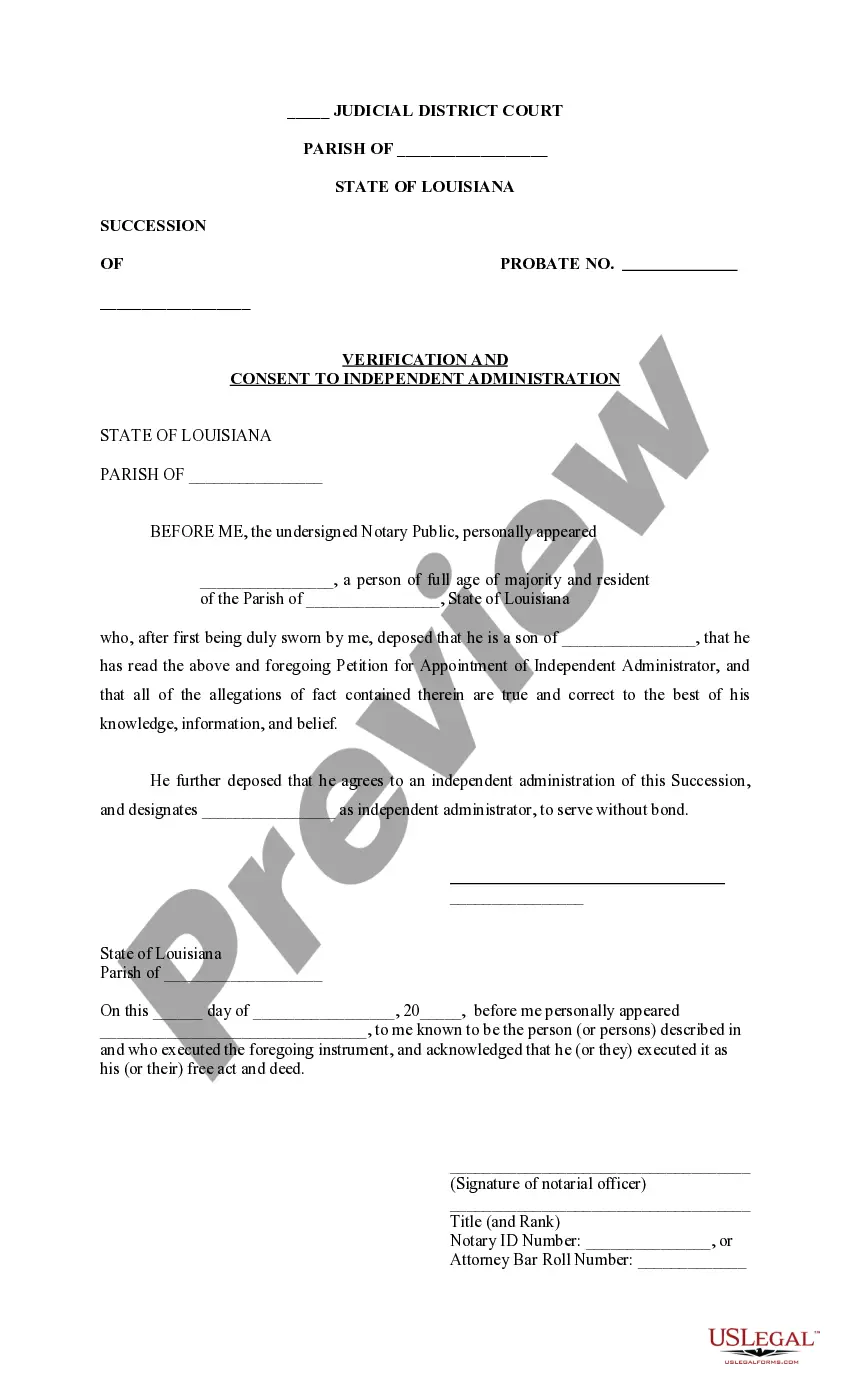
Louisiana Verification and Consent to Independent Administration
Overview of this form
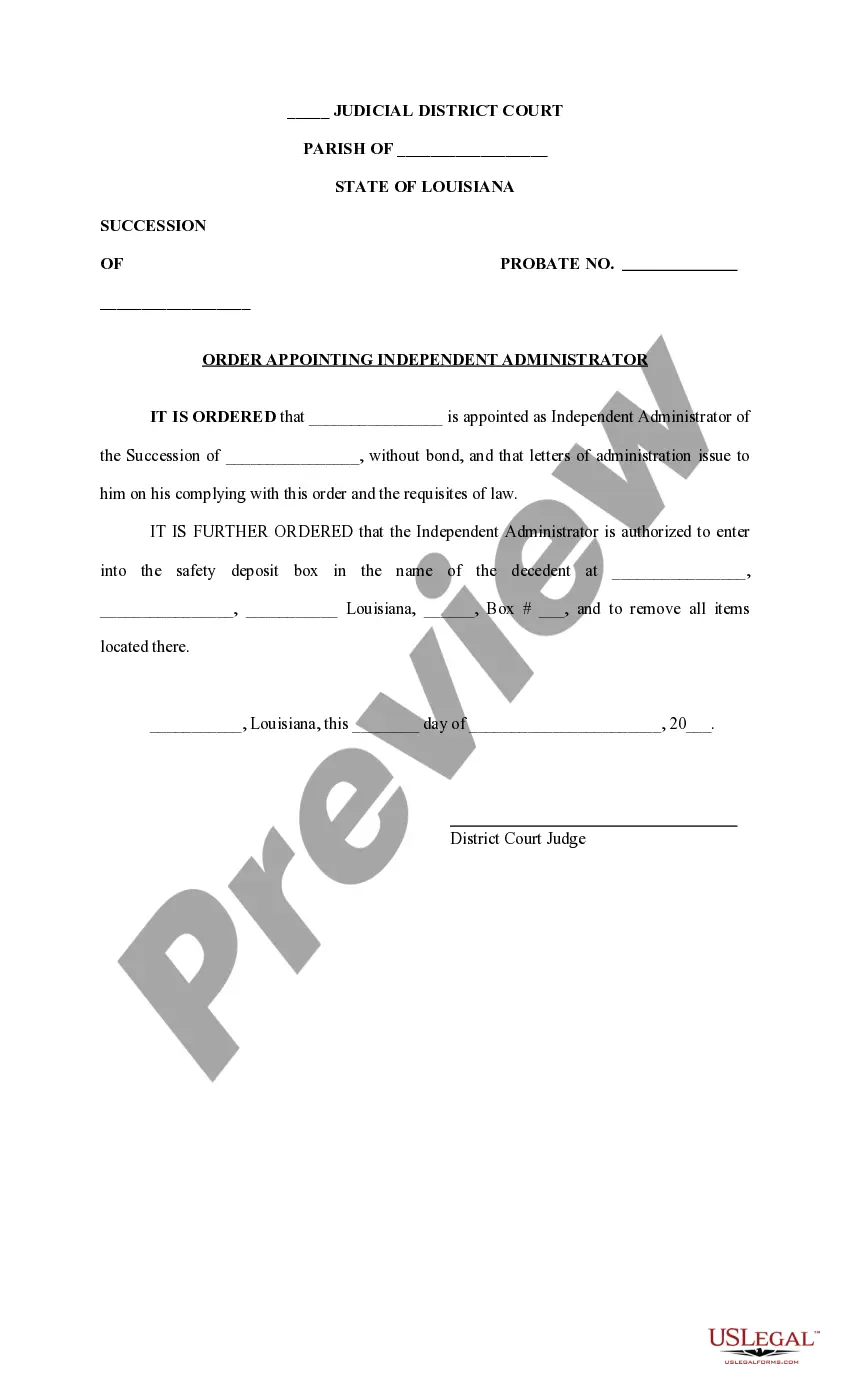
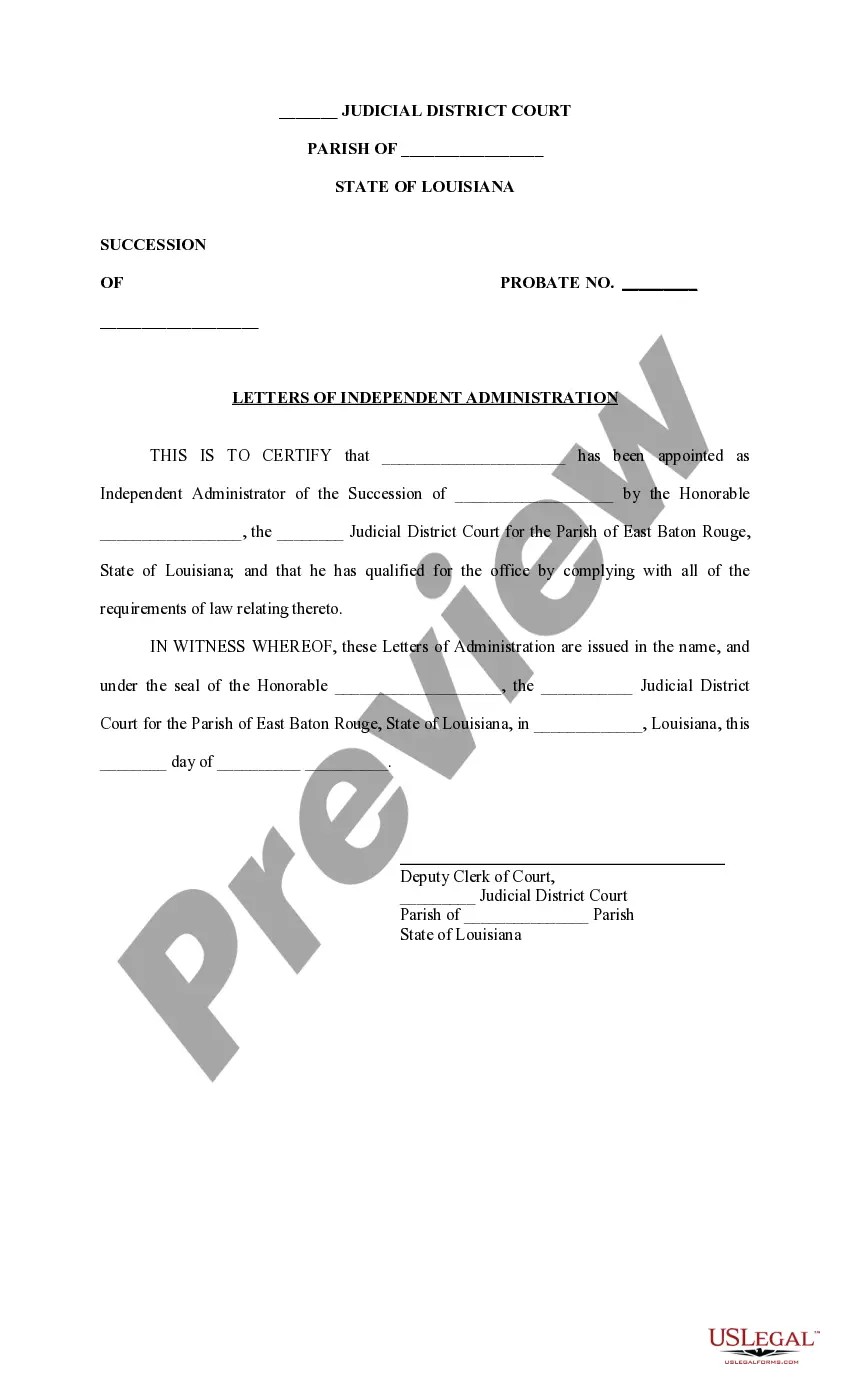
The Verification and Consent to Independent Administration form is a legal document that allows the appointment of an independent administrator for the estate of a decedent who died without a will (intestate). This form differs from other estate administration forms as it specifically facilitates the independent administration process, which enables the designated administrator to manage the estate without court oversight, streamlining the probate process.
Key components of this form
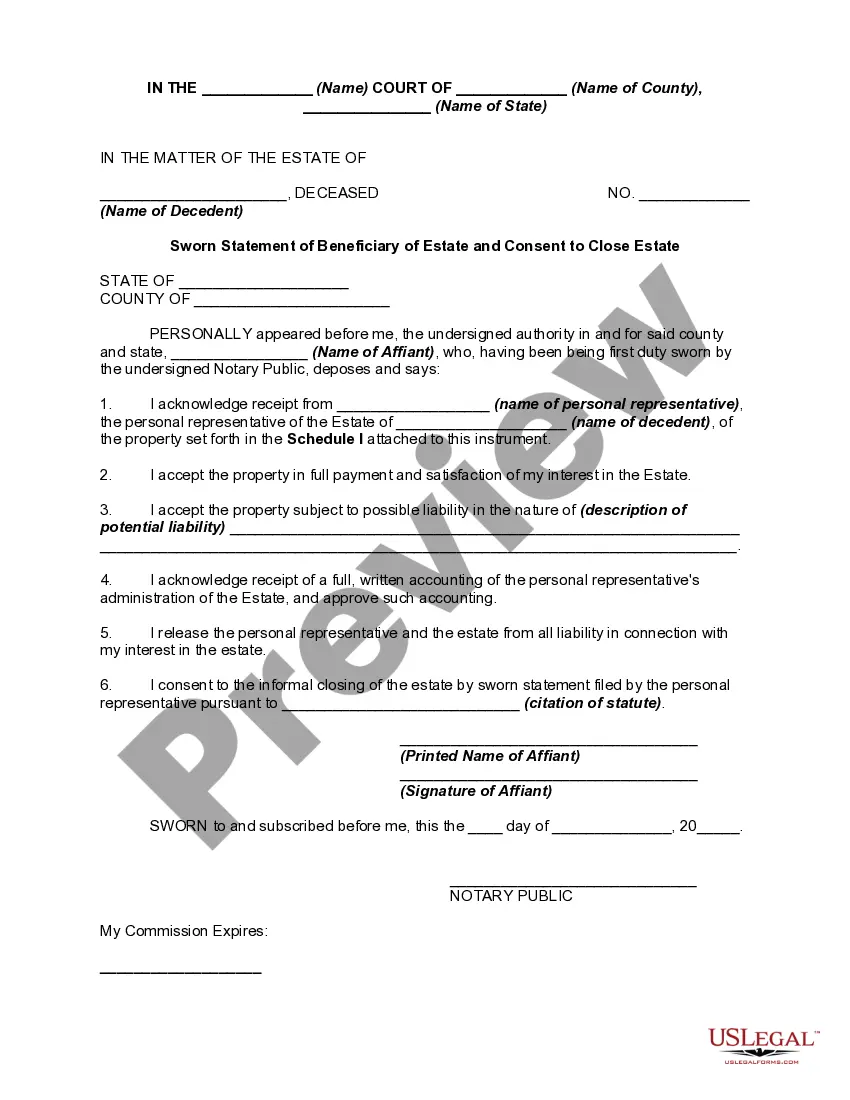
- Verification of identity and eligibility of the affiant.
- Consent to the independent administration of the decedent's estate.
- Designation of the independent administrator.
- Affirmation of the truthfulness of statements made in the petition.
- Signature of a notary public for validation.
When to use this document
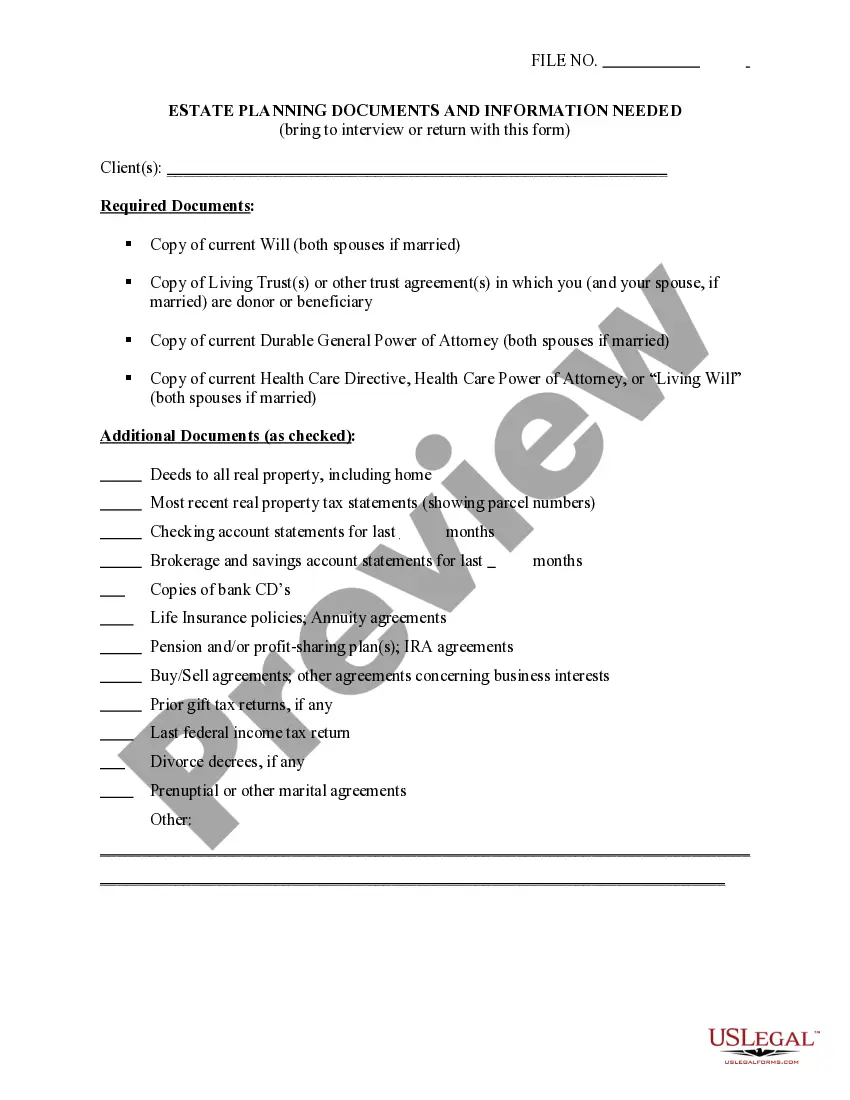
This form is used when an individual wishes to establish an independent administrator for an estate where the decedent has died intestate. It is typically utilized in situations where the heirs agree to avoid a more traditional court-administered process, allowing for quicker resolution of the estate's affairs and distribution of assets.
Who can use this document
The following individuals should consider using this form:
- Heirs or beneficiaries of a decedent who died without a will.
- Family members seeking to simplify the administration of an estate.
- Individuals designated by heirs to manage the estate independently.
How to prepare this document
- Identify the affiant, who must be a qualified individual and a resident of Louisiana.
- Provide the name of the decedent whose estate is being administered.
- Indicate the consent for independent administration and name the chosen administrator.
- Complete the verification section by affirming the truth of the statements made.
- Sign the form in the presence of a notary public to ensure legal validity.
Notarization requirements for this form
This form must be notarized to be legally valid. US Legal Forms provides secure online notarization powered by Notarize, allowing you to complete the process through a verified video call.
Get your form ready online
Our built-in tools help you complete, sign, share, and store your documents in one place.
Make edits, fill in missing information, and update formatting in US Legal Forms—just like you would in MS Word.
Download a copy, print it, send it by email, or mail it via USPS—whatever works best for your next step.
Sign and collect signatures with our SignNow integration. Send to multiple recipients, set reminders, and more. Go Premium to unlock E-Sign.
If this form requires notarization, complete it online through a secure video call—no need to meet a notary in person or wait for an appointment.
We protect your documents and personal data by following strict security and privacy standards.

Make edits, fill in missing information, and update formatting in US Legal Forms—just like you would in MS Word.

Download a copy, print it, send it by email, or mail it via USPS—whatever works best for your next step.

Sign and collect signatures with our SignNow integration. Send to multiple recipients, set reminders, and more. Go Premium to unlock E-Sign.

If this form requires notarization, complete it online through a secure video call—no need to meet a notary in person or wait for an appointment.

We protect your documents and personal data by following strict security and privacy standards.
Mistakes to watch out for
- Failing to have the form notarized, which can lead to its invalidity.
- Leaving out essential information regarding the decedent or the administrator.
- Not ensuring all heirs have consented to the independent administration.
Why use this form online
- Immediate access to the form for quick completion.
- Editability allows you to customize details specific to your situation.
- Reassurance of the document being prepared in accordance with legal standards.
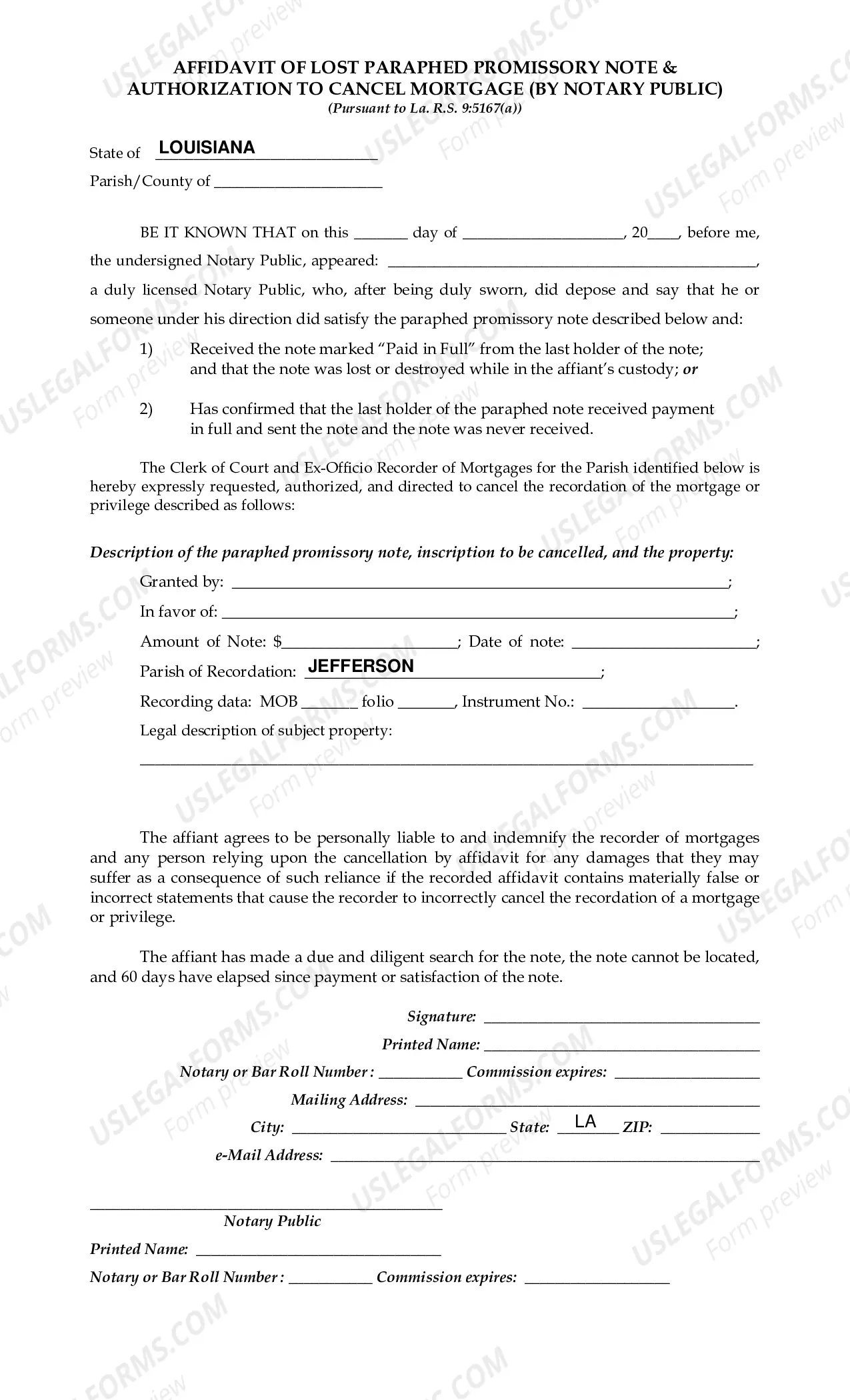
Looking for another form?
Form popularity
FAQ
An executor (male) or executrix (female) is the person named in a will to perform these duties. An administrator (male) or administratrix (female) is the person appointed by the probate court to complete these tasks when there is no will or no executor or executrix has been named in the will.
What is the Independent Administration of Estates Act? It is a series of laws that allow an executor or administrator to manage or administer most aspects of the decedent's estate without court supervision.
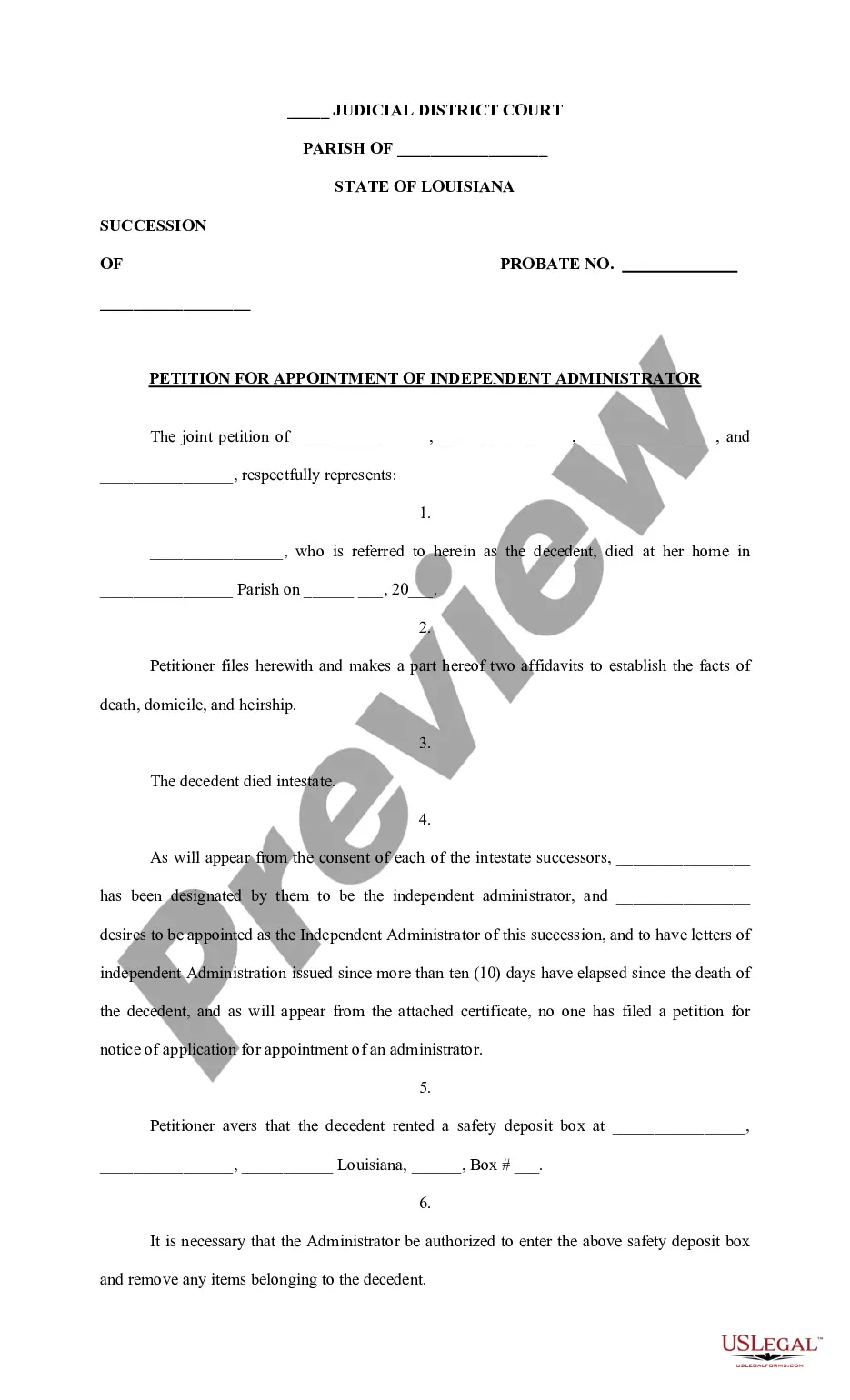
Maximum $125,000 (CCP 3421 Small Successions Defined) Laws CCP 3432. Step 1 Write in the full name of the person who died. Step 2 Write in the State and County or Parish in which the decedent resided at the time of death. Step 3 Write in the names of the two people signing the petition.
An independent executor is an executor who administers the testator's estate with minimal supervision by the probate court.An independent executor is also known as non intervention executors. Some states permit independent executors to sell the estate property without first securing a court order.
Independent administration An independent administrator does not need approval from the court to take certain steps on behalf of the estate. This includes actions like paying debts, transferring title or selling property. An independent administrator must retain an attorney in most probate courts.
What is the Independent Administration of Estates Act? It is a series of laws that allow an executor or administrator to manage or administer most aspects of the decedent's estate without court supervision.
Independent administration An independent administrator does not need approval from the court to take certain steps on behalf of the estate. This includes actions like paying debts, transferring title or selling property. An independent administrator must retain an attorney in most probate courts.
A succession is required regardless if someone dies testate (with a will) or intestate (without a will), unless all of the assets can be transferred by other methods. The typical method to avoid probate for non-beneficiary designated assets is by establishing a revocable trust (aka living trust).