Weekly Expense Report
About this form
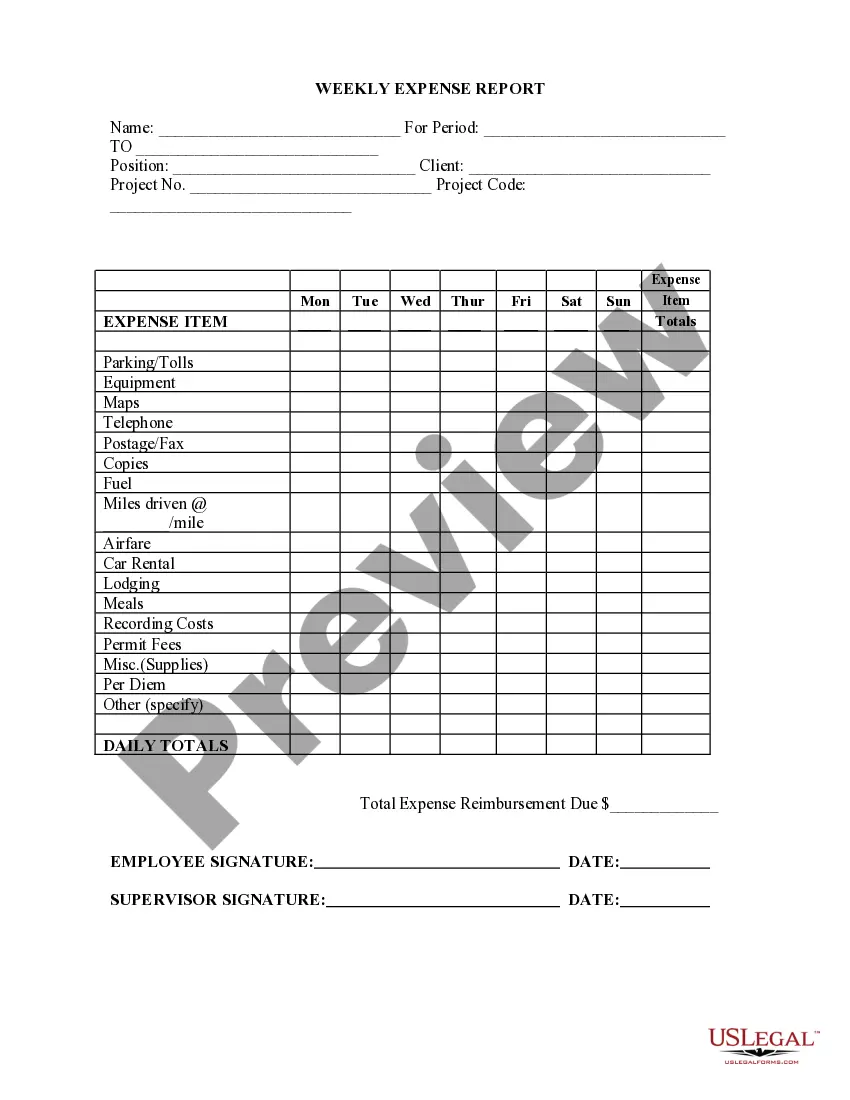
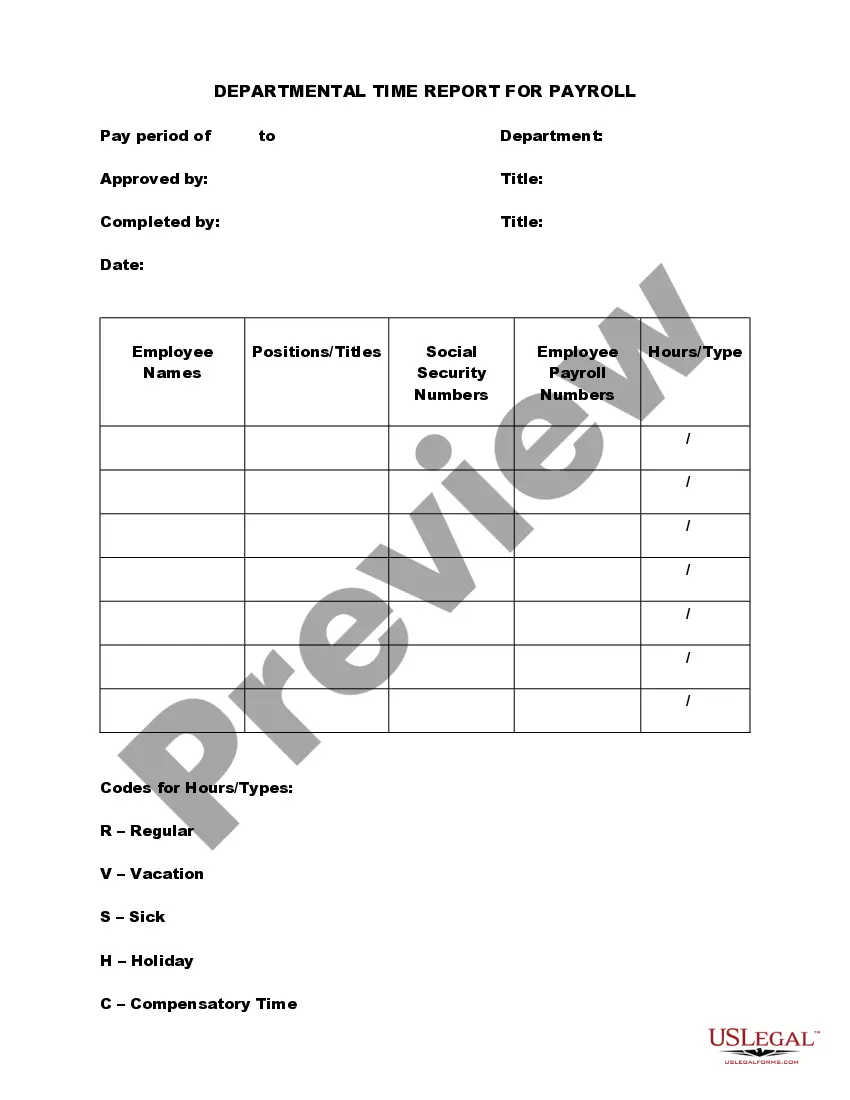
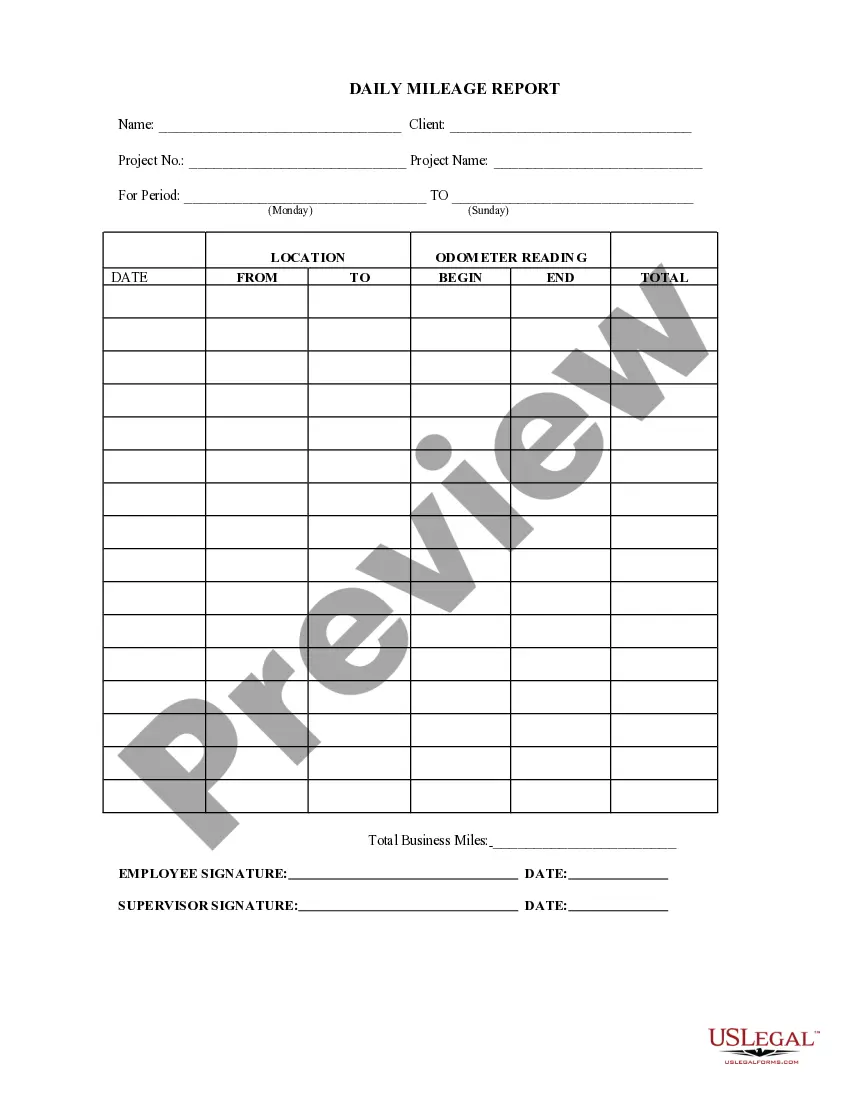
The Weekly Expense Report is a document used to track and detail expenses incurred by employees during a specific work period. This form helps in submitting accurate expense claims for reimbursement. Unlike general expense reports, the Weekly Expense Report is tailored to account for daily expenses over a week.
Form components explained
- Name of the employee
- Time period for which expenses are reported
- Position of the employee
- Client and project information
- Detailed line items for expenses categorized by day
- Delineation of total expenses and reimbursement due
When to use this form
This form should be used whenever an employee incurs expenses that need to be reimbursed by their employer over the course of a week. Scenarios include attending conferences, traveling for work, or purchasing supplies for a project.
Intended users of this form
The Weekly Expense Report is intended for:
- Employees seeking reimbursement for work-related expenses
- Managers overseeing expense reporting and approvals
- Finance teams handling budget and expense tracking
Instructions for completing this form
- Fill in your name and position at the top of the form.
- Specify the client and project details, including project number and code.
- Record daily expenses by categorizing them under appropriate items such as parking, lodging, and meals.
- Calculate daily totals and enter them at the bottom of the section.
- Provide your signature along with the date and obtain your supervisor's signature.
Notarization guidance
This form does not typically require notarization unless specified by local law. However, having a supervisor's approval adds a layer of validation to the reimbursement request.
Get your form ready online
Our built-in tools help you complete, sign, share, and store your documents in one place.
Make edits, fill in missing information, and update formatting in US Legal Forms—just like you would in MS Word.
Download a copy, print it, send it by email, or mail it via USPS—whatever works best for your next step.
Sign and collect signatures with our SignNow integration. Send to multiple recipients, set reminders, and more. Go Premium to unlock E-Sign.
If this form requires notarization, complete it online through a secure video call—no need to meet a notary in person or wait for an appointment.
We protect your documents and personal data by following strict security and privacy standards.

Make edits, fill in missing information, and update formatting in US Legal Forms—just like you would in MS Word.

Download a copy, print it, send it by email, or mail it via USPS—whatever works best for your next step.

Sign and collect signatures with our SignNow integration. Send to multiple recipients, set reminders, and more. Go Premium to unlock E-Sign.

If this form requires notarization, complete it online through a secure video call—no need to meet a notary in person or wait for an appointment.

We protect your documents and personal data by following strict security and privacy standards.
Common mistakes
- Failing to include all relevant expense items.
- Not signing the form or forgetting supervisor approval.
- Using incorrect dates for the reporting period.
- Omitting receipts required for specific expense types.
Benefits of completing this form online
- Immediate access to a professionally crafted form.
- Editable fields for convenience and accuracy.
- Secure and reliable format for submitting expense claims.
Legal use & context
- This form is legally binding as proof of incurred expenses.
- Employers may have specific guidelines on what expenses are reimbursable.
- Retention of receipts may be necessary for compliance with company policy.
Summary of main points
- The Weekly Expense Report simplifies tracking and reimbursement of employee expenses.
- Complete accuracy is crucial for reimbursement eligibility.
- Ensure that all required signatures are obtained to validate the report.
Looking for another form?
Form popularity
FAQ
An expense report is a form that itemizes expenses necessary to the functioning of a business. A small business may ask its employees to submit expense reports to reimburse them for business-related purchases such as gas or meals.
For each expense, enter the date and description. Use the dropdown menus to select payment type and category for each expense. For each expense, enter the total cost. Attach all necessary receipts to the document. Submit for review and approval!
Choose a template or expense-tracking software. Edit the columns and categories (such as rent or mileage) as needed. Add itemized expenses with costs. Add up the total. Attach or save your corresponding receipts. Print or email the report.
Information identifying the person submitting the report (department, position, contact info, SSN, etc.) A date and dollar amount for each expense, matching the date and dollar amount on the receipt provided for that expense. A brief description of each expense.
Choose a Template (or Software) To make an expense report, you should use either a template or expense-tracking software. Edit the Columns. Add Itemized Expenses. Add up the Total. Attach Receipts, If Necessary. Print or Send the Report.
Have A Clear Expense Policy. Determine what expenses your company is willing to cover and communicate this policy very clearly to your employees. Make Expenses Easy To Report And Track. Issue Corporate Credit Cards. Set Up A Routine Audit.
Review the first receipt to make sure it is legitimate and not questionable. All expenses claimed for reimbursement should have supportive and valid receipts with attached bills. Review all the receipts to make sure that all expense claims abide by the company's policy guidelines.
The employer requires that the paper receipts and expense reports contain information sufficient to substantiate the amount, date, time, place, and business purpose of each expense.
An itemised expense would contain multiple expenses listed as line items. The itemised expense total will be calculated automatically, based on the expense amount of each line item and the tax applied on each of them.