Contractor Indemnification
Understanding this form
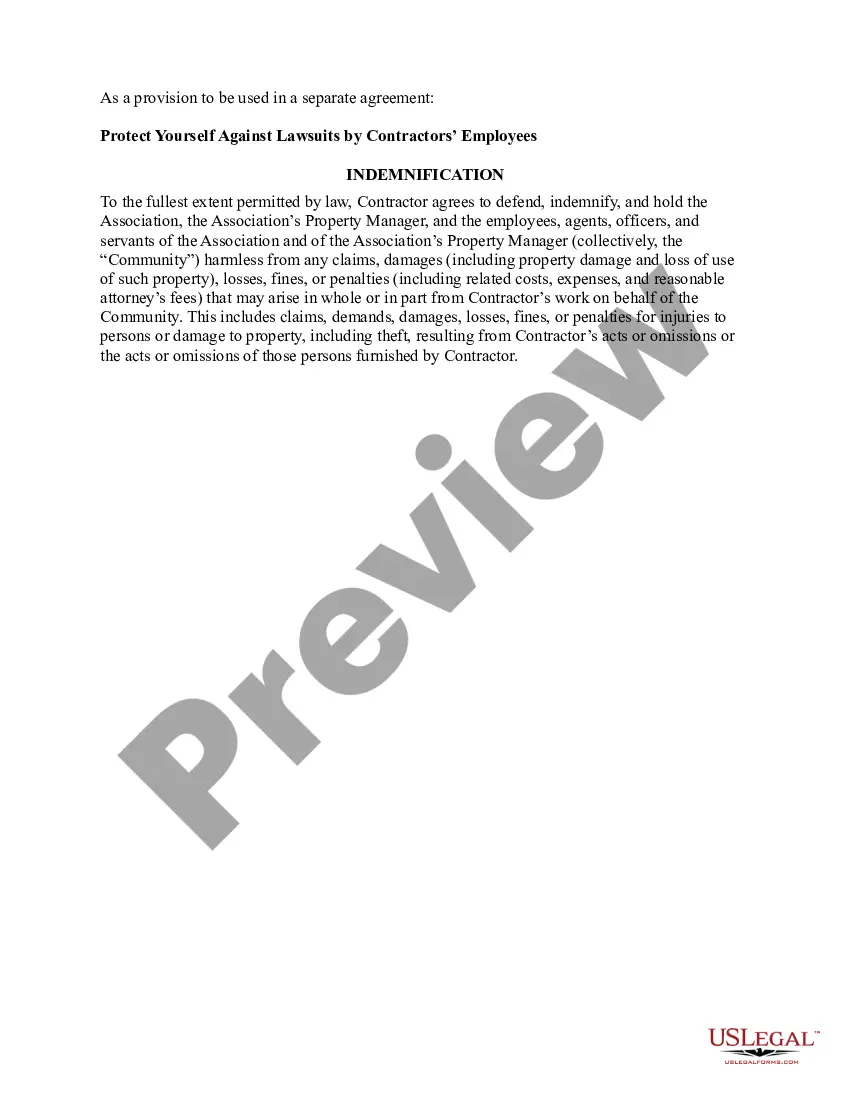
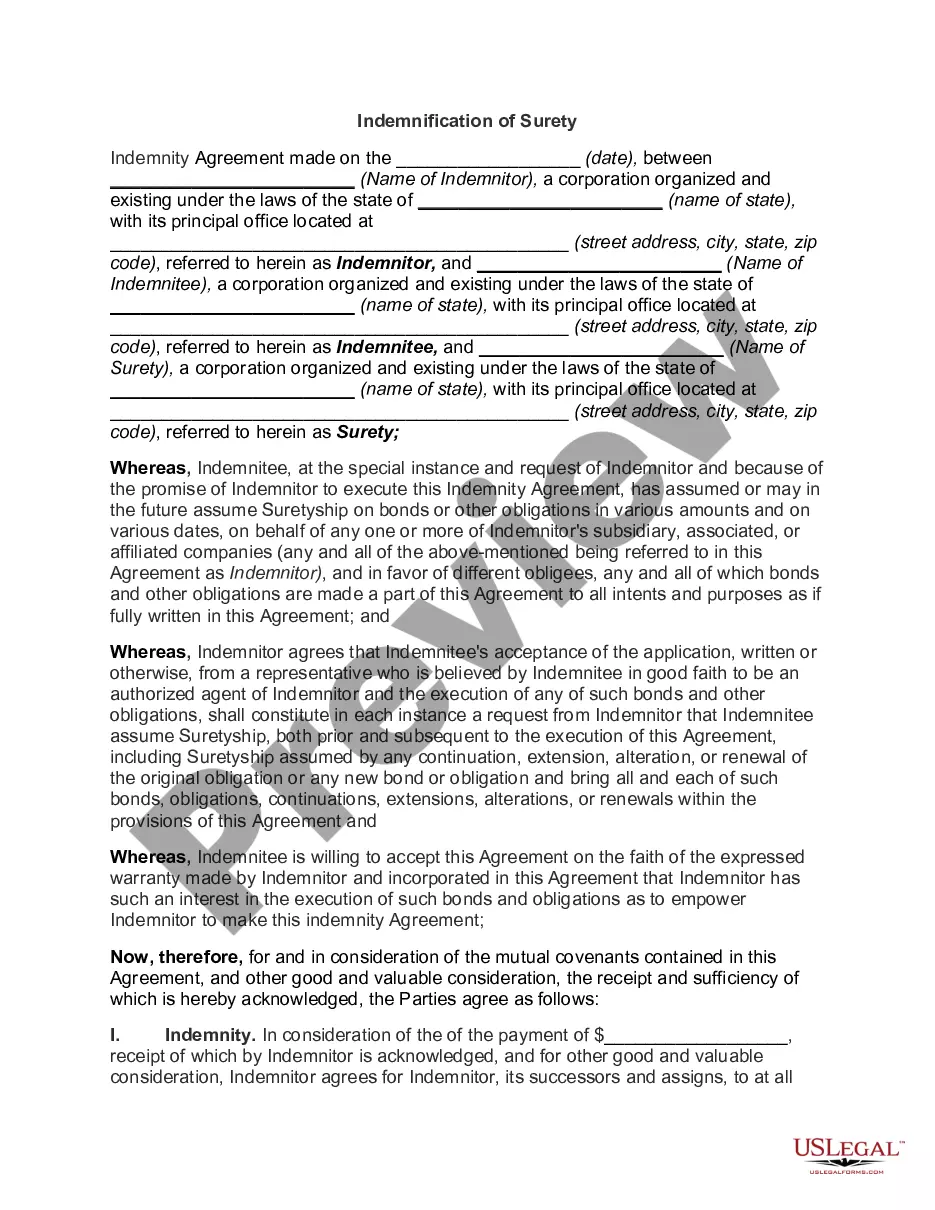
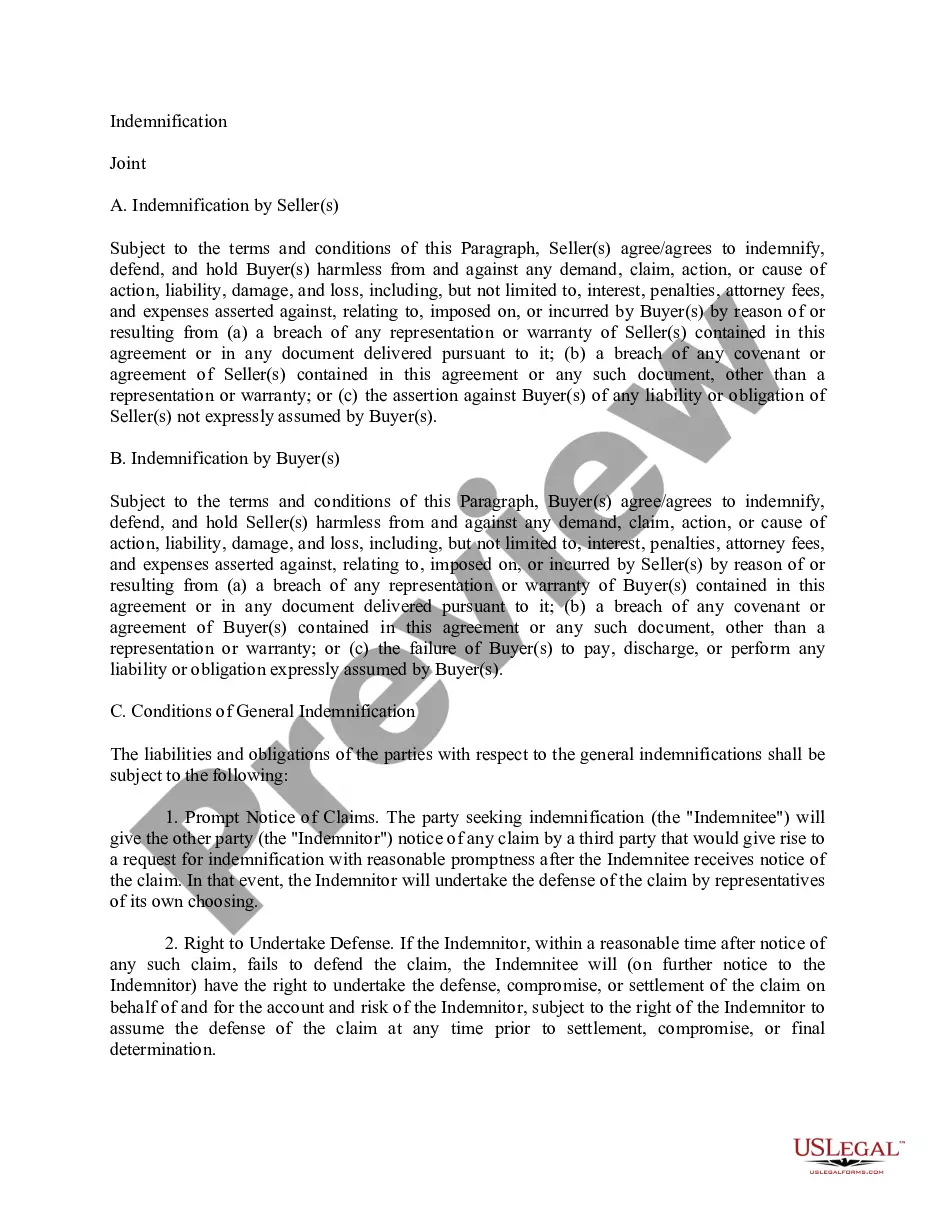
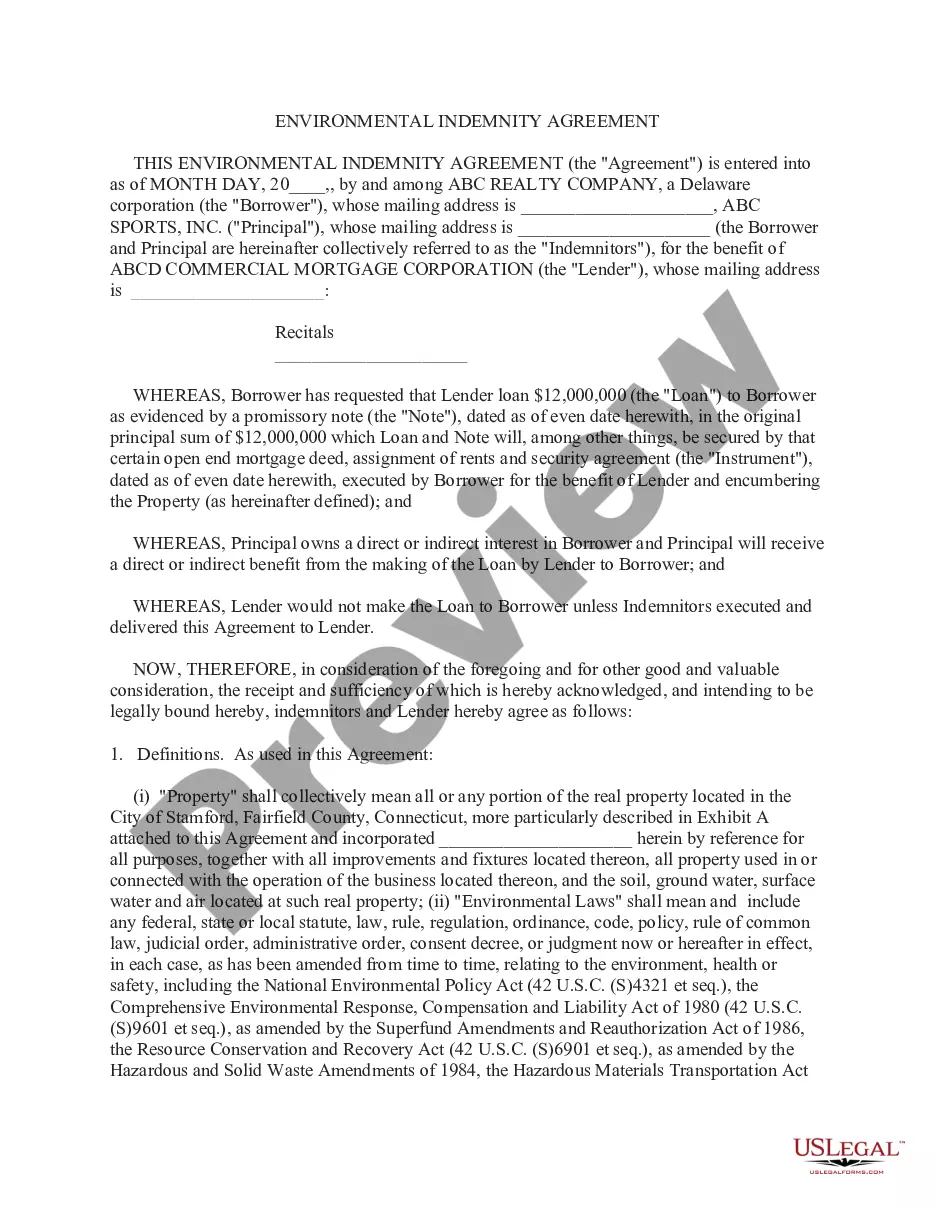
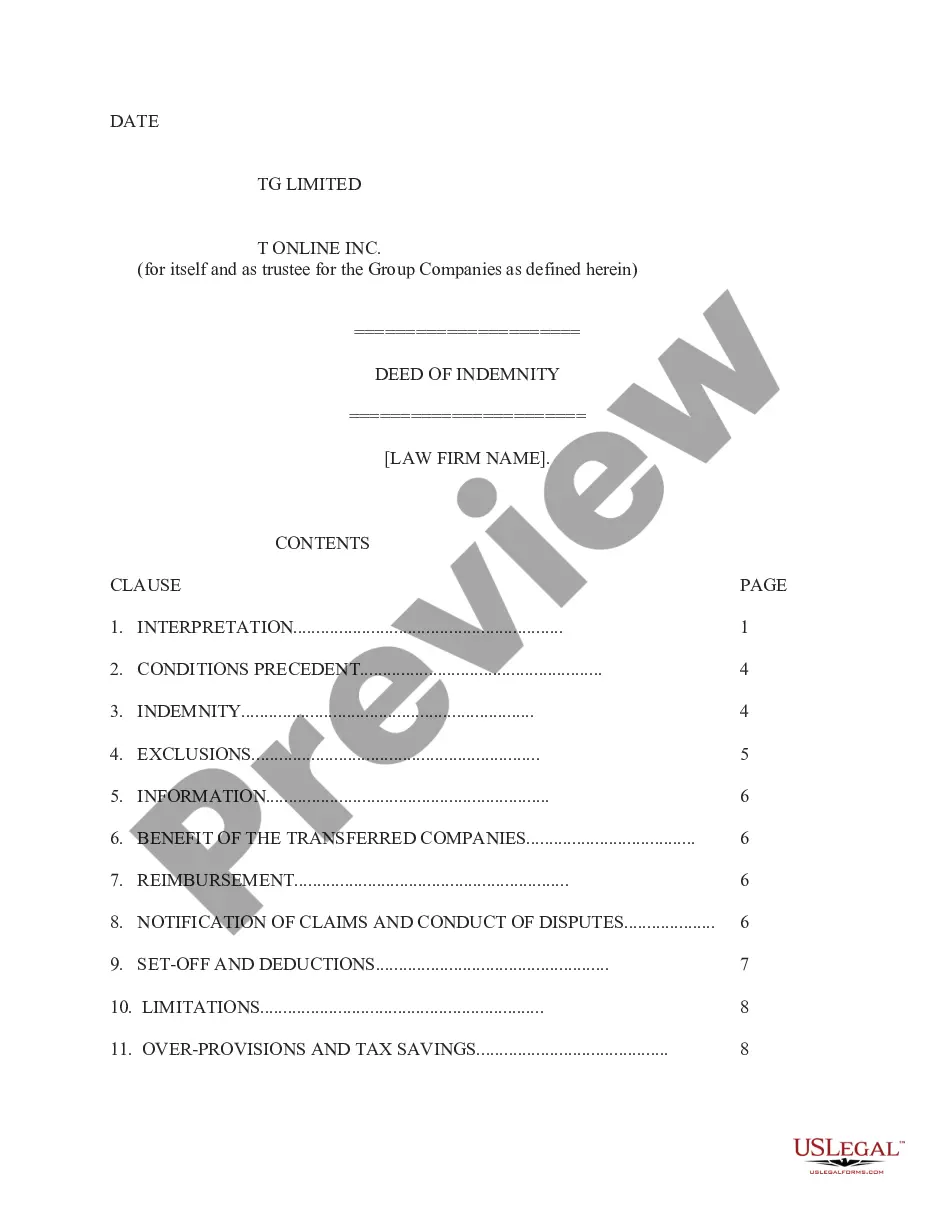
The Contractor Indemnification form is a legal document designed to protect individuals or entities from legal claims and lawsuits associated with the work performed by a contractor and their employees. It establishes a contractual obligation for the contractor to defend and indemnify the party seeking protection, typically referred to as the indemnitee. This form is crucial when hiring contractors, as it clarifies financial responsibilities and helps manage potential legal risks, setting it apart from general liability waivers and contracts.
Form components explained
- Identifying information for both the contractor (indemnitor) and the party seeking protection (indemnitee).
- A detailed description of the work being performed by the contractor.
- Provisions outlining the scope of indemnification, including any associated costs such as attorney fees.
- Legal framework governing the agreement, specifying the applicable state laws.
- Signature lines for both parties to acknowledge and execute the agreement.
Situations where this form applies
This form should be used any time an individual or organization hires a contractor to perform work that may expose them to legal claims. Common scenarios include construction projects, maintenance work, or any service where contractor employees may be present on the indemniteeâs property and could potentially cause injuries or damage. Using this form helps ensure that the contractor takes responsibility for their actions and those of their employees, providing peace of mind for the hiring party.
Who should use this form
- Homeowners hiring contractors for renovations or repairs.
- Business owners engaging contractors for maintenance or construction services.
- Property managers overseeing projects that involve external contractors.
- Associations or organizations that require contractors to work on communal property.
Completing this form step by step
- Identify and enter the names of the contractor (indemnitor) and the party seeking protection (indemnitee).
- Provide a detailed description of the work to be performed to clarify the scope of the agreement.
- Specify any relevant contract numbers or references related to the project.
- Enter the applicable state governing laws that will apply to the agreement.
- Both parties should sign and date the agreement to validate it.
Is notarization required?
This form does not typically require notarization unless specified by local law. However, it is advisable to consult local regulations to ensure compliance with jurisdiction-specific requirements.
Get your form ready online
Our built-in tools help you complete, sign, share, and store your documents in one place.
Make edits, fill in missing information, and update formatting in US Legal Forms—just like you would in MS Word.
Download a copy, print it, send it by email, or mail it via USPS—whatever works best for your next step.
Sign and collect signatures with our SignNow integration. Send to multiple recipients, set reminders, and more. Go Premium to unlock E-Sign.
If this form requires notarization, complete it online through a secure video call—no need to meet a notary in person or wait for an appointment.
We protect your documents and personal data by following strict security and privacy standards.

Make edits, fill in missing information, and update formatting in US Legal Forms—just like you would in MS Word.

Download a copy, print it, send it by email, or mail it via USPS—whatever works best for your next step.

Sign and collect signatures with our SignNow integration. Send to multiple recipients, set reminders, and more. Go Premium to unlock E-Sign.

If this form requires notarization, complete it online through a secure video call—no need to meet a notary in person or wait for an appointment.

We protect your documents and personal data by following strict security and privacy standards.
Avoid these common issues
- Failing to include a detailed description of the work, which can lead to misunderstandings.
- Not specifying the governing law, which can affect enforceability.
- Leaving out necessary signatures or dates, rendering the agreement invalid.
- Overlooking potential local law requirements that may impact indemnification clauses.
Benefits of completing this form online
- Convenient access to the form allows for easy download and completion.
- Editability enables users to tailor the document to their specific needs without starting from scratch.
- Reliability in having a legally vetted form drafted by licensed attorneys, ensuring compliance and protection.
Looking for another form?


Form popularity
FAQ
A government agency may not indemnify its contractors for claims brought against them by reason of their own negligence. Nor may the United States agree in advance to assume liability for the negligence of its employees for which it may not otherwise be responsible under the Federal Tort Claims Act.
You should look to limit indemnification clauses by narrowing their scope, putting in caps on damages, and clearly defining the indemnifiable acts (i.e. the representations and warranties in the example above). Also consider purchasing insurance as a means to limit your financial risk.
An indemnification is a contractual obligation by one party (indemnitor) to pay or compensate for the losses, damages or liabilities incurred by another party to the contract (indemnitee) or by a third party.
It's a legally binding promise to protect another person against loss from an event or series of events: they are indemnified and protected from liability. Sometimes, indemnities are implied into the terms of contracts automatically, due to the nature of the legal relationship between the two parties.
An indemnity contract is a legal arrangement between two parties in which one party agrees to pay another party for a loss or harm that meets certain requirements and conditions unless other circumstances are specified.
Indemnification provisions are generally enforceable. There are certain exceptions however. Indemnifications that require a party to indemnify another party for any claim irrespective of fault ('broad form' or 'no fault' indemnities) generally have been found to violate public policy.
Indemnification clauses are clauses in contracts that set out to protect one party from liability if a third-party or third entity is harmed in any way. It's a clause that contractually obligates one party to compensate another party for losses or damages that have occurred or could occur in the future.
A typical example is an insurance company wherein the insurer or indemnitor agrees to compensate the insured or indemnitee for any damages or losses he/she may incur during a period of time.
Building Blocks of an Indemnification Clause. Typical indemnification provisions will be long sentences with many clauses, legal-sounding words, and long lists of specific details. Insurance Implications and Other Contractual Matters. Other Technical Elements of an Indemnification Provision. Takeaway.