Indemnification Agreement for Property Survey
What this document covers
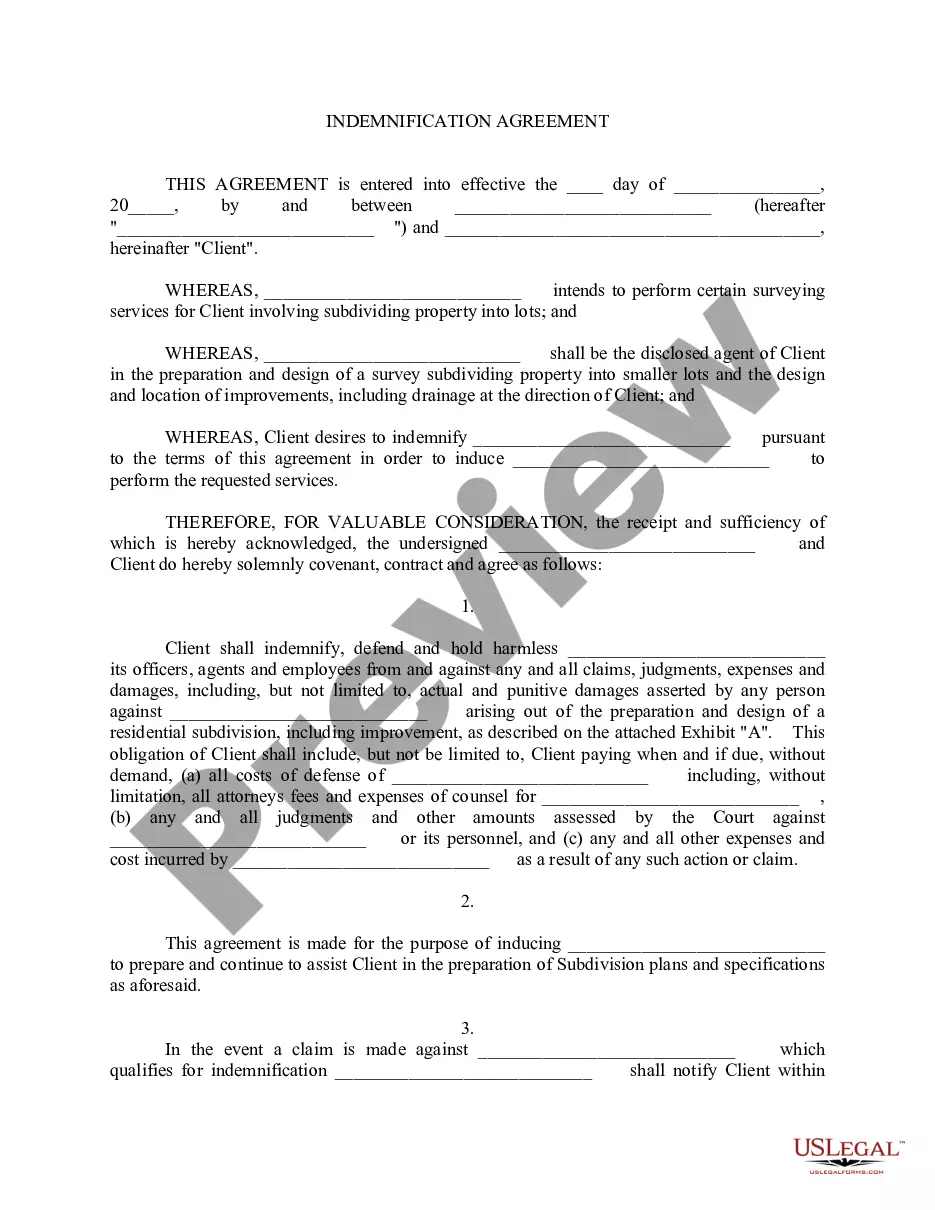
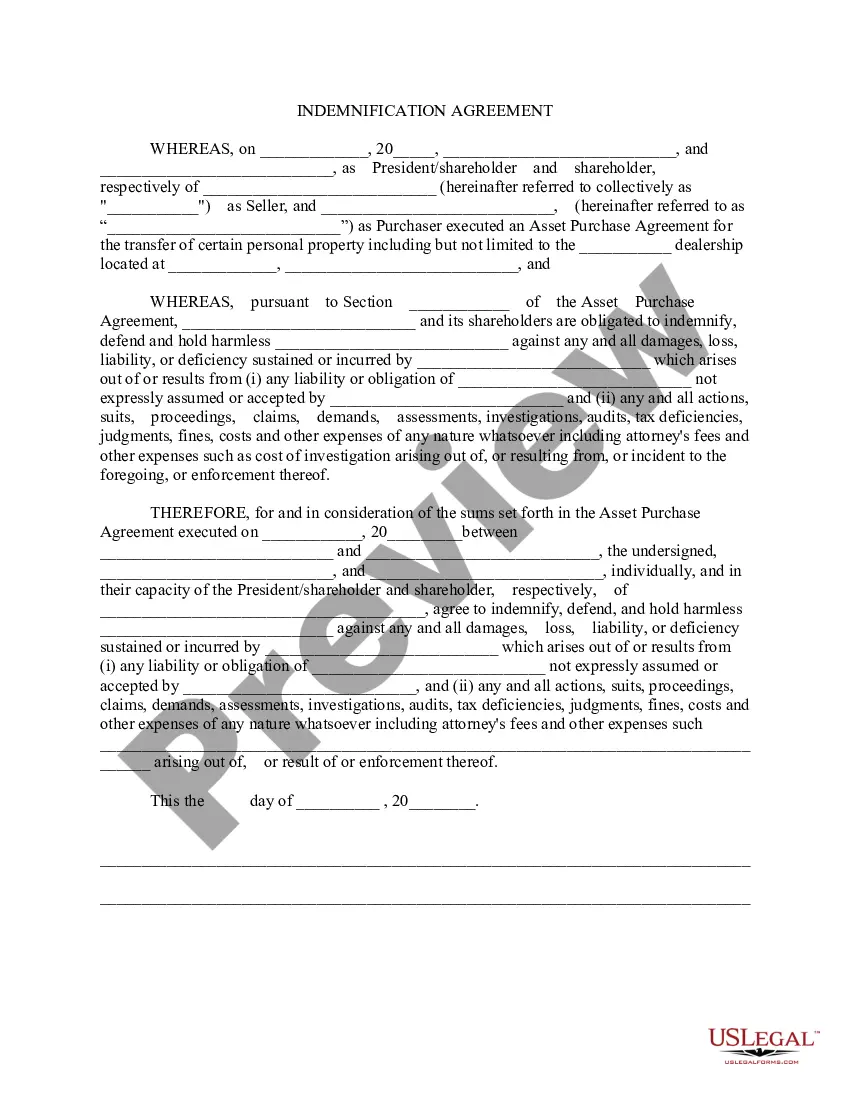
The Indemnification Agreement for Property Survey is a legal document that establishes a contractual relationship between a contractor and a client regarding surveying services. It outlines the contractor's role as an agent of the client in preparing and designing a property survey for subdividing land into smaller lots, while also detailing the indemnification provisions. This form differs from other agreements by specifically addressing the liability associated with surveying practices and the clientâs responsibility to protect the contractor from potential claims arising from their work.
Key parts of this document
- The effective date of the agreement and identification of the parties involved.
- Scope of surveying services and responsibilities of the contractor as an agent.
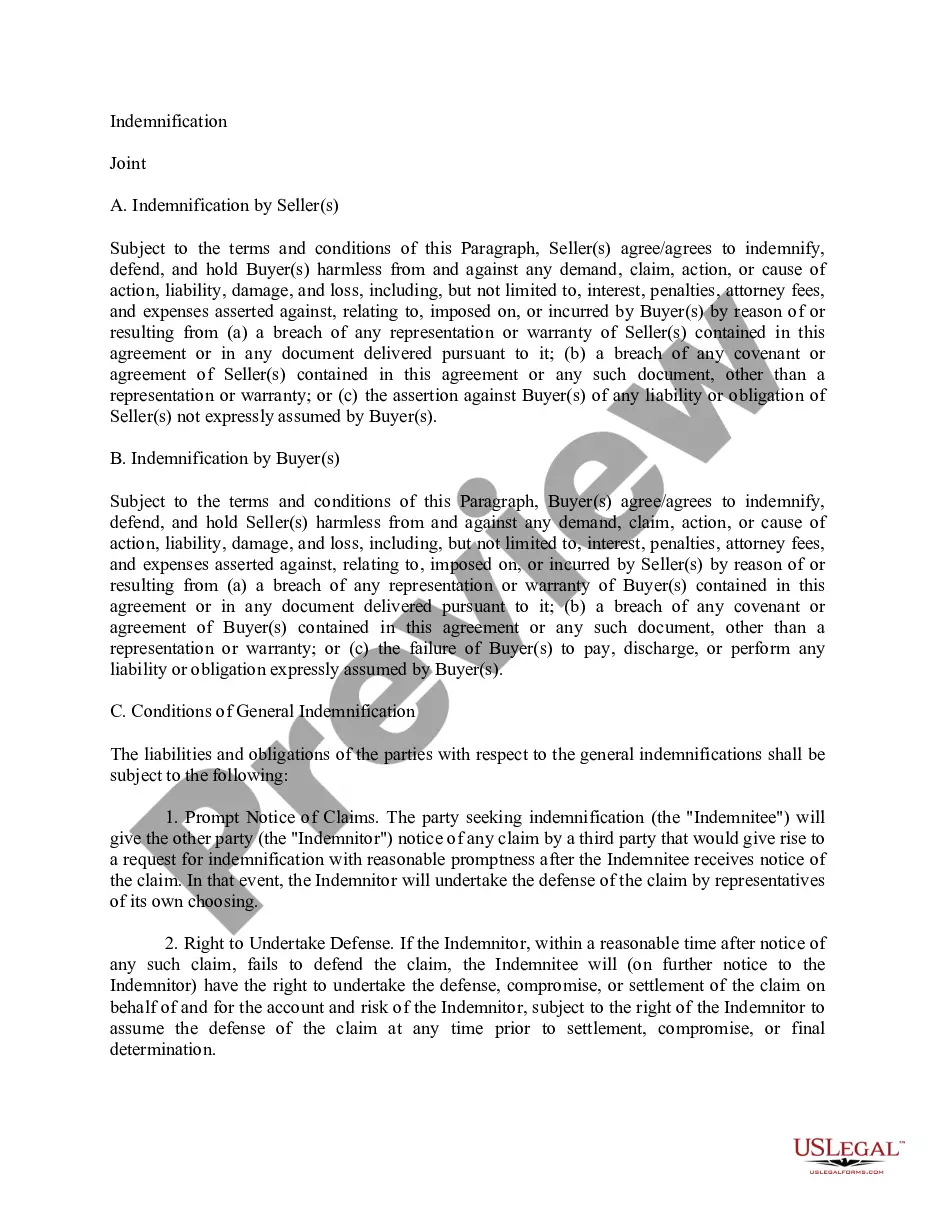
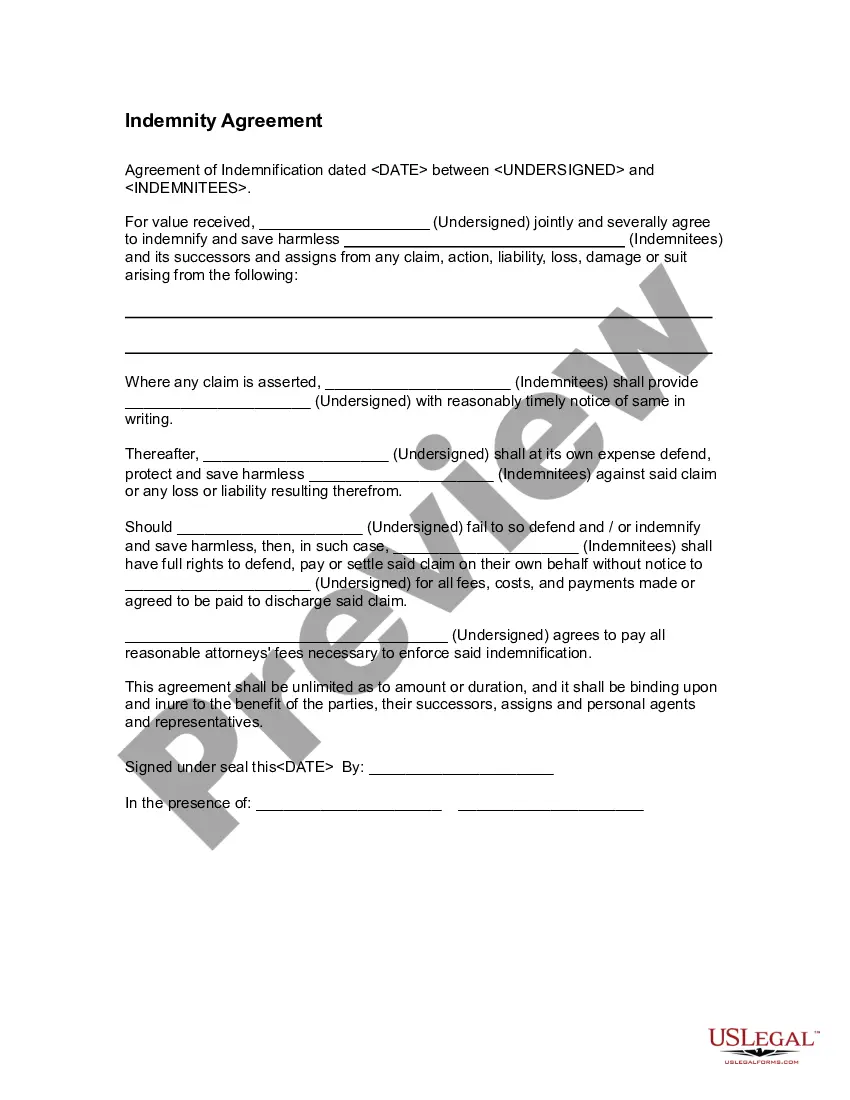
- Indemnification clause that requires the client to defend and hold harmless the contractor from claims related to the property survey.
- Notice requirements for any claims made against the contractor.
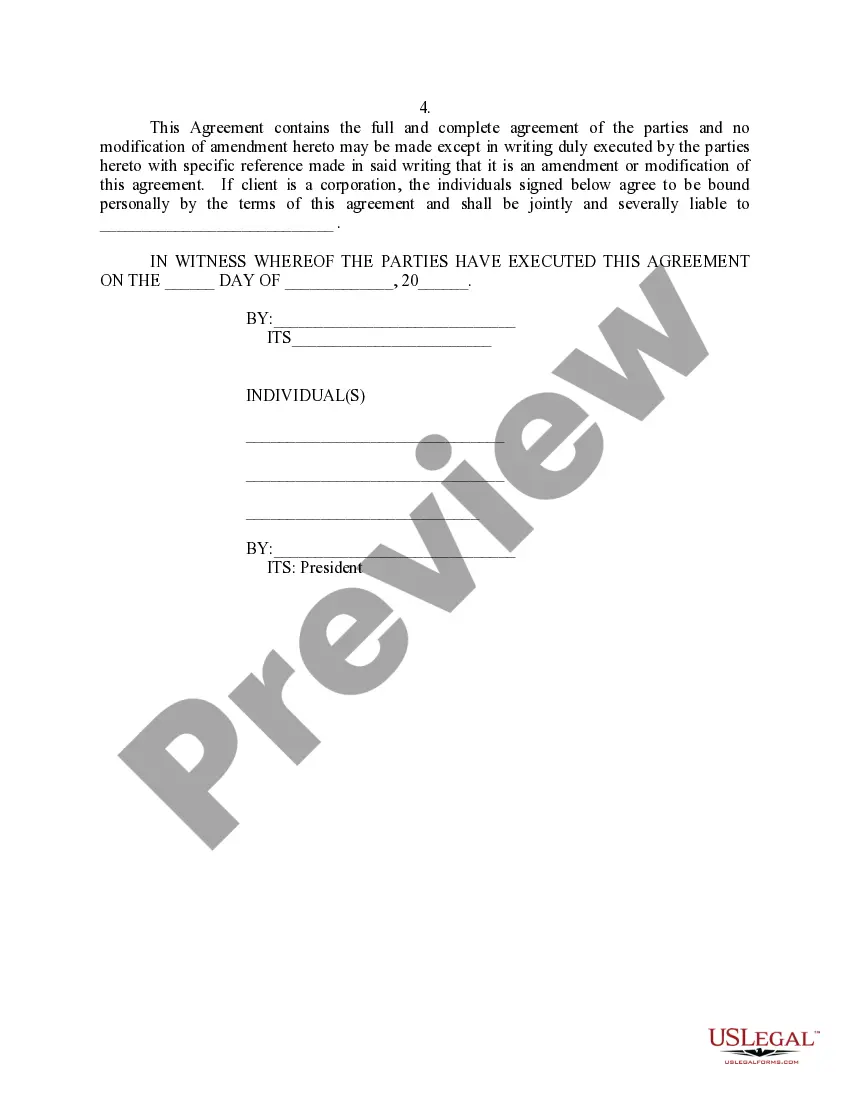
- Provisions for amendments and modifications of the agreement.
- Signatures of the parties to execute the agreement.
Common use cases
This form should be used when a contractor is hired to provide surveying services for a client, especially in projects involving the subdivision of property into smaller lots. It is particularly essential when there are potential liabilities or claims that could arise from the surveying work, allowing the client to indemnify the contractor and ensuring a clear understanding of responsibilities and protections for both parties.
Who should use this form
- Property owners engaging a contractor for surveying services.
- Surveying contractors seeking protection from liabilities related to their work.
- Developers involved in subdividing land for residential or commercial use.
- Legal professionals advising clients on risk management in surveying contracts.
Completing this form step by step
- Identify the parties involved and fill in their names and addresses.
- Specify the effective date of the agreement at the top of the form.
- Clearly define the scope of surveying services and responsibilities of the contractor.
- Include specific clauses regarding indemnification and conditions for claims.
- Obtain signatures from both the contractor and client to execute the agreement.
- Keep a copy for your records and provide another to the other party.
Is notarization required?
This form does not typically require notarization unless specified by local law. However, users should check the requirements in their jurisdiction to ensure compliance with any legal formalities.
Get your form ready online
Our built-in tools help you complete, sign, share, and store your documents in one place.
Make edits, fill in missing information, and update formatting in US Legal Forms—just like you would in MS Word.
Download a copy, print it, send it by email, or mail it via USPS—whatever works best for your next step.
Sign and collect signatures with our SignNow integration. Send to multiple recipients, set reminders, and more. Go Premium to unlock E-Sign.
If this form requires notarization, complete it online through a secure video call—no need to meet a notary in person or wait for an appointment.
We protect your documents and personal data by following strict security and privacy standards.

Make edits, fill in missing information, and update formatting in US Legal Forms—just like you would in MS Word.

Download a copy, print it, send it by email, or mail it via USPS—whatever works best for your next step.

Sign and collect signatures with our SignNow integration. Send to multiple recipients, set reminders, and more. Go Premium to unlock E-Sign.

If this form requires notarization, complete it online through a secure video call—no need to meet a notary in person or wait for an appointment.

We protect your documents and personal data by following strict security and privacy standards.
Avoid these common issues
- Failing to include all partiesâ names and information correctly.
- Omitting specific details about the surveying services being provided.
- Not clearly defining the indemnification terms, which can lead to confusion later.
- Neglecting to have both parties sign and date the agreement.
- Forgetting to attach any relevant documentation or Exhibit A that outlines the specifics of the survey.
Why use this form online
- Easy access to a professionally drafted indemnification agreement tailored for property surveying.
- Immediate download and editability, allowing customization to match specific needs.
- Time-saving compared to traditional methods of obtaining legal forms.
- Cost-effective solution for securing necessary legal documents without needing a lawyerâs visit.
Legal use & context
- The agreement is enforceable under contract law, provided all parties fulfill their obligations.
- Clients should be aware of the extent of their indemnification obligations to avoid excessive liabilities.
- Consultation with a legal expert may be beneficial to tailor the agreement to specific legal environments.
Quick recap
- The Indemnification Agreement for Property Survey is crucial for protecting contractors from potential liabilities.
- It must be filled out accurately, specifying all relevant details of the project and parties involved.
- Understanding the terms of indemnification can significantly impact the legal safety of both contractors and clients in real estate transactions.
Looking for another form?
Form popularity
FAQ
When the term indemnity is used in the legal sense, it may also refer to an exemption from liability for damages. Indemnity is a contractual agreement between two parties. In this arrangement, one party agrees to pay for potential losses or damages caused by another party.
Generally (but not always), California courts agree to provide indemnity for own negligence if the parties use sufficiently specific and explicit language that is strictly construed against the indemnitee.
With a real estate indemnity agreement, one party is pledging to protect another from any kind of financial loss or from a lawsuit of some kind.With a real estate indemnity agreement, one party, usually the buyer, agrees to take full responsibility for a mistake or a problem caused by the other.
The main difference in this case is that hold harmless may require a party to protect against actual losses as well as potential losses while indemnification protects against actual losses only.
In practice, a hold harmless and an indemnity are functionally equivalent in that both require a party to assume responsibility for losses incurred by another party in connection with certain acts and circumstances. Some argue that while an indemnity shifts losses, a hold harmless shifts both losses and liability.
Generally, indemnification is the buyer's remedy for a breach of any promises made in the purchase agreement or losses incurred relating to specific liabilities outlined in the purchase agreement. Indemnification allocates the risk of various post-closing losses between buyer and seller.
It's still your business decision whether you sign them or not, but you should do so only where it is a critical contract that you have no way of modifying or negotiating changes. In contrast, the best kind of Indemnity Agreement is commonly called a Mutual Indemnity Agreement or a Mutual Hold Harmless Provision.
An indemnity-holder has the right to recover from the indemnifier all incidental costs which he may be compelled to pay in any such suit if, in bringing or defending it, he did not contravene the orders of the promisor, and acted as it would have been prudent for him to act in the absence of any contract of indemnity,