Complaint regarding Dentist Malpractice
About this form
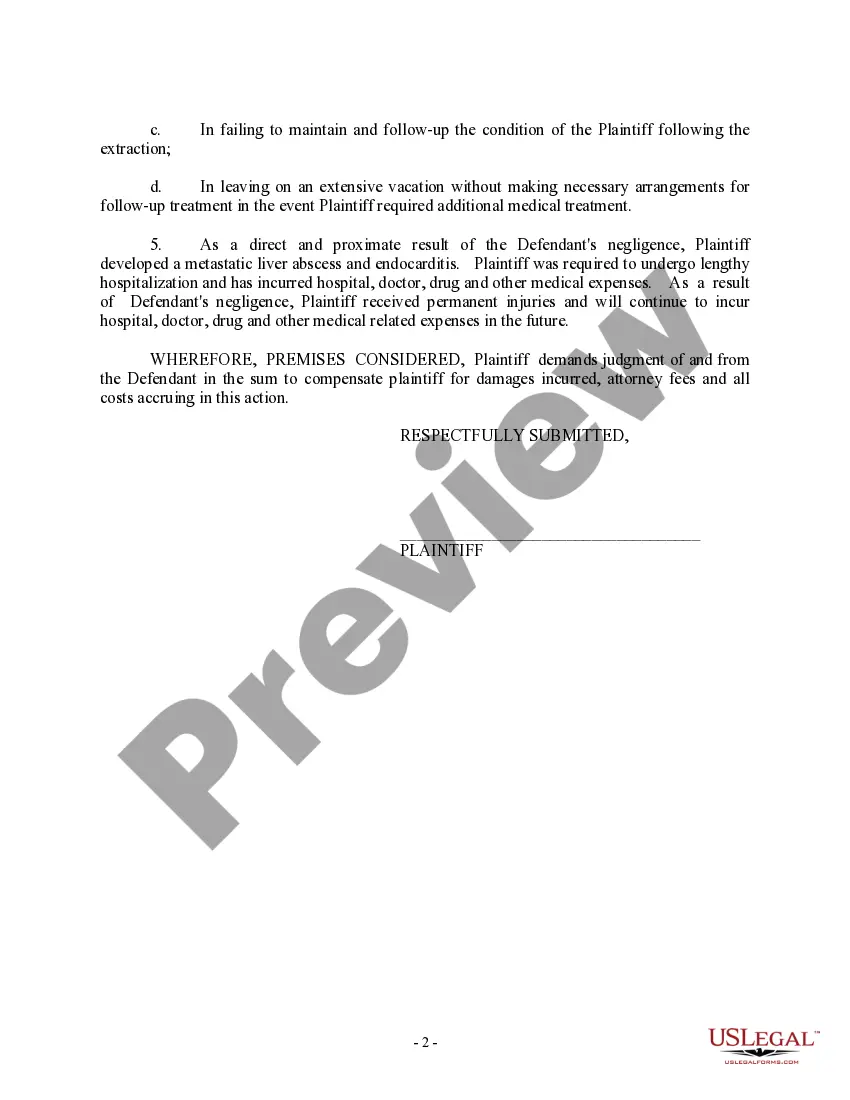
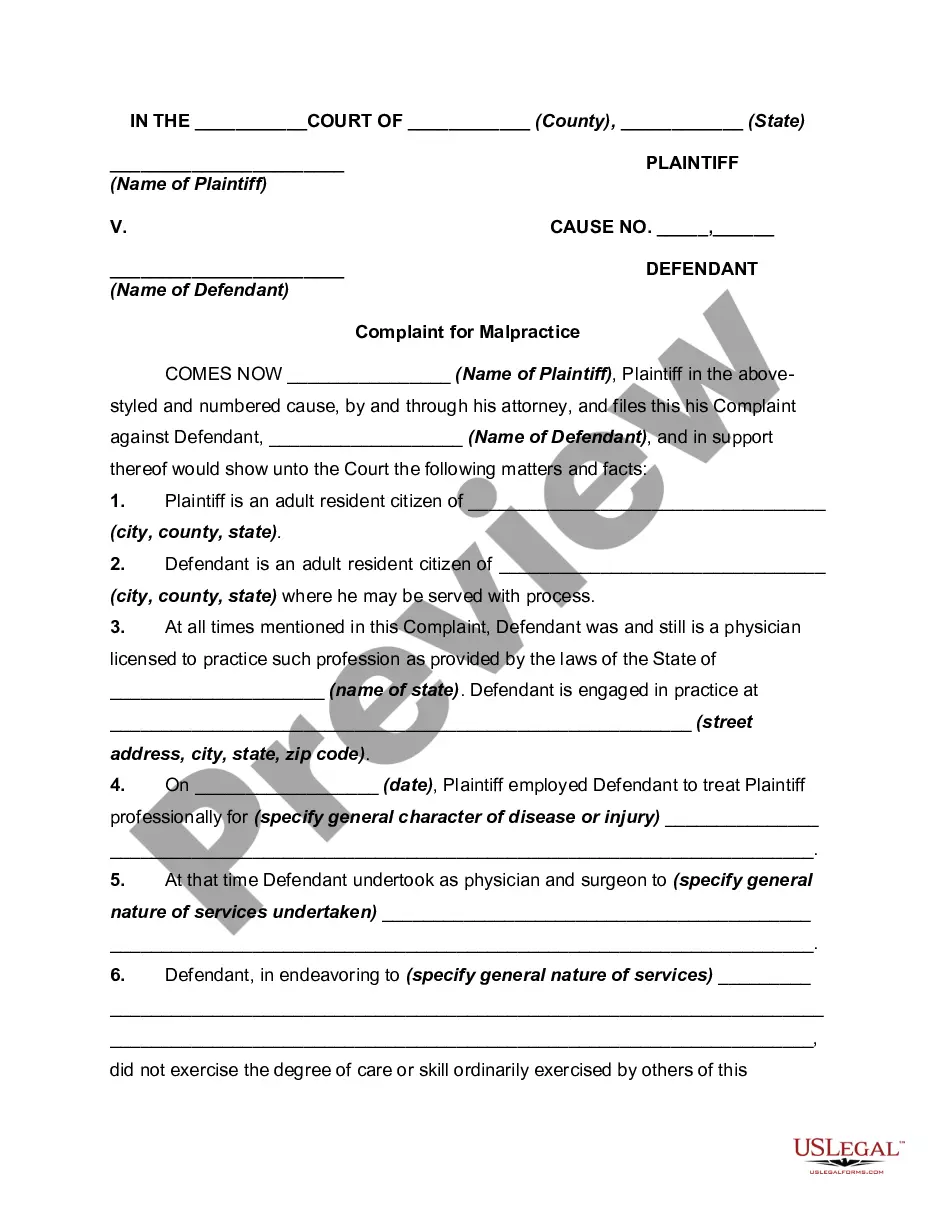
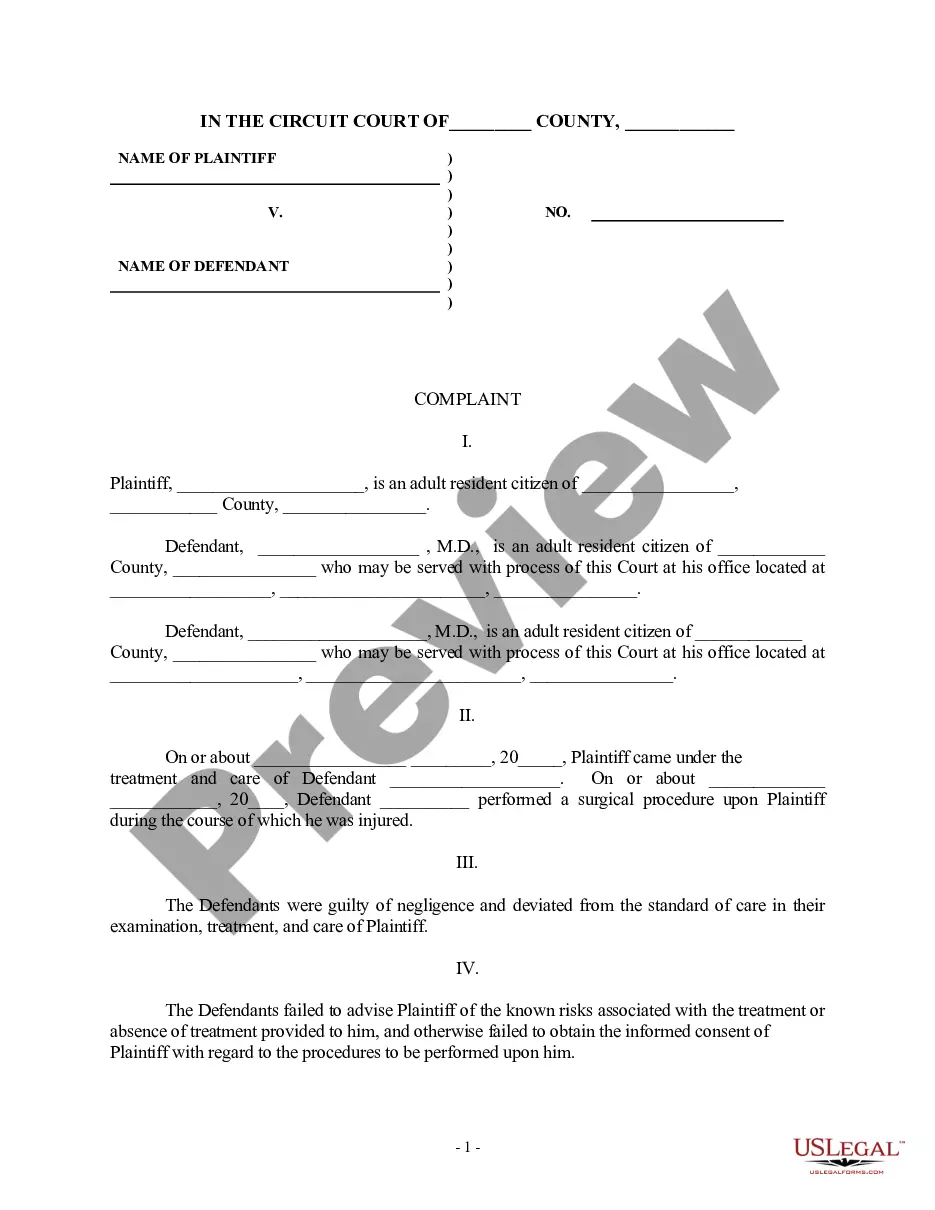
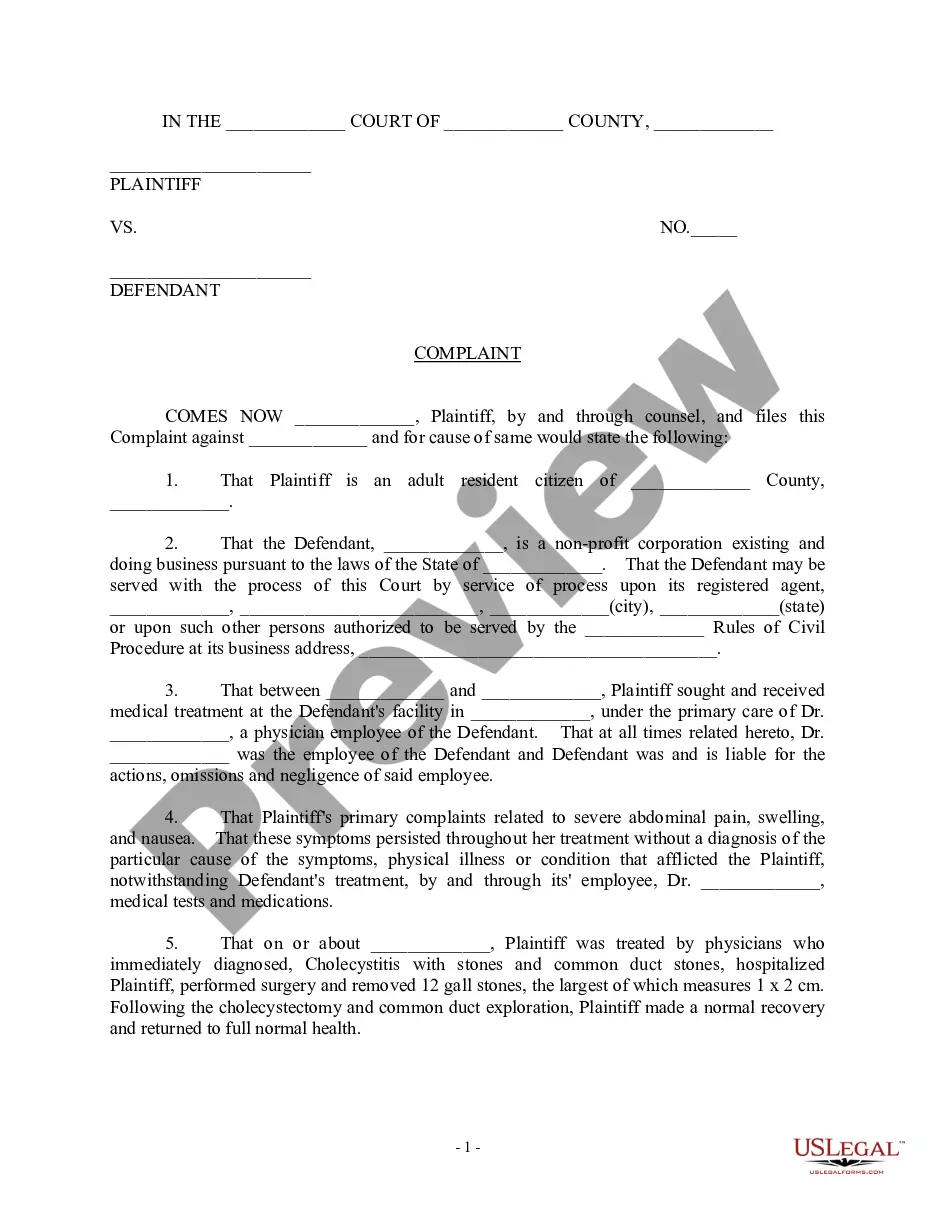
The Complaint regarding Dentist Malpractice is a legal document used to formally address grievances related to negligent dental practices. This specific complaint asserts that injuries resulted from improper tooth extraction and inadequate follow-up care, leading to severe medical conditions. Unlike other legal complaints, this form is tailored specifically for cases involving dental malpractice, making it essential for individuals seeking redress after suffering harm due to a dentist's negligence.
What’s included in this form
- Identification of the plaintiff and the defendant, including their addresses.
- A statement of the events leading to the complaint, detailing the treatment received.
- Allegations of negligence against the defendant, specifying deviations from standard care.
- Details regarding the injuries suffered by the plaintiff due to the defendant's actions.
- A demand for judgment, including compensation for damages and attorney fees.

When to use this document
This form should be used when an individual believes that they have suffered harm due to the negligence of a dentist. Situations may include improper extractions, failure to diagnose conditions, or lack of proper follow-up care that results in serious health complications. If you have experienced adverse health outcomes following dental treatment, this complaint can help you seek legal remedy.
Who should use this form
- Individuals who believe they have been victims of dentist malpractice.
- Patients who experienced complications from dental procedures.
- Persons looking to file a formal legal complaint against a dentist in their local jurisdiction.
Steps to complete this form
- Identify and enter the names and contact information of the plaintiff and defendant.
- Describe the dental treatment received, including the date and location of the service.
- List the specific allegations of negligence against the dentist in detail.
- Document the injuries and complications that resulted from the alleged malpractice.
- Specify the damages sought, including any medical expenses and attorney fees.
Does this form need to be notarized?
This form does not typically require notarization unless specified by local law. However, it is always advisable to check local regulations to confirm any notarization requirements before submission.
Get your form ready online
Our built-in tools help you complete, sign, share, and store your documents in one place.
Make edits, fill in missing information, and update formatting in US Legal Forms—just like you would in MS Word.
Download a copy, print it, send it by email, or mail it via USPS—whatever works best for your next step.
Sign and collect signatures with our SignNow integration. Send to multiple recipients, set reminders, and more. Go Premium to unlock E-Sign.
If this form requires notarization, complete it online through a secure video call—no need to meet a notary in person or wait for an appointment.
We protect your documents and personal data by following strict security and privacy standards.

Make edits, fill in missing information, and update formatting in US Legal Forms—just like you would in MS Word.

Download a copy, print it, send it by email, or mail it via USPS—whatever works best for your next step.

Sign and collect signatures with our SignNow integration. Send to multiple recipients, set reminders, and more. Go Premium to unlock E-Sign.

If this form requires notarization, complete it online through a secure video call—no need to meet a notary in person or wait for an appointment.

We protect your documents and personal data by following strict security and privacy standards.
Avoid these common issues
- Failing to provide complete and accurate information about the treatment received.
- Not clearly articulating the nature of negligence or the specific injuries sustained.
- Omitting the request for damages, including medical costs and legal fees.
Why use this form online
- Convenience of downloading the form anytime and filling it out at your own pace.
- Editability allows you to customize the form specific to your circumstances.
- Access to professionally drafted legal templates aids in ensuring accuracy and thoroughness.
Legal use & context
- This complaint may serve as the basis for initiating legal proceedings against a dentist.
- It is an important document for establishing the plaintiff's claims in a court of law.
- Follow local procedures for filing and serving this complaint to ensure it is enforceable.
Key takeaways
- The Complaint regarding Dentist Malpractice is essential for patients claiming injury due to dental negligence.
- Completing this form accurately ensures a proper legal foundation for your case.
- Understanding the legal process and requirements can significantly impact the outcome of your claim.
Looking for another form?
Form popularity
FAQ
Tell the dental practice what you're worried about. If they don't put things right, you can make a formal complaint - ask the practice what their complaints procedure is. If you're still not happy after they've replied, you can complain to the Parliamentary and Health Service Ombudsman on their website.
If you're looking for a ballpark idea, though, the average payment in a dental malpractice suit is $65,000 (according to Medical Protective, the leading provider of malpractice insurance in the United States).
Dental malpractice refers to medical malpractice for an injury resulting from negligent dental work, failure to diagnose or treat a hazardous condition, delayed diagnosis or treatment of oral disease, or any intentional misconduct on the part of the dentist.
The existence of a duty, usually implied by the doctor-patient relationship. A breach of the duty in malpractice, a breach of the standard of care. Damages in non-legal terms, an injury.
Examples of Dental Malpractice improper extraction of teeth. failure to diagnose various conditions (e.g., TMJ, oral cancer) failure to properly treat complications of care (e.g., infection) failure to properly supervise or oversee actions of employees (e.g., hygienists)
The process for filing a lawsuit against a dentist can quickly become complicated and could vary from state to state. This would depend on each state's laws regarding personal injury, and malpractice and negligence. The appropriate court with which to file the lawsuit could also vary.
The evidence that you can gather yourself will include records of any out-of-pocket expenses that you have had due to the negligence, such as the cost of further dental treatment to repair the damage that the negligent act caused. You may also have missed work or been unable to work due to the negligence.
Anyone can choose to sue their dentist for a bad dental procedure. This is called a dental malpractice lawsuit, and it is part of the medical malpractice practice area within personal injury law.