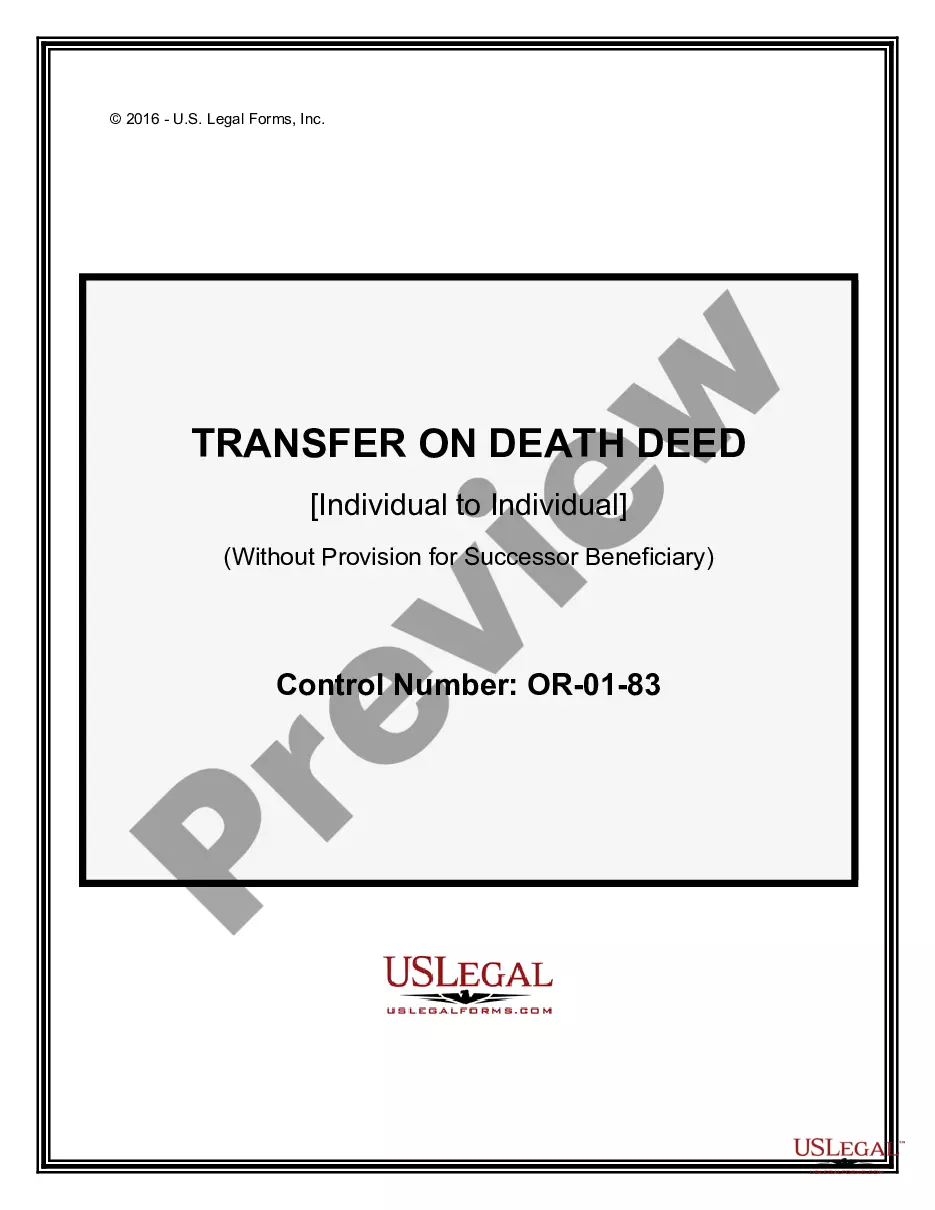
Oregon Transfer on Death Deed from an individual Owner/Grantor to an individual Beneficiary.
Understanding this form
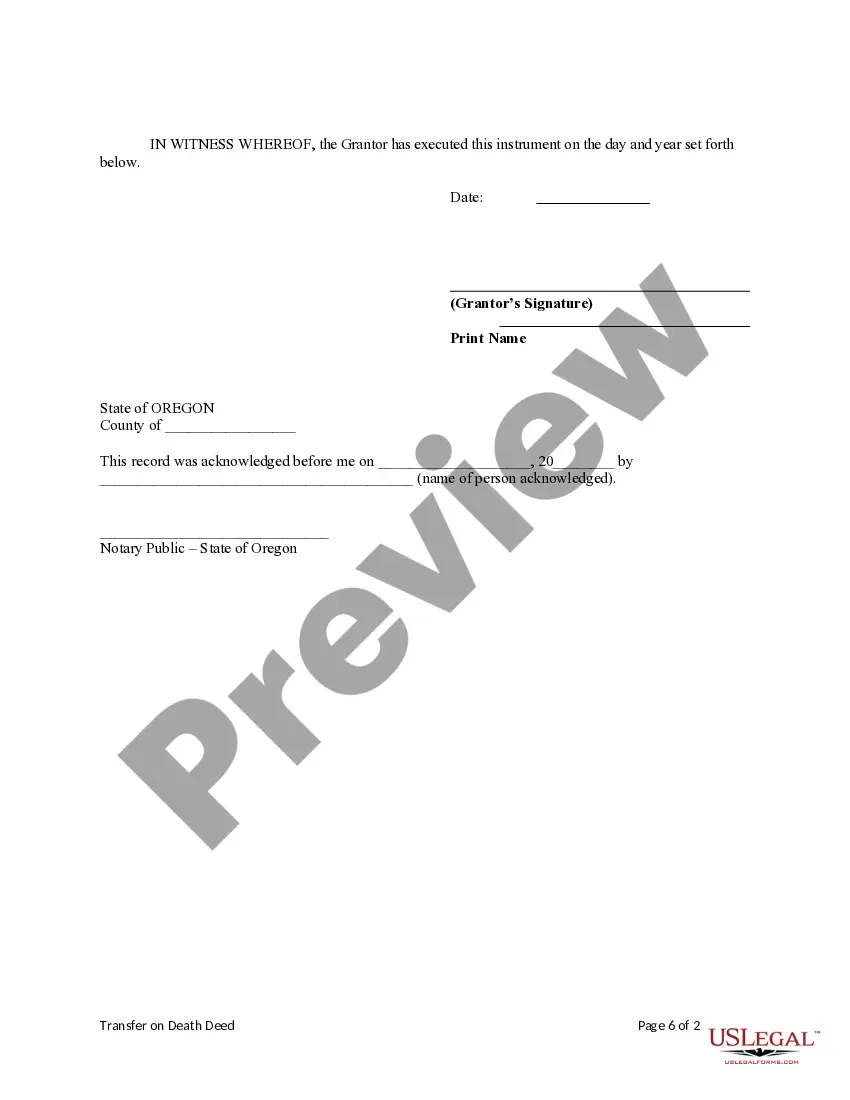
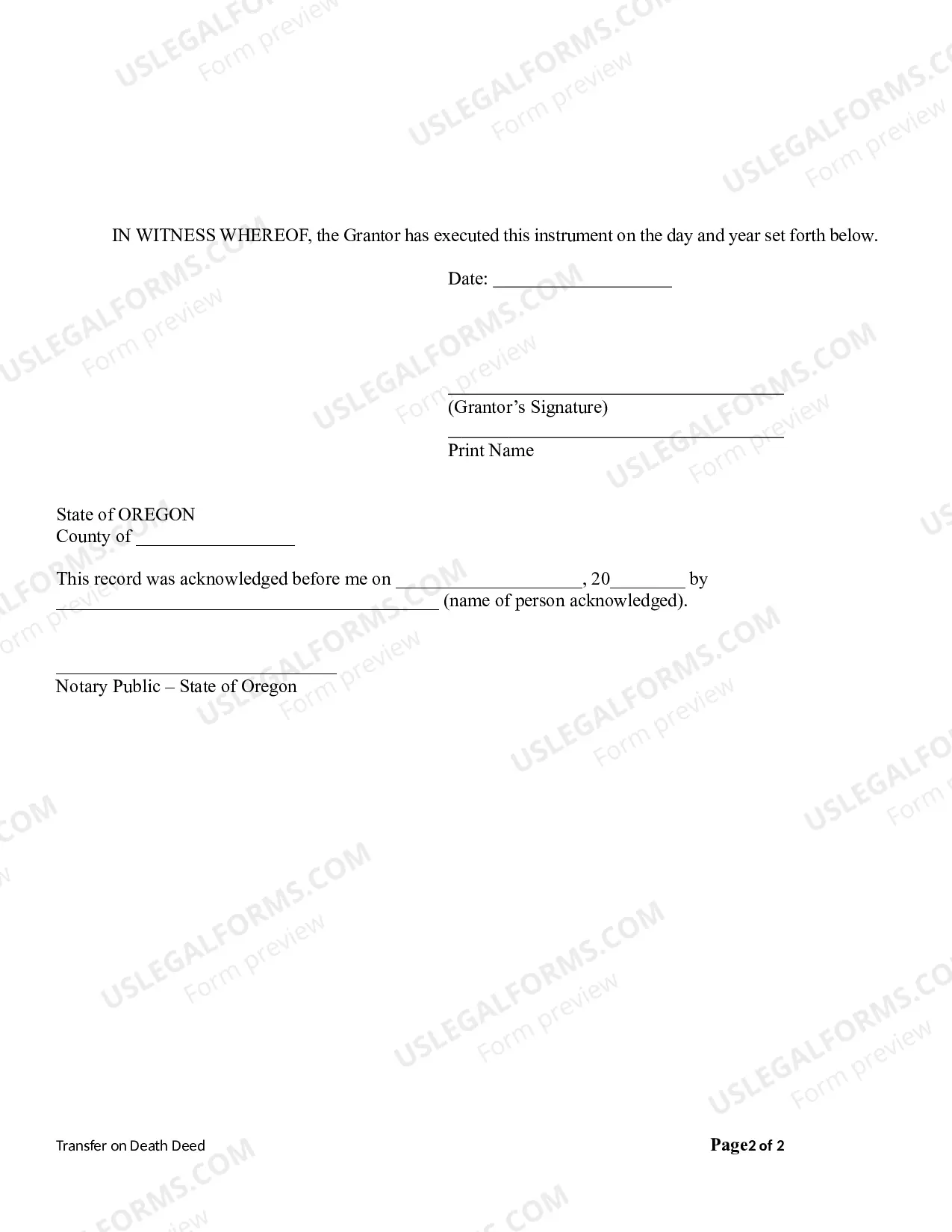
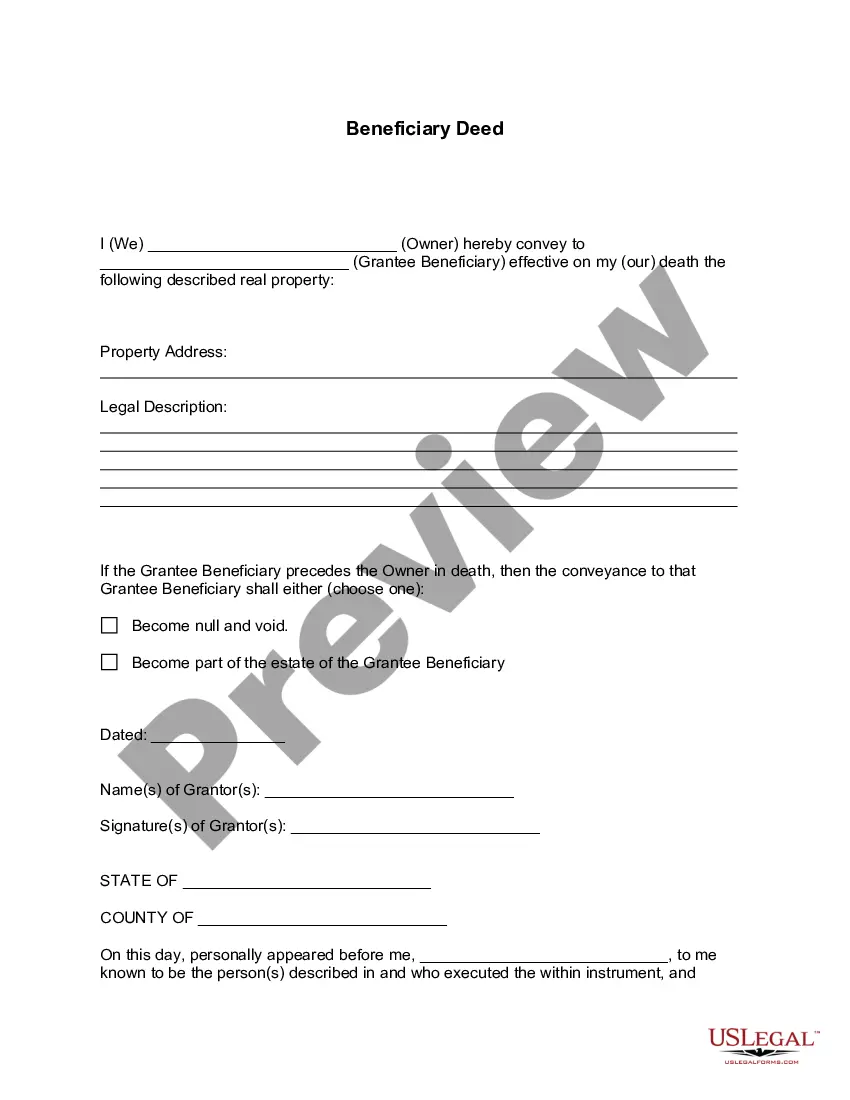
This is a Transfer on Death Deed allowing an individual Grantor to designate a specific Beneficiary who will receive the property upon the Grantor's death. This form is unique as it enables the Grantor to retain control over the property during their lifetime, and the transfer remains revocable until the moment of death. It must be recorded before the Grantor passes away, differentiating it from other types of deeds that take immediate effect.
Key parts of this document
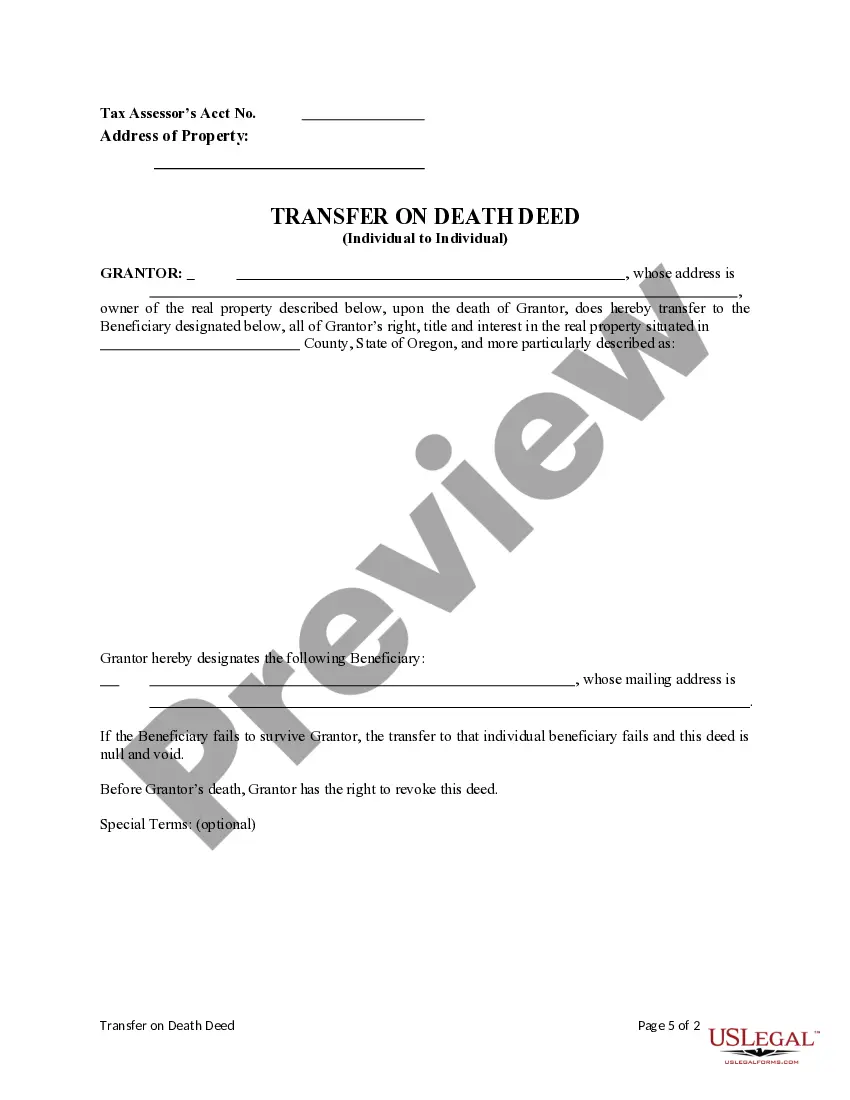
- Identification of the Grantor and Beneficiary.
- Description of the property being transferred.
- Revocability clause, allowing the Grantor to change their mind.
- Requirement for recording before the Grantor's death.
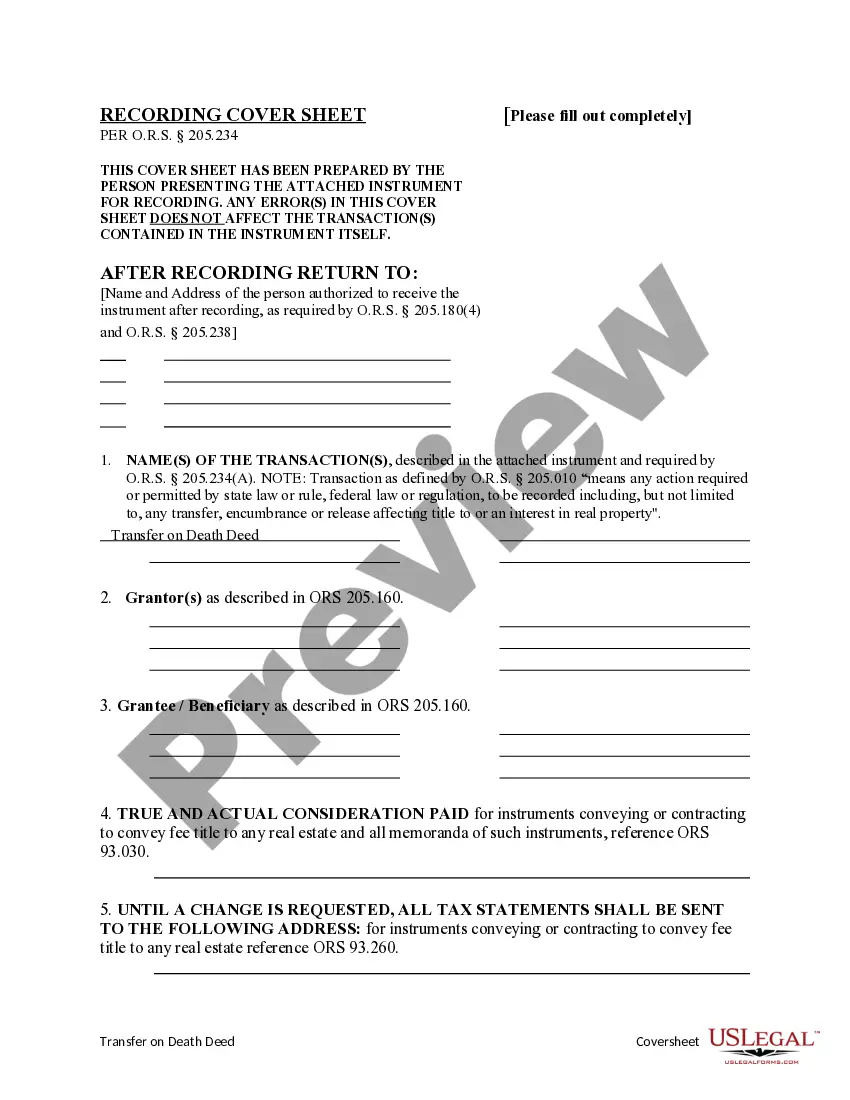
- Coversheet compliance with state law.




When to use this form
This form is ideal for individuals who wish to ensure that their property is transferred directly to a chosen Beneficiary upon death, bypassing probate. It is useful for those who want to simplify the inheritance process without relinquishing ownership or control of their property during their lifetime.
Who needs this form
- Individuals who own real property and wish to designate a Beneficiary.
- Grantors seeking a revocable transfer method until their death.
- Those looking to avoid probate for their properties.
How to complete this form
- Identify the parties involved by entering the names of the Grantor and Beneficiary.
- Provide a detailed description of the property being transferred.
- Include any necessary clauses regarding the revocability of the deed.
- Ensure the form is signed and dated by the Grantor.
- Record the completed form with the County Clerk/Recorder before the Grantor's death.
Does this form need to be notarized?
This form does not typically require notarization unless specified by local law. However, make sure to check local requirements in your jurisdiction for any additional legal formalities.
Get your form ready online
Our built-in tools help you complete, sign, share, and store your documents in one place.
Make edits, fill in missing information, and update formatting in US Legal Forms—just like you would in MS Word.
Download a copy, print it, send it by email, or mail it via USPS—whatever works best for your next step.
Sign and collect signatures with our SignNow integration. Send to multiple recipients, set reminders, and more. Go Premium to unlock E-Sign.
If this form requires notarization, complete it online through a secure video call—no need to meet a notary in person or wait for an appointment.
We protect your documents and personal data by following strict security and privacy standards.

Make edits, fill in missing information, and update formatting in US Legal Forms—just like you would in MS Word.

Download a copy, print it, send it by email, or mail it via USPS—whatever works best for your next step.

Sign and collect signatures with our SignNow integration. Send to multiple recipients, set reminders, and more. Go Premium to unlock E-Sign.

If this form requires notarization, complete it online through a secure video call—no need to meet a notary in person or wait for an appointment.

We protect your documents and personal data by following strict security and privacy standards.
Typical mistakes to avoid
- Failing to record the deed before the Grantor's death.
- Not including a proper legal description of the property.
- Omitting the signature of the Grantor.
- Assuming the deed automatically transfers ownership without proper recording.
Why use this form online
- Convenient access to forms that can be completed at your own pace.
- Editable templates that ensure you include all necessary information.
- Time-saving option to download and print directly from your device.
- Compliance with state laws, with updates as necessary.
- The Transfer on Death Deed is legally binding once recorded.
- Ensure compliance with local laws to avoid potential disputes after the Grantor's death.
- Consulting an attorney for specific situations is advised to ensure all legal aspects are addressed.
Quick recap
- The Transfer on Death Deed allows a straightforward transfer of property upon death.
- It is revocable and must be recorded to be effective.
- Proper completion and recording can avoid complications in the future.
Looking for another form?



Form popularity
FAQ
If you die without leaving a will, then your estate will be distributed in accordance with the law of succession. This also happens: When the will is not valid because it was not made properly.
Effective January 1, 2012, Oregon law provides for a new form of deed known as a transfer on death (TOD) deed. These deeds allow an owner of real property to designate a beneficiary who will obtain title to that real property when the owner dies, without having to go through probate (subject to some exceptions).
A TOD beneficiary designation means Transfer on Death. Some financial institutions also call this a POD designation (or Pay on Death). Usually the people who name TOD beneficiaries on an account or transfer it to a Trust are trying to avoid probate.
When someone dies without a will, it's called dying intestate. When that happens, none of the potential heirs has any say over who gets the estate (the assets and property). When there's no will, the estate goes into probate.Legal fees are paid out of the estate and it often gets expensive.
In most cases, the surviving owner or heir obtains the title to the home, the former owner's death certificate, a notarized affidavit of death, and a preliminary change of ownership report form. When all these are gathered, the transfer gets recorded, the fees are paid, and the county issues a new title deed.
File a petition in probate court. The first step to transferring the property to the rightful new owners is to open up a case in probate court. Petition the court for sale and convey the property to the purchaser. Next, you must petition the court to sell the property.
If you'd like to avoid having your property going through the probate process, it's a good idea to look into a transfer on death deed. A transfer on death deed allows you to select a beneficiary who will receive your property, but only when you've passed away.
If it was inherited, succession law comes into play. Once the beneficiaries and their shares, rights and liabilities are decided, the property has to be transferred in their names. For this you need to apply for property transfer at the sub-registrar's office.
When a joint owner dies, the process is relatively simple you just need to inform the Land Registry of the death. You should complete a 'Deceased joint proprietor' form on the government's website and then send the form to the Land Registry, with an official copy of the death certificate.