Limited Liability Company - LLC - Formation Questionnaire
What is this form?
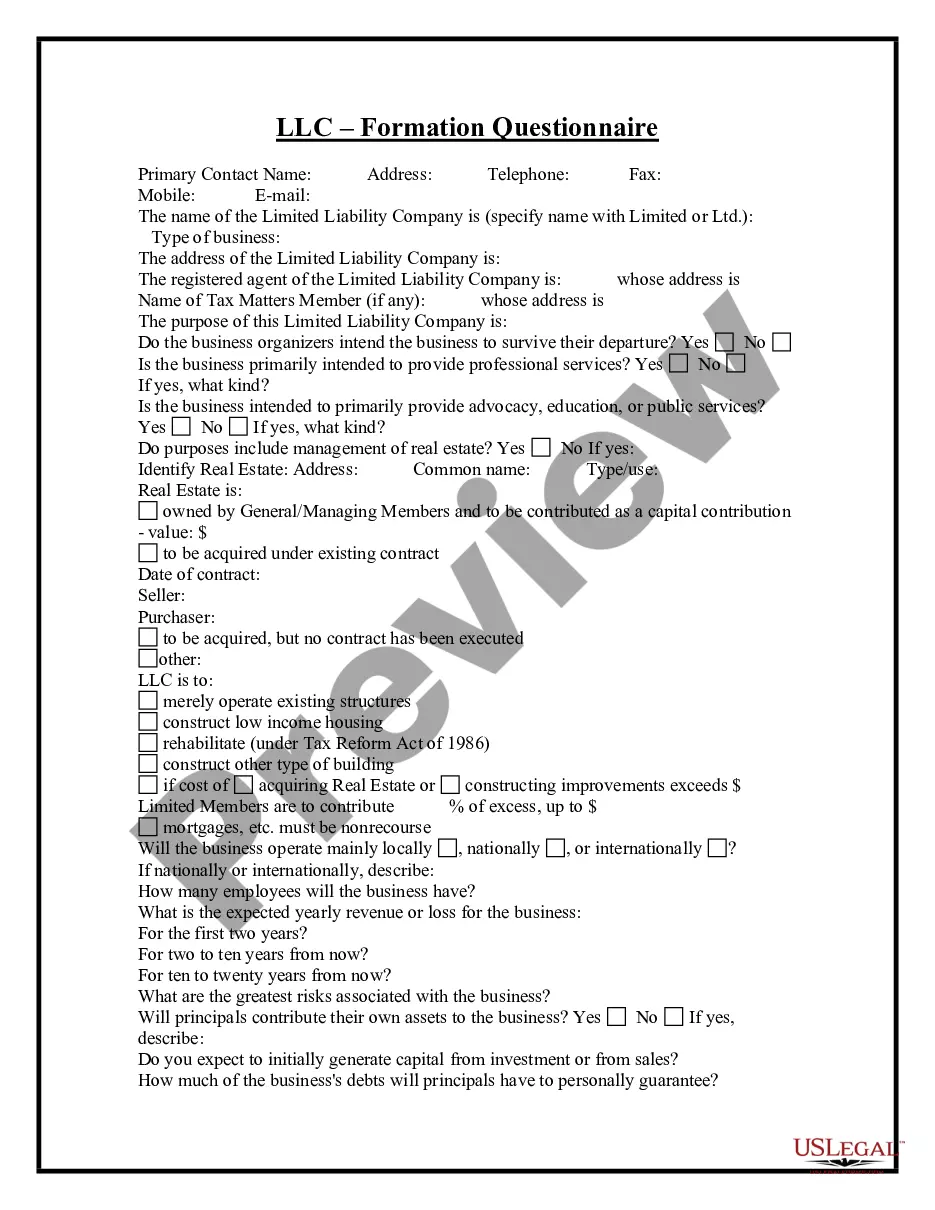
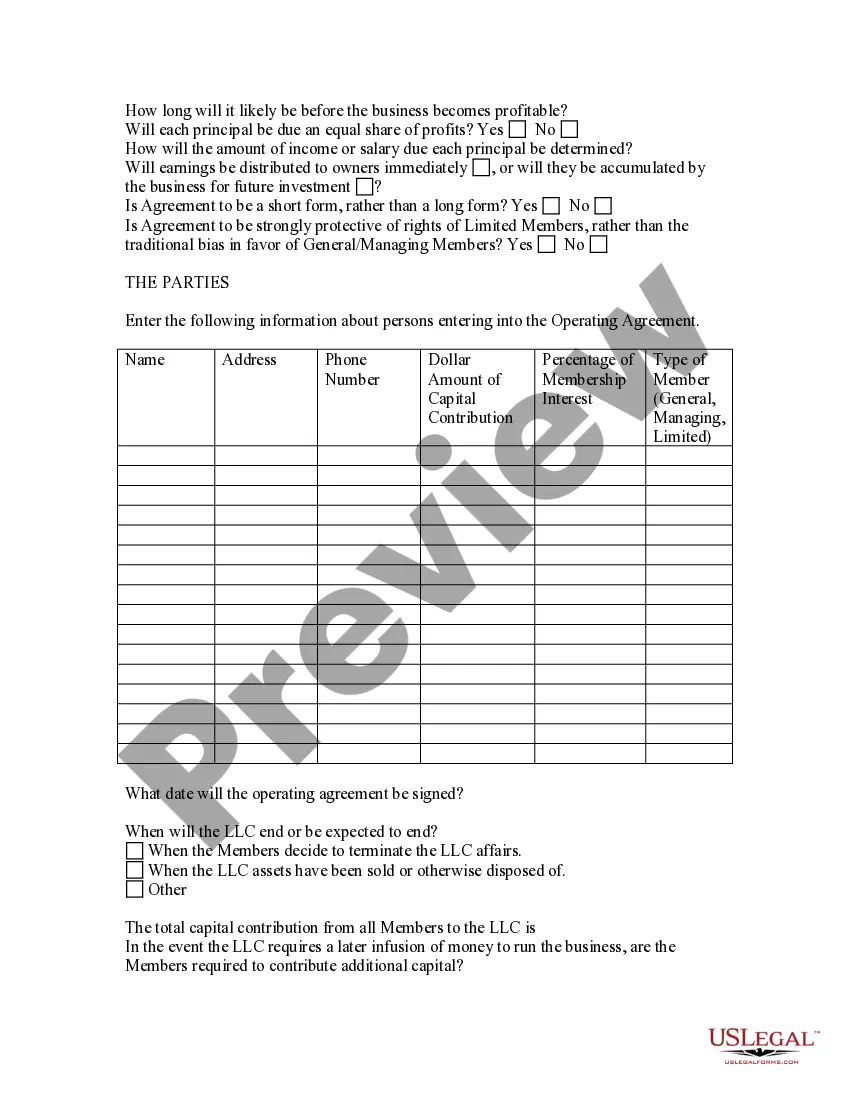
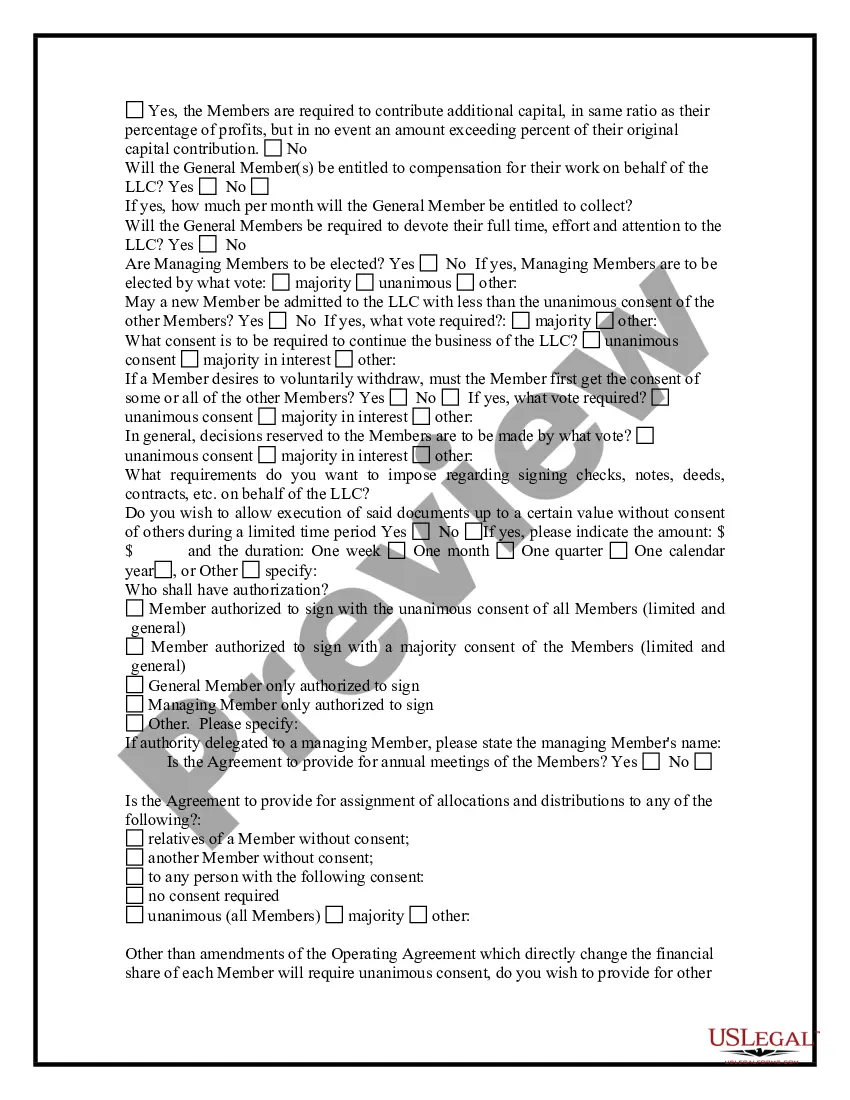
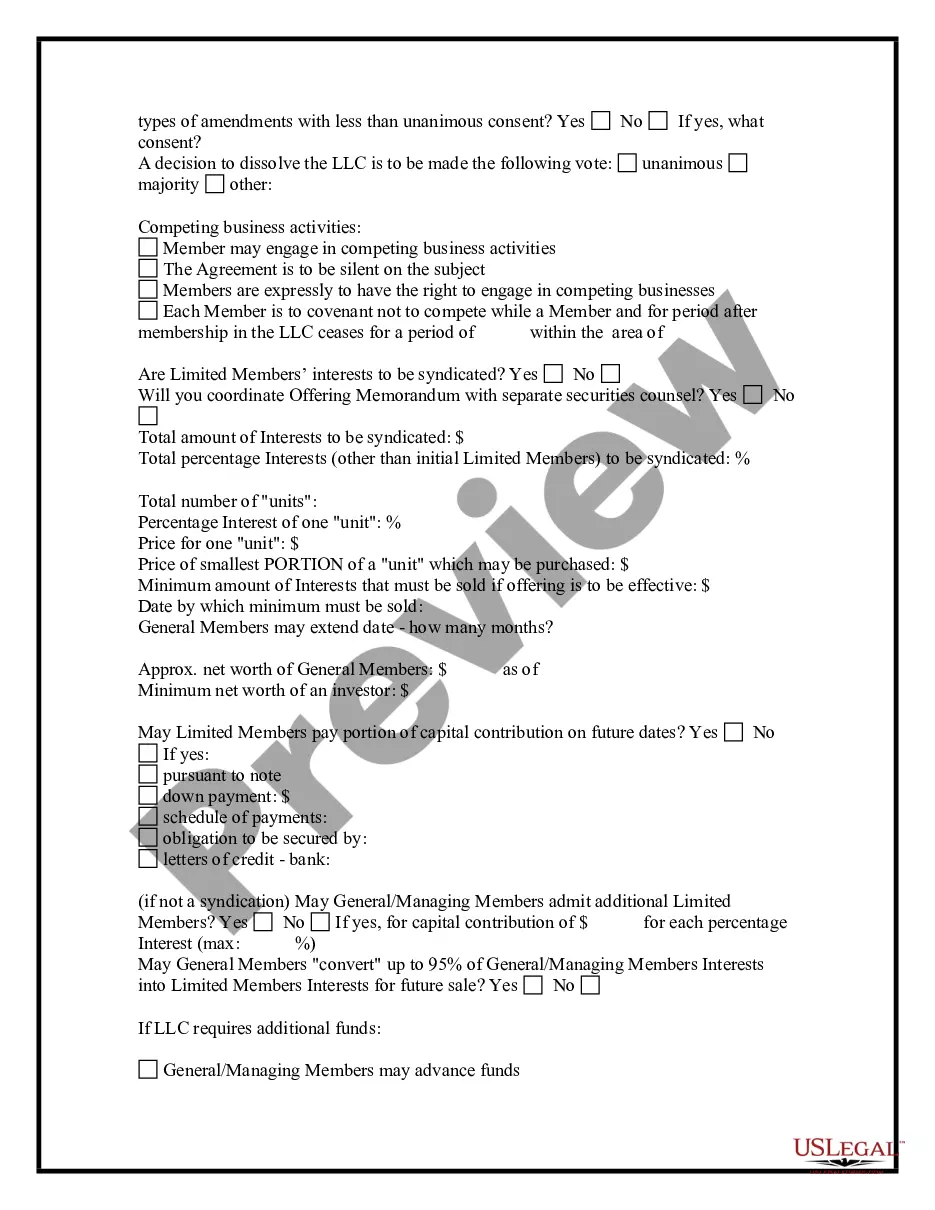
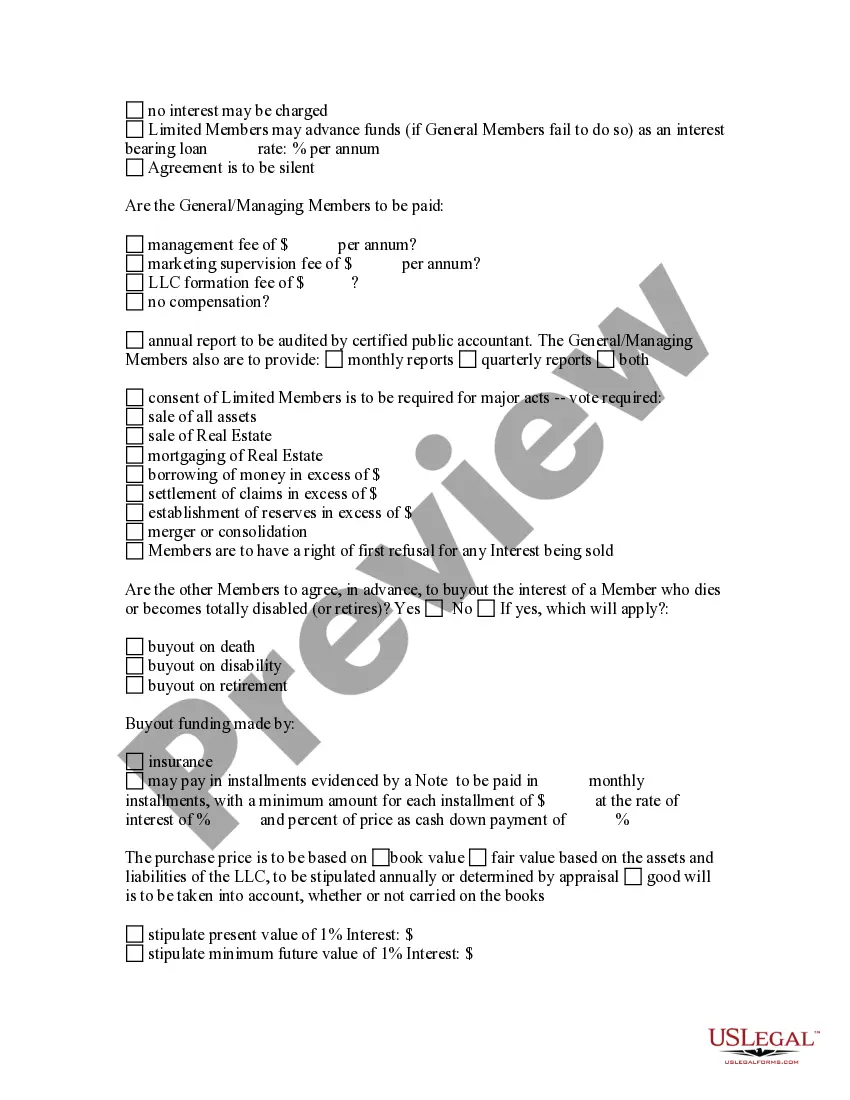
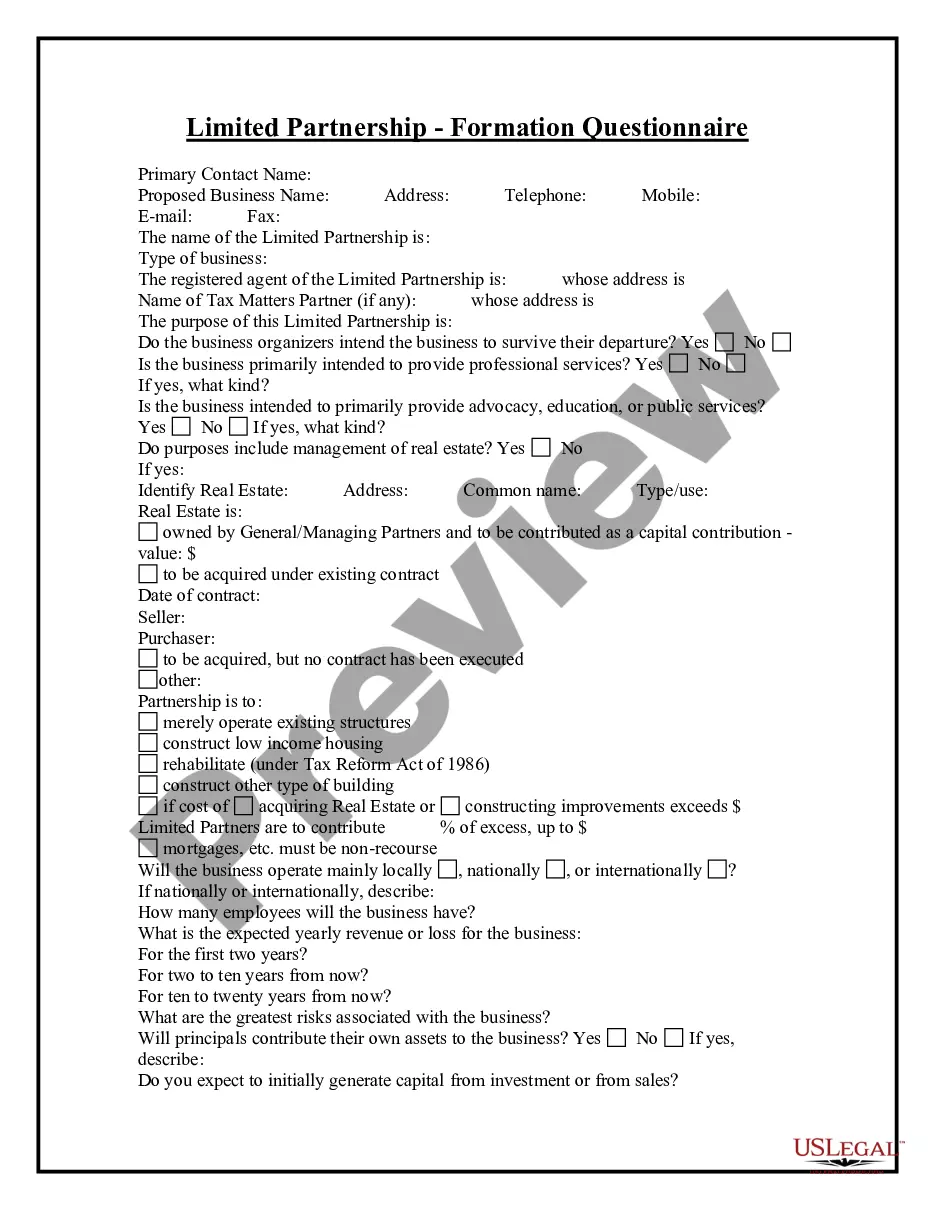
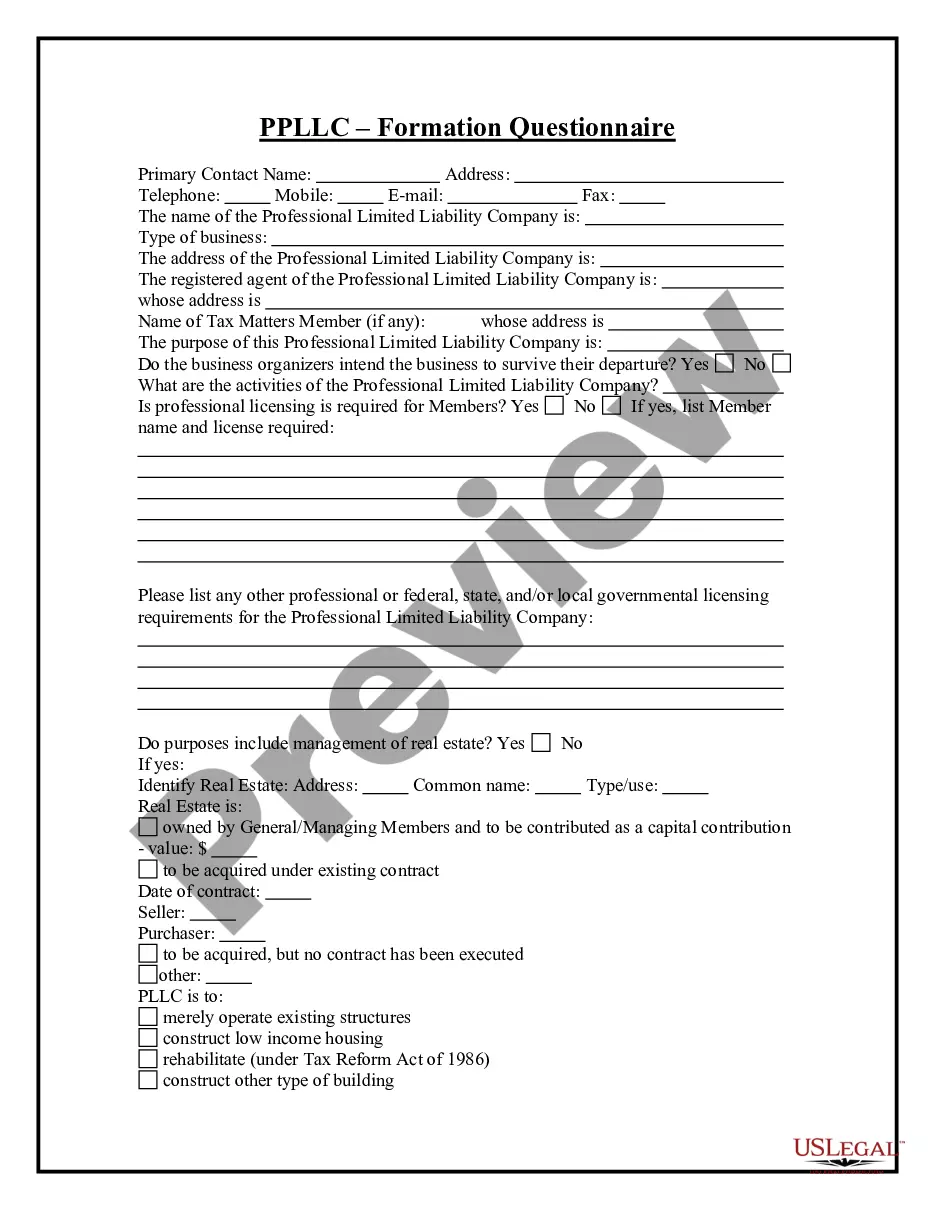
The Limited Liability Company (LLC) Formation Questionnaire is a vital tool for individuals starting a limited liability company. This form assists in gathering essential information that affects the legal rights and responsibilities of the parties involved. It is designed to help users prepare effectively for legal consultations, thereby enhancing the attorney's assessment of the case while minimizing costs associated with initial interviews. Unlike general business forms, this questionnaire is specifically focused on the nuances of LLC formation.
Key parts of this document
- Identification of General Member(s) and their compensation details.
- Consideration of construction projects, including low-income housing and other buildings.
- Provisions regarding the rights of Limited Members versus General Members.
- Information on legal obligations related to the formation of the LLC.
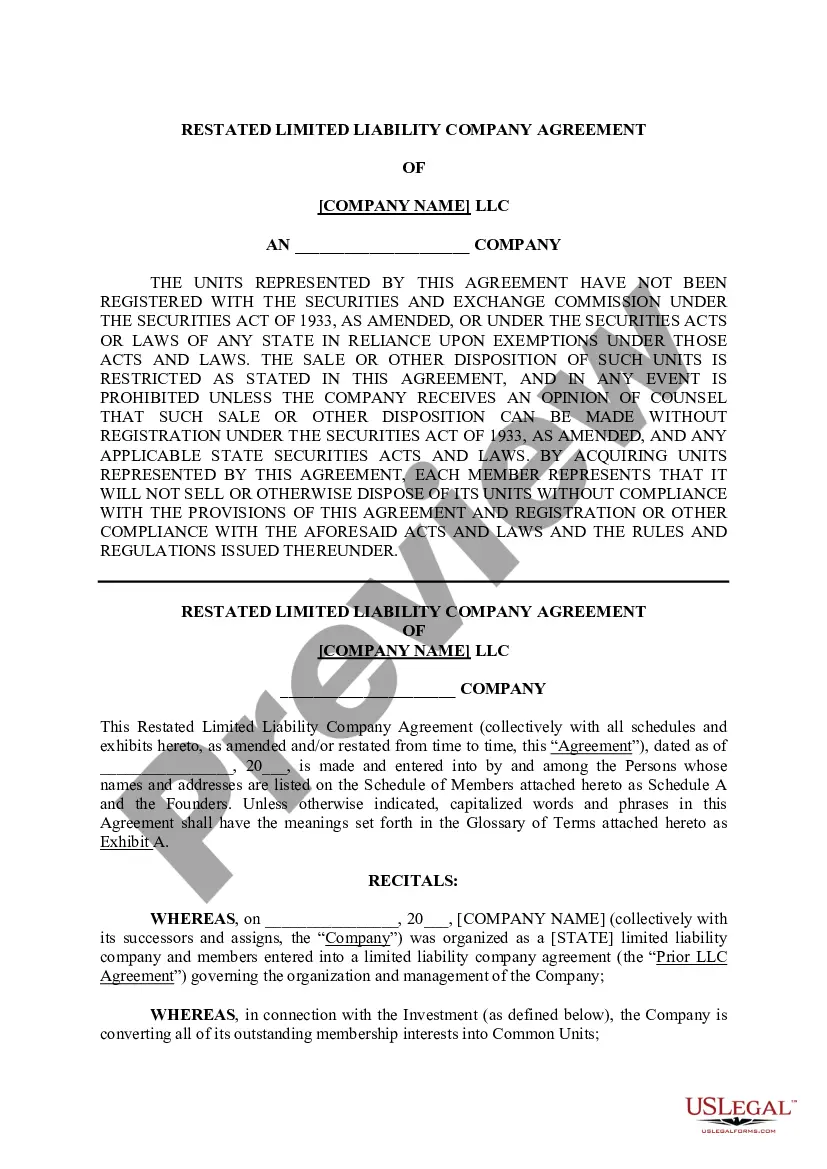
- Details necessary for the Operating Agreement.


When this form is needed
This form is useful when you are ready to start a limited liability company and need to clarify the roles and responsibilities of the involved parties. It is particularly beneficial for individuals seeking to ensure comprehensive legal preparation and proper issue identification before forming an LLC. Additionally, attorneys may use this form during initial client meetings to assess the needs of new clients efficiently.
Who needs this form
- Entrepreneurs planning to form an LLC.
- Business partners engaged in joint ventures under the LLC structure.
- Attorneys representing clients in the formation of a limited liability company.
- Individuals or groups seeking to understand their legal obligations related to LLCs.
How to prepare this document
- Identify the parties involved in the LLC and their roles.
- Specify the type of work or projects the LLC will engage in.
- Answer questions regarding the rights of Limited Members.
- Clearly define the conditions for compensation for General Members.
- Review all entries for accuracy before submitting to an attorney.
Is notarization required?
This form does not typically require notarization unless specified by local law. It's always advisable to check state-specific rules to ensure compliance with any additional requirements.
Get your form ready online
Our built-in tools help you complete, sign, share, and store your documents in one place.
Make edits, fill in missing information, and update formatting in US Legal Forms—just like you would in MS Word.
Download a copy, print it, send it by email, or mail it via USPS—whatever works best for your next step.
Sign and collect signatures with our SignNow integration. Send to multiple recipients, set reminders, and more. Go Premium to unlock E-Sign.
If this form requires notarization, complete it online through a secure video call—no need to meet a notary in person or wait for an appointment.
We protect your documents and personal data by following strict security and privacy standards.

Make edits, fill in missing information, and update formatting in US Legal Forms—just like you would in MS Word.

Download a copy, print it, send it by email, or mail it via USPS—whatever works best for your next step.

Sign and collect signatures with our SignNow integration. Send to multiple recipients, set reminders, and more. Go Premium to unlock E-Sign.

If this form requires notarization, complete it online through a secure video call—no need to meet a notary in person or wait for an appointment.

We protect your documents and personal data by following strict security and privacy standards.
Common mistakes to avoid
- Failing to accurately identify all parties involved in the LLC.
- Not fully understanding the implications of compensation clauses.
- Incomplete or vague answers that could lead to misunderstandings.
- Omitting project details crucial for the LLC's scope of work.
Why complete this form online
- Easy access to the most up-to-date legal formats.
- Convenient download options that allow for editing at your own pace.
- Reliable templates crafted by licensed attorneys to ensure legal compliance.
- Cost-effective compared to traditional legal consultations.
What to keep in mind
- The Limited Liability Company - LLC - Formation Questionnaire is vital for preparing to form an LLC.
- It helps identify important legal considerations for both members and attorneys.
- Utilizing this form can lead to cost savings and better legal compliance.
- Preparation using this questionnaire fosters better communication among LLC members.
Looking for another form?


Form popularity
FAQ
Choose a name for your LLC. File Articles of Organization. Choose a registered agent. Decide on member vs. manager management. Create an LLC operating agreement. Comply with other tax and regulatory requirements. File annual reports. Out of state LLC registration.
While it's not difficult to form a limited liability company ("LLC"), the rules for how it must be done vary state by state.You will find all the specifics and information you need, including links to forms, government agencies, and other resources you need to form an LLC in your state.
Any person starting a business, or currently running a business as a sole proprietor, should consider forming an LLC. This is especially true if you're concerned with limiting your personal legal liability as much as possible. LLCs can be used to own and run almost any type of business.
Understand your state's LLC rules and regulations. Each state abides by different rules and every small business is different. Check for your company's name availability before reserving it. File articles of organization. Appoint a registered agent. Draft an operating agreement.
The IRS treats one-member LLCs as sole proprietorships for tax purposes. This means that the LLC itself does not pay taxes and does not have to file a return with the IRS. As the sole owner of your LLC, you must report all profits (or losses) of the LLC on Schedule C and submit it with your 1040 tax return.
Choose your management structure. There are two forms of management for LLCs: member-managed and manager-managed. Choose your title. In a single-member LLC, you have the freedom to choose whatever title best reflects your role. Create an Operating Agreement.
Your spouse. One of the first people you should talk with about this new venture is your spouse. A lawyer. An accountant and trusted advisor. A business coach or mentor. A banker.
Unlike a corporation, an LLC is not considered to be a distinct entity for income tax purposes. The owner(s) of the LLC report their operating results, including profit or loss, on their personal income tax returns, just as they would as either a sole proprietorship or partnership.
Business Name. Your LLC must have a name that is unique and is not the same or confusingly similar to another business. Registered Agent. Operating Agreement. Articles of Organization. Business Licenses and Permits. Statement of Information Form. Tax Forms.