Contingency Clause: Contract for Real Property
About this form
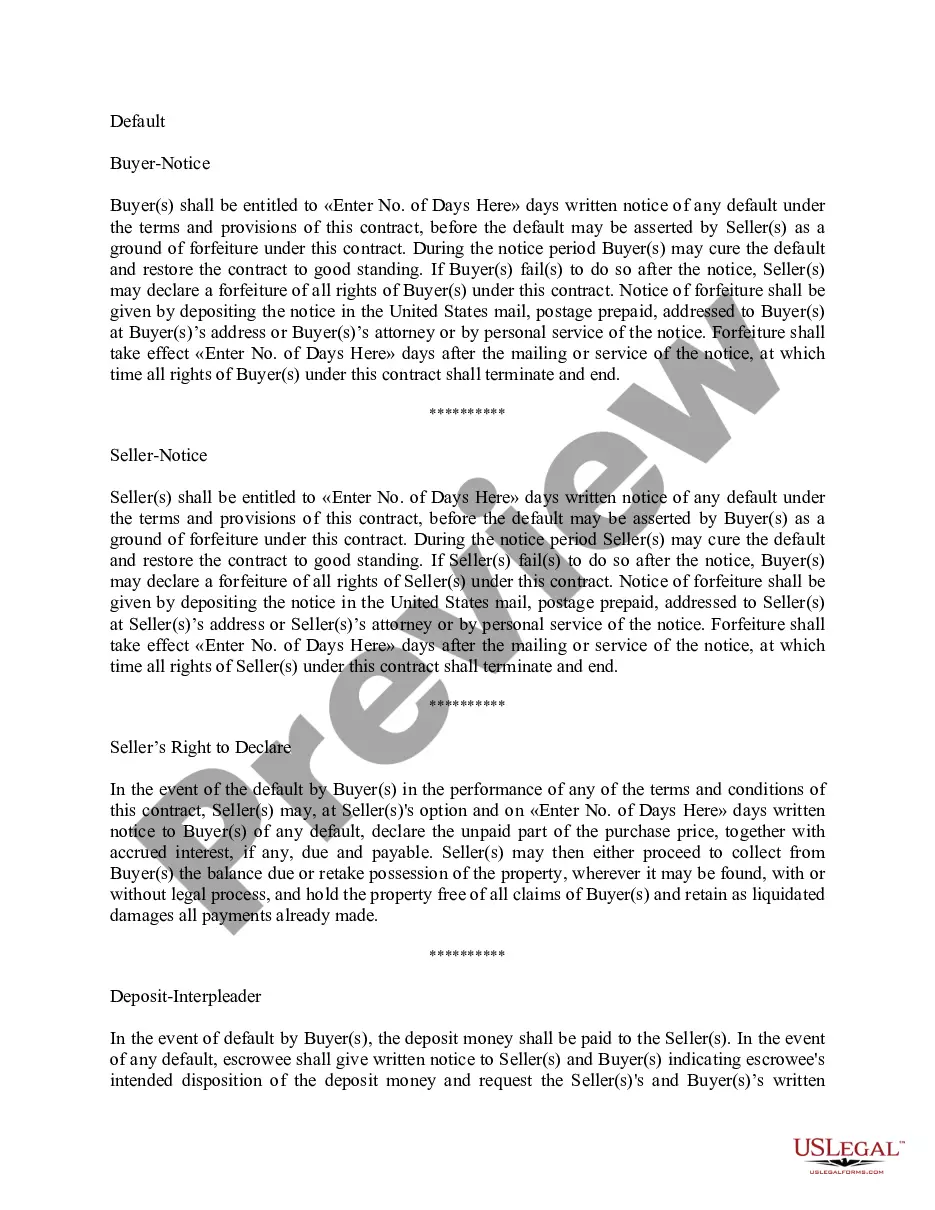
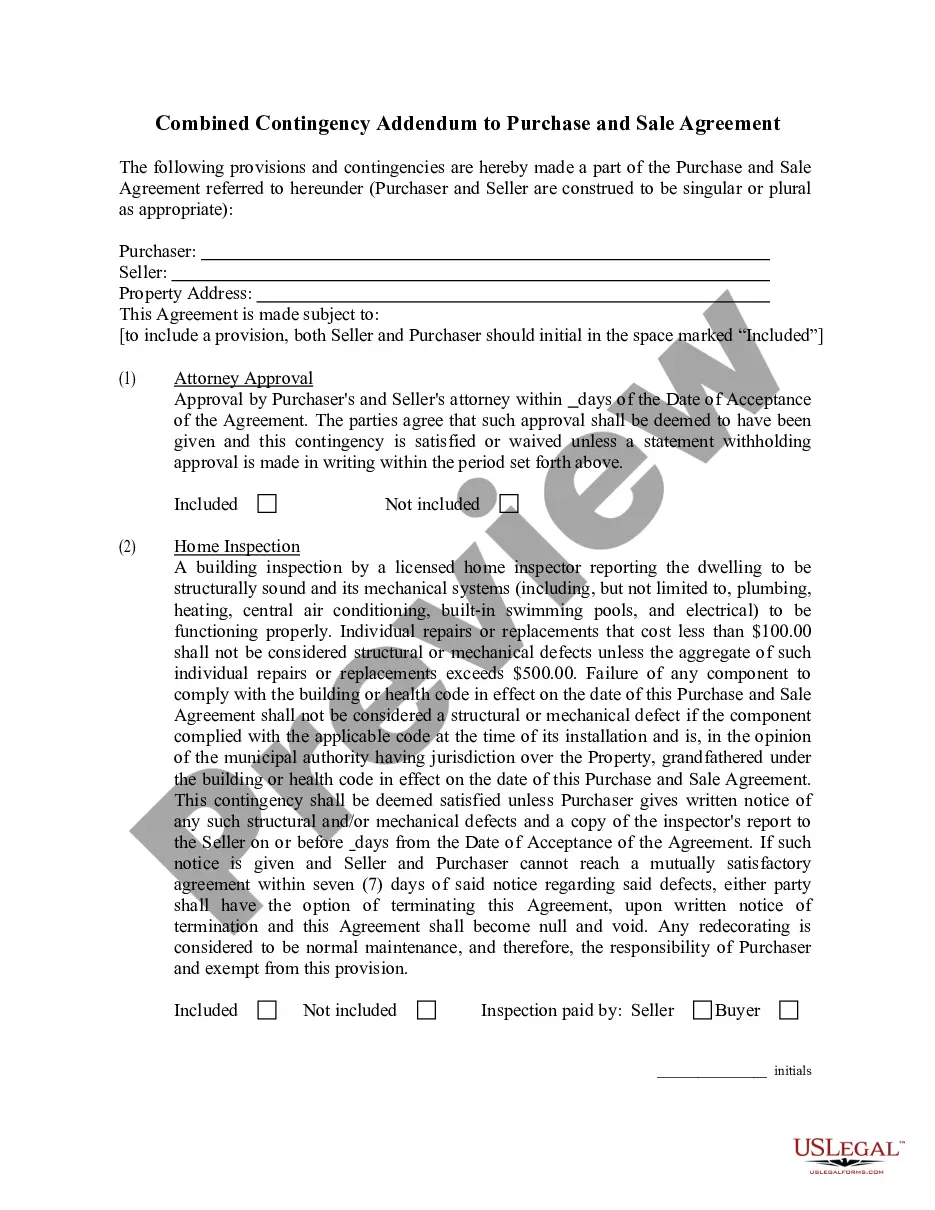
The Contingency Clause: Contract for Real Property is a specialized clause within a real estate contract that establishes specific conditions under which the agreement can be enforced or terminated. This clause allows one or both parties to back out of the contract if certain stipulations, such as inspections or financing, are not met. Unlike standard clauses often found in contracts, this contingency clause is critical in real estate transactions, ensuring that buyers and sellers have protections throughout the purchasing process.
Key components of this form
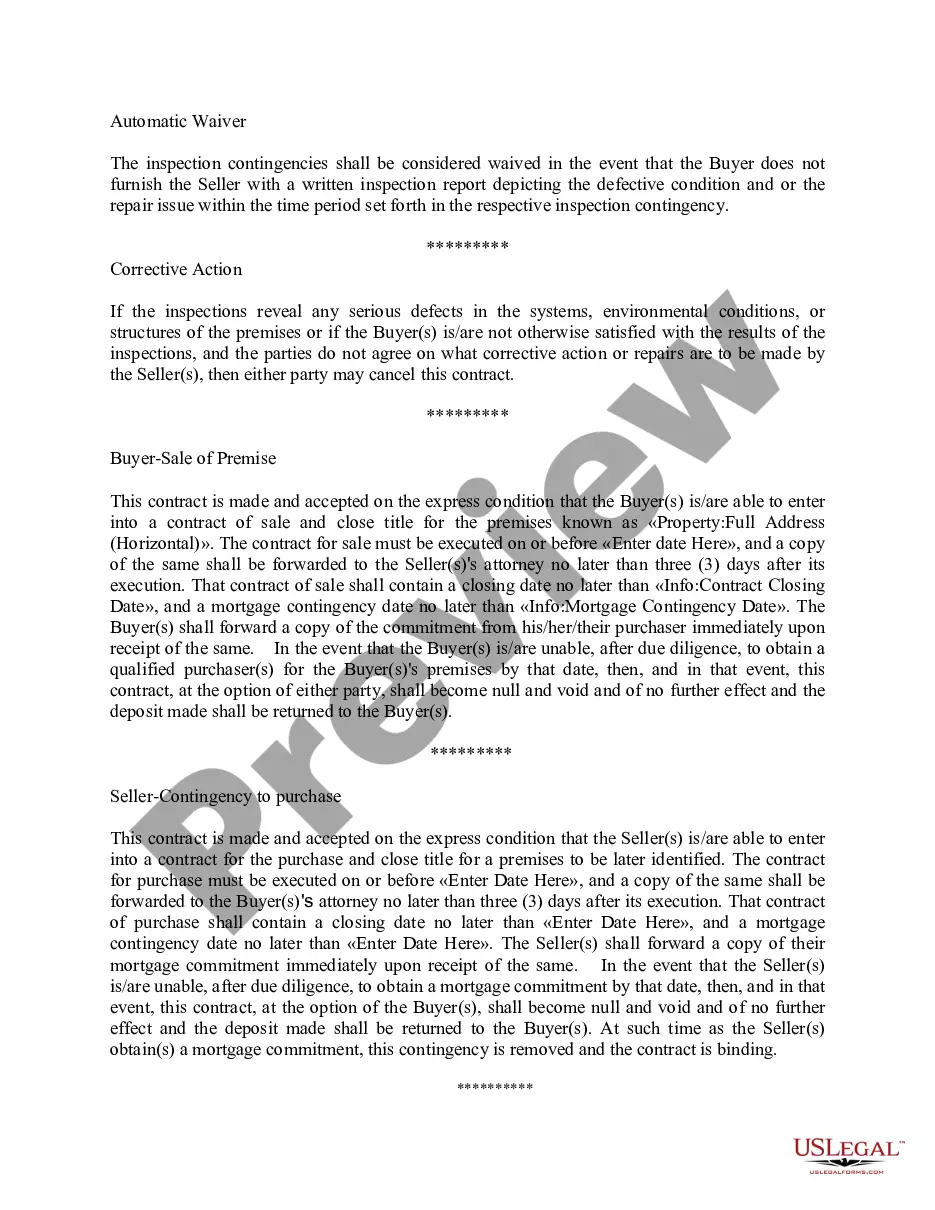
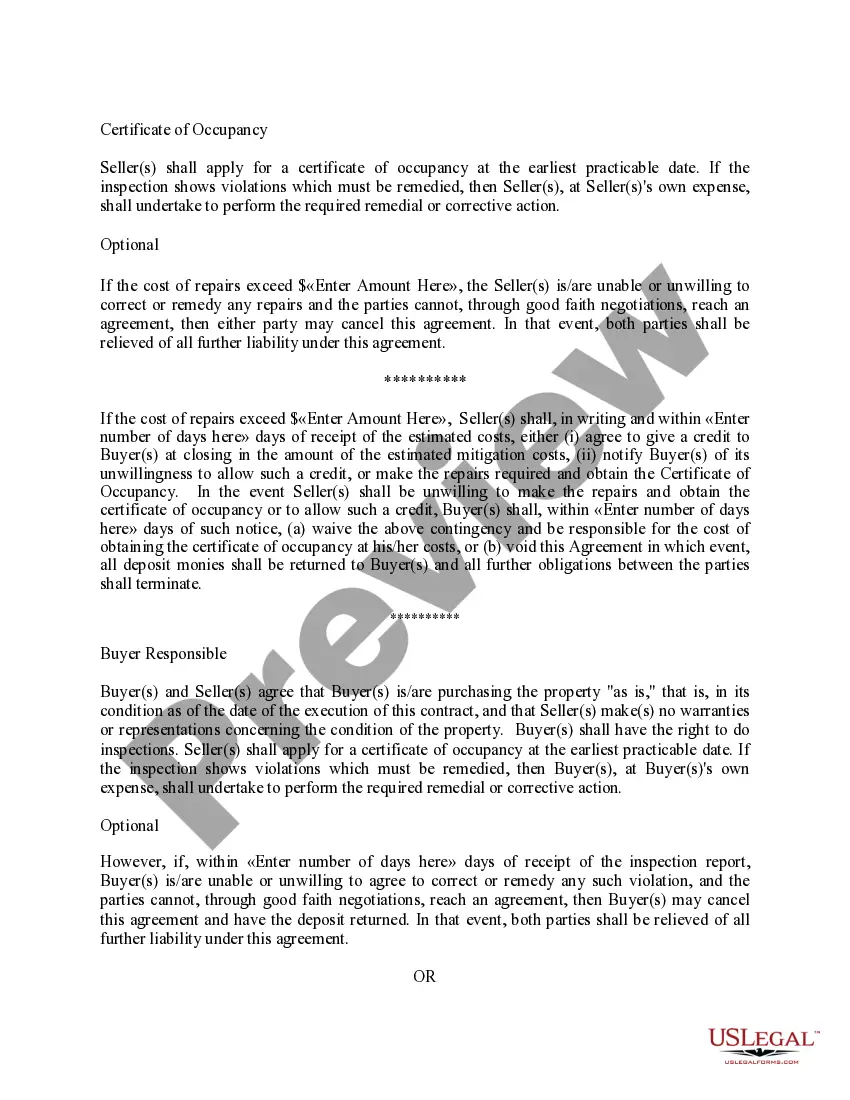
- Inspection contingencies that define the process for addressing property defects.
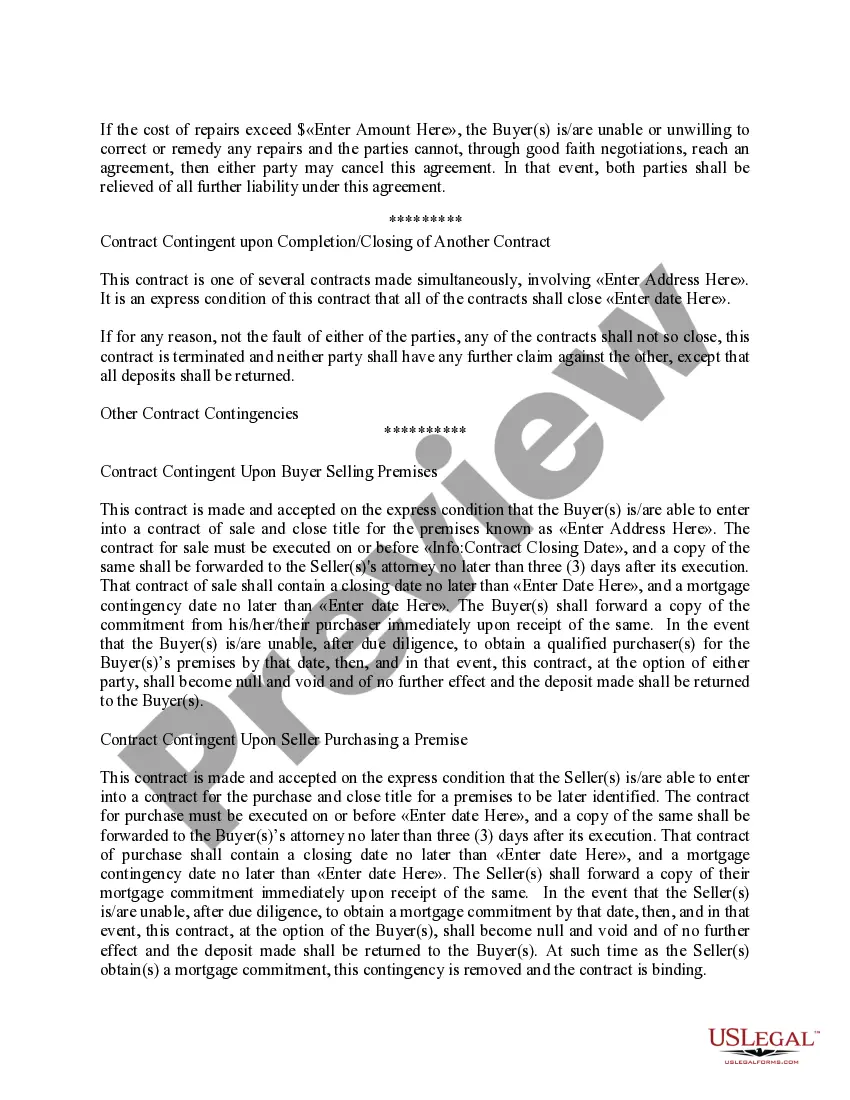
- Buyer contingencies related to finalizing the sale of their current property.
- Seller contingencies requiring acquisition of a new property and associated financing.
- Provisions for corrective actions in case of serious property defects.
- Clear deadlines for executing contracts and notifying the other party.
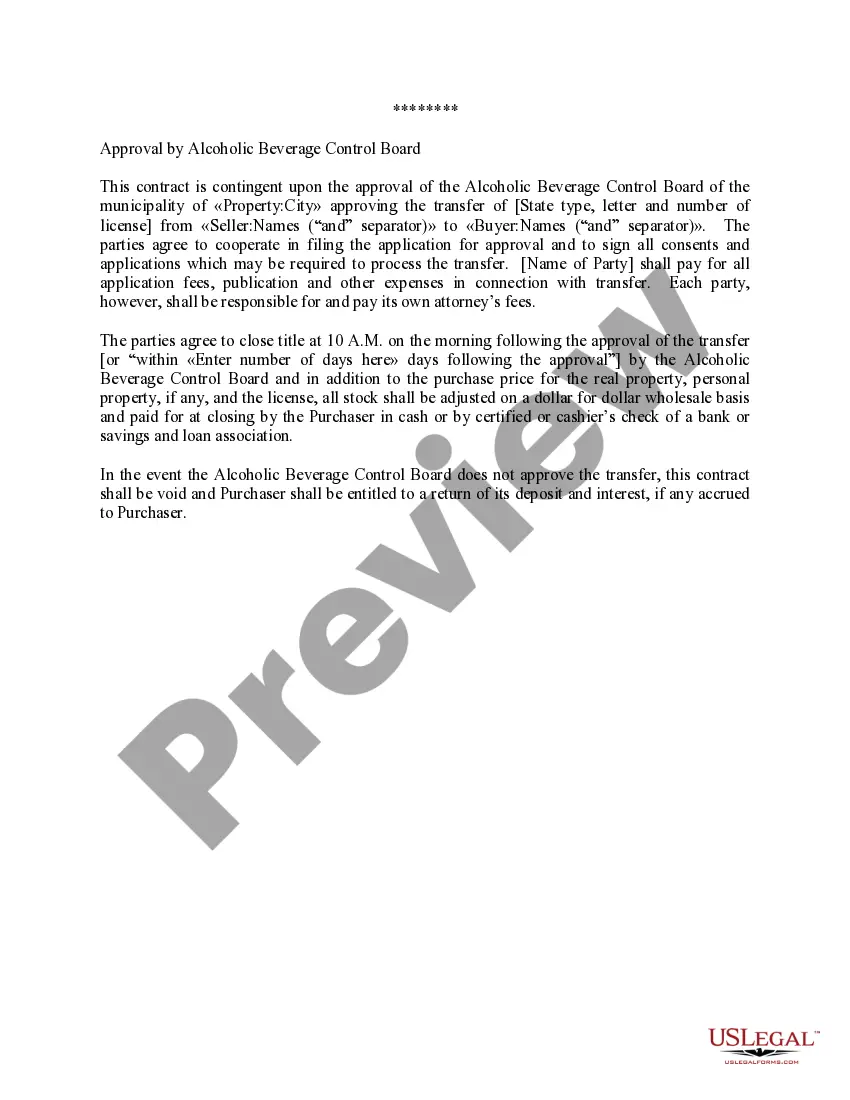
- Cooperation clauses for approvals, such as from regulatory agencies.
Situations where this form applies
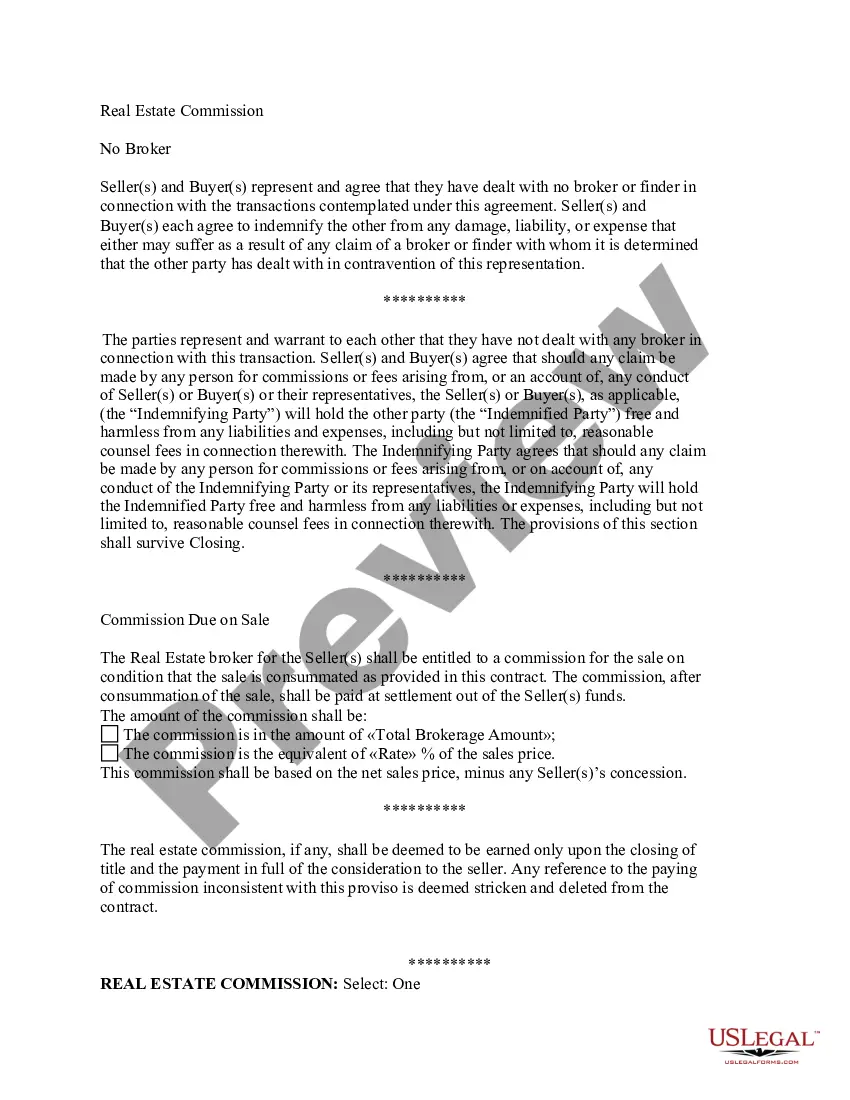
This form should be used when entering into a real estate contract involving specific conditions that must be met for the transaction to proceed. It is particularly useful in scenarios where property inspections are needed, when a buyer must sell their current home, or when a seller needs to purchase another property. Using this form helps ensure that both parties are clear on the contingencies involved, allowing for smoother negotiations and transitions.
Who this form is for
- Homebuyers looking to protect themselves during the property purchase process.
- Home sellers who need to negotiate certain conditions before finalizing a sale.
- Real estate agents and brokers acting on behalf of clients in real estate transactions.
- Investors involved in property transactions requiring specific contractual terms.
How to complete this form
- Identify the parties involved in the contract, including buyers and sellers.
- Enter the property details, including the full address and legal description.
- Specify the relevant contingencies for inspections, financing, and approvals.
- Set clear deadlines for each contingency, including dates for contract execution.
- Include any necessary additional terms, such as corrective actions for property defects.
Does this document require notarization?
This form does not typically require notarization unless specified by local law. Always check your jurisdiction's requirements to ensure compliance.
Get your form ready online
Our built-in tools help you complete, sign, share, and store your documents in one place.
Make edits, fill in missing information, and update formatting in US Legal Forms—just like you would in MS Word.
Download a copy, print it, send it by email, or mail it via USPS—whatever works best for your next step.
Sign and collect signatures with our SignNow integration. Send to multiple recipients, set reminders, and more. Go Premium to unlock E-Sign.
If this form requires notarization, complete it online through a secure video call—no need to meet a notary in person or wait for an appointment.
We protect your documents and personal data by following strict security and privacy standards.

Make edits, fill in missing information, and update formatting in US Legal Forms—just like you would in MS Word.

Download a copy, print it, send it by email, or mail it via USPS—whatever works best for your next step.

Sign and collect signatures with our SignNow integration. Send to multiple recipients, set reminders, and more. Go Premium to unlock E-Sign.

If this form requires notarization, complete it online through a secure video call—no need to meet a notary in person or wait for an appointment.

We protect your documents and personal data by following strict security and privacy standards.
Mistakes to watch out for
- Failing to clearly define all contingencies or their terms.
- Not including accurate property descriptions or addresses.
- Overlooking deadlines for executing contracts or responding to contingencies.
- Neglecting to consult legal counsel when drafting complex agreements.
Why complete this form online
- Easy access to legally drafted templates, ensuring compliance with regulations.
- Convenient editability to customize the form according to specific needs.
- Reliable support from licensed attorneys to answer questions if needed.
Looking for another form?


Form popularity
FAQ
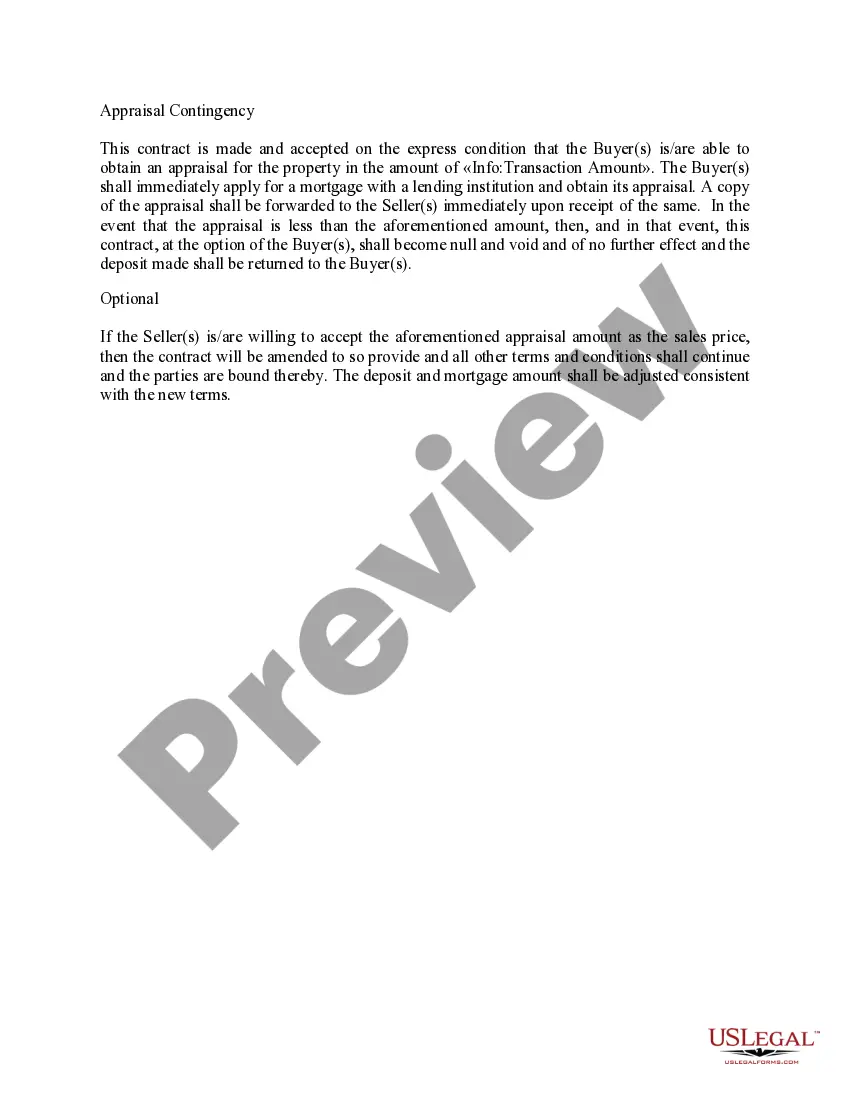
As an appraisal contingency example, if you agree to buy a home for $200,000, but the appraised value comes in at only $190,000, the lender will not give you a loan for the property unless you cover the difference.
A contingency is a clause that buyers include when making an offer on a home that allows them to back out of buying the house if the terms of the clause aren't met. Without a contingency in place, buyers risk losing their earnest money deposit if they decide not to purchase the home after making an offer.
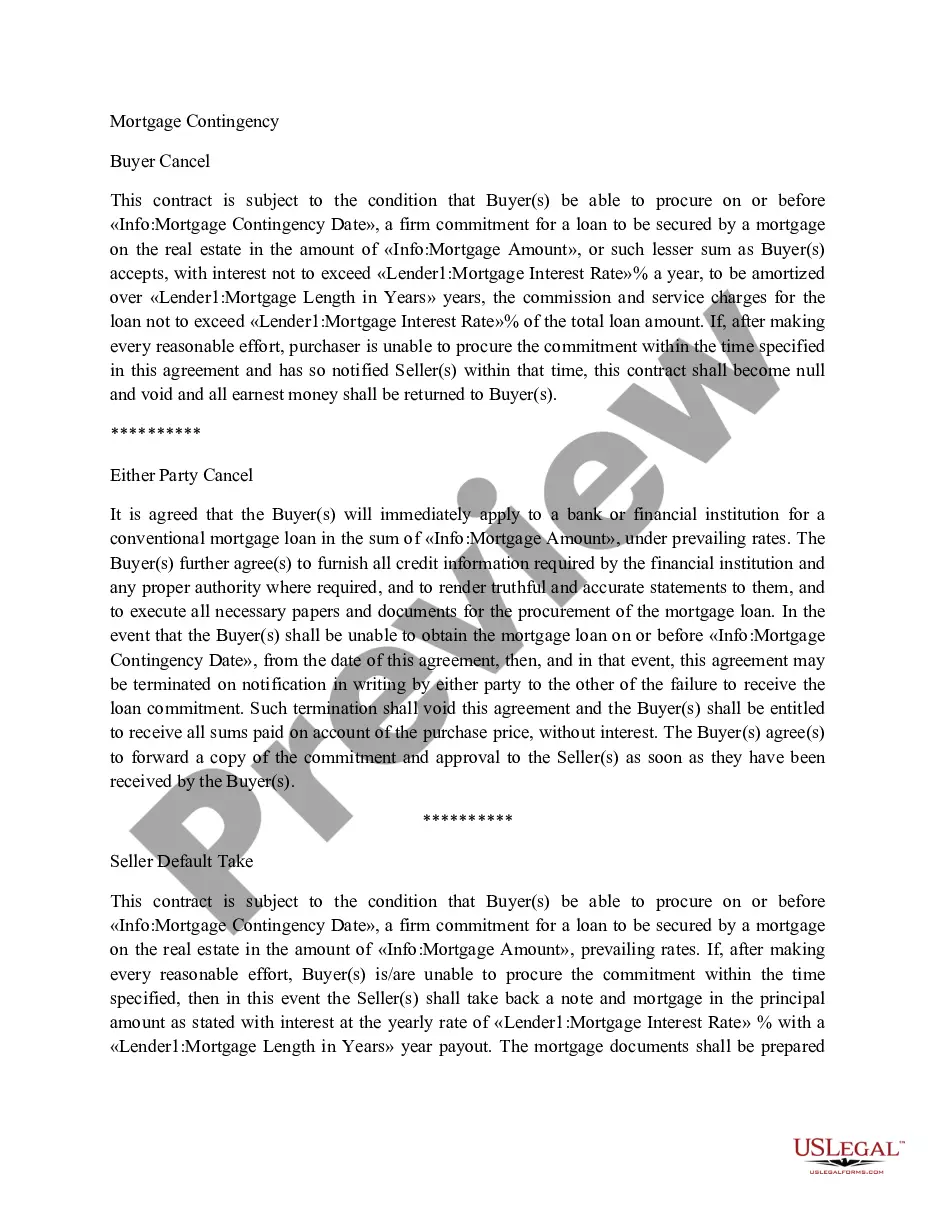
Contingencies can include details such as the time frame (for example, ?the buyer has 14 days to inspect the property?) and specific terms (such as, ?the buyer has 21 days to secure a 30-year conventional loan for 80% of the purchase price at an interest rate no higher than 4.5%?).
A contingency is a condition that needs to be met before an offer can proceed. In other words, it's kind of like a safety net. Therefore, an appraisal contingency means that if your home doesn't appraise for the amount you've agreed to pay, you can walk away from the deal with your deposit.
The Property must appraise at a value equal to or exceeding the purchase price or, at the option of Buyer, this contract may be terminated and all x monies shall be refunded to Buyer.
Some of the most common real estate contingencies include appraisal, mortgage, title and home inspection contingencies. Many home buyers also include a sale of prior home contingency, which allows them to withdraw an offer if they are unable to sell their current home within a specified timeframe.
An appraisal contingency clause is a condition built into a real estate contract that gives the buyer the right to walk away from the transaction if the appraised value of the property is lower than the agreed-upon purchase price.