Mississippi Ordinance Rezoning Certain Property
What this document covers
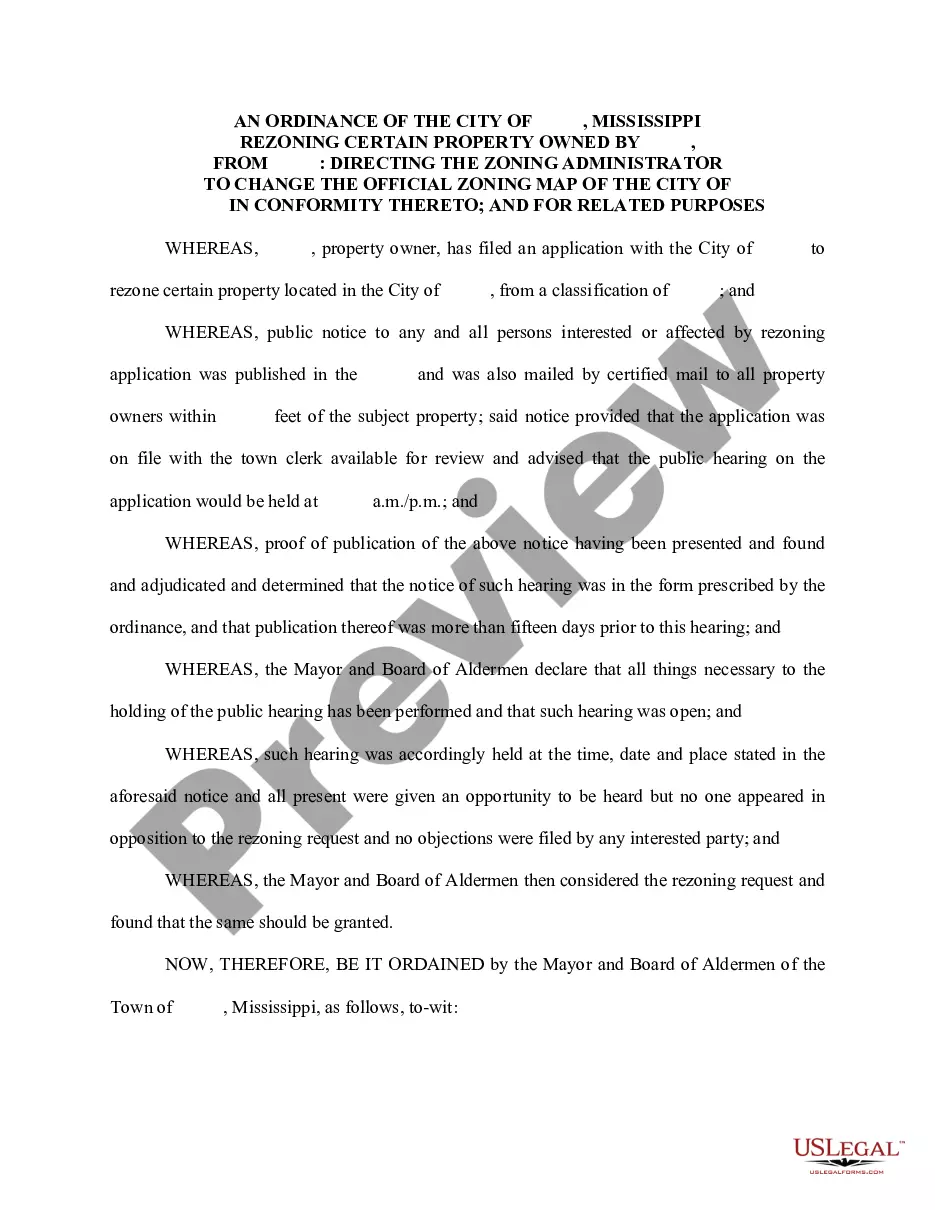
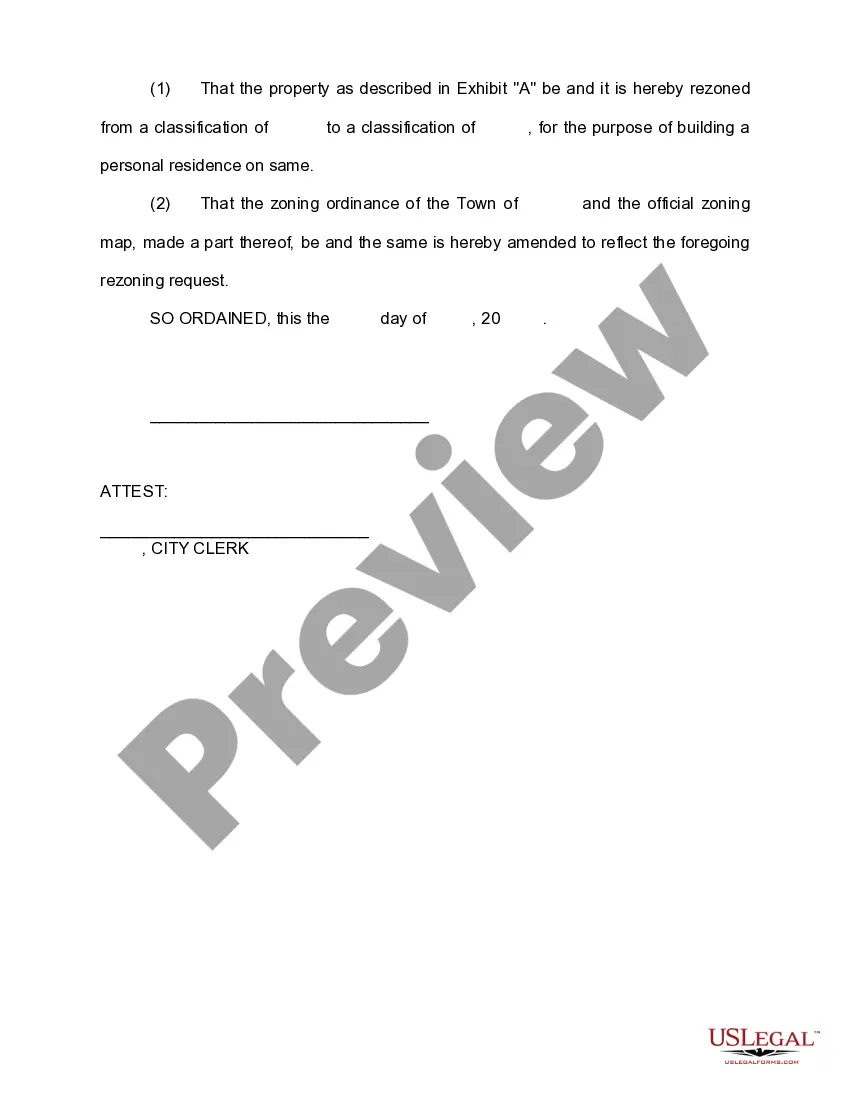
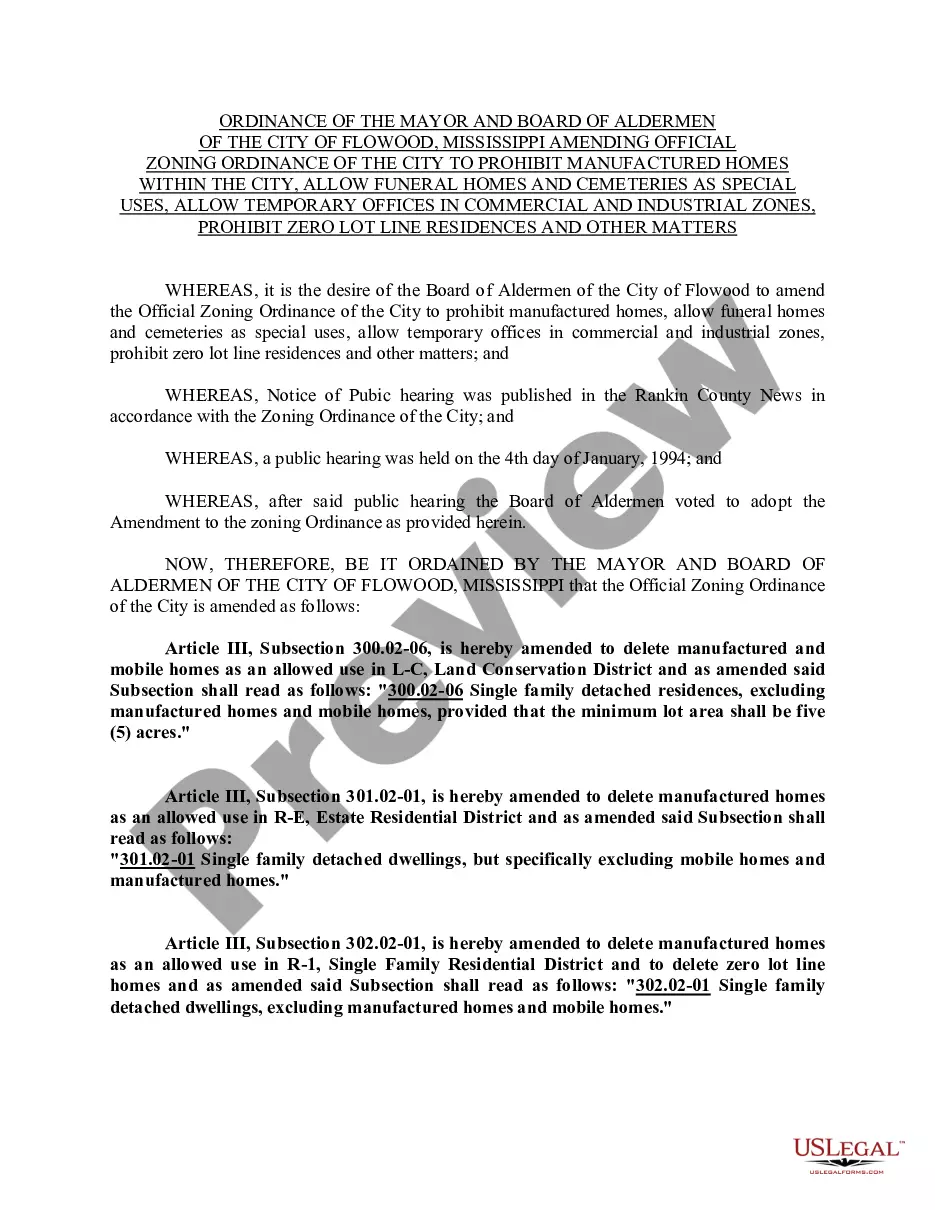
The Ordinance Rezoning Certain Property form is a legal document specific to Mississippi that facilitates the process of changing the zoning classification of a particular property. This form is crucial for municipal governments, as it outlines the decision to rezone a property, detailing the reasons for the change and confirming that due legal processes have been followed. The Ordinance differs from other zoning forms by providing a comprehensive declaration of the municipal board's decision after public hearings have taken place.
Form components explained
- Declaration regarding the public hearing process
- Summary of hearing results, including any opposition
- Details of the rezoning request and justification
- Formal decision from the Mayor and Board of Aldermen
When this form is needed
This form is used when a local government body, such as a city or county, decides to change the zoning of a property. Scenarios include when developers seek to change a property use to residential or commercial, or when land use needs to adapt to community needs, such as increasing housing or business areas. It is required after public hearings have been conducted and no objections have been raised by the community.
Who should use this form
- Municipal officials, including mayors and aldermen
- City planning and zoning departments
- Property developers and investors
- Community stakeholders involved in local development decisions
How to prepare this document
- Confirm that public hearings have been properly advertised and conducted.
- Document any public attendance and remarks made during the hearings.
- Clearly outline the rezoning request, including the current and proposed zoning categories.
- Provide justification for the rezoning, stating the benefits to the community.
- Have the Mayor and Board of Aldermen formally sign the completed ordinance.
Is notarization required?
Notarization is generally not required for this form. However, certain states or situations might demand it. You can complete notarization online through US Legal Forms, powered by Notarize, using a verified video call available anytime.
Get your form ready online
Our built-in tools help you complete, sign, share, and store your documents in one place.
Make edits, fill in missing information, and update formatting in US Legal Forms—just like you would in MS Word.
Download a copy, print it, send it by email, or mail it via USPS—whatever works best for your next step.
Sign and collect signatures with our SignNow integration. Send to multiple recipients, set reminders, and more. Go Premium to unlock E-Sign.
If this form requires notarization, complete it online through a secure video call—no need to meet a notary in person or wait for an appointment.
We protect your documents and personal data by following strict security and privacy standards.

Make edits, fill in missing information, and update formatting in US Legal Forms—just like you would in MS Word.

Download a copy, print it, send it by email, or mail it via USPS—whatever works best for your next step.

Sign and collect signatures with our SignNow integration. Send to multiple recipients, set reminders, and more. Go Premium to unlock E-Sign.

If this form requires notarization, complete it online through a secure video call—no need to meet a notary in person or wait for an appointment.

We protect your documents and personal data by following strict security and privacy standards.
Typical mistakes to avoid
- Failing to provide sufficient notice of public hearings.
- Not including all required signatures from municipal officials.
- Forgetting to report any public objections or comments during the hearing.
- Inadequately justifying the need for rezoning in the document.
Why complete this form online
- Convenience of downloading and filling out the form at your own pace.
- Editability to customize the form to fit specific property and zoning requirements.
- Access to up-to-date forms that comply with current legal standards.
- Guidance and support through the completion process to avoid common errors.
Main things to remember
- The Ordinance Rezoning Certain Property form is essential for changing property zoning in Mississippi.
- Proper completion involves following legal procedures and engaging with the community.
- Use this form to document municipal decisions effectively and ensure compliance with state laws.
Looking for another form?
Form popularity
FAQ
Zoning classifications tell us what a particular tract of land can be used for.For example, a single-family home in a more secluded subdivision will have different zoning requirements than an apartment building in the heart of a busy city.
In addition to the three main categories (residential, commercial, manufacturing), the zoning toolkit includes complementary rules that address specific types of development, as well as the design and quality of public spaces.
The "R-R" District is intended to create or preserve rural or very large lot residential homesites where a. limited range of agricultural activities may be conducted. The "R-R" District is intended to be applied. to areas designated as Rural Residential by the General Plan.
Each zone is assigned for a specific purpose like residential, industrial, commercial etc.These laws prohibit the construction of a commercial real estate in a residential zone. Zoning ensures that lands are prudently demarcated for a particular purpose.
Where Are Zoning Laws and Ordinances Located? The best place to look for your local laws is at the office of your city or town government. The offices of the mayor, city attorney, or department of housing, are also a good place to start. Some public libraries may also have local ordinance materials.
Functional zoning. The most prevalent form of zoning where land use zones are defined according to their function, such as commercial, residential, or industrial. Form-based zoning. Intensity zoning. Incentive zoning.
Zoning ordinances are the written laws that provide the specifications for the use of real estate in different zones. These laws prohibit the construction of a commercial real estate in a residential zone. Zoning ensures that lands are prudently demarcated for a particular purpose.
The five main zones are: R2 Low Density Residential. R3 Medium Density Residential. R4 High Density Residential. R5 Large Lot Residential.
Environment protection zone means any of the following, or an equivalent land use zone:rural residential zone means Zone R5 Large Lot Residential or an equivalent land use zone.