Zoning Ordinance for a Commercial District
What is this form?
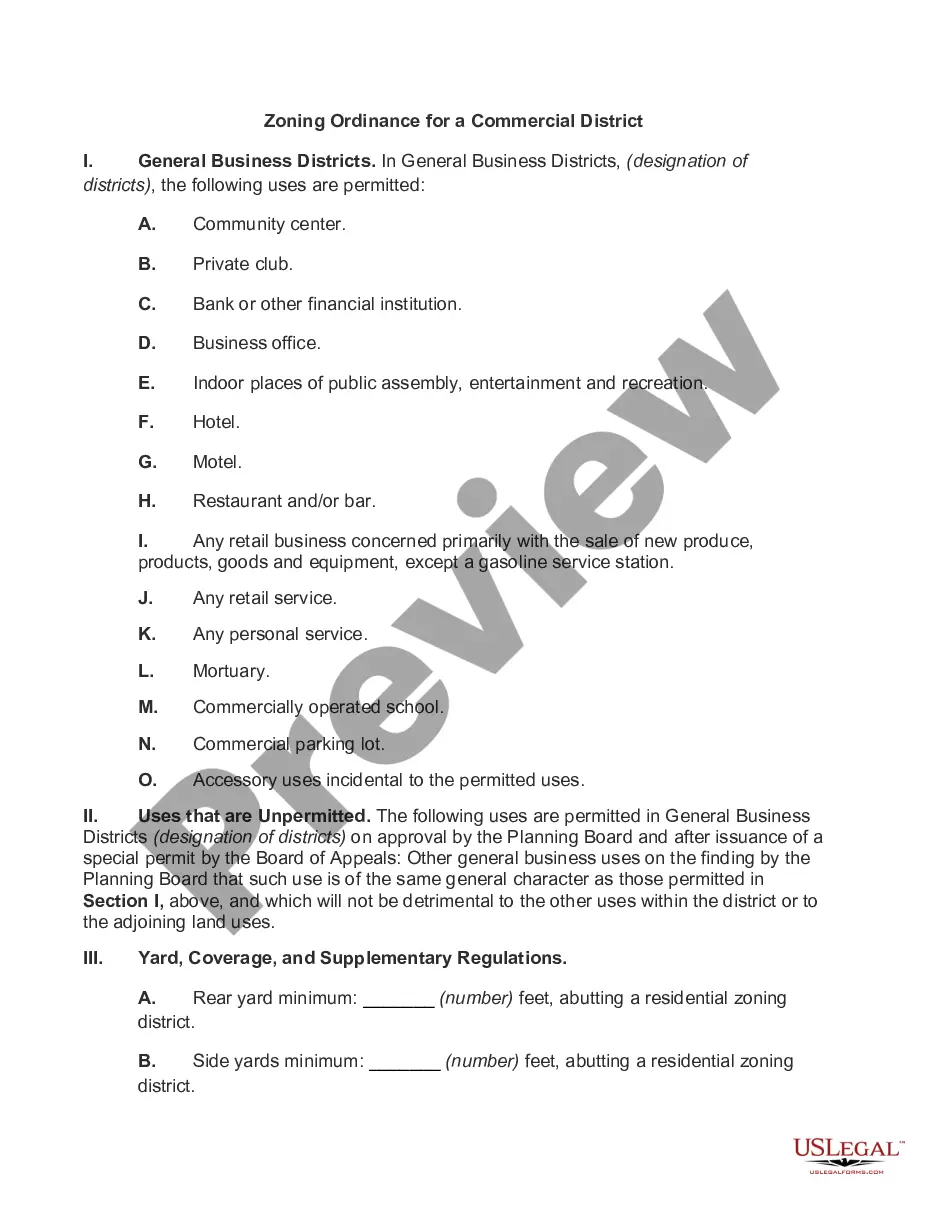
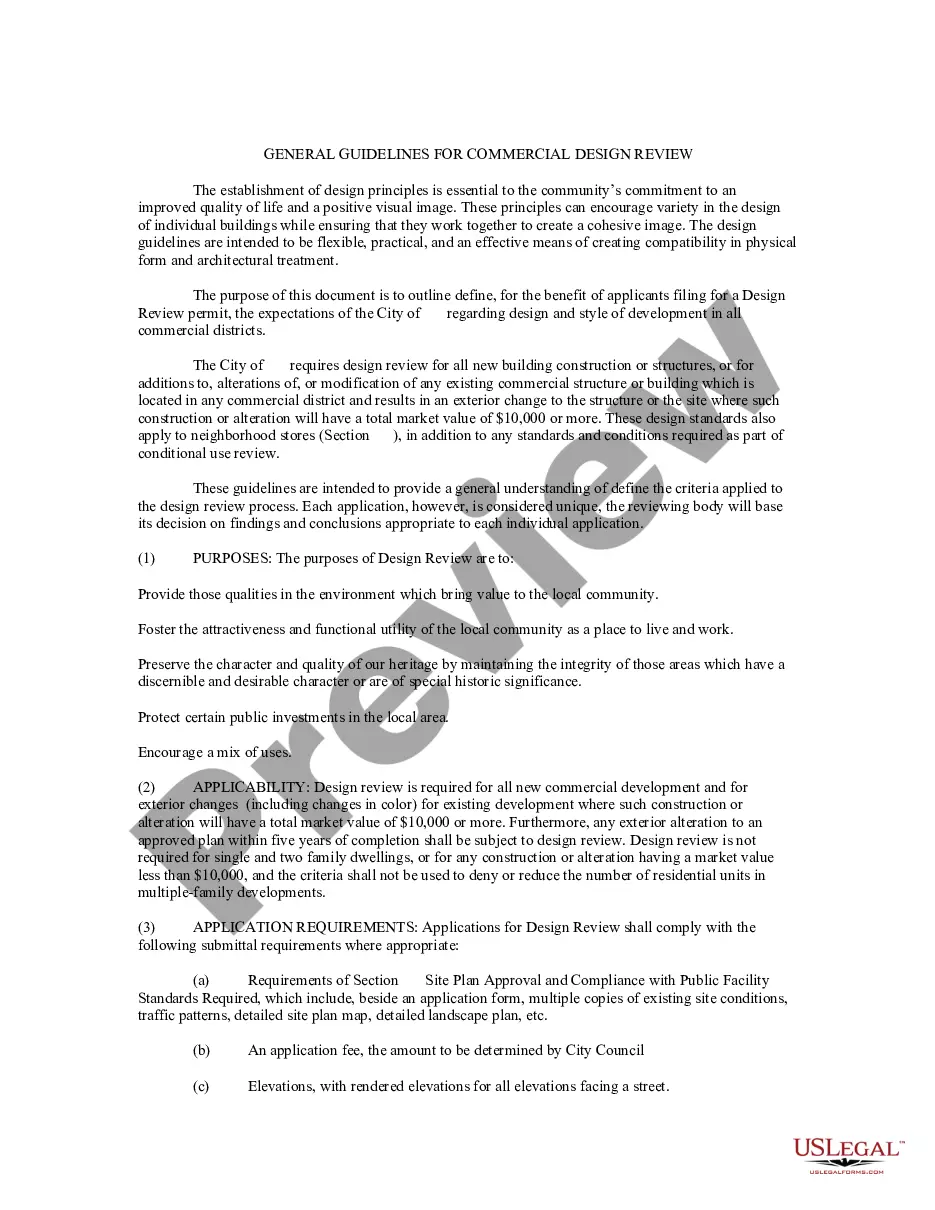
The Zoning Ordinance for a Commercial District is a legal document that establishes the permitted uses and regulations for businesses within a designated commercial area. This form outlines specific types of businesses allowed, as well as requirements for yard space and coverage. The ordinance differs from other zoning forms by focusing specifically on commercial districts and their unique regulations for development and land use.
What’s included in this form
- General business district permits and uses, including community centers, restaurants, and hotels.
- Conditions for unpermitted uses that require Planning Board approval.
- Yard regulations such as minimum rear and side yard requirements.
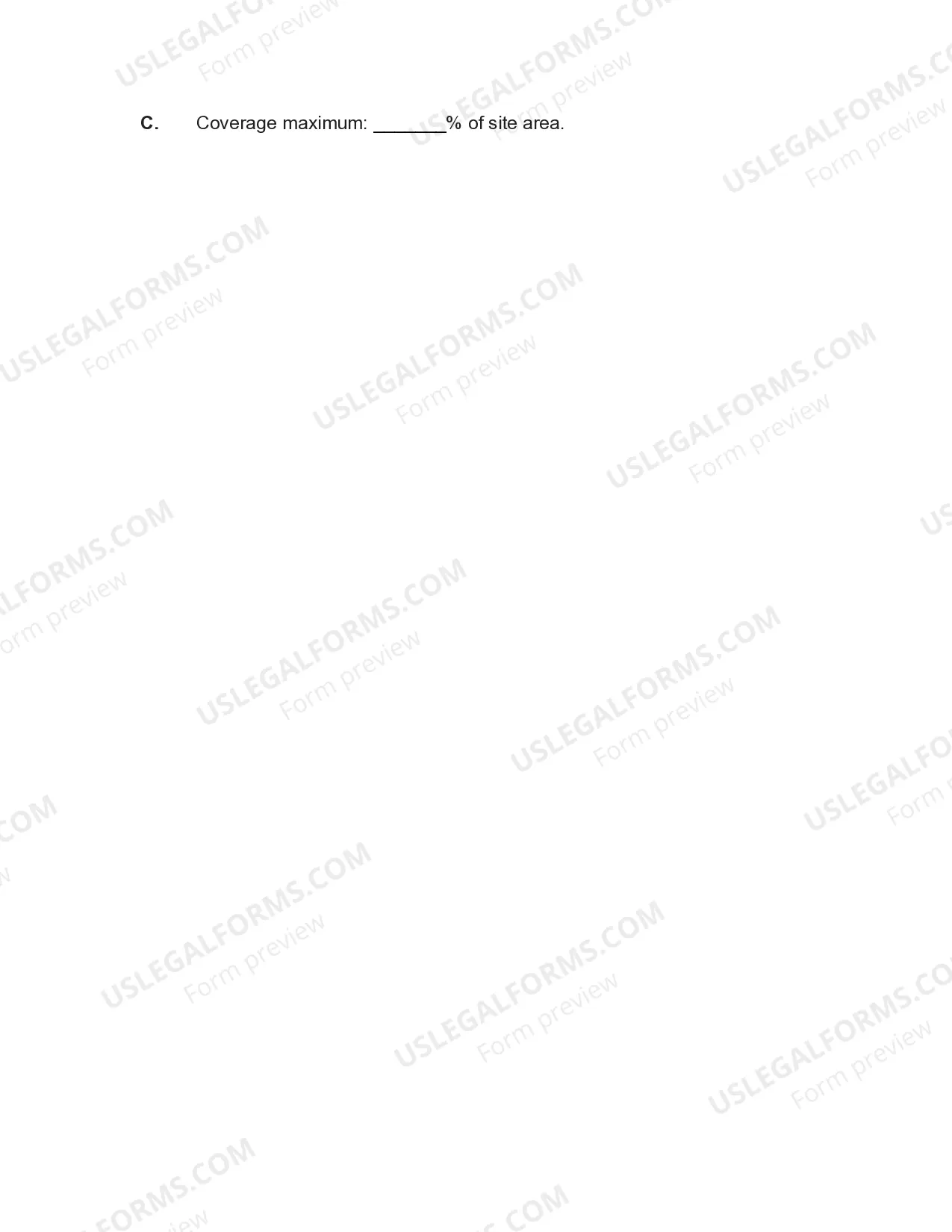
- Maximum coverage percentage of the site area allowed for business purposes.
When this form is needed
This form should be used when a community plans or reviews zoning ordinances for commercial districts. It is essential for establishing which businesses are allowed, ensuring that all developments adhere to local regulations, and providing a clear framework for future commercial growth within the community.
Who needs this form
- Local government officials, including zoning boards and planning departments.
- Developers and business owners looking to establish or expand their operations in a commercial district.
- Lawyers and consultants specializing in land use and zoning laws.
Instructions for completing this form
- Identify the specific commercial district by its designation.
- List the allowable uses for businesses as outlined in the ordinance.
- Determine the minimum yard space requirements for abutting residential zones.
- Specify the maximum coverage of the site area designated for business use.
- Include provisions for unpermitted uses that require special approval from the Planning Board.
Does this form need to be notarized?
This form does not typically require notarization unless specified by local law. However, it is important to verify any local requirements that may necessitate notarization for the ordinance to be legally valid.
Get your form ready online
Our built-in tools help you complete, sign, share, and store your documents in one place.
Make edits, fill in missing information, and update formatting in US Legal Forms—just like you would in MS Word.
Download a copy, print it, send it by email, or mail it via USPS—whatever works best for your next step.
Sign and collect signatures with our SignNow integration. Send to multiple recipients, set reminders, and more. Go Premium to unlock E-Sign.
If this form requires notarization, complete it online through a secure video call—no need to meet a notary in person or wait for an appointment.
We protect your documents and personal data by following strict security and privacy standards.

Make edits, fill in missing information, and update formatting in US Legal Forms—just like you would in MS Word.

Download a copy, print it, send it by email, or mail it via USPS—whatever works best for your next step.

Sign and collect signatures with our SignNow integration. Send to multiple recipients, set reminders, and more. Go Premium to unlock E-Sign.

If this form requires notarization, complete it online through a secure video call—no need to meet a notary in person or wait for an appointment.

We protect your documents and personal data by following strict security and privacy standards.
Avoid these common issues
- Failing to specify all permitted uses within the district.
- Omitting yard requirements, which can lead to disputes with adjacent residential areas.
- Neglecting to properly outline the conditions for unpermitted uses requiring special permits.
Why use this form online
- Convenient access to a professionally drafted zoning ordinance template.
- Editability allows for customization based on specific community needs.
- Accessibility ensures timely compliance with statutory requirements.
Looking for another form?
Form popularity
FAQ
A great resource for your use is the development assistance office. This is a free service of the City of Austin where you can find out more about your zoning. (Note: Your property may have deed restrictions that affect how it can be used. The City of Austin does not check deed restrictions.
You can visit, call, or email your local zoning office, city hall, or your local planning board, and get a copy of the ordinance. Sometimes, zoning maps and local ordinances are also available online on your city's website and in local libraries.
Commercial areas in a city are areas, districts, or neighborhoods primarily composed of commercial buildings, such as a strip mall, office parks, downtown, central business district, financial district, "Main Street", or shopping centers.
Single Family ? 3 Zoning District (SF-3) The SF-3, Single-Family Residential district is intended for low density residential uses on large and medium size lots. The minimum lot size of one (1) acre.
Residential, Civic, Commercial, Industrial, and Agricultural. Each zoning district allows for multiple uses such as single family residential, food sales, retail, or religious assembly.
The subdivision process for normal lots (minimum 50 ft. wide) takes about 3-6 months with the City of Austin. For flag lots it can take 6-9 months. Normal subdivision costs approximately $6-7K in city fees.
Commercial zones are areas of a city, township, or other municipality specifically set aside for commercial businesses. They are separate from agricultural, industrial, and residential zones as far as land use is concerned.
Residential, Civic, Commercial, Industrial, and Agricultural. Each zoning district allows for multiple uses such as single family residential, food sales, retail, or religious assembly. Most uses are allowed in several zoning districts, and each zoning district allows several uses.