Appraisal Contingency Clauses: Contract for Real Property
Understanding this form
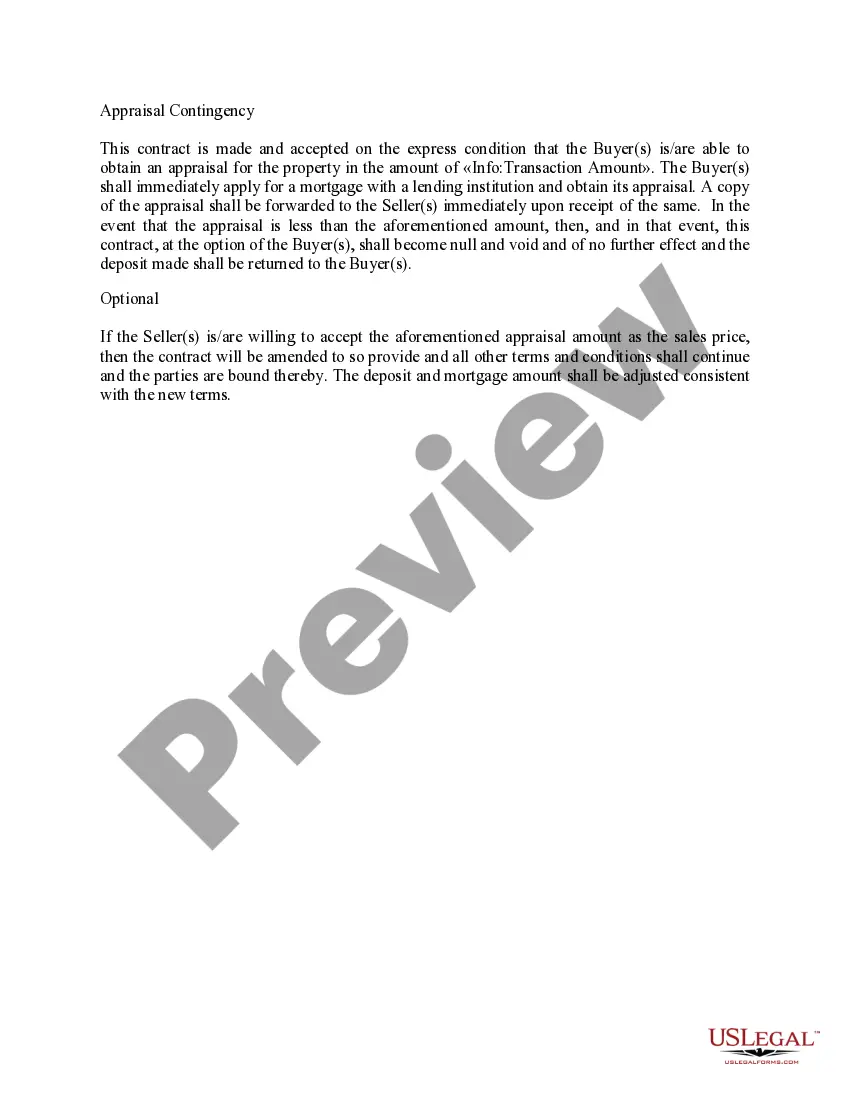
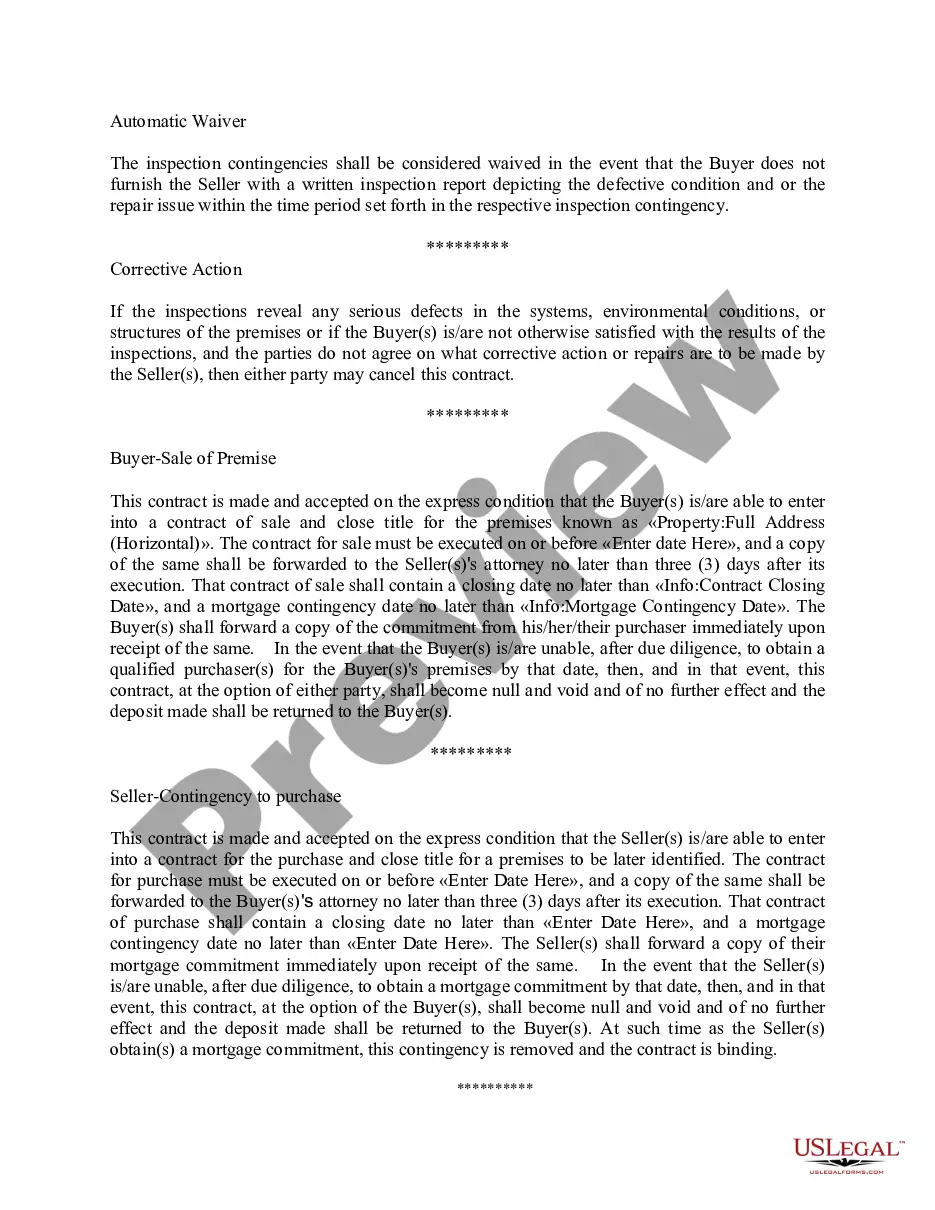
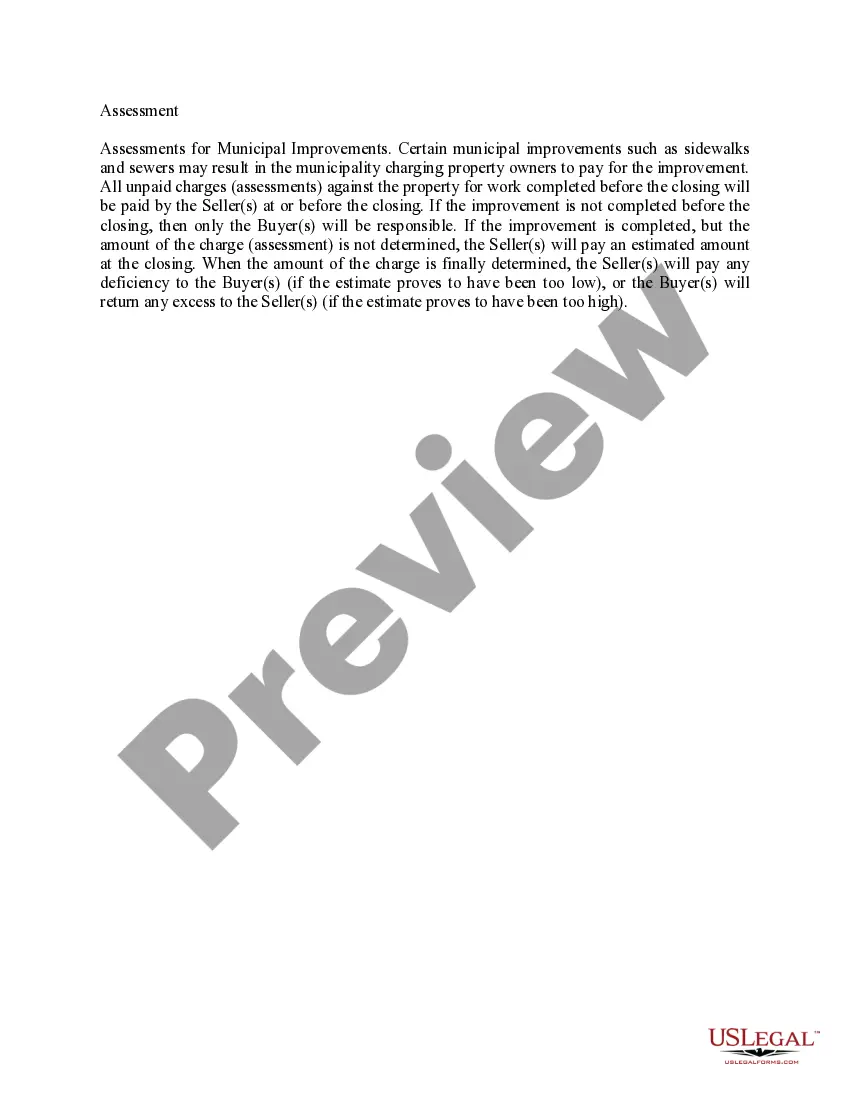
The Appraisal Contingency Clause is a crucial part of a Contract for Real Property. This form specifies conditions that must be met for the contract to be binding, particularly related to the property's appraisal. Unlike similar forms, this clause provides both the buyer and seller an option to proceed or nullify the agreement based on the appraisal outcome.
Main sections of this form
- Contingency condition that allows buyers to back out if the appraisal is lower than expected.
- Requirement for buyers to apply for a mortgage and obtain an appraisal promptly.
- Requirement for the buyer to share the appraisal with the seller immediately upon receipt.
- Provision allowing the contract to be amended if the seller accepts the lower appraisal value.
- Adjustment of deposit and mortgage amounts in accordance with any new terms.

When to use this form
This form is utilized during real estate transactions when a buyer wants to incorporate an appraisal contingency into the contract. It is particularly important when the buyer seeks financing, as it protects them if the property's appraised value is less than the purchase price. Use this form to ensure both parties have clarity regarding the appraisal condition.
Who needs this form
- Home buyers who need to safeguard their investment during the purchasing process.
- Sellers who are open to negotiating terms based on an appraisal.
- Real estate agents and attorneys representing buyers or sellers in property transactions.
Instructions for completing this form
- Identify the buyer(s) and seller(s) involved in the transaction.
- Specify the property being purchased in detail.
- Enter the transaction amount for the appraisal condition.
- Include a timeline for applying for the mortgage and obtaining the appraisal.
- Ensure both parties sign and date the document to make it enforceable.
Notarization requirements for this form
This form does not typically require notarization unless specified by local law. Ensure compliance with specific state requirements to maintain the binding nature of the agreement.
Get your form ready online
Our built-in tools help you complete, sign, share, and store your documents in one place.
Make edits, fill in missing information, and update formatting in US Legal Forms—just like you would in MS Word.
Download a copy, print it, send it by email, or mail it via USPS—whatever works best for your next step.
Sign and collect signatures with our SignNow integration. Send to multiple recipients, set reminders, and more. Go Premium to unlock E-Sign.
If this form requires notarization, complete it online through a secure video call—no need to meet a notary in person or wait for an appointment.
We protect your documents and personal data by following strict security and privacy standards.

Make edits, fill in missing information, and update formatting in US Legal Forms—just like you would in MS Word.

Download a copy, print it, send it by email, or mail it via USPS—whatever works best for your next step.

Sign and collect signatures with our SignNow integration. Send to multiple recipients, set reminders, and more. Go Premium to unlock E-Sign.

If this form requires notarization, complete it online through a secure video call—no need to meet a notary in person or wait for an appointment.

We protect your documents and personal data by following strict security and privacy standards.
Common mistakes
- Failing to disclose the expected appraisal amount can lead to misunderstandings.
- Not promptly submitting the appraisal results can delay the transaction.
- Overlooking the requirement to adjust the contract if the appraisal comes in lower.
Advantages of online completion
- Convenient access to a professionally drafted form anytime, enhancing user experience.
- Easy editability allows users to customize it based on their unique needs.
- Reliable source ensures compliance with legal standards, reducing risks in real estate transactions.
Looking for another form?
Form popularity
FAQ
As an appraisal contingency example, if you agree to buy a home for $200,000, but the appraised value comes in at only $190,000, the lender will not give you a loan for the property unless you cover the difference.
Options that could make an offer more attractive include offering more than the asking price, offering a larger Earnest Money Deposit than requested, letting the sellers choose the closing date, picking up the sellers closing costs and limiting the time period for your house to sell.
CONTINGENCY: This offer is accepted contingent upon BUYER selling their real property located at (Address) (City) , with in days (contingency period) from acceptance of this offer, or any written extensions thereof signed by BUYER and SELLER.
A contingency is a condition that needs to be met before an offer can proceed. In other words, it's kind of like a safety net. Therefore, an appraisal contingency means that if your home doesn't appraise for the amount you've agreed to pay, you can walk away from the deal with your deposit.
Contingency contracts target undesirable behaviors and conditions while helping a person achieve better outcomes. For instance, a parent can enter a contingency contract with a child that does not finish his or her homework on time. The child can agree to finish his or her homework before supper.
An appraisal contingency clause is a provision included in purchase contracts that allows homebuyers to back out of their contract if a home is appraised for less than the purchase price included in the contract.
A contingency clause should clearly outline what the condition is, how the condition is to be fulfilled, and which party is responsible for fulfilling it. The clause should also provide a timeframe and what happens if the condition is not met.
Contingencies can include details such as the time frame (for example, ?the buyer has 14 days to inspect the property?) and specific terms (such as, ?the buyer has 21 days to secure a 30-year conventional loan for 80% of the purchase price at an interest rate no higher than 4.5%?).