Environmental Matters Questionnaire
Understanding this form
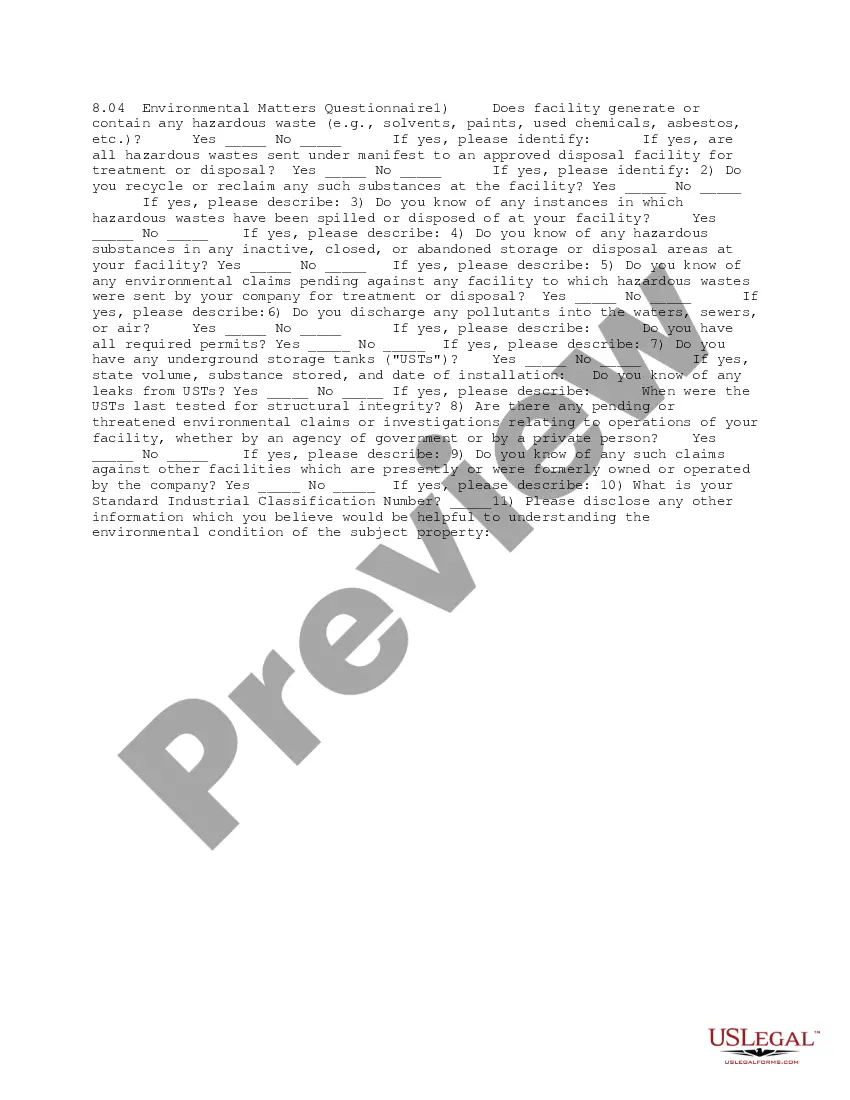
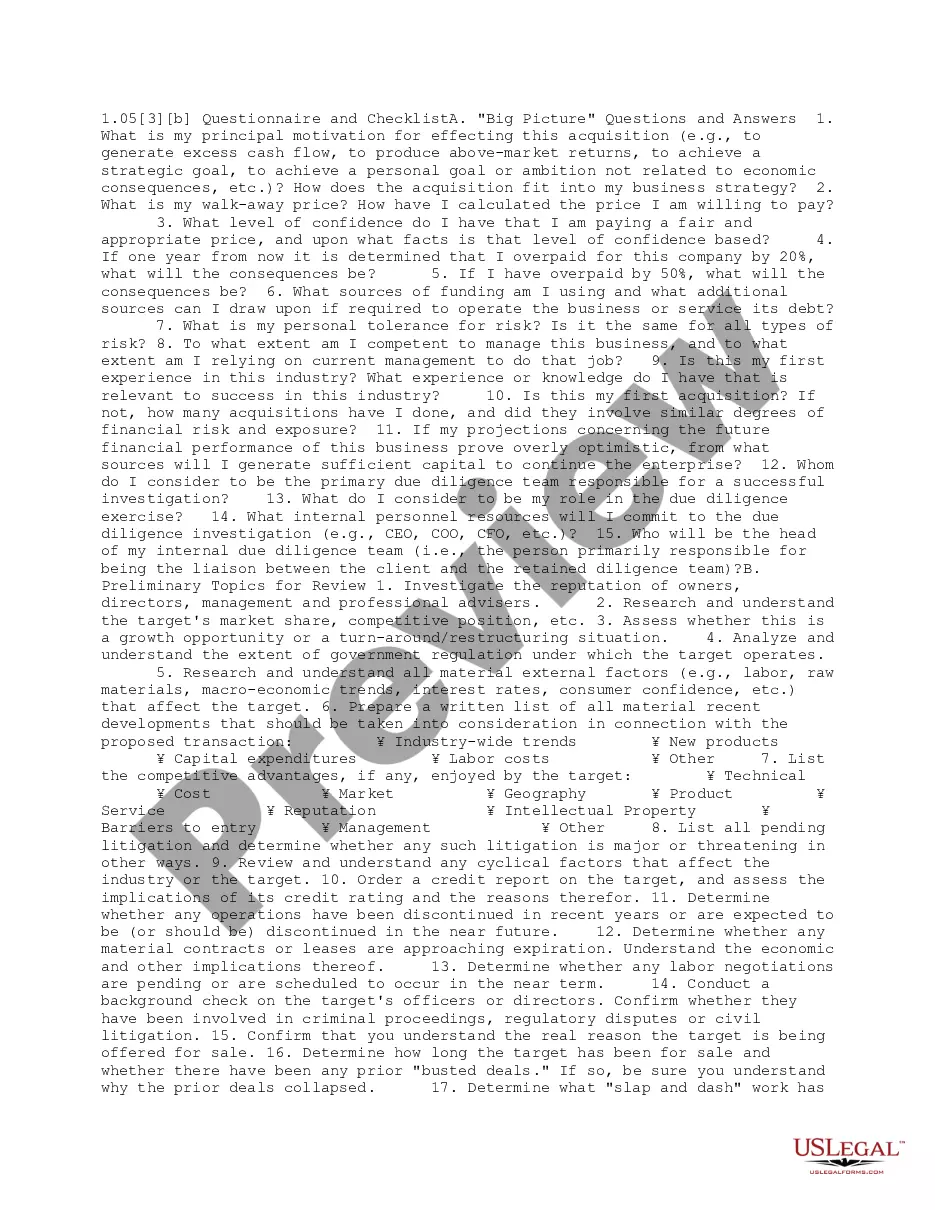
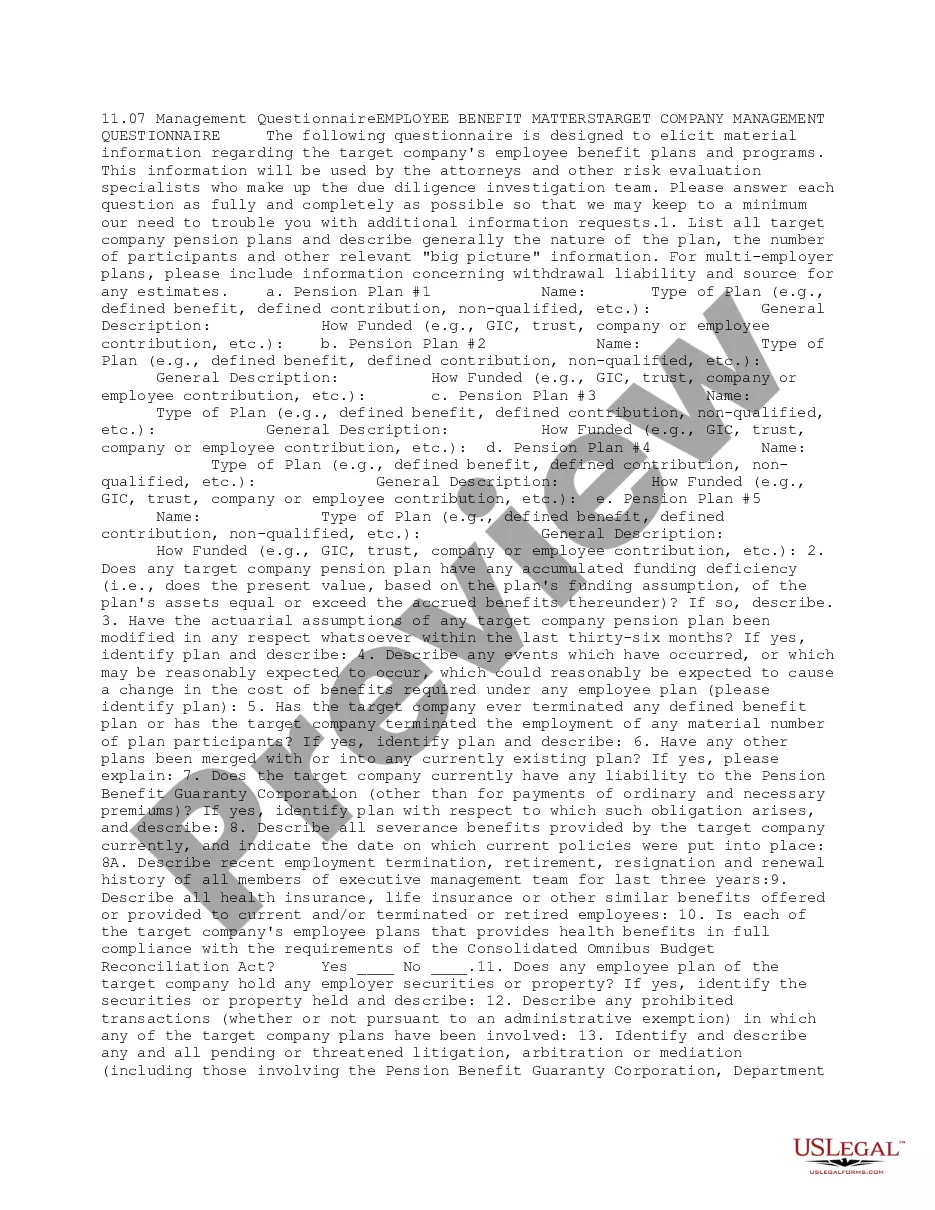
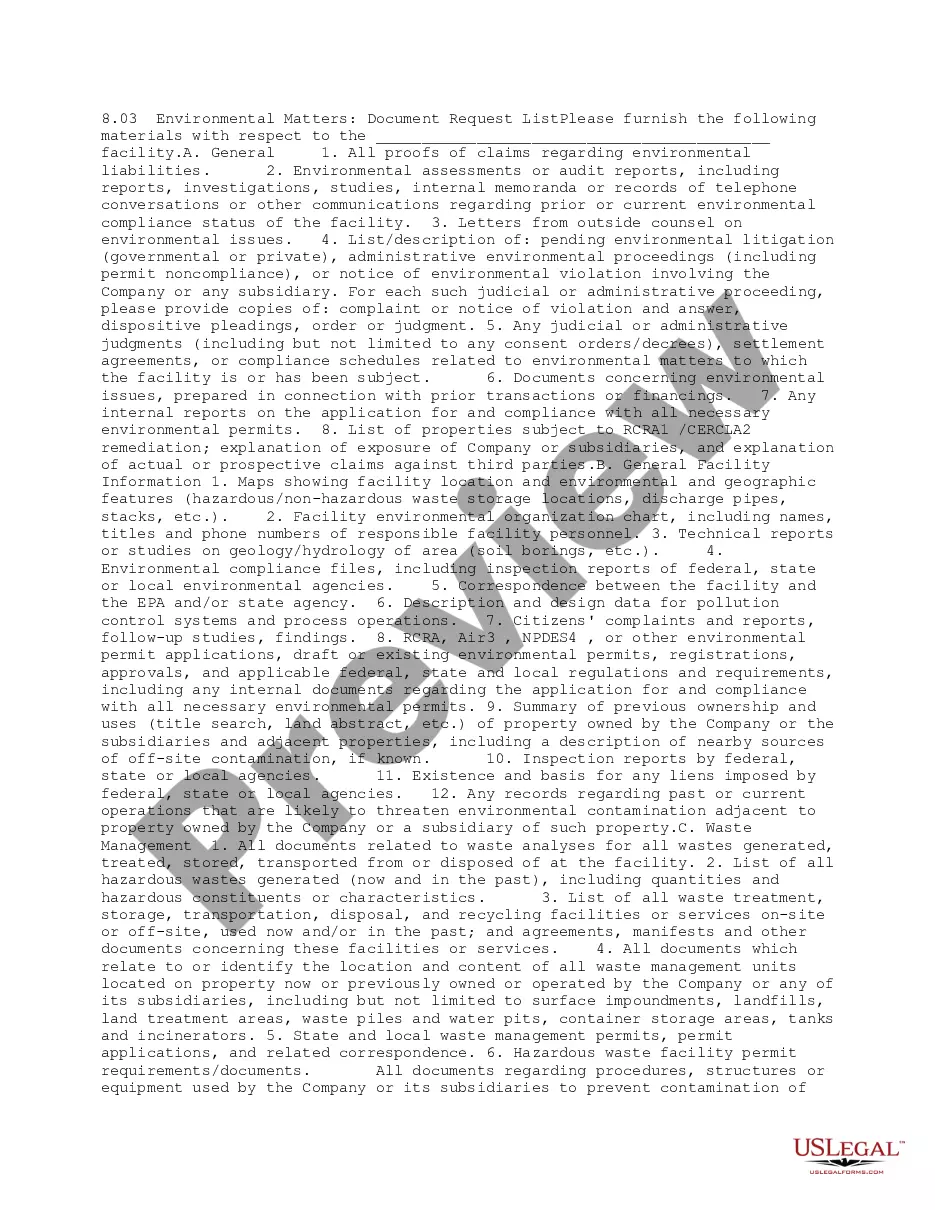
The Environmental Matters Questionnaire is a due diligence tool used to gather information about potential environmental issues related to business transactions. This form is crucial for assessing a company's environmental practices and liabilities, and it differs from other legal forms by focusing specifically on hazardous waste and environmental compliance concerns that may impact business operations.
Key parts of this document
- Questions about hazardous waste generation and management.
- Inquiries on recycling practices for hazardous substances.
- Details regarding past spills or hazardous waste disposal incidents.
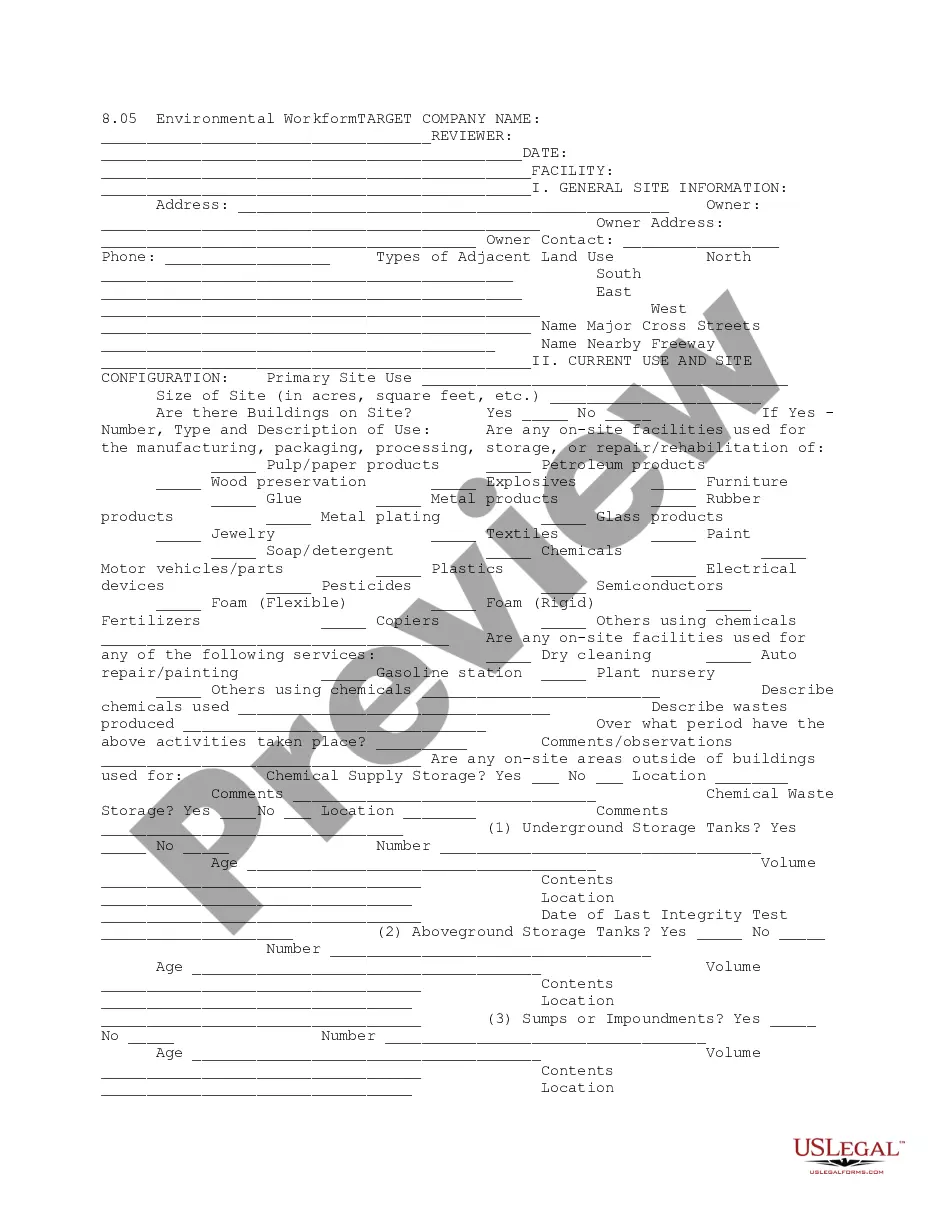
- Information on underground storage tanks and any potential leaks.
- Assessment of any pending environmental claims against the facility.
- Standard Industrial Classification Number to categorize the business.
When to use this document
This form should be used when a business is involved in transactions that require due diligence on environmental matters. This includes mergers, acquisitions, or any sale of properties where environmental concerns may exist. It helps buyers understand potential liabilities related to hazardous wastes and regulatory compliance at the facilities being considered.
Who this form is for
- Businesses conducting due diligence before acquiring a new facility.
- Investors evaluating a company's environmental compliance status.
- Real estate professionals involved in the sale or purchase of properties with environmental concerns.
- Corporate attorneys working on mergers or acquisitions.
Completing this form step by step
- Start by filling out the facility's name and basic identification details.
- Answer questions regarding hazardous waste generation and management practices.
- Provide details on any recycling activities and past environmental incidents.
- Disclose information about underground storage tanks and any leaks.
- Include information about any pending or threatened environmental claims.
- Lastly, provide the Standard Industrial Classification Number and any additional relevant information.
Is notarization required?
This form does not typically require notarization unless specified by local law. It's advisable to check with legal counsel regarding specific requirements in your jurisdiction.
Get your form ready online
Our built-in tools help you complete, sign, share, and store your documents in one place.
Make edits, fill in missing information, and update formatting in US Legal Forms—just like you would in MS Word.
Download a copy, print it, send it by email, or mail it via USPS—whatever works best for your next step.
Sign and collect signatures with our SignNow integration. Send to multiple recipients, set reminders, and more. Go Premium to unlock E-Sign.
If this form requires notarization, complete it online through a secure video call—no need to meet a notary in person or wait for an appointment.
We protect your documents and personal data by following strict security and privacy standards.

Make edits, fill in missing information, and update formatting in US Legal Forms—just like you would in MS Word.

Download a copy, print it, send it by email, or mail it via USPS—whatever works best for your next step.

Sign and collect signatures with our SignNow integration. Send to multiple recipients, set reminders, and more. Go Premium to unlock E-Sign.

If this form requires notarization, complete it online through a secure video call—no need to meet a notary in person or wait for an appointment.

We protect your documents and personal data by following strict security and privacy standards.
Common mistakes to avoid
- Failing to disclose previous spills or hazardous waste issues thoroughly.
- Incomplete answers regarding recycling practices.
- Overlooking to update information on underground storage tanks and their conditions.
- Neglecting to include pending environmental claims against the facility.
Why use this form online
- Convenient access to important information without the need for physical storage.
- Editable format allows for easy updates and customization.
- Reliable templates drafted by licensed attorneys ensure legal compliance.
- Instant downloads help expedite the due diligence process.
Legal use & context
- This form is designed to help identify potential environmental risks before entering into a business transaction.
- Failure to disclose environmental issues can lead to legal liability and financial penalties.
- Utilizing a standardized form promotes thoroughness and efficiency in the due diligence process.
Summary of main points
- The Environmental Matters Questionnaire is crucial for assessing environmental liabilities.
- Accurate completion of the form can help avert legal consequences and ensure compliance.
- Regular reviewing and updating of the information is vital as environmental regulations evolve.
Looking for another form?
Form popularity
FAQ
A good questionnaire is one which help directly achieve the research objectives, provides complete and accurate information; is easy for both interviewers and respondents to complete, is so designed as to make sound analysis and interpretation possible and is brief.
A sample survey is a survey which is carried out using a sampling method, i.e. in which a portion only, and not the whole population is surveyed.
In English, there are four types of questions: general or yes/no questions, special questions using wh-words, choice questions, and disjunctive or tag/tail questions. Each of these different types of questions is used commonly in English, and to give the correct answer to each you'll need to be able to be prepared.
What according to you is the biggest environmental threat today? How can it be overcome? What inspired you to become an environmentalist? How far can technology help save the situation? What do you think a commoner can do to help the environment. Why would you ask a student to join the environmental sector?
Some examples of a questionnaire are: Customer Satisfaction Questionnaire: This type of research can be used in any situation where there's an interaction between a customer and an organization. For example, you might send a customer satisfaction survey after someone eats at your restaurant.
Computer questionnaire. Respondents are asked to answer the questionnaire which is sent by mail. Telephone questionnaire. In-house survey. Mail Questionnaire. Open question questionnaires. Multiple choice questions. Dichotomous Questions. Scaling Questions.
Multiple choice questions. Rating scale questions. Likert scale questions. Matrix questions. Dropdown questions. Open-ended questions. Demographic questions. Ranking questions.
An environmental questionnaire is a preliminary task in the environmental due diligence process by lenders and other information-seekers. The questionnaire screens the environmental hazards of a property undergoing any transaction.
In survey sampling it most often involves a questionnaire used to measure the characteristics and/or attitudes of people. Different ways of contacting members of a sample once they have been selected is the subject of survey data collection.