Management Questionnaire Employee Benefit Matters
What this document covers
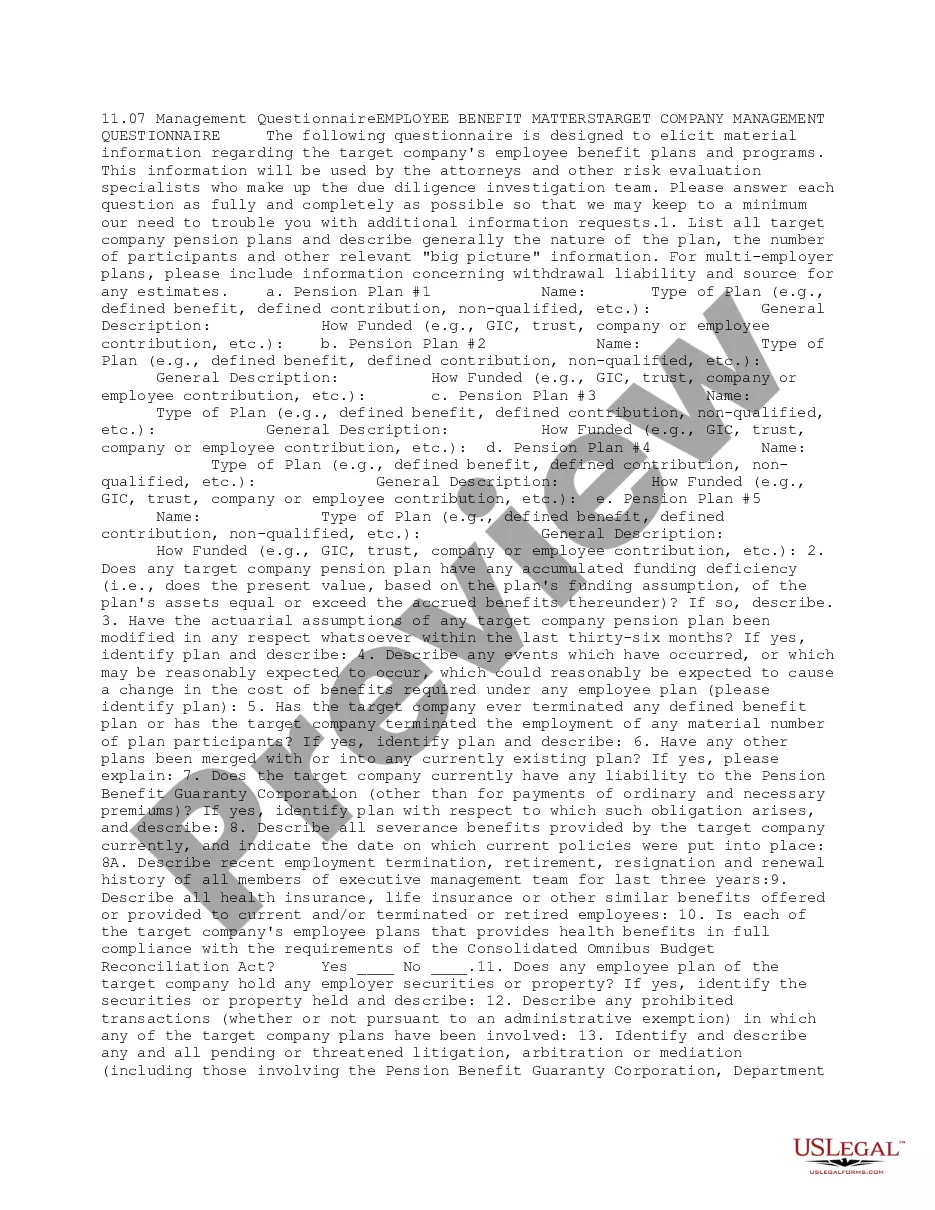
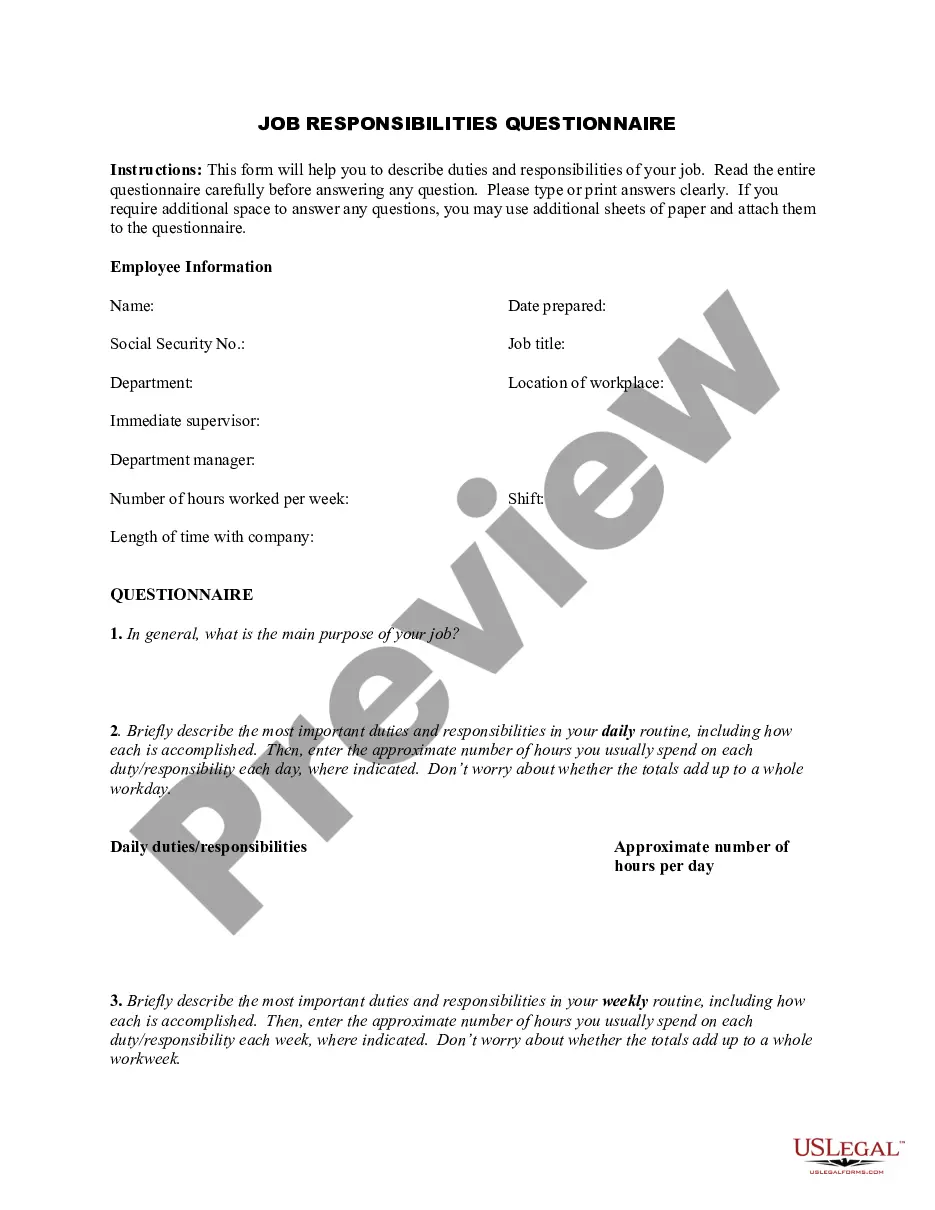
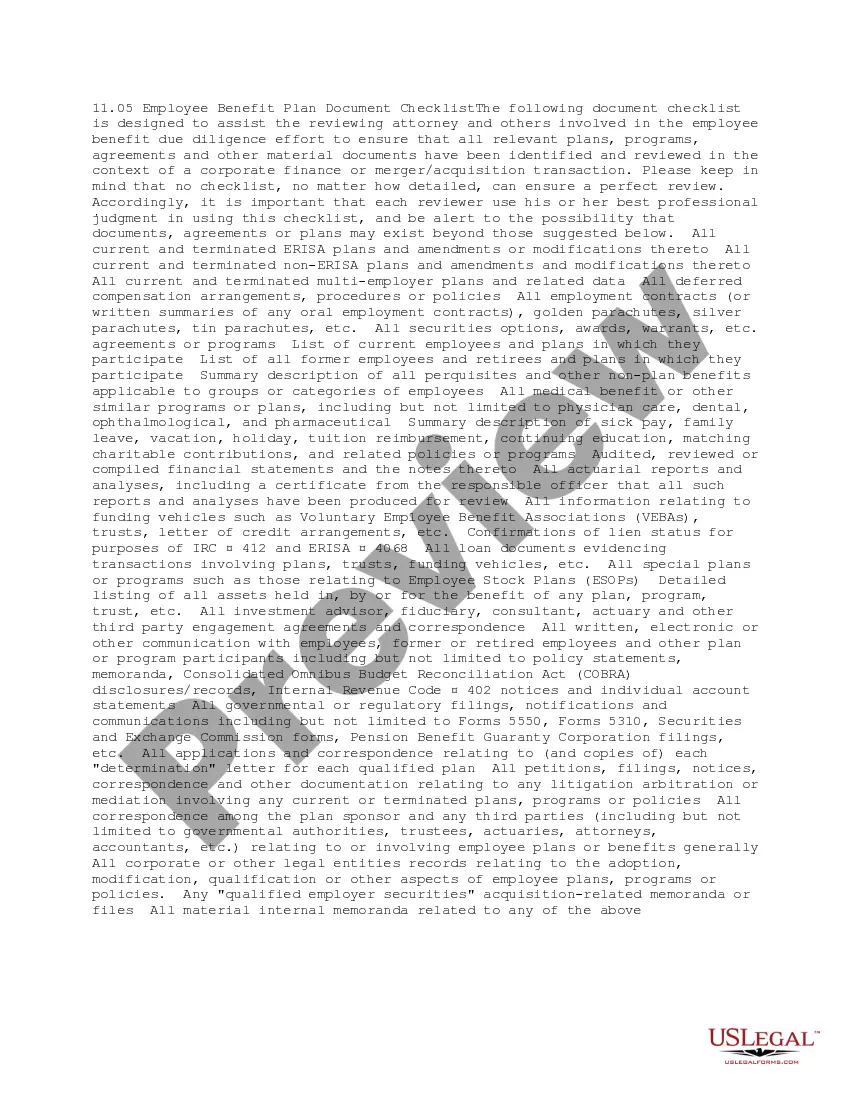
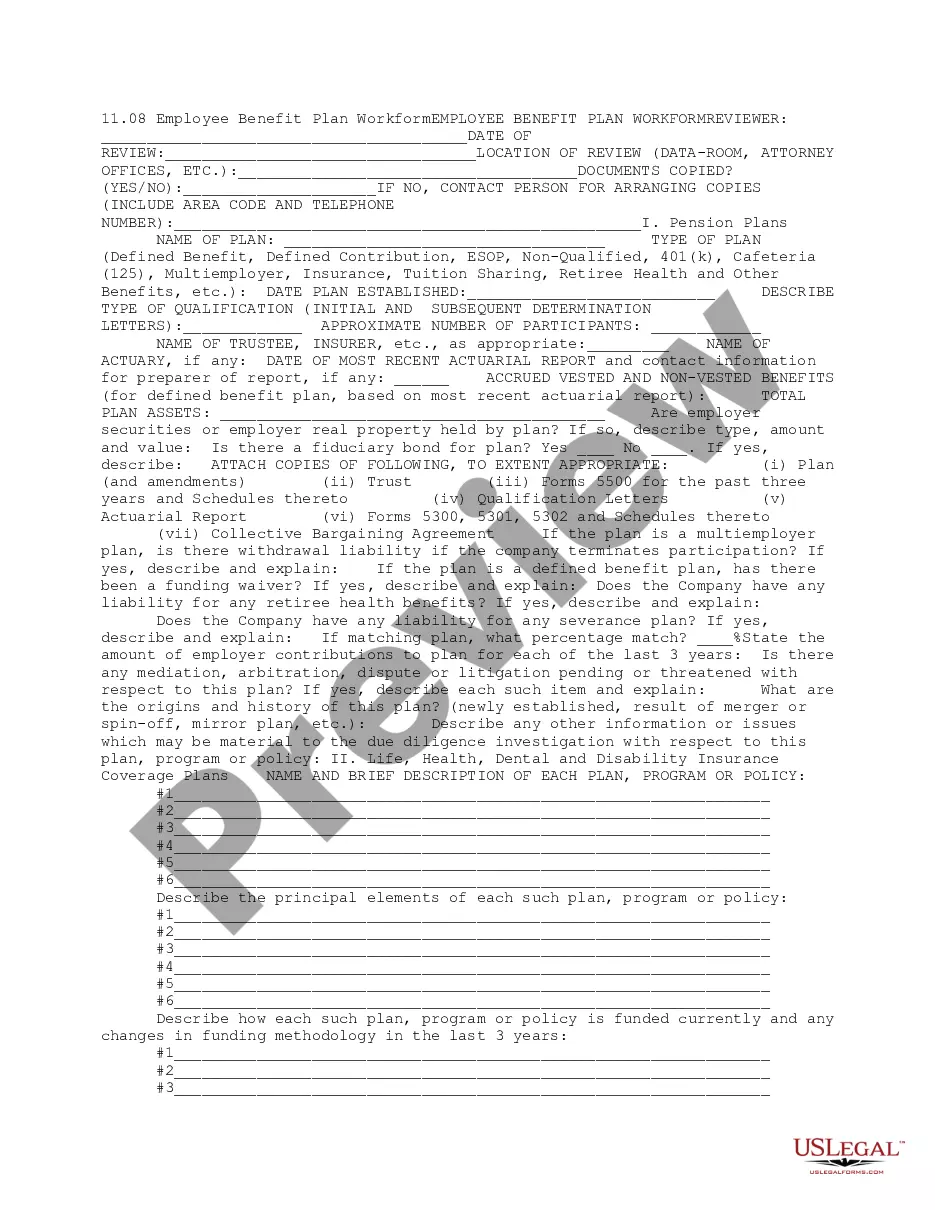
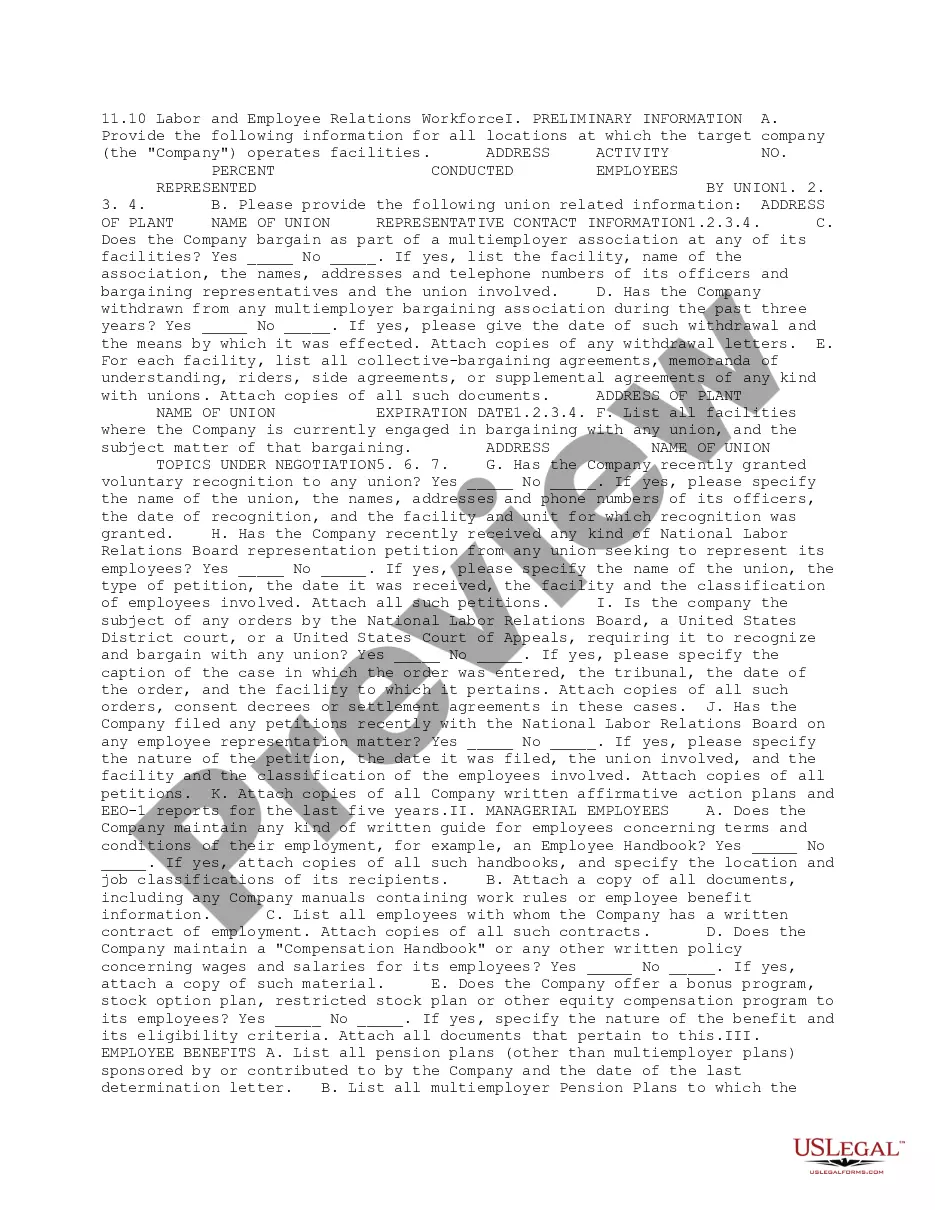
The Management Questionnaire Employee Benefit Matters is a legal document designed to gather crucial information regarding a companyâs employee benefit plans and programs. This form plays a vital role in due diligence investigations, particularly in mergers and acquisitions, helping attorneys and risk evaluation specialists assess the material conditions of employee benefits. This form differs from basic employee benefit forms as it focuses specifically on detailed inquiries essential for a comprehensive evaluation of employee benefits during corporate transactions.
What’s included in this form
- List of all pension plans, including plan type and funding sources.
- Details on any funding deficiencies associated with pension plans.
- Information on modifications to actuarial assumptions within the last thirty-six months.
- Events that may change the costs of employee benefits.
- Details about severance benefits and recent executive management changes.
When this form is needed
This form should be used when a company is involved in a merger or acquisition and requires a thorough evaluation of its employee benefit plans. It is critical when conducting due diligence to ensure compliance with legal requirements and to assess any liabilities that may arise from employee benefits.
Intended users of this form
- Corporate attorneys conducting due diligence during mergers and acquisitions.
- Company executives responsible for employee benefits management.
- Risk assessment professionals evaluating potential liabilities associated with employee benefit plans.
How to complete this form
- Identify and list all pension plans linked to the target company, specifying the type and funding methods for each.
- Review and report on any funding deficiencies related to pension plans.
- Document any changes to actuarial assumptions made within the last thirty-six months.
- Gather information on recent corporate events that could affect employee benefits costs.
- Detail all severance benefits, including dates when current policies were implemented.
Does this form need to be notarized?
This form does not typically require notarization unless specified by local law. Users are encouraged to check local regulations for any specific notarization requirements related to employee benefit matters.
Get your form ready online
Our built-in tools help you complete, sign, share, and store your documents in one place.
Make edits, fill in missing information, and update formatting in US Legal Forms—just like you would in MS Word.
Download a copy, print it, send it by email, or mail it via USPS—whatever works best for your next step.
Sign and collect signatures with our SignNow integration. Send to multiple recipients, set reminders, and more. Go Premium to unlock E-Sign.
If this form requires notarization, complete it online through a secure video call—no need to meet a notary in person or wait for an appointment.
We protect your documents and personal data by following strict security and privacy standards.

Make edits, fill in missing information, and update formatting in US Legal Forms—just like you would in MS Word.

Download a copy, print it, send it by email, or mail it via USPS—whatever works best for your next step.

Sign and collect signatures with our SignNow integration. Send to multiple recipients, set reminders, and more. Go Premium to unlock E-Sign.

If this form requires notarization, complete it online through a secure video call—no need to meet a notary in person or wait for an appointment.

We protect your documents and personal data by following strict security and privacy standards.
Avoid these common issues
- Failing to provide complete details of all employee benefit plans.
- Omitting relevant event information that could affect employee benefit costs.
- Neglecting to indicate any funding deficiencies associated with pension plans.
Advantages of online completion
- Convenient access to legal templates anytime, anywhere.
- Editable forms that can be tailored to specific corporate needs.
- Reliable content crafted by licensed attorneys to ensure compliance with legal standards.
Legal use & context
- This form is integral for legal compliance during corporate transactions.
- It ensures that all material employee benefit information is documented and assessed, minimizing future liabilities.
- Utilizing this form can prevent potential legal disputes regarding employee benefits and pension plans.
Quick recap
- The Management Questionnaire Employee Benefit Matters is essential for thorough due diligence in mergers and acquisitions.
- Accurate and complete information is crucial for effective risk assessment.
- Understanding the specifics of employee benefits helps in minimizing future liabilities.
Glossary of terms
- Pension Plan: A retirement plan funded by the employer that provides employee benefits upon retirement.
- Funding Deficiency: A situation where the assets of a pension plan are less than the accrued benefits owed to employees.
- Severance Benefits: Compensation provided to employees who are terminated from their positions.
Looking for another form?
Form popularity
FAQ
Health, Dental, and Vision Insurance Are the Most Desirable Employee Benefits. Better health, dental, and vision insurance topped the list with 88 percent of respondents saying that they would give this benefit some consideration (34 percent) or heavy consideration (54 percent).
Thank employees for participating. Provide an initial overview of results. Analyze results with leadership. Announce detailed results. Discuss team-level results within teams.
#1 Financial Wellness Programs. #2 Flexible Work Arrangements. #3 Health Insurance Benefits. #4 Paid Time Off. #5 Mental Health Benefits. #6 Family-Friendly Employee Benefits. #7 Professional Development Benefits. #8 Student Loan Employee Benefits.
Health insurance. Most employees view health insurance as one of the most important factors in an employee benefits package. Dental insurance. Vacation and sick time. Paid holidays. Tuition assistance.
What are the four major types of employee benefits? These include medical, life, disability, and retirement. Here is a closer look at these employee benefits and why they are often offered by business owners.
Medical. The most common (and often most essential) type of benefits employers can offer is medical coverage. Life. Another common employee benefit is life insurance or accidental death and dismemberment insurance. Disability. Retirement.
Does the company offer health insurance? Will it cover members or my family as well as myself? How much of the premium costs do I have to pay for myself? Can I choose different levels of coverage? What kind of coverage is there for dental, vision and disability insurance?
What are the four major types of employee benefits? Traditionally, most benefits used to fall under one of the four major types of employee benefits, namely: medical insurance, life insurance, retirement plans, and disability insurance.
The most common benefits are medical, disability, and life insurance; retirement benefits; paid time off; and fringe benefits.