Mississippi Order Denying Motion to Set Aside Summary Judgment
What this document covers
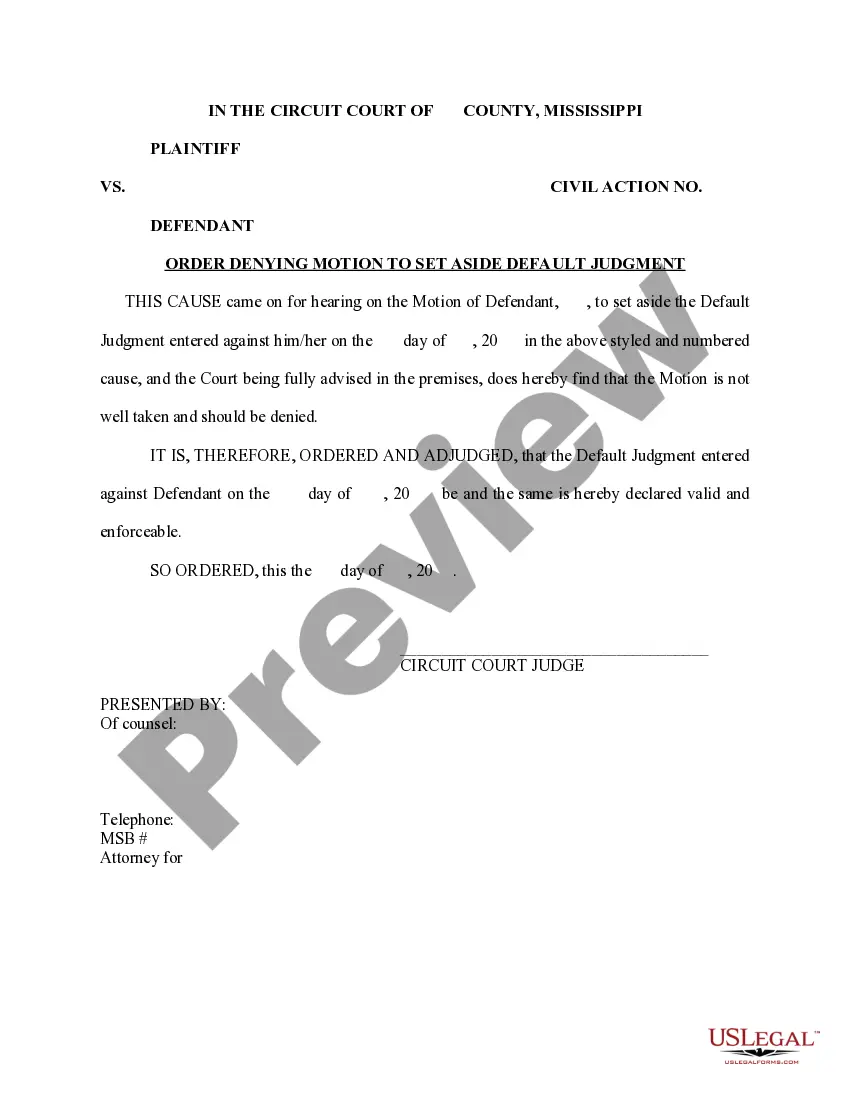
The Order Denying Motion to Set Aside Summary Judgment is a legal document used in court to formally deny a partyâs request to overturn a summary judgment that has already been granted. Unlike other motions, this order specifically addresses the status of a previous decision, affirming that the court will not change its ruling based on the arguments presented. It is essential for maintaining the integrity of the judicial process and ensuring that prior decisions remain in effect unless legally challenged with sufficient grounds.
Form components explained
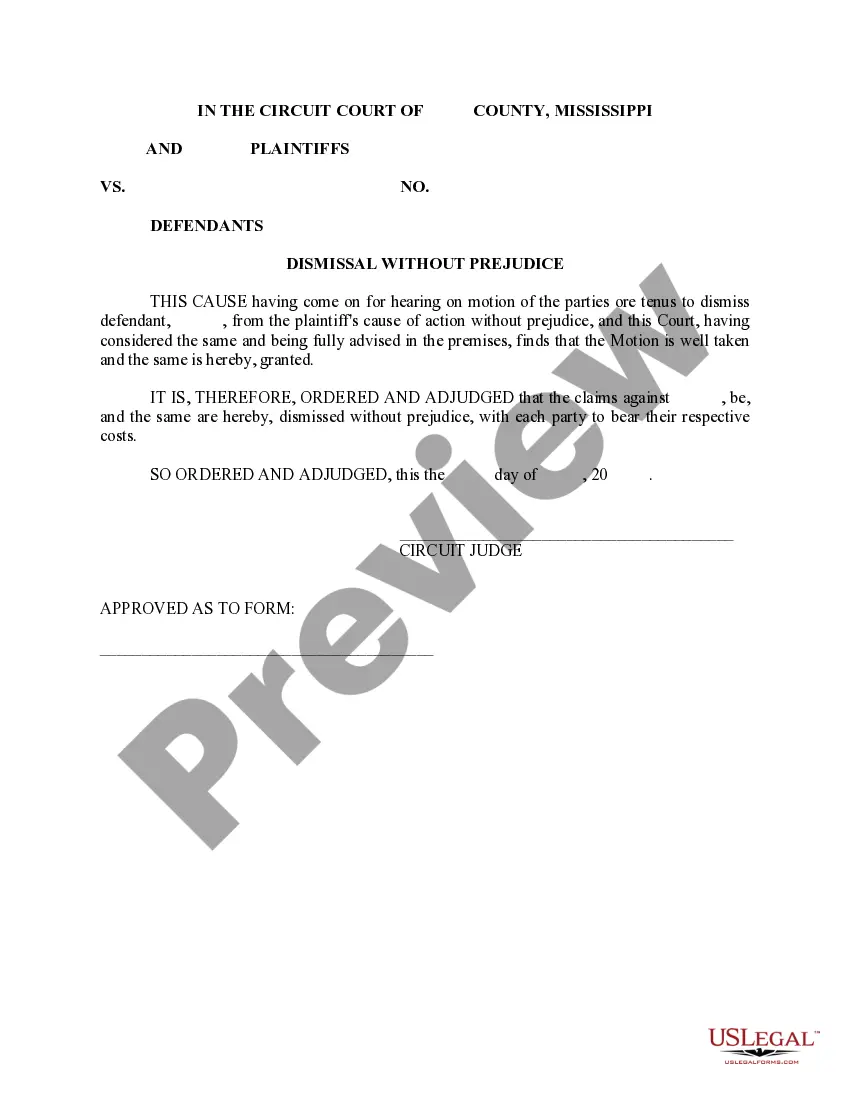
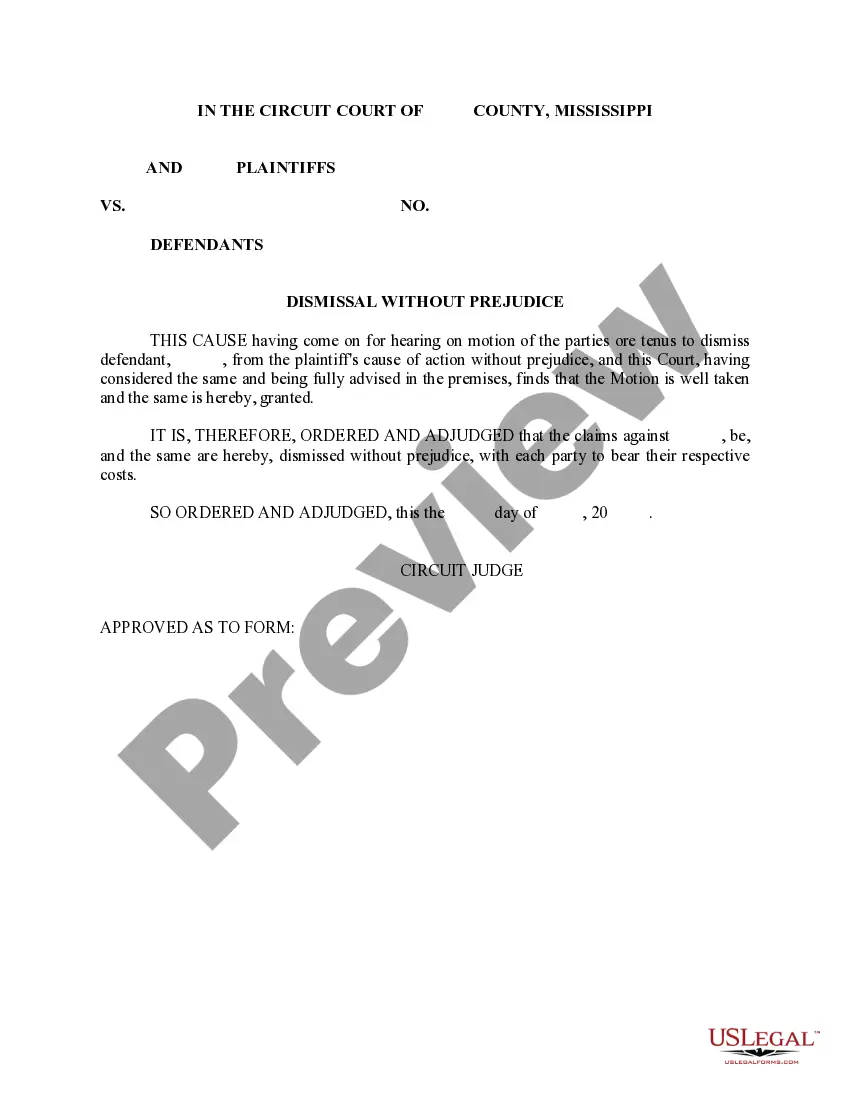
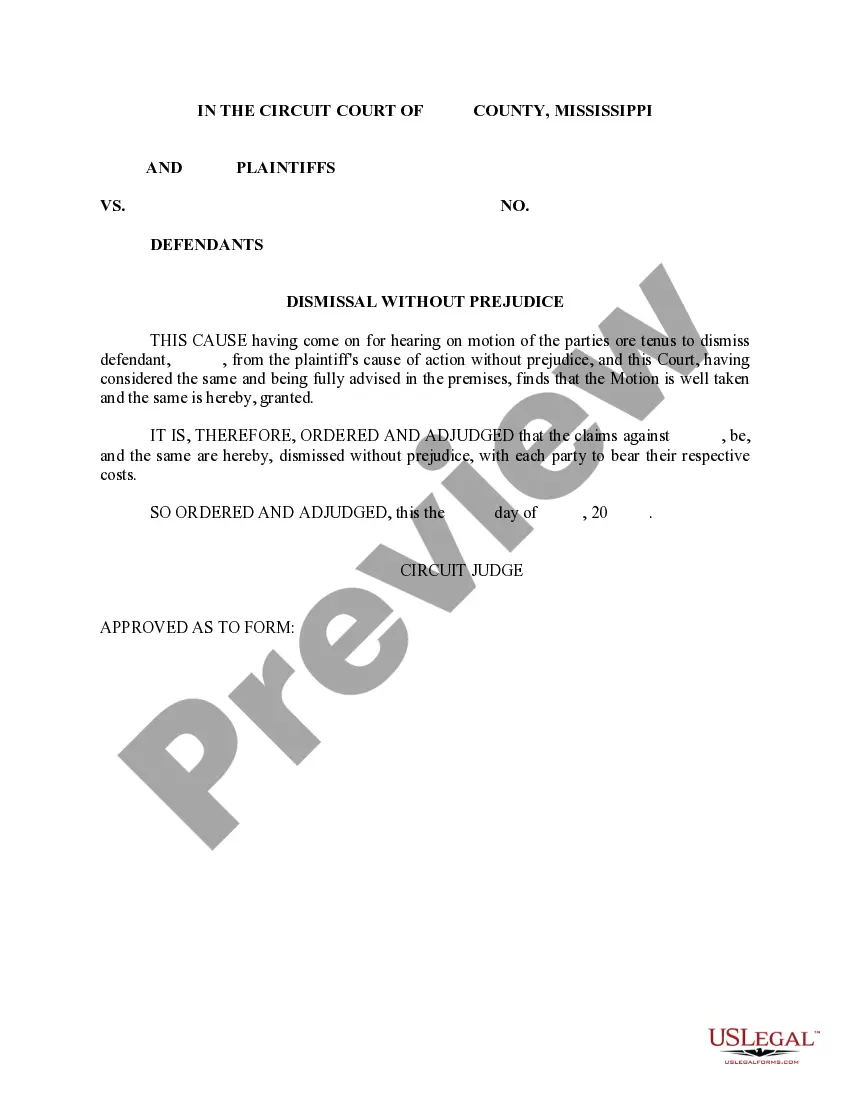
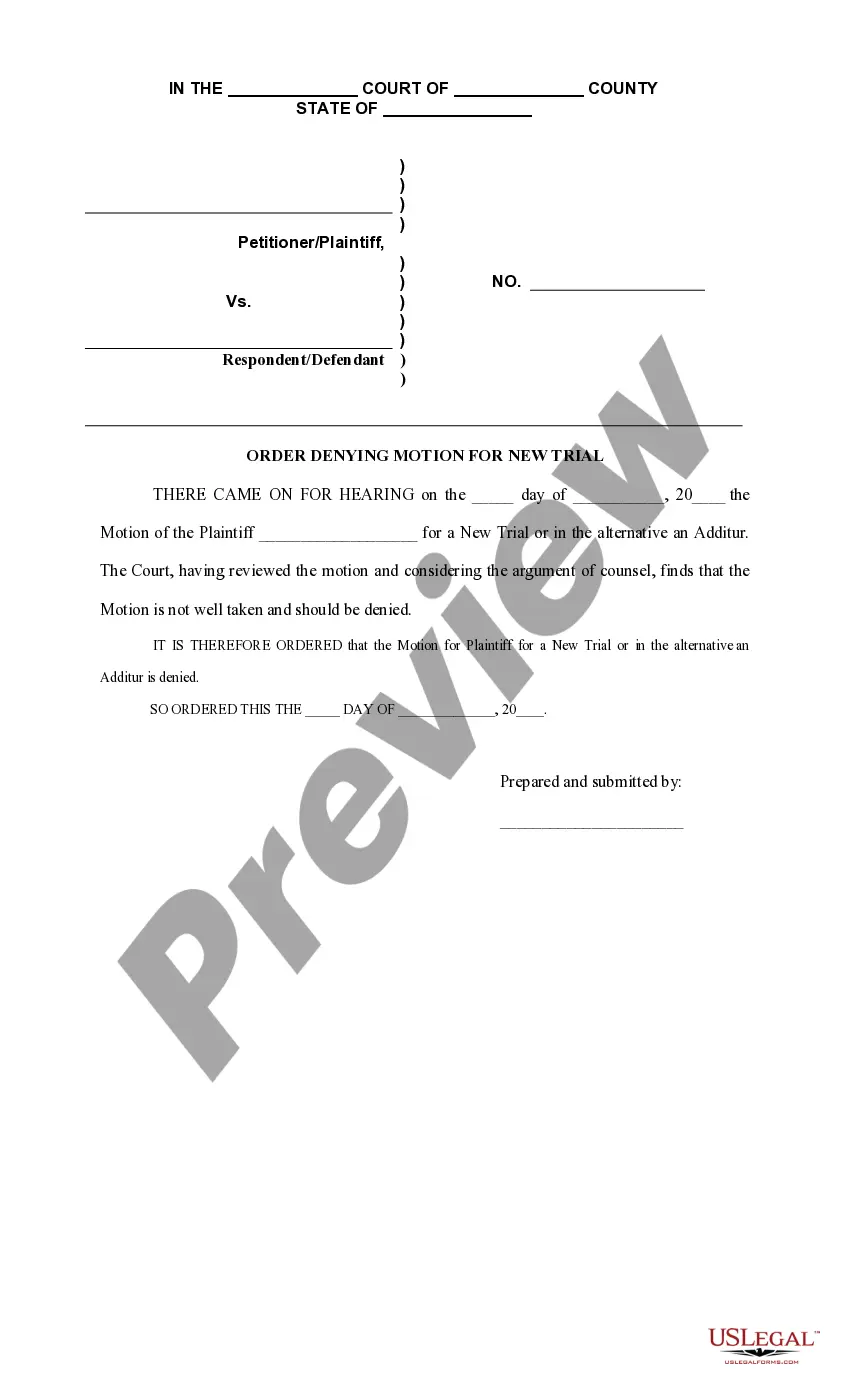
- Heading title: Clearly identifies the document as an Order Denying Motion to Set Aside Summary Judgment.
- Case details: Includes the names of parties involved in the case and the case number.
- Date and judge's signature: Confirms the date of the order and includes the signature of the presiding judge.
- Reasons for denial: Outlines the court's reasoning for denying the motion, based on applicable laws and rules.
- Filed date: Indicates when the order was officially filed with the court.
When to use this document
You would use the Order Denying Motion to Set Aside Summary Judgment when a party to a legal case has filed a motion to overturn or set aside a previous summary judgment decision by the court. This form is necessary when the court evaluates the validity of the motion and decides not to grant it, thereby upholding the original judgment. Common scenarios include civil lawsuits where one party believes there were errors in how the judgment was made or where new evidence is presented that they feel warrants revisiting the courtâs earlier decision.
Who this form is for
Individuals or entities involved in a legal dispute who have had a motion denied by the court should use this form. This includes:
- Defendants seeking to challenge a summary judgment against them.
- Plaintiffs or respondents wanting to document the court's decision.
- Legal professionals assisting clients through the court process.
Steps to complete this form
To complete the Order Denying Motion to Set Aside Summary Judgment, follow these steps:
- Identify the parties in the case: Enter the names and roles of all parties involved.
- Provide case details: Include the case number and court name.
- Specify the date of the original judgment: Clearly state when the summary judgment was originally issued.
- Document the judge's name: Write the name of the judge who issued the denial order.
- Add the judge's signature: Ensure there is space for the judge's signature to finalize the order.
Is notarization required?
This form does not typically require notarization unless specified by local law.
Get your form ready online
Our built-in tools help you complete, sign, share, and store your documents in one place.
Make edits, fill in missing information, and update formatting in US Legal Forms—just like you would in MS Word.
Download a copy, print it, send it by email, or mail it via USPS—whatever works best for your next step.
Sign and collect signatures with our SignNow integration. Send to multiple recipients, set reminders, and more. Go Premium to unlock E-Sign.
If this form requires notarization, complete it online through a secure video call—no need to meet a notary in person or wait for an appointment.
We protect your documents and personal data by following strict security and privacy standards.

Make edits, fill in missing information, and update formatting in US Legal Forms—just like you would in MS Word.

Download a copy, print it, send it by email, or mail it via USPS—whatever works best for your next step.

Sign and collect signatures with our SignNow integration. Send to multiple recipients, set reminders, and more. Go Premium to unlock E-Sign.

If this form requires notarization, complete it online through a secure video call—no need to meet a notary in person or wait for an appointment.

We protect your documents and personal data by following strict security and privacy standards.
Mistakes to watch out for
- Failing to include all pertinent case details, which may delay processing.
- Not signing the order where required, potentially rendering it invalid.
- Neglecting to check the specific state requirements, which can vary widely.
- Overlooking deadlines for filing the order after the decision is made.
Benefits of using this form online
- Convenience of downloading the form online at any time, enabling immediate access.
- Editable format allows users to customize the document to fit their unique circumstances.
- Reliability of templates drafted by licensed attorneys, ensuring legal compliance.
What to keep in mind
- The Order Denying Motion to Set Aside Summary Judgment confirms the court's decision to maintain an existing summary judgment.
- The form is critical for parties involved in ongoing legal disputes seeking to understand the court's final ruling.
- Proper completion and filing are essential for legal validity and to uphold the integrity of the judicial process.
Looking for another form?
Form popularity
FAQ
When a court sets aside a conviction it dismisses the conviction, the penalties are dismissed and disabilities are vacated. The record of the prior conviction remains but the court record will also note that the conviction has been set aside.
1 : something (such as a portion of receipts or production) that is set aside for a specified purpose. 2 : a program requiring a percentage of opportunities (as for jobs or funding) to be reserved for an underrepresented group.
If the judgment is set aside, you and the creditor are put back in the position you were both in immediately before the judgment. This means if you have an argument or 'defence' against the judgment which you didn't get a chance to raise when the claim was first issued, you have a second chance to do this.
Usually a court will agree to set aside judgment if you can show that you did not receive any court papers and therefore were not aware of the court case against you.When you make your application to set aside judgment the court will fix a hearing date. Both you and the Claimant will have to go to this hearing.
To ask a court to set aside (cancel) a court order or judgment, you have to file a request for order to set aside, sometimes called a motion to set aside or motion to vacate. The terms set aside or vacate a court order basically mean to cancel or undo that order to start over on a particular issue.
The Court in its inherent jurisdiction has the power to set aside its own Judgment or Order made without jurisdiction or if same has been fraudulently obtained. In such circumstance, an appeal for the purpose of having the null judgment or order cannot be said to be necessary.
If a notice of motion for setting aside or variation of a judgment or order is filed within 14 days after the judgment or order is entered, the court may set aside or vary the judgment or order under r 36.16(1) as if the judgment or order had not been entered: r 36.16(3A).
Once the judgment is set aside, the case starts up again. If you do not file an answer with the court to defend against plaintiff's complaint, you could again be defaulted and another default judgment could be entered against you.
If the judgment is set aside, you and the creditor are put back in the position you were both in immediately before the judgment. This means if you have an argument or 'defence' against the judgment which you didn't get a chance to raise when the claim was first issued, you have a second chance to do this.