Mississippi Response to Plaintiffs' Motion to Set Aside Summary Judgment
What this document covers
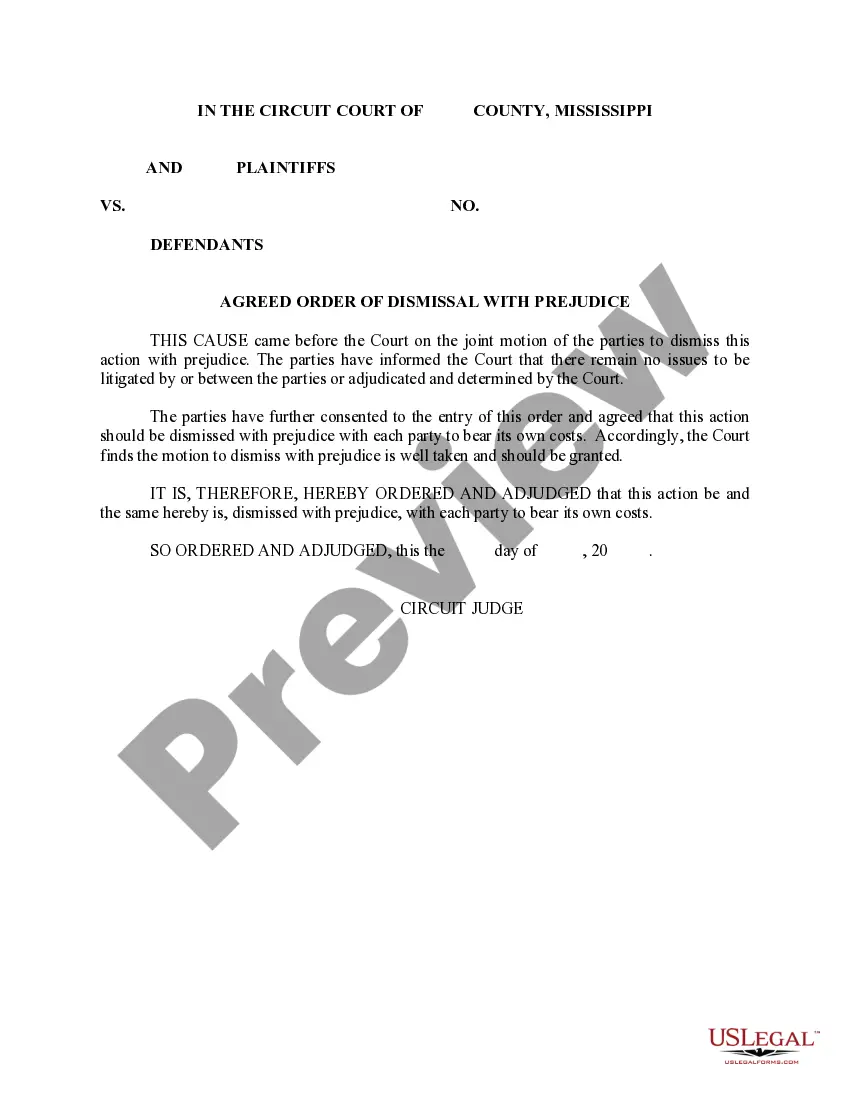
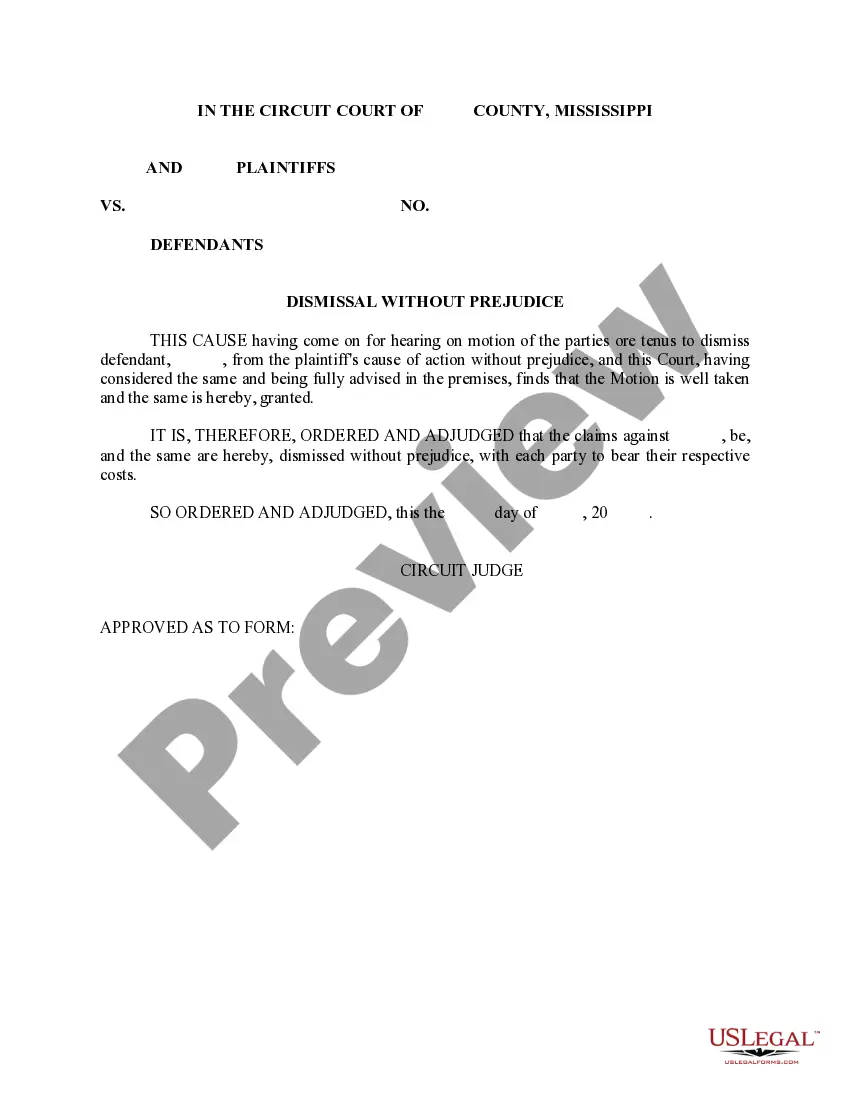
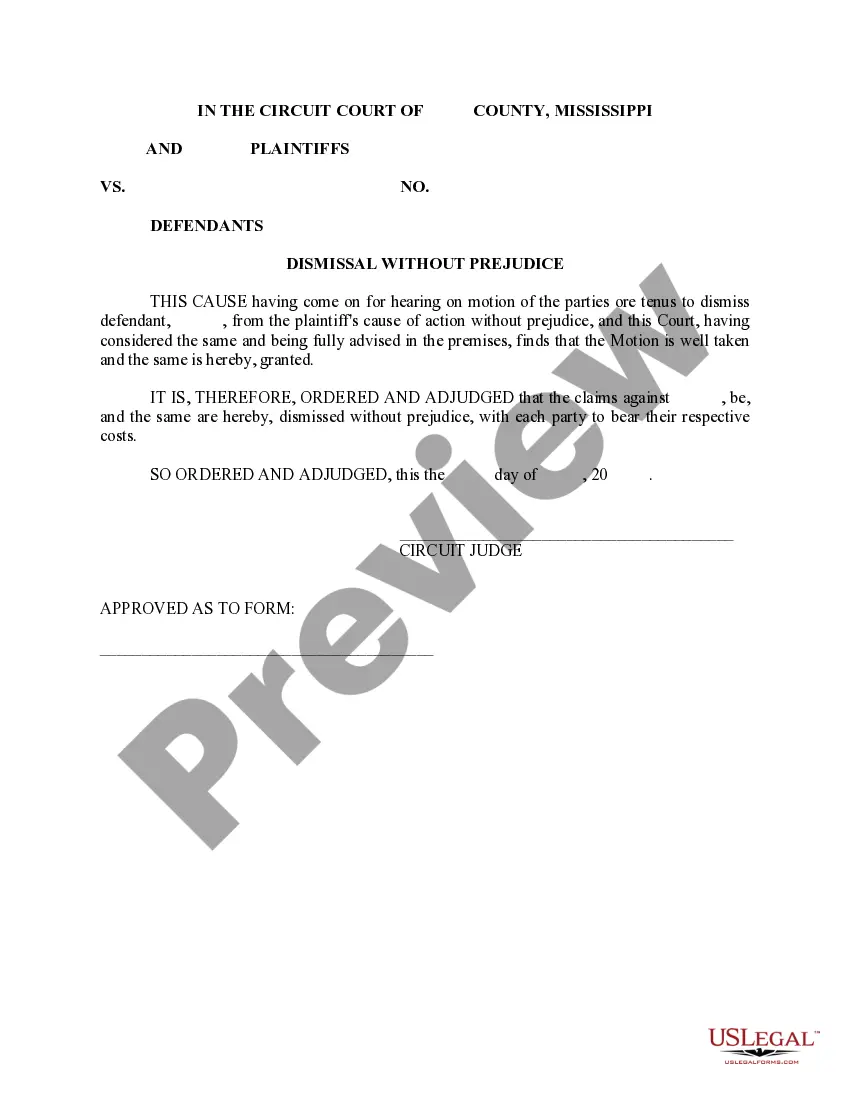
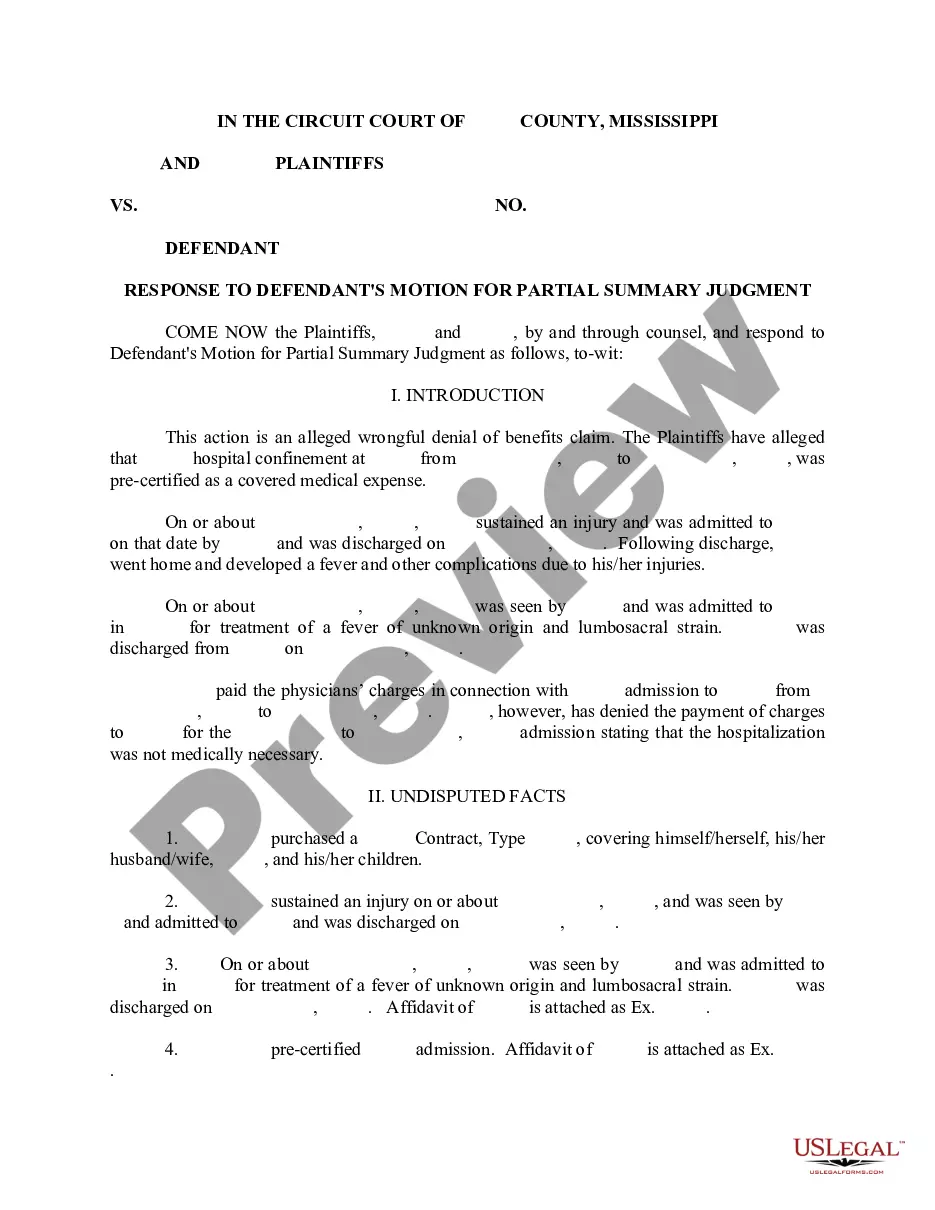
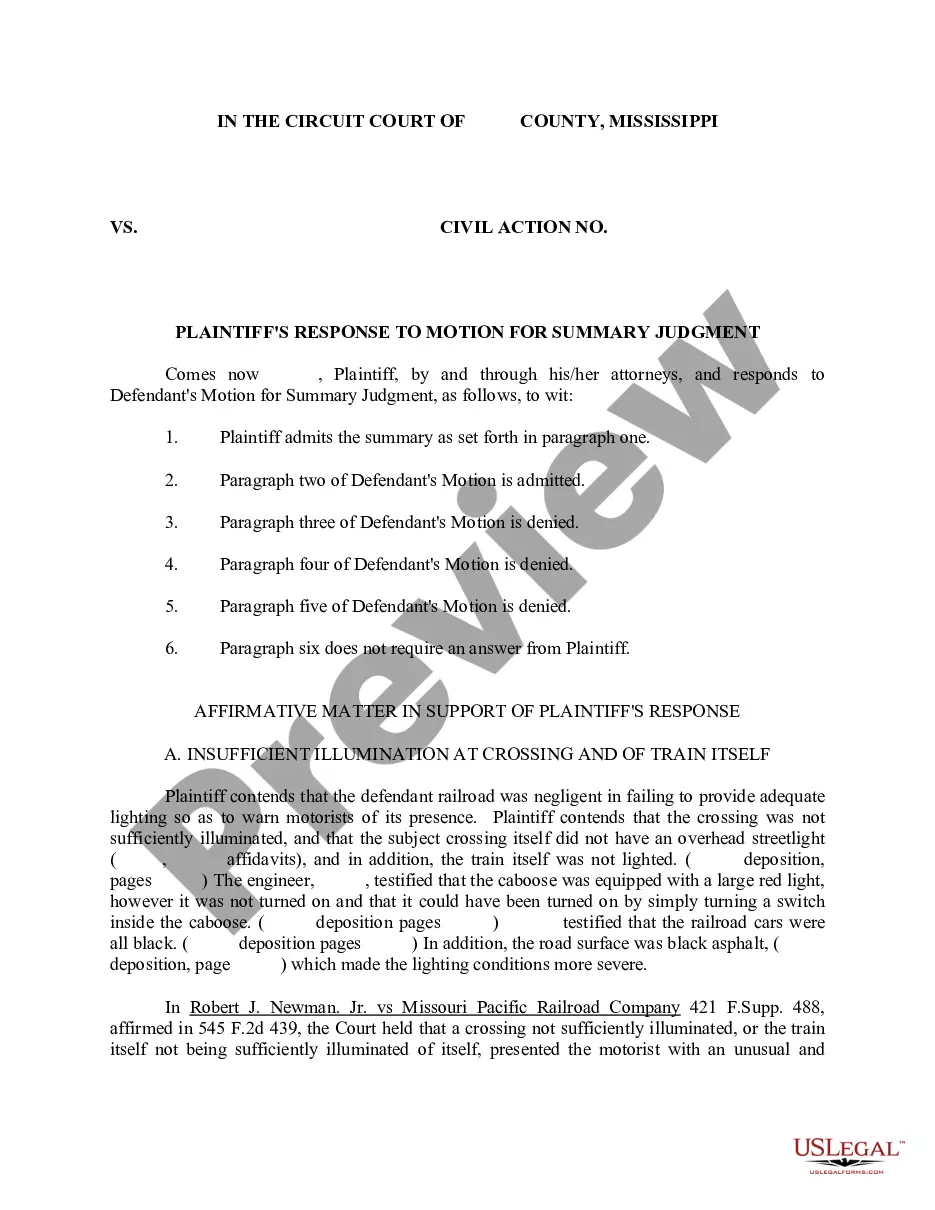
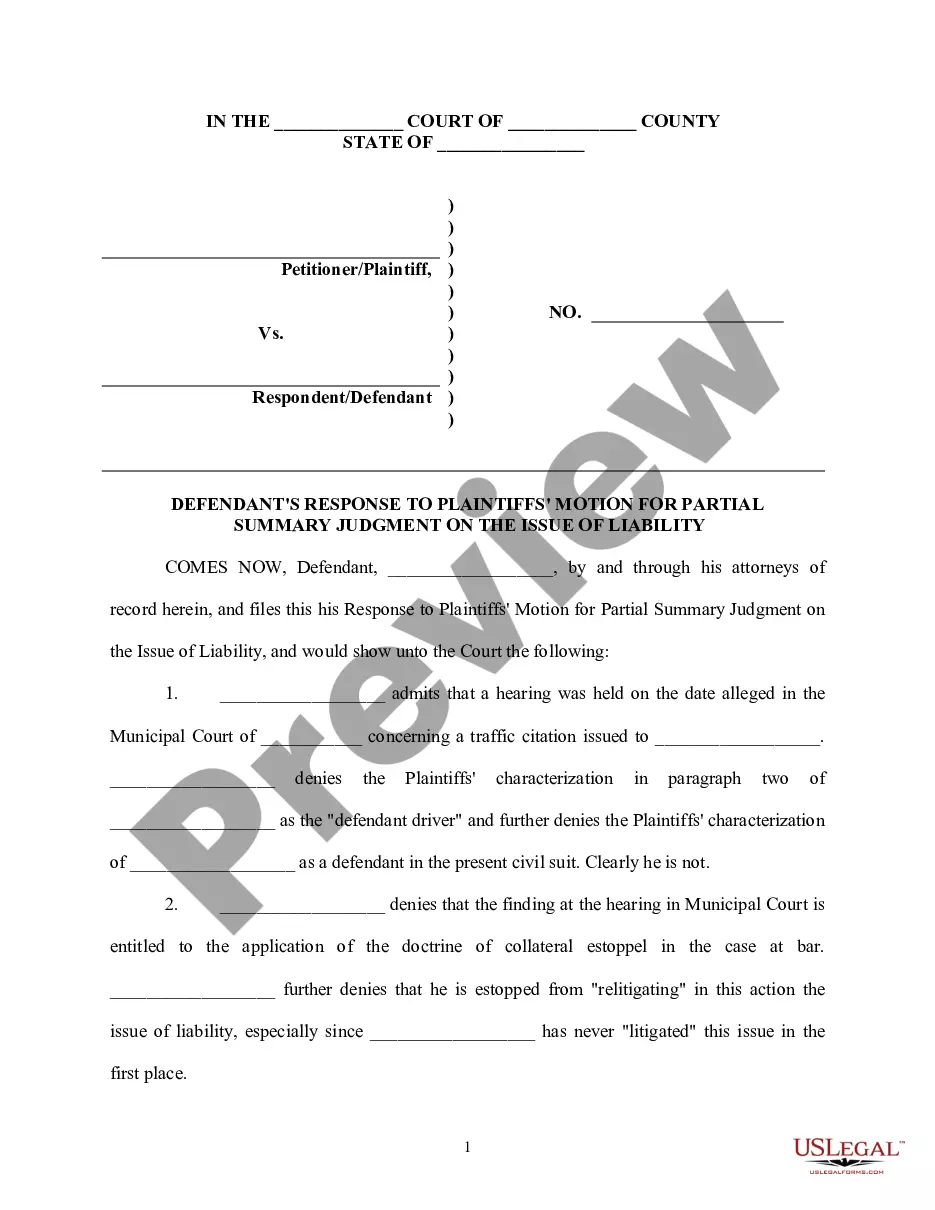
The Response to Plaintiffs' Motion to Set Aside Summary Judgment is a legal document used to formally respond to a plaintiff's request to overturn a previous judgment in a case. This form allows the party opposing the motion to present their arguments and evidence against granting such a request. Unlike other forms related to summary judgment, this response specifically addresses the motion to set aside, focusing on defending the original ruling.
Form components explained
- Title of the document indicating it is a response to a motion.
- Section for inserting the names of the parties involved.
- Space to outline the reasons for opposing the motion.
- Clause indicating consent to dismissal if applicable.
- Signature line for the responding party or their attorney.
When to use this form
This form is typically used when a party receives a motion from the plaintiffs seeking to set aside a summary judgment that was previously granted in their favor. It is necessary to respond promptly within the time frame set by the court to ensure that your arguments are considered. This situation may arise in civil lawsuits, often involving contract disputes or issues related to property rights.
Who this form is for
- Individuals or entities that have been served a motion to set aside summary judgment.
- Defendants in civil cases seeking to contest the plaintiff's motion.
- Attorneys representing clients in legal disputes where a summary judgment was made.
Instructions for completing this form
- Identify the parties involved in the case, listing their names and roles.
- Provide a clear statement opposing the motion, including any supporting arguments.
- Fill in any consent clauses if both parties agree to dismiss the case.
- Sign and date the response, ensuring it is completed by the appropriate party.
- File the completed form with the court and provide copies to all parties involved.
Notarization requirements for this form
This form does not typically require notarization unless specified by local law. Always verify your jurisdiction's requirements to ensure compliance with court procedures.
Get your form ready online
Our built-in tools help you complete, sign, share, and store your documents in one place.
Make edits, fill in missing information, and update formatting in US Legal Forms—just like you would in MS Word.
Download a copy, print it, send it by email, or mail it via USPS—whatever works best for your next step.
Sign and collect signatures with our SignNow integration. Send to multiple recipients, set reminders, and more. Go Premium to unlock E-Sign.
If this form requires notarization, complete it online through a secure video call—no need to meet a notary in person or wait for an appointment.
We protect your documents and personal data by following strict security and privacy standards.

Make edits, fill in missing information, and update formatting in US Legal Forms—just like you would in MS Word.

Download a copy, print it, send it by email, or mail it via USPS—whatever works best for your next step.

Sign and collect signatures with our SignNow integration. Send to multiple recipients, set reminders, and more. Go Premium to unlock E-Sign.

If this form requires notarization, complete it online through a secure video call—no need to meet a notary in person or wait for an appointment.

We protect your documents and personal data by following strict security and privacy standards.
Typical mistakes to avoid
- Failing to respond within the required timeframe set by the court.
- Missing signatures, which can invalidate the response.
- Not adequately addressing the arguments presented in the plaintiff's motion.
- Using overly technical language that may confuse the court or other parties.
Benefits of completing this form online
- Convenience of downloading and filling the form at any time.
- Ability to easily edit and customize the form to fit individual circumstances.
- Access to legally vetted documents that conform to current legal standards.
Looking for another form?

Form popularity
FAQ
To ask a court to set aside (cancel) a court order or judgment, you have to file a request for order to set aside, sometimes called a motion to set aside or motion to vacate. The terms set aside or vacate a court order basically mean to cancel or undo that order to start over on a particular issue.
If the judgment is set aside, you and the creditor are put back in the position you were both in immediately before the judgment. This means if you have an argument or 'defence' against the judgment which you didn't get a chance to raise when the claim was first issued, you have a second chance to do this.
Accept the judgment. Settle the judgment for less. Challenge the judgment. Pursue debt relief.
PLAINTIFF'S MOTION TO VACATE THE JUDGMENT: If you are the plaintiff and you did not go to court, you can ask the court to "vacate" (cancel) the judgment if the court ordered a judgment in favor of the defendant.
After you notify the defendant of the judgment, you can begin to enforce the judgment. Your judgment might be for money, repossession, eviction, foreclosure, or any number of things. In any case, your rights at this point would be the same as if you had gone to trial and won.
First, you can ask the court to set aside the default judgment and give you an opportunity to contest it. Next, you can settle the debt with the debt buyer for an amount less than what the default judgment is for. And finally you can eliminate the default judgment completely by filing for bankruptcy.
Usually a court will agree to set aside judgment if you can show that you did not receive any court papers and therefore were not aware of the court case against you.When you make your application to set aside judgment the court will fix a hearing date. Both you and the Claimant will have to go to this hearing.
In order to vacate a judgment in California, You must file a motion with the court asking the judge to vacate or set aside the judgment. Among other things, you must tell the judge why you did not respond to the lawsuit (this can be done by written declaration).
The Court in its inherent jurisdiction has the power to set aside its own Judgment or Order made without jurisdiction or if same has been fraudulently obtained. In such circumstance, an appeal for the purpose of having the null judgment or order cannot be said to be necessary.