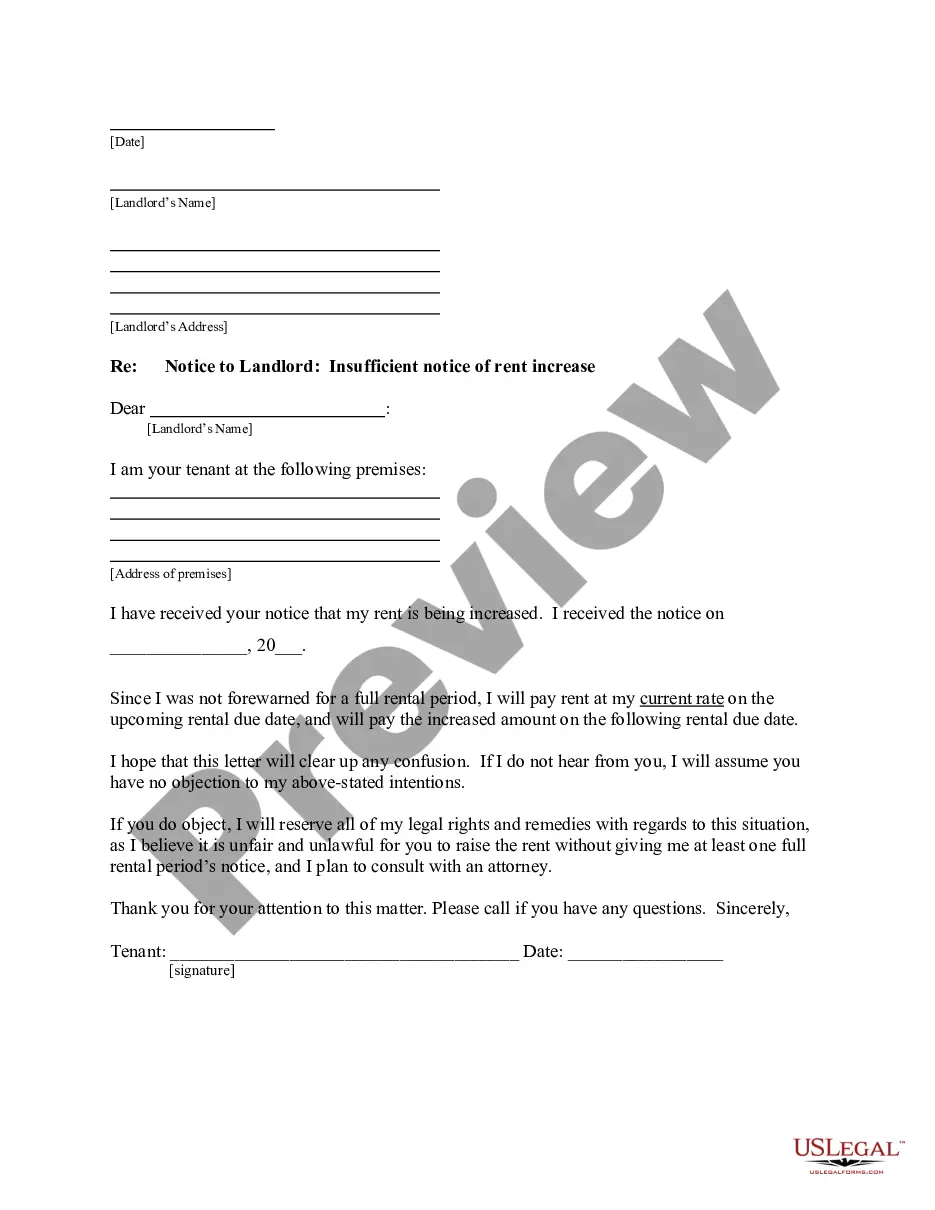
Mississippi Response to Motion for Summary Judgment
Understanding this form
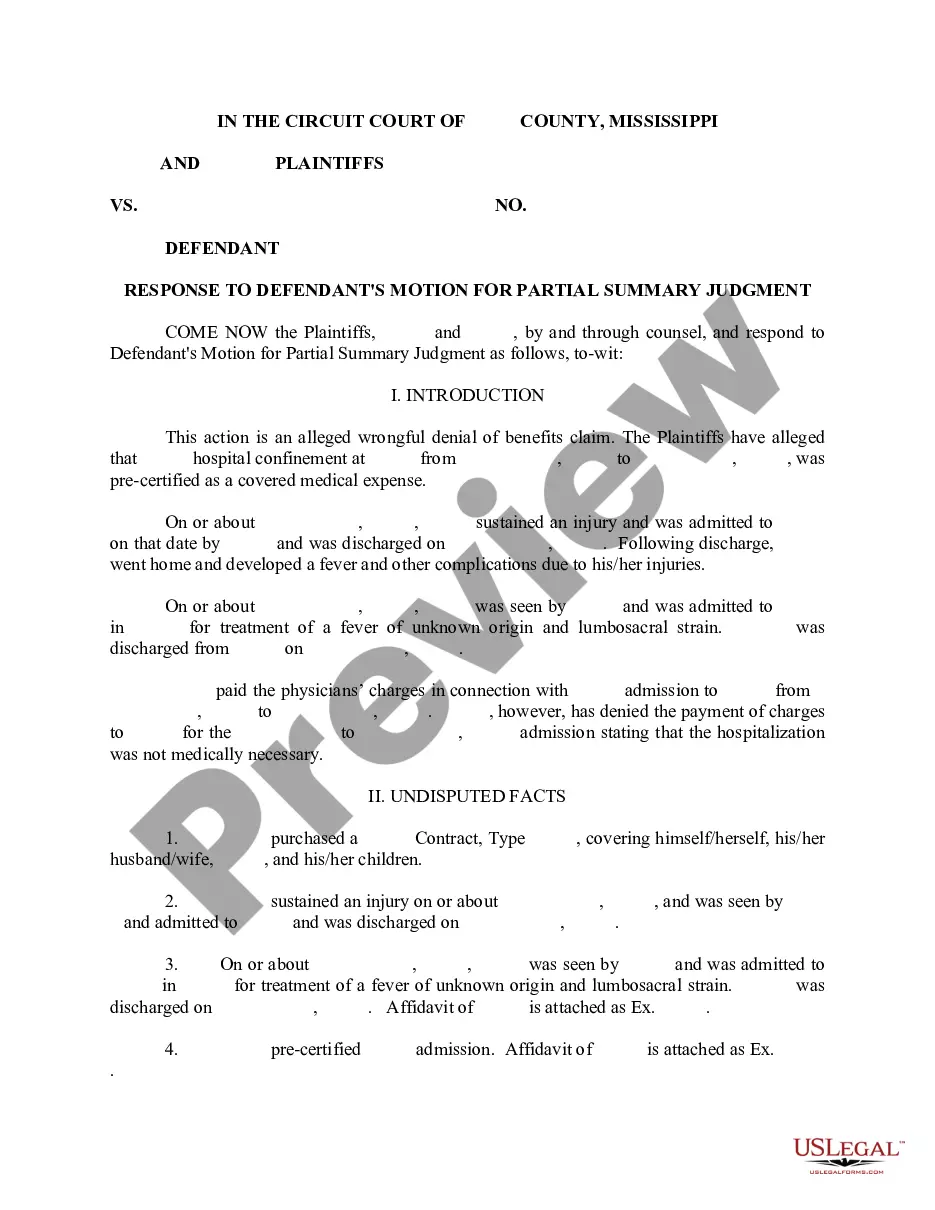
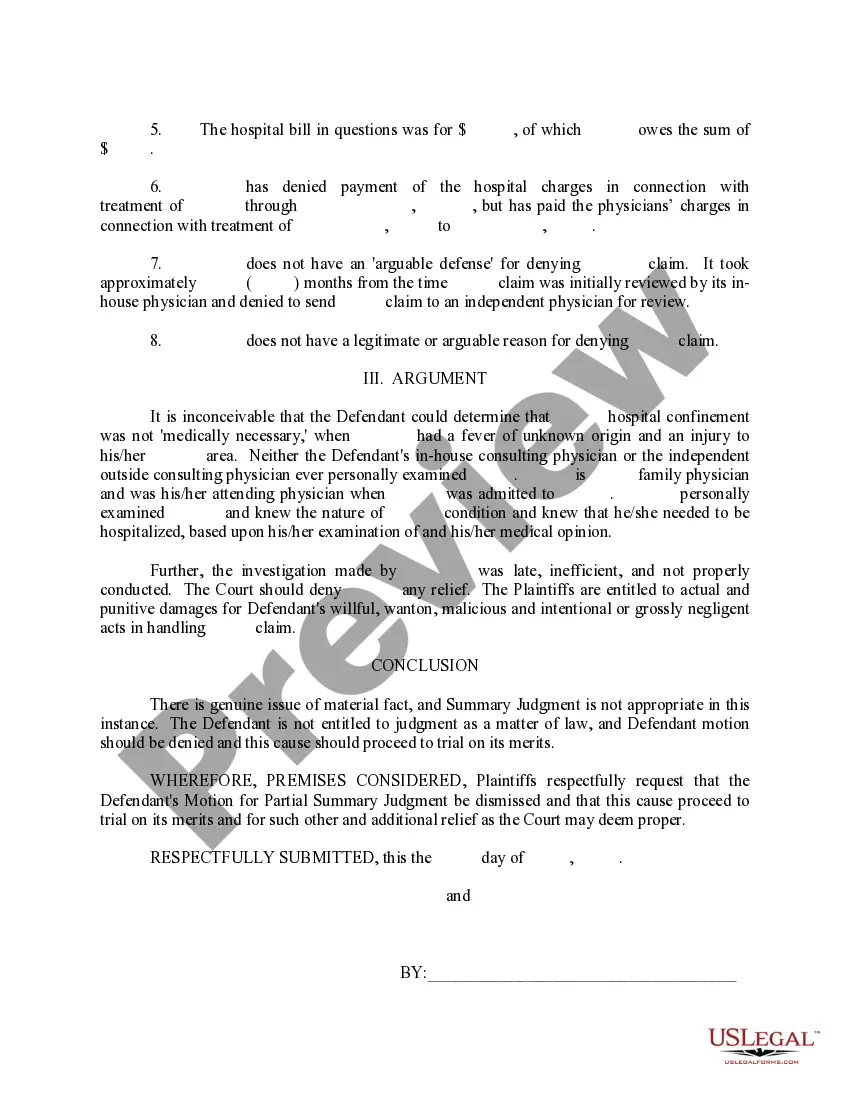
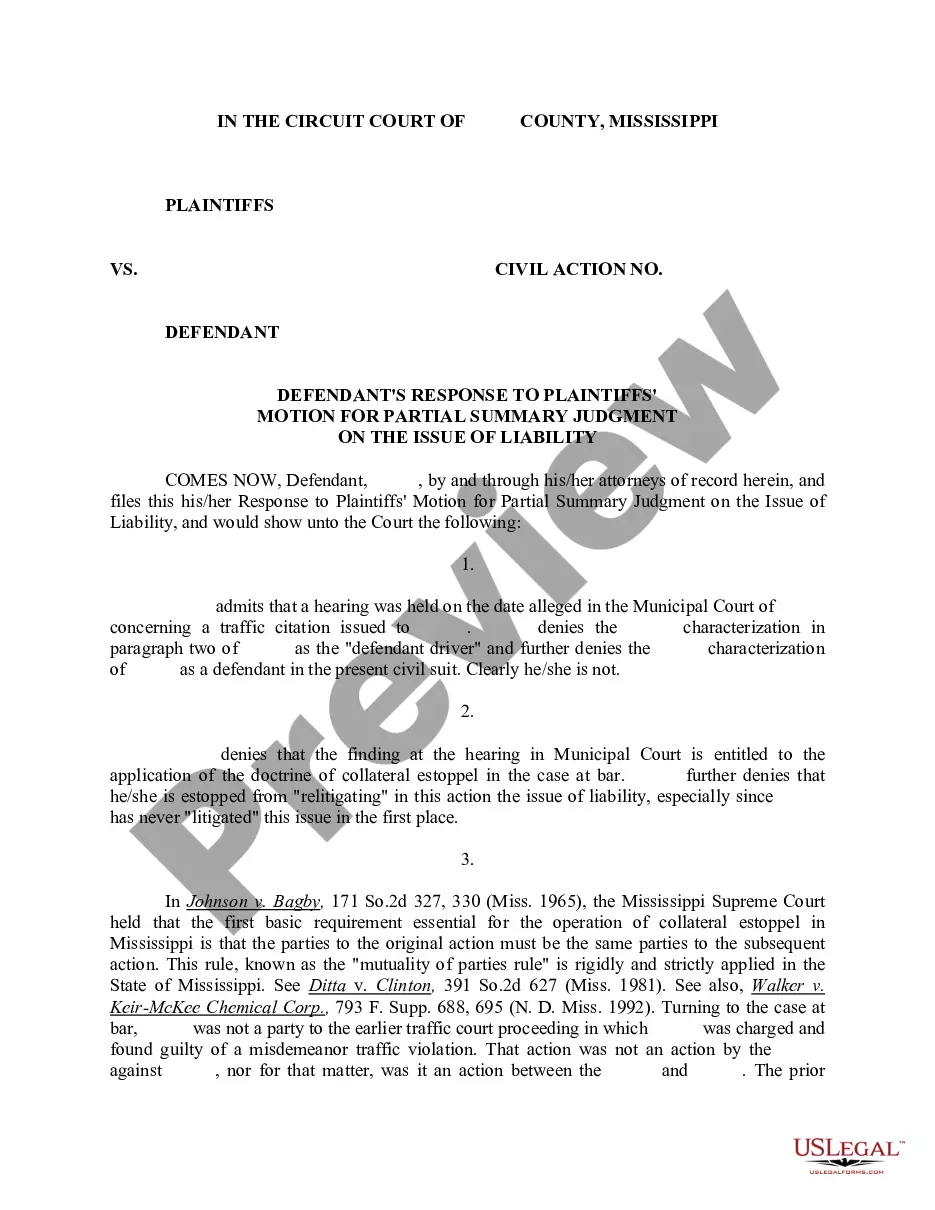
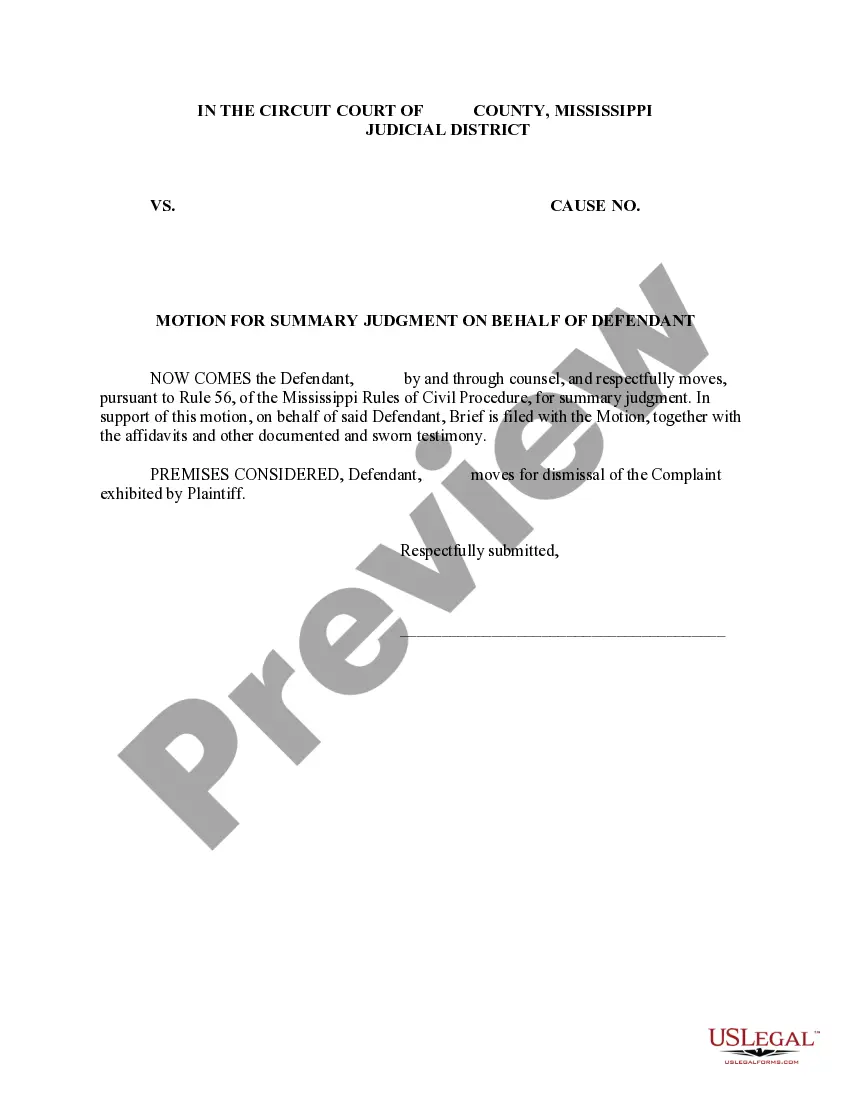
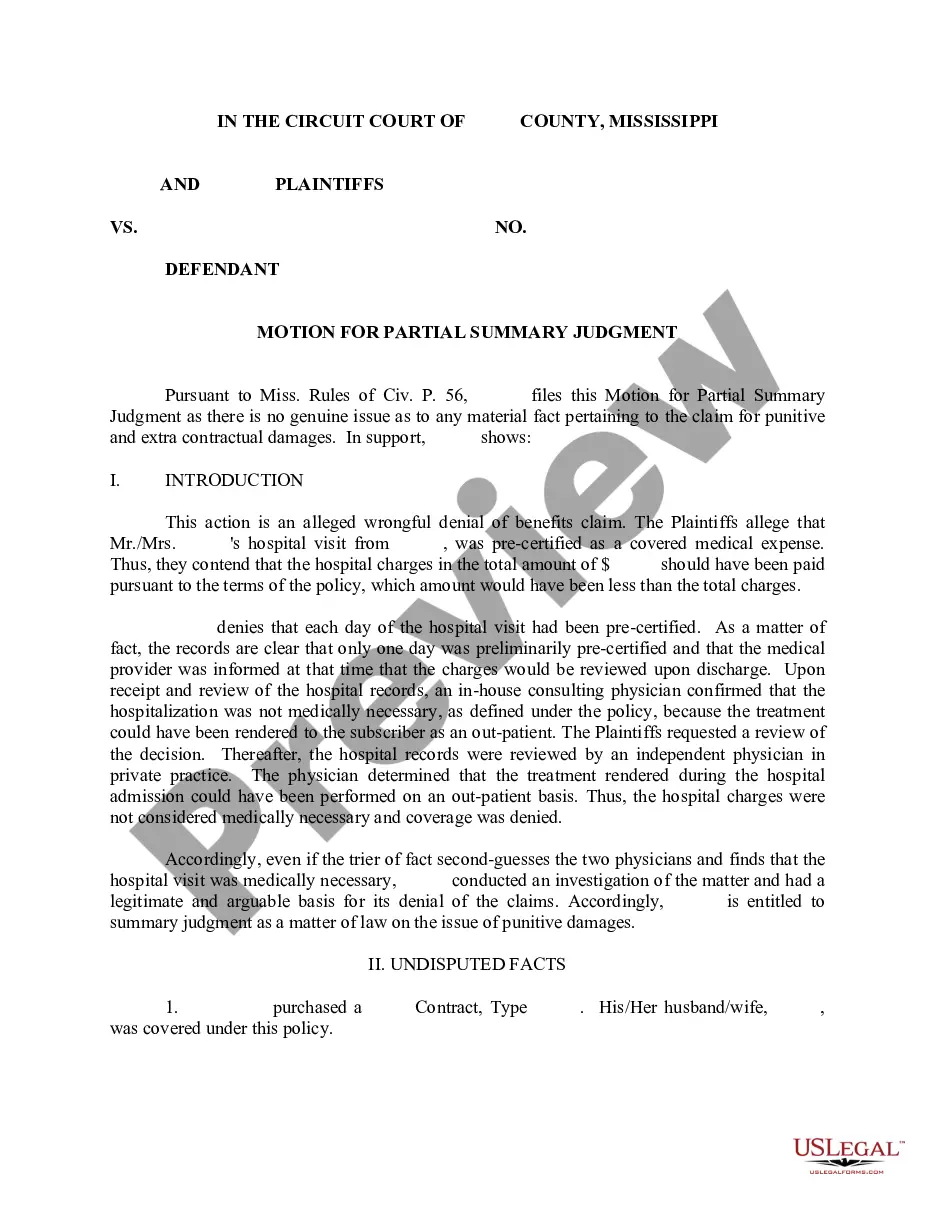
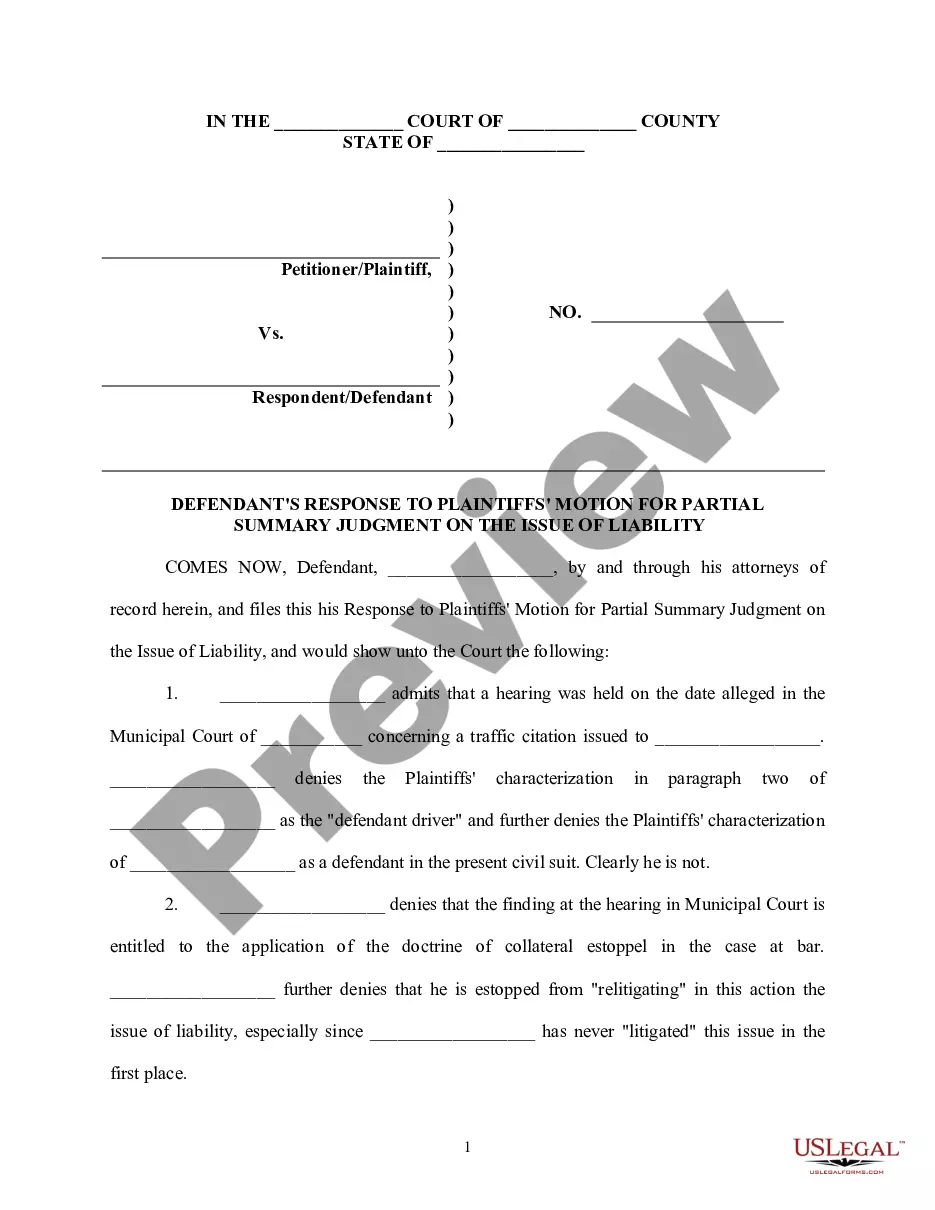
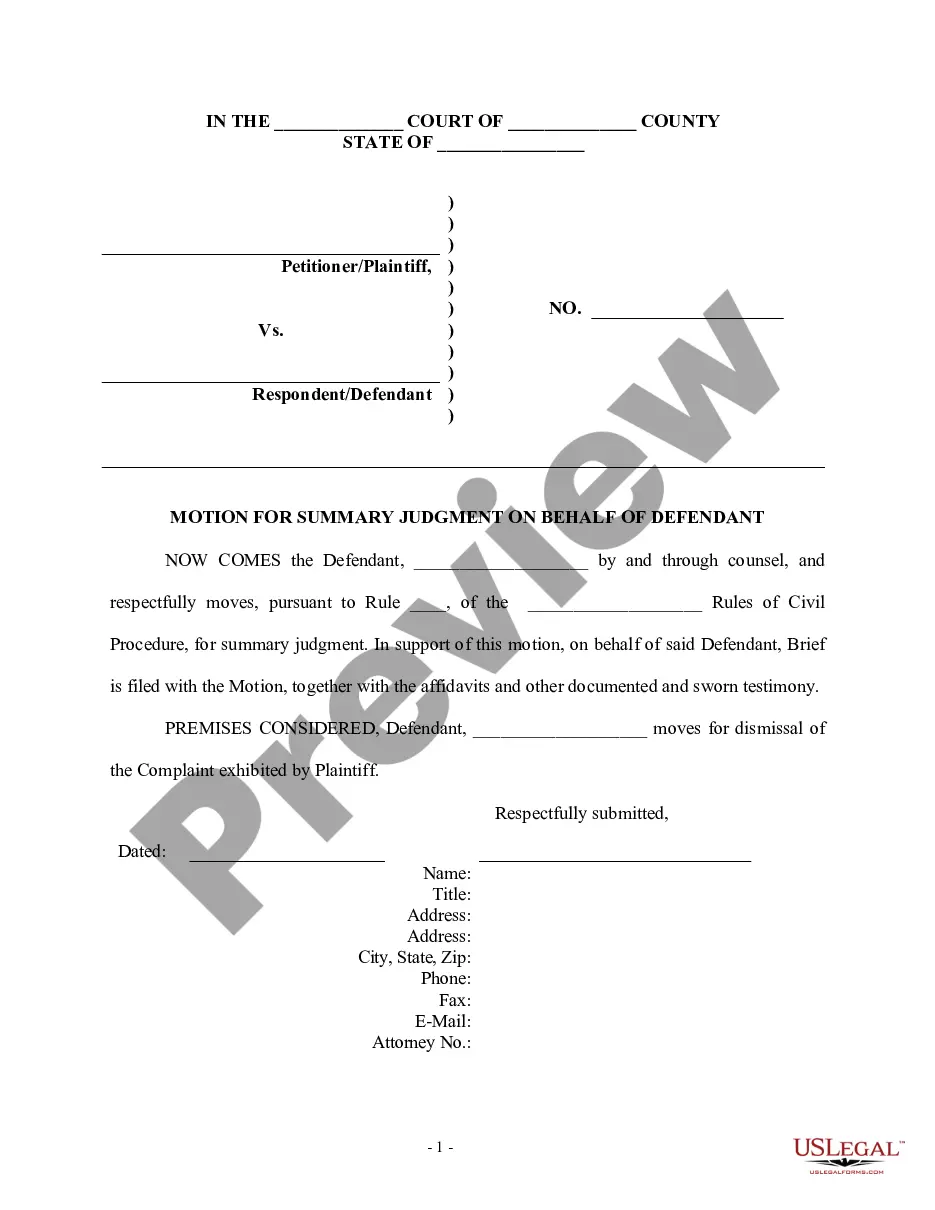
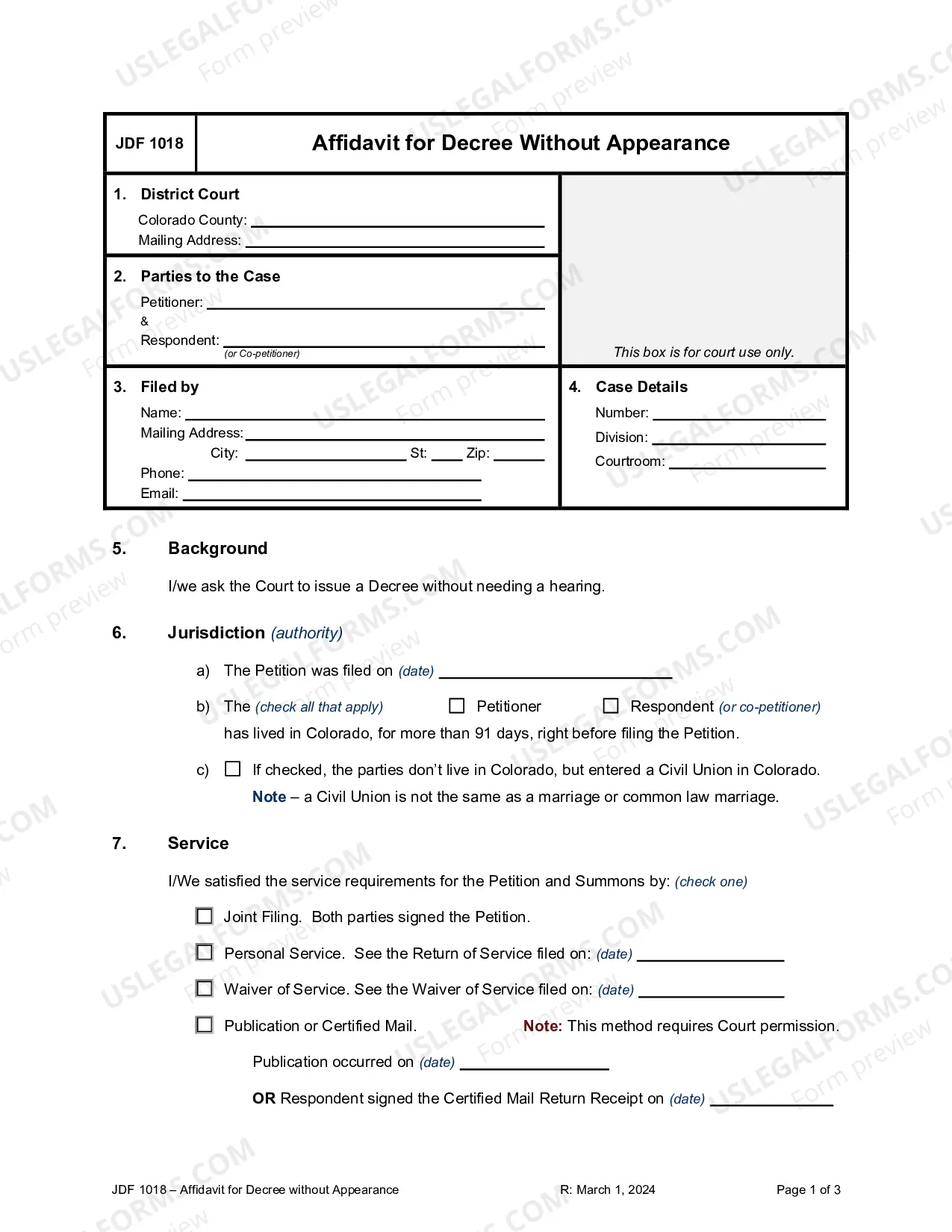
The Response to Motion for Summary Judgment is a legal document used by plaintiffs to contest a defendant's request for summary judgment in a lawsuit. This form allows plaintiffs to articulate their arguments and request the court to dismiss the motion, ensuring that the case proceeds to trial. Unlike other motions, this response specifically addresses the claims made in the motion for summary judgment, emphasizing the need for a trial to resolve factual disputes.
Form components explained
- Statement addressing the motion for partial summary judgment
- Request for the court to dismiss the motion
- Affirmation that the case should proceed to trial
- Space for additional relief requested from the court
Common use cases
This form should be used when a plaintiff needs to respond to a defendant's motion for summary judgment. It's applicable in cases where the plaintiff believes there are substantial issues of fact that warrant a trial, rather than having the case decided without a full hearing. If the motion challenges the legality of the plaintiff's claims or seeks to dismiss them outright, this response form will help maintain the case in court.
Intended users of this form
- Plaintiffs in civil litigation facing a motion for summary judgment
- Individuals with limited legal knowledge needing clear guidance
- Parties seeking to ensure their case is heard in court rather than dismissed
- Lawyers or legal advocates representing plaintiffs in related cases
Steps to complete this form
- Identify the parties involved in the motion.
- Clearly state your objection to the motion for summary judgment.
- Provide a rationale for why the motion should be denied, emphasizing material facts that remain in dispute.
- Include any specific relief or amendments you seek from the court.
- Review the completed form for accuracy and clarity.
- Sign and date the form as required.
Does this form need to be notarized?
This form does not typically require notarization to be legally valid. However, some jurisdictions or document types may still require it. US Legal Forms provides secure online notarization powered by Notarize, available 24/7 for added convenience.
Get your form ready online
Our built-in tools help you complete, sign, share, and store your documents in one place.
Make edits, fill in missing information, and update formatting in US Legal Forms—just like you would in MS Word.
Download a copy, print it, send it by email, or mail it via USPS—whatever works best for your next step.
Sign and collect signatures with our SignNow integration. Send to multiple recipients, set reminders, and more. Go Premium to unlock E-Sign.
If this form requires notarization, complete it online through a secure video call—no need to meet a notary in person or wait for an appointment.
We protect your documents and personal data by following strict security and privacy standards.

Make edits, fill in missing information, and update formatting in US Legal Forms—just like you would in MS Word.

Download a copy, print it, send it by email, or mail it via USPS—whatever works best for your next step.

Sign and collect signatures with our SignNow integration. Send to multiple recipients, set reminders, and more. Go Premium to unlock E-Sign.

If this form requires notarization, complete it online through a secure video call—no need to meet a notary in person or wait for an appointment.

We protect your documents and personal data by following strict security and privacy standards.
Typical mistakes to avoid
- Failing to clearly outline factual disputes that necessitate a trial.
- Not responding within the deadline set by the court.
- Omitting relevant legal arguments or supporting documentation.
- Using overly complex language that could confuse the court.
Benefits of using this form online
- Accessibility: Download the form anytime, anywhere, avoiding travel to a lawyer's office.
- Editability: Easily fill in or adjust the form to match specific case details or requirements.
- Reliability: Forms are drafted by licensed attorneys, ensuring legal compliance and accuracy.
Looking for another form?


Form popularity
FAQ
A response must be in writing and include the same supporting documents as a motion for summary judgment. The opposition to the motion for summary judgment should also include a statement of facts showing the dispute and supporting documents.
If the motion is granted, the judgment on the issue or case is deemed to be a final judgment from which a party may seek an appeal. The court of appeal can reverse the grant of summary judgment and reinstate the claim in the lower court. However, this is rarely done and most summary judgments are upheld on appeal.
If a defendant refuses to produce documents or witnesses for depositions, you can oppose the summary-judgment motion by submitting your declaration and showing that facts essential to justify your opposition may exist but cannot for reasons stated be presented to the court.
19, 2008) (motions to dismiss or for summary judgment are not responsive pleadings, and therefore do not cut off a plaintiff's right to amend his pleadings once at any time).