Mississippi Motion for Partial Summary Judgment
About this form
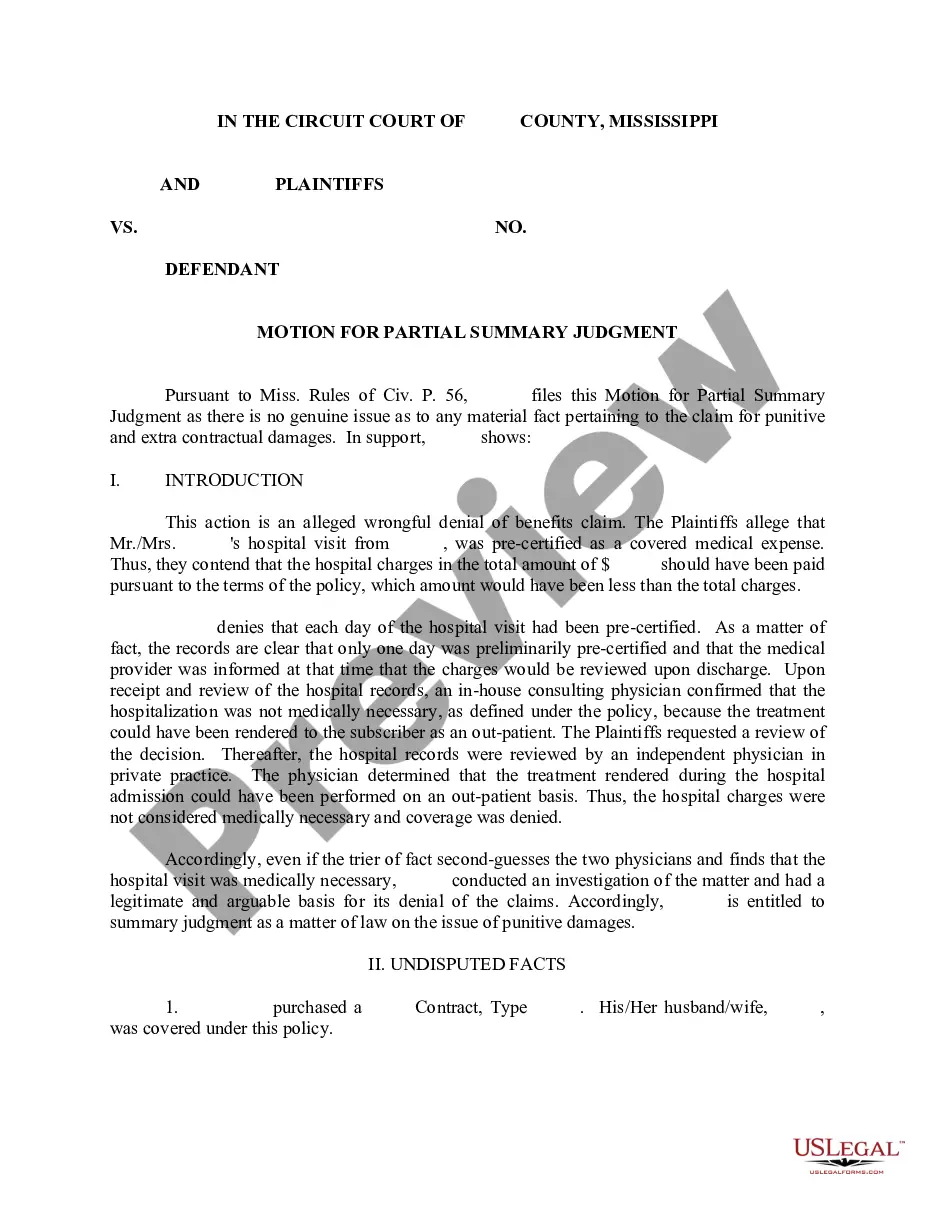
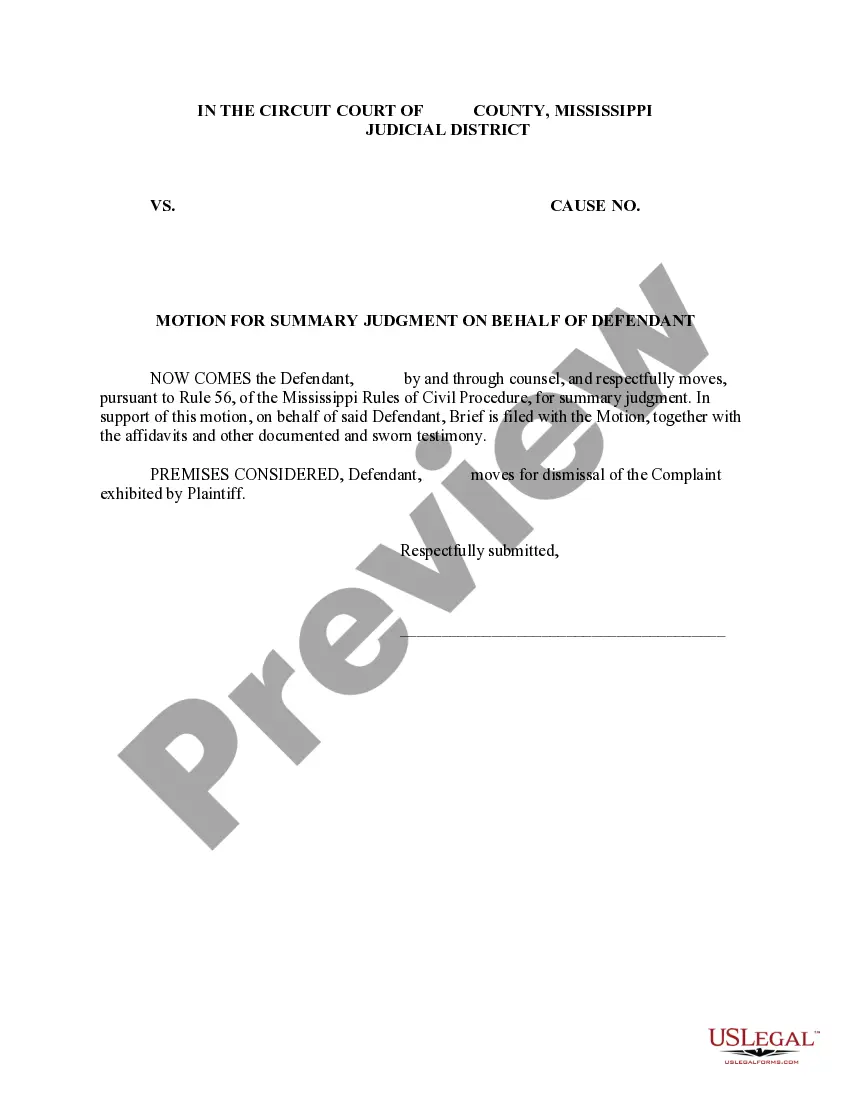
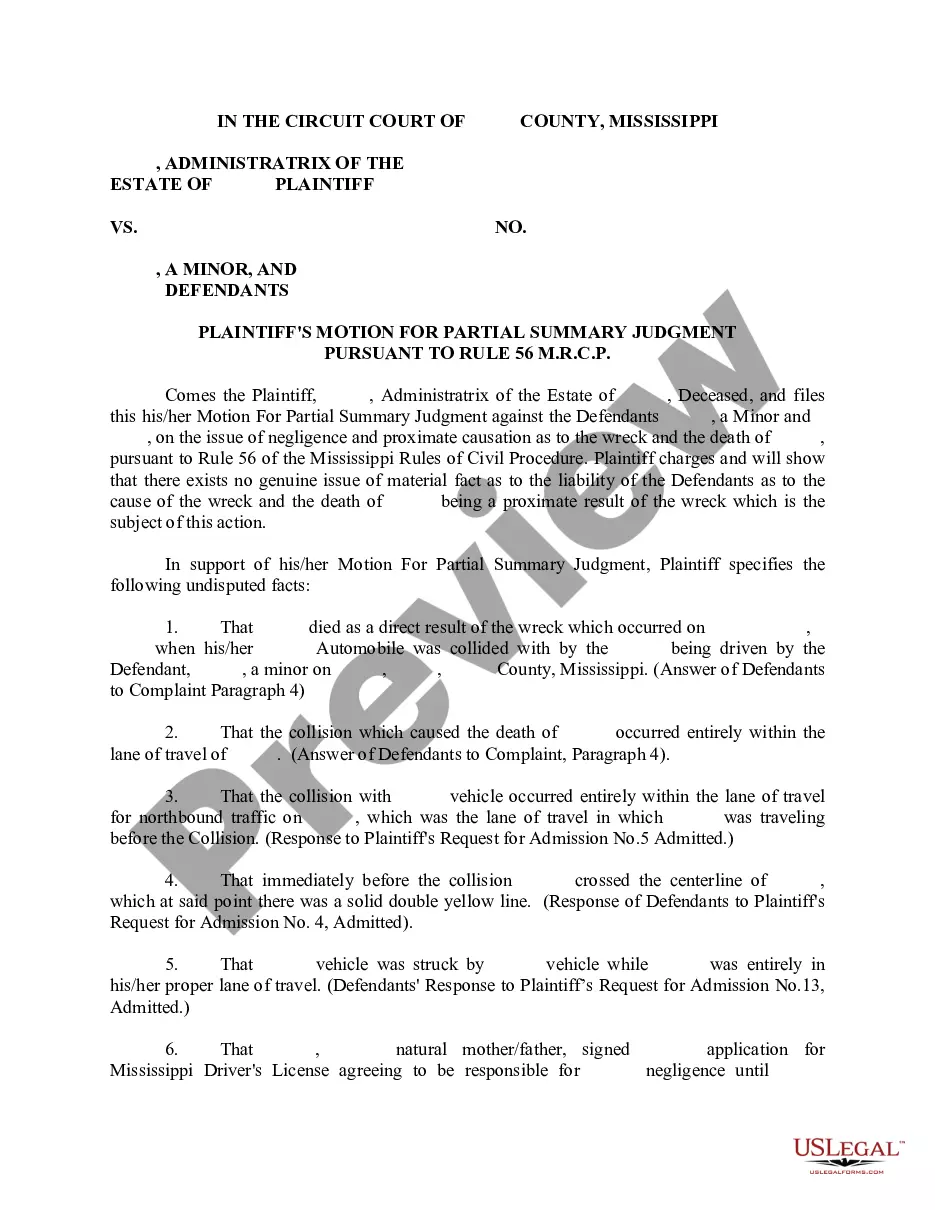
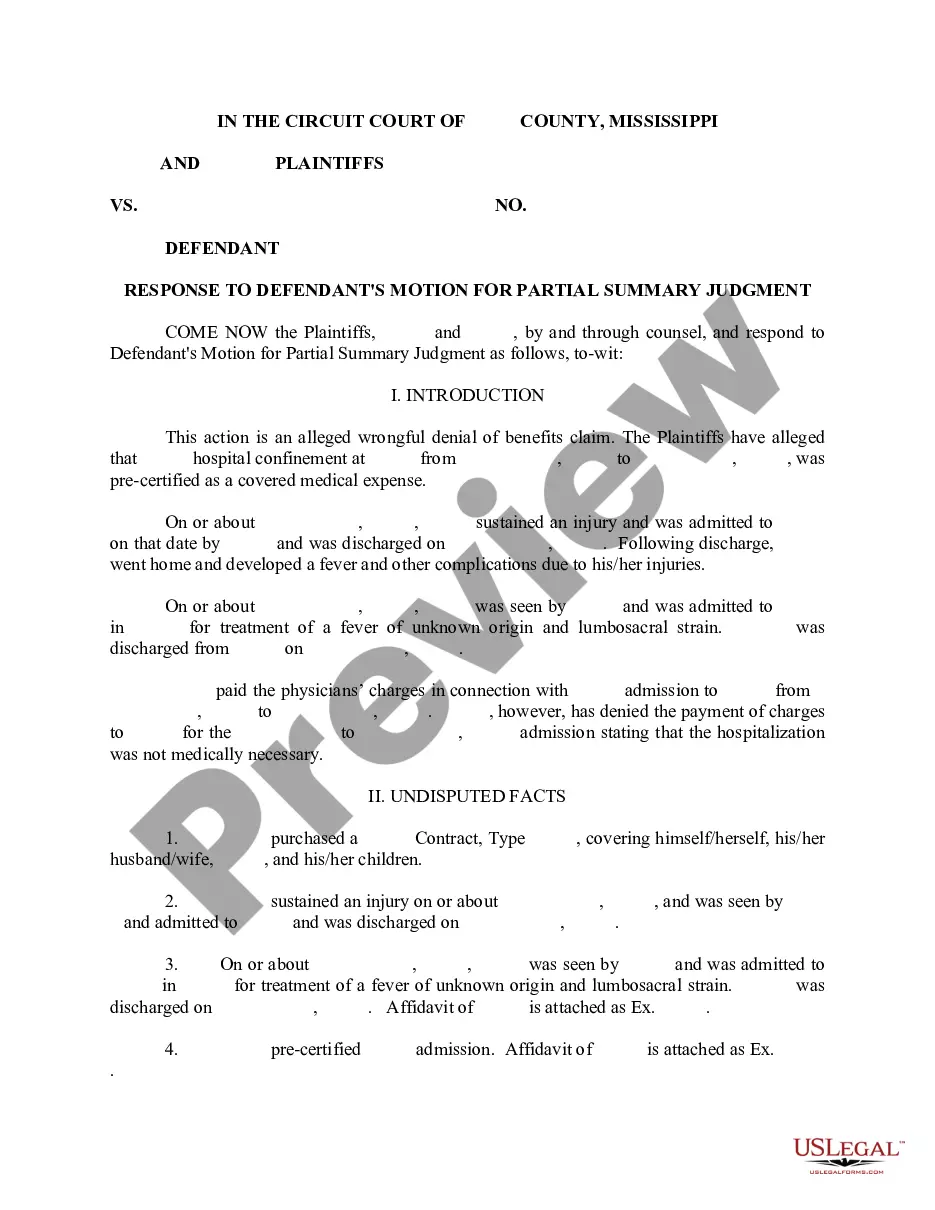
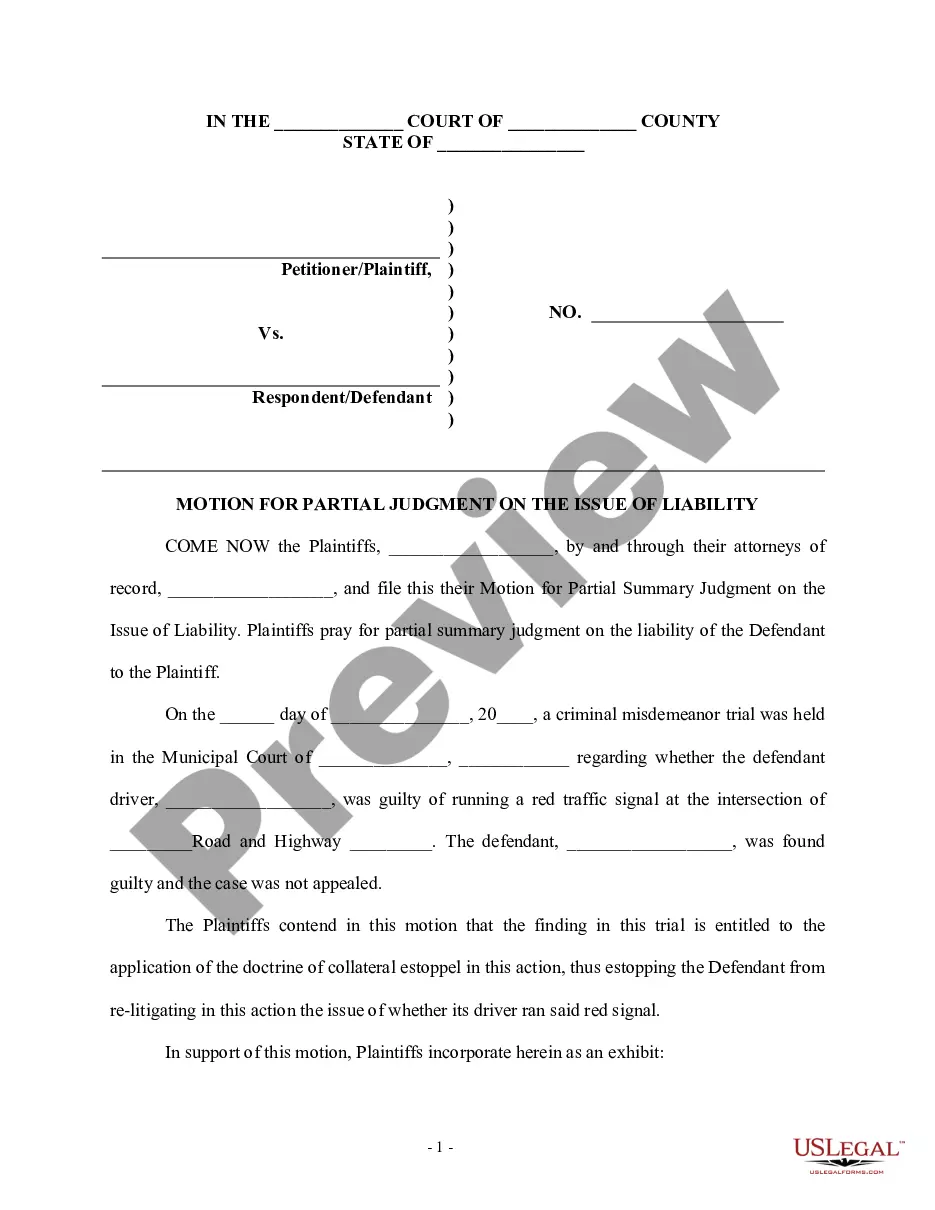
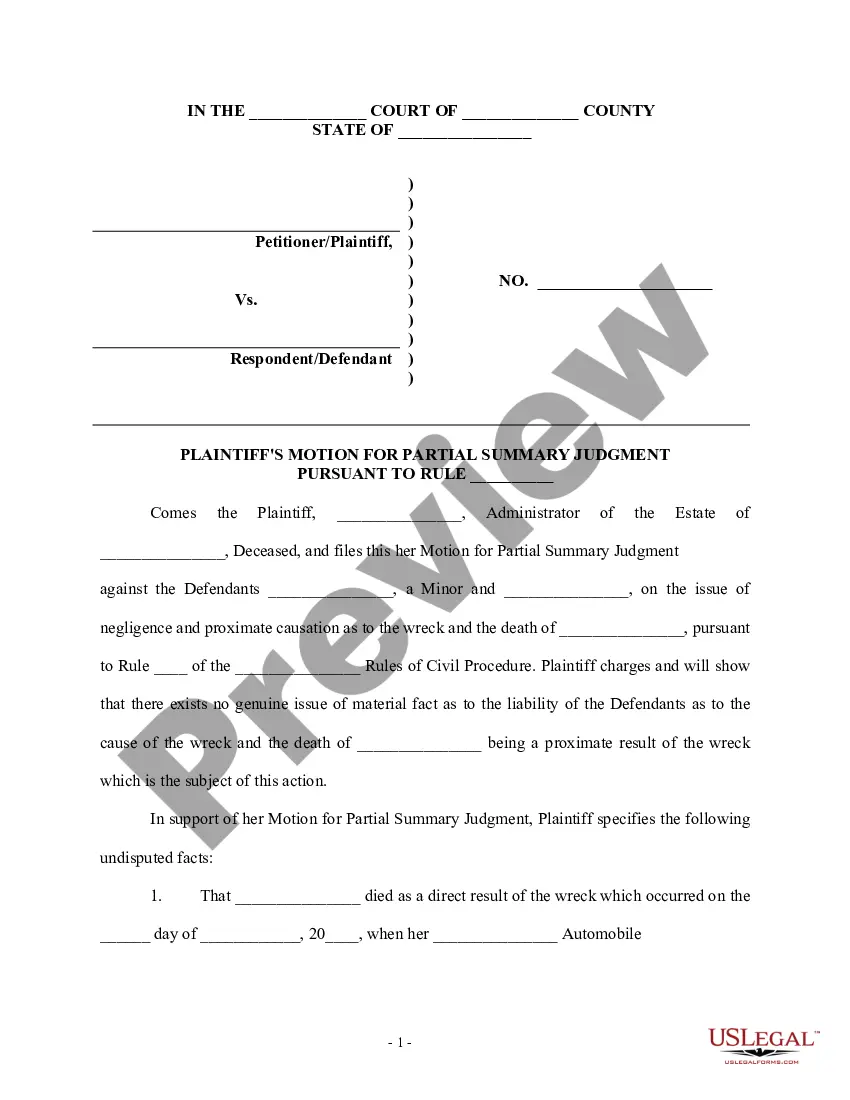
A Motion for Partial Summary Judgment is a legal document that requests the court to make a ruling on certain aspects of a case before it goes to trial. This motion is used when one party believes there is no dispute over the material facts of the case and that they are entitled to judgment as a matter of law. The motion helps streamline legal proceedings by resolving specific issues early on, distinguishing it from full summary judgments which cover all issues in a case.
Key components of this form
- Caption: Identifies the case and the parties involved.
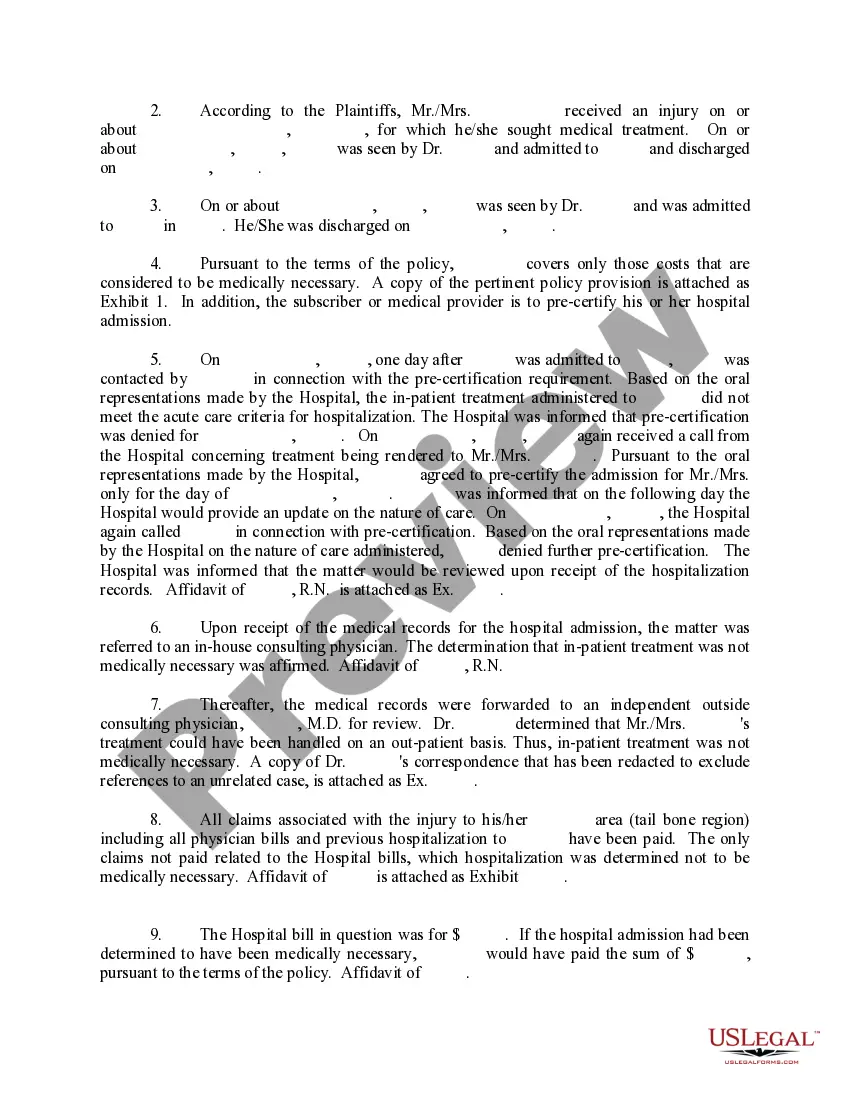
- Statement of Facts: Summarizes the undisputed facts of the case.
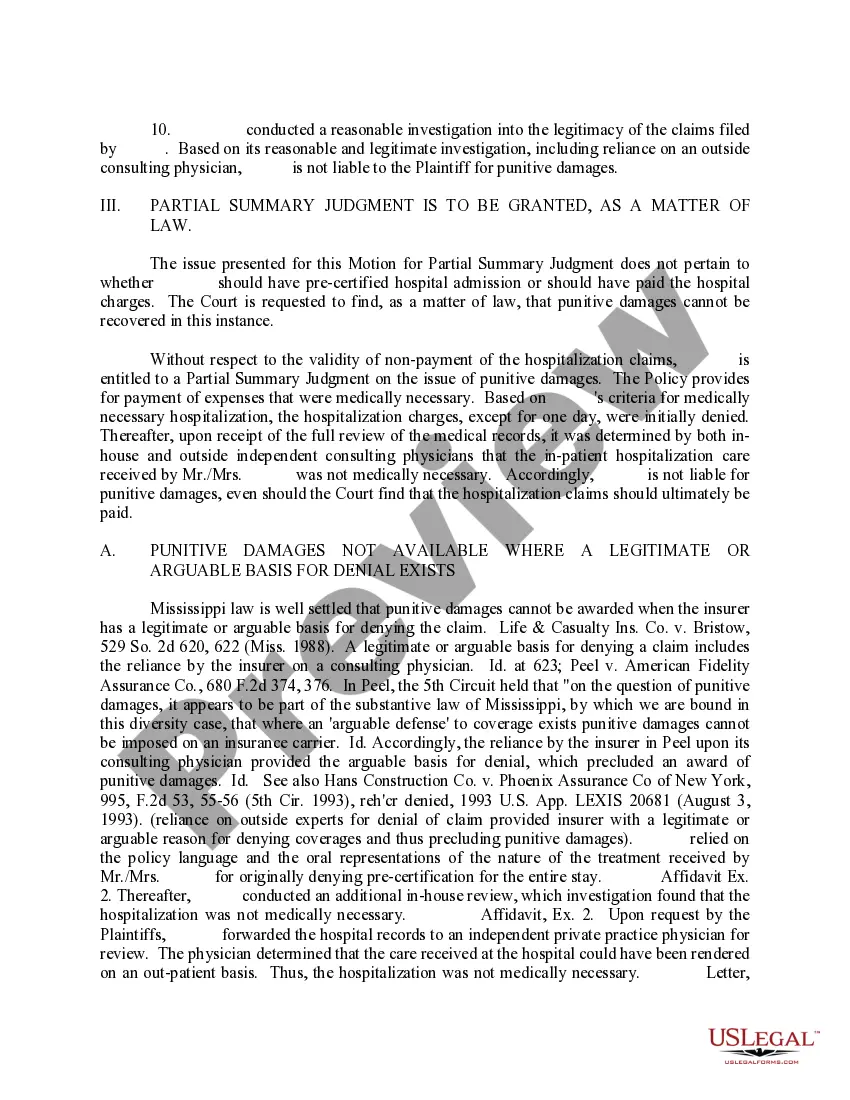
- Legal Argument: Outlines the reasons the court should grant the motion based on law.
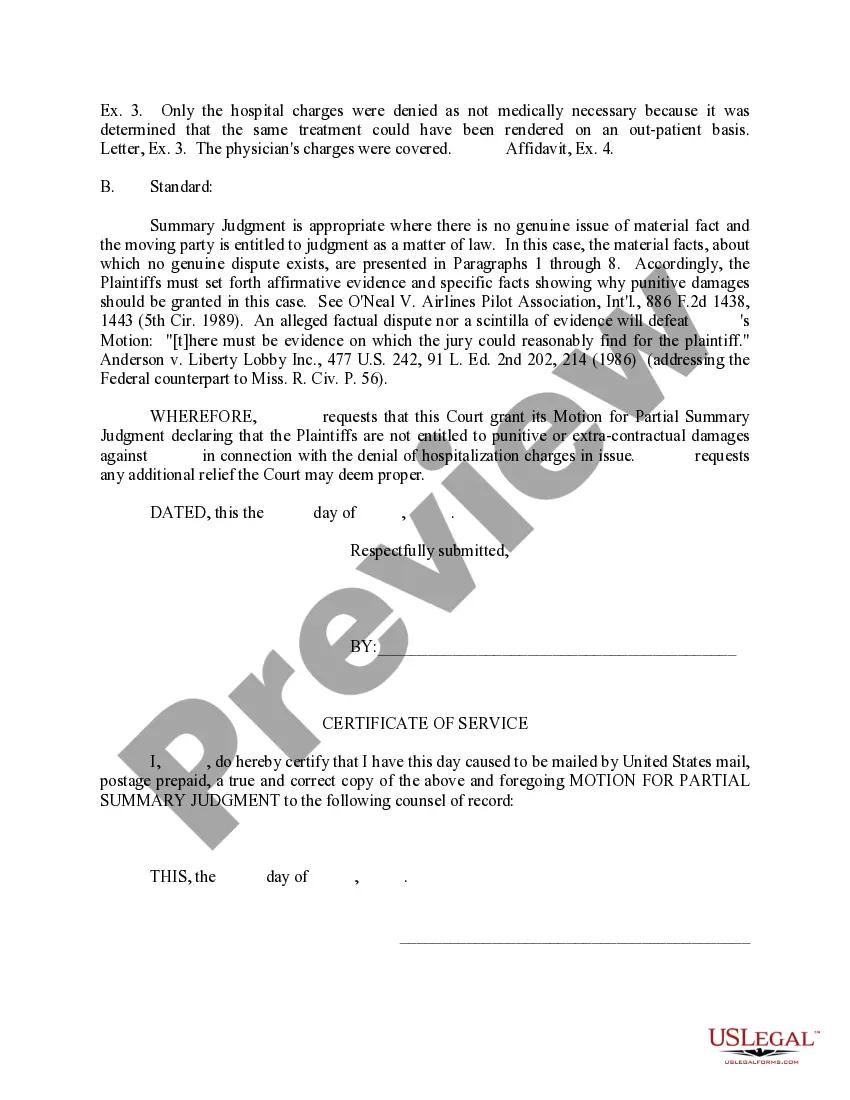
- Request for Relief: Specifies the exact judgment or ruling being requested.
- Signature Block: Designates the attorney or party filing the motion.
Situations where this form applies
This form is commonly used in civil litigation when a party seeks to resolve specific claims or defenses without the need for a full trial. It is particularly suitable in cases where the facts are clear and support a legal argument for judgment based on those facts. Situations may include contract disputes, personal injury claims, or any instance where one party believes there are no material facts requiring a trial.
Who can use this document
- Plaintiffs or defendants involved in civil litigation.
- Attorneys representing parties in court cases.
- Individuals seeking to resolve specific aspects of their case efficiently.
Instructions for completing this form
- Identify the parties: Clearly state the names and roles of the parties involved in the case.
- Outline the factual background: Provide a concise statement of the facts that are undisputed.
- Present your legal argument: Include citations of relevant laws and legal precedents supporting your motion.
- Specify the relief sought: Clearly detail what ruling you are requesting from the court.
- Sign and date: Ensure that the appropriate party signs the motion, and date it accurately.
Does this document require notarization?
This form does not typically require notarization unless specified by local law. Always check to ensure compliance with your jurisdiction's rules.
Get your form ready online
Our built-in tools help you complete, sign, share, and store your documents in one place.
Make edits, fill in missing information, and update formatting in US Legal Forms—just like you would in MS Word.
Download a copy, print it, send it by email, or mail it via USPS—whatever works best for your next step.
Sign and collect signatures with our SignNow integration. Send to multiple recipients, set reminders, and more. Go Premium to unlock E-Sign.
If this form requires notarization, complete it online through a secure video call—no need to meet a notary in person or wait for an appointment.
We protect your documents and personal data by following strict security and privacy standards.

Make edits, fill in missing information, and update formatting in US Legal Forms—just like you would in MS Word.

Download a copy, print it, send it by email, or mail it via USPS—whatever works best for your next step.

Sign and collect signatures with our SignNow integration. Send to multiple recipients, set reminders, and more. Go Premium to unlock E-Sign.

If this form requires notarization, complete it online through a secure video call—no need to meet a notary in person or wait for an appointment.

We protect your documents and personal data by following strict security and privacy standards.
Mistakes to watch out for
- Failing to clearly state the undisputed facts.
- Neglecting to cite relevant laws or precedents in the legal argument.
- Submitting without proper formatting or compliance with court rules.
- Not including a request for specific relief in the conclusion.
Why use this form online
- Convenience: Access the form anytime and anywhere.
- Editability: Customize the form to fit your specific case details quickly.
- Reliability: The form is drafted by licensed attorneys to ensure legal compliance.
Legal use & context
- This motion is governed by specific rules of civil procedure applicable in the jurisdiction where the case is filed.
- Improperly filed motions may be dismissed or denied, impacting the overall case outcome.
What to keep in mind
- A Motion for Partial Summary Judgment streamlines the legal process by addressing specific issues before trial.
- Essential components include a statement of facts, legal arguments, and a clear request for relief.
- Always check state-specific rules when preparing to file the motion.
Looking for another form?







Form popularity
FAQ
Summary judgment orders usually cannot be appealed after a trial has taken place. The Ninth Circuit Court of Appeals called it a pointless academic exercise to review factual summary judgment issues after a trial in Banuelos v. Construction Laborers' Trust Funds for So. Calif., 382 F.
The grant of summary judgment usually results in a final judgment only if the grant resolves all issues as to all parties. An order for summary judgment is interlocutory if it does not entirely end the proceedings before the trial court.
21 provides that misjoinder of parties is not ground for dismissal of an action, and that parties may be dropped or added by court order on motion of any party or of the court's own initiative at any stage in the action and on such terms as are just.
Generally, you should move all at once. However, you can move to dismiss various affirmative defenses, causes of action and/or counterclaims early on but there's a high chance of being denied as premature.
Motion for judgment on the pleadings is a party's request to the court to rule in his/her favor based on the pleadings on file, without accepting evidence, as when the outcome of the case rests on the court's interpretation of the law.
Judgment on the pleadings is a motion made after pleading and before discovery; summary judgment happens after discovery and before trial; JMOL occurs during trial.Timing is very important in making a motion for JMOL; the motion can be made only after the opposing party has presented its case.
If you win the summary judgment, then you get to do exactly what you were trying to do before the motion was ever filed, which is progress your client's case towards litigation with a chance of settlement. If you lose, then you can either file for an appeal or tell your client to give up but who would do that?
Partial summary judgment," as used in' this comment, refers to the granting of judgment on a portion of a single claim. It is not used to refer to the granting of judgment on a single claim where more than one claim is presented in a case.
Check a judge's standing orders before filing. Although Rule 56 does not prohibit successive summary judgment motions,15 some judges limit a party to a single summary judgment motion.